Planning a ghost town road trip to Lexington and Alma means visiting a place where entire communities hide beneath water. Head to Lexington Reservoir near Los Gatos, ideally during late summer or drought years, when low water levels expose old road alignments and ghostly foundation outlines pressed into the mudflats. You’ll connect with a vanished slice of California’s mountain history that most travelers never know exists — and there’s far more to this haunting story than what’s visible on the surface.
Key Takeaways
- Lexington and Alma, founded in 1871, were thriving mountain communities submerged beneath Lexington Reservoir after the Lenihan Dam was built in 1952.
- During droughts or late summer, old road alignments and foundation outlines emerge from the mudflats, offering rare glimpses of the vanished towns.
- Visit Lexington Reservoir County Park near Los Gatos and use shoreline trails to explore exposed remnants during low water conditions.
- Check current reservoir levels through the Santa Clara County Water District website before planning your visit for optimal visibility.
- Pack comfortable shoes and binoculars, and consider combining this stop with a broader California ghost town road trip itinerary.
The Ghost Towns Sleeping Under Lexington Reservoir
When the waters of Lexington Reservoir rise, they swallow a secret — two forgotten towns, Alma and Lexington, that once hummed with rail traffic, timber commerce, and mountain travelers. Both towns vanished in 1952 when the James J. Lenihan Dam sealed their fate, slowly flooding decades of California history beneath the surface.
You won’t find these ghost towns on any main street. They’re submerged beneath Santa Clara County’s quiet reservoir hills above Los Gatos. But when water levels drop, historical artifacts — old road alignments, foundations, remnants of former lives — occasionally resurface.
Local legends tie the area to colorful western-era stories that make the silence feel charged. This isn’t just a lake. It’s a living archive, and visiting it means standing directly above a drowned world.
What Happened to Lexington and Alma Before the Reservoir?
Before the reservoir swallowed them whole, Alma and Lexington were anything but quiet. Founded in 1871, Alma grew into a scrappy mountain hub built around historic transportation routes connecting the Santa Clara Valley to the Santa Cruz coast.
The South Pacific Coast Railroad ran through Alma from 1880 to 1940, making it a legitimate rail stop for loggers, vacationers, and merchants alike. You’d have found saloons, a hotel, a general store, and even a post office tucked inside a bar.
Mining history also threaded through the region, alongside thriving lumber mills that fed the logging industry deep in the Santa Cruz Mountains. These weren’t sleepy settlements — they were working, breathing communities.
Then the James J. Lenihan Dam sealed in 1952, and the water erased everything.
What’s Left to See at the Reservoir Today?
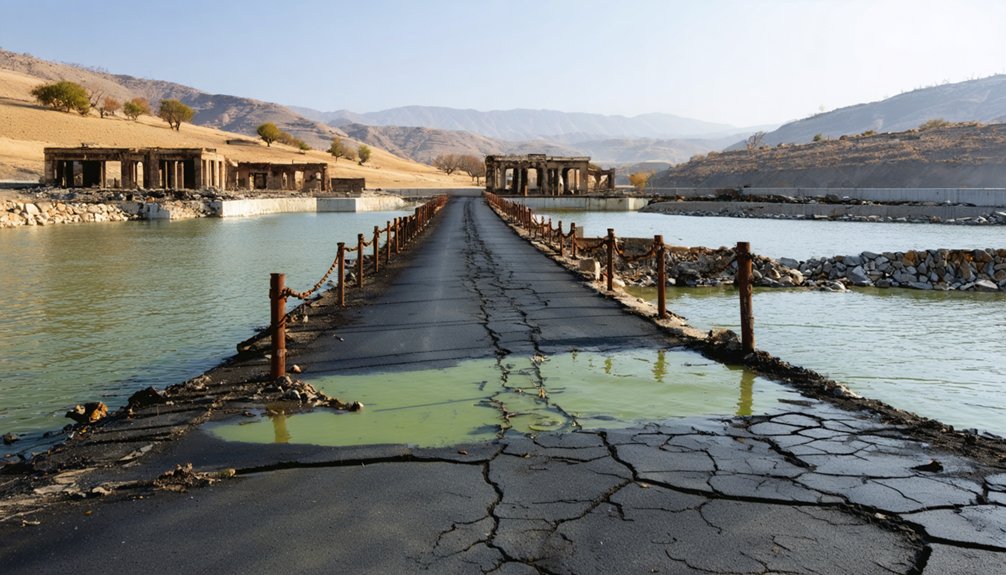
Though the towns are gone, Lexington Reservoir still holds secrets worth chasing. When the water level drops during dry seasons, flooded remnants emerge from the depths — old road traces, foundation outlines, and ghostly infrastructure that once supported daily life in Alma and Lexington.
You’ll want to time your visit after a drought year, when exposure is greatest. Los Gatos Creek Trail runs along the reservoir’s edge, giving you elevated sightlines over the water. Bring binoculars and a camera.
The surrounding hills are forest-covered now, quiet and indifferent to the history beneath the surface. But standing at the shoreline, knowing an entire community rests below, delivers something most road trips never offer — a genuine sense of places lost and time swallowed whole.
When Low Water Exposes the Ghost Town
Drought years are when Lexington Reservoir gives up its secrets. When the water level drops markedly, the drowned streets of Lexington and Alma slowly resurface, offering you a rare window into a vanished California.
You might spot old road alignments, foundation outlines, or scattered historical artifacts from the communities that once thrived here before 1952 swallowed them whole. These aren’t dramatic cinematic ruins — they’re subtle, ghostly impressions pressed into the mudflat.
But that restraint makes the experience feel more intimate, more real. Check recent reservoir conditions before making the drive from Los Gatos. California’s ongoing drought cycles mean exposure windows do occur, sometimes lasting weeks.
Timing your visit around low water transforms a scenic reservoir stop into something genuinely haunting and unforgettable.
Plan Your Visit to Los Gatos and Lexington Reservoir
Los Gatos serves as your natural base for exploring Lexington Reservoir and the drowned towns beneath it. Water level management determines what you’ll actually see, so check current reservoir conditions before you go.
Historical preservation here isn’t about roped-off exhibits — it’s about timing your visit right.
- Best timing: Visit during late summer or drought years when low water exposes remnants
- Access point: Lexington Reservoir County Park offers trails along the shoreline
- Nearby fuel: Los Gatos has restaurants, cafés, and gear shops within minutes
- Research first: Santa Clara County Water District publishes current reservoir levels online
Pack comfortable shoes, bring binoculars, and stay flexible. The reservoir reveals its secrets on its own schedule, rewarding patient explorers with glimpses of a California that officially no longer exists.
Lexington Reservoir on a California Ghost Town Road Trip
When water levels drop at Lexington Reservoir, the past resurfaces — literally. Submerged roads and foundations emerge from the waterline, giving you a rare glimpse into towns that vanished in 1952.
Historic tales of grizzly bear feasts, logging crews, and rail-stop saloons suddenly feel tangible when you’re standing at the edge of that exposed shoreline.
Lexington and Alma aren’t typical ghost towns where you wander dusty streets — they demand a different kind of curiosity. You’re reading a landscape shaped by reservoir ecology, where water dictates what history reveals and what it hides.
Fold this stop into a broader California ghost town road trip, and it earns its place. Few sites deliver this particular tension between erasure and rediscovery quite so dramatically.
Frequently Asked Questions
Can You Swim or Kayak in Lexington Reservoir Today?
You can’t swim at Lexington Reservoir, but you’re free to kayak and explore its open waters. Water recreation thrives here, and reservoir activities let you paddle directly above the ghostly, submerged ruins of Alma below.
Were Residents Compensated When Alma and Lexington Were Flooded?
Records don’t fully confirm compensation, but residents faced “historical relocation” — quietly uprooted for progress. The environmental impact reshaped their world forever. You’d find that eminent domain likely dictated their futures, leaving few with meaningful choices or recourse.
What Gruesome Crime Is Linked to Alma’s Local History?
The specific details of Alma’s gruesome crime aren’t fully documented here, but you’ll find the town’s local legends and historical hauntings tied to dark, untold western-era stories waiting to be uncovered beneath those reservoir waters.
Is Fishing Permitted at Lexington Reservoir Near the Ghost Towns?
You can cast your line above historic ghost towns at Lexington Reservoir, but you’ll want to check current reservoir fishing regulations with California Fish and Wildlife before you explore these hauntingly submerged waters.
Did Any Alma Residents Attempt to Stop the Reservoir Project?
While records don’t confirm organized reservoir project protests, you’ll find it’s likely Alma residents’ opposition existed quietly — fewer than 100 souls watched their tight-knit community’s fate sealed when authorities prioritized water supply over their cherished freedom.
References
- https://www.facebook.com/groups/SanJoseHistory/posts/3156182101179669/
- https://en.wikipedia.org/wiki/Alma
- https://www.sfgate.com/obscuresf/article/brief-history-of-a-Bay-Area-ghost-town-17397657.php
- https://en.wikipedia.org/wiki/List_of_ghost_towns_in_California
- https://www.youtube.com/watch?v=h5JqoiSToSE
- https://www.visitcalifornia.com/road-trips/ghost-towns/
- http://rhorii.com/Lexington/Lex.html