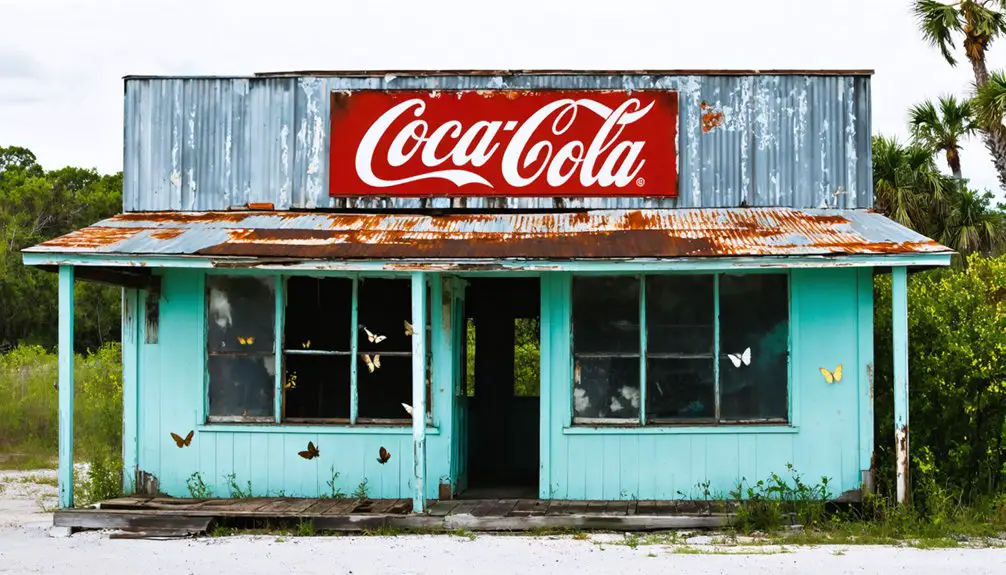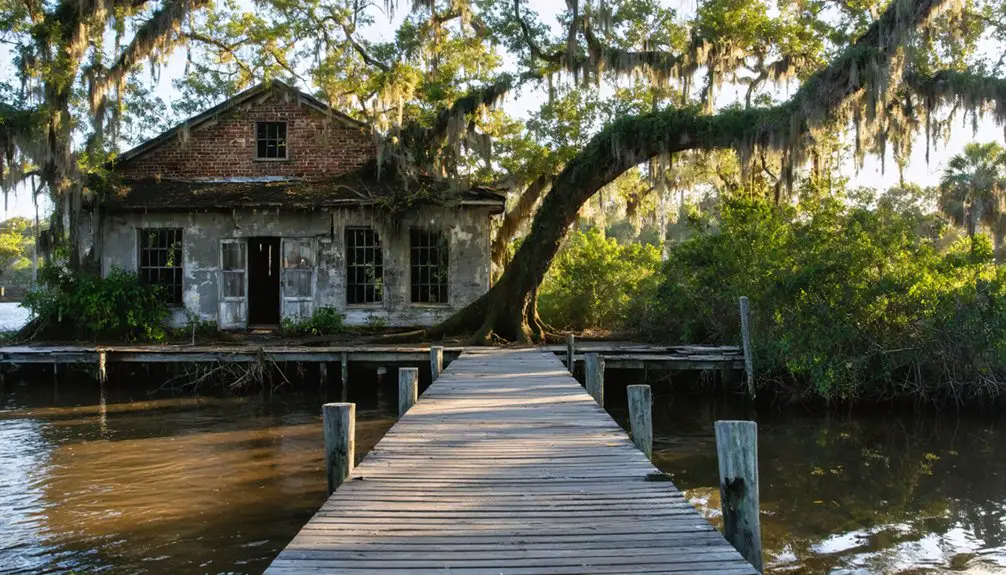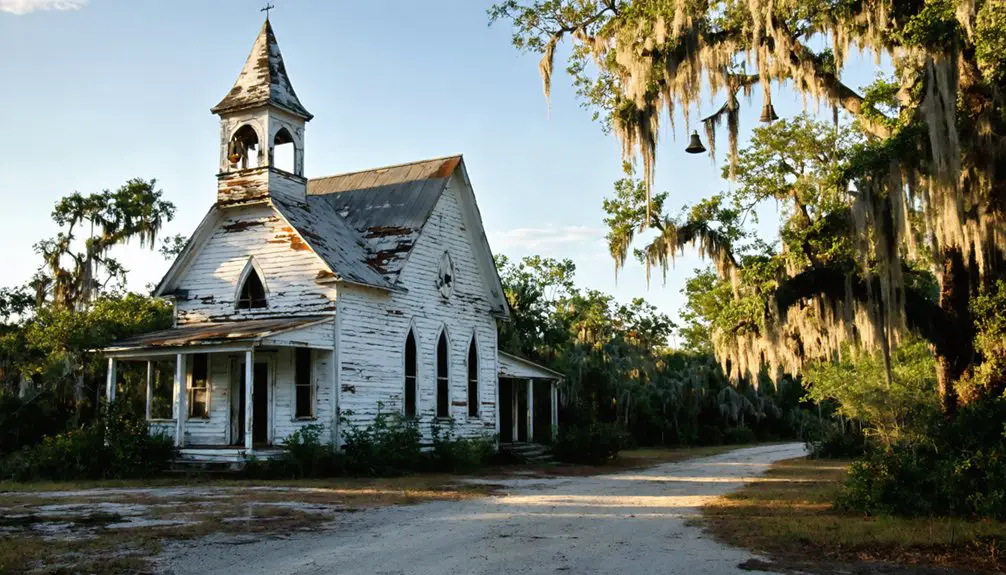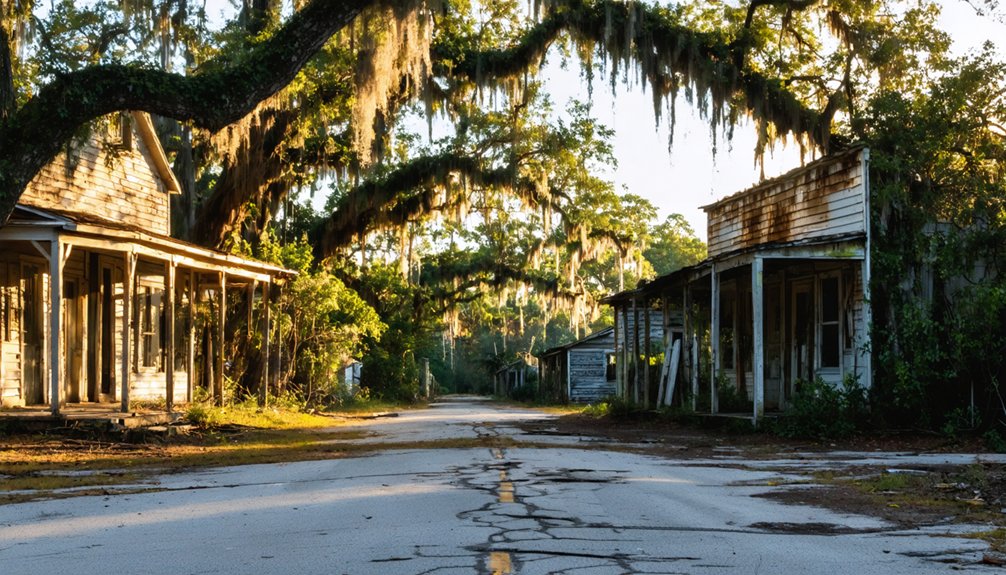
Planning a ghost town road trip to Chetwynd, Florida means stepping into a forgotten British colony that vanished almost overnight. Founded in 1883 north of Fruitland Park, this English settler community built its dreams on citrus groves until the Great Freeze of 1894 erased everything. Today, Holy Trinity Episcopal Church stands as the lone survivor of that ambition. Visit in fall or winter for the best experience, and there’s much more to uncover about this remarkable Lake County story.
Key Takeaways
- Chetwynd, Florida, founded in 1883, is a ghost town located just north of Fruitland Park in Lake County, accessible by standard 2WD vehicles.
- The Great Freeze of 1894 destroyed Chetwynd’s citrus industry overnight, forcing settlers to abandon the town and leaving almost no physical remains.
- Holy Trinity Episcopal Church, established in 1886, serves as the primary surviving landmark and anchor point for exploring the Chetwynd area.
- Fall, winter, and spring are the best seasons to visit, offering cooler temperatures and more comfortable conditions for outdoor exploration.
- Pair your visit with nearby stops like Mount Dora, Fruitland Park Historic District, and Lake Apopka Wildlife Drive for a fuller road trip.
What Was Chetwynd, Florida?
Tucked just north of Fruitland Park in Lake County, Chetwynd was a small Florida settlement with an unlikely backstory — it was founded in 1883 by a British land company run by Granville Bryan Chetwynd-Stapylton, who recruited English bachelors and sons of landed gentry to carve out a citrus empire in central Florida.
These ambitious settlers dreamed of independence and prosperity in Florida’s interior, far from the constraints of their homeland. Today, local legends and urban legends swirl around this forgotten community, adding mystery to its already fascinating history.
Dreamers across an ocean, they chased citrus gold — now only whispers and legends remain.
The town’s economic foundation rested entirely on citrus, making it dangerously vulnerable to Florida’s unpredictable climate. When disaster struck, Chetwynd couldn’t survive.
What remains is a ghost town story worth chasing — one rooted in bold ambition, cultural contrast, and ultimate collapse.
The British Settlers Who Bet Everything on Florida Citrus
When you look into Chetwynd’s origins, you’ll find a surprisingly international cast of characters — English bachelors and sons of landed gentry who followed British entrepreneur Granville Bryan Chetwynd-Stapylton into the Florida interior starting in 1883.
They came with a clear plan: plant citrus, turn a profit, and build a thriving community from scratch.
What they couldn’t plan for was the Great Freeze, which devastated Florida’s citrus industry and stripped the town of its entire economic reason to exist.
British Settlers Arrive
In 1883, a British land company led by Granville Bryan Chetwynd-Stapylton set its sights on the Florida interior, betting that the region’s mild winters and fertile soil could turn citrus into a fortune. The settlers who followed brought distinct cultural influences that shaped the community’s character from the start.
They weren’t typical pioneers:
- Most were English bachelors seeking independence beyond rigid class structures back home
- Many came from landed gentry families, bringing capital and ambition
- Their goal was building citrus groves as a path to self-sufficient wealth
- Their architectural remnants, including Holy Trinity Episcopal Church, still anchor the area today
You’re fundamentally tracing the footsteps of men who chased freedom across an ocean, only to find Florida had its own harsh terms.
Citrus Dreams Take Hold
Citrus was the entire bet. When Granville Bryan Chetwynd-Stapylton’s British land company planted roots in Lake County, they weren’t hedging — they were all in. These English settlers brought their cultural influences with them, but they quickly adapted to Florida’s agricultural practices, learning to cultivate groves across the sandy inland soil.
Sons of landed gentry who’d once inherited estates now worked the land themselves, betting that Florida sunshine would turn oranges into fortunes. You can almost picture it — neat groves stretching toward the horizon, men in proper English fashion doing decidedly improper frontier labor.
The dream wasn’t unreasonable. Central Florida’s climate seemed perfect, the market was hungry, and ambition ran high. For a few years, Chetwynd looked like it might actually work.
The Great Freeze Strikes
Then the freeze came, and it took everything. The Great Freeze devastated Florida’s citrus industry, and Chetwynd’s British settlers watched their carefully cultivated groves die overnight. What local folklore remembers as a brutal turning point became the defining chapter in Chetwynd’s ghost town legends.
The collapse unfolded fast:
- Temperatures plummeted, killing mature citrus trees that took years to grow.
- Revenue vanished as harvests failed across Lake County.
- Settlers abandoned their land claims and returned to England or moved on.
- The town dissolved, leaving behind silence and scattered memories.
You’re visiting a place where ambition met nature’s hard limits. The freeze didn’t just kill crops — it erased an entire community’s reason for existing, turning Chetwynd into little more than a name on old maps.
How the Great Freeze of 1894 Destroyed Chetwynd’s Economy
When the Great Freeze of 1894 swept through central Florida, it didn’t just kill crops—it killed Chetwynd. You can imagine the devastation those English settlers felt watching their carefully cultivated groves blacken overnight.
The environmental changes were catastrophic and swift, stripping away every orange tree the British colonists had spent years nurturing.
Those settlers had built their entire identity around citrus ambition. The cultural influences they’d carried from England—discipline, land management, aristocratic ambition—couldn’t compete with Florida’s brutal winter fury.
Without citrus revenue, Chetwynd had no economic foundation left to stand on.
Families packed up and left. The town simply emptied.
What the settlers couldn’t have predicted was that one devastating freeze could erase more than a decade of determined colonial effort almost overnight.
One Church Is All That Survived: Holy Trinity Episcopal in Fruitland Park
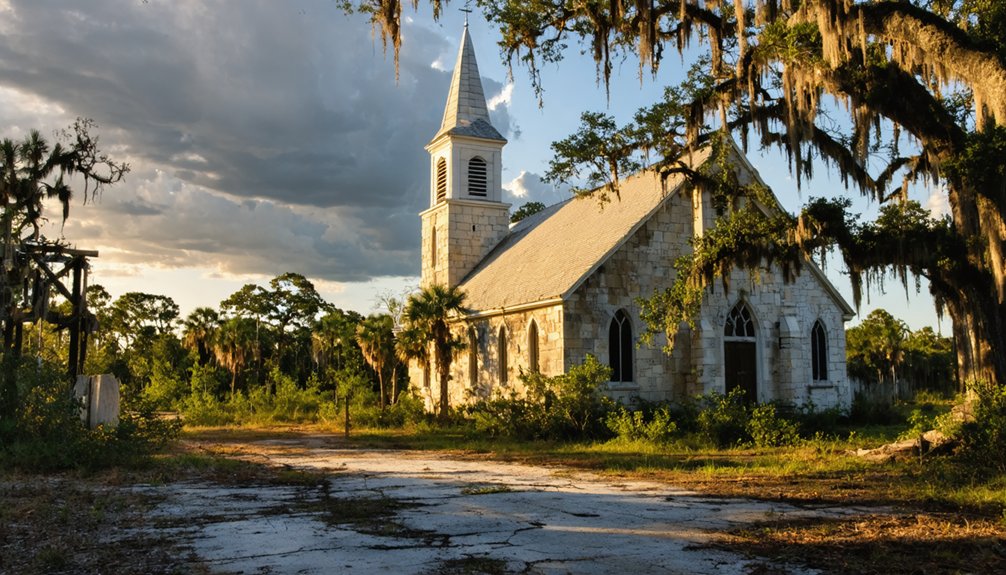
After Chetwynd’s settlers abandoned their ruined groves and moved on, they left behind almost nothing—except one quiet church. Holy Trinity Episcopal in Fruitland Park stands as the sole architectural remnant of a vanished British colony, carrying its cultural influences into the present day.
When you visit, keep these four facts in mind:
- The church was founded in 1886, just three years after Chetwynd’s settlement began.
- English gentry shaped its founding congregation and early traditions.
- It sits in Fruitland Park, not on the original ghost town site.
- No other original structures survived the town’s collapse.
You’re not touring ruins here—you’re standing before a living landmark that quietly outlasted everything else. That’s worth the detour.
Why Chetwynd Qualifies as One of Florida’s Forgotten Ghost Towns
When you trace Chetwynd’s origins back to 1883, you find a British land company executive, Granville Bryan Chetwynd-Stapylton, recruiting English bachelors and sons of landed gentry to build a citrus empire in central Florida.
The settlement thrived briefly on that citrus ambition until the Great Freeze devastated crops and stripped the town of its entire economic foundation.
What you’re left with today is a vanished community so thoroughly erased that it earns its ghost-town status not from abandoned buildings but from near-total disappearance.
British Settlement Origins
Few ghost towns in Florida carry a story quite like Chetwynd’s. In 1883, a British land company led by Granville Bryan Chetwynd-Stapylton planted roots in Lake County, bringing with it local legends of ambition, citrus wealth, and aristocratic dreams. You won’t find abandoned structures filling the landscape today, but the history runs deep.
The settlement’s British origins shaped everything about it:
- Founded in 1883 by an English land company
- Led by Granville Bryan Chetwynd-Stapylton
- Populated largely by English bachelors and sons of landed gentry
- Built around citrus farming as the primary economic engine
When you visit, you’re stepping into a story about bold settlers who chased fortune in Florida’s interior, far from anything familiar back home.
Great Freeze Collapse
The dreams Chetwynd’s British settlers built on citrus didn’t survive the Great Freeze, and that’s precisely what seals the town’s fate as one of Florida’s forgotten ghost towns.
When devastating freezes struck Florida’s interior in the 1890s, citrus groves collapsed overnight, stripping the settlement of its entire economic foundation.
Without income, the English bachelors and landed-gentry sons who’d shaped Chetwynd’s cultural influences had no reason to stay. They scattered, and the town quietly disappeared.
Today, modern conservation efforts haven’t targeted a townsite because almost nothing physical remained to protect.
What you’re chasing here isn’t ruins — it’s a story. Understanding that collapse helps you appreciate why visiting Holy Trinity Episcopal Church carries such weight as Chetwynd’s sole surviving connection to that lost world.
The Best Season to Visit Chetwynd and Lake County Ghost Town Sites
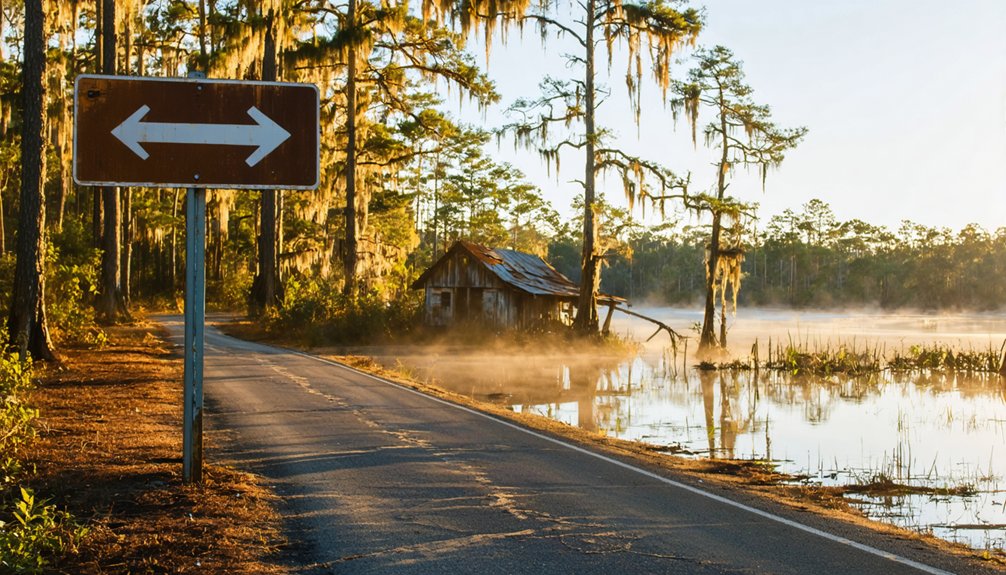
Florida’s mild winters make fall through spring the sweet spot for exploring Chetwynd and the surrounding Lake County ghost town sites. You’ll avoid the brutal summer heat and enjoy comfortable outdoor sightseeing. Cultural preservation efforts here are best appreciated when you’re not rushing back to your car for air conditioning.
Local legends surrounding Chetwynd’s British settlers are easier to absorb when the weather invites you to linger.
Plan your visit around these seasonal advantages:
- Fall (October–November): Cooler temps, fewer crowds, ideal for outdoor exploration.
- Winter (December–February): Peak comfort; perfect for driving Lake County backroads.
- Spring (March–April): Wildflowers bloom, making photography rewarding.
- Summer (June–August): Avoid if possible; extreme heat limits outdoor time considerably.
How to Reach the Chetwynd Site From Fruitland Park
Once you’ve picked your season, getting to the Chetwynd site is notably straightforward. The former town sits just north of Fruitland Park in Lake County, and you’ll need nothing more than a standard 2WD vehicle to reach it.
Getting to the Chetwynd site is straightforward — just north of Fruitland Park, reachable by any standard 2WD vehicle.
Start in Fruitland Park and head north — the drive is short and scenic, cutting through central Florida’s quiet inland landscape.
Your clearest landmark is Holy Trinity Episcopal Church, founded in 1886, which carries the cultural influences of the British settlers who once shaped this community. Locals still share stories and local legends tied to Granville Bryan Chetwynd-Stapylton‘s ambitious citrus colony.
Use the church as your anchor point, then explore the surrounding area where the vanished town once stood.
Freedom-seekers will appreciate how little crowds this detour draws.
Lake County Road Trip Stops Worth Combining With Chetwynd
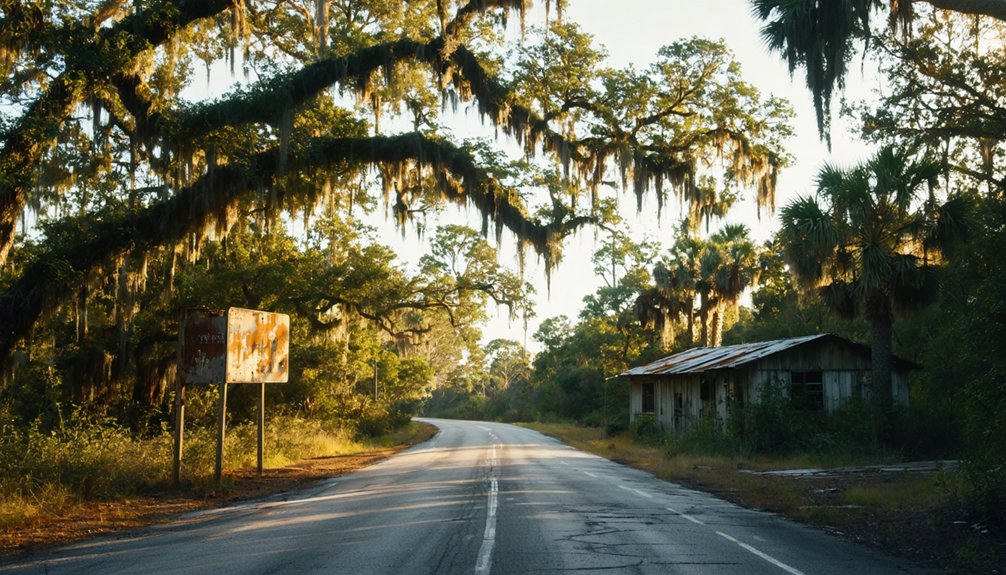
Since Chetwynd works best as a quick historical detour, you’ll want to pair it with other Lake County stops to build a fuller road trip. The region rewards curious travelers who dig into its layered history, local legends, and art preservation efforts.
Consider adding these four stops:
- Fruitland Park Historic District – Walk streets shaped by the same citrus-boom era that built Chetwynd.
- Mount Dora – Explore its thriving arts scene, where galleries champion regional art preservation.
- Clermont Historic Village Museum – Uncover local legends tied to Florida’s early inland settlers.
- Lake Apopka Wildlife Drive – Trade history for nature with a scenic loop through restored wetlands.
Together, these stops transform a single detour into a genuinely rewarding Lake County adventure.
Frequently Asked Questions
Is There an Admission Fee to Visit the Holy Trinity Episcopal Church?
Like an open door welcoming wanderers, the Holy Trinity Episcopal Church doesn’t charge admission. You’re free to explore its historical architecture and religious significance, connecting with Chetwynd’s forgotten past without spending a dime.
Are There Any Guided Tours Available at the Chetwynd Ghost Town Site?
You won’t find formal guided tours at Chetwynd, but you’ll discover the site’s historical significance through self-guided exploration. Visit Holy Trinity Episcopal Church to witness active preservation efforts that keep this forgotten British settlement’s adventurous story beautifully alive.
Can Visitors Access the Chetwynd Site on Foot or by Bicycle?
Like a blank trail waiting for your boots, you’ll find walking access straightforward here. Cycling routes through flat central Florida make it easy, and the 2WD road means you can freely explore Chetwynd’s haunting history your way.
Are There Any Restaurants or Accommodations Near the Chetwynd Site?
You’ll find local dining options and nearby lodging choices in neighboring Fruitland Park and Leesburg, keeping your adventure flexible and free. Explore cozy eateries and comfortable accommodations just minutes from Chetwynd’s historic, hauntingly beautiful site.
Is the Holy Trinity Episcopal Church Still an Active Congregation Today?
Founded in 1886, Holy Trinity Episcopal Church still stands as an active congregation today. You’ll discover its historical architecture and religious significance firsthand — a living landmark connecting you directly to Chetwynd’s fascinating British settler past.
References
- https://en.wikipedia.org/wiki/Chetwynd
- https://www.youtube.com/watch?v=oiS5w2an3sI
- https://www.ghosttowns.com/states/fl/chetwynd.html