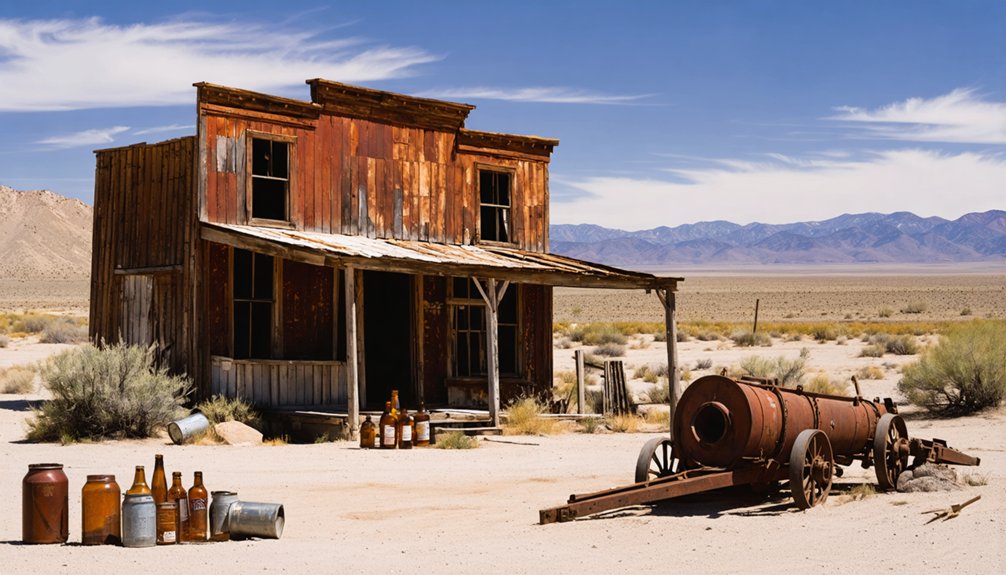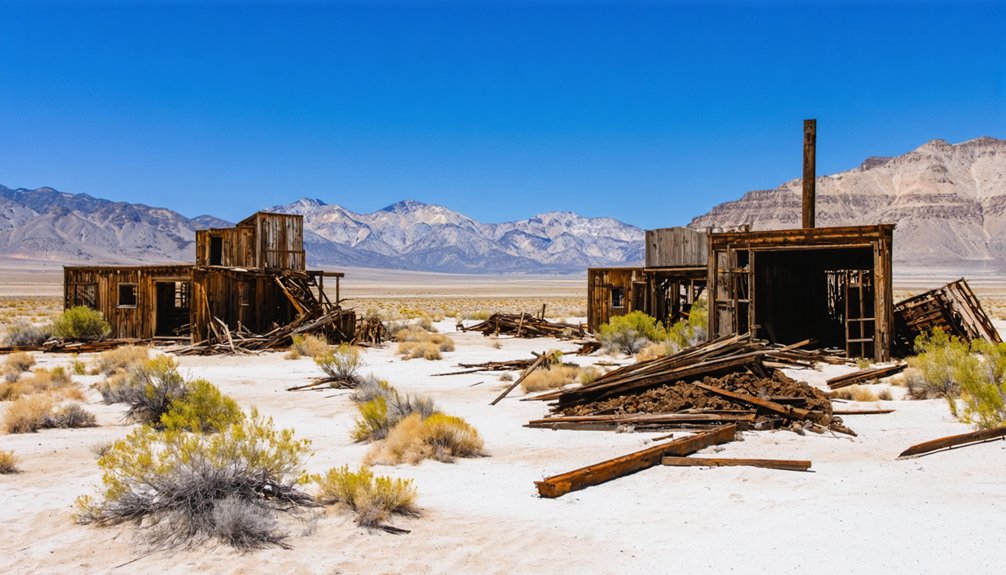
Planning a road trip to Lucky Jim Camp means heading about 50 miles southeast of Las Vegas into El Dorado Canyon, where Confederate miners once staked claims against their Union rivals during the Civil War. Founded in 1862 and gone by the late 1860s, this forgotten settlement leaves no structures or artifacts behind — just desert silence and coordinates. If you’re curious about what shaped this remote Nevada ghost town, there’s much more to uncover.
Key Takeaways
- Lucky Jim Camp, founded in 1862 near Nelson, Nevada, is a Civil War-era mining ghost town accessible via NV-165 through El Dorado Canyon.
- Visit between October and April to avoid extreme desert heat, starting early mornings for ideal photography and solitude.
- No signs or structures remain; navigation requires printed or offline maps due to unreliable cell service in the canyon.
- Bring sturdy boots, two liters of water per person, and sun protection for exploring the unmarked, rugged terrain.
- Nearby Techatticup Mine and Nelson Ghost Town offer additional historical context and guided tours to complement your visit.
What Was Lucky Jim Camp?
Back in 1862, when the region still fell under the jurisdiction of the New Mexico Territory, Lucky Jim Camp took shape as a mining settlement tucked into El Dorado Canyon in what’s now Clark County, Nevada. Miners worked the Colorado Mining District, hauling mining equipment through rugged canyon terrain in pursuit of ore.
The camp sat on the canyon’s north side, south of the Techatticup Mine, at an elevation of 2,444 feet. Despite historical myths romanticizing these settlements as thriving boomtowns, Lucky Jim Camp was short-lived, fading by the mid-to-late 1860s.
It also carried Civil War tensions, attracting miners with Confederate sympathies. Today, you’d find no ruins or standing structures — just open, barren land holding the weight of a largely forgotten past.
Did the Civil War Actually Reach El Dorado Canyon?
The Civil War’s reach extended far beyond its eastern battlefields, finding its way into the remote canyons of Nevada’s mining country. When you look at El Dorado Canyon’s history, you’ll find Confederate-sympathizing miners who settled Lucky Jim Camp alongside Union-sympathizers who established their own camp at Buster Falls, roughly a mile up-canyon.
The canyon fundamentally became a microcosm of the nation’s division, with rival factions staking their claims in the same rugged stretch of desert.
Civil War Reaches Nevada
How far did the Civil War actually reach? Further than most people realize. El Dorado Canyon became a pressure point where Confederate and Union sympathizers staked competing claims — not just to silver and gold, but to ideological ground.
Lucky Jim Camp drew miners loyal to the Confederate cause, while Union-sympathetic settlers established Buster Falls roughly one mile up-canyon.
You won’t find historical reenactments staged here. The canyon keeps its tension quiet now. But the competing mining techniques these rival factions used — and the dangerous proximity they maintained — tell a story of a nation fracturing across every frontier it touched.
Nevada wasn’t immune. Even in 1862, while battles raged back East, this remote canyon carried the war’s echo in every claim staked and every campfire lit.
Confederate Miners Settle Canyon
Lucky Jim Camp didn’t form in a vacuum. Miners with Confederate sympathies deliberately chose El Dorado Canyon, putting distance between themselves and Union authority. They weren’t just chasing silver and gold — they were staking ideological ground.
Historical myths often romanticize these men as simple prospectors, but their settlement choices reflected calculated political loyalty during a fractured nation.
You can picture them applying frontier mining techniques — hand-drilling, blasting, and sluicing — while tension simmered up-canyon where Union-sympathetic miners worked near Buster Falls. The canyon itself became an informal boundary line between two Americas.
When you visit today, that charged history is invisible. No structures remain. But knowing Confederate miners once worked this specific stretch of El Dorado Canyon transforms the barren landscape into something far more charged with meaning.
Union Camp Nearby
While most people associate Civil War conflict with battlefields in Virginia or Georgia, El Dorado Canyon quietly hosted its own ideological standoff — Confederate miners working Lucky Jim Camp below, Union-sympathetic miners settled at Buster Falls roughly a mile up-canyon near Huse Spring.
The Civil War impact reached even this remote desert canyon, dividing men by allegiance rather than geography. Confederate sympathizers and Union loyalists shared the same canyon walls, the same scarce water, the same dangerous ore.
- Buster Falls sat approximately one mile up-canyon from Lucky Jim Camp
- Huse Spring marked the Union camp’s anchor point
- Both camps operated simultaneously during the 1860s
- Political loyalties shaped settlement patterns in El Dorado Canyon
- No battlefield existed — tension lived in proximity and silence
Where Exactly Is Lucky Jim Camp?
You’ll find Lucky Jim Camp tucked into the north side of El Dorado Canyon, just above the mouth of January Wash, at an elevation of 2,444 feet in the Eldorado Mountains of Clark County, Nevada.
The site sits south of the Techatticup Mine, placing it near the modern community of Nelson, accessible via NV-165 and the backroads that thread through the canyon.
Plan to pair your visit with a stop at Techatticup Mine, since the Lucky Jim site itself holds no standing structures — just open, barren ground where a Confederate-sympathizing mining camp once stood in 1862.
Location And Setting
Tucked into the rugged terrain of El Dorado Canyon in the Eldorado Mountains of Clark County, Nevada, Lucky Jim Camp sits on the north side of the canyon at an elevation of 2,444 feet, just above the mouth of January Wash where it meets the canyon floor.
The geological features here shaped both the mining activity and the camp’s strategic position. Though no historical artifacts remain visible today, the landscape still tells its story.
- Coordinates: 35°42′08″N 114°48′12″W
- South of the Techatticup Mine
- Near modern-day Nelson, accessible via NV-165
- Part of the Colorado/Eldorado Mining District
- Barren terrain with no standing structures remaining
You’re free to explore this open, undeveloped land on your own terms.
How To Get There
Finding Lucky Jim Camp means heading into the sun-baked backcountry of southern Nevada, near the small community of Nelson in Clark County. Take NV-165 toward Nelson and Eldorado Canyon, where mining history runs deep in every rocky wall and dry wash.
The site sits on the north side of El Dorado Canyon, south of the Techatticup Mine, above the mouth of January Wash, at an elevation of 2,444 feet. No signs mark it. No historical artifacts remain visible above ground.
Your best landmark is the Techatticup Mine itself — start there, then orient yourself down-canyon.
Because the site is barren and undeveloped, pair your visit with Nelson Ghost Town nearby. Freedom here means exploring on your own terms, with maps, coordinates, and curiosity leading the way.
What’s Left at Lucky Jim Camp Today?
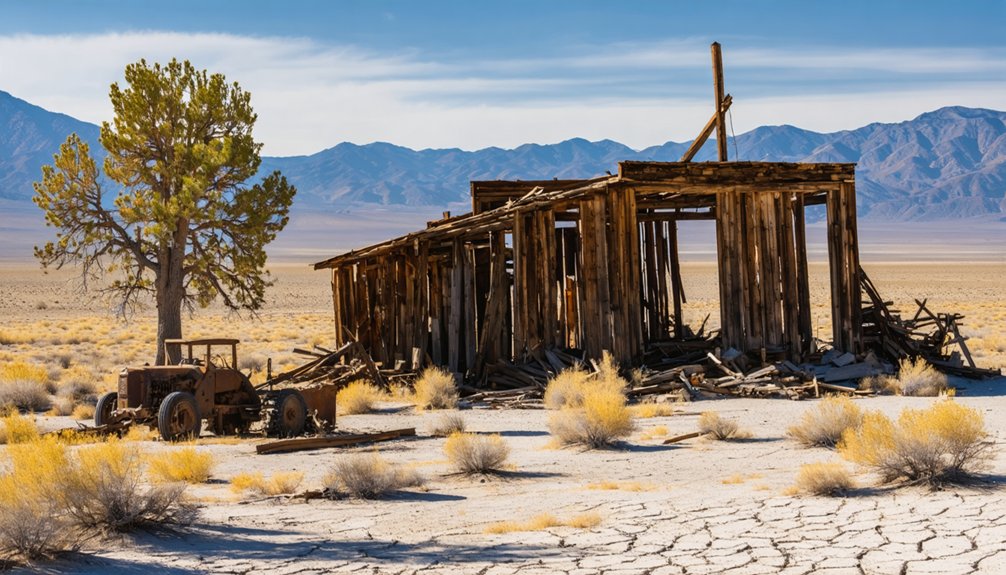
What remains at Lucky Jim Camp today is, put simply, almost nothing. The desert has reclaimed every trace of the miners who once worked this canyon. No historical artifacts survive above ground, and preservation efforts never took hold here. You’re visiting a coordinate, not a ruin.
Still, the site carries weight if you know what happened here:
- Founded in 1862, during active Civil War-era tensions
- Confederate-sympathizing miners once called this canyon home
- Sits above January Wash where it meets El Dorado Canyon
- Elevation of 2,444 feet places you firmly in the Eldorado Mountains
- Satellite imagery confirms no standing structures remain
Come with context, not expectations of crumbling walls. The land speaks quietly, and you’ll need history in your head to hear it.
What Else Is Worth Seeing Nearby: Techatticup Mine and Nelson
The good news is that Lucky Jim Camp doesn’t ask you to drive far to find something more tangible. Just up the canyon, you’ll find the Techatticup Mine, one of Nevada’s richest former gold mines and now a working tourist attraction. Tours take you underground and put you face-to-face with historical artifacts that bring El Dorado Canyon’s mining history to life in ways a barren hillside simply can’t.
You’ll see equipment, tunnels, and remnants that Lucky Jim Camp itself no longer offers. Pair that with a walk through Nelson Ghost Town, where weathered structures and rusting machinery still stand along the roadside.
Together, these two stops give your road trip the tangible historical payoff that Lucky Jim Camp’s empty ground withholds.
How to Get to Lucky Jim Camp From Las Vegas
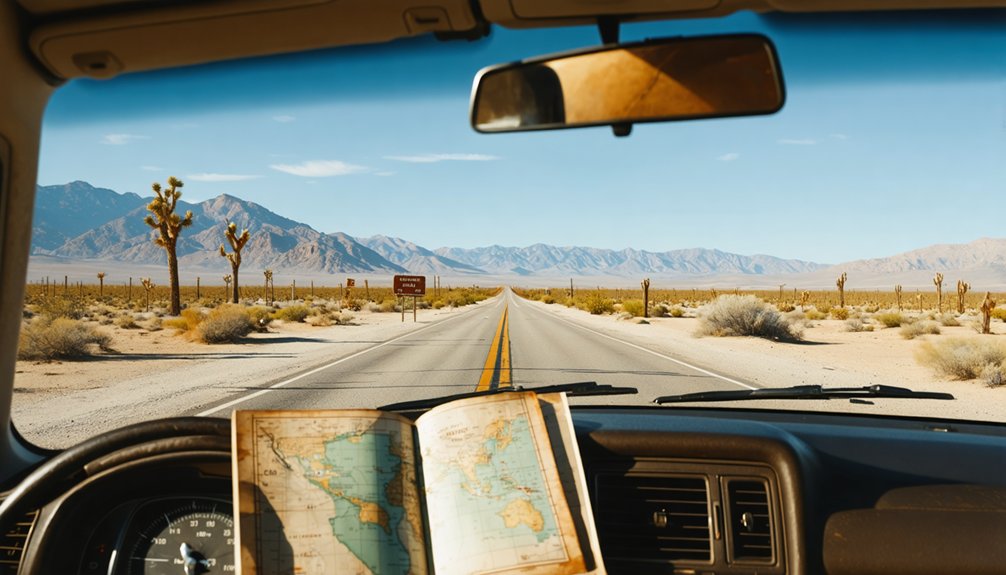
Getting to Lucky Jim Camp from Las Vegas is a straightforward drive of roughly 50 miles southeast, following US-95 South before turning onto NV-165 toward Nelson and El Dorado Canyon.
You’ll pass through open Mojave desert before descending into the rugged canyon corridor where 1860s miners once debated loyalty and chased silver.
- Take US-95 South from Las Vegas toward Boulder City
- Turn onto NV-165 heading toward Nelson
- Follow NV-165 into El Dorado Canyon
- Pass Nelson Ghost Town and Techatticup Mine as landmarks
- Look for the north canyon wall above January Wash
No historical artifacts remain visible on-site, and old mining techniques left little permanent evidence.
Pair this stop with Techatticup Mine for meaningful context before exploring the barren ground yourself.
When Should You Visit Lucky Jim Camp?
Once you’ve mapped your route down NV-165, timing your visit becomes just as important as knowing where to turn. El Dorado Canyon sits at 2,444 feet, which means summer heat turns the barren site brutal by midmorning. Plan your arrival between October and April for manageable temperatures and clear desert light that makes photography worthwhile.
Early mornings give you the canyon largely to yourself before Techatticup Mine draws its daily crowds. That solitude matters here — Lucky Jim Camp left no ruins, so what you’re really chasing are historical myths etched into the landscape itself. Modern preservation efforts haven’t touched this spot precisely because there’s nothing left to preserve.
Come prepared to read the land, not the structures, and you’ll leave with something worth remembering.
What to Pack for El Dorado Canyon

Packing for El Dorado Canyon means preparing for a site that offers history without infrastructure. No visitor center, no shade structures, no water — just open desert terrain where mining history once played out hard and fast. You’re moving through land that shaped real lives during the 1860s, so come ready.
- Sturdy hiking boots for uneven canyon terrain
- At least two liters of water per person
- Sun protection: hat, sunscreen, UV-rated clothing
- A printed or offline map — cell service is unreliable
- A camera for documenting the landscape where historical artifacts no longer survive above ground
Leave nothing behind and take only photographs. The canyon doesn’t protect you, and it doesn’t forgive carelessness. Respect the land the same way you’d respect the history buried beneath it.
Frequently Asked Questions
Was Lucky Jim Camp Ever Officially Recognized as an Incorporated Town?
Can history truly recognize what vanishes so fast? Lucky Jim Camp was never incorporated — it remained a rugged mining settlement. You’ll find no ghost town preservation records or historic camping sites reflecting any official town status.
How Long Did Miners Typically Stay at Lucky Jim Camp?
Miners didn’t stay long at Lucky Jim Camp — you’d have found most moving on within months. Camp life during this brief mining history was transient, driven by shifting ore yields and Civil War tensions reshaping loyalties fast.
Are There Guided Historical Tours Specifically Focused on Lucky Jim Camp?
No guided tours specifically cover Lucky Jim Camp’s ghost town architecture or local legends. You’ll find broader Eldorado Canyon tours at nearby Techatticup Mine, where you can independently chase the freedom of uncovering Lucky Jim’s untamed, forgotten history.
Was Gold the Only Mineral Mined at Lucky Jim Camp?
Like a well-kept secret, Lucky Jim Camp’s mineral diversity remains unclear. The available mining history doesn’t confirm gold as the sole target, so you’d want to dig deeper into Colorado Mining District records for answers.
Is a Four-Wheel-Drive Vehicle Required to Reach Lucky Jim Camp?
The knowledge doesn’t confirm specific vehicle requirements, but you’ll want a capable ride for off-road navigation through El Dorado Canyon’s rugged backroads. A high-clearance vehicle gives you the freedom to reach this remote, historically-rich site confidently.
References
- https://en.wikipedia.org/wiki/Lucky_Jim_Camp
- https://theluckythirtykate.wordpress.com/portfolio/nelson-and-techatticup-mine-fallout-new-vegas/
- https://www.destination4x4.com/lucky-jim-camp-nevada/
- https://kids.kiddle.co/Lucky_Jim_Camp
- https://mapcarta.com/23360920
- https://de.abcdef.wiki/wiki/Lucky_Jim_Camp
- https://en.wikipedia.org/wiki/List_of_ghost_towns_in_Nevada
- https://fr.abcdef.wiki/wiki/Lucky_Jim_Camp
- https://itouchmap.com/?d=847144&s=NV&f=mine