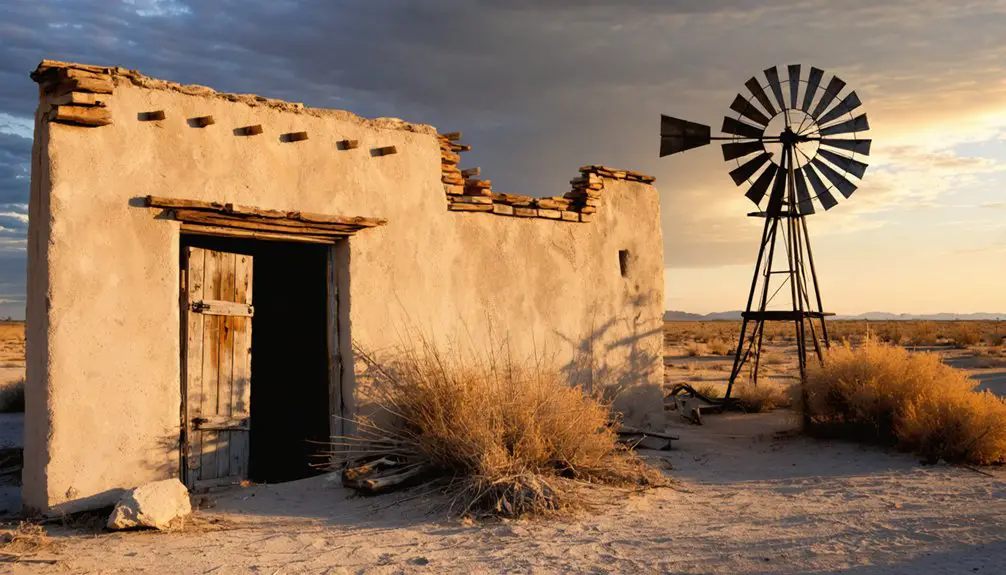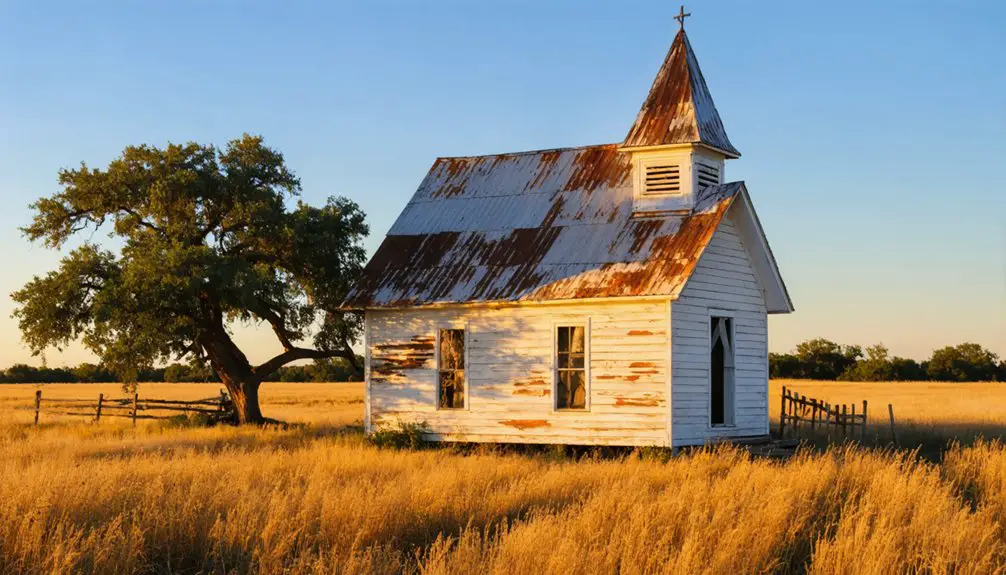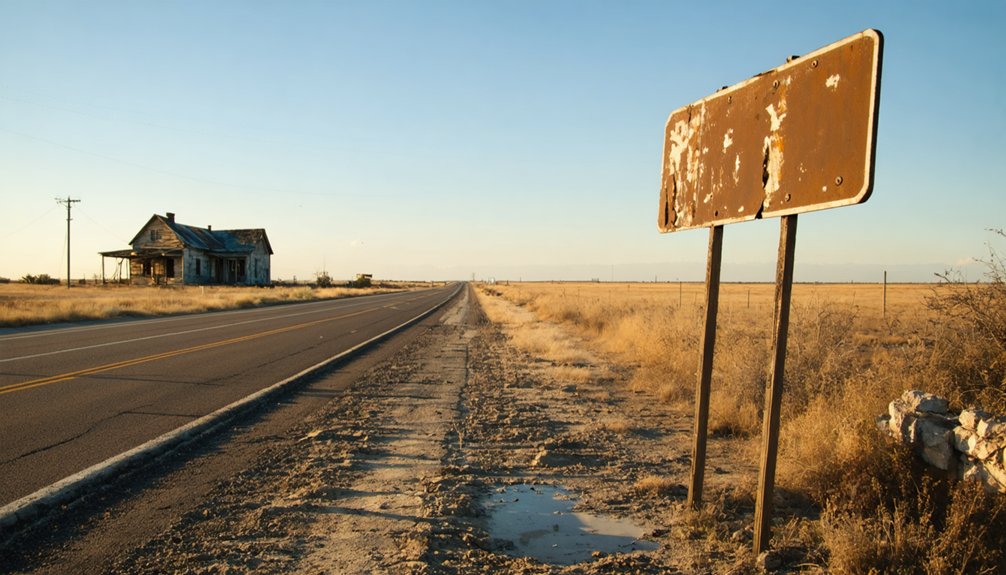
Planning a ghost town road trip to Lytton Springs, Texas means heading northeast of Lockhart along FM 1854 into Caldwell County’s quiet, open ranchland. You’ll find abandoned structures, forgotten crossroads, and echoes of early 1800s settlement scattered across the landscape. There’s no main street or commercial district waiting for you — just subtle, weathered remnants of a community time slowly erased. Pack water, bring a camera, and go early. Everything you need to make the most of this drive is ahead.
Key Takeaways
- Lytton Springs is located in northeastern Caldwell County, about ten miles northeast of Lockhart along Farm to Market Road 1854.
- From Austin, drive southeast on US-183 to Lockhart, then head northeast on FM 1854 to reach Lytton Springs.
- Spring and fall offer the best visiting conditions, with mild temperatures and scenic wildflowers enhancing roadside exploration.
- Pack water, snacks, offline maps, a camera, and sturdy shoes, as commercial stops and cell coverage are limited.
- Key highlights include abandoned structures, the historic Hickory Flats intersection, and Cedar Creek’s role in early settlement patterns.
Where Exactly Is Lytton Springs, Texas?
Tucked into the northeastern corner of Caldwell County, Lytton Springs sits about ten miles northeast of Lockhart along Farm to Market Road 1854, placing it squarely within the Greater Austin metropolitan area despite its rural, unhurried character.
You’ll find it nestled between the old Hickory Flats settlement and Cedar Creek, a quiet stretch where modern infrastructure like FM 1854 and Farm Road 812 traces over early 19th-century town layouts.
That road network makes it surprisingly accessible — just a two-to-three-hour drive from both Austin and Houston.
Yet rural preservation defines the experience here. There’s no commercial bustle, no municipal government, just open land and forgotten history waiting along the roadside.
It’s the kind of place you discover when you’re chasing something real.
How to Get to Lytton Springs From Austin or Houston
If you’re coming from Austin, head southeast toward Lockhart and then drive ten miles northeast to reach Lytton Springs via Farm to Market Road 1854.
Houston travelers can take a westward route along FM 1854, placing the community within a comfortable two-to-three hour drive.
Watch for the intersection of Farm Road 812, Watts Road, and Lytton Springs Road near Hickory Flats, as these converging rural routes mark the heart of the area’s historical landscape.
From Austin Via Lockhart
Whether you’re departing from Austin or Houston, Lytton Springs sits conveniently within a two-to-three-hour drive along rural Texas backroads. From Austin, head southeast on US-183 toward Lockhart, a drive of roughly 30 miles. Lockhart serves as your anchor point before pushing northeast another ten miles along Farm to Market Road 1854.
That final stretch rewards you with open pastureland, quiet crossroads, and the kind of stillness that makes local legends feel plausible. You’re entering Caldwell County’s northeastern edge, where abandoned structures hint at a community that once held 500 residents.
Keep your eyes open as you roll through — Lytton Springs doesn’t announce itself dramatically. It simply appears, understated and weathered, exactly what you’d expect from a fading unincorporated Texas community worth exploring.
From Houston On FM 1854
Heading west from Houston, you’ll trace a path through the broad Texas countryside before the urban sprawl gives way to quieter farm roads and open range. Leave modern infrastructure and urban development behind as FM 1854 carries you into northeastern Caldwell County:
- Depart Houston heading west via US-90 or I-10
- Shift onto regional farm roads as city density thins
- Follow FM 1854 directly into Lytton Springs, roughly 2–3 hours out
- Note the FM 812 intersection near Hickory Flats, marking old settlement territory
You’re arriving somewhere the road itself tells the story. Lytton Springs sits ten miles northeast of Lockhart, quietly resisting the pull of surrounding growth. The land opens up, the noise drops, and history steps forward.
Nearby Roads And Landmarks
Once you leave the noise of Austin or Houston behind, the roads themselves become your guide. Farm to Market Road 1854 carries you into northeastern Caldwell County, where historical landmarks emerge quietly from the landscape.
Watch for the intersection where Farm Road 812 meets Watts Road and Lytton Springs Road — this crossroads once marked Hickory Flats, a fading settlement steeped in local legends about a small township shaded by hickory trees that no longer stand.
Cedar Creek edges the region to the east, grounding you geographically as you navigate these rural stretches. You’re roughly ten miles northeast of Lockhart, sitting between two ghost town sites that tell Texas’s early settlement story.
Let the road network guide your curiosity — every intersection here holds history.
What Qualifies Lytton Springs as a Ghost Town?
Though it still appears on maps and carries a zip code, Lytton Springs fits the ghost town label because it’s lost the commercial and civic heartbeat that once defined it as a community. Several markers confirm its fading status:
- No active commercial district exists within the community
- It remains unincorporated, meaning no local government functions here
- Abandoned structures signal decades of population decline since its 2000 census count of 500
- Local legends surrounding nearby Hickory Flats reflect a broader pattern of settlements dissolving into memory
You won’t find a bustling main street or civic center here. What you’ll find instead is open road, quiet land, and traces of lives once lived. That’s precisely what makes Lytton Springs worth exploring on your own terms.
The History Behind Lytton Springs and Its Quiet Decline
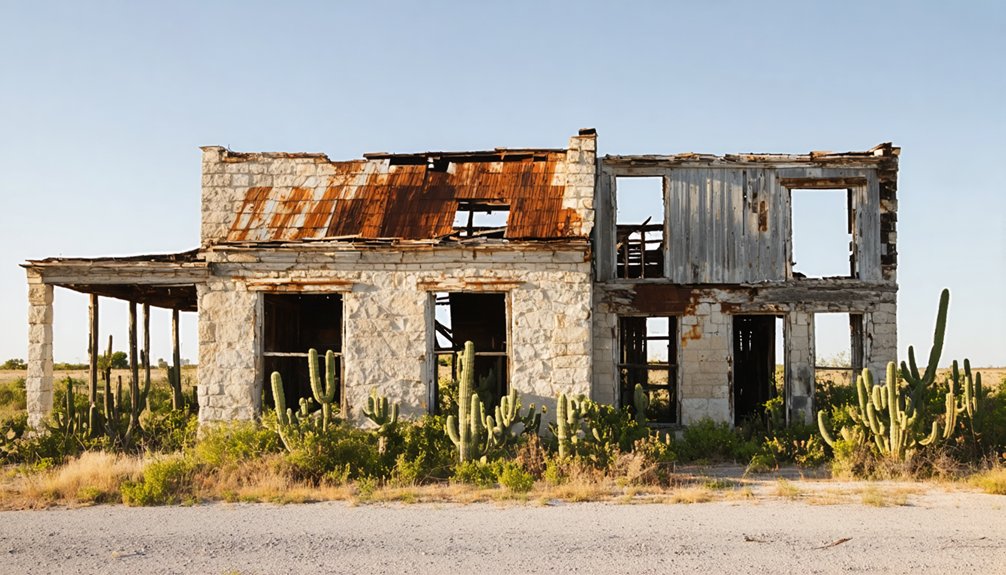
Understanding why Lytton Springs feels so hushed today means looking at what shaped it in the first place. Settlers carved out this northeastern Caldwell County community during the early 1800s, building lives along rural farm roads far from centralized power.
Nearby Hickory Flats once buzzed with activity where Farm Road 812 meets Watts Road, its namesake hickory trees long gone now.
As urban development pulled residents toward cities offering modern amenities, small unincorporated communities like Lytton Springs simply couldn’t compete. No municipal government anchored it. No commercial district sustained it.
What’s Left to See When You Arrive at Lytton Springs
When you roll into Lytton Springs along Farm to Market Road 1854, you’ll find a landscape that speaks more through absence than presence. The old road intersections — where Farm Road 812 meets Watts and Lytton Springs Road — mark the skeletal outline of what once bustled as an active rural community.
You can trace the ghost of the town’s former life through these forgotten byways and the surrounding countryside, where early settlement patterns still quietly shape the land.
Remnants of Rural History
Arriving in Lytton Springs, you won’t find a bustling main street or a preserved historic district — what greets you instead is the quiet geometry of rural Texas: farm roads cutting through open land, the occasional weathered structure, and an absence that speaks louder than any monument.
Population decline and encroaching urban development have stripped the community down to its bones. What remains tells the story honestly:
- FM 1854 cutting northeast from Lockhart
- Scattered intersections marking former town boundaries
- Open land where commercial districts once operated
- Road signs connecting you to Cedar Creek and Hickory Flats nearby
These aren’t dramatic ruins — they’re subtle imprints. You’ll read this landscape best if you slow down, let the silence settle, and look past what’s missing toward what endured.
Roads and Forgotten Sites
The roads themselves are your map here. Farm to Market Road 1854 carries you into Lytton Springs, but the real discoveries happen where old routes intersect. Head toward Farm Road 812, where it meets Watts and Lytton Springs Road — you’re standing near Hickory Flats, once a legitimate township humming with early 1800s life.
No historical landmarks remain standing, but the landscape holds the outline of what was. Local legends describe a small community nestled among hickory trees that have long since vanished, leaving only open land and quiet crossroads behind.
You won’t find a welcome sign or a museum. What you’ll find instead is the raw, unfiltered texture of forgotten Texas — a place where the road itself becomes the only monument worth reading.
Hickory Flats: The Ghost Town Next Door
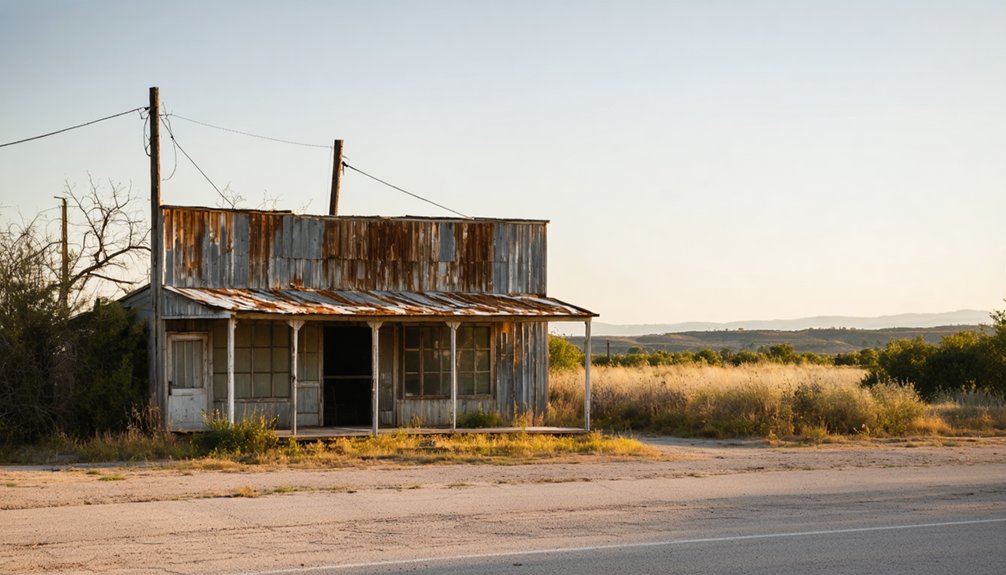
Just a short distance from Lytton Springs lies Hickory Flats, a ghost town that once thrived where Farm Road 812 meets Watts Road. Local legends describe a small township shaded by hickory trees — trees that no longer stand. What remains is open land, abandoned structures, and a crossroads steeped in forgotten history.
Here’s what you’ll find when you explore Hickory Flats:
- A historic intersection marking the original town site
- Stories of early 1800s settlers who built a working community
- Remnants of a landscape stripped of its signature hickory trees
- Proximity to Cedar Creek, adding scenic context to your exploration
You’re free to roam this quiet stretch and piece together a past that Texas roads nearly erased completely.
Cedar Creek and Other Historic Stops Nearby
Beyond Hickory Flats, Cedar Creek winds through the landscape as a natural landmark that anchors the region’s historical geography. This waterway once shaped early settlement patterns, drawing communities to its banks long before urban development transformed surrounding areas of Central Texas.
As you explore this corridor, you’ll notice how deliberately rural it feels — stripped of modern amenities that define nearby Austin’s sprawl. That contrast is precisely the point.
Each stop between Lytton Springs, Hickory Flats, and Cedar Creek tells a layered story of communities that thrived, faded, and left only road intersections as their monuments.
Pack water, charge your phone, and embrace the quiet. These historic stops reward travelers who slow down and read the landscape rather than rush through it toward the next city.
Best Time of Year to Visit Lytton Springs
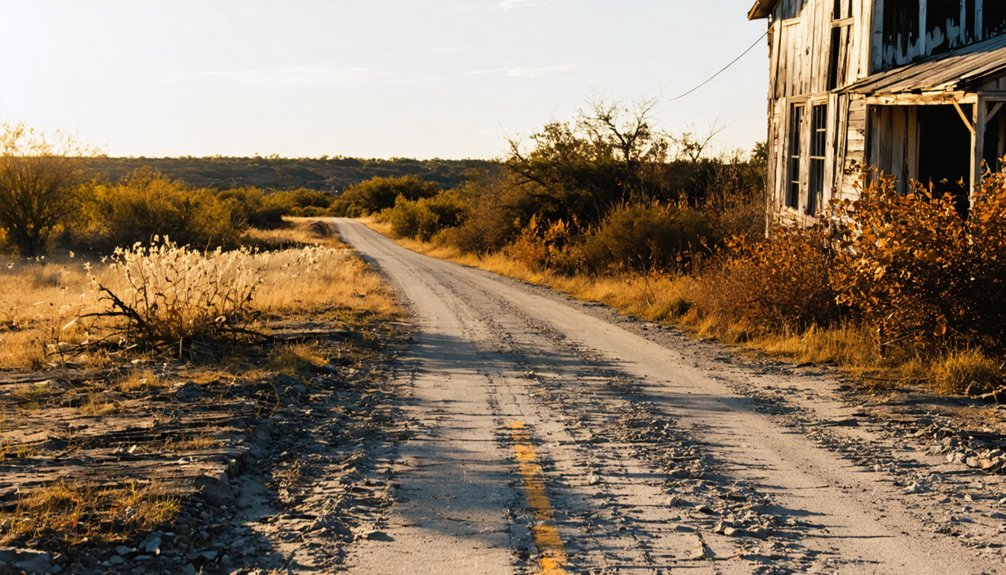
Timing your visit to Lytton Springs can make the difference between a rewarding rural ramble and a sweaty, uncomfortable slog. Far removed from urban development and modern amenities, this unincorporated stretch offers no air-conditioned refuges, so choose your season wisely.
- Spring (March–May): Wildflowers bloom, temperatures stay mild, and the landscape feels alive.
- Fall (October–November): Cooler air returns, making roadside exploration genuinely pleasant.
- Winter (December–February): Crisp, quiet days suit solitary wanderers craving open roads.
- Summer (June–September): Brutal heat dominates; visit only during early morning hours.
You’re trading convenience for authenticity out here, so pack water, wear breathable layers, and fuel up in Lockhart before heading northeast on FM 1854.
A Full-Day Itinerary Built Around the Lytton Springs Drive
Start your morning early from either Austin or Houston, giving yourself enough time to enjoy the two-to-three-hour drive without rushing past the rural scenery that defines this stretch of Texas backroads.
As you head northeast on Farm to Market Road 1854, watch for the quiet intersection near Hickory Flats, where Farm Road 812 meets Watts and Lytton Springs Road — a crossroads that once marked an active early settlement now swallowed by time.
Pack a map, a full tank of gas, and a camera, because the flat, open landscape and scattered cedar and hickory terrain reward those who slow down and look closely.
Morning Departure Planning Tips
Whether you’re rolling out of Austin or making the longer haul from Houston, an early morning departure puts you ahead of the midday heat and gives you room to breathe through the drive. Hit the road early, and you’ll arrive with enough daylight to explore abandoned structures and chase local legends without rushing.
- Fuel up before leaving — options thin out past Lockhart
- Download offline maps — cell coverage gets spotty in rural Caldwell County
- Pack water and snacks — no commercial stops exist near Lytton Springs
- Start by 7–8 AM — this gives you a full day before afternoon heat peaks
Early departure isn’t just practical — it’s the freedom to move at your own pace through genuine Texas backcountry.
Scenic Stops Along Route
Once you’re on the road, the drive itself becomes part of the experience — and the Austin-Houston corridor rewards those who don’t just blow past the mile markers. Pull off near Hickory Flats, tucked between Lytton Springs and Cedar Creek, where local legends describe a small township that once thrived among hickory trees now long gone.
Farm Road 812 meets Watts Road at what was once an active historical landmark — a genuine early 1800s town site reduced to a quiet intersection. You’ll feel the weight of forgotten lives in that stillness.
These aren’t manufactured attractions; they’re raw, honest remnants of Texas history. Slow down, step out, and let the landscape tell you what the road signs won’t.
What to Pack Before You Make the Drive

Since Lytton Springs sits well outside any commercial hub, you’ll want to pack smart before hitting FM 1854. No gas stations or convenience stores await you here, so preparation means freedom on this stretch of rural Texas.
Bring these four essentials:
- Water and snacks — remote roads offer no resupply options
- A camera — historical artifacts and weathered structures deserve documentation
- A regional map or downloaded offline GPS — cell signals thin out in northeastern Caldwell County
- A notebook — local legends surrounding Hickory Flats and vanished hickory groves are worth recording firsthand
Dress for unpredictable Texas weather, and wear sturdy shoes if you plan to walk former town sites. You’re chasing history, not comfort — pack accordingly and drive confidently.
Frequently Asked Questions
Is Lytton Springs Safe to Visit for Solo Travelers?
You’ll find Lytton Springs safe for solo travelers. Explore its historical preservation sites freely, soak in local legends, and roam FM 1854’s quiet rural roads — it’s an uncrowded, liberating ghost town adventure awaiting your independent spirit.
Are There Any Guided Ghost Town Tours Available in Caldwell County?
Imagine wandering Hickory Flats alone, uncovering local legends yourself. Caldwell County doesn’t currently offer formal guided ghost town tours, but you’ll find historical preservation resources through Lockhart’s local historical society to guide your independent exploration.
Can You Camp Overnight Near Lytton Springs or Hickory Flats?
You’ll need to research campground options carefully, as no established sites exist directly at Lytton Springs or Hickory Flats. Secure overnight permits through nearby private landowners or explore dispersed camping on surrounding rural Texas land for your adventure.
Is Lytton Springs Accessible for Visitors With Mobility Limitations?
You’ll find Lytton Springs’ flat farm roads reasonably accessible, letting you explore its historical preservation sites and soak in local legends along FM 1854 without significant barriers challenging your freedom-seeking spirit.
Are Photography Permits Required When Visiting Unincorporated Texas Communities?
You don’t need photography permits in unincorporated Texas communities like Lytton Springs. You’re free to capture its fading charm without bureaucratic hurdles, though historical preservation ethics encourage you to respect photography regulations on any private property you’ll encounter.
References
- https://en.wikipedia.org/wiki/Lytton_Springs
- https://www.reddit.com/r/Austin/comments/1yteh4/ghost_towns_between_and_around_23_hours_houston/
- https://www.ghosttowns.com/states/tx/hickoryflats.html