Planning a ghost town road trip to Manchester, South Dakota means visiting a place that’s been erased twice — first by economic collapse, then by a catastrophic F4 tornado in 2003. You’ll find scattered foundations, a visible street grid, and historical markers along US-14 in Kingsbury County. The site takes about 30-45 minutes to explore, and it pairs well with nearby ghost towns. There’s much more to uncover before you go.
Key Takeaways
- Manchester, South Dakota, sits along US-14 in Kingsbury County, easily accessible between De Smet and Iroquois without requiring 4WD vehicles.
- An F4 tornado destroyed Manchester in 2003, leaving only foundations, a town pump, and a street grid marking its former layout.
- Plan 30 to 45 minutes on-site, arriving mid-morning for ideal photography lighting of the remaining foundations and historical markers.
- Summer visits are recommended, as warm temperatures and dry roads make exploring the site significantly easier than winter conditions.
- Combine Manchester with nearby ghost towns and a western Badlands trip for a fuller South Dakota rural history road trip experience.
What Made Manchester a South Dakota Ghost Town
Manchester’s story didn’t end with the usual slow bleed of a dying rural town — it ended with a bang. Originally called Fairview, this Kingsbury County community thrived when the Chicago & Northwestern Railroad rolled through, bringing businesses, churches, and schools.
Then rail decline and the Great Depression gutted its economy, shrinking its population to just 40 residents by 2000.
What sealed Manchester’s fate was an F4 tornado on June 24, 2003. Packing winds between 207 and 260 mph and stretching nearly a mile wide, it erased what little remained.
South Dakota officially disincorporated the town in 2004.
Today, community remnants — foundations, a town pump, and a memorial marker — preserve the historical significance of a place that two forces, time and nature, conspired to erase.
How to Reach the Manchester Town Site
Reaching the Manchester town site is straightforward — it sits along US-14 and 425th Avenue in Kingsbury County, placing it squarely on a paved road between De Smet and Iroquois in east-central South Dakota.
Manchester sits on paved US-14 in Kingsbury County, easily reached between De Smet and Iroquois in east-central South Dakota.
You don’t need a 4WD vehicle or special gear; the 2WD grid route keeps it accessible for any traveler chasing historic landmarks and local legends across the region.
Pull off the road, step out, and you’ll immediately sense the quiet weight of a community that once thrived here.
The rural corridor is sparsely populated, so traffic stays minimal, giving you space to explore without distraction.
If you’re mapping a broader eastern South Dakota ghost-town route, Manchester fits naturally as a compelling roadside stop that rewards curiosity without demanding a long detour.
What You’ll Actually See at the Manchester Town Site
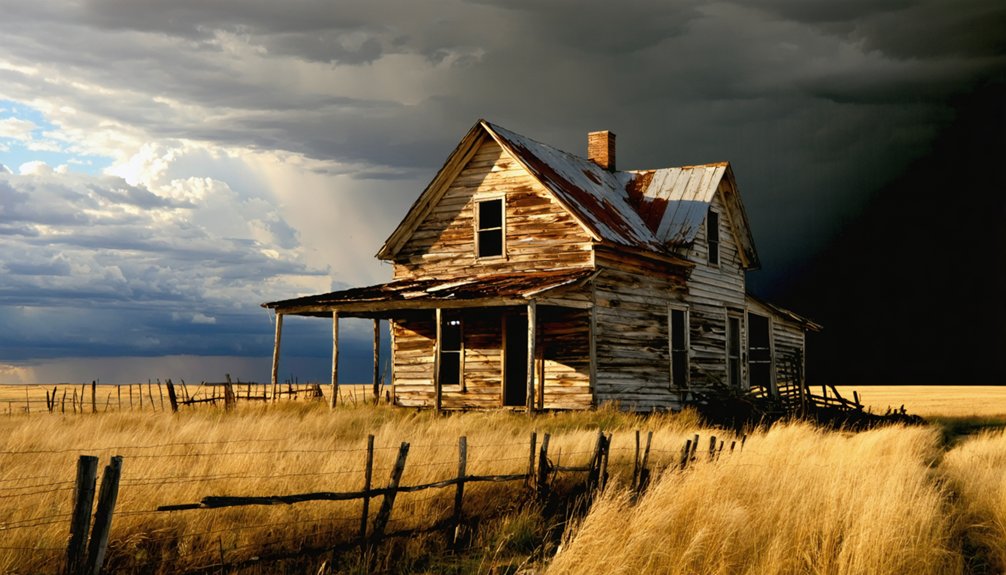
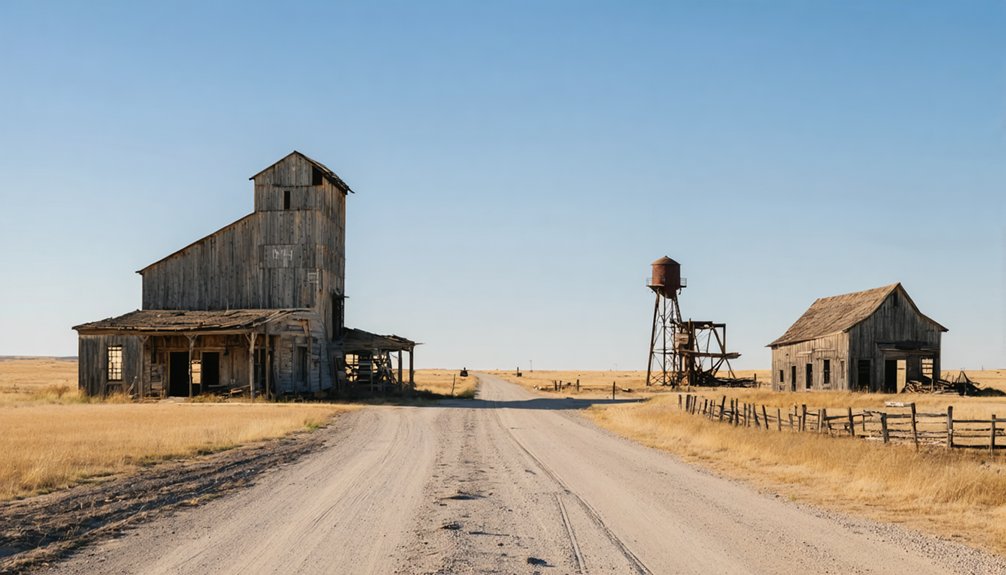
Once you step out of your vehicle, the stark emptiness of Manchester’s former townsite tells the story more powerfully than any historical account could. You’ll notice the street grid still cutting through the landscape, a quiet outline of what once bustled with commerce and community.
The town pump stands as one of the most recognizable survivors, while scattered foundations mark where homes and businesses once operated. Historical markers give you context, grounding the emptiness in real dates and names.
Local wildlife has reclaimed much of the surrounding land, adding an unexpected layer of life to an otherwise barren plot. Don’t expect elaborate ruins — Manchester rewards visitors who appreciate subtlety.
The site is brief but haunting, letting the absence itself become the most compelling exhibit you’ll encounter.
When to Go and How Long You’ll Actually Need
Summer gives you the best window for visiting Manchester, with temperatures typically settling in the 80s and the roads staying clear and dry. Seasonal weather matters here because winter snow can obscure foundations and make rural grid roads slippery. You won’t need more than 30 to 45 minutes on-site. Here’s how to make every minute count:
- Arrive mid-morning for soft, directional light — ideal for photography tips around the town pump and foundations.
- Check the memorial marker first to ground yourself in the town’s history.
- Walk the street grid to feel the original layout beneath your feet.
- Shoot westward in late afternoon if you stay longer for dramatic shadow contrast across the barren site.
Other Ghost Towns to Pair With Your Manchester Road Trip
Manchester sits in a stretch of eastern South Dakota that rewards curiosity, and if you’re already making the drive, pairing it with nearby ghost towns turns a short roadside stop into a full day of rural history.
Eastern South Dakota’s rural corridor holds several sites with real historical significance, where abandoned structures tell stories of railroad booms, harsh winters, and economic collapse.
You’re free to build your own route heading west toward the Badlands region, where ghost towns shift from prairie agricultural communities to mining-era settlements.
Each stop adds context to the last.
Whether you chase one ghost town or six, South Dakota’s open roads make it easy to move between sites without backtracking much, giving you a genuinely rewarding and self-directed road trip experience.
Frequently Asked Questions
Was Anyone Killed When the 2003 Tornado Struck Manchester?
You’ll be relieved to know the 2003 tornado didn’t claim any lives, though it injured four people. This historical weather event reminds you why tornado safety matters — nature’s fury can devastate entire communities instantly.
What County Is the Manchester Ghost Town Located In?
You’ll find Manchester’s abandoned landmarks in Kingsbury County, east-central South Dakota. This historic preservation site sits along US-14, where you can explore what remains of a once-thriving community before the devastating 2003 tornado claimed it forever.
Is There an Admission Fee to Visit the Manchester Site?
You’ll pay no admission fee to explore Manchester’s historical preservation site. Visitor amenities are minimal, but you’re free to roam the open roadside stop, discovering the town pump, foundations, and memorial marker at your own pace.
Who Was Chester H. Manchester, the Town’s Original Postmaster?
You’ll find Chester H. Manchester’s history origins rooted in his postmaster biography — he’s the town’s first postmaster, whose name replaced “Fairview,” forever branding this South Dakota community with his lasting personal legacy.
What Was Manchester Called Before It Received Its Current Name?
“What’s in a name?” Before it became Manchester, you’ll find its historic name origins rooted in Fairview — a town naming history that changed when Chester H. Manchester, its first postmaster, lent his legacy to the land.
References
- https://kids.kiddle.co/Manchester
- https://www.powderhouselodge.com/black-hills-attractions/fun-attractions/ghost-towns-of-western-south-dakota/
- https://www.sdpb.org/rural-life-and-history/2023-08-21/some-black-hills-ghost-towns-and-their-origins
- https://en.wikipedia.org/wiki/Manchester
- https://en.wikipedia.org/wiki/List_of_ghost_towns_in_South_Dakota
- https://en.wikipedia.org/wiki/2003_Manchester_tornado
- https://www.ghosttowns.com/states/sd/manchester.html