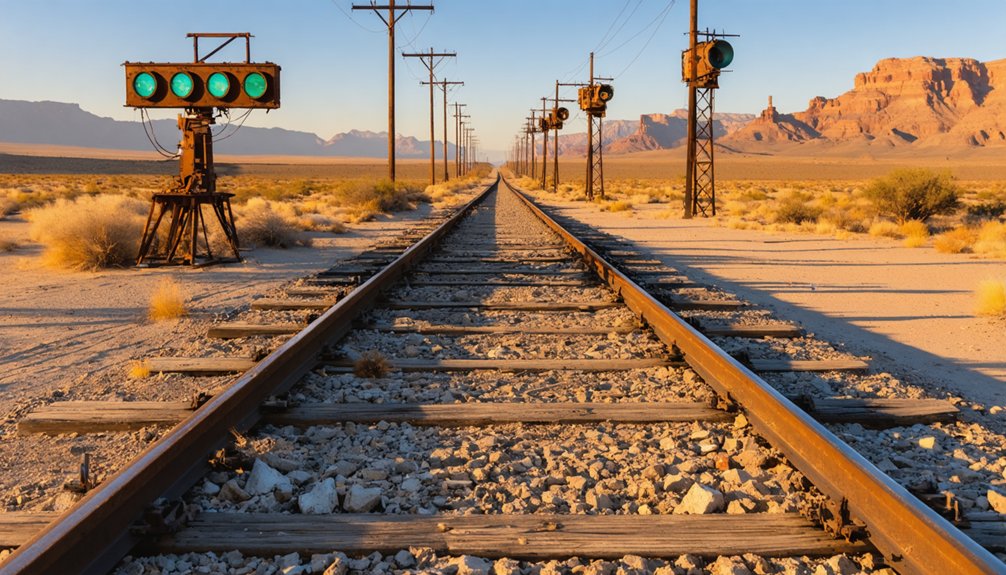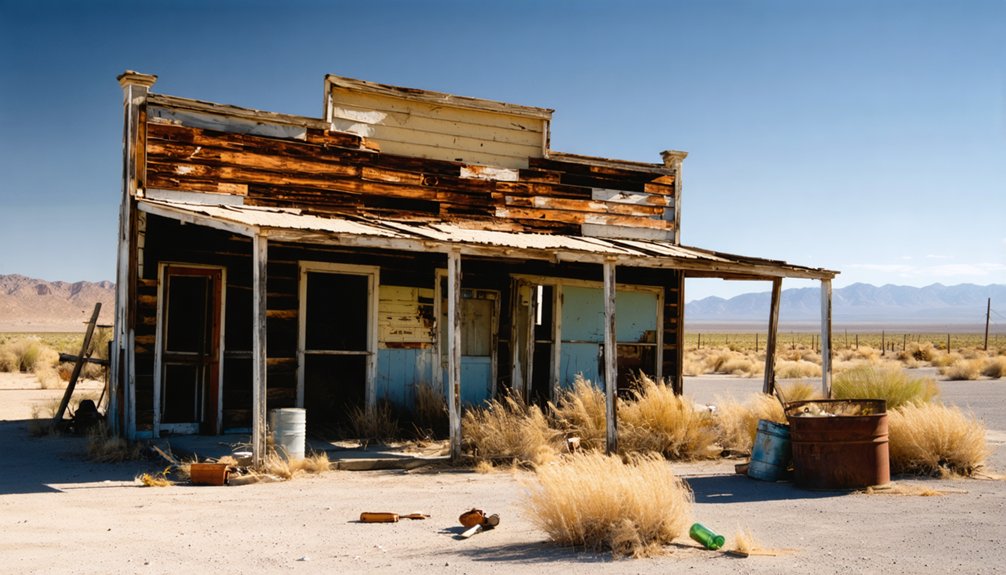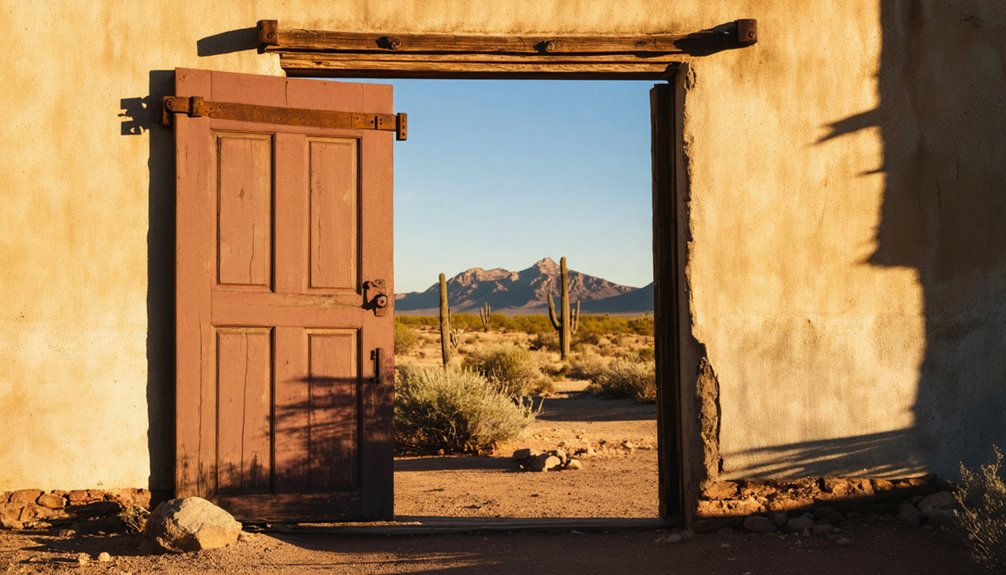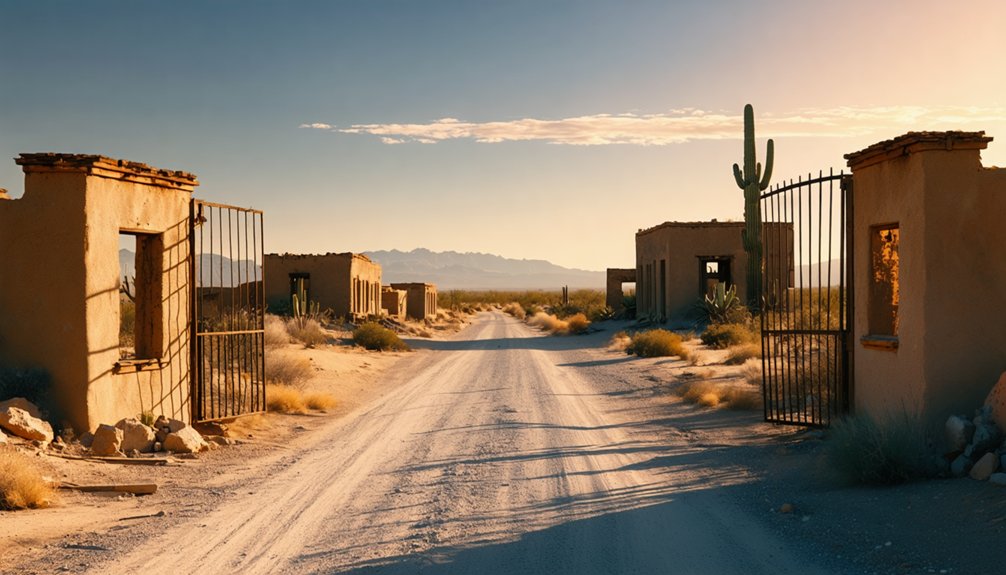
Planning a ghost town road trip to Cascabel, Arizona means heading north from Benson along an unpaved desert road to one of the Southwest’s most remote and rewarding hidden gems. You’ll find crumbling adobe walls, rattlesnake legends, and a stunning riparian corridor along the San Pedro River. Visit between October and April to avoid brutal summer heat. Stick around—there’s far more history, wildlife, and frontier intrigue waiting just ahead.
Key Takeaways
- Cascabel is located along the San Pedro River in Cochise County, Arizona, roughly 23 miles north-northwest of Benson.
- Travel Cascabel Road via Benson using a high-clearance vehicle, as unpaved desert roads are prone to sudden washouts.
- Visit between October and April to avoid extreme summer heat exceeding 100°F; spring offers wildflowers and active wildlife.
- The site features crumbling adobe walls, ruined frontier structures, and no formal visitor infrastructure, delivering a raw ghost town experience.
- Wildlife including deer, javelinas, otters, and raptors inhabit the protected riparian corridor, enriching your road trip with natural discoveries.
What Is Cascabel, Arizona: and Is It Worth the Drive?
Tucked along the San Pedro River in Cochise County, Cascabel is a ghost town that’s more of a scattered remnant than a preserved historic site — and that’s exactly what makes it worth the drive. You won’t find a curated main street or a gift shop.
Instead, you’ll encounter occupied adobes, crumbling walls, and a landscape that carries real cultural significance — Spanish-language roots, frontier ranching history, and a post office that operated from 1916 to 1936 before the town quietly faded.
Crumbling adobes, ranching roots, and a post office that closed in 1936 — Cascabel’s past lingers visibly.
Preservation challenges are visible everywhere you look, shaped by decades of abandonment and wartime population loss. But that rawness is the appeal.
If you’re chasing authentic desert history on your own terms, Cascabel delivers something most tourist stops never could.
Where Is Cascabel Located Along the San Pedro River?
You’ll find Cascabel tucked into Cochise County, Arizona, stretching along the San Pedro River roughly 23 miles north-northwest of Benson and east of Tucson. The town sits within a river corridor that spans about 40 miles long and 10 miles wide, making the San Pedro itself as much a landmark as any structure you’ll encounter.
That riparian setting shapes everything about the drive, pulling you through a landscape where desert terrain meets a rare perennial stream.
San Pedro River Setting
Cascabel sits along the San Pedro River in southeastern Arizona, placing it within one of the region’s most ecologically rich corridors. The river sustains a rare perennial flow through the Sonoran Desert, supporting diverse wildlife and lush riparian vegetation that sharply contrasts the surrounding arid landscape.
When you explore this area, you’re moving through river ecosystems that have attracted human settlement for centuries, leaving behind historical artifacts scattered across the terrain.
The broader Cascabel corridor stretches roughly 40 miles long and 10 miles wide, giving you plenty of open country to cover.
Designated as one of the Last Great Places in 1990, the San Pedro corridor remains a protected landscape where the Bureau of Land Management actively preserves the bottomland habitat you’ll encounter throughout your visit.
Distance From Tucson
Knowing where Cascabel sits relative to Tucson helps you plan your drive and set realistic expectations for what you’ll find when you arrive. It’s east of Tucson and roughly 23 miles north-northwest of Benson, placing you deep in the San Pedro River corridor‘s historical significance.
Here’s what the location means for your road trip:
- Drive time from Tucson runs approximately 90 minutes depending on your route.
- Remote roads define the final stretch, so check your fuel before leaving pavement.
- Wildlife habitat lines the river corridor, rewarding patient travelers with bird sightings and desert fauna.
- No services exist at Cascabel itself, making preparation essential.
You’re trading convenience for authenticity — and that’s exactly the point.
Cochise County Placement
Where you drop a pin on the map matters when you’re chasing ghost towns, and Cascabel lands squarely in Cochise County, Arizona, threading along the San Pedro River in the state’s southeastern corner. This placement puts you deep inside a landscape where desert flora crowds the riverbanks and local legends still echo across crumbling adobe walls.
The river corridor here stretches roughly 40 miles long and 10 miles wide, giving you serious room to explore beyond a single stop. Cochise County carries its own frontier weight, and Cascabel fits that identity perfectly — a remote settlement that rose, faded, and left just enough behind to reward the curious traveler willing to navigate dusty rural roads toward something genuinely off the beaten path.
How to Get to Cascabel, Arizona
Getting to Cascabel means trading busy highways for quiet rural roads through southeastern Arizona’s high desert. You’ll approach from Benson, roughly 23 miles to the southeast, winding through landscapes shaped by local folklore and striking geological features along the San Pedro River corridor.
- Start in Benson – Head north from I-10 toward the river valley.
- Follow Cascabel Road – This unpaved stretch runs alongside the San Pedro, connecting scattered ranches and adobe remnants.
- Prepare your vehicle – High-clearance vehicles handle the rough road better, especially after monsoon season.
- Check conditions beforehand – Desert roads wash out quickly; confirm accessibility before departing.
You’re not just driving to a destination—you’re steering through a living piece of Arizona’s frontier history.
The History of Cascabel: Farming, Conflict, and Abandonment
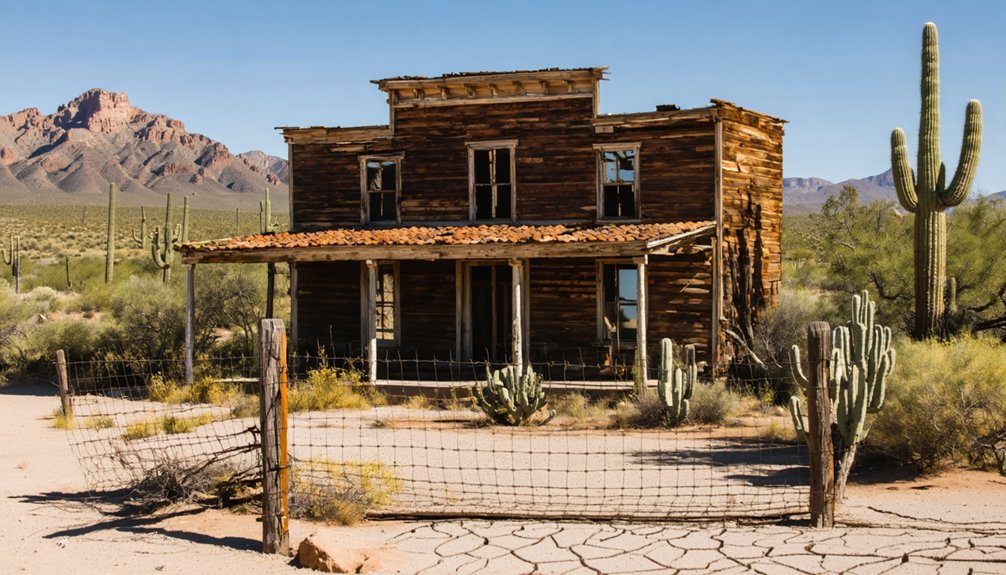
Once you’ve turned onto that dusty road, you’re riding through a valley that carries centuries of layered history beneath its sun-baked surface. Spanish explorers arrived as early as 1592, and Father Kino followed in 1706, embedding deep cultural influences into this stretch of southeastern Arizona.
By 1865, Mexican and Anglo settlers were building an agricultural history here, farming the San Pedro bottomlands until Apache conflict pushed them out. The Leach Wagon Road cut through in 1868, reconnecting the region to a broader frontier network.
Ranching and farming families returned, and by 1916, the community formally became Cascabel.
The post office closed in 1936, and World War II drained what population remained. What you’ll find today are sun-bleached adobe walls and silence — honest remnants of a community that simply ran out of momentum.
Why Cascabel Got Named After a Dead Rattlesnake
Every ghost town deserves a good name, and Cascabel’s origin story delivers one of the Southwest’s more memorable ones. The Spanish word for “rattle,” Cascabel earned its identity through local legends tied directly to a dead rattlesnake encounter involving an early settler.
Here’s what shaped the name:
- Alex Herron chose “Cascabel” when establishing the post office in 1916
- Authorities had already rejected the proposed name “Pool”
- A rattlesnake encounter near the settlement inspired the replacement suggestion
- Rattlesnake symbolism fit naturally within the area’s Spanish-language frontier heritage
You’ll appreciate how this name captures the raw, unfiltered character of desert life. It wasn’t chosen for charm — it was chosen because the land itself demanded honesty about what you’d find there.
What You’ll Actually Find at Cascabel’s Ghost Town Site Today
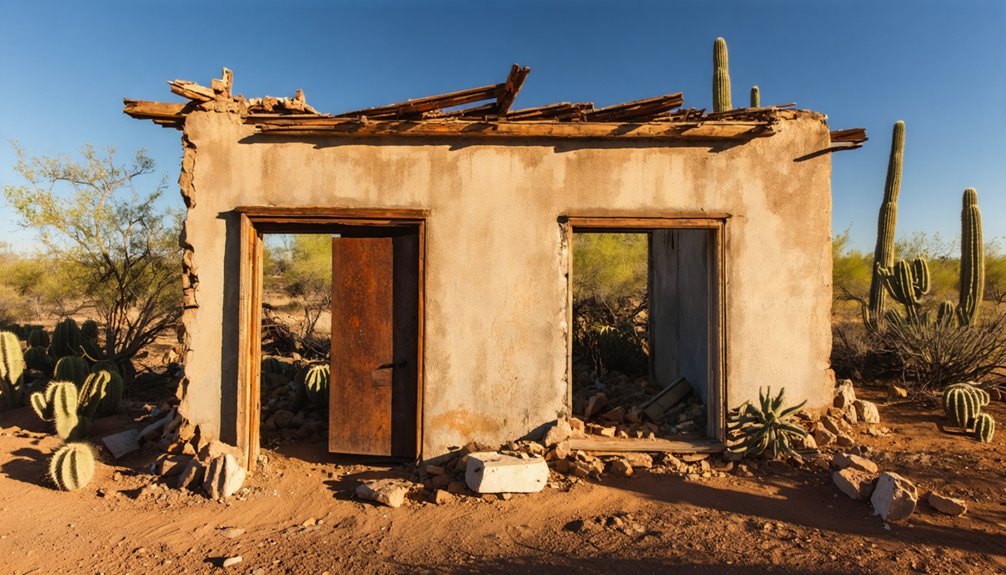
When you arrive at Cascabel today, you’ll find a semi-abandoned landscape of occupied adobes, crumbling walls, and scattered structural remnants rather than a preserved town.
You’ll want to keep your eyes open along the San Pedro River corridor, where the riparian habitat draws diverse wildlife and offers striking desert views.
The site’s remote, rugged conditions make it more of an exploratory experience than a curated visit, so go prepared for rough rural roads and limited amenities.
Adobe Ruins And Remnants
Though Cascabel never grew into a bustling town, what remains today still tells a quiet story of frontier life along the San Pedro River. You’ll find scattered remnants that reflect both cultural heritage and the area’s rugged past.
Explore at your own pace and look for:
- Occupied adobes – A few structures still stand, some privately used
- Ruined adobe walls – Crumbling outlines mark former homes and ranch buildings
- Post office traces – Remnants tied to the 1916–1936 community hub
- Agricultural footprints – Old field boundaries reflecting early farming activity
Mining history shaped much of southeastern Arizona, and Cascabel’s settlement patterns reflect that broader regional push.
You’re not visiting a museum — you’re reading a landscape that history wrote directly into the desert.
Wildlife And River Views
Beyond the crumbling adobe walls, Cascabel’s real draw is the living landscape surrounding them. The San Pedro River runs through one of North America’s most essential riparian corridors, and you’ll find cottonwood groves, willow thickets, and a surprising density of wildlife just steps from the ghost town remnants.
Birdwatchers especially love this stretch. Migratory species pass through seasonally, and resident raptors are easy to spot year-round. Deer, javelinas, and occasional river otters also frequent the corridor.
This landscape isn’t separate from Cascabel’s story — it’s woven into it. The river sustained the agricultural history that drew settlers here, and the cultural heritage they left behind exists because this water source made frontier life possible.
The land outlasted the town, and it rewards every explorer who arrives ready to look closely.
Current Site Conditions
Arriving at Cascabel today, you’ll find a place that exists somewhere between ghost town and living community. Local folklore lingers in every crumbling adobe wall, and preservation efforts have kept some structures standing.
Expect a raw, unpolished landscape that rewards curious explorers.
Here’s what you’ll actually encounter on-site:
- Occupied adobes — a few residents still live here, blending past and present
- Ruined adobe walls — scattered remnants from farming and ranching-era structures
- No formal visitor infrastructure — no gift shops, paved lots, or signage
- Protected riparian land — Bureau of Land Management holdings border the settlement
You’re stepping into a place that resists tidy categorization. Cascabel doesn’t perform its history; it simply holds it, quietly and on its own terms.
When Is the Best Time to Visit Cascabel, Arizona?
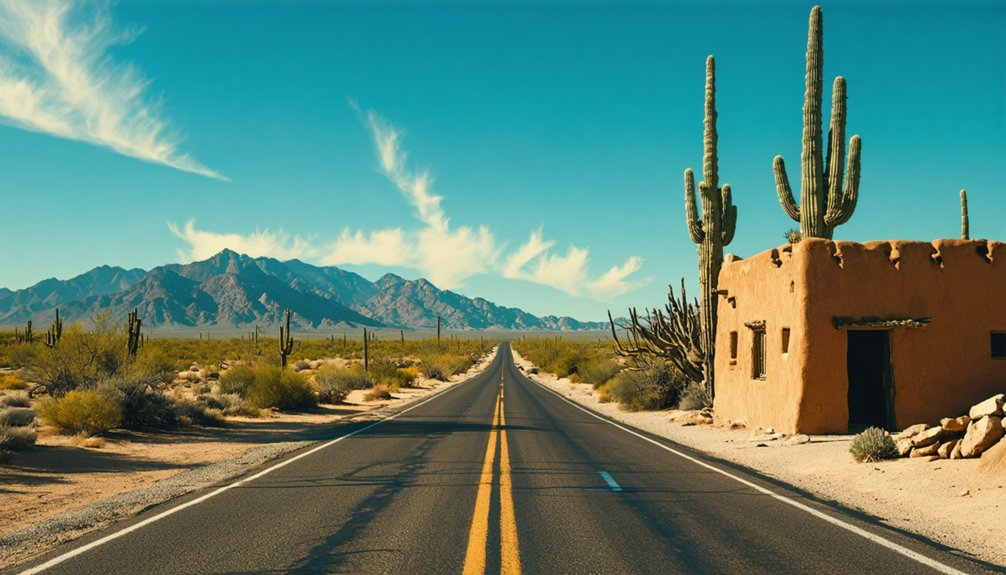
Because Cascabel sits in the Sonoran Desert lowlands, the season you choose to visit can make or break your experience. Summers are brutal, pushing temperatures well past 100°F, making exploration genuinely dangerous. Skip July and August unless you enjoy suffering.
Your best window runs from October through April, when mild temperatures let you roam adobe ruins, follow the San Pedro River corridor, and absorb the landscape at a comfortable pace. Winter days stay warm enough for outdoor exploration without the punishing heat.
Spring offers a sweet spot — wildflowers emerge, wildlife activity increases, and the riparian habitat feels alive. This is when the land quietly echoes its deeper story, shaped by Native influences and historical myths tied to centuries of settlement along the river.
Wildlife and Ruins Along the San Pedro River Near Cascabel
The San Pedro River corridor near Cascabel delivers two distinct draws in one stretch of desert — living wildlife habitat and the crumbling bones of frontier settlement. You’ll find both woven together across a landscape shaped by local legends and desert flora.
Explore the area with these four highlights in mind:
- Riparian birdwatching — the perennial river attracts rare migratory species year-round
- Adobe ruins — occupied and collapsed structures reveal the settlement’s quiet decline after 1936
- Desert flora — cottonwoods, mesquite, and native grasses line the riverbanks
- BLM-protected bottomland — conserved since 1990 as one of the Last Great Places
You’re moving through preserved wilderness and forgotten history simultaneously, which makes this corridor unlike any standard ghost-town stop.
Frequently Asked Questions
Can You Camp Overnight Near the Cascabel Ghost Town Site?
You’ll find camping opportunities near Cascabel along the BLM-managed San Pedro River corridor. Always check current camping regulations before you set up, and practice wildlife safety since you’re deep in Arizona’s wild desert terrain.
Are There Any Guided Tours Available for the Cascabel Area?
Like a rattlesnake’s warning rattle, Cascabel’s secrets don’t reveal themselves easily—no formal guided exploration exists here. You’ll embrace historical preservation independently, wandering adobe ruins and the San Pedro corridor on your own untamed, freedom-filled terms.
Is a Four-Wheel-Drive Vehicle Necessary to Reach Cascabel?
You don’t strictly need four-wheel drive, but vehicle necessity grows on remote, unpaved desert roads. A high-clearance vehicle handles Cascabel’s rugged terrain better, letting you explore freely and confidently reach this wild, rewarding ghost town.
Are There Any Nearby Towns With Gas Stations or Restaurants?
You’ll find tourist amenities and local history in Benson, about 23 miles southeast, where gas stations and restaurants await. It’s your best resupply stop before venturing into Cascabel’s remote, rugged, and rewarding desert landscape.
Is It Legal to Collect Artifacts or Adobe Remnants at Cascabel?
You shouldn’t collect artifacts or adobe remnants at Cascabel. Artifact laws protect these historic sites, and preservation rules make removal illegal. Respect these boundaries — you’ll keep the freedom to explore these remarkable ghost town landscapes for future visits.
References
- https://kids.kiddle.co/Cascabel
- https://cascabel.org/history/
- https://www.facebook.com/PeterSantenello/posts/he-bought-an-arizona-ghost-town/1277060803781626/
- https://www.tombstonetraveltips.com/cascabel-arizona.html
- https://www.youtube.com/watch?v=__EvnO3EFjw
- https://cascabel.org/wp-content/uploads/2018/12/casbook-web-with-cover.pdf
- https://en.wikipedia.org/wiki/List_of_ghost_towns_in_Arizona
- https://lugaresquefazer.com/cascabel