Planning a ghost town road trip to McVey, Illinois means heading into the rural backroads of Macoupin County, where a forgotten railroad settlement waits in quiet decay. You don’t need a 4WD vehicle, just a regular car and a sense of adventure. Visit in spring or fall, pack water, sturdy shoes, and a camera, and arrive during daylight. There’s much more to uncover about this hauntingly authentic Illinois ghost town ahead.
Key Takeaways
- McVey is located in Macoupin County, Illinois, accessible via narrow country roads suitable for standard 2WD vehicles.
- Visit during spring or fall for comfortable temperatures, good visibility, and safer exploration conditions.
- Arrive self-sufficient with water, snacks, sturdy shoes, and a camera, as no on-site amenities exist.
- Combine McVey with neighboring ghost towns using county maps and ghost-town directories for a comprehensive regional loop.
- Research local railroad history and folklore beforehand, as limited cell signal makes on-site information gathering difficult.
What Is McVey, Illinois: and Why Is It a Ghost Town?
Tucked into the rural backroads of Macoupin County, Illinois, McVey is a ghost town that once grew up alongside the railroad — and quietly faded when that lifeline disappeared. Like many Illinois settlements, McVey’s fate tied directly to transportation.
Tucked into Macoupin County’s backroads, McVey rose alongside the railroad — and quietly vanished when the trains stopped coming.
When rail traffic shifted and industry moved on, residents followed, leaving behind only fragments of what existed before.
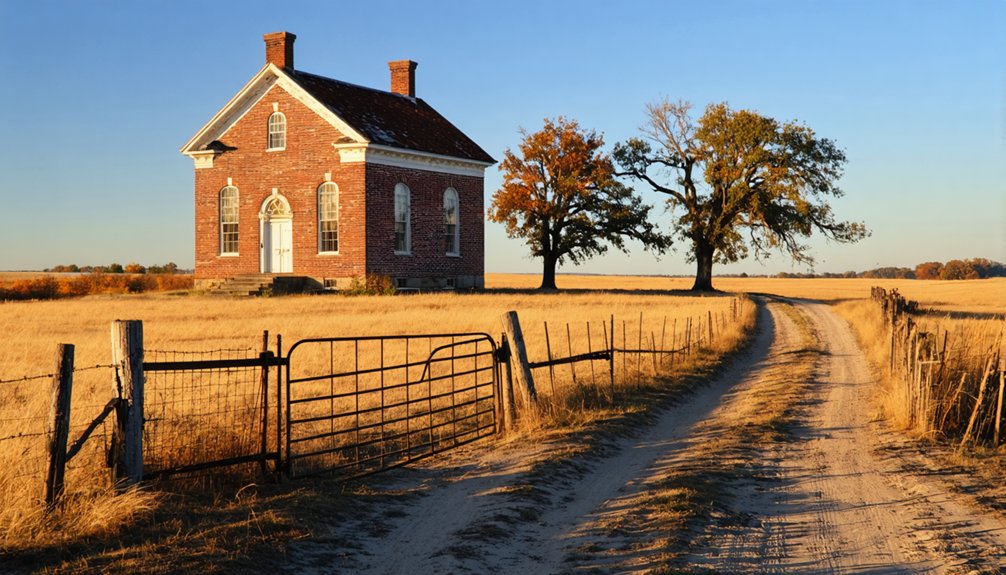
You won’t find urban legends about dramatic disasters here — McVey’s story is quieter, shaped by economic drift rather than sudden collapse. Preservation efforts never formalized around the site, so what remains today is raw and unpolished: a single house and a few nearby structures standing against the rural landscape.
That honesty is exactly what makes McVey worth seeking out if you crave an unfiltered slice of Illinois history.
Where Exactly Is McVey Located in Macoupin County?
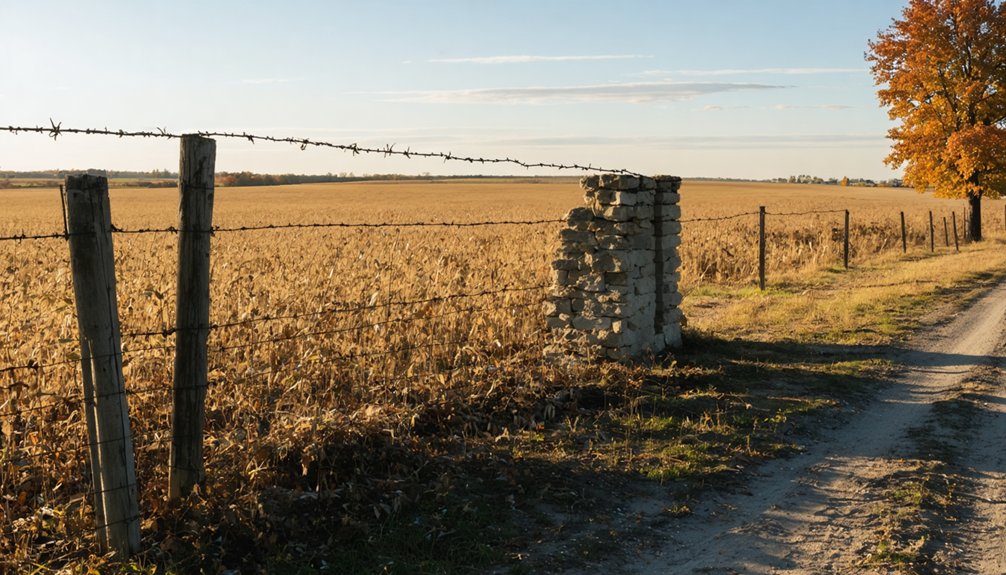
You’ll find McVey tucked into the rural landscape of Macoupin County, Illinois, a region shaped by farming communities and forgotten railroad lines.
The town sits in a railroad-adjacent setting, meaning the tracks once drove its existence and likely contributed to its decline.
When you’re plotting your route, expect narrow country roads and quiet surroundings that signal you’re heading somewhere history left behind.
Macoupin County, Illinois Location
McVey sits in Macoupin County, a rural stretch of central-west Illinois where backroads cut through farmland and the land holds quiet reminders of a more industrious past. You’ll find this ghost town tucked along a railroad-adjacent corridor, where the tracks once drove commerce and community.
Today, historical preservation efforts remain minimal, leaving the site raw and unpolished — exactly the kind of stop that rewards curious travelers willing to explore on their own terms.
Local legends tied to railroad-era settlement give the area a layered character you won’t find in a museum. If you’re mapping your route, position McVey as a deliberate detour through Macoupin County’s countryside.
The roads are 2WD accessible, making it easy to reach without specialized gear.
Railroad-Adjacent Rural Setting
Sitting along a railroad-adjacent corridor in Macoupin County, this faded Illinois settlement rewards travelers who don’t mind reading between the lines of a landscape. The rail line shaped McVey’s rise, and its decline mirrors a pattern repeated across Illinois.
You’ll find the rural surroundings quietly evocative, especially if you’re drawn to historical preservation and local legends.
Before you arrive, keep these details in mind:
- The railroad setting likely anchored the original community’s economy and growth
- Local legends often fill historical gaps where records go silent
- Nearby countryside buildings hint at a settlement that never fully vanished
You won’t need a four-wheel drive to reach it, but you’ll need curiosity. Daytime visits let you absorb the landscape without missing the subtle evidence still scattered across the land.
How Did McVey Become Abandoned?
When you look into McVey’s past, you’ll find a story shaped by the rise and fall of railroad-driven settlement across Illinois.
Like many small towns in Macoupin County, McVey depended on transportation links that eventually dried up, leaving the community without the economic lifeline it needed to survive.
Today, you can still spot partial remnants on site — a single standing house and a few nearby structures that quietly mark where a once-connected railroad town used to thrive.
Railroad Industry Decline
Like so many small Illinois settlements, McVey’s story is tied directly to the rise and fall of the railroad industry. When rail traffic dried up, towns like McVey lost their economic lifeline almost overnight.
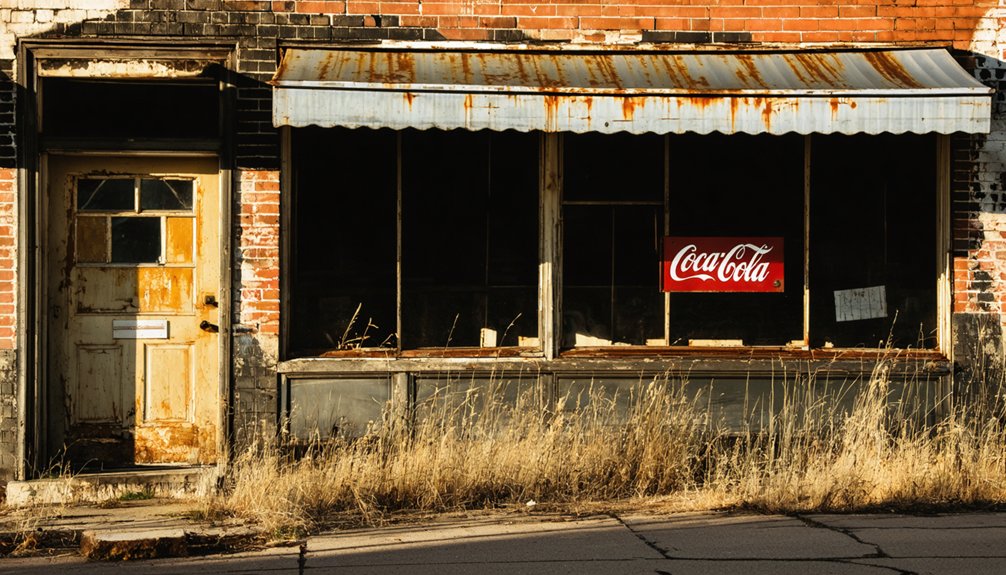
You can still see the urban decay firsthand — a quiet reminder of how quickly prosperity can vanish.
The railroad’s decline triggered a chain reaction that historical preservation efforts never caught up with:
- Rerouted rail lines pulled commerce and residents toward larger hubs
- Disappearing freight demand eliminated local jobs that sustained the community
- Population exodus left buildings empty and infrastructure unmaintained
Understanding this pattern helps you appreciate McVey not just as a curiosity, but as a living snapshot of Illinois history. Your road trip here connects you directly to that forgotten chapter.
Transportation Links Lost
How does a town simply vanish? In McVey’s case, transportation shaped everything. When railroad routes shifted or traffic dried up, communities that depended on those lines lost their economic lifeline overnight. Businesses closed. Residents relocated. Streets emptied.
You’re tracing a pattern that repeated across Macoupin County and throughout Illinois — settlements born alongside rail lines that disappeared once those connections broke. Without transportation links, no commerce survived, no population held, and no future remained.
What you’ll find at McVey today is the result of that collapse — a single house, scattered nearby structures, and open countryside carrying the weight of community memory.
Historical preservation efforts rarely reached places this small, which makes your visit itself an act of remembrance. You’re witnessing what happens when a town loses its reason to exist.
Partial Remnants Remain
That collapse didn’t erase McVey completely — it just left fragments behind. Urban decay has quietly worked through what once stood here, yet the site still carries real historical significance.
You’ll find a one-house remnant anchoring the location, with a few nearby structures scattered across the surrounding countryside. It’s not a full townscape — it’s a skeleton, and that rawness makes it worth stopping for.
What you can expect on site:
- A single surviving house marking the town’s core footprint
- Additional buildings visible in the nearby rural surroundings
- A railroad-adjacent setting that explains why settlement happened here at all
You’re not walking into a preserved museum. You’re reading history through what time forgot to finish demolishing — and that’s exactly the point.
Can You Drive to McVey in a Regular Car?
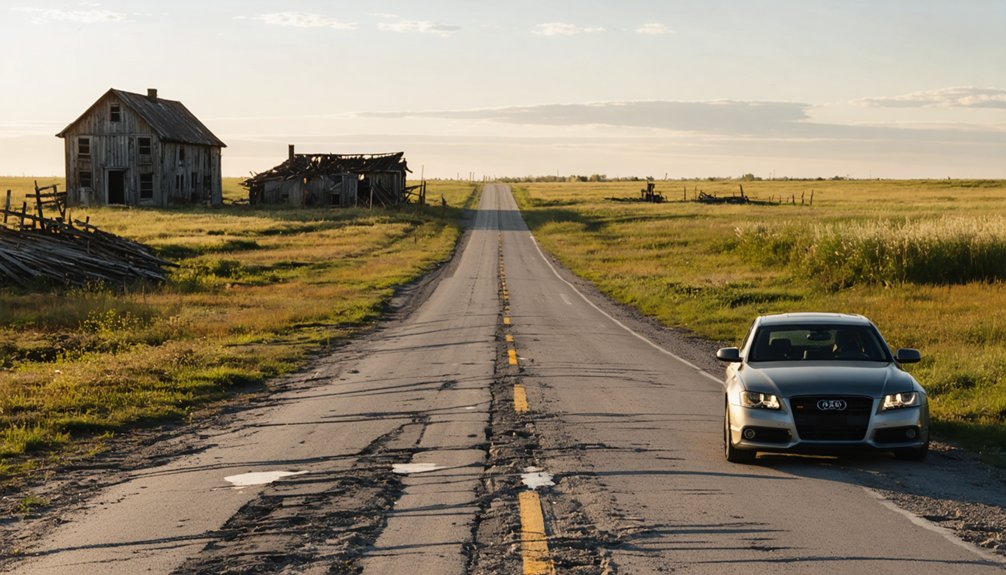
The good news for road-trippers is that McVey is accessible by a standard two-wheel-drive vehicle, so you won’t need a truck or SUV to make the trip. You can roll down Macoupin County’s rural backroads in an ordinary sedan and reach the site without trouble.
Plan your visit during daylight hours so you can properly take in the historical architecture and soak up any local legends still clinging to this forgotten railroad settlement.
Winters here bring cold, snowy conditions that can make rural roads tricky, while summers turn hot fast, so spring and fall offer the most comfortable windows for exploring.
Pack your own water and supplies, since amenities are practically nonexistent out here — but that raw, unfiltered access is exactly what makes McVey worth chasing.
What’s Left to See at McVey Today?
While McVey won’t dazzle you with a preserved Main Street or a row of crumbling storefronts, it does offer a hauntingly minimal snapshot of what railroad-era settlement looked like before time swallowed it whole.
McVey won’t dazzle you — but it will show you exactly what railroad-era settlement looked like before time erased it.
Historical preservation here is raw and unpolished, which makes it feel more honest than a curated museum ever could.
Here’s what you’ll find when you arrive:
- One surviving house, standing as the site’s most tangible link to community stories once lived here
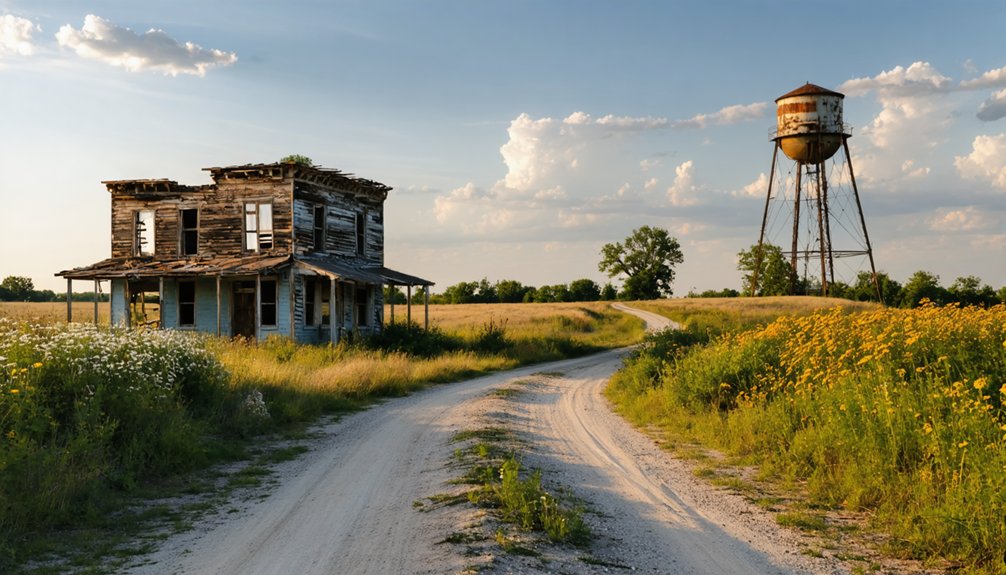
- Scattered nearby buildings, hinting at a slightly wider original footprint
- Railroad-adjacent landscape, framing the context for why people settled and why they eventually left
You’re not chasing grandeur — you’re chasing truth. McVey delivers that in quiet, understated form.
When Is the Best Time to Visit McVey?
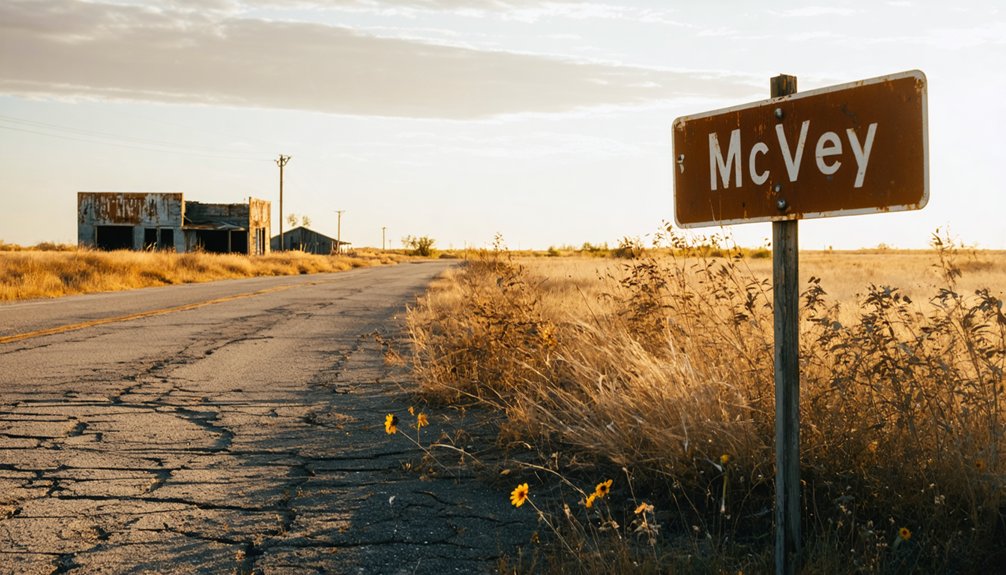
Timing your visit to McVey isn’t complicated, but it does matter. Spring and fall offer the most comfortable conditions for exploring this quiet Macoupin County remnant. You’ll avoid the brutal summer heat and the cold, snowy winters that can make rural backroads genuinely miserable.
Always plan for a daytime visit — there’s no infrastructure here, no lighting, and no services waiting for you. Tourist accessibility is straightforward since the site requires only standard 2WD, meaning most vehicles handle it easily.
Go when visibility is good and daylight is generous, giving you enough time to observe what’s left standing.
Historical preservation efforts are minimal here, so the site is raw and unmanaged. That authenticity rewards visitors who come prepared, curious, and ready to read the landscape on its own terms.
What Should You Bring to McVey?
Once you’ve settled on the right season and time of day, packing smart becomes your next priority. McVey offers no amenities, so you’re entirely self-sufficient out there. Bring what you need to explore comfortably and document this site’s historical significance for yourself.
McVey offers nothing — no amenities, no shortcuts. Come prepared, come self-sufficient, or don’t come at all.
- Camera or sketchbook – Capture the one-house remnant and surrounding rural landscape before conditions change further.
- Local folklore research – Download notes or printed materials beforehand; no signal is guaranteed in rural Macoupin County.
- Water, snacks, and sturdy shoes – The railroad-adjacent terrain demands practical footwear and personal provisions.
You’re visiting a place that exists largely outside conventional tourism, which means freedom comes with responsibility. Arrive prepared, stay aware of your surroundings, and let McVey’s quiet, fading story speak for itself.
Other Ghost Towns to Pair With a Mcvey Day Trip
McVey works best as one stop on a longer Macoupin County loop, because Illinois rewards ghost-town hunters who string multiple sites together into a single day.
Macoupin County sits inside a broader belt of abandoned railroad and mining settlements, so you’ll find companion stops within reasonable driving distance. Research neighboring towns before you leave home, since local legends often point toward forgotten sites that never appear on official lists.
Some of these spots carry urban legends about vanished communities that disappeared overnight when mines closed or rail lines shifted. Cross-reference ghost-town directories with county road maps to build a flexible route.
Keep your itinerary loose enough to explore unmarked turnoffs, because the most rewarding finds frequently hide just beyond the destinations you originally planned to visit.
Frequently Asked Questions
Is There a Fee or Permit Required to Visit Mcvey?
Like an open door to the past, you’re free to explore! No fees or permits are confirmed for McVey. Visitor regulations and historical preservation guidelines aren’t documented, so you’ll roam this ghost town unrestricted.
Are There Any Nearby Towns With Restaurants or Gas Stations?
You’ll find local dining and roadside stops in nearby Macoupin County towns like Carlinville, where restaurants and gas stations await. Stock up before heading out, as McVey’s rural surroundings offer little on-site convenience!
Has Mcvey Ever Been Featured in Books or Documentaries?
You won’t find confirmed literary references or documentary features highlighting McVey’s historical significance, but don’t let that stop you — its mysterious, untamed spirit makes it a hidden gem worth personally discovering and documenting yourself!
Is Mcvey Privately Owned Land, or Is It Publicly Accessible?
The sources don’t confirm whether it’s private ownership or public access, but you’ll want to verify before venturing out. Respecting land boundaries keeps your adventurous spirit free and your ghost-town explorations legally sound!
Are There Any Local Guided Tours Covering Mcvey and Nearby Sites?
No verified guided tours currently cover McVey’s historical landmarks or local legends. You’ll likely explore it independently, blazing your own trail through Macoupin County’s forgotten backroads — a freeing, self-directed adventure awaiting your curious spirit.
References
- https://en.wikipedia.org/wiki/List_of_ghost_towns_in_Illinois
- https://ns3.ghosttowns.com/states/il/mcvey.html
- https://sites.rootsweb.com/~iltttp/ghosttowns.htm
- https://drloihjournal.blogspot.com/p/lost-towns-of-illinois-series.html
- https://www.travelmag.com/forgotten-ghost-towns-in-illinois-where-history-still-has-plenty-to-say/
- https://www.youtube.com/watch?v=M9JL8xIvjA4
- https://www.youtube.com/watch?v=SK0284ZVaRQ
- https://www.youtube.com/watch?v=f04r5CCC7qY
- https://www.youtube.com/watch?v=gM3ZIgtFzBk
- http://freepages.rootsweb.com/~gtusa/history/usa/il.htm