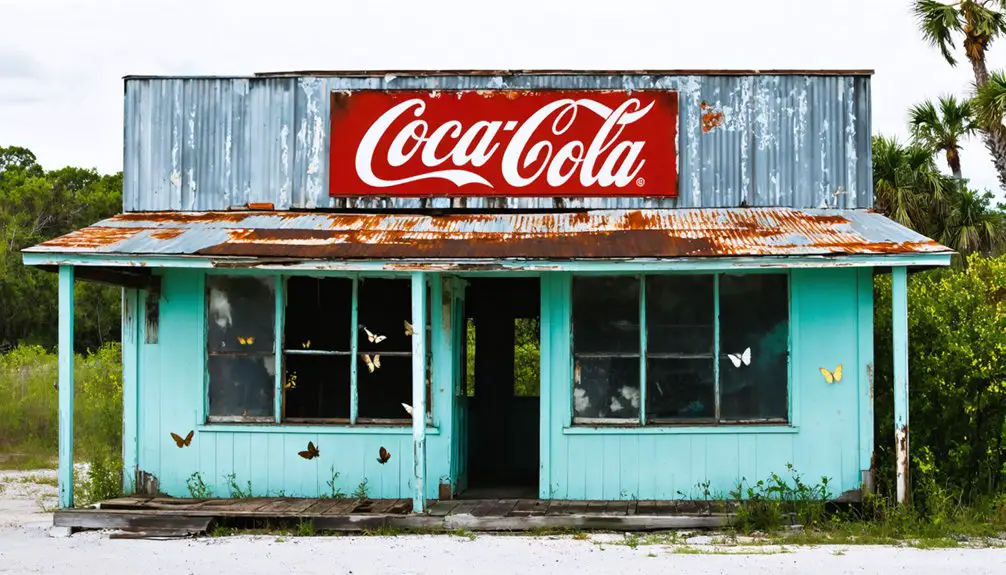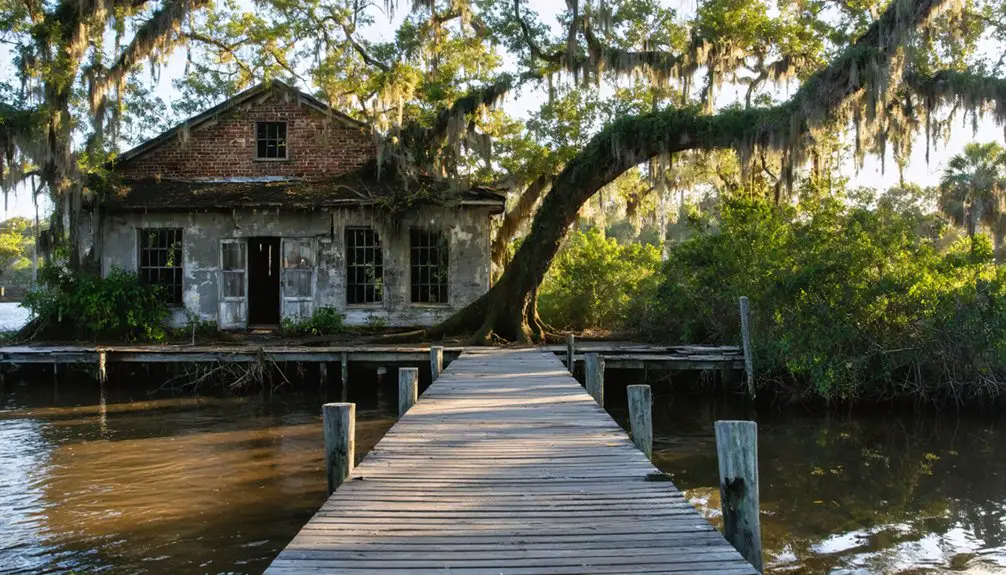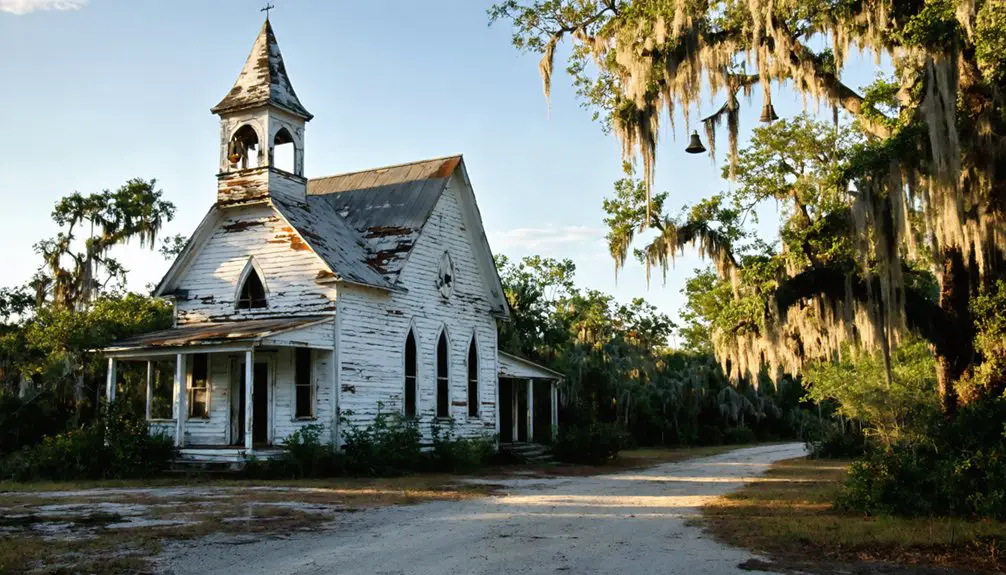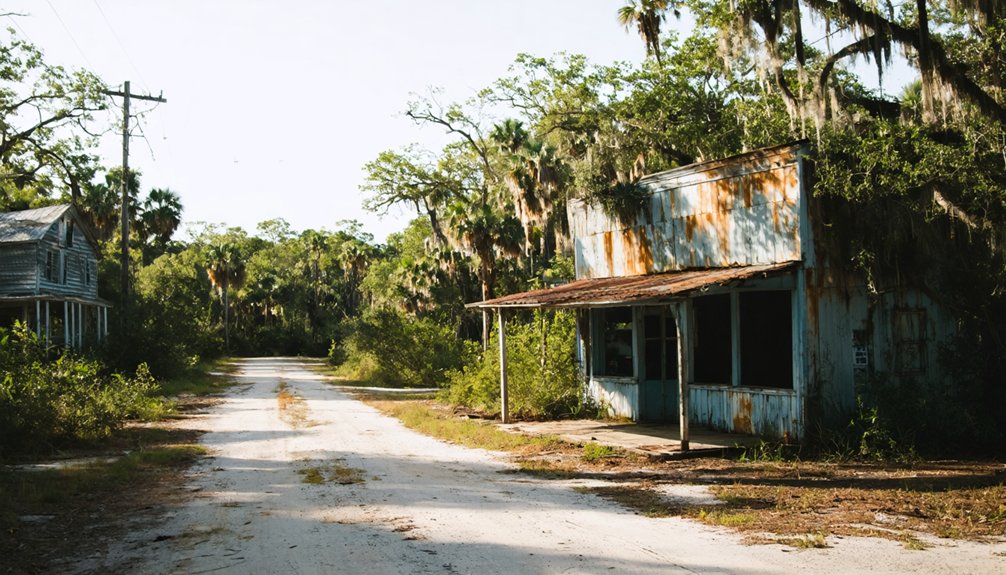
Planning a ghost town road trip to Moffitt, Florida means heading to Hardee County, roughly 2 miles south of Zolfo Springs at US Highway 17 and Moffitt Road. This former lumber boomtown collapsed after its mill closed and post office shut in 1916, leaving behind only railroad remnants and wild pine scrublands. You’ll want to visit between October and April for comfortable exploring. Pack water, bug spray, and your camera — there’s far more to this forgotten Florida story waiting to be uncovered.
Key Takeaways
- Moffitt sits roughly 2 miles south of Zolfo Springs at the intersection of US Highway 17 and Moffitt Road in Hardee County.
- Only an old railroad crossing post and scattered track remnants remain, offering an authentic, unfiltered glimpse into Florida’s lumber boom era.
- Visit between October and April for milder weather; pack water, bug protection, closed-toe shoes, a camera, and GPS.
- Extend your trip by adding nearby ghost towns like Paynes Creek, Homeland, Fort Green, Ona, and Gardner along US Highway 17.
- Use ghost town databases like Ghosttowns.com and Legends of America alongside GPS coordinates for accurate navigation and flexible itinerary planning.
What Made Moffitt, Florida a Ghost Town?
Once a bustling lumber town in the heart of Hardee County, Moffitt’s rise and fall followed a familiar pattern — the land gave what it had, and when it was gone, so was the town.
The land gave what it had, and when it was gone, so was the town.
John Moffitt established the settlement after the Florida Southern Railway arrived, and a large lumber mill quickly became the economic engine driving everything forward.
The historical significance of Moffitt lies in how rapidly it grew and collapsed. The mill employed most residents, but the environmental impact of clearing the surrounding pine scrublands proved devastating.
Once the timber was exhausted, the mill closed, and people simply left. The Post Office shuttered in 1916, and the population vanished almost entirely.
What you’ll find today is flat, quiet terrain and a road bearing a forgotten name.
How to Find Moffitt, Florida on Your Road Trip Route
Knowing where Moffitt once stood is half the battle, and getting there’s straightforward once you’ve got your bearings. Moffitt sits in Hardee County, roughly 2 miles south of Zolfo Springs in central Florida. Your clearest landmark is US Highway 17, where Moffitt Road intersects near the site. That crossroads puts you exactly where local legends say a thriving lumber town once buzzed with activity.
Pull up GPS coordinates from reputable ghost town websites before you leave — they’ll drop you precisely on location.
Standard 2WD vehicles handle the roads without trouble, so you won’t need anything special.
Once you arrive, scan for the old railroad crossing post, one of the few remaining historical landmarks anchoring this forgotten place to its past.
How to Get There and Which Roads to Take
Getting to Moffitt requires nothing more than a reliable road map and a tank of gas. Head to Hardee County in central Florida and follow US Highway 17 south toward Zolfo Springs.
From there, you’ll drive roughly 2 miles south until Moffitt Road intersects the highway, marking the heart of this forgotten settlement.
Standard 2WD vehicles handle the roads easily, so you won’t need specialized equipment. GPS coordinates from ghost town websites pinpoint the exact location, saving you guesswork.
Once you arrive, you’ll find old railroad crossing posts standing as quiet monuments to historical preservation and the local legends surrounding the lumber era that once defined this community.
The roads are public, the access is free, and the journey belongs entirely to you.
What You’ll Actually See at Moffitt, Florida?
When you arrive at Moffitt, you won’t find crumbling buildings or bustling history — you’ll spot an old railroad crossing post standing as the site’s most tangible remnant of its once-active past.
The flat pine scrublands stretch around you, painting a quiet picture of the terrain that lumber workers once stripped bare. It’s a sparse scene, but if you’re tuned into the history, the landscape itself tells the story.
Old Railroad Crossing Post
What remains at Moffitt today is modest but evocative: an old railroad crossing post standing as the site’s most tangible link to its working past. It’s a quiet but powerful example of historical preservation, marking where trains once rolled through carrying timber and connecting this small settlement to the wider world.
You’ll also find potential railroad relics scattered along the former rail path, remnants of tracks and materials left behind after service was completely abandoned. These fragments reward curious explorers willing to look closely.
Don’t expect a polished exhibit or interpretive signage. What you get instead is raw, unfiltered history you can stand beside and contemplate freely.
For those drawn to forgotten places, that railroad crossing post speaks volumes without saying a word.
Pine Scrubland Terrain
Beyond that railroad crossing post, the landscape itself becomes part of the story. You’ll find yourself standing amid flat pine scrublands that stretch quietly in every direction, the same terrain that once supported a thriving lumber operation.
It’s a landscape that speaks honestly about why Moffitt existed and why it eventually disappeared.
Historical preservation here isn’t about manicured museums — it’s raw, unfiltered land telling its own truth. The former lumber areas show nature’s resilience, reclaiming what industry once stripped away.
You’ll also discover genuine opportunities for wildlife observation, as the scrublands attract native Florida species that have returned since the timber era ended.
Bring binoculars, move slowly, and you’ll see this forgotten corner of Hardee County rewarding your curiosity in unexpected ways.
The Best Time to Visit Moffitt, Florida
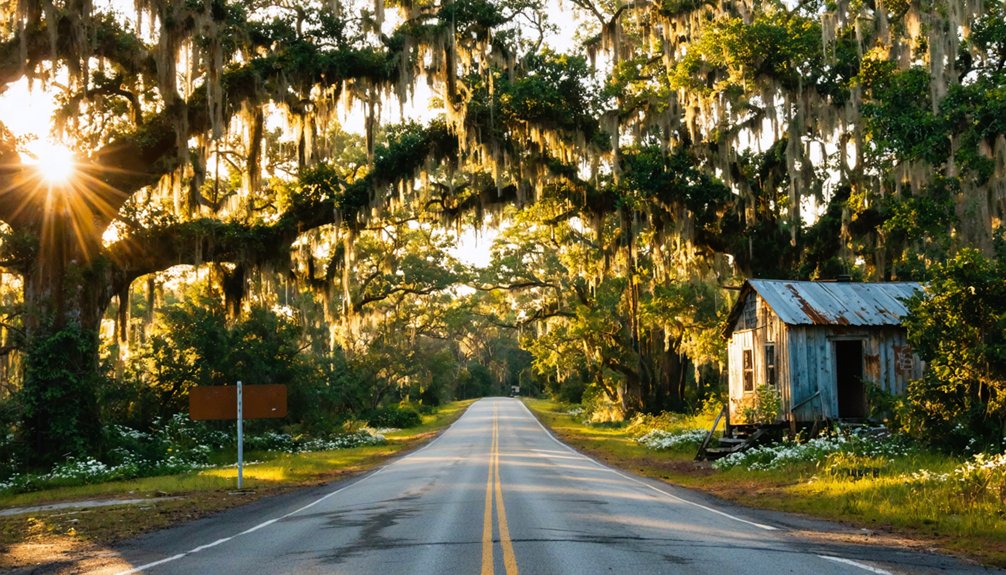
Florida’s mild climate makes Moffitt a year-round destination, so you won’t need to stress over timing your visit. Each season offers something distinct for those drawn to its cultural significance and quiet historical atmosphere.
Summer brings intense heat and humidity, so pack accordingly and hydrate frequently.
Fall, winter, and spring deliver cooler, more comfortable temperatures perfect for exploring the scrublands and remnants on foot.
Preservation efforts at sites like Moffitt depend on respectful visitors who explore responsibly regardless of season. Since no visitor center or shaded infrastructure exists, milder months between October and April give you the most comfortable experience.
Whenever you choose to go, you’ll enjoy the freedom of an uncrowded, off-the-beaten-path destination that lets you connect directly with Florida’s forgotten past on your own terms.
What to Pack for a Remote Florida Ghost Town Visit
Visiting a remote ghost town like Moffitt means you’re heading somewhere with zero amenities, so smart packing makes the difference between a rewarding trip and a miserable one. Florida’s flat pine scrublands demand respect, and you’ll want to move freely through the terrain without distractions.
Pack these essentials before hitting the road:
- Sun and bug protection – sunscreen, insect repellent, and a hat shield you from Florida’s intense exposure
- Field guides or a plant ID app – helps you identify local flora safely without disturbing the ecosystem
- Camera and notebook – document historical artifacts like the old railroad crossing post without touching or removing anything
Carry water, wear closed-toe shoes, and bring a charged phone with downloaded GPS coordinates. You’re exploring on your own terms, so prepare accordingly.
Ghost Towns Near Moffitt to Add to Your Route
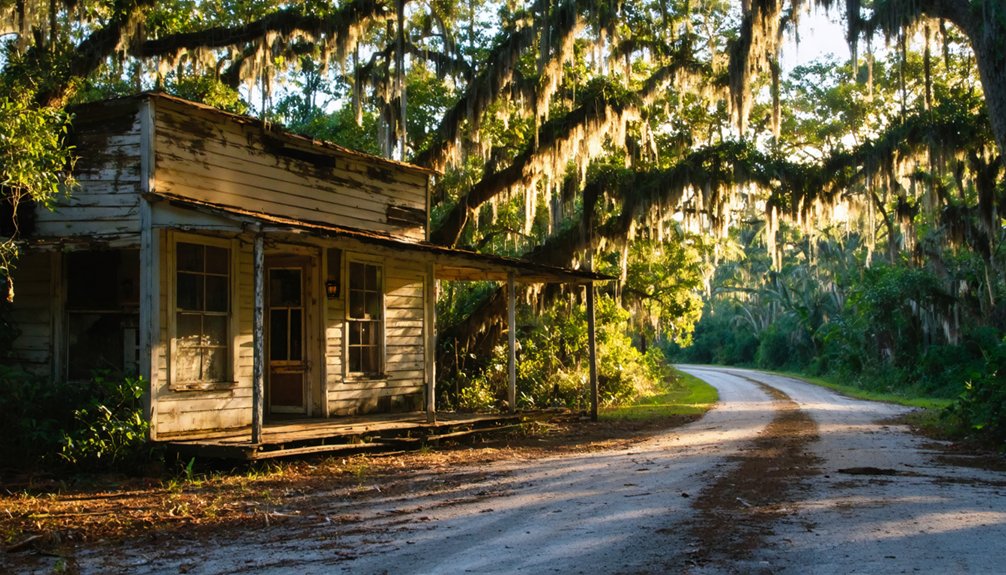
Since you’re already making the drive to Hardee County, you’ll want to stretch your road trip by tracking down other ghost towns scattered across central Florida’s backroads. The region harbors several forgotten settlements that share Moffitt’s story of boom-and-bust lumber and railroad economies, making them natural companions on your route.
Pull up a dedicated ghost town database like Ghosttowns.com or Legendsofamerica.com to map out the closest abandoned sites and build a loop that maximizes your mileage.
Nearby Ghost Towns Worth Visiting
Hardee County and its surrounding region hold several ghost towns that pair well with a stop at Moffitt, making it easy to build a full day’s route through Florida’s forgotten history. Each location carries its own historical significance and offers architectural remnants that tell the story of Florida’s early settlement era.
Consider adding these stops to your itinerary:
- Paynes Creek – A site steeped in frontier conflict and early pioneer history
- Homeland – A former phosphate town with scattered structural remnants worth exploring
- Fort Green – A small agricultural settlement that quietly faded after economic collapse
You’ll find that stringing these locations together creates a rewarding drive through central Florida’s past, giving you genuine freedom to explore on your own terms.
Planning Your Extended Route
Extending your route beyond Moffitt opens up a surprisingly rich stretch of central Florida ghost towns, each one adding another layer to the region’s forgotten past. Hardee County and its surrounding areas hold historical landmarks tied to the same railroad and timber boom that built and buried Moffitt.
Towns like Ona and Gardner carry their own local legends, stories of settlers, sawmills, and sudden abandonment that mirror Moffitt’s arc almost exactly. You can string these stops together along US Highway 17 without backtracking, keeping your drive efficient and rewarding.
Grab a detailed Florida ghost town map, cross-reference GPS coordinates, and sketch a flexible itinerary. Central Florida’s flat roads make the driving easy, leaving your energy for exploration rather than navigation.
Frequently Asked Questions
Who Was John Moffitt and Why Did He Found the Town?
John Moffitt founded the town after the Florida Southern Railway arrived, sparking lumber industry growth. You’ll find his local legends tied to historic landmarks, as he built a thriving settlement around a large, bustling mill.
How Long Did the Moffitt Post Office Operate Before Closing?
You’ll find Moffitt’s postal history spans just 16 years, operating from 1900 until 1916. That brief window reflects the town’s rapid community development and equally swift decline once its lumber-driven economy collapsed.
Did the Railroad Ownership Change After the Florida Southern Railway?
Like shifting winds, railroad ownership did change after the Florida Southern Railway — you’ll find its historical significance lives in those evolutions, as multiple owners took control before tracks were ultimately removed entirely from Moffitt’s landscape.
How Many Houses Were Estimated to Exist in Moffitt?
You’ll find that Moffitt’s historic architecture once comprised just 9 to 10 small houses, a humble footprint that speaks to its limited tourism potential, yet you can still explore this freedom-rich, untamed ghost town today!
What Secondary Occupations Did Moffitt Residents Pursue Besides Lumber?
Before Wi-Fi existed, you’d have found Moffitt’s resilient residents hustling through subsistence farming and cattle raising alongside local crafts, keeping their families fed and their free-spirited community alive beyond the lumber mill’s demands.
References
- https://www.ghosttowns.com/states/fl/moffitt.html
- https://en.wikipedia.org/wiki/List_of_ghost_towns_in_Florida
- https://www.ghosttowns.com/states/fl/fl.html
- https://www.youtube.com/watch?v=RHyltULL0-o
- https://apps.apple.com/ua/app/ghosttownmap/id6761741652
- https://en.wikipedia.org/wiki/Moffit
- https://www.oneworld365.org/blog/florida-ghost-towns
- https://www.youtube.com/watch?v=kXGAKmjGMXg
- https://www.youtube.com/watch?v=oiS5w2an3sI
- https://www.youtube.com/watch?v=IYx5g_y6Ccs