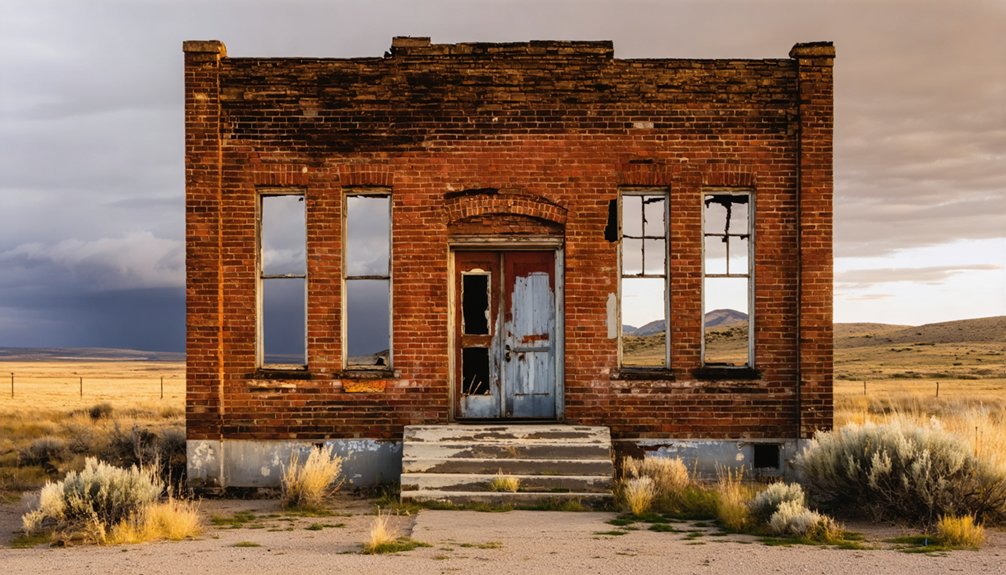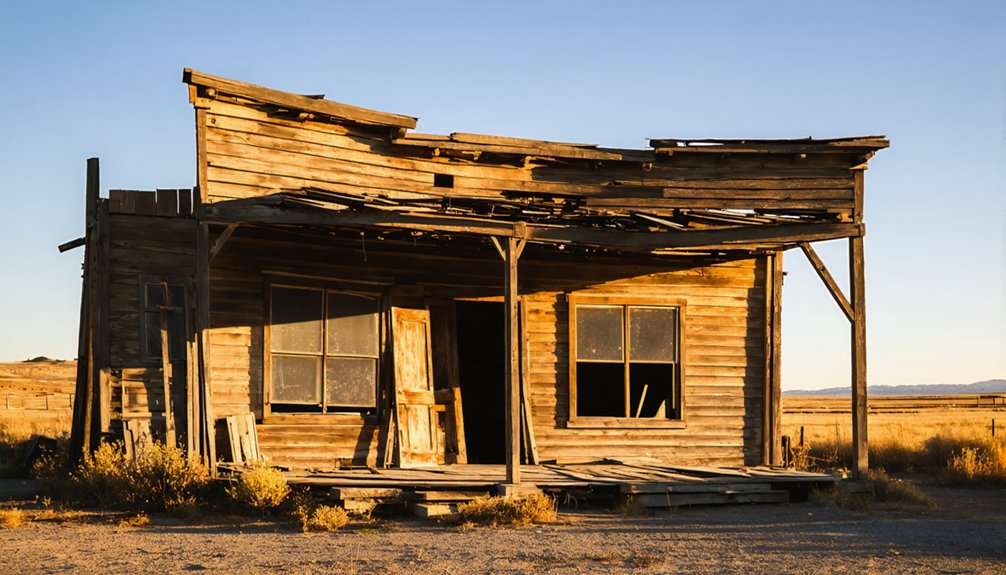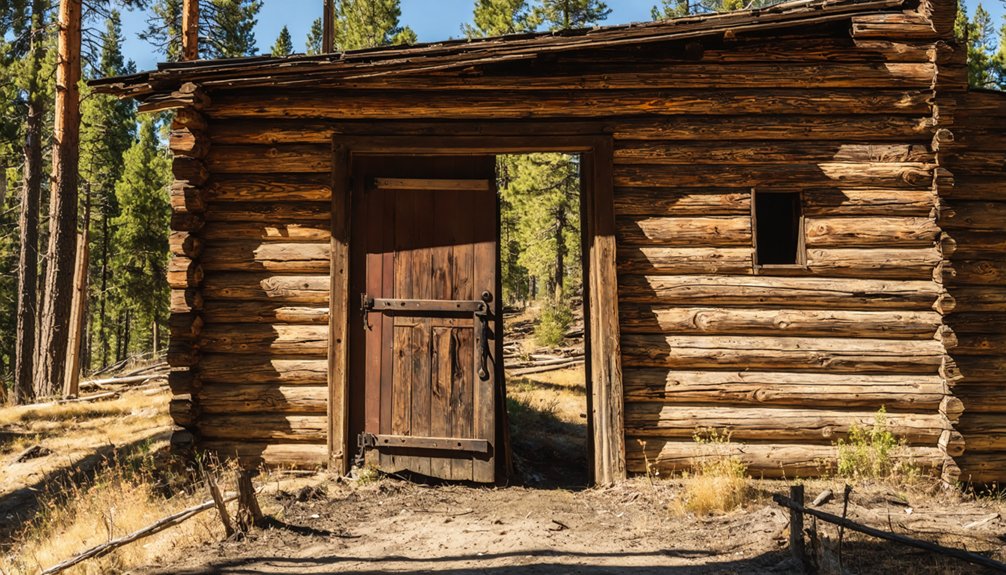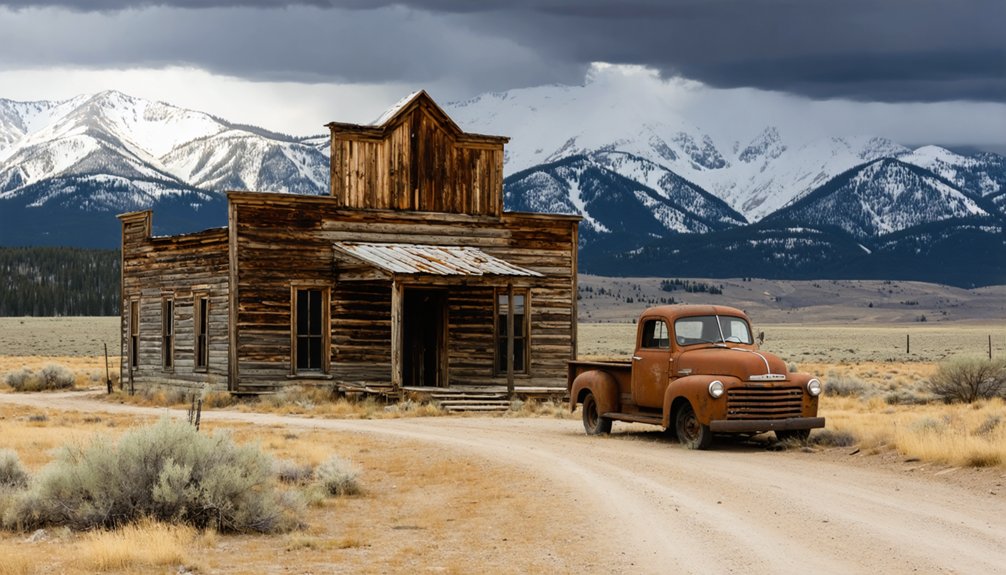
Planning a ghost town road trip to Moose City, Idaho means chasing a vanished boomtown deep into Clearwater County’s forested wilderness. Gold sparked the town’s creation in 1862, drawing roughly 200 prospectors before the rush faded and silence swallowed everything whole. Today, a Forest Service sign and faint building outlines are all that remain. Pack sturdy boots, layer up, and bring your curiosity — there’s far more to this forgotten corner of Idaho history than you’d expect.
Key Takeaways
- Moose City is a remote ghost town in Idaho, accessible by standard 2WD vehicles, best visited during summer or fall for ideal conditions.
- Pack layered clothing, sturdy boots, water, a paper map, battery pack, and photography gear for your visit.
- The site features only a Forest Service sign and faint level spots where buildings once stood, with no surviving structures.
- A two-day road trip pairs Moose City with nearby Pierce, the site of Idaho’s original 1860 gold discovery.
- Nearby Silver City offers preserved buildings and walking tours, providing a contrasting ghost town experience alongside Moose City’s raw wilderness.
What Was Moose City, Idaho?
Once gold fever swept through Idaho’s Clearwater region in the early 1860s, Moose City emerged as one of the many boomtowns that rose and fell with the promise of rich diggings. Tied to discoveries along Moose Creek and Independence Creek, the town took shape after July 4, 1862, drawing roughly 200 prospectors enthusiastic to stake their claim.
At its peak, you’d have found a saloon, hotel, restaurant, jail, butcher shop, and three general stores supporting a thriving community. The mining history here ran hot for about three years before the diggings thinned out and people moved on.
Today, nearly every trace is gone — no historical artifacts survive above ground — but the story of Moose City still rewards those curious enough to seek it out.
How Gold Built and Abandoned Moose City in Less Than a Decade
When gold was discovered at Pierce on October 1, 1860, it set off a chain reaction that would eventually pull miners deep into Clearwater County. By July 4, 1862, prospectors had struck gold along Moose Creek and Independence Creek. That discovery sparked a boom, drawing around 200 people to the area and supporting a surprisingly complete little town — saloon, hotel, jail, butcher shop, and three general stores — for roughly three years.
But once the diggings began to fail in the 1870s, Moose City emptied out just as fast as it had filled up, leaving behind little more than a few level spots in the timber.
Gold Rush Begins
Though it all started miles away and two years earlier, the discovery of gold at Pierce on October 1, 1860, set the entire Clearwater region of Idaho buzzing with prospectors. Miners flooded in throughout 1861, chasing every rumor of a strike.
Then on July 4, 1862, fortune hunters hit pay dirt again near Moose Creek and Independence Creek. That Independence Day discovery ignited a second rush, pulling roughly 200 people into the wilderness to stake their claims.
The diggings produced well, and a real town took shape fast. Today, preservation challenges mean almost no historical artifacts survive to mark that frenzied moment. But knowing what happened here makes standing on this quiet, timber-reclaimed ground feel like touching something raw, unfiltered, and genuinely free.
Moose City Booms
As gold poured out of the Moose Creek and Independence Creek diggings, a real town rose fast from the Idaho wilderness. About 200 prospectors rushed in, building something worth remembering:
- A saloon where free men spent their hard-earned dust after long days underground.
- A hotel, restaurant, and butcher shop that gave miners a rare taste of civilization deep in Idaho timber country.
- Three general stores and a jail — proof that even wild boomtowns need order.
The diggings produced well for three years, sustaining this tight community. But when the gold thinned, so did the population.
Today, historical artifacts are nearly gone, and preservation efforts never took hold — leaving only young timber and silence behind.
Town Fades Fast
Gold built Moose City fast and gutted it just as quickly. The diggings produced well for roughly three years, drawing miners, merchants, and drifters into the Idaho wilderness. Once the gold thinned, people scattered just as swiftly as they’d arrived, leaving behind saloons, storefronts, and a jail nobody wanted to maintain.
Urban decay moved in silently after that. Timber reclaimed the lots, weather collapsed the structures, and seasonal prospectors replaced full-time residents.
By the 1870s, the town was functionally dead.
Historic preservation never had a serious chance here. The final blow came in 1924 when Forest Service workers dismantled the old jail to build a work camp. You’re now visiting a site where freedom once thrived but left almost no physical evidence behind.
What’s Left at the Moose City Ghost Town Today?
When you arrive at Moose City today, don’t expect crumbling storefronts or rusted mining equipment — there’s almost nothing left to see. Young timber has reclaimed the land, and a Forest Service sign marks what’s fundamentally an empty clearing.
Moose City offers no crumbling relics — just young timber, a Forest Service sign, and a clearing reclaimed by time.
Historical artifacts have vanished, claimed by time, forest, and workers who dismantled the last standing jail in 1924.
What you’ll find stirs something deeper than ruins ever could:
- Silence where 200 gold-hungry miners once shouted and traded
- A few level spots in the earth, ghostly footprints of buildings long gone
- Wildlife sightings that remind you nature always reclaims what people abandon
You’re standing on ground where dreams rose and collapsed within a single decade.
What You’ll Actually Find When You Arrive at the Site
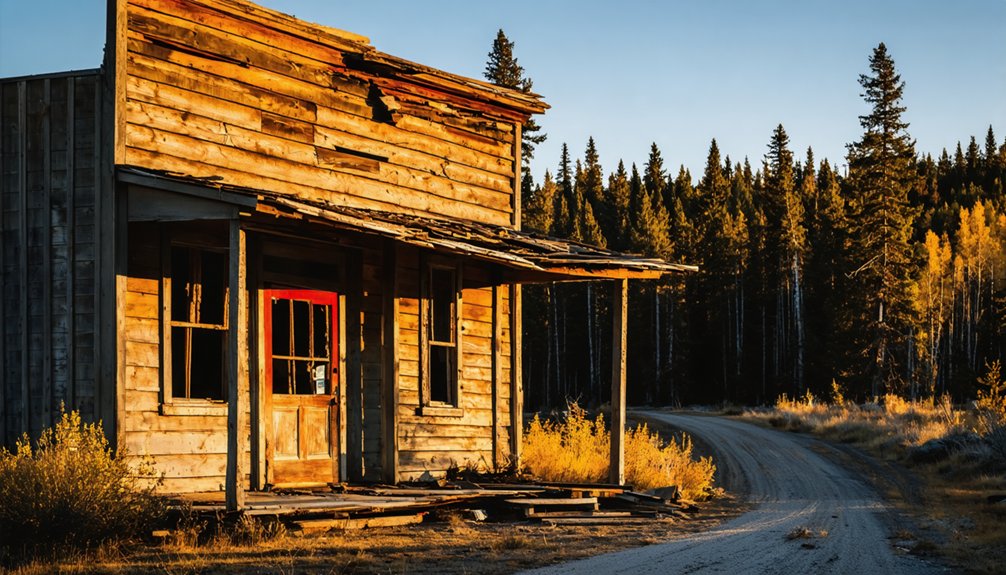
Stepping out of your vehicle at Moose City, you’ll notice the Forest Service sign before anything else — because there’s genuinely little else to notice. That historical signage marks a townsite that young timber has almost completely reclaimed.
Where saloons, hotels, and general stores once stood, you’ll find only faint level spots pressed into the earth beneath the trees. Don’t expect mining equipment scattered dramatically across the landscape — it’s gone, along with the jail workers dismantled in 1924.
What remains is quiet forest and the subtle suggestion of human activity beneath your feet. It’s a place that rewards imagination more than observation.
You’re fundamentally standing inside a vanished community, reading its absence rather than its presence, which carries its own kind of weight.
When Is the Best Time to Visit Moose City, Idaho?
You’ll want to plan your visit to Moose City during the summer or fall, when the roads are passable and the site is accessible.
Winter brings heavy snow that can block access entirely, making the already-remote location even harder to reach.
Summer runs cool in this part of Idaho, so you’ll stay comfortable while you explore the forested remains of the old townsite.
Best Seasons To Visit
Summer and fall are your best bets for visiting Moose City, since winter snow can make the area inaccessible and spring conditions remain unpredictable. The cool summer temperatures make exploring the timber-covered townsite comfortable, while fall adds striking color to an already atmospheric landscape.
Here’s why timing your visit matters:
- Summer gives you the clearest access to walk the few level spots where buildings once stood, connecting you to the preservation challenges that have erased nearly everything.
- Fall strips away some undergrowth, occasionally revealing subtle ground-level traces of historical artifacts hidden beneath decades of regrowth.
- Winter closes the door entirely — snow reclaims the silence, reminding you how thoroughly nature disciplines forgotten places.
Choose your window wisely; Moose City rewards the deliberate traveler.
Winter And Summer Conditions
Winter buries Moose City under snow that makes the already faint traces of the old townsite completely unreachable, so you’ll want to plan your visit between late spring and early fall.
Summer brings cool temperatures that make hiking through the young timber reclaiming the old diggings genuinely pleasant.
Fall offers crisp air and thinner undergrowth, giving you a slightly clearer sense of the ground’s subtle level spots where buildings once stood.
Either season rewards patience.
Preservation challenges are real here — decades of weather, forest regrowth, and the 1924 Forest Service work camp dismantled nearly everything.
The cultural significance of Moose City lives in its history, not its ruins.
Come prepared to read the land carefully, because the town won’t announce itself.
How Do You Get to Moose City in Clearwater County?
Getting to Moose City in Clearwater County is straightforward enough that a standard 2WD vehicle can handle the road, but don’t let that fool you into thinking it’s a casual detour. The remoteness demands respect, and the Forest Service sign marking the site is one of the few historic landmarks you’ll actually spot.
Before you roll out, keep these realities in mind:
- The town is nearly invisible — young timber has swallowed the old townsite whole.
- Local legends won’t guide you — sparse historic references make this one of Idaho’s hardest ghost towns to pinpoint.
- You’re chasing ghosts — only a few level spots remain where buildings once stood.
Plan carefully, and the journey itself becomes the reward.
What Should You Pack for a Remote Idaho Ghost Town Like Moose City?
Knowing how to reach Moose City is only half the battle — what you bring with you determines whether you walk away with a great story or a miserable one. Pack layered clothing since summers run cool and conditions shift fast. Sturdy boots handle the uneven, timber-covered ground better than trail runners. Bring plenty of water, a paper map, and a charged battery pack since cell service won’t save you out here.
For photography tips, shoot during golden hour when low light adds atmosphere to those few remaining level spots and Forest Service signage. A wide-angle lens captures the reclaiming timber beautifully. If urban legends draw you here, bring a notebook — locals carry stories the ground no longer tells.
Pack light, but pack smart.
Which Idaho Ghost Towns Are Closest to Moose City?
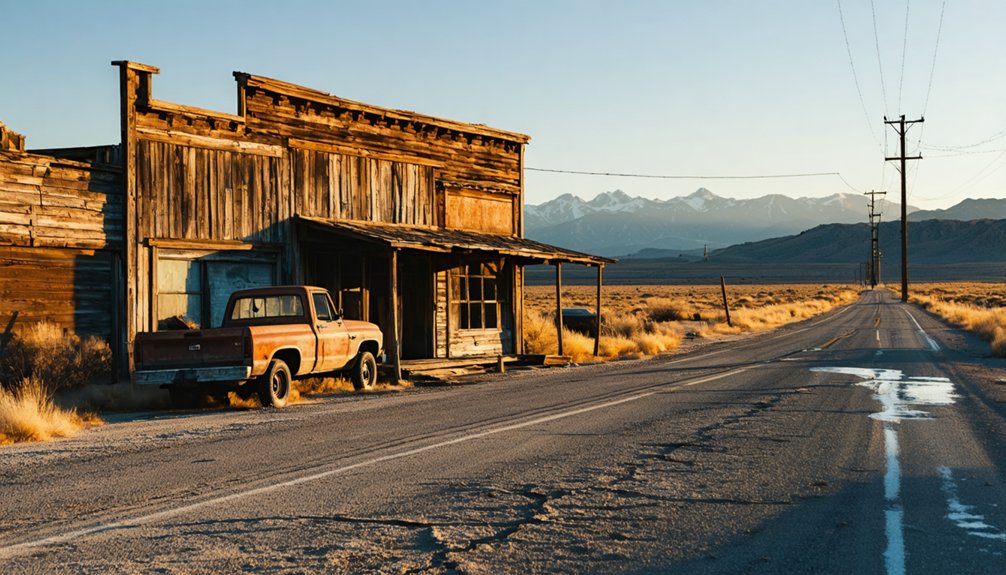
Once you’ve explored Moose City’s timber-reclaimed lots and Forest Service marker, Silver City makes the strongest case for your next stop among Idaho’s ghost towns. Unlike Moose City’s vanished footprint, Silver City preserves genuine ghost town architecture and scattered mining equipment you can actually walk among.
Silver City preserves what Moose City lost — real ghost town bones you can actually walk among.
Here are three nearby stops worth your freedom-fueled drive:
- Silver City – Owyhee County’s crown jewel, offering intact buildings and raw frontier atmosphere that’ll genuinely move you.
- Pierce – Where Idaho’s gold rush ignited on October 1, 1860, connecting you directly to the story that created Moose City.
- Elk City – A small historic mining community tucked into the Clearwater mountains, keeping that rugged, untamed spirit alive.
Each stop deepens the journey considerably.
What Makes Moose City Different From Silver City?
When you visit Silver City, you’ll find preserved buildings, maintained roads, and other visitors sharing the experience with you — it’s a ghost town you can actually read and walk through.
Moose City offers you something entirely different: raw wilderness reclaiming a townsite so thoroughly that you’ll struggle to find proof a community ever existed there.
If you’re after solitary exploration and a deeper imaginative challenge, Moose City rewards that instinct in ways a more polished destination never could.
Ruins Versus Raw Wilderness
While both Moose City and Silver City tell stories of Idaho’s gold rush era, they couldn’t be more different as destinations. Silver City offers historical artifacts, restored buildings, and modern preservation efforts. Moose City gives you something rawer — freedom to stand where a town once breathed and feel its silence.
Here’s what sets them apart emotionally:
- Silver City lets you photograph surviving structures and walk maintained paths.
- Moose City forces you to imagine — young timber has swallowed the townsite whole.
- Moose City’s invisibility makes discovery feel earned, not handed to you.
You won’t find interpretive signs or gift shops here. You’ll find level ground, forest, and the quiet weight of a place history forgot. That’s the real draw.
Crowds Versus Solitary Exploration
Silver City draws a crowd — and that’s exactly the point. It offers modern preservation, historical artifacts, and enough surviving structures to satisfy casual visitors. You’ll share it with tour groups, photographers, and weekend explorers.
Moose City offers something entirely different. You won’t find guided tours or roadside markers beyond a single Forest Service sign. Young timber has swallowed the townsite, leaving only faint level spots where buildings once stood. No historical artifacts survive above ground. No modern preservation effort exists here.
What you get instead is raw solitude. You’re reading the land itself, piecing together a vanished world through context and imagination. If you crave freedom over convenience and silence over spectacle, Moose City rewards exactly the kind of traveler willing to seek it out.
How Do You Build a Two-Day Idaho Ghost Town Road Trip Around Moose City?
Structure your trip this way:
- Day one — Drive into Clearwater County, absorb the landscape, and locate the marked site where preservation efforts have kept the memory alive despite vanished historical artifacts.
- Day two — Push toward Pierce, where Idaho’s 1860 gold discovery gave birth to everything Moose City became.
- Both evenings — Camp under open Idaho skies, letting the silence remind you that freedom isn’t found in crowds — it’s found exactly here, in forgotten places worth remembering.
Frequently Asked Questions
Is Moose City on Any Official Idaho Historical Registry or Landmark List?
The knowledge doesn’t confirm Moose City’s historic preservation status or archaeological significance on any official registry. You’ll want to dig deeper into Idaho’s State Historical Society records to uncover that freedom-seeking answer yourself!
Can You Legally Pan for Gold at the Moose City Site Today?
You’ll need to check current Forest Service regulations before gold panning at Moose City, as legal restrictions apply on federal land. Recreational gold panning’s often permitted, but you must confirm rules beforehand!
Are There Any Campgrounds Located Near the Moose City Ghost Town?
You’ll find Forest Service campgrounds near Moose City’s remote site. Grab your camping permits ahead of time, embrace the wild freedom of Idaho’s backcountry, and don’t forget wildlife safety precautions while exploring this untamed, timber-reclaimed landscape!
Has Moose City Ever Been Featured in Any Ghost Town Publications?
Like a needle in a haystack, you’ll find Moose City mentioned in historical ghost tales on ghosttowns.com, where abandoned mining structures and the town’s fleeting past earn it a sparse but notable published reference.
Is Cell Phone Service Available Near the Moose City Site in Idaho?
Don’t count on cell service near Moose City — you’re deep in Idaho’s Clearwater County wilderness, where signal strength drops fast. Embrace the freedom of going off-grid and bring a paper map for orienting yourself in this remote ghost town!
References
- https://www.ghosttowns.com/states/id/eagle.html
- https://www.facebook.com/groups/1130011148218111/posts/1504227110796511/
- https://www.youtube.com/watch?v=1RS6qsZt6bA
- https://sunnyridgerv.com/blog/silver-city
- https://www.letsgoboise.com/silver-city-idaho-ghost-town/
- https://en.wikipedia.org/wiki/List_of_ghost_towns_in_Idaho
- https://history.idaho.gov/wp-content/uploads/2018/08/0064.pdf
- https://www.picton.us/picton/idaho-1950s-stories
- https://yellowpinetimes.wordpress.com/2023/04/09/idaho-history-apr-9-2023/
- https://visitidaho.org/travel-tips/boom-or-bust-exploring-idaho-ghost-towns/