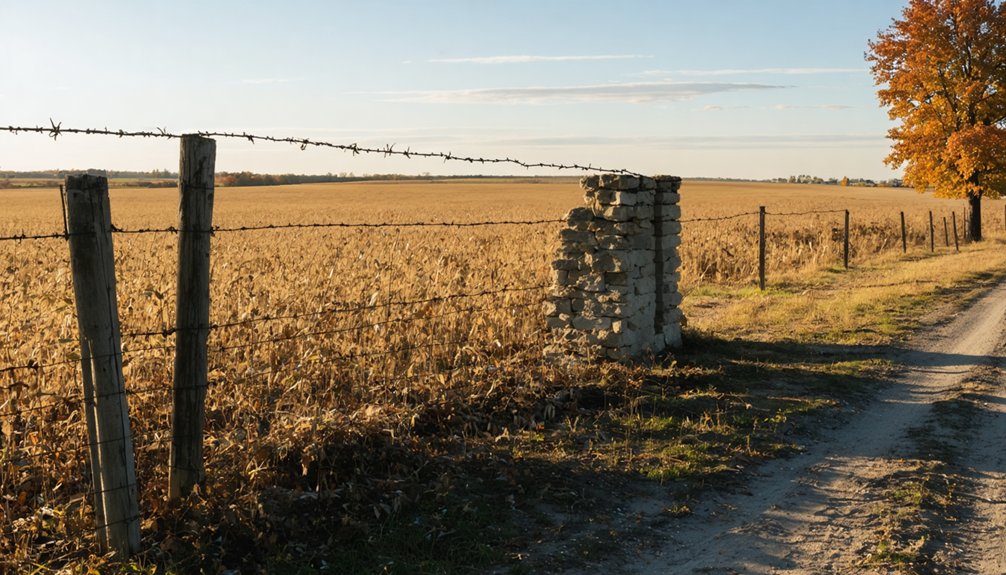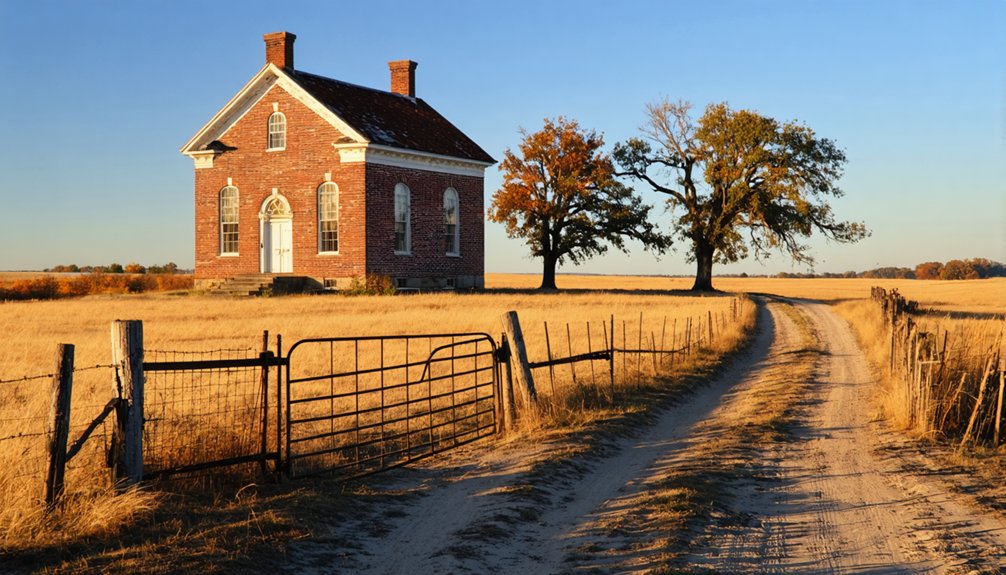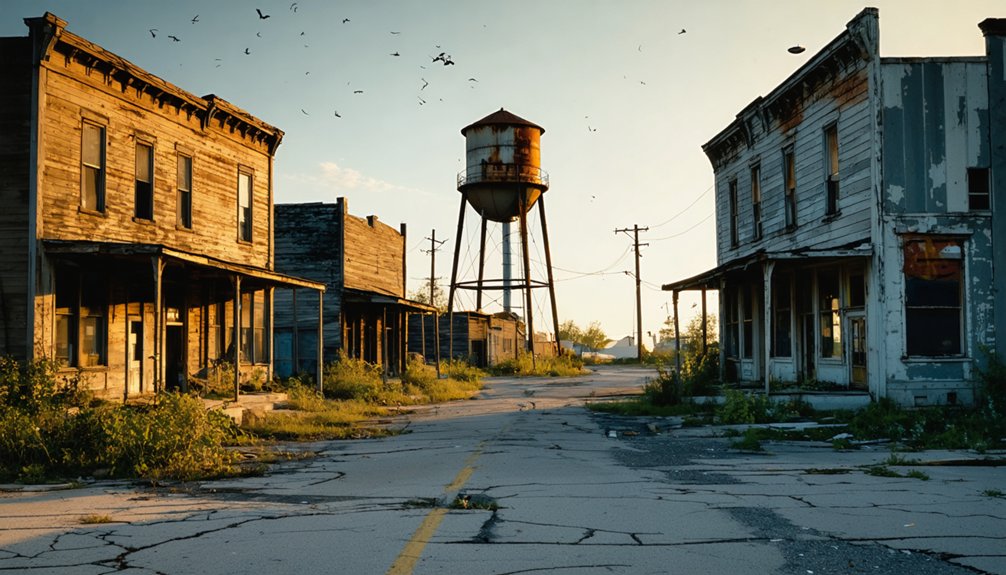
To plan your ghost town road trip to Schoper, Illinois, head eight miles from Carlinville into Macoupin County’s quiet rural landscape. Once home to 650 miners and the state’s largest coal operation, Schoper rose and collapsed within a single decade after Standard Oil closed its mines in 1925. Today, no signs or structures mark what once stood here — only open roads and silence remain. Keep going, and you’ll uncover the full story of this vanished industrial world.
Key Takeaways
- Schoper is located eight miles from Carlinville in Macoupin County, Illinois, making it an easy day trip destination.
- No markers, signage, or guided tours exist, so visitors must explore via open rural roads independently.
- The site once housed 650 miners and a thriving community but was completely abandoned by the mid-1920s.
- Nearby ghost towns like Coffeen, Kincaid, and Tovey can be combined into a fuller coal country road trip.
- The last remaining structure, Schoper Powerhouse and Mine Offices, was demolished in 2003, leaving only open terrain.
What Was Schoper, Illinois?
Once a thriving coal town nestled eight miles from Carlinville in Macoupin County, Schoper, Illinois, was born from the ambitions of Standard Oil and the promise of what lay beneath Thomas Schoper’s 500-acre family farm.
Eight miles from Carlinville, Standard Oil’s ambitions transformed one family’s farm into a booming Illinois coal town.
What started as agricultural history — a working family farm rooted in the Illinois soil — transformed almost overnight into an industrial powerhouse after Standard Oil purchased the property in 1918.
Geological surveys revealed a seven-foot coal seam beneath the land, and Standard Oil wasted no time sinking two mines: Berry and Schoper.
The town grew fast, fueled by coal money and working-class grit.
Today, local legends keep Schoper’s memory alive, though the town itself has long since faded, leaving behind little more than ghost town whispers on the Illinois prairie.
How Standard Oil Turned a Family Farm Into a Company Town
When a coal shortage gripped the nation in 1917, Standard Oil of Indiana didn’t wait around — they went looking for a solution buried in the Illinois earth. They bought Thomas Schoper’s 500-acre farm in 1918, and what followed reshaped the landscape and community identity of Macoupin County forever.
Here’s how it unfolded:
- Geological surveys revealed a seven-foot coal seam beneath the farmland.
- Standard Oil sank two mines: Berry and Schoper.
- They ordered 192 Sears Honor-Bilt homes for $1 million to house workers.
- Only 12 homes were built in Schoper itself.
- The economic impact was immediate — 650 men worked the Schoper mine alone.
One family’s farm became an entire town practically overnight.
Schoper at Its Peak: The Largest Coal Mine in Illinois
At its peak, Schoper wasn’t just another coal town scratching at the earth — it was the largest coal mine in all of Illinois. When you walk this land today, you’re standing where 650 men once descended into the earth daily, hauling up to 4,000 tons of coal per shift.
The nearby Berry Mine added another 450 workers pulling 2,000 tons more. These weren’t just numbers — they were community stories written in sweat and coal dust.
The industrial relics that once defined this landscape hummed with real ambition. Standard Oil had built something extraordinary here, a powerhouse operation fueling a nation.
That scale is hard to imagine now, but understanding it makes your visit to Schoper far more meaningful.
Why Schoper Collapsed Within a Decade
Yet for all its industrial muscle, Schoper’s collapse came fast — by the mid-1920s, the boom had already gone bust. Company towns built around single industries are fragile by nature, and Schoper’s mining history proves exactly that. When the coal stopped, everything stopped.
Here’s what brought it down:
- Standard Oil no longer needed the coal supply it once desperately sought
- A July 1925 notice confirmed the mine’s permanent closure
- Workers lost jobs, then left — taking the community with them
- The company town structure meant no economic diversity to fall back on
- Without industry, the houses, the streets, the life simply emptied out
You’re looking at a place that went from 650 employed miners to silence in under a decade. That’s the real cost of depending on one thing.
What’s Left to See at Schoper Today?
Visiting Schoper now means confronting how thoroughly a place can vanish. The last significant structure standing was the Schoper Powerhouse and Mine Offices, a massive concrete Federalist building that embodied both urban decay and the fading memory of industrial ambition.
In summer 2003, even that was torn down, erasing the final chapter of historical preservation anyone might’ve pursued. Today, you won’t find markers, museums, or guided tours. You’ll find open land, roughly eight miles from Carlinville, quietly holding its secrets beneath the Illinois sky.
Still, driving out there carries weight. You’re standing where 650 men once worked, where a million-dollar housing order shaped lives, where a boom town dissolved in under a decade. That invisible history belongs to anyone willing to seek it.
How to Find Schoper From Carlinville
Getting there’s part of the experience. Schoper sits roughly eight miles from Carlinville, deep in Macoupin County, where flat farmland swallows forgotten history whole. You won’t find flashy signage or tourist markers — just open road and quiet.
Before you go, keep these details in mind:
- Carlinville serves as your base town and starting point
- Head approximately eight miles out into Macoupin County
- The area is also labeled Standard City on older maps
- Expect urban decay rather than preserved historic architecture — most structures are gone
- The Schoper Powerhouse, the last standing remnant, was demolished in 2003
You’re chasing a feeling more than a destination. What remains is land, silence, and the weight of a boom-and-bust story written in coal dust.
Other Illinois Ghost Towns Tied to the Coal Mining Era
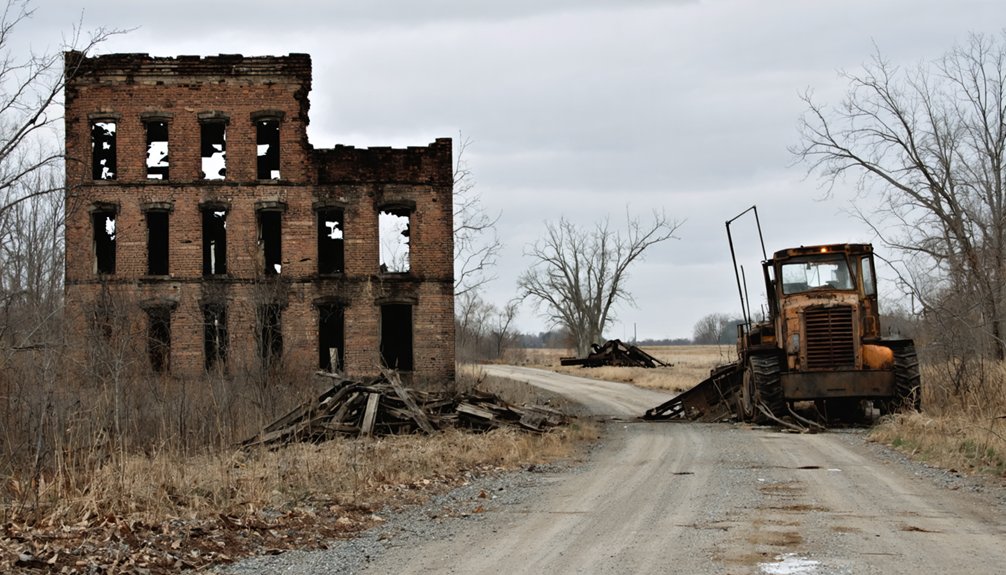
Schoper wasn’t the only Illinois town that coal built and coal broke. Across Macoupin and surrounding counties, you’ll find pockets of urban decay where company towns once hummed with industrial history.
Coalfield settlements like Coffeen, Kincaid, and Tovey each followed a familiar arc — boom, bust, abandonment. Standard Oil wasn’t unique in betting everything on coal, and neither were the workers who staked their lives on steady wages underground.
When the seams ran thin or the economics shifted, these towns emptied fast. What’s left are crumbling foundations, overgrown lots, and faded memories locals still carry.
If Schoper sparks your curiosity, let it pull you deeper into Illinois’s coal country. You’ll find a whole forgotten world waiting out there on those back roads.
What Makes Macoupin County Worth an Illinois Ghost Town Road Trip
When you’re planning your ghost town road trip, Macoupin County rewards you with a layered history that extends well beyond a single abandoned site. The county’s coal-era boom left behind a scattered legacy of forgotten settlements, each one a quiet testament to how quickly industrial ambition could rise and collapse.
You’ll want to anchor your trip in nearby Carlinville, which not only served as Schoper’s closest hub but also received homes from the very same 1918 Sears order that shaped the company town itself.
Macoupin County’s Ghost Town Legacy
Why stop at just one ghost town when Macoupin County has more buried history than most Illinois counties combined? Its mining heritage and industrial decline left a landscape worth exploring on your own terms.
You’ll find echoes of forgotten ambition scattered across the region:
- Schoper, Standard Oil’s abandoned company town
- Standard City, the alternate name locals still recognize
- Berry Mine’s vanished workforce community
- Carlinville’s Sears homes, ordered alongside Schoper’s dozen
- Wood River’s connection to the same 1918 boom
Each site tells a piece of the same story — coal, corporate ambition, and collapse.
Macoupin County isn’t just a detour; it’s an open-air museum without admission fees or guided tours. You set the pace, and history does the rest.
Carlinville’s Historical Connections
Eight miles from Schoper’s vanished mine shafts, Carlinville holds its own piece of the 1918 story — 180 of the Sears Honor-Bilt homes Standard Oil ordered that year still stand today, the largest collection of Sears kit homes in the world.
Walking those streets, you’re stepping through living mining history, touching the same boom-era ambition that briefly made Schoper the largest coal mine in Illinois. These homes outlasted the industry that built them.
Industrial decline erased Schoper entirely, but Carlinville absorbed its legacy in brick, wood, and plaster. You can drive between both sites in minutes, tracing a complete arc — from a ghost town that disappeared to a neighborhood that survived.
That contrast makes Macoupin County’s story worth the road trip.
Frequently Asked Questions
Was Schoper Ever Officially Incorporated as a Town in Illinois?
As all that glitters isn’t gold, Schoper never gained official incorporation. You’ll find its ghost town history tied purely to its mining legacy — a company town born, thrived, and vanished with Standard Oil’s coal ambitions.
Did Thomas Schoper’s Family Remain in the Area After the Sale?
The records don’t confirm if the Schopers stayed, but local legends suggest roots run deep. You’d find mineral rights changed hands, yet family echoes linger across Macoupin County’s forgotten, freedom-soaked landscape.
Are There Any Photographs of Schoper During Its Peak Mining Years?
You’ll find Schoper’s mining history captured in photographic archives at local Illinois historical societies. These evocative images transport you back to the town’s bustling peak, where 650 free-spirited miners once shaped their own remarkable destiny.
Can Visitors Legally Access the Land Where Schoper Once Stood?
Crumbling silence blankets the land — you’d need permission to access it, as it’s private property. No abandoned structures remain to draw you in, and ghost town legends alone can’t grant you legal entry.
Did Any Former Schoper Residents Document Their Experiences Living There?
No documented accounts exist, but you’ll find ghost town legends and local resident stories whispered through Macoupin County’s history. Seek out longtime Carlinville locals—they’re your best living connection to Schoper’s vanished world.
References
- https://drloihjournal.blogspot.com/2022/09/lost-towns-of-illinois-schoper-illinois.html
- https://en.wikipedia.org/wiki/List_of_ghost_towns_in_Illinois
- https://www.ghosttowns.com/states/il/il.html
- https://drloihjournal.blogspot.com/p/lost-towns-of-illinois-series.html
- https://freepages.rootsweb.com/~gtusa/history/usa/il.htm
- https://www.onlyinyourstate.com/experiences/illinois/creepy-ghost-towns-il
- https://www.youtube.com/watch?v=f04r5CCC7qY
- https://www.youtube.com/watch?v=X-k9IxjPWqc
- https://kids.kiddle.co/List_of_ghost_towns_in_Illinois
- https://www.youtube.com/watch?v=M9JL8xIvjA4