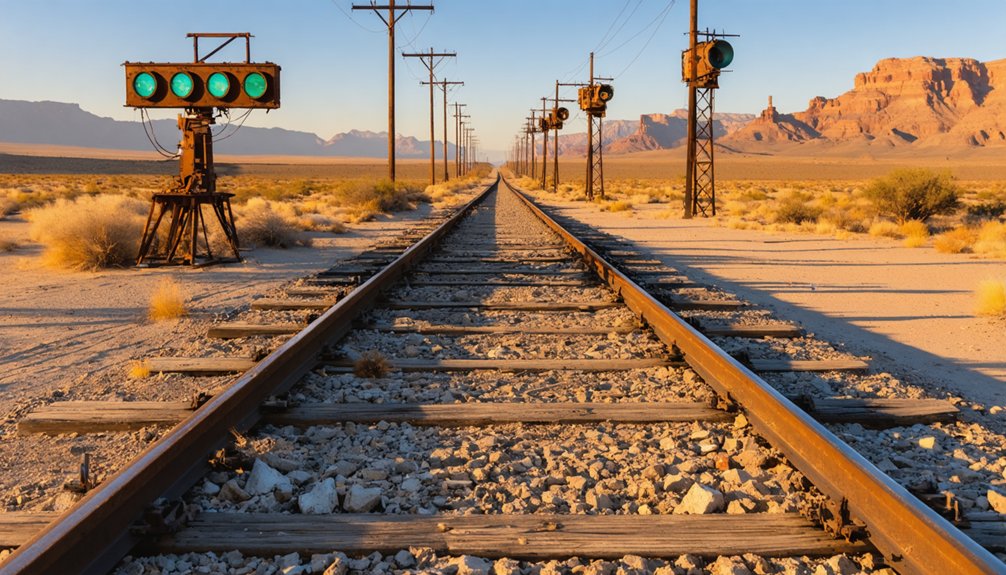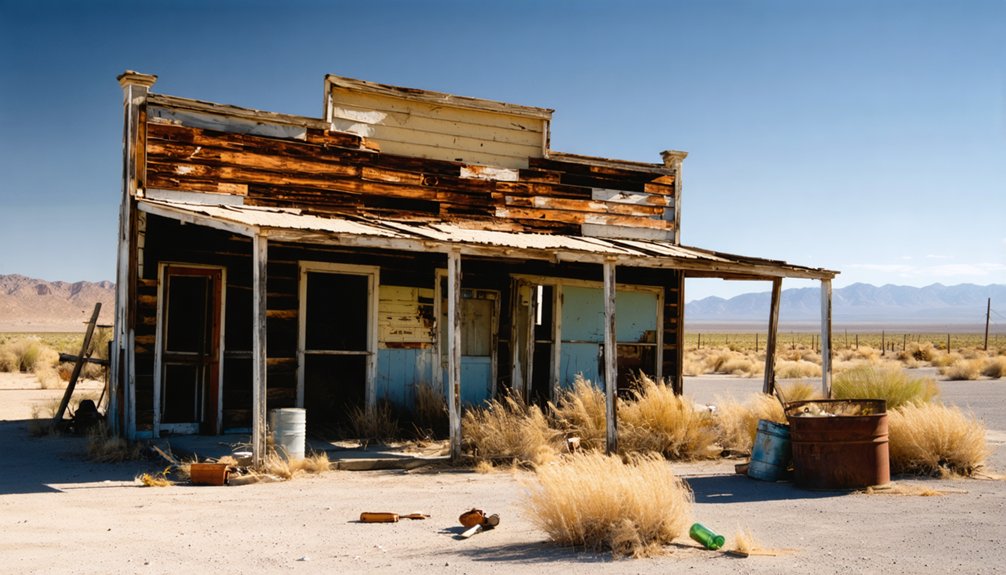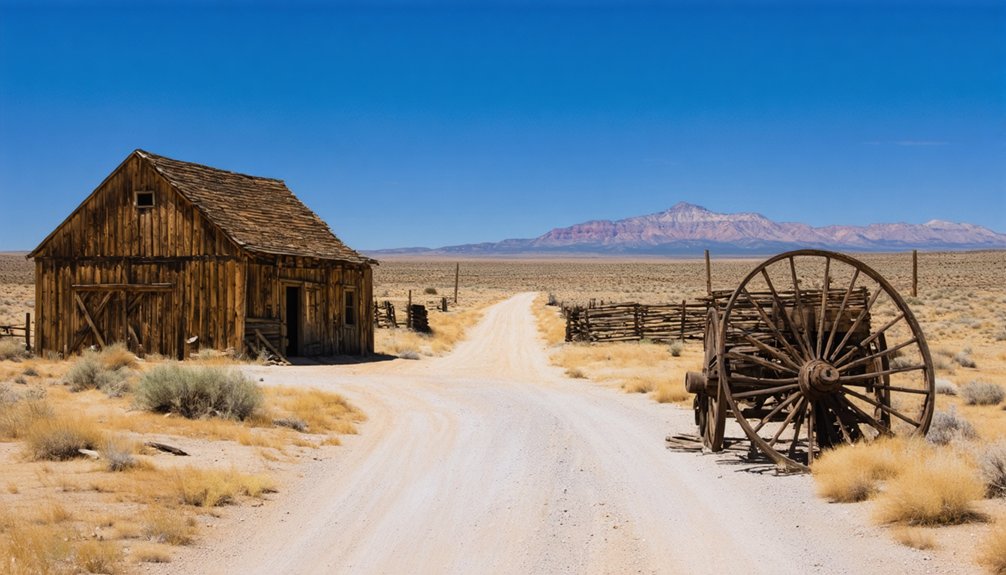
Planning a ghost town road trip to Mt. Trumbull means heading into Arizona’s remote Strip desert, where washboard roads lead to genuine frontier history. Start in St. George and follow BLM-1004 southeast across sweeping red desert flats to Bundyville, a Mormon pioneer settlement featuring a restored 1922 schoolhouse. Visit in spring or fall for the best conditions. Pack plenty of water, recovery gear, and a satellite communicator—and everything you need to plan your trip is just ahead.
Key Takeaways
- Start from St. George, traveling south on BLM-1004 and County Road #5 across the Arizona Strip, covering roughly 34 remote desert miles.
- Visit the restored 1922 schoolhouse, scattered homestead ruins, and nearby ghost towns like White Hills, Chloride, and Santa Claus for rich frontier history.
- Travel in spring (April) or fall (October) to avoid dangerous summer heat, winter snow, and impassable muddy road conditions.
- Pack multiple gallons of water, recovery equipment, a satellite communicator, and navigation tools, as the area has no cell service or resupply points.
- Roads are 2WD-accessible in dry conditions but become impassable after rain, so monitor weather closely before departing.
What Makes Mt. Trumbull Worth the Drive?
Tucked deep within Arizona’s remote Strip desert, Mt. Trumbull offers something rare — a genuine piece of frontier history that hasn’t been sanitized for mass tourism. You’ll explore the ruins of Bundyville, a Mormon pioneer settlement where Abraham Bundy’s family homesteaded in 1916, carving out a self-sufficient life under brutal desert conditions.
The 1922 schoolhouse stands as the site’s crown jewel, a tribute to preservation efforts that honor the community’s cultural significance. Restored and still standing, it represents over 40 years of settler resilience in one of America’s most unforgiving landscapes.
For those craving true freedom and adventure, Mt. Trumbull delivers isolation, authenticity, and raw desert beauty that paved-road destinations simply can’t replicate. It’s worth every mile of rough gravel road.
The History of Mt. Trumbull and the Bundyville Settlement
When you visit Mt. Trumbull, you’re stepping into a place shaped by Mormon pioneers who first established the settlement in the late 1870s.
The community later took the name “Bundyville” after Abraham Bundy, whose family staked a homestead claim in the area in 1916.
You’ll find that the settlement’s survival depended on lumber production, mining, and ranching — all carved out of an unforgiving desert landscape.
Mormon Pioneer Origins
Nestled in the remote Arizona Strip, Mt. Trumbull carries a legacy rooted in Mormon pioneer determination. In the late 1870s, settlers pushed into this unforgiving desert landscape, carving out a self-sufficient community against extraordinary odds. The area later became known as “Bundyville,” honoring Abraham Bundy, whose family established a homestead claim here in 1916.
These pioneers built their lives around lumber production, mining, and ranching — industries that demanded grit and resourcefulness. Today, cultural preservation efforts keep this history alive, most *particularly* through the site’s historic architecture.
The restored 1922 schoolhouse stands as the settlement’s defining landmark, offering you a tangible connection to those who shaped this isolated outpost. When you visit, you’re stepping directly into a story of frontier independence and resilience.
Bundyville Settlement History
Though the name “Mt. Trumbull” carries geographic weight, locals know this place as Bundyville — named after Abraham Bundy, whose family staked a homestead claim here in 1916. You’re walking into a settlement that once thrived on lumber production, mining, and ranching under brutal desert conditions.
The community built everything it needed to survive, reflecting a fierce spirit of independence that resonates with anyone who values freedom from outside dependence.
The archaeological significance of this site runs deep. You’ll notice remnants of a self-sufficient pioneer lifestyle scattered across the landscape.
Cultural preservation efforts have kept Bundyville’s story alive, ensuring that future visitors understand what genuine resilience looks like. This wasn’t just a town — it was a declaration that hardworking families could carve out life on their own terms.
How to Get to Mt. Trumbull From St. George
Starting from St. George, head south along BLM-1004, where wide-open desert terrain rewards those chasing true freedom. You’ll navigate BLM Road 1069 and County Road #5 across the remote Arizona Strip — roughly 34 miles southeast of Wolf Hole Lake.
Picture your journey unfolding across:
- Sweeping red desert flats stretching endlessly under a massive blue sky
- Rugged graded gravel roads carved through wildlife conservation corridors
- Isolated BLM junctions requiring precise navigation tools to identify correctly
- Desert roadside stops offering opportunities to sample local cuisine in nearby towns before venturing off-grid
- Steep road dropoffs that become impassable after rainfall
The road suits 2WD vehicles under dry conditions, but always drive during daylight. These BLM roads don’t forgive mistakes after dark.
What’s Left to See at Bundyville Today
When you arrive at Bundyville, the restored 1922 schoolhouse stands as the site’s most striking feature, offering a tangible glimpse into the community’s self-sufficient pioneer life.
You’ll also spot scattered structural ruins throughout the area, remnants of homestead-era buildings that hint at what the settlement once was.
The surrounding Sonoran desert landscape frames it all, stretching out across the remote Arizona Strip in a way that makes the isolation of these early settlers feel very real.
The Restored Schoolhouse
Once you arrive at Bundyville, the restored 1922 schoolhouse is the star of the show — and it’s easy to see why. It stood as the community’s heartbeat for over 40 years, and preservation efforts have kept its story alive for those willing to make the journey.
Here’s what you’ll find when you step onto the grounds:
- Weathered wooden walls that echo decades of desert life
- Historical artifacts connecting you to the original settler families
- An authentic one-room layout frozen in early 20th-century simplicity
- Sweeping desert views framing the structure against raw Arizona wilderness
- Quiet isolation that makes the resilience of its builders feel tangible
Nothing else remains quite like it — this schoolhouse *is* Bundyville’s legacy.
Remaining Structural Ruins
Beyond the schoolhouse, Bundyville’s remaining ruins tell a quieter, more fragmented story. Scattered foundations, collapsed walls, and weathered debris mark where homes and outbuildings once stood.
You’ll notice how the desert has steadily reclaimed these structures, weaving them into surrounding wildlife habitats where lizards, ravens, and desert scrub now thrive undisturbed.
Walking through the site, you’re stepping directly into cultural preservation territory — each crumbling remnant represents the raw, self-sufficient spirit of early homesteaders who carved a life from unforgiving terrain. Nothing here is manicured or staged.
The ruins exist honestly, stripped down by decades of sun, wind, and neglect.
Explore carefully, respect what remains, and resist disturbing any artifacts. These fragments aren’t just rubble — they’re the last physical evidence of Bundyville’s brief but determined existence.
Surrounding Desert Landscape
Stepping away from the ruins, the surrounding desert landscape opens up with its own raw, unhurried beauty. You’ll find yourself surrounded by an untamed wilderness that stretches endlessly across the Arizona Strip.
The desert flora and mountain vistas create a striking backdrop that rewards anyone willing to make the journey:
- Twisted juniper trees clinging to rocky desert soil
- Sweeping mountain vistas of Mt. Trumbull’s volcanic ridgeline
- Hardy desert flora including sagebrush, yucca, and prickly pear cactus
- Expansive open skies offering unobstructed views for miles
- Ancient lava flows carving dramatic textures across the terrain
Out here, silence isn’t empty — it’s full. The landscape reminds you why places like Bundyville existed: rugged, self-sufficient, and completely free from the noise of modern life.
Arizona Strip Ghost Towns Near Mt. Trumbull Worth a Stop
While you’re out exploring the Arizona Strip, the ghost towns scattered across the region make Mt. Trumbull just one stop on a broader adventure. White Hills, Chloride, and Santa Claus each tell their own stories of boom-and-bust desert life.
Chloride, Arizona’s oldest mining town, still breathes with quirky murals and surviving storefronts.
Santa Claus offers an eerily abandoned holiday-themed settlement frozen in time.
White Hills echoes with silver mining history stretching back to the 1890s.
Spring visits reward you with wildflower blooms painting the desert floor between stops.
Once the sun drops, the night sky over the Arizona Strip delivers an unobstructed canopy of stars.
Linking these towns into one route transforms your Mt. Trumbull trip into an unforgettable multi-destination expedition.
Best Time of Year to Visit Mt. Trumbull
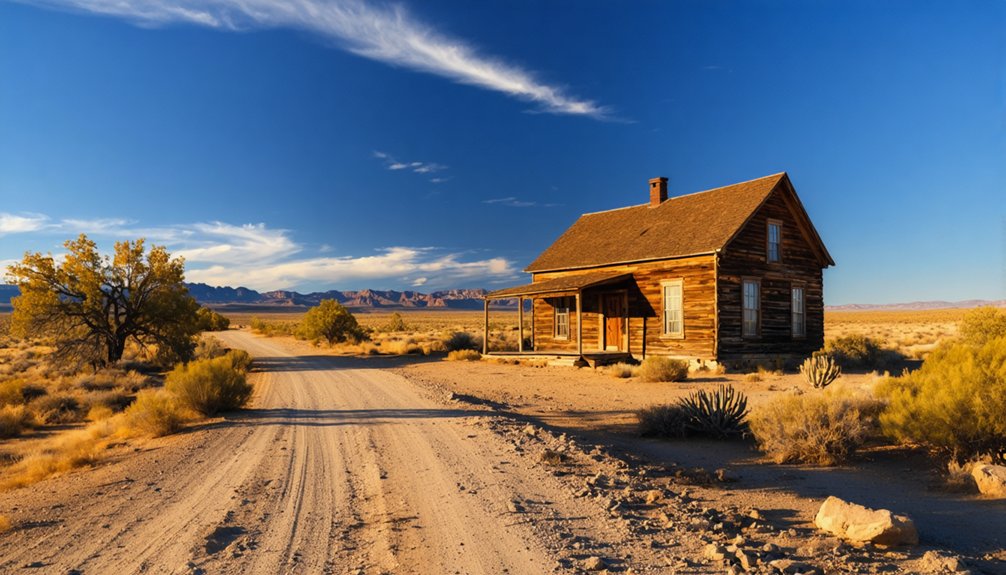
Timing your visit to Mt. Trumbull makes all the difference between an epic adventure and a miserable slog. Spring (April) and fall (October) offer ideal conditions for exploration, wildlife encounters, and stunning photography tips you’ll actually use.
- April mornings bring crisp desert air, blooming wildflowers, and active wildlife emerging from winter.
- October light casts golden tones across red rock formations, perfect for landscape photography.
- Summer heat turns trails dangerous, demanding excessive water supplies and limiting exploration.
- Winter snowfall creates unpredictable road conditions, making graded gravel paths genuinely impassable.
- Post-rain roads develop steep, slippery dropoffs that’ll strand even experienced off-roaders.
You’ll want maximum daylight hours, so plan arrival early. The desert rewards those who respect its rhythms and punishes those who don’t.
Water, Recovery Gear, and Comms You Need for the Arizona Strip
Once you’ve locked in your travel window, your next move is loading up with the right gear—because the Arizona Strip will expose every gap in your preparation.
Carry multiple gallons of water per person; there’s no resupply out here, and wildlife encounters can extend your time on trail unexpectedly.
Water is non-negotiable on the Arizona Strip—carry more than you think you need and plan for the unexpected.
Pack recovery gear—traction boards, a hi-lift jack, and tow straps—because those graded gravel roads don’t forgive mistakes.
A satellite communicator isn’t optional; it’s your lifeline when cell service disappears miles before you reach the scenic viewpoints worth stopping for.
Navigation tools matter too, since road junctions aren’t always marked.
Plan for two days, move deliberately, and treat every mile of BLM road as the remote wilderness it actually is.
Frequently Asked Questions
Is There Cell Phone Service Available Along BLM Road 1069?
Like a signal lost in the void, you’ll find cell service vanishes on BLM Road 1069. The rugged road conditions demand you carry a satellite communication device to stay safely connected with the outside world.
Are Campfires Permitted Within the Mount Trumbull Wilderness Area Boundaries?
The knowledge base doesn’t specify campfire regulations for Mount Trumbull Wilderness. You’ll want to check with BLM directly for current wilderness safety guidelines before igniting any campfires within the designated wilderness area boundaries.
Can Visitors Enter and Explore Inside the Restored Bundyville Schoolhouse?
You can explore the restored Bundyville schoolhouse, a powerful symbol of settler resilience. Its rich schoolhouse history spans over 40 years, and restoration details reveal a community hub that thrived until 1966—walk freely through living pioneer legacy.
Is There an Entrance Fee Required to Visit Mt. Trumbull Ghost Town?
You don’t need to pay an entrance fee to visit Mt. Trumbull! It’s free to explore, embracing true freedom. The site’s historical preservation guarantees visitor amenities remain accessible, letting you roam this remote Arizona desert ghost town unrestricted.
Are Pets Allowed on Trails Within the Mount Trumbull Wilderness Area?
Like a wild spirit roaming free, you can bring pets, but pet safety demands responsibility. Leash regulations apply, so you’ll want to keep your companion secure on Mount Trumbull’s rugged, untamed wilderness trails.
References
- https://www.ghosttowns.com/states/az/mounttrumbull.html
- https://www.arizonahighways.com/ghost-town-trail
- https://www.youtube.com/watch?v=nqIwe-5ScFQ
- https://www.youtube.com/watch?v=26KT9whgPtY
- http://freepages.rootsweb.com/~gtusa/history/ontheroad/us6b.htm
- https://www.westernoutdoortimes.com/story/2020/03/01/rving/arizona-ghost-town-loop/4152.html
- https://www.thedieselapartment.com/scenic-drive-arizona-ghost-town-loop/
- https://we3travel.com/arizona-ghost-towns-road-trip-guide/
- https://www.trailsoffroad.com/US/arizona/trails/3623-ghost-town-loop