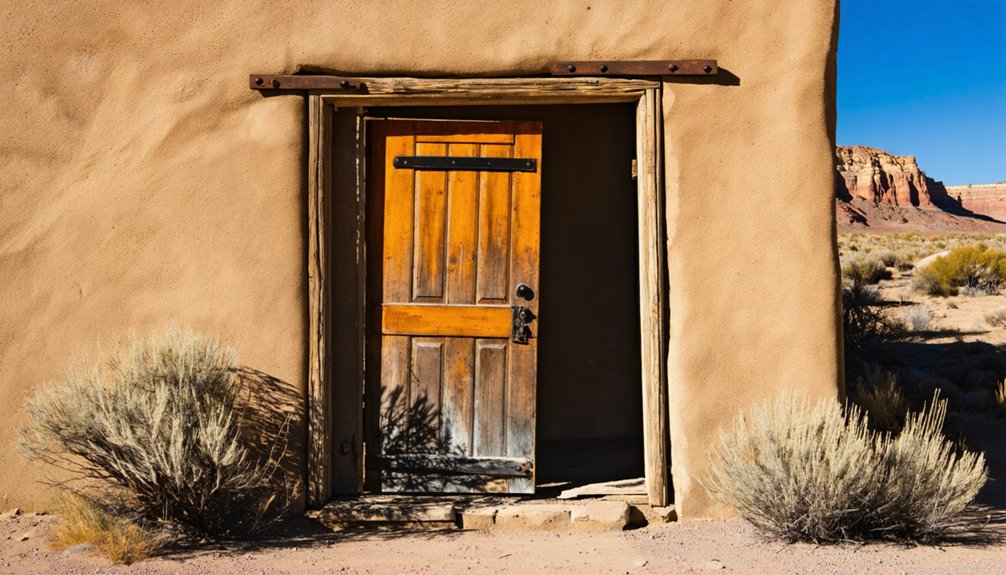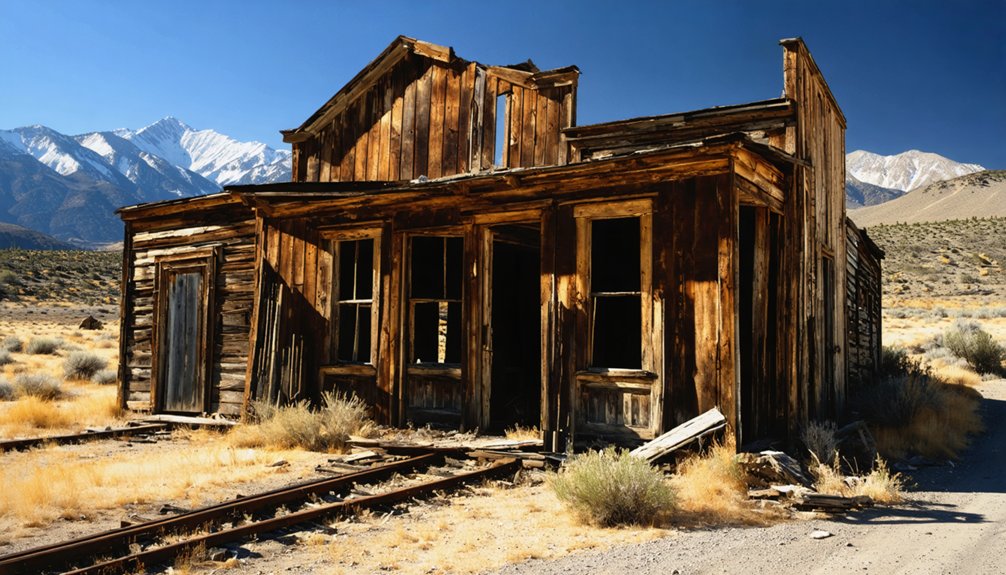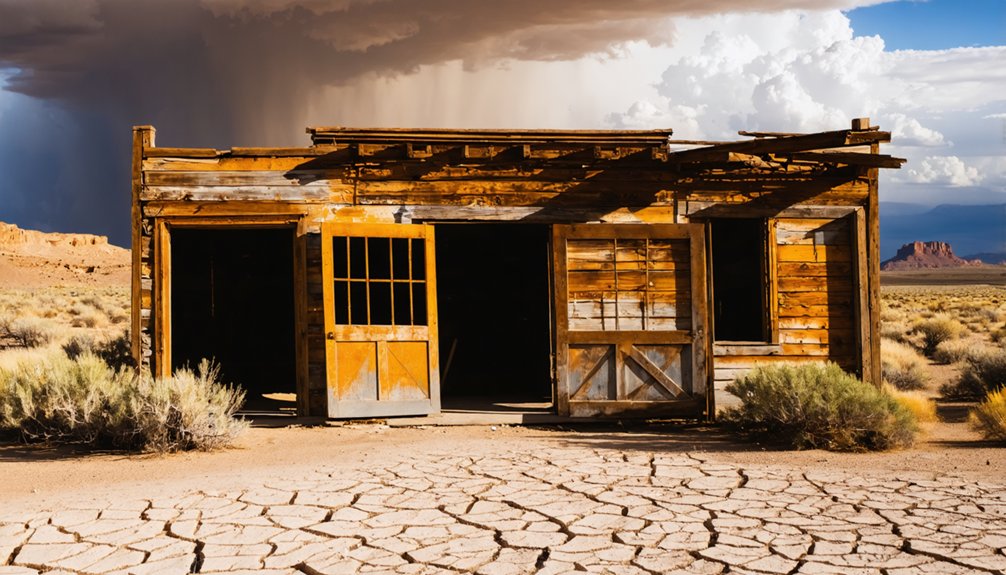
Planning a ghost town road trip to Washakie, Utah means driving about 90 minutes from Salt Lake City into Box Elder County’s quiet, dirt-road landscape. You’ll find a site that’s far more than abandoned ruins—it’s the rebuilt homeland of the Northwestern Shoshone, established in 1880 after the devastating 1863 Bear River Massacre. A historic LDS chapel, a sacred cemetery, and sweeping silence greet you. Stick around to uncover everything this remarkable destination has to offer.
Key Takeaways
- Washakie is a ghost town located in Utah, about 90 minutes from Salt Lake City via I-15 and rural dirt roads.
- Pack essential supplies, navigation tools, and check road conditions beforehand, as the area has limited cell service and challenging terrain.
- The historic LDS chapel, listed on the National Register of Historic Places, is the most notable remaining structure to visit.
- Nearby ghost towns like Iosepa, Thistle, and Frisco offer additional stops, with a five to seven-day trip enabling deeper exploration.
- Respect the site’s cultural significance, as Washakie serves as the Northwestern Band of Shoshone’s official reservation and ancestral homeland.
What Is Washakie and Why Does It Matter?
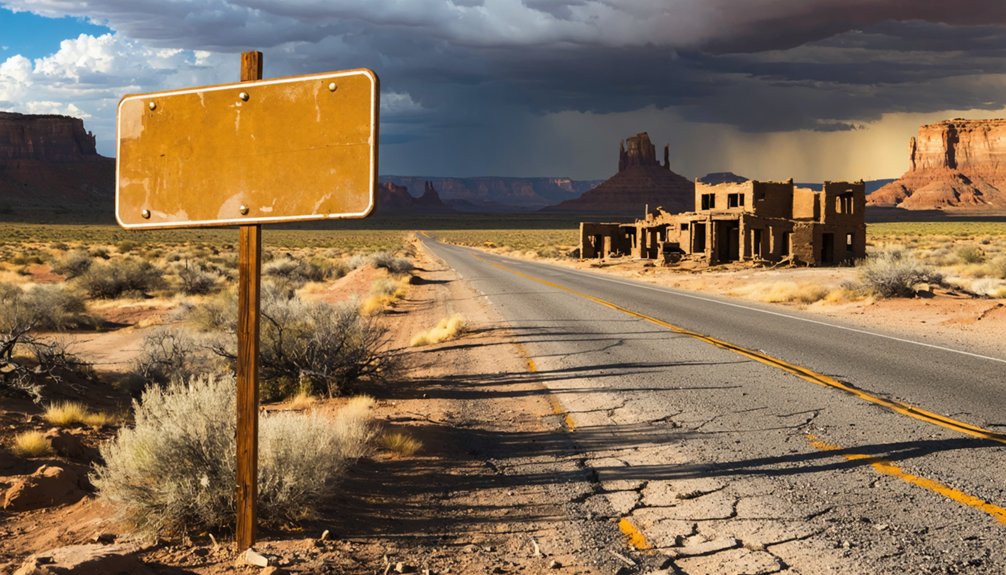
Tucked into the rural expanse of Box Elder County in northern Utah, Washakie isn’t your typical ghost town.
The Church of Jesus Christ of Latter-day Saints established it in 1880 specifically to help the Northwestern Band of Shoshone rebuild after the devastating Bear River Massacre.
For generations, this settlement functioned as a Shoshone Indian Farm, anchoring the community’s economic and cultural survival.
The Northwestern Shoshone History That Shaped Washakie
When you visit Washakie, you’re standing on ground shaped by one of the darkest moments in Shoshone history — the 1863 Bear River Massacre, which devastated the Northwestern Band and left their community in ruins.
The Church of Jesus Christ of Latter-day Saints established the settlement in 1880 specifically to help the Shoshone rebuild, giving them a working farm where generations could restore their economic and social life.
That resilience defines Washakie’s cultural legacy, and it’s why the tribe continues fighting to reclaim the surrounding land today.
Bear River Massacre Impact
Few events in American history carry the weight of the Bear River Massacre, a devastating attack on January 29, 1863, where U.S. Army troops killed hundreds of Northwestern Shoshone men, women, and children.
The massacre aftermath shattered the band’s way of life, leaving survivors without resources, shelter, or security. You’ll find it remarkable that despite this catastrophic loss, the Northwestern Shoshone didn’t disappear. Community resilience drove them forward.
By 1880, the Church of Jesus Christ of Latter-day Saints established Washakie specifically to help rebuild what the massacre had destroyed. The settlement gave survivors and their descendants a foundation — land to farm, a place to gather, and a community to rebuild.
Washakie became living proof that survival and renewal were possible even after unimaginable devastation.
Rebuilding The Shoshone Community
By 1880, the Church of Jesus Christ of Latter-day Saints had done something remarkable — it established Washakie as a deliberate act of community rebuilding for the Northwestern Shoshone.
After the devastation of the Bear River Massacre, the tribe needed more than survival; they needed a foundation for cultural revival and a place to reclaim their identity.
Washakie became exactly that. The settlement functioned as a Shoshone Indian Farm, giving the Northwestern Band a stable home and a means of self-sufficiency through most of the 20th century.
You can see community resilience written into every acre of that land — a people choosing to rebuild rather than disappear.
The farm wasn’t just agriculture; it was the social and economic heartbeat of a nation refusing to be erased.
Cultural Legacy At Washakie
Resilience runs deep at Washakie — you can feel it in the land itself. After the devastation of the Bear River Massacre, the Northwestern Shoshone didn’t disappear. They rebuilt here, farming this soil for generations and creating something enduring.
That’s community resilience in its most powerful form.
The cultural significance of Washakie extends beyond its ghost town status. The cemetery still holds the ancestors of the Northwestern Band, and the historic LDS chapel stands as proof that this community once thrived.
Today, the tribe actively works to reclaim surrounding farmland, refusing to let their connection to this place fade.
When you visit, you’re walking through living history — a story of survival, adaptation, and an unbreakable bond between a people and their land.
What Remains at Washakie Today
Today, only a handful of structures survive at Washakie, with the old LDS chapel standing as the most prominent reminder of what once thrived here. This historic structure earned a place on the National Register of Historic Places, giving you a tangible connection to the community that once called this land home.
Beyond the chapel, the Washakie remnants include a cemetery where ancestors of the Northwestern Band of Shoshone still rest. That small tract of land now functions as the tribe’s official reservation, carrying immense cultural weight within its modest boundaries.
No permanent residents remain, making Washakie a true ghost town. When you visit, you’ll walk through silence broken only by open sky and wind, standing where generations of Shoshone people built their lives after unimaginable loss.
How to Drive to Washakie From Salt Lake City
Getting to Washakie from Salt Lake City takes you north on I-15 through Box Elder County, covering roughly 90 miles before you switch onto local rural roads for the final approach.
You’ll pass through Ogden and Tremonton, where you can grab supplies before heading into rural territory. For driving tips, load Google Maps before leaving since cell service thins out once you leave the interstate.
A standard vehicle handles the paved roads fine, but stay alert for unmarked turns on the county roads. For scenic stops, the open landscape of northern Utah rewards patient travelers with wide desert views and quiet stretches rarely touched by tourism.
Give yourself about 90 minutes total from Salt Lake City, and you’ll arrive with energy to explore the site properly.
Ghost Towns Near Washakie Worth Adding to Your Route
Once you’ve explored Washakie, northern Utah puts you within striking distance of several ghost towns worth folding into your route.
Each stop carries its own historical significance, adding texture to your journey through the region’s layered past.
- Iosepa – A forgotten Hawaiian Mormon settlement with a moving memorial cemetery that tells a story unlike any other ghost towns in Utah.
- Thistle – A flooded railroad town where submerged ruins peek through, offering an eerie glimpse into a community swallowed by disaster.
- Frisco – A once-booming silver mining town in the West Desert featuring striking stone kilns still standing against the open sky.
String these together and you’ve built a route that’s equal parts history, discovery, and open road freedom.
How Many Days Should You Spend on a Washakie Road Trip?
How long you spend on a Washakie road trip depends on how deeply you want to dig into the region’s history. A focused one-day visit covers the cemetery, the historic LDS chapel, and the surrounding landscape without feeling rushed.
However, a well-planned road trip itinerary spanning five to seven days lets you explore nearby sites like Iosepa, Thistle, and the West Desert ghost towns.
Your travel accommodations will shape the pace considerably. Box Elder County’s rural setting means you’ll likely base yourself in Salt Lake City or a nearby town.
Budget an extra day if you’re adding southern clusters like Grafton or Frisco. The fuller loop covers 600 to 800 miles, so give yourself enough time to actually absorb each stop.
Road Conditions, Gear, and What to Know Before Visiting Washakie
Paved roads handle most of the drive to Washakie, but the final approach through Box Elder County’s rural stretches can turn rough depending on recent weather.
Road conditions shift quickly in this remote corner of northern Utah, so you’ll want to check conditions before leaving. Pack essential gear and stay prepared for limited services nearby.
Before you head out, cover these basics:
- Check road conditions using Utah’s UDOT traffic map, especially after rain or winter weather.
- Bring essential gear including water, a paper map, and a basic toolkit since cell service is unreliable.
- Use a standard vehicle for paved sections, but consider 4WD if you’re exploring surrounding dirt roads.
Washakie rewards the prepared traveler, not the careless one.
Frequently Asked Questions
Is There an Entrance Fee to Visit the Washakie Ghost Town Site?
Since 1880, Washakie’s ghost town history has welcomed curious explorers freely. You won’t pay an entrance fee, but always respect visitor guidelines — the cemetery and chapel grounds deserve your mindful, responsible presence.
Are Pets Allowed When Visiting the Washakie Cemetery and Chapel Grounds?
The knowledge doesn’t specify pet policies for Washakie’s cemetery and chapel grounds. You’ll want to contact the Northwestern Band of Shoshone directly to guarantee you’re respecting proper cemetery etiquette before bringing your furry companion along.
Can Visitors Legally Take Photographs Inside the Historic Washakie LDS Chapel?
Since 1880, this chapel’s stood tall! You’ll want to check with local authorities on photography etiquette before snapping shots inside, as the historical significance of this sacred space may carry specific visitor guidelines.
Is Camping Permitted Anywhere Near the Washakie Site in Box Elder County?
The knowledge doesn’t specify camping regulations directly at Washakie, but you’ll find nearby campgrounds throughout Box Elder County. Explore your freedom by checking Utah’s state parks and public lands for perfect overnight stays near this historic site!
Does the Northwestern Band of Shoshone Offer Guided Tours at Washakie?
Like a book without a guide, Washakie’s Shoshone history remains yours to explore independently. The knowledge base doesn’t confirm guided tours, but the site’s cultural significance speaks powerfully, inviting you to discover its story freely.
References
- https://www.onlyinyourstate.com/trip-ideas/utah/road-trip-ut-ghost-towns
- https://www.visitutah.com/things-to-do/history-culture/ghost-towns
- https://www.ghosttowns.com/states/ut/washakie.html
- https://www.roadtripryan.com/go/t/utah/moab/sego-ghost-town
- https://www.onlyinyourstate.com/trip-ideas/utah/abandoned-places-road-trip-ut
- https://www.youtube.com/watch?v=JDIhYM_i-vU
- https://www.americansouthwest.net/utah/grand_staircase_escalante/paria.html
- https://www.utah.com/things-to-do/attractions/old-west/ghost-towns-in-utah/
- https://www.tripadvisor.com/Attractions-g28965-Activities-c47-t14-Utah.html
- https://travelzone.bestwestern.com/southwest-ghost-towns-road-trip/