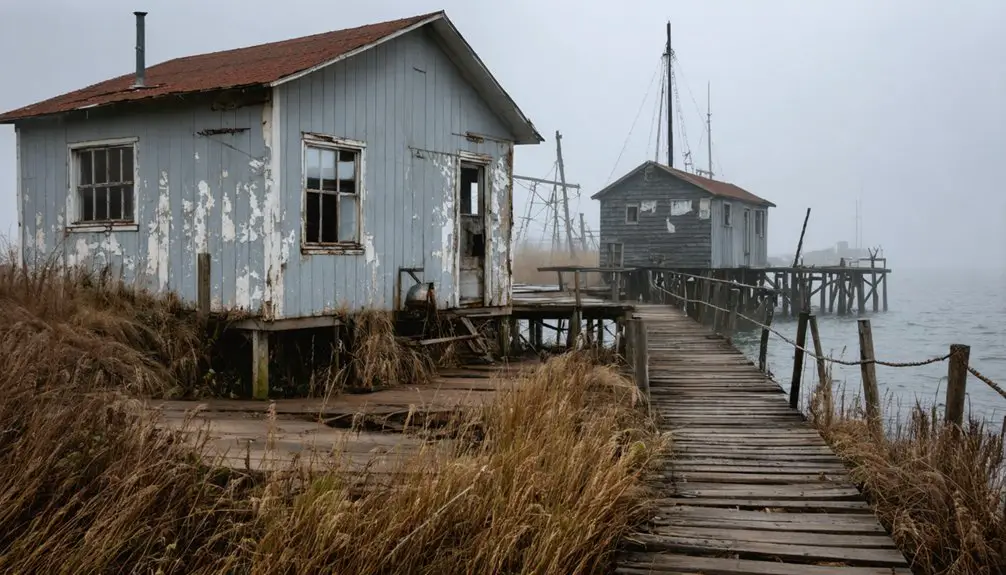
When you road trip to Muskego Settlement in Wisconsin, you’re stepping into what’s left of a remarkable 1839 Norwegian pioneer community that once thrived along Muskego Lake’s marshy shores. Five distinct immigrant groups built their lives here before time and urban sprawl swallowed nearly everything whole. You’ll also find Haunchyville lurking just miles away, Wisconsin’s most persistent ghost town legend. Stick around, and you’ll uncover every haunting detail this forgotten corner of history has left behind.
Key Takeaways
- Muskego Settlement, established in 1839 in Racine County, Wisconsin, was one of America’s earliest Norwegian-American communities and now stands largely abandoned.
- The settlement featured five distinct ethnic communities: Yankees, English, Irish, Germans, and Norwegians, each leaving unique cultural and architectural marks.
- Visitors can explore remaining architectural relics and remnants that quietly echo the once-thriving pioneer and immigrant settlement’s rich history.
- Muskego’s decline accelerated after incorporating as a city in 1964, with economic shifts drawing residents toward larger urban centers.
- Nearby Haunchyville, off Mystic Drive in Waukesha County, adds an eerie urban legend element to your ghost town road trip experience.
What Was the Muskego Settlement Ghost Town?
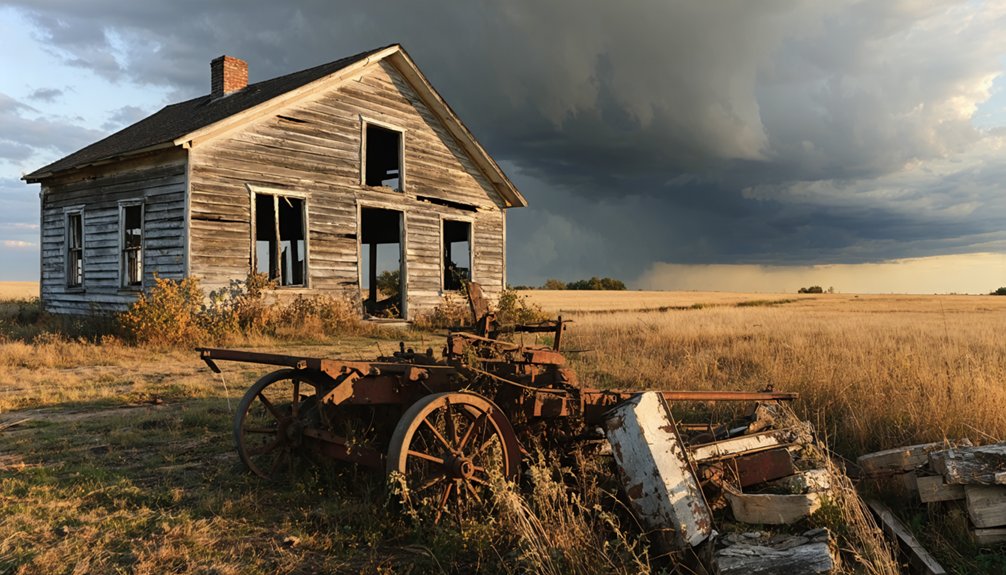
Although it’s easy to overlook on a modern map, Muskego Settlement carries the quiet weight of American frontier history — it was one of the first Norwegian-American settlements ever established in the United States, taking root in 1839 along the shores of Muskego Lake in what’s now Racine County, Wisconsin.
Muskego Settlement, established in 1839, stands as one of America’s earliest Norwegian-American communities — quiet, overlooked, yet historically profound.
Forty Norwegian pioneers arrived that year, drawn by the promise of open land, three pristine lakes, and dense forests teeming with game.
Before them, the Potawatomi called this marsh-like landscape home. Today, urban decay has swallowed much of what those settlers built, leaving behind little more than echoes.
Yet historical preservation efforts keep their story alive, reminding you that this quiet corner of southern Wisconsin once represented something radical — the freedom to start completely over.
How Norwegian Pioneers Built a Community at Muskego in 1839
When forty Norwegian pioneers stepped off their journey and onto the marshy shores of Muskego Lake in 1839, they weren’t just settling land — they were building the foundation of what would become one of the first Norwegian-American communities in the entire United States.
They carved homes from dense forests, drew on Norwegian traditions of community cooperation, and faced pioneer survival challenges head-on — brutal winters, unfamiliar terrain, and limited resources. Yet they persisted.
They established schools and a post office, creating infrastructure that reflected their fierce independence. You can almost picture them gathering near the lakeshores, speaking their native tongue while laying roots in foreign soil.
Their resilience transformed a marshy wilderness into something genuinely remarkable — a community built entirely on determination and cultural pride.
The Five Communities of the Muskego Settlement
What made Muskego Settlement truly extraordinary wasn’t just the Norwegian pioneers — it was the mosaic of five distinct communities that took root across the region, each staking out their own corner of this Wisconsin wilderness. Yankees centered around Muskego itself, while the English claimed Durham Hill’s high ground. The Irish carved out Denoon, Germans settled Tess Corners, and Norwegians anchored what became known specifically as Muskego Settlement.
As you explore today, you’ll notice how local folklore still echoes these distinct identities across the landscape. Each group left fingerprints on the historical architecture — from farmsteads to gathering halls — that shaped this corridor’s character. Walking these grounds, you’re fundamentally crossing invisible boundary lines that once defined where one world ended and another began.
Why the Muskego Settlement Became a Ghost Town
The same growth that breathed life into Muskego Settlement ultimately swallowed it whole. As Muskego incorporated as a city in 1964, modern infrastructure replaced the quiet, lake-bordered world the Norwegian pioneers had carved out in 1839.
Historical economic shifts drew residents toward urban centers, leaving the original settlement behind like a faded photograph.
You won’t find bustling streets here anymore. What remains are architectural remnants and stories embedded in the landscape — echoes of five distinct communities who once shared this territory.
The forests thinned, the trading posts closed, and the old Norwegian settlement dissolved quietly into memory.
But that’s exactly why you should visit. There’s something freeing about standing where history paused, breathing in land that progress forgot to completely erase.
Haunchyville: The Ghost Town Legend Near Muskego
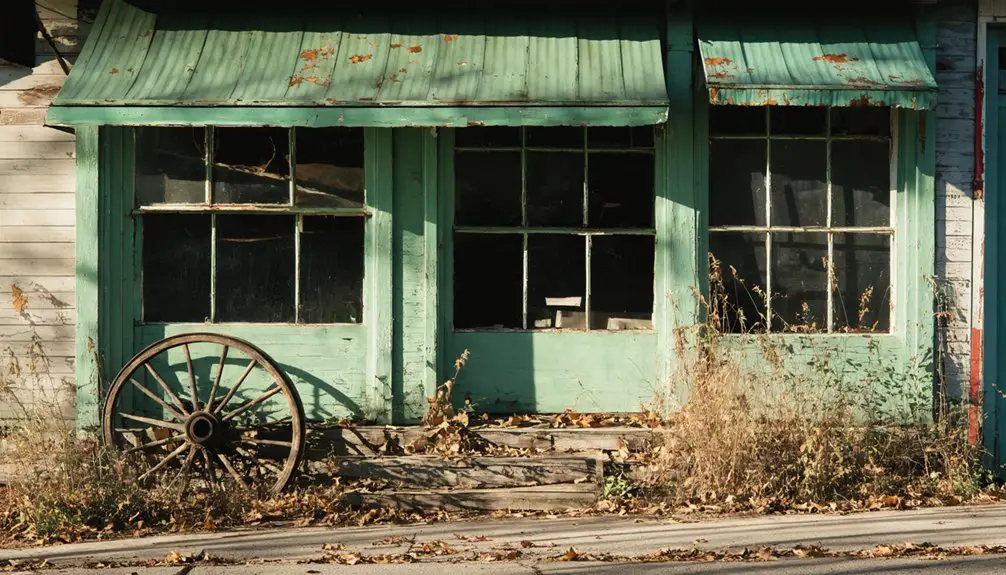
Not every ghost town leaves behind crumbling storefronts and rusted wagon wheels — some leave behind something stranger. Near Muskego, tucked into forested seclusion somewhere off Mystic Drive in Waukesha County, you’ll find Haunchyville — one of Wisconsin’s most persistent urban legends.
Not every ghost town leaves behind ruins — some leave behind legends, like Haunchyville, Wisconsin’s most mysteriously persistent urban myth.
Folklore stories describe it as a tiny settlement built by short-statured people, formerly displayed as circus oddities, whose houses barely reached chest height.
Locals whisper about a farmer who hanged himself in a nearby barn, deepening the eerie atmosphere surrounding the site.
You won’t find Haunchyville on any official map, but that’s precisely the appeal. If you’re someone who craves open roads and untamed history, chasing this legend adds an unexpected horror-history layer to your broader Muskego ghost town adventure.
Frequently Asked Questions
What Modern Roads Provide the Best Access Routes to Muskego Settlement?
You’ll find Janesville and Loomis roads offer the best access routes, improved since the 1920s. Check traffic updates and road conditions before heading out — they’ll connect you to Muskego Settlement’s hauntingly free, open landscapes.
Are There Nearby Lakes or Forests Visitors Can Explore During Their Trip?
You’ll find three stunning lakes to explore and forests perfect for forest hiking trails and wildlife photography. These waters and woodlands once echoed with Potawatomi footsteps, offering you that same timeless, freeing connection to nature’s untouched beauty.
When Did Muskego Officially Incorporate as a City?
Muskego officially incorporated as a city in 1964! You’ll find its historical architecture echoing a nostalgic past, and don’t forget the local legends that’ve freely shaped this remarkable town’s unforgettable, storied journey through time.
Where Exactly Is the Thomas Parker Family Historical Site Located?
You’ll find the Luther Parker family’s historical site nestled in Muskego’s early settlements, where family genealogy trails lead you to historical artifacts echoing New Hampshire roots — they arrived in 1836, leaving you a nostalgic, freeing connection to Wisconsin’s pioneer past.
What Year Did the Potawatomi Tribe Cede Their Lands to the Government?
You’ll find the Potawatomi treaty’s land cession dates trace back to 1832, five years after that first European trading post arrived. They surrendered their beloved ancestral grounds, forever changing the freedom they’d known for generations.
References
- https://en.wikipedia.org/wiki/Muskego_Settlement
- https://townsquarepublications.com/muskego-wi-history/
- https://www.jahernandez.com/posts/haunchyville-of-waukesha-county-wisconsin
- https://en.wikipedia.org/wiki/List_of_ghost_towns_in_Wisconsin
- https://wisconsinlegendspodcast.com/episode/the-miniscule-marauders-of-muskego-haunchyville