Planning a ghost town road trip to New Chicago, South Dakota means tracking down a vanished Black Hills mining camp in Lawrence County’s rugged terrain. You won’t find road signs or paved routes leading the way, so grab county maps and consult the South Dakota State Historical Society before you go. Pair the stop with nearby ghost towns like Rockerville and Galena for a richer experience. Keep exploring to uncover everything you need to make this trip worthwhile.
Key Takeaways
- New Chicago, a former Black Hills mining camp in Lawrence County, South Dakota, merged into Maitland after mining declined around World War II.
- The site features remnants like the Fremont-Gover Mine head frame, old mill sites, rusted equipment, and weathered barns on private land.
- No signage or roadside markers exist, so visitors must research back roads and obtain county maps before visiting.
- Pair New Chicago with nearby ghost towns like Rockerville, Galena, Carbonate, and Mystic for a fuller Black Hills mining history experience.
- Consult the South Dakota State Historical Society, local libraries, and ranching families for records, land plats, and access information.
What Was New Chicago, South Dakota?
New Chicago, South Dakota started as a mining camp in Lawrence County, nestled within the Black Hills — a region where gold-rush ambitions built towns almost overnight. You’re looking at a place where mining history shaped every structure, every road, and every decision settlers made.
Gold-rush ambitions built New Chicago almost overnight — mining history shaped every structure, every road, every decision.
The camp eventually merged into Maitland, South Dakota, but not before leaving behind a footprint worth exploring.
Like many Black Hills settlements, New Chicago depended entirely on extractive industry. When the mines faded around World War II, so did the town.
You won’t find railroad relics or a bustling main street here — the land shifted toward ranching and farming instead.
What remains tells an honest story about how quickly boom-era communities could rise, adapt, and quietly disappear into the South Dakota landscape.
Where New Chicago Sits in Lawrence County
When you head to New Chicago, you’re traversing Lawrence County, which sits in the heart of South Dakota’s Black Hills region.
The Black Hills region is known for its gold-rush history that shaped nearly every ridge and hollow.
The county’s rugged terrain made it a natural hub for mining camps, and New Chicago fit squarely into that pattern before the settlement was eventually absorbed into nearby Maitland.
Knowing this geographic context helps you plot a smarter route and frame what you’re actually looking at when you arrive.
Lawrence County’s Geographic Position
Tucked into the rugged terrain of Lawrence County, South Dakota, New Chicago sits within the heart of the Black Hills—a region defined by its dramatic landscape and its deeply extractive past. Lawrence County occupies the northwestern corner of South Dakota, bordering Wyoming and Montana.
The Black Hills rise sharply here, cutting against the open plains with dense pine forests and ancient rock formations. Unlike areas reshaped by urban development, this county retained much of its raw, untamed character after mining declined.
The environmental impact of decades of gold extraction still marks the land in subtle ways—altered hillsides, abandoned mill sites, and scarred terrain. When you travel through Lawrence County, you’re moving through a living record of boom-era ambition and the wilderness that ultimately reclaimed it.
Black Hills Regional Context
Within the Black Hills, New Chicago occupies a specific niche in Lawrence County’s web of former mining settlements. The region’s mining history shaped nearly every community that rose and fell across these hills, and New Chicago followed that same arc.
You’ll find that understanding this broader context sharpens your appreciation for what the site represents.
Railroad development also played a defining role across the Black Hills, connecting isolated camps to supply lines and markets. Where rail lines reached, towns grew. Where they didn’t, settlements struggled.
New Chicago’s story fits neatly into this regional pattern, making it one stop in a larger landscape of resource-driven ambition and eventual decline.
Exploring it alongside neighboring ghost towns gives you a richer, more complete picture of how the Black Hills once buzzed with industrial energy.
Proximity To Maitland
New Chicago didn’t survive as a standalone community — it was absorbed into Maitland, a small settlement that now marks the area where the old mining camp once operated.
Urban development never reached this corner of Lawrence County, which actually works in your favor as an explorer. What you’ll find instead is raw, unfiltered history.
Picture yourself exploring:
- Quiet gravel roads cutting through open ranchland
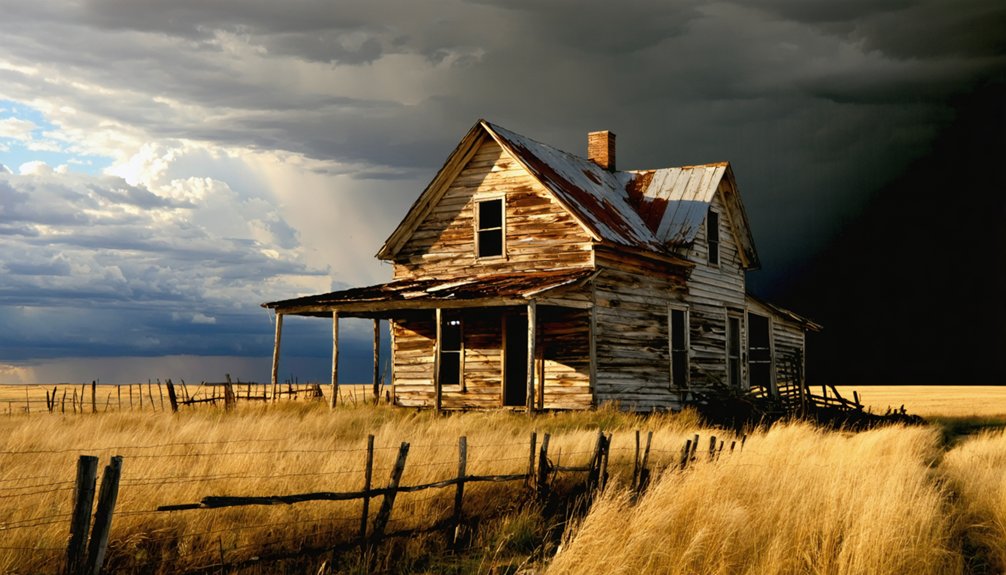
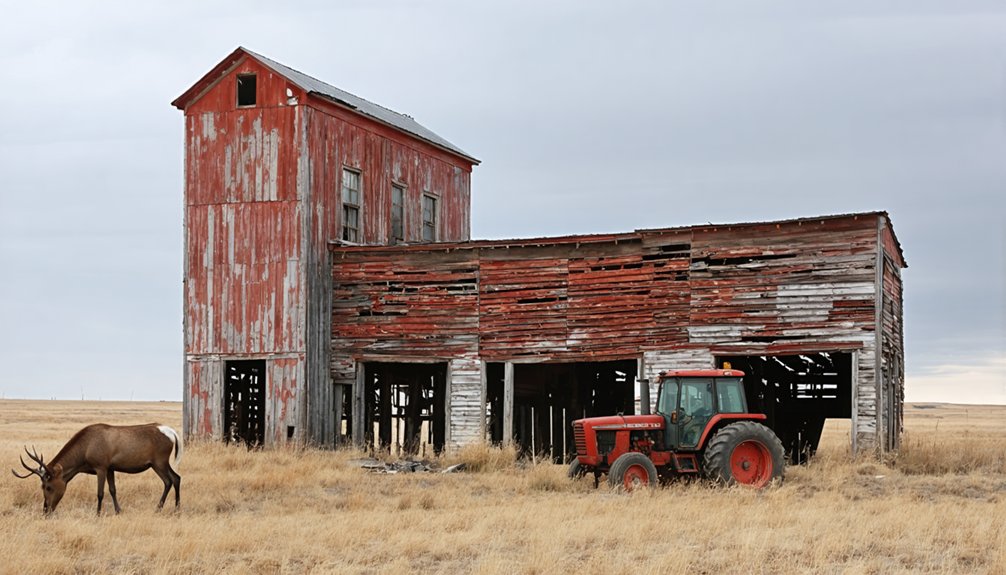
- Weathered barns standing against a wide Dakota sky
- The rusted head frame of the Fremont-Gover Mine rising from the brush
- Rolling terrain that once hummed with mining activity
Historical preservation here is minimal and honest — no staged storefronts, no tourist polish.
Maitland simply absorbed what remained, leaving you to piece together New Chicago‘s story from scattered, authentic fragments.
Can You Actually Get to the Site?
Getting to New Chicago isn’t as simple as plugging an address into your GPS and hitting the road. Much of the original townsite now sits on private farms and ranches, which means your access is genuinely limited. You can’t just wander freely across the landscape expecting open trails and welcome signs.
Local access remains tricky, and signage issues compound the challenge — don’t expect roadside markers guiding you toward the site. You’ll need to research Lawrence County’s back roads before you leave home and respect property boundaries once you arrive.
Think of this stop as a historical interpretation experience rather than a walkable destination. The freedom here comes from understanding the land’s past, not from roaming it unchecked.
Preparation makes the difference between a rewarding detour and a wasted drive.
What’s Left of the Ghost Town Today?
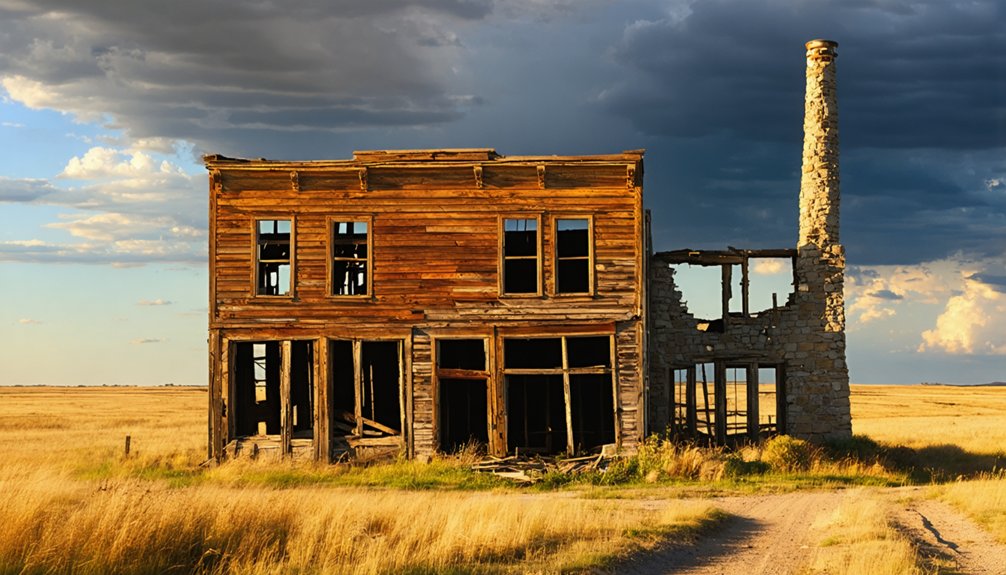
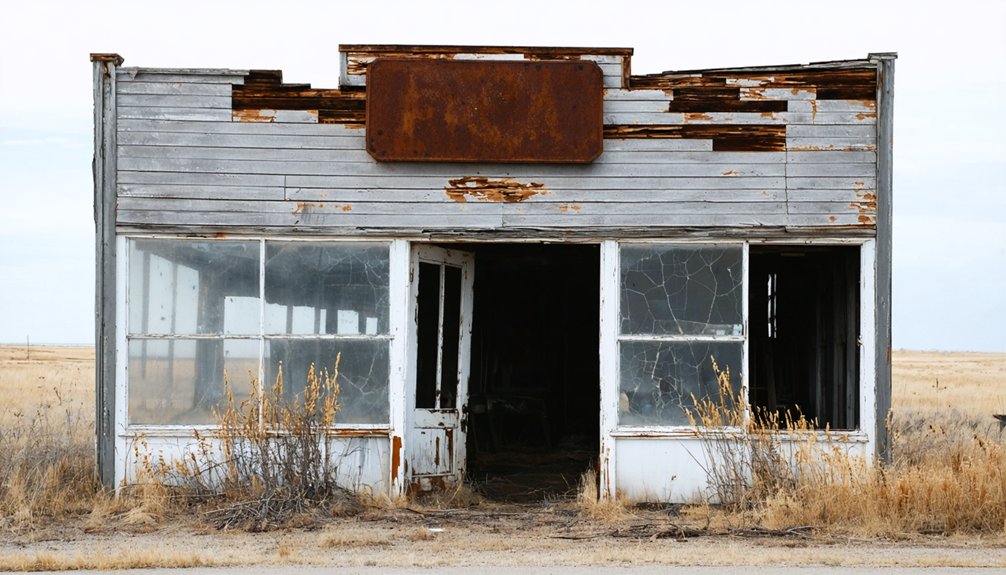
What remains of New Chicago is modest but telling. Historical preservation here isn’t polished or curated — it’s raw land holding quiet stories. Visitor access is limited, but what you can observe from public vantage points rewards a curious eye.
Look for these four surviving remnants:
- Three mill sites — crumbling foundations where ore was once processed
- The Fremont-Gover Mine head frame — a skeletal steel structure piercing the skyline
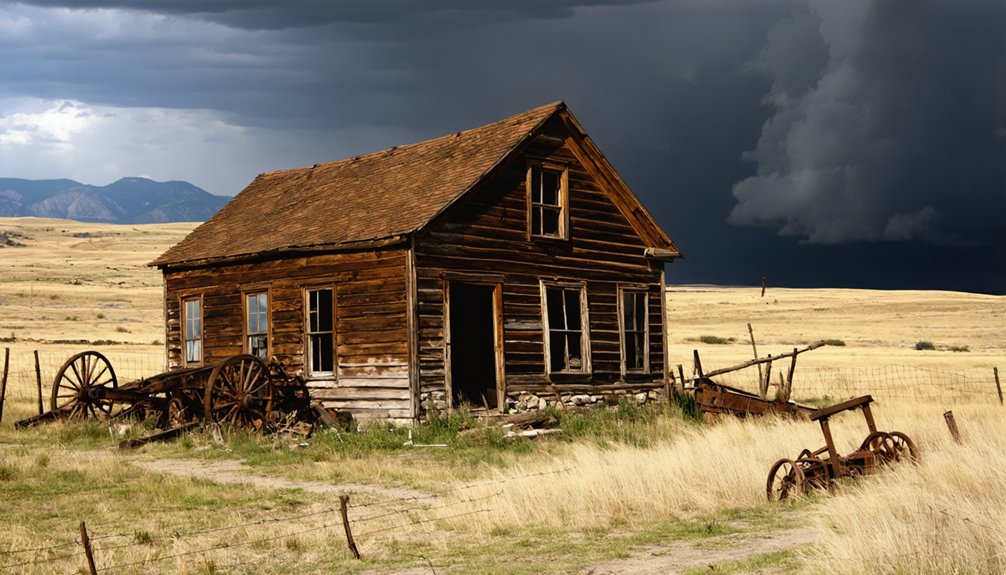
- Old barns and outbuildings — weathered wood slowly surrendering to the prairie
- A historic homestead — a glimpse into the domestic life behind the mining rush
These fragments won’t overwhelm you, but they’ll ground you in a real place where ambition once carved itself into South Dakota’s hills.
Private Land, Dirt Roads, and No Signage: What Visiting Looks Like
Visiting New Chicago means accepting that the modern travel experience — GPS pins, welcome signs, paved pull-offs — simply doesn’t apply here. Much of the original townsite sits on private farms and ranches, so you’ll need to respect boundaries and research access points before heading out.
Dirt roads replace pavement, and there’s no signage guiding you toward the mill sites or the Fremont-Gover Mine head frame. Urban development never reached this corner of Lawrence County, which partly explains why preservation challenges remain so significant — without institutional interest or public ownership, maintaining what little survives falls to chance.
Come prepared with county maps, a flexible itinerary, and realistic expectations. This isn’t a curated stop; it’s raw, unfiltered history that rewards curiosity and punishes passivity.
Other Black Hills Ghost Towns to Pair With the Trip
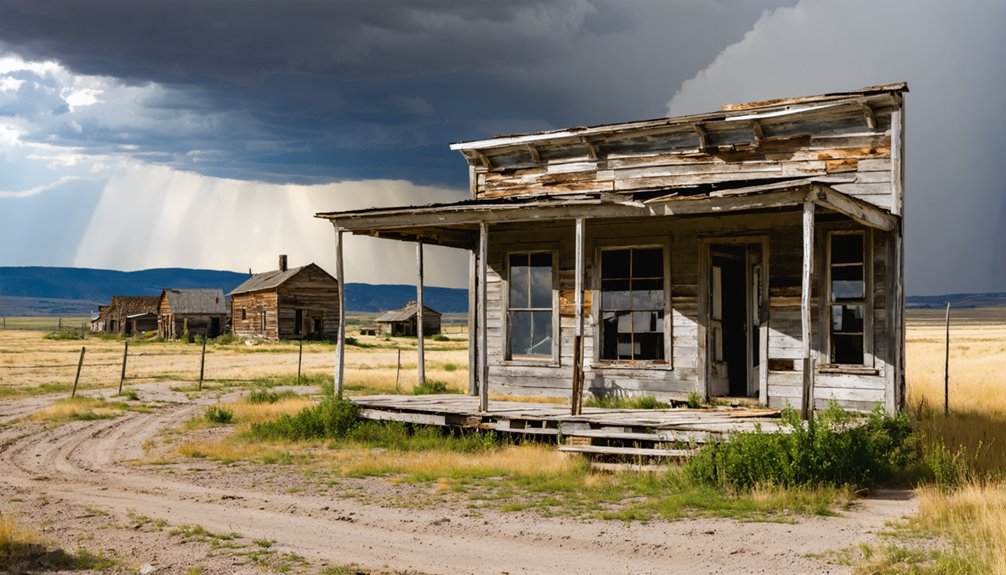
Once you’ve explored New Chicago, Lawrence County gives you plenty of nearby ghost towns worth adding to your route. You’ll find remnants of other mining camps scattered across the Black Hills, each reflecting the same boom-and-bust story that shaped this region.
Pairing these stops together turns a single site visit into a fuller picture of South Dakota’s gold-rush past.
Nearby Mining Camp Ruins
Since New Chicago sits within the heart of the Black Hills ghost-town corridor, you’ve got no shortage of nearby mining camp ruins worth folding into your road trip. Lawrence County’s mining history shaped dramatic settlement patterns across the region, leaving scattered remnants that reward curious travelers.
Add these stops to your route:
- Collapsed shaft houses half-buried in pine-studded hillsides
- Crumbling stone foundations where stamp mills once thundered around the clock
- Rusted equipment slowly consumed by decades of weather and overgrowth
- Abandoned headframes standing like skeletal monuments against open sky
Each site tells a chapter of the same resource-driven story New Chicago represents. Moving between these ruins builds a vivid, connected picture of how entire communities rose, worked hard, and quietly disappeared.
Lawrence County Ghost Towns
Lawrence County doesn’t stop at New Chicago when it comes to ghost towns worth chasing. The Black Hills region is loaded with abandoned settlements that each tell a different chapter of local history, from gold-rush fever to railroad collapse.
You can build an entire road trip around Lawrence County alone, moving from one forgotten townsite to the next without running out of stories. Some sites offer stronger ghost town preservation than others, meaning you’ll find everything from crumbling foundations to surprisingly intact structures depending on where you stop.
Research each location before you go, since access varies and some sites sit on private land. Pairing these stops with New Chicago gives you a fuller, richer picture of how the Black Hills boom-and-bust cycle actually played out.
Black Hills Road Trip Stops
The Black Hills gives you more ghost towns to chase beyond Lawrence County, making it easy to stretch your trip into a multi-day loop through South Dakota’s most historically dense landscape. Each stop adds archaeological significance and cultural preservation value to your journey.
- Rockerville – Walk remnants of an 1870s gold camp where hydraulic mining scarred the hillsides permanently.
- Galena – Explore collapsed structures from a once-thriving silver mining district tucked into forested terrain.
- Carbonate – Stand where miners carved temporary lives into unforgiving rock during the Black Hills rush.
- Mystic – Follow a narrow valley road to weathered foundations that mining families once called home.
String these sites together and you’ll experience the full arc of boom, bust, and abandonment across South Dakota’s wildest corridor.
County Maps and Local Records That Help You Plan

Before you load up the car and head toward Lawrence County, grab a county map and dig into local historical records — they’ll save you a lot of guesswork on the road. The South Dakota State Historical Society holds documents that support historical preservation efforts across the Black Hills, including survey records and mining claims tied directly to New Chicago’s past.
Local libraries in Lawrence County often keep regional newspapers and land plats that reveal exactly where settlements once stood. Don’t overlook local legends passed down through ranching families — they frequently fill gaps that official records miss.
Cross-referencing these sources helps you pinpoint mill sites, old property boundaries, and access points before you ever leave your driveway, turning a vague road trip into a focused, purposeful journey.
Frequently Asked Questions
Is New Chicago, South Dakota, Listed on Any Official Historic Registers?
Like a faded map with missing trails, New Chicago’s ghost town architecture isn’t confirmed on official historic registers, but you’ll find historic preservation efforts alive in Lawrence County’s documented Black Hills ghost-town heritage.
Were Any Famous Miners or Settlers Associated With New Chicago?
You won’t find famous miner discoveries or celebrated settler stories tied to New Chicago. It’s a humble camp where anonymous prospectors chased gold, leaving behind only mill ruins and whispered histories waiting for you to uncover.
What Was the Population of New Chicago at Its Peak?
Unfortunately, you won’t find exact peak population records for New Chicago. What you *will* discover are remnants of ghost town architecture and limited historic preservation efforts that hint at a once-bustling mining community worth exploring freely.
Are There Guided Tours Available for Lawrence County Ghost Towns?
No formal guided tours exist, but you’ll uncover haunted legends and vintage photographs through local historical societies. They’ll connect you with Lawrence County’s ghost town stories, sparking your adventurous spirit as you freely explore these forgotten Black Hills communities.
Did New Chicago Ever Have a Post Office During Its Active Years?
The records don’t confirm New Chicago had a post office, but you’ll uncover fascinating historical landmarks and local legends tied to its mining roots as you freely explore Lawrence County’s rugged, story-rich ghost town landscape.
References
- https://en.wikipedia.org/wiki/List_of_ghost_towns_in_South_Dakota
- https://kxrb.com/south-dakota-ghost-towns-2/
- https://www.powderhouselodge.com/black-hills-attractions/fun-attractions/ghost-towns-of-western-south-dakota/
- https://kids.kiddle.co/Flatiron
- https://kids.kiddle.co/List_of_ghost_towns_in_South_Dakota
- https://www.youtube.com/watch?v=Ayos-T6W6AU
- https://www.sdpb.org/rural-life-and-history/2023-08-21/some-black-hills-ghost-towns-and-their-origins