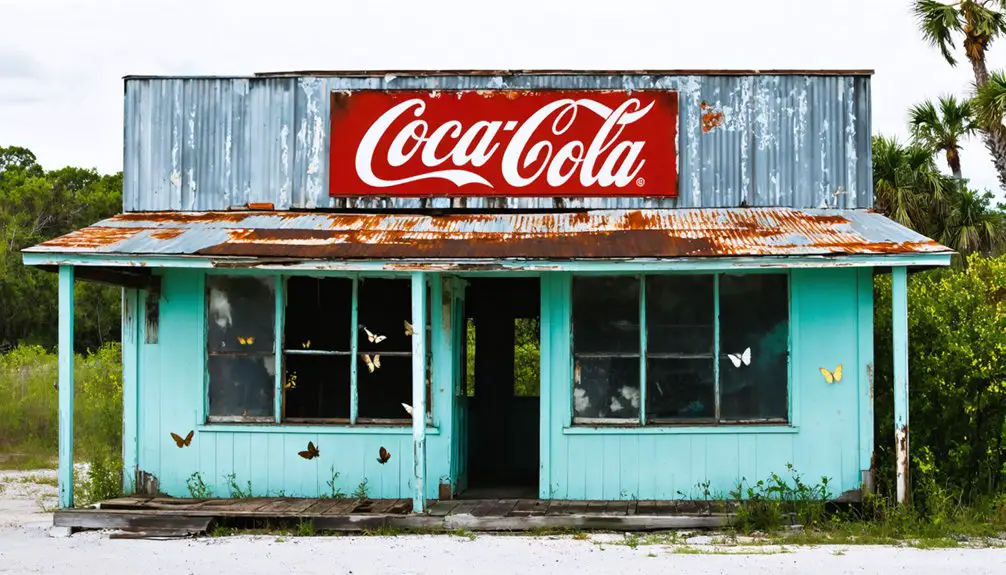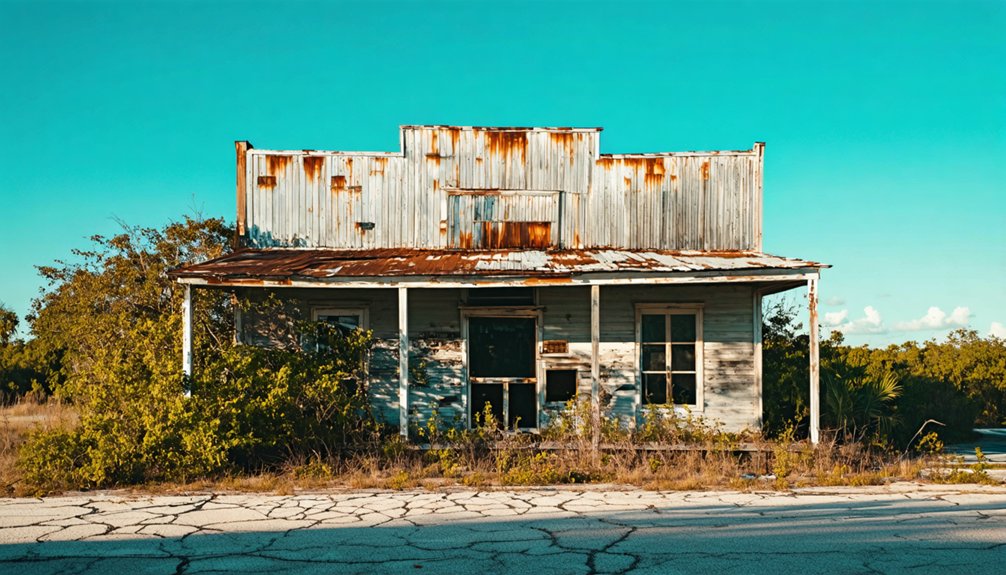
Planning a ghost town road trip to Osowaw Junction, Florida, is easier than you’d think. This forgotten railroad community sits in northeastern Okeechobee County, just off US Route 441, roughly 9 miles from Yeehaw Junction. You’ll find scattered remnants of weathered structures along flat, easily navigable roads — no 4WD required. The town’s name even means “bird” in Seminole language. Stick around, and there’s much more to uncover about this quietly vanished slice of Florida history.
Key Takeaways
- Osowaw Junction sits in northeastern Okeechobee County off US Route 441, about 9 miles from Yeehaw Junction, accessible by standard 2WD vehicles.
- The ghost town originated as a 1914 railroad station, later growing into a citrus community before declining after the rail line closed in 1947.
- Visible remnants include a fruit stand, two-story house, shed, and partial barn structures scattered along the roadside for self-guided exploration.
- Respect private property boundaries, drive slowly, and stay cautious of uneven ground, particularly during low-light conditions near dusk.
- Visit year-round, but bring hydration and sun protection in summer; nearby attractions include Kissimmee Prairie Preserve State Park and Lake Okeechobee.
What Is Osowaw Junction, Florida?
Tucked into the northeastern corner of Okeechobee County, Osowaw Junction is a ghost town off US Route 441, sitting roughly 9 miles from Yeehaw Junction between Fort Drum and the junction itself. Its name carries Native heritage — “Osowaw” comes from a Seminole word meaning “bird.”
Osowaw Junction — a ghost town off US Route 441, its Seminole name quietly meaning “bird.”
The town started as a railroad station in 1914 on the Kissimmee Valley Extension of the Florida East Coast Railroad. Eventually, it grew into a small citrus community built around orange and tangerine groves.
By 1921, it even had a public school. When the rail line shut down in 1947, most residents left, and the town faded into scattered farms and groves.
Today, it’s a compelling stop for anyone drawn to local history and the open road.
How Do You Get to Osowaw Junction?
You’ll find Osowaw Junction tucked into the northeastern corner of Okeechobee County, Florida, roughly 9 miles from Yeehaw Junction along US Route 441.
To reach the site, follow 441 to the stretch between Fort Drum and Yeehaw Junction, where the former community once thrived as a railroad and citrus hub.
The good news for road-trippers is that the area is accessible by standard 2WD vehicle, so you won’t need specialized equipment to make the trip.
Location Within Florida
Nestled in the northeastern corner of Okeechobee County, Osowaw Junction sits off US Route 441, roughly 9 miles from Yeehaw Junction and a few miles north of Fort Drum. You’ll find this forgotten settlement tucked between open stretches of Florida flatland, where citrus groves and scattered farms replaced what was once a living railroad community.
Historical maps show the site positioned along the old Kissimmee Valley Extension, giving you a tangible connection to its 1914 origins.
Local legends surrounding abandoned rail towns like this one add an intriguing layer to any road trip stop.
The coordinates land you around 27°34.8’N, 80°50.1’W, so plug them in before you head out.
The road is 2WD accessible, meaning you don’t need a special vehicle to explore this slice of Florida’s past.
Main Roads To Take
Since US Route 441 is the main artery through this part of Florida, it’s the road you’ll want to follow to reach Osowaw Junction. Head north from Fort Drum or south from Yeehaw Junction — the site sits roughly nine miles from Yeehaw Junction, tucked off 441 in the northeastern corner of Okeechobee County.
The drive itself carries historical context worth absorbing. You’re traveling through land once shaped by the Florida East Coast Railroad’s Kissimmee Valley Extension, where small citrus towns rose and fell with the rail lines.
Local legends of vanished communities line this corridor, and Osowaw Junction is one of them.
The good news — you don’t need a 4WD vehicle. Standard 2WD handles the area fine, making this ghost town genuinely accessible for any road tripper.
Accessibility And Terrain
Getting to Osowaw Junction is straightforward — the site sits off US Route 441, between Fort Drum to the south and Yeehaw Junction to the north. You don’t need a truck or SUV to reach it; the area is accessible by standard 2WD vehicle, so you can roll up in whatever you’re driving.
The terrain is flat, typical of Florida’s interior prairie and citrus country. You’ll find remnants like a fruit stand, a two-story house, a shed, and a partial barn scattered along the roadside.
Pay attention to lighting conditions, especially if you’re arriving near dusk, since the rural surroundings offer little artificial light. Take basic safety precautions — watch for uneven ground and respect any private property boundaries near the remaining structures.
What’s Left at the Osowaw Junction Site Today?
When you pull off US Route 441, you’ll find a handful of structures that hint at Osowaw Junction’s former life — a fruit stand, a two-story house, a shed, and a partial barn still mark the site.
You won’t find a preserved attraction or guided experience here; it’s purely a roadside stop you take in on your own terms.
The good news is that the area’s accessible by 2WD, so you don’t need a specialized vehicle to make the visit happen.
Remaining Structures On Site
Though Osowaw Junction has long faded from the map, a handful of structures still stand along the roadside to mark where the community once thrived. These historical artifacts give you a rare, unfiltered glimpse into Florida’s railroad past without any formal preservation efforts guarding the site.
Here’s what you’ll find:
- Fruit stand – a nod to the citrus economy that once drove the town
- Two-story house – the most substantial remaining structure on site
- Shed – small but still standing along the roadside
- Partial barn – a weathered remnant hinting at the area’s agricultural roots
You won’t find guided tours or interpretive signs here — just open road, honest ruins, and the freedom to explore Florida history on your own terms.
Roadside Stop Accessibility
Reaching Osowaw Junction doesn’t require a lifted truck or an off-road adventure — the site is fully accessible by standard 2WD vehicle along US Route 441, tucked between Fort Drum and Yeehaw Junction in northeastern Okeechobee County. You can pull over anytime, as the climate stays warm most of the year with mild winters making visits comfortable across seasons.
Don’t expect interpretive signs or guided tours — Osowaw Junction’s historical significance lives in what remains scattered along the roadside. Your visitor tips are simple: drive slowly, keep your eyes open, and respect private property near the fruit stand, two-story house, shed, and partial barn.
You’re fundamentally reading a landscape, piecing together a railroad-era citrus town that time quietly reclaimed. That freedom to explore on your own terms is the whole point.
What’s Near Osowaw Junction Worth Stopping For?
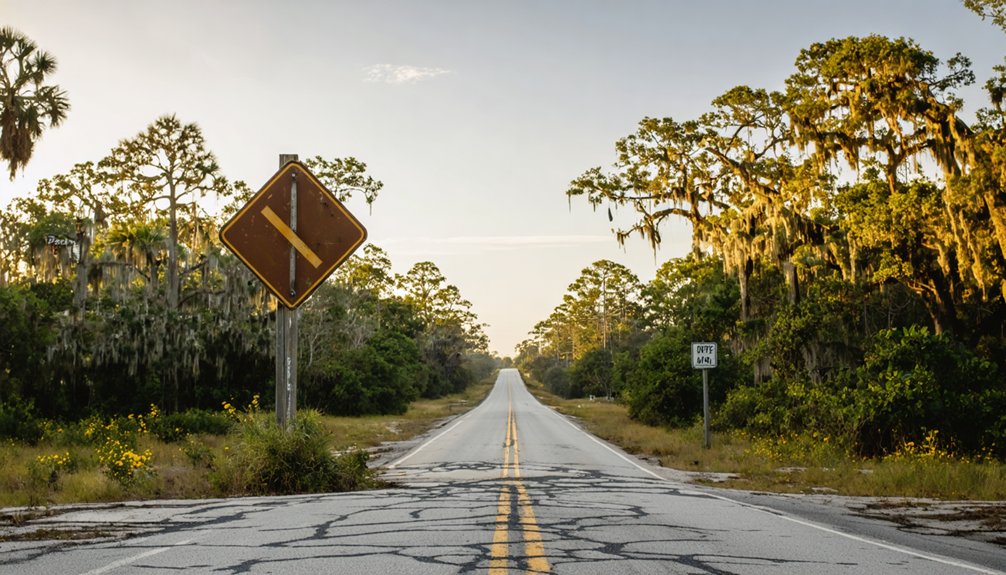
Since Osowaw Junction sits along US Route 441 in Okeechobee County, you’re already on one of Florida‘s most historically rich rural corridors. Several nearby attractions make this stretch worth slowing down for, and the local wildlife alone justifies the detour.
Here are four stops worth adding to your route:
- Yeehaw Junction – Just 9 miles away, it’s another piece of old Florida with frontier-era character.
- Fort Drum – A small community a few miles south with deep agricultural roots.
- Lake Okeechobee – Drive east for fishing, birding, and wide-open water views.
- Kissimmee Prairie Preserve State Park – Expansive flatlands teeming with native birds and untamed scenery.
You’ve got real freedom out here — use it.
When Is the Best Time to Visit Osowaw Junction?
Florida’s rural interior runs hot most of the year, so if you’re planning a stop at Osowaw Junction, timing matters less than you might think — ghosttowns.com lists the best time to visit as simply *anytime*. That said, seasonal weather does shape your experience.
Timing your visit to Osowaw Junction barely matters — Florida’s rural interior stays hot and wild year-round.
Summer brings intense heat and afternoon thunderstorms typical of central Florida, so carry water and dress light.
Winter offers milder, more comfortable conditions — ideal if you want to linger roadside without sweating through your shirt.
As visitor tips go, the site is accessible by 2WD, meaning no special vehicle prep is required.
Whether you roll through in January or July, Osowaw Junction rewards the curious traveler willing to pull off US 441 and look closely at what’s left behind.
What Should You Know Before You Go?
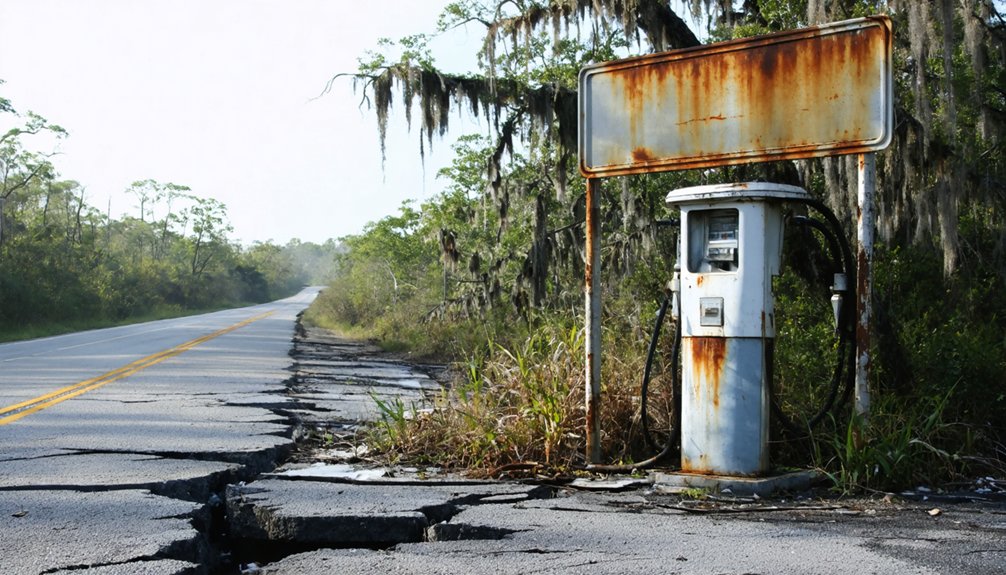
Before you make the turn off US 441, there are a few practical details worth knowing. Osowaw Junction rewards curious travelers who come prepared.
- Access is easy — standard 2WD vehicles handle the roads fine, so no off-road gear is needed.
- Historical context matters — understanding that this was a railroad citrus town helps you read the landscape rather than just pass through it.
- Look for specific remains — a fruit stand, two-story house, shed, and partial barn are the markers worth locating.
- Local legends add color — ask around about the Seminole name “Osowaw,” meaning “bird,” and the community’s quiet disappearance after 1947.
You won’t find a visitor center here — just open land, scattered history, and your own curiosity driving the experience.
Frequently Asked Questions
What Does the Name Osowaw Actually Mean in Seminole Language?
You’ll find that “Osowaw” means “bird” in the Seminole language. Its cultural significance runs deep, reflecting rich Seminole language origins that once shaped this land’s identity long before it became Florida’s forgotten ghost town.
When Was the Osowaw Junction Railroad Station Originally Established?
Like Flagler’s legendary rail expansion that opened Florida’s frontier, you’ll find Osowaw Junction’s railroad station was established in 1914 — where historic architecture once thrived and local legends grew alongside the Kissimmee Valley Extension’s iron tracks.
Which Railroad Line Originally Connected Osowaw Junction to Other Florida Towns?
You’ll find that the Kissimmee Valley Extension of the Florida East Coast Railroad originally connected Osowaw Junction to other towns. These historical train routes and railroad station architecture once fueled freedom, commerce, and adventure across Florida’s frontier landscape.
When Did the Railroad Serving Osowaw Junction Finally Stop Operating?
You might think it’s ancient history, but the railroad serving Osowaw Junction didn’t stop operating until 1947 — leaving behind haunted stories and vintage photographs of a citrus community that simply vanished when the trains quit running.
Did Osowaw Junction Ever Have a School During Its Active Years?
Yes, Osowaw Junction had a public school by 1921! You’ll find it fascinating that this once-thriving citrus community built real roots before local legends and ghost stories replaced its lively, freedom-filled spirit after the railroad’s abandonment.
References
- https://en.wikipedia.org/wiki/Osowaw_Junction
- https://www.ghosttowns.com/states/fl/osowawjunction.html
- https://www.ghosttowns.com/states/fl/fl.html
- https://en.wikipedia.org/wiki/List_of_ghost_towns_in_Florida
- https://www.flickr.com/photos/mainmanwalkin/albums/72157606151949219/
- https://en.wikipedia.org/?title=Category:Stub-Class_Ghost_town_articles&from=N
- https://www.youtube.com/watch?v=Jaz9_gPwddc
- https://www.florida-backroads-travel.com/florida-ghost-towns.html
- http://www.gribblenation.org/2018/02/ghost-town-tuesday-yeehaw-junction-and.html
- https://www.islands.com/2176270/florida-once-thriving-ghost-towns-transformed-eerie-abandoned-beauties-visit/