California’s got two ghost towns named Deadwood — one in Trinity County, one in Placer County — and mixing them up means a wasted drive. Both boomed during the Gold Rush, both faded when the gold ran out, and both left behind little more than weathered cemeteries and buried foundations. You’ll want to confirm your destination, load up on water, and head out between late spring and fall. Stick around, and you’ll uncover exactly what to expect at each haunted site.
Key Takeaways
- California has two Deadwood ghost towns in Trinity and Placer counties, so confirm your destination before planning your route.
- Take Foresthill Road from Auburn, then Deadwood Road to reach Placer County’s Deadwood; a standard 2WD vehicle suffices.
- Visit between late spring and fall, as winter snow can block access to both sites.
- Combine Deadwood with nearby Forest Hill and Iowa Hill for a comprehensive California mining history road trip.
- Pack water, navigation tools, sturdy boots, and a camera, as no amenities exist at either site.
Which Deadwood, California Are You Actually Visiting?
Before you load up the car and hit the road, you’ve got to know which Deadwood you’re actually chasing — because California has two of them, and they’re not even in the same county.
One sits in Trinity County, born around 1851 from mining ambition and dead timber forests. The other rose in Placer County in 1852, fueled by Gold Rush fever.
Both carry local legends, both have faded into silence, and both reward curious travelers willing to seek out historic markers where towns once roared. Mix them up, and you’ll burn hours heading the wrong direction.
Trinity County’s Deadwood ties to the Brown Bear Mine. Placer County’s version once held 500 souls.
Know your destination before you go — your road trip depends on it.
How Two California Mining Towns Boomed and Went Silent
When you trace the history of either Deadwood, you’ll find the same relentless pattern: gold draws a crowd, the crowd builds a town, and the town collapses the moment the gold runs out.
Trinity County’s Deadwood climbed from a rough 1851 settlement into a functioning community anchored by the Brown Bear Mine, while Placer County’s version exploded to nearly 500 residents after an 1852 gold strike before fading just a few years later.
Both towns lived and died by the same brutal logic that shaped nearly every California mining settlement.
Mining Towns Rise Fast
During the California Gold Rush, mining towns didn’t grow—they exploded. One year you’d have a muddy trail through the wilderness; the next, you’d find a settlement of 500 people, supply stores, and primitive mining technology tearing into the hillsides.
That’s exactly what happened in Placer County when gold turned up near Deadwood in 1852. Prospectors rushed in, town population surged almost overnight, and a rough community carved itself out of California’s rugged terrain.
Trinity County’s Deadwood followed a similar arc, emerging around 1851 as miners pushed deeper into wild country chasing the next strike.
Both towns embodied the era’s restless energy. You didn’t wait for permission to build a life—you showed up, staked your claim, and got to work.
Boom Gives Way Bust
The boom never lasted. Gold veins thinned, miners chased richer strikes elsewhere, and both Deadwoods emptied fast. Placer County’s settlement collapsed by around 1855, leaving behind historical myths of Sam Colt’s presence and a peak population of 500 hopeful souls.
Trinity County held on longer, its post office closing in 1915 before silence took over completely.
Don’t expect tourist amenities when you arrive. No restaurants, no visitor centers, no guided walks exist at either site. What you’ll find instead is raw, unfiltered history — a cemetery, a few old wells, and the kind of stillness that makes the past feel immediate.
These towns didn’t fade gracefully. They were abandoned when the profit vanished, and that brutal honesty is exactly what makes them worth your time.
What Still Stands at Deadwood, California Today
When you reach the end of Deadwood Road in Placer County, don’t expect standing storefronts or preserved saloons — time and weather have taken most of what once housed a population of 500.
What you’ll find instead are the quiet survivors: a cemetery and a few old wells that mark where lives were lived and a town once hummed with Gold Rush ambition.
These remnants aren’t dramatic, but they’re honest, and they’ll ground your road trip in the real, unhurried weight of California’s mining past.
Cemetery And Old Wells
While most of Deadwood’s buildings have long since vanished, you’ll still find a cemetery and a few old wells marking where this once-bustling gold rush settlement stood. These historical artifacts connect you directly to the 500 souls who once chased fortune here. Walk carefully — you’re treading on living history.
Here’s what you can expect to discover:
- The cemetery — weathered headstones that preservation efforts have kept partially intact, telling stories of miners who never made it home
- Old wells — scattered across the townsite, hinting at where homes and businesses once thrived
- Open terrain — the surrounding landscape lets you mentally reconstruct Deadwood’s former layout
Bring your camera, your curiosity, and respect for those who came before you.
Limited Surviving Structures
Beyond the cemetery and old wells, you won’t find much standing at Deadwood today — and that’s exactly what makes it such a haunting destination.
Nature has reclaimed most of what the miners built, leaving behind only whispers of foundations and scattered historical artifacts half-buried in the earth.
No preservation efforts have restored the townsite to anything resembling its peak population days of roughly 500 residents.
What remains is raw and unpolished — the kind of place that demands your imagination to fill the silence.
You’re walking through a void where saloons, homes, and storefronts once stood.
That absence tells its own story.
Come prepared to read the landscape carefully, because Deadwood doesn’t hand you its history — you have to find it yourself.
How to Drive to Deadwood, California Without Getting Lost
Getting to Deadwood, California requires an essential first decision: which Deadwood are you chasing? Two ghost towns share the name, and choosing wrong wastes your adventure.
Two ghost towns share the name Deadwood, California. Choose the wrong one and you’ve wasted your adventure.
For the Placer County site, follow these steps:
- Take Foresthill Road out of Auburn toward the Sierra foothills.
- Turn onto Deadwood Road and follow it to the townsite at road’s end.
- Visit between late spring and fall — winter snow blocks access entirely.
Your 2WD vehicle handles this route fine, making it genuinely accessible freedom.
Once there, historical artifacts like the cemetery and old wells reward curious explorers.
Visitor tips worth remembering: bring water, expect no amenities, and verify your maps beforehand.
Trinity County’s Deadwood demands separate research before you roll out.
Ghost Towns Near Deadwood Worth Folding Into Your Route
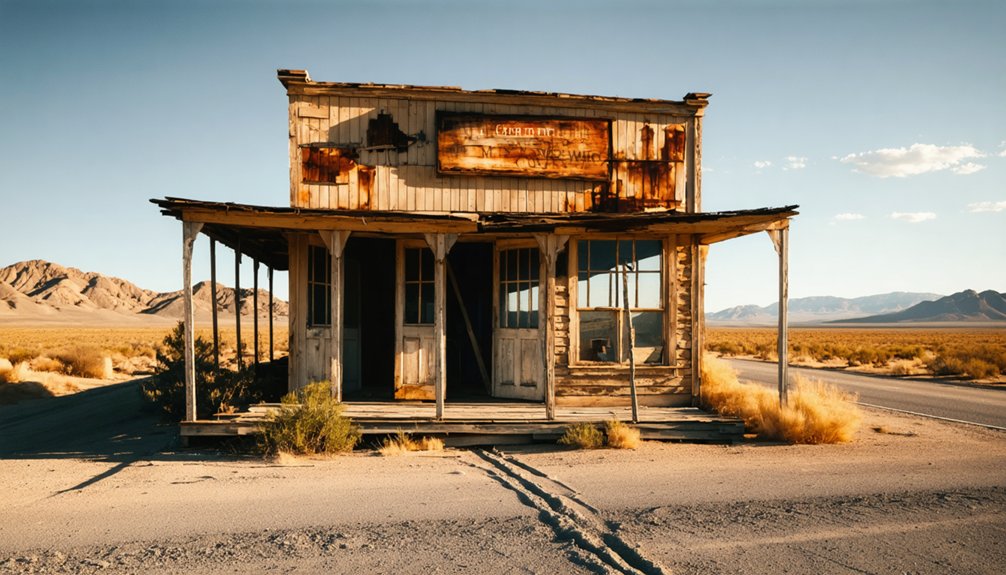
Once you’ve mapped Deadwood onto your route, the surrounding Gold Rush corridor practically begs you to keep driving. Both Trinity and Placer counties hide abandoned settlements layered with historical myths and local legends that reward curious travelers willing to veer off the main road.
Near the Placer County site, Forest Hill and Iowa Hill once roared with mining activity before fading into quiet relics. Trinity County’s backcountry holds similar forgotten camps tied to the same boom-and-bust cycles that shaped Deadwood itself.
String these stops together and you’ll trace the raw arc of California’s mining era across a single road trip. Pack your maps, verify road conditions before departure, and give yourself enough daylight to explore each site without rushing the history underneath your boots.
Best Time to Visit Deadwood and What to Bring
Timing your visit to the Placer County Deadwood makes a real difference—late spring through fall offers the most forgiving conditions, while winter snow can close roads and cut off access entirely.
Late spring also brings wildflower blooms along Foresthill Road, rewarding you before you even reach Deadwood Road.
Pack smart and move freely:
- Navigation tools – Cell service is unreliable; download offline maps before leaving.
- Sun and weather gear – Warm summers mean strong sun; pack layers for cooler mornings near scenic viewpoints.
- Exploration basics – Water, sturdy boots, and a camera help you document the cemetery and remaining wells without rushing.
The site rewards curiosity, not comfort.
Come prepared, and the history speaks clearly on its own terms.
Frequently Asked Questions
Was Deadwood, Placer County, Really Home to Gun Maker Sam Colt?
Yes, you’ll find that ghost town legends claim Sam Colt once called Deadwood, Placer County, home. As you explore its golden history, you’re uncovering a bold, freedom-filled past where gunslingers and dreamers left their mark.
What Does the Name Deadwood, Trinity County, Actually Refer To?
You’ll find that Deadwood’s name draws from the surrounding forests of dead timber — a raw, evocative detail that shapes its ghost town legends and connects you directly to its historical landmarks and rugged, untamed past.
What Was the Peak Population of Deadwood in Placer County?
At its gold-rush peak, you’re looking at roughly 500 souls chasing fortune here. This historic mining site once buzzed with ambition — now it’s yours to explore through ghost town tourism, where freedom meets faded glory.
When Did the Brown Bear Mine First Begin Operating Near Deadwood?
You’ll find the Brown Bear Mine first fired up in 1880, making it one of Trinity County’s iconic historic landmarks. It’s a gold prospecting chapter you can’t ignore when you’re chasing Deadwood’s wild, untamed past.
How Long Did the Trinity County Deadwood Post Office Remain Open?
You’ll find that Trinity County Deadwood’s historical postal services ran for 34 years, from 1881 to 1915. That closure sealed the town’s fate—now ghost town preservation keeps its adventurous, freedom-seeking spirit alive for explorers like you.
References
- https://en.wikipedia.org/wiki/Deadwood
- https://pitsenberger.com/blog/deadwood-placer-county
- https://en.wikipedia.org/wiki/List_of_ghost_towns_in_California
- https://www.youtube.com/watch?v=1tNbPhh_wE4
- https://kids.kiddle.co/Deadwood
- https://www.outlawsquare.com/deadwood-history/
- https://www.ghosttowns.com/states/ca/deadwoodplacer.html
- https://www.deadwood.com/history/history-timeline/