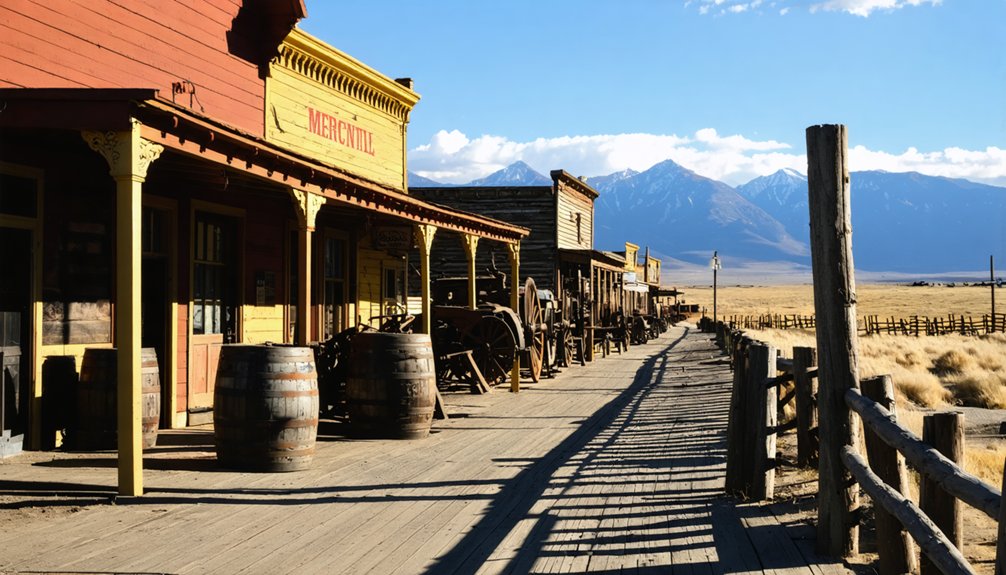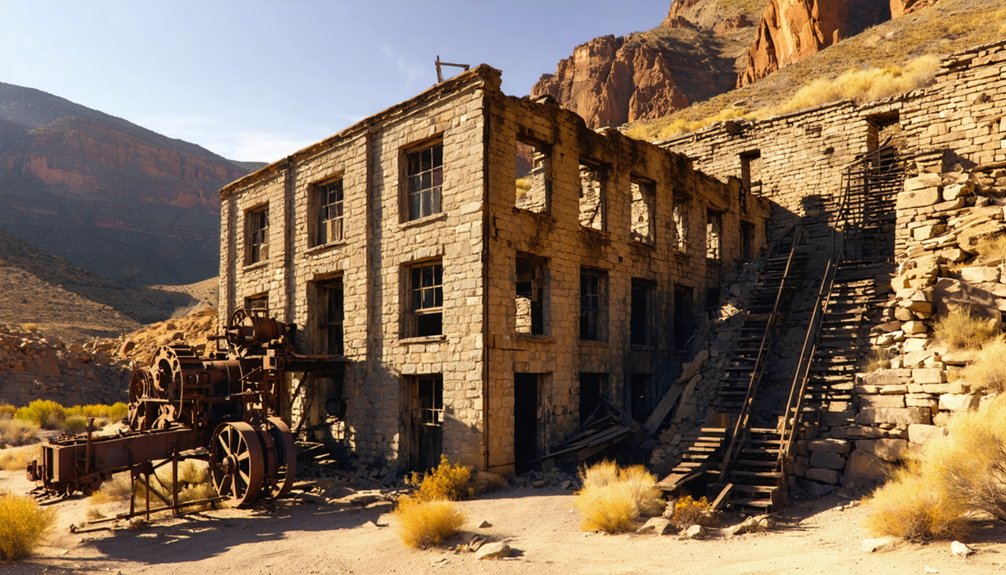
Reaching Panamint City isn’t a casual road trip stop — it’s a commitment. You’ll base camp in Ballarat, navigate rough gravel roads toward Surprise Canyon, then hike 7.5 rugged miles past water crossings, canyon walls, and desert wildlife before silver-era ruins come into view. Plan your visit between late fall and early spring to dodge dangerous heat and flash floods. Everything you need to know to do this right is waiting just ahead.
Key Takeaways
- Panamint City is best visited between late fall and early spring to avoid dangerous summer heat and monsoon flash flood risks.
- Start your trip at Ballarat, the primary base camp, then drive Indian Ranch Road to reach the Surprise Canyon trailhead.
- A locked gate requires a rugged 7.5-mile hike one way through Surprise Canyon to reach the ghost town.
- The site contains stone stamp mill remains, collapsed cabin foundations, rusted mining artifacts, and relics from the catastrophic 1876 flood.
- Pack sufficient water, sturdy boots, and navigation tools, and always monitor weather conditions due to real flash flood danger.
Why Panamint City Is California’s Most Remote Ghost Town Hike
Because most ghost towns let you drive straight to the ruins, Panamint City immediately sets itself apart — you’ll earn every step of this one. A locked gate blocks vehicle access entirely, leaving a rugged 7.5-mile hike through Surprise Canyon as your only way in.
That barrier isn’t a drawback — it’s the point. The remoteness drives genuine cultural preservation, keeping the site free from casual vandalism and overcrowding. You’ll move through a landscape where wildlife encounters feel inevitable rather than incidental, sharing the canyon with desert bighorn sheep and native birds undisturbed by road traffic.
Sitting near Death Valley and added to the national park in 1994, Panamint City rewards only those willing to push into true backcountry — exactly the kind of freedom this destination demands.
The Silver Boomtown a Flash Flood Destroyed in 1876
What drew thousands to the Panamint Range starting in 1872 wasn’t scenery — it was silver. Within two years, Panamint City swelled to 2,000 residents, fueled by mining legends, frontier ambition, and outlaw energy few towns could match.
Silver didn’t just draw dreamers to the Panamint Range — it drew outlaws, legends, and 2,000 restless souls hungry for fortune.
Then 1876 arrived.
A catastrophic flash flood tore through Surprise Canyon, erasing most of what the boomtown had built. The flood aftermath left behind twisted timber, scattered stone, and silence. By the 1880s, the town was gone.
What remains today tells that story honestly:
- Silver and copper ore discovery in 1872 ignited one of California’s wildest rushes
- Peak population reached roughly 2,000 by 1874
- A single flood event in 1876 effectively ended all significant mining activity
You’re not visiting a preserved relic — you’re walking into a cautionary tale.
When To Plan Your Panamint City Hike
Timing this hike correctly isn’t optional — it’s survival planning. Summer temperatures inside Surprise Canyon can turn lethal fast, and no amount of preparation compensates for triple-digit heat in a shadeless canyon.
Plan your visit between late fall and early spring, when cooler temperatures make the strenuous trail manageable and genuinely rewarding.
That seasonal window also rewards you beyond safety. Local flora springs to life after winter rains, and wildlife encounters — bighorn sheep, desert birds, small canyon mammals — become part of the experience rather than a footnote.
You’ll move through the landscape instead of fighting it.
Avoid monsoon season, when flash flood risk inside the canyon becomes serious. Panamint City’s own 1876 destruction proves what that canyon can do when water moves through it.
Using Ballarat as Your Base Camp for the Panamint City Hike
Ballarat functions as your practical launching pad before the real wilderness begins. This remote outpost sits near the base of the Panamint Range, positioning you close to Indian Ranch Road and the Surprise Canyon approach. You’ll soak in mining history just by being here — Ballarat itself is a ghost town, carrying echoes of the same frontier era that built Panamint City.
- Stock up on water before leaving Ballarat; you won’t find reliable sources ahead
- Watch for desert wildlife along the canyon approach, including bighorn sheep and rattlesnakes
- From Ballarat, drive toward Chris Wicht Camp, where your hike officially begins
Cell service disappears fast out here, so finalize your plans before you leave pavement behind. Ballarat isn’t luxurious — it’s functional, honest, and exactly what a backcountry staging area should be.
How To Get to the Panamint City Trailhead
Once you’ve topped off your water and taken a last look around Ballarat, the route to the trailhead pulls you deeper into the desert’s raw interior. Follow Indian Ranch Road toward Surprise Canyon Road, where washboarded gravel will test your patience and your vehicle.
A locked gate eventually stops all traffic, and that’s your cue to lace up your boots.
From Chris Wicht Camp, you’re looking at roughly 7.5 miles one way into Surprise Canyon. Pay close attention to trail markers — each one confirms your route through terrain where wrong turns cost serious time and energy.
Watch for desert wildlife encounters along the canyon floor; bighorn sheep and rattlesnakes share this corridor. Cell service is nonexistent, so load your navigation tools before you leave Ballarat.
What the Hike Into Surprise Canyon Is Really Like?
Surprise Canyon earns its name the moment you step past the gate and follow the narrow corridor carved between towering rock walls. You’ll cover roughly 7.5 miles one way through terrain that shifts constantly, keeping your attention sharp. Spring wildflower blooms paint canyon walls between boulder scrambles, and desert wildlife movements remind you that this wilderness runs on its own schedule.
You’re not walking a groomed path. You’re orienting yourself through a raw canyon with real consequences.
- Water crossings appear unexpectedly, requiring careful footing and treated water stops.
- Flash flood risk is genuine, especially after any upstream weather activity.
- Elevation gain and canyon heat compound fatigue faster than most hikers anticipate.
Come physically prepared, carry navigation tools, and respect what the canyon demands from you.
Gear and Water Every Panamint City Hiker Needs To Carry
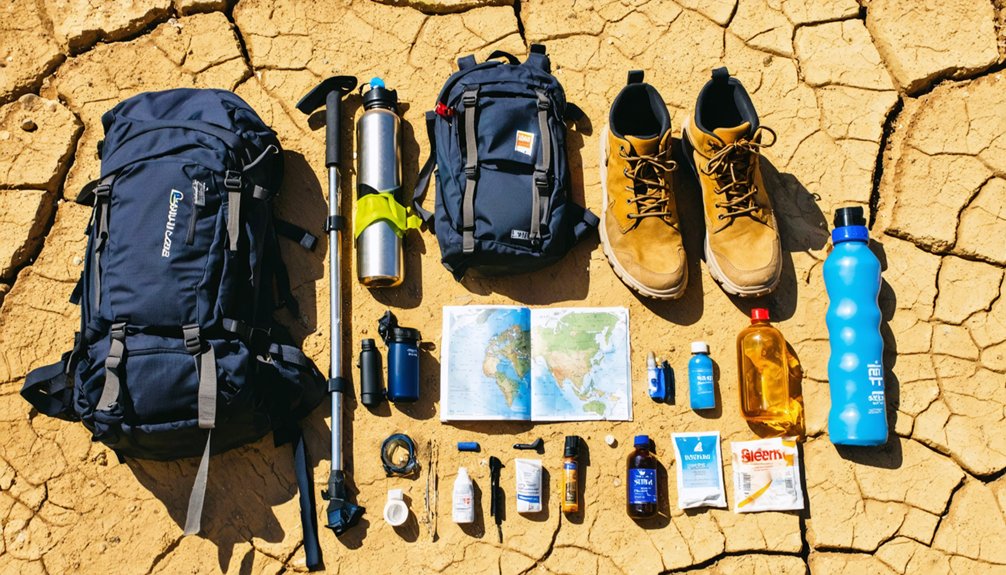
The canyon won’t wait for you to improvise. Carry more water than you think you’ll need — at least four liters — and treat any canyon water before drinking it. A satellite communicator isn’t optional here; cell service doesn’t exist, and emergencies happen fast in remote terrain.
Pack sun protection, a topographic map, and sturdy boots built for rocky scrambles.
Flash floods remain a real threat, just as they were when one swept away most of Panamint City in 1876. Know the forecast before you descend.
Once you reach the ruins, you’ll move among mining remnants and historical artifacts without modern infrastructure around you. Treat every structure with care. Photograph freely, touch nothing, and leave everything exactly as the desert preserved it.
How To Stay Safe From Flash Floods in Surprise Canyon
Flash floods don’t announce themselves at the canyon mouth — they build miles away, over ridges you can’t see, and arrive without warning. Surprise Canyon earned its name honestly. The 1876 flood that erased Panamint City proved what the terrain can do. Unlike bandit threats from the town’s outlaw era, floods carry no negotiation.
Flash floods don’t negotiate. They build unseen, arrive without warning, and erase everything in their path.
Watch trail signage near the canyon entrance for current conditions, and monitor skies aggressively.
- Start your hike early and exit the canyon well before afternoon storm buildup
- Never shelter in narrow canyon sections if dark clouds appear over distant ridges
- Identify high-ground escape routes before you need them — scan continuously while you move
The canyon is stunning. It’s also unforgiving. Respect both truths equally, and you’ll walk out on your own terms.
The Ruins, Relics, and Views Waiting at Panamint City
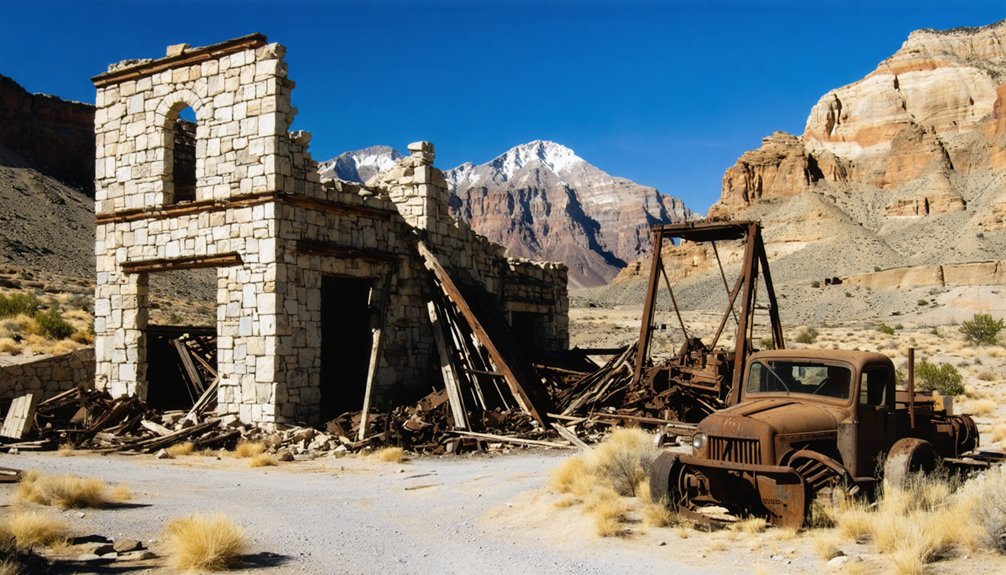
When you finally push through Surprise Canyon and reach Panamint City, you’ll find the skeletal remains of a town that once held 2,000 people, including a standing stone mill and scattered building foundations that anchor the site’s frontier scale.
Relics turn up throughout the ruins—rusted equipment, fragments of daily life, and structural remnants that reward slow, careful exploration.
From the elevated canyon setting, you’ll also take in sweeping panoramic views of the Panamint Range that make the brutal hike feel like exactly the right price of admission.
Historic Structures Still Standing
After a rugged 7.5-mile push through Surprise Canyon, you’ll find that Panamint City doesn’t disappoint. Historic buildings and mining artifacts scatter across the canyon slopes, rewarding every step of that demanding approach.
Here’s what you can still explore:
- The stone stamp mill — a towering remnant of silver processing operations that once ran around the clock during the 1874 boom
- Collapsed cabin foundations — structural ghosts marking where nearly 2,000 residents once lived, worked, and caused trouble
- Scattered mining artifacts — rusted machinery, ore cart hardware, and tools frozen in time since the catastrophic 1876 flood ended everything
These structures survived desert extremes for over a century. Walking among them connects you directly to a lawless frontier chapter that most travelers never reach.
Relics Scattered Throughout Site
Beyond the stamp mill and cabin foundations, relics push out from the soil and canyon walls in every direction — rusted ore carts half-buried in debris, collapsed timber frames still holding their shape after 150 years, and scattered hardware that once kept a rough silver operation running at full tilt.
Mining relics surface constantly as you move through the site, rewarding anyone who takes time to look carefully rather than rush through.
Canyon formations amplify the experience, with towering rock walls framing the wreckage and giving the whole place an almost theatrical scale.
You’re fundamentally walking through an open-air museum that nature has been slowly reclaiming since 1876.
Bring a camera, move slowly, and resist the urge to disturb anything — preservation rules apply, and the scene speaks loudest left untouched.
Panoramic Canyon Views
The relics pull your eyes down, but the canyon itself demands you look up. Surprise Canyon frames a wilderness that rewards every angle you give it — towering walls, desert sky, and silence that feels earned.
- Spring wildflower blooms paint canyon ledges in color that contrasts sharply against ancient rock
- Nighttime stargazing from elevation delivers one of the darkest, most unfiltered skies in California
- Shifting light at golden hour transforms the ruins and canyon walls into something that feels cinematic
You’re standing inside a natural amphitheater that swallowed a boomtown whole. The scale hits differently once you realize the 1876 flood that destroyed Panamint City roared straight through this corridor. Look up, look out, and let the canyon speak.
Frequently Asked Questions
Are Permits Required to Hike to Panamint City?
The knowledge doesn’t specify permit requirements or hiking regulations for Panamint City. You’ll want to check directly with Death Valley National Park before heading out, as rules can change and you don’t want surprises in the backcountry.
Can You Camp Overnight Near the Panamint City Ruins?
You can camp overnight near the ruins, but historical preservation and camping regulations apply. Ancient silver-boom echoes meet modern wilderness rules — so pack your freedom carefully, follow Leave No Trace principles, and plan your backcountry adventure responsibly.
Is the Surprise Canyon Hike Dog-Friendly?
You can bring your dog, but weigh the risks carefully. Trail difficulty is brutal, and dog safety’s genuinely at stake — scorching desert heat, rocky terrain, and zero shade can quickly overwhelm even the toughest four-legged adventurer.
Are There Any Guided Tours Available to Panamint City?
No guided tours exist for Panamint City — you’ll forge your own path. Embrace that freedom as you pursue photography opportunities and historical preservation firsthand, hiking Surprise Canyon’s raw, untamed miles to discover California’s most legendary ghost town yourself.
What Wildlife Might You Encounter While Hiking Surprise Canyon?
Like desert sentinels, wildlife thrives in Surprise Canyon’s rich wildlife habitats. You’ll spot bighorn sheep, rattlesnakes, and ravens during animal sightings along the trail — each creature embodying the canyon’s untamed, free spirit awaiting your discovery.
References
- https://en.wikipedia.org/wiki/Panamint_City
- https://theabandonedplaces.com/panamint-city-california-ghost-town/
- https://www.onlyinyourstate.com/nature/california/panamint-city-socal
- https://www.destination4x4.com/panamint-city-california-ghost-town-inyo-county/
- https://fr.wikipedia.org/wiki/Panamint_City
- https://www.onxmaps.com/hiking/y368p5ddmqgm/panamint-city
- https://adventuretaco.com/more-than-a-ghost-town-panamint-city-2/
- https://janmackellcollins.wordpress.com/2024/09/08/remote-hot-and-wicked-panamint-city-california/
- https://efoutfit.com/2020/08/24/panamint-city-death-valley/
- https://www.alltrails.com/trail/us/california/panamint-city-and-sentinel-peak-via-surprise-canyon-trail