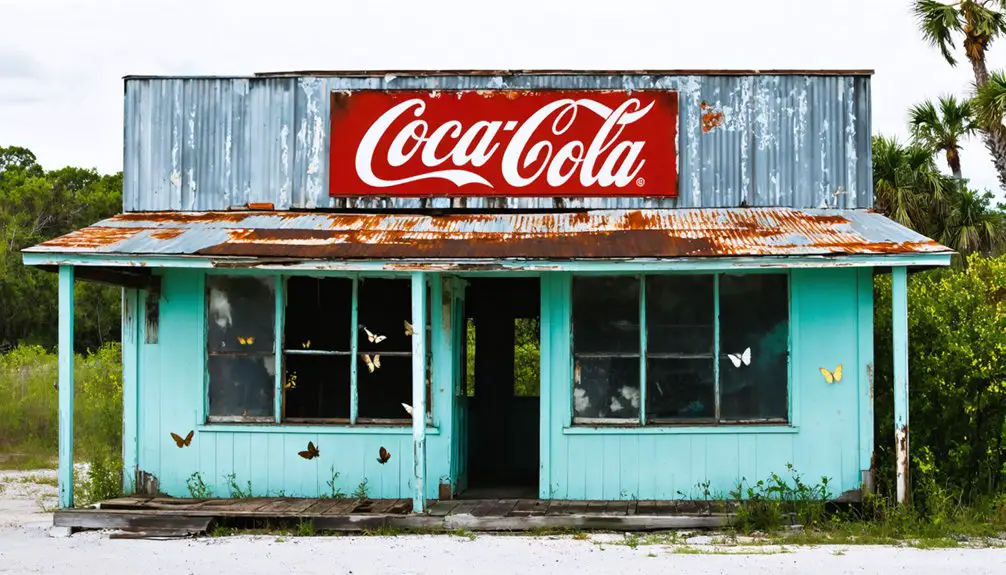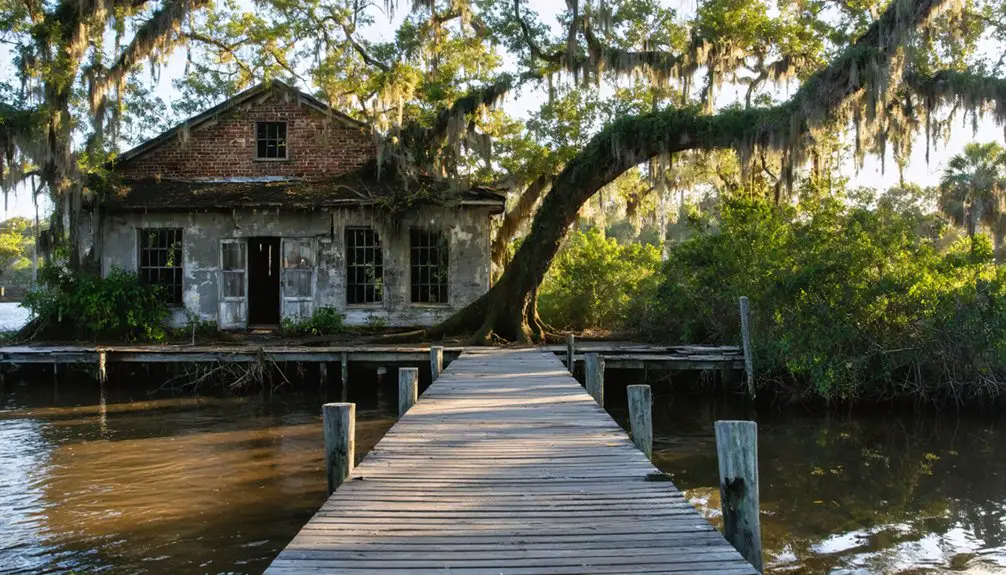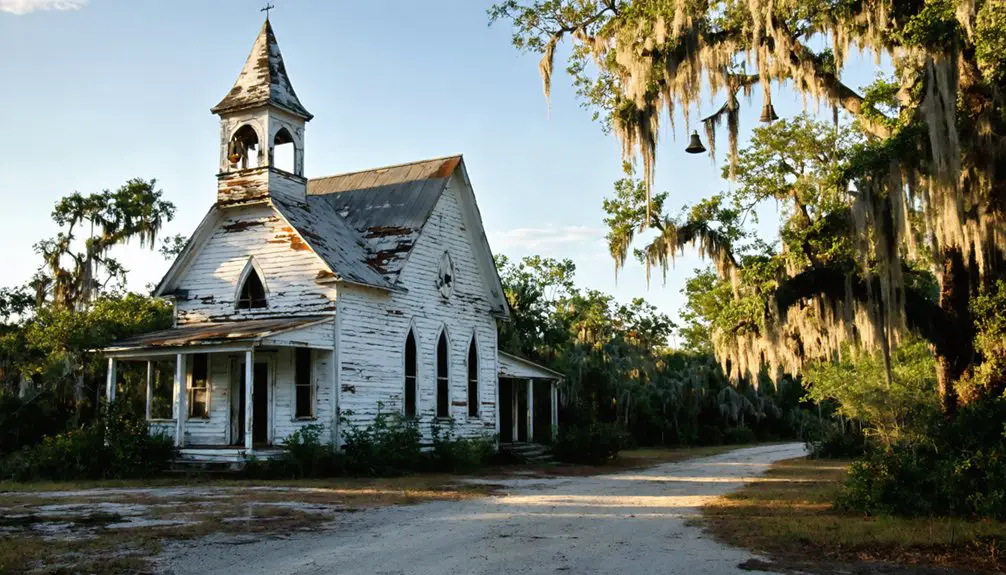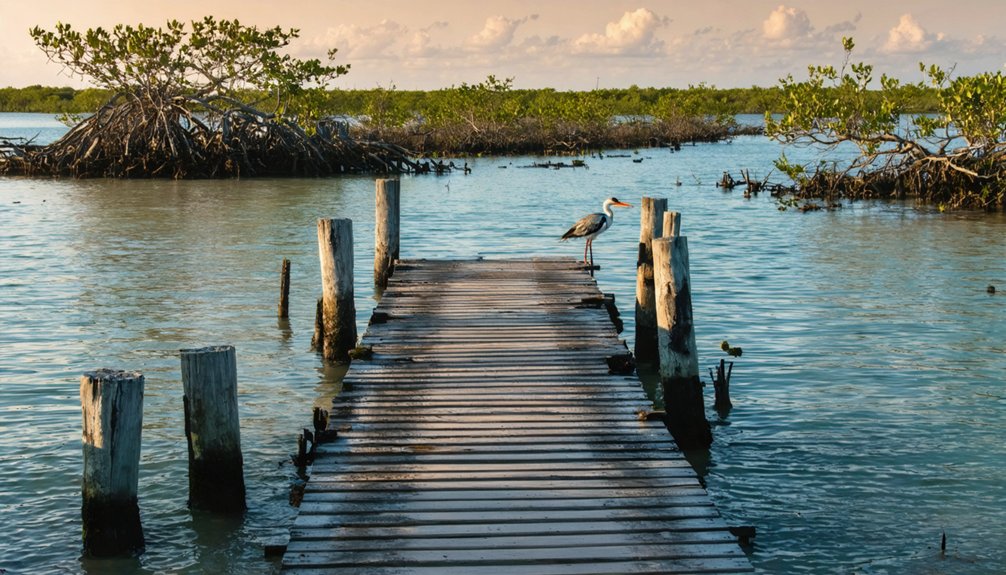
Planning a ghost town road trip to Punta Rassa means trading crumbling storefronts for something quieter but just as haunting. You’ll find a peaceful shoreline where cattle once thundered toward Cuba-bound ships, where telegraph cables once carried hemisphere-wide news, and where frontier ambition has since dissolved into mangroves and tidal flats. There’s no preserved plaza waiting for you, just Gulf breezes and layered history. Stick around, and Punta Rassa’s remarkable past will reveal itself.
Key Takeaways
- Punta Rassa sits at the western foot of the Sanibel Causeway on Florida’s Southwest Gulf Coast, making it an easy road trip detour.
- Once a thriving 1800s cattle port and telegraph hub, Punta Rassa now exists as a ghost town with no preserved buildings remaining.
- The site hosted Florida’s first undersea telegraph cable to Cuba in 1867 and received news of the USS Maine’s sinking in 1898.
- Visit during November through April, arriving early morning for optimal wildlife viewing of herons, dolphins, and osprey along the shoreline.
- Nearby attractions include Sanibel Island, Edison & Ford Estates, and the Southwest Florida Museum of History, perfect for extending your road trip.
Why Punta Rassa Is Considered a Ghost Town
Though no crumbling facades or abandoned storefronts mark the spot, Punta Rassa earns its ghost town label through sheer historical erasure — a once-thriving frontier port that powered Florida’s cattle trade with Cuba has all but vanished, leaving only a name and a shoreline where a boomtown once stood.
Punta Rassa didn’t fade — it vanished, leaving only a name and a shoreline where a boomtown once stood.
Local legends speak of dusty cattle drives ending at this Gulf Coast tip, where cowboys loaded longhorns onto ships bound for Havana.
Historic legends tie the site to military forts, telegraph lines, and frontier ambition that once made Punta Rassa matter far beyond its size.
Today, you won’t find preserved buildings or interpretive plazas. What you’ll find instead is quieter and stranger — a place where history didn’t fade slowly but simply disappeared, swallowed by time, storms, and progress.
Where Is Punta Rassa?
You’ll find Punta Rassa tucked along Florida’s Southwest Gulf Coast on the Fort Myers mainland, right where the Sanibel Causeway stretches out toward the barrier islands. It’s a compact spot, easy to miss if you’re rushing toward Sanibel, but that roadside proximity makes it a natural stopping point on any Southwest Florida drive.
The same waterfront where cattle once boarded ships for Cuba now sits just steps from one of the region’s most-traveled bridges.
Southwest Florida Gulf Coast
Nestled at the southwestern tip of the Florida mainland, Punta Rassa sits where the Caloosahatchee River meets San Carlos Bay, just before the bridge carries travelers across to Sanibel Island. You’ll find yourself standing at a crossroads of Gulf Coast history, saltwater air sharp on your face, the horizon wide and unobstructed.
This compact waterfront spot anchors the Lee County coastline, placing you within easy reach of Fort Myers and the barrier islands beyond. The surrounding waters reward wildlife observation, with herons, osprey, and dolphin moving freely through the estuary.
After exploring the site, you can sample local cuisine in nearby Fort Myers, grounding your road trip in both history and authentic Southwest Florida flavor. It’s a liberating stretch of coastline worth every detour.
Near Sanibel Island Bridge
The bridge to Sanibel Island is your landmark: Punta Rassa sits right at its western foot, where the Caloosahatchee River empties into San Carlos Bay. You’re standing at a crossroads that once carried far more weight than vacation traffic.
This narrow strip of land handled Florida’s cattle trade, shipping livestock across to Cuba throughout the 1800s. Before that, it absorbed the violence of military conflicts during the Seminole Wars, even hosting Fort Dulaney until a hurricane leveled it in 1841.
Today, most drivers barely notice Punta Rassa as they roll toward Sanibel’s beaches. That’s precisely what makes it worth stopping for. Pull over before you cross that bridge, and let the Gulf wind remind you what this quiet point once was.
Fort Myers Mainland Location
Where exactly do you find a ghost town hiding in plain sight? Punta Rassa sits on the Fort Myers mainland in Lee County, tucked at the southwestern tip where the Caloosahatchee River meets the Gulf of Mexico. You’ll reach it just before crossing the causeway toward Sanibel Island, making it an easy detour on any Southwest Florida drive.
The surrounding coastal ecosystems remain striking — mangrove shorelines, tidal flats, and local wildlife including osprey and bottlenose dolphins share the waters that once carried cattle ships bound for Cuba.
Fort Myers serves as your nearest hub for fuel, food, and lodging. Punta Rassa itself stays compact, so you’re not committing to hours of exploration — just a focused, rewarding stop steeped in frontier history.
The Cattle Trade That Built Punta Rassa
Before the waterfront drew sport fishermen and tourists, Punta Rassa was a working cattle port that helped fuel trade between Florida and Cuba. During the 1800s, ranchers drove herds across open Florida range and loaded them onto ships bound for Havana. That raw commerce defined the town’s identity long before local cuisine or wildlife viewing became part of the conversation.
You can almost feel the weight of that frontier economy when you stand at the water’s edge today. The ships are gone, the cattle pens have vanished, and the boomtown has faded into ghost town lore.
What remains is the story of a scrappy Southwest Florida port that connected two countries through livestock, ambition, and open Gulf water.
Forts, Wars, and Why the Military Kept Coming Back
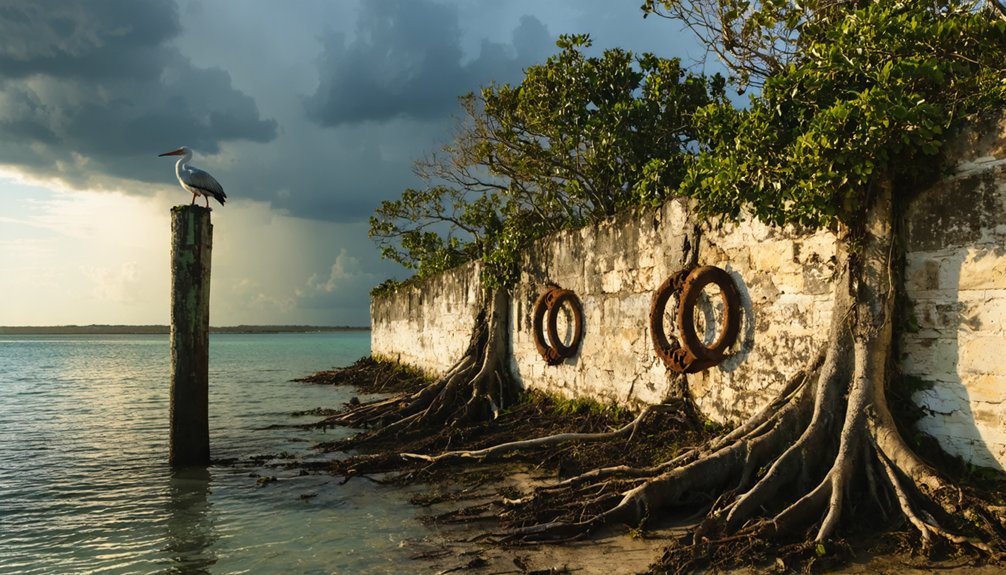
Before the cattle drives and telegraph cables, Punta Rassa earned its place on military maps during the Seminole Wars, when soldiers constructed Fort Dulaney on the exposed shoreline between 1835 and 1865.
A powerful hurricane tore the fort apart in 1841, yet the site’s strategic value kept pulling the military back.
Union forces recognized that same advantage when they returned during the Civil War.
You’re standing on ground that armies couldn’t leave alone, drawn repeatedly by the same geography that made it useful for cattle and communications alike.
Fort Dulaney’s Hurricane Destruction
During the Seminole Wars, the U.S. military built Fort Dulaney at Punta Rassa, turning this cattle port into a strategic outpost along Southwest Florida’s volatile frontier.
Then in 1841, a hurricane erased it completely. Nature reclaimed what soldiers had built, reshaping the surrounding wildlife habitats and coastline in one violent storm.
- Fort Dulaney stood briefly but served a fierce, necessary purpose.
- The 1841 hurricane destroyed the fort’s structures entirely.
- Surrounding wildlife habitats recovered as the land returned to nature.
- Soldiers stationed here likely sampled early local cuisine from the region’s abundant waters.
- The site’s erasure only deepened Punta Rassa’s ghost town mystique.
You’re standing where a fort once held the line — and the Gulf simply took it back.
Civil War Strategic Return
The Gulf swallowed Fort Dulaney in 1841, but Punta Rassa’s strategic value didn’t sink with it. When the Civil War erupted, the military returned, recognizing what earlier commanders already knew — this narrow coastal point controlled movement between Florida and Cuba.
Confederate cattle drives funneled beef through here, feeding Southern forces while Union blockades tightened around the coast. You’re standing where competing armies understood geography before roads existed.
The surrounding wildlife habitats sheltered both soldiers and smugglers moving through mangrove corridors that still frame the shoreline today. Even local cuisine traces roots to this period, when cattle workers and sailors cooked what the land and water offered.
Punta Rassa kept drawing power back because geography doesn’t negotiate — it simply determines who controls the water.
How a Telegraph Cable Put Punta Rassa on the Map
By 1867, Punta Rassa had quietly become one of the most strategically wired spots in the Western Hemisphere. When the International Ocean Telegraph Company laid an undersea cable connecting this remote Gulf shore to Havana, local legends transformed overnight. You’re standing where dispatches once crossed continents, where historical artifacts of early communications infrastructure shaped national events.
By 1867, Punta Rassa wasn’t just a remote Gulf shore — it was where continents quietly connected.
In 1898, news of the USS Maine’s sinking traveled through this very point.
Here’s what made Punta Rassa matter beyond cattle and coastline:
- First undersea telegraph link between Florida and Cuba
- International Ocean Telegraph Company controlled port rights from 1866
- Havana dispatches routed directly through this small outpost
- Maine sinking news relayed here in 1898
- Positioned Punta Rassa as a hemisphere-wide communications hub
When Tarpon Fishing Replaced Cattle at the Docks
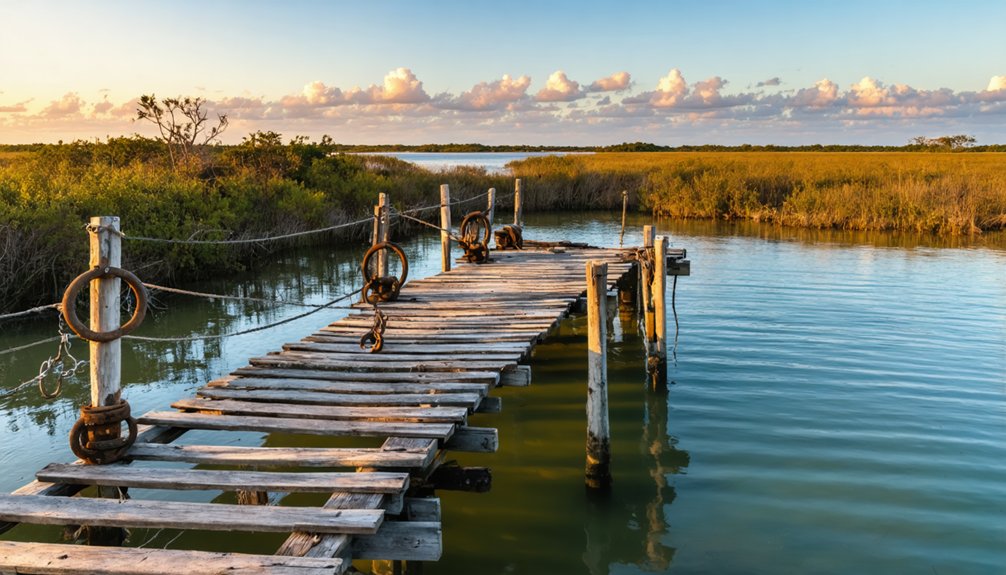
By the 1880s, the cattle drives had slowed, and Punta Rassa’s waterfront found a new calling in tarpon fishing.
Wealthy anglers from the North discovered the area’s rich Gulf waters and began arriving in pursuit of the “silver king,” drawn by catches that rivaled anything the Atlantic coast could offer.
You can still feel that changeover when you stand at the water’s edge, imagining the docks that once smelled of livestock now hosting well-heeled sportsmen casting lines into the same shimmering shallows.
Sport Fishing Arrives
As cattle drives wound down and the frontier economy shifted, Punta Rassa quietly reinvented itself around a different kind of catch. Once defined by cattle trade and telegraph lines humming with urgent messages, the waterfront welcomed a new crowd by the 1880s — wealthy anglers chasing tarpon through Gulf waters.
You’d have found a different energy here, rawer and more more exhilarating:
- Tarpon fishing put Punta Rassa on the national map
- Wealthy sportsmen traveled specifically for the Gulf’s trophy catches
- The docks shifted from livestock loading to fishing vessels
- Southwest Florida’s earliest tourism identity took shape here
- Recreation replaced commerce as the waterfront’s main purpose
That progression gave this ghost town a second life before time eventually claimed it again.
Wealthy Anglers Visit
Tarpon changed everything at Punta Rassa. By the 1880s, wealthy sport fishermen were trading city suits for fishing lines along these same docks where cowhands once loaded cattle onto Cuban-bound ships.
The local wildlife drew them in — massive silver tarpon rolling through warm Gulf waters, putting up fights that no money could replicate elsewhere. Word spread fast among America’s leisure class.
You can almost picture the scene: polished visitors arriving by boat, trading stories about record catches, turning a rough frontier port into an unlikely playground for the privileged.
Unlike the cultural festivals and organized tourism of today, this was raw, unscripted adventure. Freedom was the entire point — cast a line, chase something wild, leave everything else behind.
Tarpon Draws Tourism
The docks at Punta Rassa didn’t stay quiet long after the cattle trade faded. Once defined by military conflicts and livestock exports, this waterfront reinvented itself around one magnificent fish — the tarpon.
Wealthy sport fishermen arrived in the 1880s, drawn by legendary Gulf Coast catches and open coastal freedom.
- Tarpon runs drew elite anglers from across the country
- Sport fishing replaced cattle as the waterfront’s primary identity
- Early tourism built on the same docks once used for livestock
- The Gulf waters offered freedom far removed from industrial life
- Punta Rassa became Southwest Florida’s first real fishing destination
You’re standing where commerce, conflict, and recreation converged. The same waters that once carried cattle ships to Cuba now promised adventure on your own terms.
What You’ll Actually Find at Punta Rassa Now
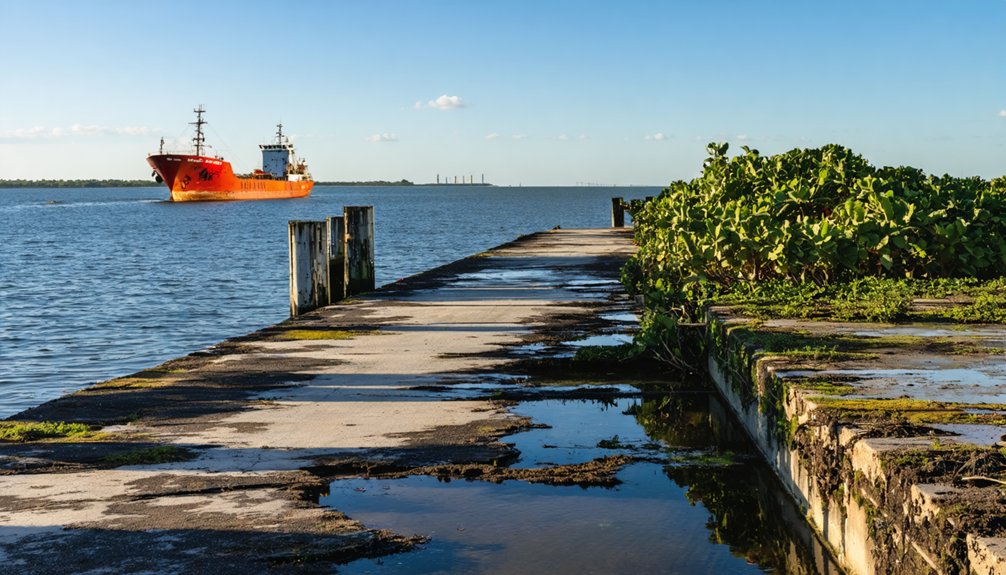
When you pull into Punta Rassa today, don’t expect crumbling storefronts or wagon ruts in the dirt. What remains is quieter than that. You’ll find a marina, waterfront access, and sweeping Gulf views where cattle once crowded the docks. The ghost here isn’t architectural — it’s atmospheric.
The ghost of Punta Rassa isn’t architectural — it’s atmospheric, felt in Gulf air where cattle once crowded the docks.
Wildlife viewing comes naturally at the water’s edge, where herons stalk the shallows and dolphins cut through the channel toward Sanibel. It’s a working coastline wearing a peaceful face.
Before you cross the bridge, grab local cuisine from nearby Fort Myers to carry with you — the spot itself doesn’t offer much in the way of dining.
Punta Rassa rewards visitors who arrive knowing what vanished. Stand at the water and let the history fill in what the landscape no longer shows.
How Long Should You Spend at Punta Rassa?
Punta Rassa rewards brevity — plan for thirty minutes, maybe an hour if you’re the kind of traveler who lingers at water’s edge piecing together what once stood there. Pair the stop with nearby Fort Myers for local cuisine before or after.
Wildlife observation adds unexpected richness; herons and pelicans work the shoreline where cattle once waited for Cuba-bound ships.
- Arrive near sunrise or sunset for the sharpest Gulf light
- Scan the water for dolphins, osprey, and wading birds during wildlife observation
- Photograph the Sanibel bridge causeway framing the horizon
- Keep local cuisine plans flexible — Fort Myers restaurants sit minutes away
- Read a historical marker slowly; there aren’t many, so each word earns its place
Nearby Stops Worth Adding to Your Punta Rassa Visit
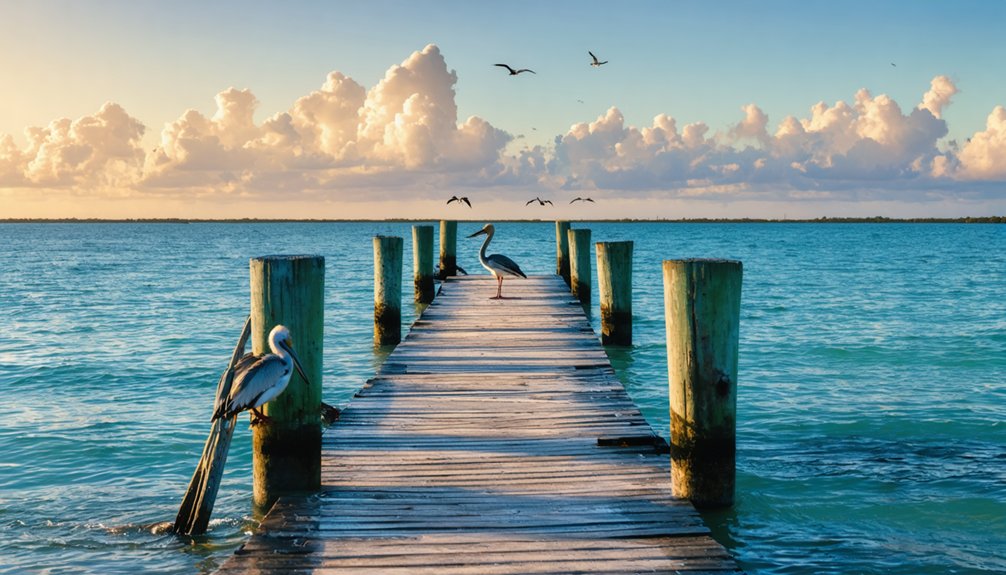
Anchoring your stop at Punta Rassa to a broader Lee County loop transforms a brief historical detour into a genuinely full day. From here, Sanibel Island sits just across the causeway, offering shell-strewn beaches that contrast sharply with the cattle trade grit this shoreline once carried.
Head north into Fort Myers to walk the riverfront district, where the same Gulf waters that floated cattle ships once carried trade goods inland. The Edison and Ford Winter Estates add another layer of historical depth without straying far.
If telegraph history sparked your curiosity at Punta Rassa, the Southwest Florida Museum of History in Fort Myers extends that narrative meaningfully. Each stop compounds the last, building a layered picture of how this coastline quietly shaped American commerce and communication.
Best Time of Year to Visit Punta Rassa
Southwest Florida’s dry season, running from November through April, gives you the most comfortable window to visit Punta Rassa. Cooler temperatures and lower humidity let you explore the site’s cattle trade legacy and telegraph significance without battling Florida’s brutal summer heat.
Plan your Punta Rassa visit during Florida’s dry season, November through April, for cooler temps and lower humidity.
- Visit between December and February for the mildest temperatures
- Arrive early morning to catch Gulf light over the water
- Avoid summer months when heat and mosquitoes peak
- Plan around tarpon season in spring for added coastal atmosphere
- Pair your visit with a Sanibel Island crossing on the same day
Shoulder months like November and March offer fewer crowds while keeping conditions pleasant.
Whatever window you choose, you’re stepping onto ground that shaped frontier commerce and national communications long before modern Florida took shape.
Frequently Asked Questions
Is There an Admission Fee to Visit Punta Rassa?
You’ll find no admission fee to explore Punta Rassa’s historical significance freely. Roam where cattle once thundered and telegraphs hummed, soaking in Gulf Coast wildlife viewing and salt-kissed breezes without spending a single dollar.
Is Punta Rassa Suitable for Young Children or Families?
You’ll find Punta Rassa offers family friendly activities amid its storied Gulf Coast setting. Kids can enjoy kid safe beaches while you explore where cattle traders and telegraph operators once shaped American history.
Are Pets Allowed at the Punta Rassa Waterfront Area?
Specific pet-friendly policies and animal restrictions aren’t documented in historical records for Punta Rassa’s waterfront. You’ll want to check with local Lee County authorities before bringing your pet to this storied Gulf Coast site.
Is Parking Free and Easy to Find at Punta Rassa?
Parking’s generally free and easy to find. Imagine rolling in like a 19th-century cattle drover — parking options stay uncrowded, and accessibility ease lets you roam freely along the Gulf, soaking up Punta Rassa’s storied, sun-drenched waterfront.
Can You Swim or Kayak Near the Punta Rassa Shoreline?
You can kayak and swim near Punta Rassa’s storied shoreline, where cattle once waded to ships bound for Cuba. Watch for marine wildlife, respect water safety, and you’ll find these Gulf waters beautifully, freely yours.
References
- https://www.floridamemory.com/items/show/295245
- https://puntarassa.org/History
- https://www.resortharbourproperties.com/punta-rassa-history/
- https://en.wikipedia.org/wiki/Punta_Rassa
- https://frontier-florida.blogspot.com/2024/01/punta-rassa-small-size-big-history.html
- https://sanibelmuseum.org/punta-rassa-before-the-bridge/
- https://floridacrackercrumbs.wordpress.com/2008/05/31/cracker-cowmen-the-history-of-punta-rassa/
- https://www.ghosttowns.com/states/fl/puntarassa.html
- https://www.uflib.ufl.edu/spec/ingraham/expedition/PuntaRassa.htm
- https://www.atlasobscura.com/places/punta-rassa-telegraph-station