Planning a road trip to Quindaro means visiting one of Kansas’s most overlooked but historically powerful ghost towns. Located along the Missouri River bluffs in Kansas City, Kansas, this 1850s abolitionist settlement served as an Underground Railroad stop and Free-State stronghold. You’ll find archaeological ruins, over 100,000 artifacts, and a John Brown memorial waiting to be explored. There’s far more to this wind-swept site than first meets the eye.
Key Takeaways
- Quindaro is located near North 27th Street and Missouri Pacific Railroad tracks in Kansas City, Kansas, along the Missouri River bluffs.
- Visit in spring or fall for mild weather; arrive early for optimal lighting and fewer crowds at the ruins.
- Wear sturdy shoes and bring water, as terrain is uneven, unpaved, and can become muddy after rain.
- Allocate two hours to explore foundations, the archaeological overlook, and the John Brown memorial plaza.
- Extend your trip by visiting nearby sites like the John Brown Museum, Huron Cemetery, and the Negro Leagues Baseball Museum.
What Was Quindaro and Why Does It Matter?
Tucked along the Missouri River bluffs in what’s now Kansas City, Kansas, Quindaro was a free-state boomtown founded in the 1850s by an unlikely alliance of abolitionists, Free Staters, and Wyandot people. The town served as a port-of-entry for those seeking freedom in Kansas Territory and became a critical Underground Railroad stop for enslaved people escaping Missouri.
Its name, drawn from Wyandot woman Nancy Brown Guthrie, translates roughly as “bundle of sticks” or “in union there’s strength” — a fitting symbol for what the community represented. That spirit of collective purpose didn’t die with the town.
Today, community activism and historic preservation efforts keep Quindaro’s story alive, ensuring you can still walk the bluffs and connect with one of America’s most defiant freedom-seeking settlements.
The Rise and Fall of Quindaro, Kansas’s Free-State Boomtown
Quindaro’s roots took hold fast. By 1857, the town was already booming, drawing Free Staters, abolitionists, and freedom seekers across the Missouri River into Kansas Territory.
By 1857, Quindaro was already alive with Free Staters, abolitionists, and freedom seekers crossing into Kansas Territory.
At its peak, roughly 600 people called Quindaro home — a remarkable number for a settlement barely a year old.
But the collapse came just as quickly. The Panic of 1857 struck early. The Civil War drained the population. Railroads bypassed the town entirely, killing its commercial lifeline.
By the early 1870s, Quindaro had gone quiet.
What you’re visiting today is the result of determined historical preservation efforts that rescued the site from obscurity — and even a proposed landfill.
The community impact Quindaro made on freedom movements didn’t disappear with the town. It simply waited to be rediscovered.
What Remains at the Quindaro Townsite Today
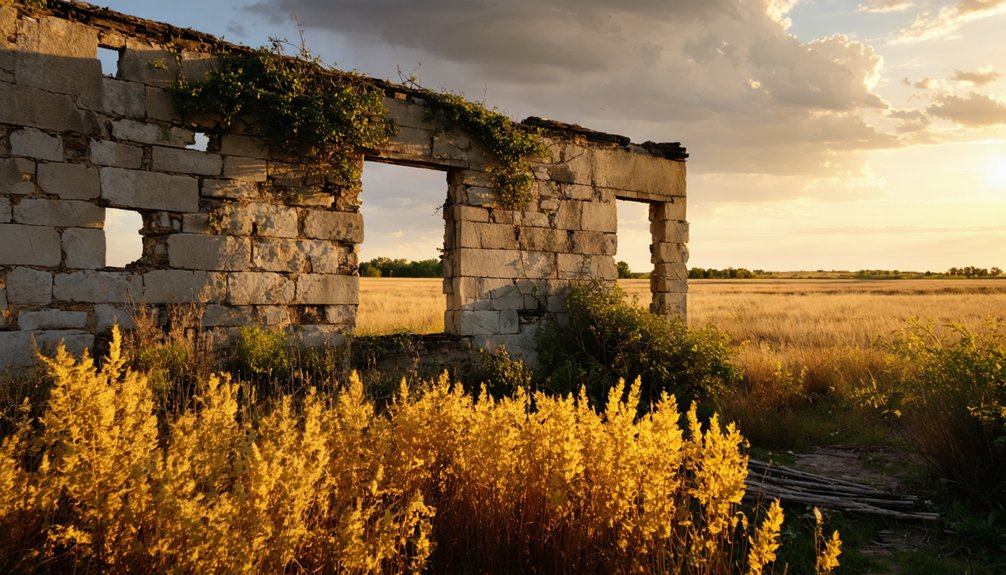
When you visit the Quindaro Townsite today, you’ll find an archaeological site where excavations have uncovered the foundations of 22 buildings, 3 wells, 1 cistern, and more than 100,000 artifacts.
The Old Quindaro Ruins & Overlook gives you a public vantage point above the remnants of what was once a thriving free-state boomtown.
A John Brown statue and memorial plaza round out the experience, connecting the physical ruins to the abolitionist story that made Quindaro historically significant.
Ruins And Archaeological Finds
Though much of Quindaro vanished long ago, what archaeologists have uncovered here is genuinely remarkable. The site’s archaeological significance goes far beyond crumbling foundations — it’s a tangible record of freedom-seekers and abolitionists who built something meaningful against enormous odds. Historical artifacts recovered here tell that story directly.
Excavations have revealed:
- Foundations of 22 buildings that once formed a thriving boomtown
- 3 wells and 1 cistern still identifiable beneath the surface
- Over 100,000 artifacts recovered from the townsite
- Evidence of everyday life from the 1850s and 1860s
- Layers of history interrupted by floods, fires, and infrastructure projects
When you visit, you’re standing above a buried town that chose freedom. That’s worth the stop.
Overlook And Memorial Features
Above the buried town, a public overlook gives you a direct line of sight over the archaeological zone where Quindaro once stood. Standing there, you feel the weight of what this ground holds — foundations, wells, cisterns, and over 100,000 recovered artifacts that confirm the town’s archaeological significance.
The landscape is quiet now, but the overlook makes the story readable.
Nearby, a John Brown statue anchors a memorial plaza that connects the site’s abolitionist legacy to something visible and permanent. The monument also honors the Wyandot people whose cooperation made Quindaro possible, grounding the experience in Native heritage as much as Free State history.
Together, the overlook and memorial give you two different but complementary ways to stand inside a history that refused to disappear entirely.
Where Exactly Is Quindaro in Kansas City, Kansas?
You’ll find the Quindaro Townsite tucked into the bluffs of northeastern Kansas City, Kansas, near North 27th Street and the Missouri Pacific Railroad tracks along the Missouri River.
The site sits within the modern Quindaro neighborhood, so you’re steering through an active residential area rather than an isolated stretch of open land.
Plug “Old Quindaro Ruins & Overlook” into your GPS to land at the most accessible public entry point for the ruins and the John Brown memorial plaza.
Quindaro’s Exact Location
Tucked into the bluffs of Kansas City, Kansas, Quindaro sits near North 27th Street and the Missouri Pacific Railroad tracks, placing it in the city’s modern Quindaro neighborhood along the Missouri River.
When you visit, you’ll find a site rich in archaeological significance and historical preservation. Here’s what anchors the location:
- The Old Quindaro Ruins & Overlook gives you a direct view of the archaeological zone
- Foundations of 22 buildings remain beneath the surface
- Over 100,000 artifacts have been recovered from excavations
- A John Brown statue marks the memorial plaza nearby
- The site earned National Register of Historic Places status in 2002
You’re standing where freedom-seekers once crossed into Kansas Territory — ground that still holds those stories beneath your feet.
Getting to Quindaro means heading into the bluffs of Kansas City, Kansas, where the site anchors itself near North 27th Street and the Missouri Pacific Railroad tracks in the city’s Quindaro neighborhood. You’ll find the Old Quindaro Ruins & Overlook marking your destination, offering a clear vantage point above the archaeological remains below.
Use GPS to navigate directly to the overlook, since the surrounding streets shift unexpectedly through the bluffs. The area’s archaeological significance makes it worth approaching slowly and deliberately — this isn’t a polished tourist stop, but a living demonstration of community preservation.
Foundations, wells, and over 100,000 recovered artifacts lie beneath your feet. Respect the site boundaries, stay on designated paths, and let the landscape itself tell you where freedom once took root.
When Should You Actually Visit Quindaro?
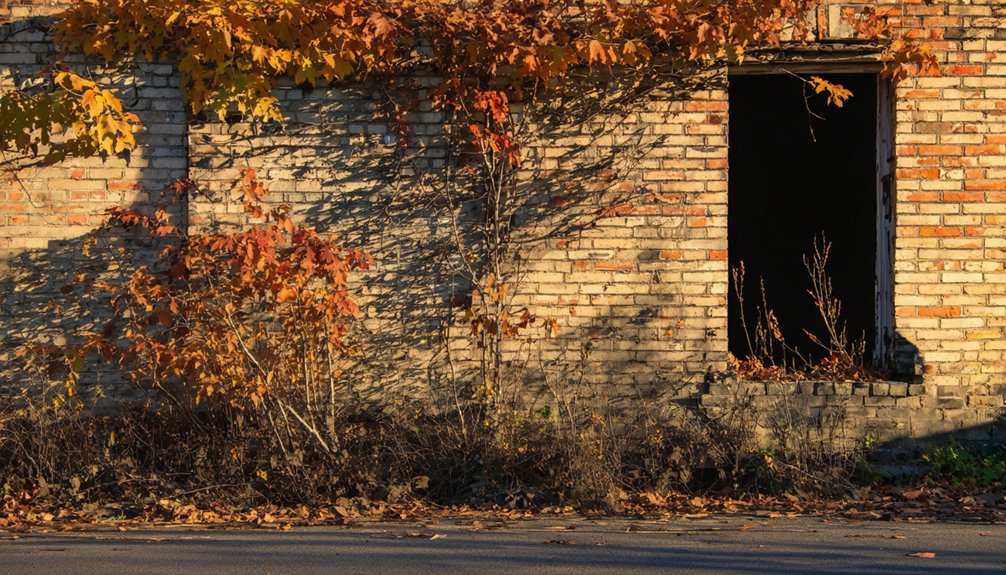
Spring and fall are your best bets for visiting Quindaro, when mild temperatures make walking the overlook and ruins far more comfortable than the sweltering Kansas City summers or icy winters. The site’s archaeological significance deserves unhurried exploration, and comfortable weather lets you do exactly that.
Plan your visit with these practical tips:
- April through May offers blooming landscapes and cooler mornings
- September through October brings crisp air perfect for outdoor exploration
- Weekday visits mean fewer crowds and more reflective time at the ruins
- Morning hours provide better lighting for photographing the foundations and overlook
- Check local preservation updates since historic preservation efforts occasionally affect site access
Whatever season you choose, arrive ready to connect with a story that shaped American freedom.
Parking, Accessibility, and Site Conditions at Quindaro
Before you arrive at Quindaro, know that this is an active archaeological site, not a polished tourist destination, so you’ll want to set your expectations accordingly.
Parking options are limited, with street parking your most realistic choice near North 27th Street. No designated visitor lot exists, so arrive prepared to walk a short distance.
Site accessibility is uneven — the terrain is rough, unimproved, and can become muddy after rain. Mobility aids may struggle on unpaved ground.
The Old Quindaro Ruins & Overlook gives you a solid vantage point without requiring you to navigate the excavation area itself.
Signage is minimal, so researching the site beforehand pays off.
Wear sturdy shoes, bring water, and treat the space with the respect a living historical site deserves.
Other Underground Railroad and Black History Sites Nearby
If you’re making the drive to Quindaro, you’ll want to extend your trip along the Civil War Freedom Trail, which connects key Underground Railroad stops across the Kansas City metro area.
Several Black history museums and cultural sites sit within easy reach, giving you a richer picture of the abolitionist movement and the lives of freedom seekers who passed through eastern Kansas.
Pairing Quindaro with these nearby stops transforms a single site visit into a full-day journey through one of the most consequential chapters in American history.
Nearby Underground Railroad Stops
Quindaro doesn’t stand alone in telling eastern Kansas’s Underground Railroad story, and pairing it with nearby sites deepens the experience considerably. The broader Kansas City region holds places where historic preservation and community storytelling keep freedom’s memory alive.
Add these stops to your route:
- John Brown Museum State Historic Site in Osawatomie, Kansas — where the abolitionist made his stand
- Mutual Musicians Foundation in Kansas City, Missouri — a historic Black cultural landmark
- The Negro Leagues Baseball Museum — honoring Black community resilience during segregation
- Huron Cemetery in Kansas City, Kansas — a Wyandot burial ground tied to Quindaro’s founding community
- First Baptist Church of Quindaro — a congregation rooted in the neighborhood’s freedom-seeking legacy
Each stop adds another layer to a story worth knowing completely.
Black History Museums Close
Extending your road trip beyond the immediate Quindaro area opens up a richer picture of Black history across the Kansas City region. The Negro Leagues Baseball Museum in downtown Kansas City, Missouri, celebrates African American heritage through one of sport’s most powerful freedom narratives.
Nearby, the American Jazz Museum shares the same building, honoring Black artistic genius born from that same spirit of resistance. The Mutual Musicians Foundation, a National Historic Landmark, still hosts late-night jazz sessions rooted in Underground Railroad-era community bonds.
Across the state line, Ethnic Enrichment Commission sites and local heritage trails connect the broader story of freedom seekers who crossed into Kansas. Each stop deepens your understanding of why Quindaro mattered then and why it still resonates now.
Civil War Freedom Trail
Following the Civil War, Freedom Trail pulls you deeper into the landscape where freedom was fought for, fled toward, and ultimately won. Quindaro‘s historical significance connects directly to nearby sites that honor the same courageous struggle. Archaeological discoveries at Quindaro amplify the stories these other stops carry.
Pair your visit with these essential nearby sites:
- John Brown State Historic Site – Walk where the abolitionist rallied Free Staters
- Mutual Musicians Foundation – Rooted in Black Kansas City history and culture
- Fort Leavenworth – A strategic Civil War military hub
- First Territorial Capitol – Where Kansas’s freedom debate began legislatively
- Historic Negro Leagues Baseball Museum – Celebrates Black resilience and community-building
Each stop deepens your understanding of the freedom movement that Quindaro helped ignite.
How Quindaro Fits Into a Kansas City Underground Railroad Tour
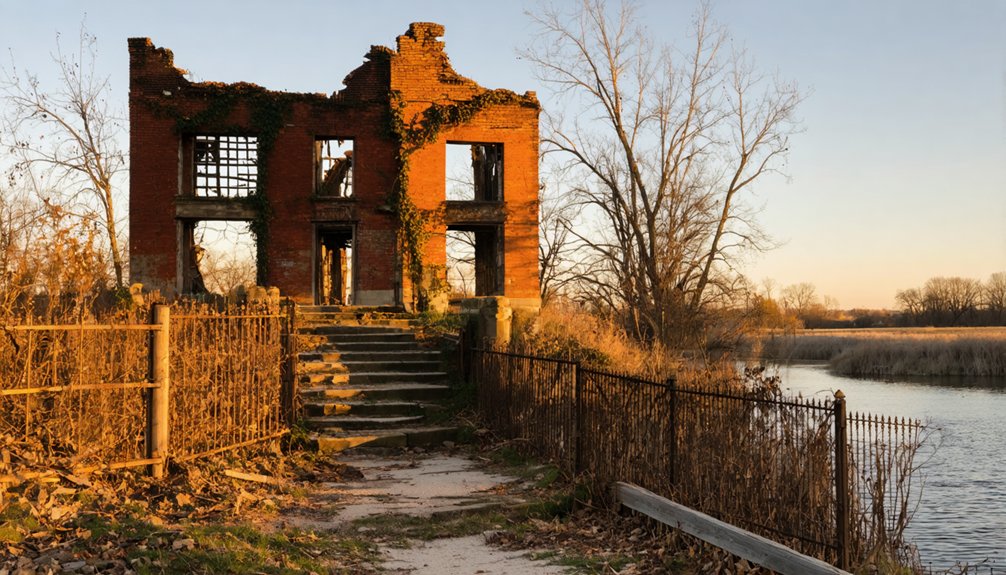
When you’re planning an Underground Railroad tour through Kansas City, Quindaro belongs near the top of your itinerary. This ghost town carried real cultural significance as a documented freedom corridor, where escaped enslaved people crossed from Missouri into Kansas Territory seeking permanent liberation.
Pair Quindaro with other Kansas City, Kansas landmarks tied to abolitionism and Black settlement history. The connections between these sites tell a larger, interconnected story about organized resistance and community building along the Missouri border.
Be aware that preservation challenges have shaped what you’ll actually encounter here. Damage from infrastructure projects and development has limited physical remains.
Still, the Old Quindaro Ruins, the John Brown statue, and recovered artifacts provide enough context to make this stop genuinely meaningful within a broader freedom trail experience.
What to Bring and How Long to Budget for Quindaro
Since Quindaro functions as a historic overlook and archaeological site rather than a fully developed attraction, you won’t need much more than a couple of hours to take it all in meaningfully.
Pair it with nearby outdoor activities or local cuisine to round out your day.
Pack smart before you go:
- Comfortable walking shoes for uneven terrain around the ruins
- Water and snacks, especially if you’re stacking multiple stops
- A camera to capture the overlook and John Brown statue
- A notebook or app for recording historical details
- Sun protection since shade is limited at the overlook
Budget roughly two hours on-site, then explore Kansas City, Kansas neighborhoods for local cuisine that reflects the area’s rich cultural history.
Why Quindaro Stands Apart From Other Civil War History Sites
Once you’ve packed your bag and mapped your route, it helps to understand what makes Quindaro worth the stop in the first place. Most Civil War history sites focus on battlefields or military strategy. Quindaro tells a different story — one built around freedom, cooperation, and resistance.
Its cultural significance comes from its rare combination of abolitionist activism, Underground Railroad history, Wyandot heritage, and Black settlement, all layered into one small archaeological site. You’re not standing where armies fought. You’re standing where people chose courage.
Preservation challenges have shaped how you’ll experience it — no reconstructed buildings, no polished museum. What remains are ruins, artifacts, and an overlook that demands your imagination. That rawness is exactly what makes Quindaro more honest, and more powerful, than most sites you’ll visit.
Frequently Asked Questions
Is There an Admission Fee to Visit the Quindaro Townsite?
You’ll find no admission fee to explore Quindaro’s historical preservation site. As a freedom-seeker, you’re welcome to experience the visitor amenities, including the public overlook and John Brown memorial plaza, completely free of charge.
Are Guided Tours Available at the Quindaro Ruins?
Like scattered stones waiting to tell their story, guided tour availability isn’t confirmed in current records. You’ll find historical preservation efforts shape your visit, but verify visitor amenities, including guided tours, directly with local Quindaro site contacts beforehand.
Can You Take Artifacts or Souvenirs From the Archaeological Site?
You can’t remove anything from the site. Artifact preservation laws strictly protect Quindaro’s 100,000+ recovered pieces. Souvenir regulations exist to safeguard this irreplaceable history, so take photographs instead and carry the stories with you.
Is the Quindaro Site Suitable for Young Children?
You’ll find Quindaro suitable for young children, though watch child safety near uneven ruins. The archaeological overlook sparks curiosity, and educational activities around abolitionism and freedom make it an engaging, meaningful stop for adventurous families.
Who Currently Manages and Maintains the Quindaro Townsite?
Like a torch passed between generations, historical preservation here relies on community involvement — you’ll find local advocates, the city of Kansas City, Kansas, and preservation groups actively managing and maintaining the Quindaro Townsite together.
References
- https://en.wikipedia.org/wiki/Quindaro_Townsite
- https://www.kancoll.org/khq/1956/56_4_farley.htm
- https://legendsofkansas.com/quindaro-kansas/
- https://kcyesterday.com/articles/quindaro-kansas-city
- https://civilwaronthewesternborder.org/encyclopedia/quindaro-kansas
- https://theclio.com/entry/86157
- https://www.thepitchkc.com/stopping-for-food-good-food-along-the-quindaro/
- https://kcindependent.com/quindaro-ruins-revitalization-to-bridge-the-past-and-present-for-future-generations/
- https://quindaroruinsprojectfoundationkck.org/quindaro-history/
- https://www.kckpl.org/kansas-collection/quindaro-history