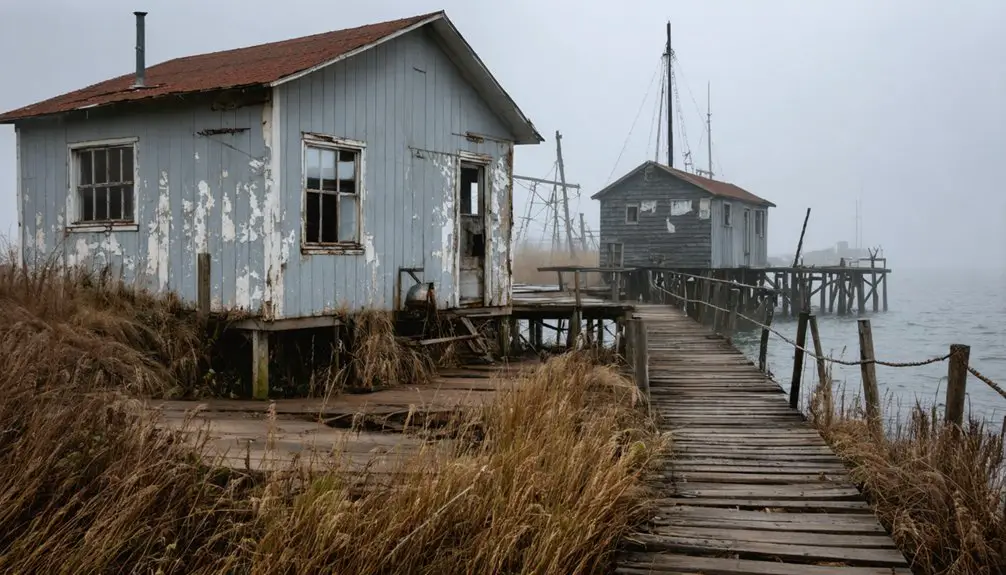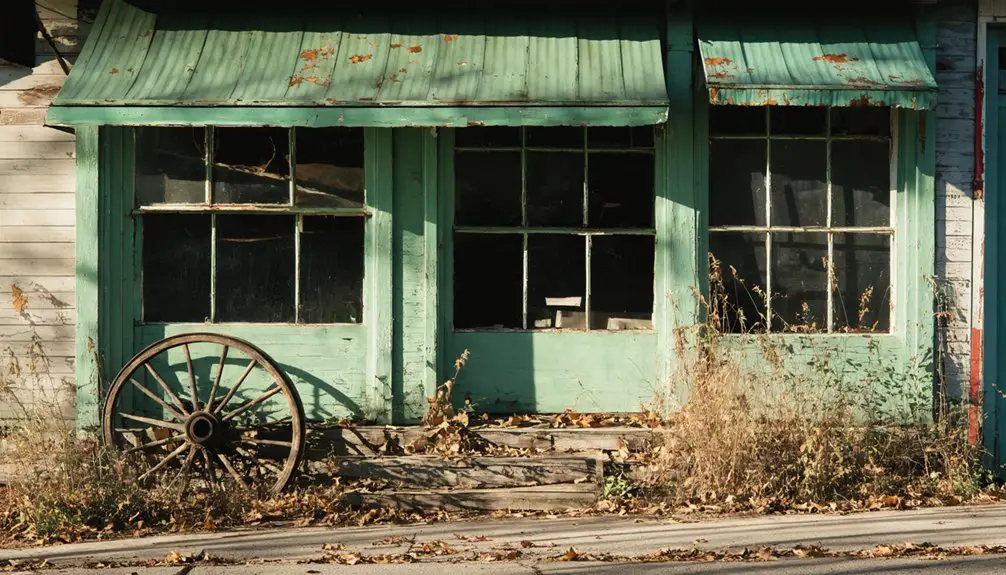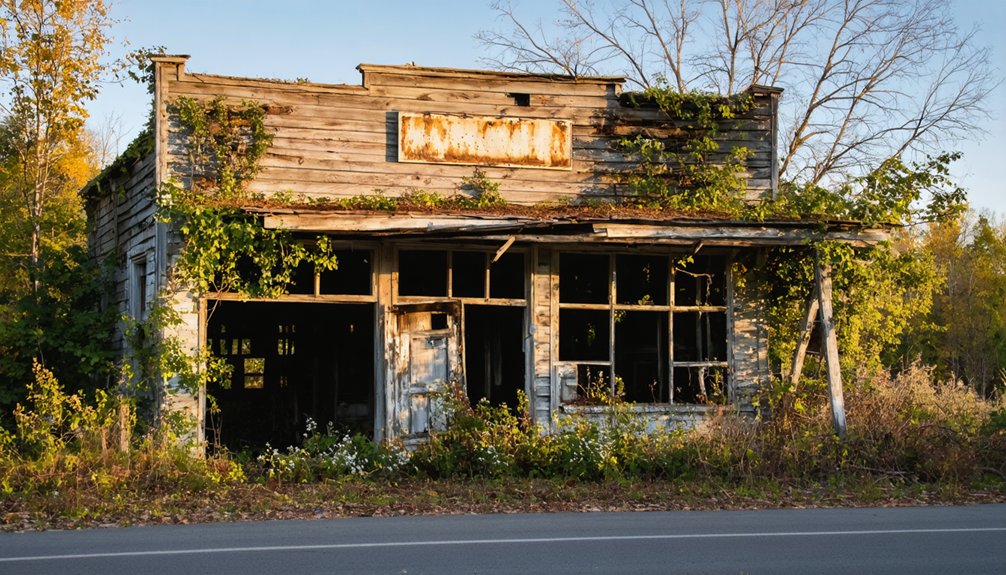
Planning a ghost town road trip to Ranney, Wisconsin is easier than you’d think. Ranney sits in Pleasant Prairie, Kenosha County, and you can reach it in a standard 2WD car via local roads off nearby Kenosha routes. Once a thriving railroad stop with its own post office, it’s now just scattered foundations and overgrown tracks. Budget about 30–45 minutes on site. There’s much more to uncover about Ranney’s rise, fall, and what surrounds it today.
Key Takeaways
- Ranney, once a railroad stop in Pleasant Prairie, Kenosha County, had a post office from 1885 to 1906 before declining.
- No standing structures remain; expect only scattered foundations and overgrown railroad tracks as evidence of the former community.
- The site is accessible via standard 2WD vehicles from Kenosha, requiring no off-road capability, and is open year-round.
- Plan approximately 30–45 minutes at Ranney, bringing a camera and realistic expectations for minimal but historically significant remains.
- Pair Ranney with nearby ghost towns for a full-day loop exploring Wisconsin’s forgotten, abandoned settlements and their unique histories.
What Was Ranney, Wisconsin?
Tucked into what’s now the village of Pleasant Prairie in Kenosha County, Ranney was once a modest but active community with a post office and a stop on the Chicago, Milwaukee, St. Paul, and Pacific Railroad. Its post office operated from 1885 to 1906, anchoring the kind of community stories that defined small Midwestern towns during that era.
Passenger trains once rolled through regularly, connecting Ranney to a broader world before that traffic stopped in 1862.
Today, no residents remain, no houses stand, and the last structure came down on July 31, 2006. What’s left are foundations and railroad tracks — quiet evidence that historic preservation sometimes means simply remembering what existed before a place disappeared entirely from the map.
How the Railroad Put Ranney on the Map
Before highways stitched the Midwest together, railroads decided which towns thrived and which ones faded before anyone noticed. Ranney’s historical significance traces directly to the Chicago, Milwaukee, St. Paul, and Pacific Railroad, which once made this small Kenosha County settlement a legitimate passenger stop.
Railroads didn’t just connect towns — they created them, decided their fate, and moved on without looking back.
That railroad impact gave Ranney a pulse. Travelers moved through, commerce followed, and a post office opened in 1885 to serve a growing community. For a time, the town had real momentum.
Then the trains stopped coming. No passenger train has halted at Ranney since 1862, and without that connection, the town had nothing left to anchor it.
The post office closed in 1906, and the settlement quietly disappeared, leaving only railroad tracks as proof it ever existed.
What’s Left at the Ranney Ghost Town Site?
When you arrive at the Ranney site, don’t expect standing structures — the last remaining house was torn down on July 31, 2006.
What you’ll find instead are scattered foundations and surviving railroad tracks, quiet remnants of a community that once welcomed passenger trains.
These traces are minimal but tangible, giving you just enough to connect with Ranney’s past before moving on to your next stop.
Foundations Still Visible
Though little remains of Ranney today, what you’ll find still tells a quiet story. Scattered foundations push up through the soil, silent markers of homes and structures that once defined a living community. They’re easy to miss if you’re not looking, but once you spot them, the urban decay hits differently — you’re standing where families actually built their lives.
These remnants carry real weight for anyone interested in historic preservation. They anchor the site to its past without a single interpretive sign needed. The railroad tracks nearby reinforce that connection, reminding you this wasn’t just a settlement — it was a stop on a major line.
Walk the area slowly. Let the foundations do the talking. Ranney rewards the curious, not the rushed.
Railroad Tracks Remain
Walking alongside the tracks, you’re tracing the same corridor that brought travelers through here before 1862. The rails outlasted every building, every resident, every post office letter.
Look for these details when you visit:
- Visible track lines cutting through the landscape
- Overgrown corridors marking the original rail path
- The contrast between natural growth and industrial steel
- Subtle grade changes typical of old rail corridors
- The sheer staying power of iron against time
The tracks give Ranney its strongest physical voice.
No Standing Structures
Once you step away from the tracks, the absence hits you — no walls, no rooftops, no doorframes standing against the sky. Ranney’s last house came down on July 31, 2006, leaving nothing vertical behind. What you’re walking through isn’t urban decay frozen mid-collapse; it’s a site already past that stage, stripped down to foundations pressed into the earth.
That erasure doesn’t diminish the historical significance — it sharpens it. You’re standing inside the footprint of a functioning community that ran a post office from 1885 to 1906 and once welcomed passengers off a major rail line.
The concrete outlines beneath your feet are the final proof that Ranney existed. Come prepared to read the land itself, because the land is all that’s left.
Getting to Ranney in Pleasant Prairie
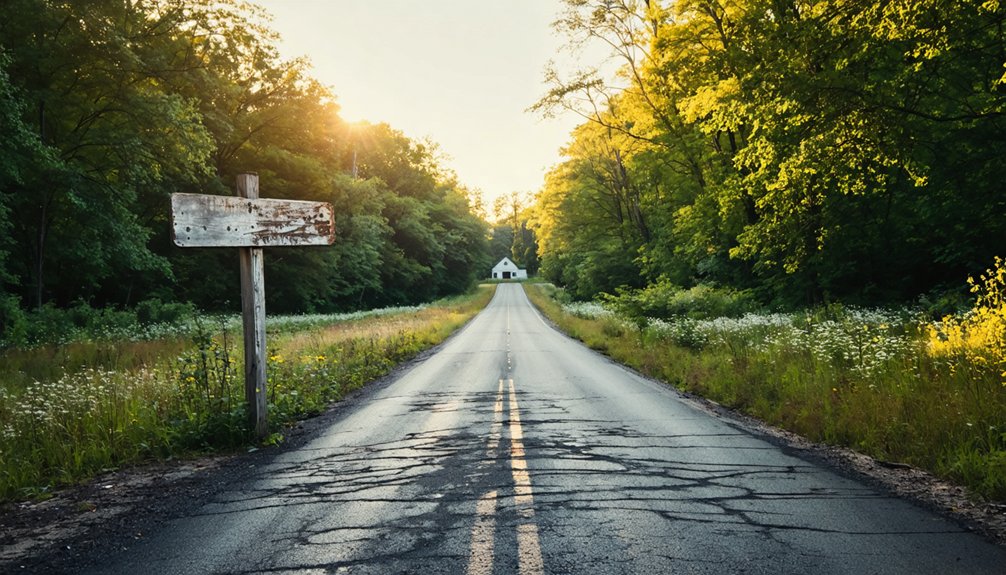
Since Ranney now falls within the village of Pleasant Prairie, you’ll find it easily reachable via local roads that connect to the broader Kenosha County road network.
The route requires only a standard 2WD vehicle, so you don’t need a truck or SUV to make the trip.
Whether you’re coming from I-94 or nearby surface streets, Pleasant Prairie’s accessible road layout makes reaching the site straightforward.
Pleasant Prairie Access Roads
Reaching Ranney is invigoratingly straightforward — the site sits within the village of Pleasant Prairie in Kenosha County, and the access roads are fully navigable by a standard 2WD vehicle, so you won’t need a truck or SUV to make the trip.
Local roads connect you directly to this historically significant former settlement, giving you cultural insights into Wisconsin’s vanished railroad communities. Pack light and plan efficiently:
- Follow Pleasant Prairie’s local road network from Kenosha
- No off-road vehicle is required
- GPS coordinates make pinpointing the site simple
- Year-round access means flexible scheduling
- Winter visits require snow preparedness, summer visits stay comfortable
You’re fundamentally driving into a quiet corner of Kenosha County where a once-active railroad stop simply disappeared — and the road gets you there easily.
2WD Route Conditions
The roads leading to Ranney’s former townsite in Pleasant Prairie don’t demand anything special from your vehicle — a standard 2WD car handles the route comfortably, leaving you free to focus on the history rather than the terrain. Local roads connect smoothly to the site, so you won’t need a truck or high clearance to reach what little remains.
That accessibility matters, especially given the historical context — this was once a railroad community drawing regular passenger traffic before fading into obscurity by the early 1900s. Today, preservation efforts have left foundations and railroad tracks as the primary markers worth finding.
You can visit any time of year, though packing for snow in winter keeps the trip practical. Plan for a brief stop rather than an extended stay.
When to Visit and What to Expect on Site
Although Ranney welcomes visitors year-round, you’ll want to pack accordingly — snowy winters and warm summers define this part of Kenosha County. Local weather shapes your seasonal activities and overall experience, so plan smart before you go.
Here’s what to expect on site:
- Winter: Snow covers the foundations, creating an eerie, atmospheric scene
- Summer: Warm conditions make walking the area comfortable and photogenic
- Year-round: Railroad tracks remain visible regardless of season
- Any visit: No structures stand — only foundations mark the former town
- Time needed: Budget 30–45 minutes; this is a brief historical stop
You’re visiting a quiet, stripped-down remnant of a railroad community. Bring curiosity, a camera, and realistic expectations — Ranney rewards the historically minded traveler, not those seeking dramatic ruins.
Other Ghost Towns Near Ranney Worth Adding to the Drive
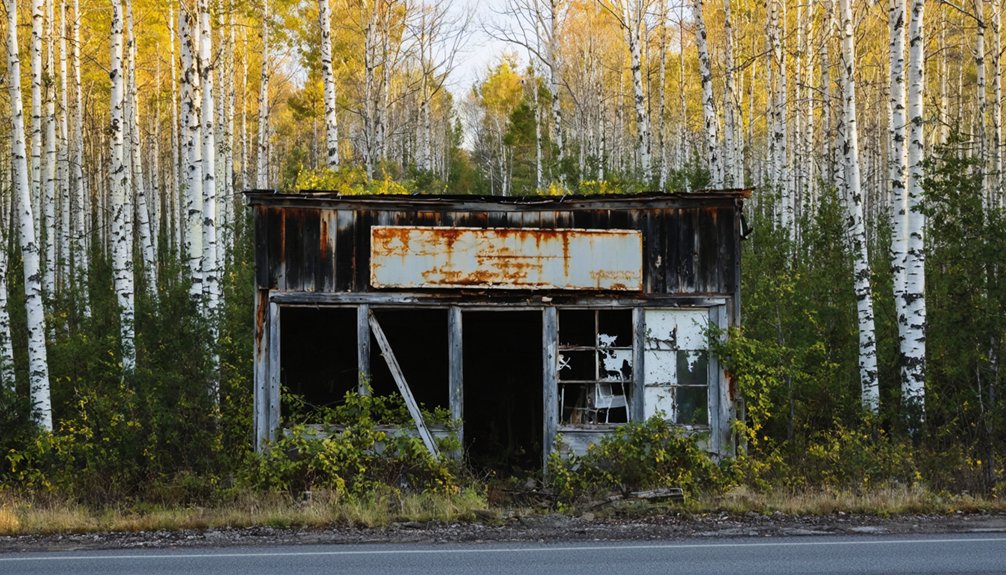
Since Ranney makes for a quick stop, you’ll want to string it together with other vanished Wisconsin communities to build a full day’s drive through Kenosha County and its neighboring regions.
Ranney is a quick stop, so pair it with nearby ghost towns for a full day’s drive.
Wisconsin’s railroad era left behind dozens of forgotten settlements, and several ghost towns sit close enough to Ranney to justify a single, well-planned loop. Each site carries its own historical anecdotes tied to rail commerce, agricultural booms, and sudden decline.
Some harbor local legends about why residents abandoned them practically overnight. Research your route beforehand, cross-reference county historical society records, and identify which sites still hold foundations or structural remnants worth photographing.
Treat the entire loop as a living timeline of Wisconsin’s vanished communities, letting Ranney serve as your anchor point before pushing outward into equally compelling, equally forgotten territory.
Frequently Asked Questions
Is There an Admission Fee or Permit Required to Visit Ranney?
You’ll find no admission fee or permit required for visiting Ranney’s remnants. Visitor regulations are minimal, and historical preservation efforts keep the foundations and railroad tracks accessible, letting you freely explore this vanished Wisconsin railroad community year-round.
Are Pets Allowed When Visiting the Ranney Ghost Town Site?
The knowledge doesn’t specify pet policies or animal restrictions for Ranney’s site. Since you’re visiting an open, unmonitored ghost town area, you’ll likely enjoy freedom to explore with your pets alongside you.
Can You Find Any Artifacts at the Ranney Site Today?
You won’t find loose artifacts at Ranney — foundations stand, tracks remain, and artifact preservation protects historical significance. You’re free to explore, observe, and appreciate these remnants, but always respect what little history’s left behind.
Is the Ranney Site on Public or Private Property?
The knowledge base doesn’t confirm whether Ranney sits on public or private land. Before you visit, research current ownership details to avoid trespassing on private land and guarantee you’re exploring this fascinating ghost town legally and freely.
Are There Nearby Restrooms or Facilities Close to the Ranney Site?
Heading off the beaten path? The Ranney site offers no restroom availability or visitor amenities, so you’ll want to plan ahead and stock up before you arrive — freedom demands preparation!
References
- https://www.ghosttowns.com/states/wi/ranney.html
- https://en.wikipedia.org/wiki/List_of_ghost_towns_in_Wisconsin
- http://shunpikingtoheaven.blogspot.com/2016/05/a-wisconsin-ghost-town.html