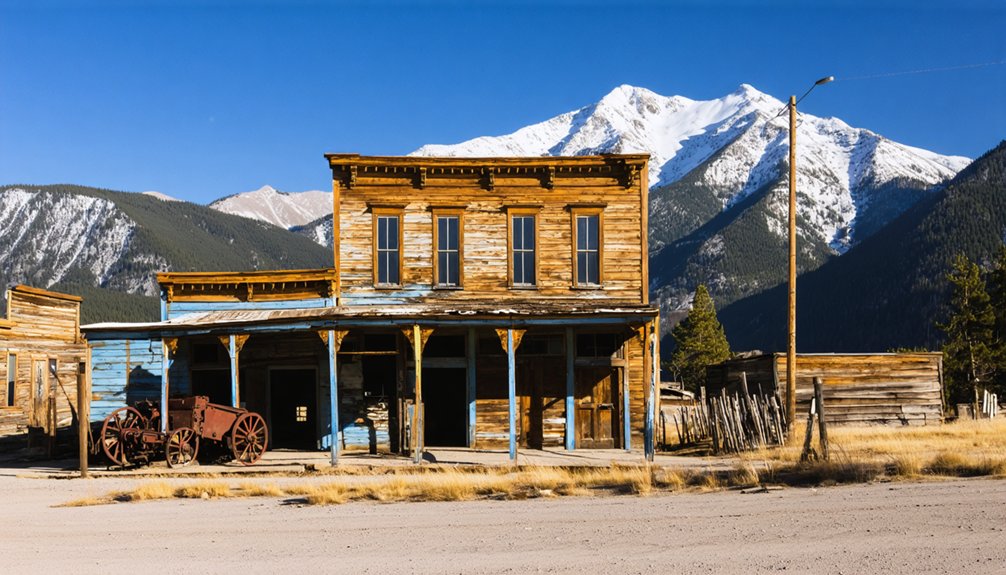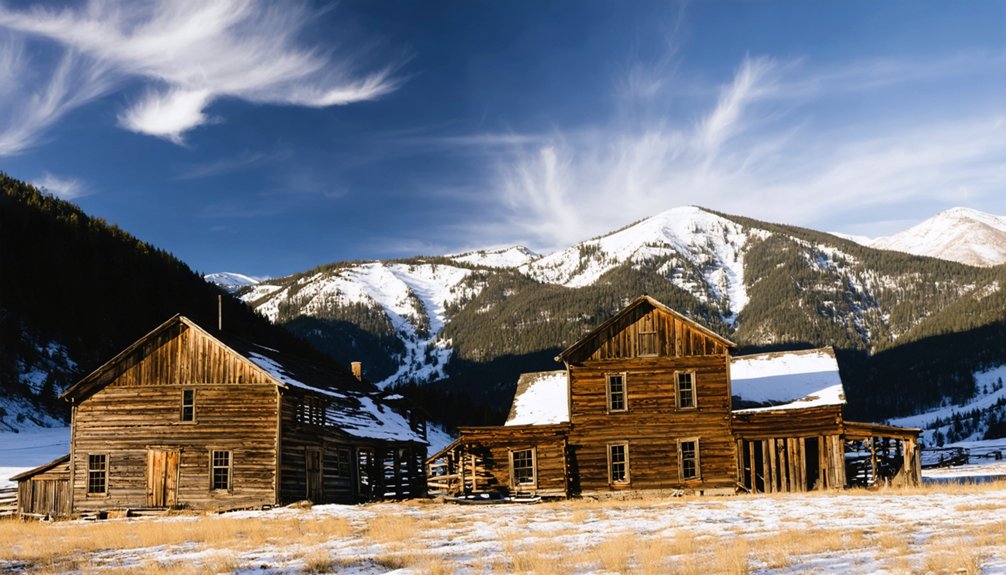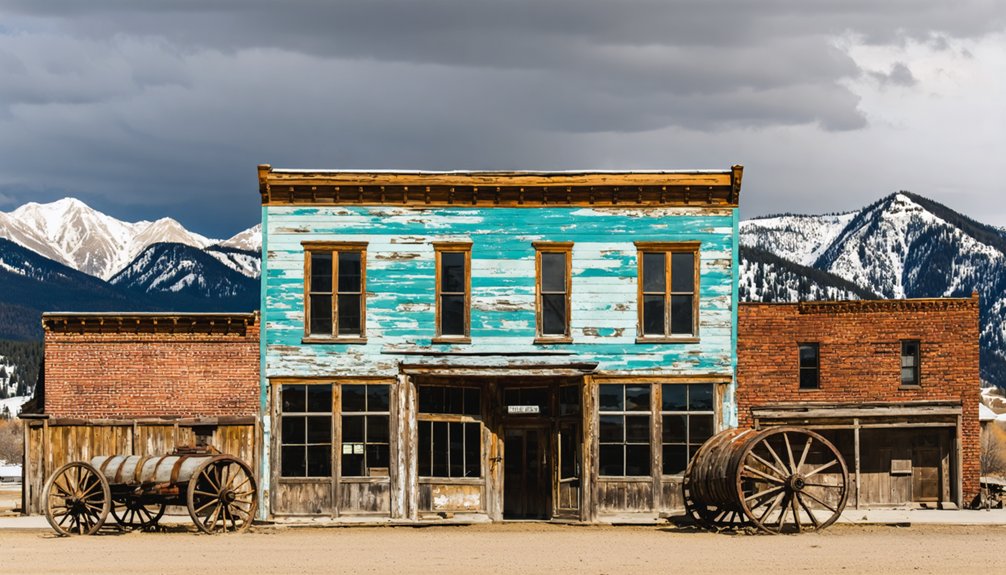
Planning a ghost town road trip to Red Cliff means discovering a Colorado Silver Boom survivor that’s anything but abandoned. Founded in 1879, this Victorian-era town still houses nearly 260 residents and landmarks like the old Eagle County Courthouse. Pair it with distant views of sealed-off Gilman, a toxic Superfund site you can’t enter but can glimpse from US-24 near Minturn. Stick around to uncover what made one town survive while the other didn’t.
Key Takeaways
- Red Cliff, founded in 1879, retains Victorian-era architecture and roughly 260 residents, making it more vibrant than a typical ghost town.
- Nearby Gilman, sealed in 1984 and designated a Superfund site in 1986, is off-limits but visible from US-24 near Minturn.
- Red Cliff survived due to civic diversification; Gilman collapsed after its single mine became unprofitable and environmentally condemned.
- The best visiting window is late June through early October for optimal weather, road access, and scenic conditions.
- Trespassing into Gilman is illegal and risks fines or arrest; legal viewpoints include highway pull-offs and the Eagle River bridge.
Why Red Cliff Is the Ghost Town Road Trip With a Twist
Most ghost town road trips promise emptiness — weathered storefronts, silence, and the thrill of standing somewhere time forgot. Red Cliff delivers something richer. This Eagle County mountain town, founded in 1879 during Colorado’s Silver Boom, never fully died. Roughly 260 residents still call it home, keeping its Victorian-era bones alive against serious preservation challenges.
The real twist sits just down the road. Gilman, an abandoned lead and zinc mining town, was sealed off in 1984 after EPA intervention and later designated a Superfund site. It’s private property — completely off-limits.
You’re not getting inside Gilman, but you don’t need to. The contrast between Red Cliff’s survival and Gilman’s haunted silence tells a complete story about mining legends, boom cycles, and the cost of extraction.
Red Cliff’s Silver Boom: From Mining Camp to County Seat
When silver fever swept Colorado in 1879, Red Cliff started as a rough mining camp clinging to the Eagle Valley hillside — and it grew fast. Within a few years, you’d have found saloons, sawmills, a bank, and even an opera house defining its skyline.
By 1883, the town had earned enough civic weight to become Eagle County’s seat, a title it held until 1921.
That mining nostalgia hits differently when you walk Red Cliff’s streets today. The Victorian-era architecture still stands, quietly narrating a boom that once pulled millions in ore from surrounding mountains.
The region’s industrial legacy didn’t come without cost — nearby Gilman’s eventual Superfund designation put environmental cleanup at the center of the story.
Red Cliff survived; the land around it still carries the consequences.
Gilman, Colorado: The Abandoned Town You Can’t Enter
Just a few miles from Red Cliff, Gilman clings to a clifftop above the Eagle River like a frozen moment in time — but you can’t get anywhere near it. After the EPA flagged the site for toxic contamination tied to the Eagle Mine, authorities shut the town down in 1984 and designated it a Superfund site two years later.
Today, private property signs and legal restrictions keep curious visitors out, leaving Gilman’s empty buildings to deteriorate in full view from US-24 below.
Gilman’s Toxic Abandonment
A few miles from Red Cliff, perched on a cliff above the Eagle River, Gilman sits frozen in 1984—the year the EPA forced its residents out and sealed the town behind a chain-link fence.
Lead and zinc mining had poisoned the soil and water around the Eagle Mine, making the site too toxic for human habitation. Today, you can glimpse mining relics from the highway—abandoned structures clinging to the cliffside—but you can’t get closer.
Private property signs and Superfund designation keep visitors out while environmental cleanup efforts continue on the contaminated land below.
Gilman isn’t romanticized decay you can wander through; it’s a cautionary landscape, visible but untouchable, reminding you that industrial prosperity often carries a long and costly environmental price tag.
Why Gilman Stays Closed
Unlike most ghost towns that welcome curious visitors with open gates and crumbling storefronts to explore, Gilman keeps you at arm’s length for reasons that go well beyond a rusted padlock. The town sits on private property, and that alone ends most conversations about access.
But the deeper barrier is environmental. Mining decline left behind more than empty buildings — it left toxic contamination serious enough to earn Gilman a Superfund designation in 1986. The environmental impact of decades of lead and zinc extraction poisoned the soil and water, making casual exploration genuinely dangerous.
You can see Gilman from US-24, perched dramatically on a cliff above the Eagle River. That distant view is your limit. The freedom to roam stops where the contamination begins.
Can You See Gilman Without Trespassing?
You can catch a distant glimpse of Gilman from US-24 near Minturn without setting foot on private property, making the highway pulloff your best legal vantage point.
The abandoned town sits on a mesa above Battle Mountain, and if you know where to look, you’ll spot the skeletal outlines of structures against the ridgeline.
Crossing onto the property is a different matter entirely — Gilman is privately owned, posted, and trespassing carries real legal consequences that no abandoned building is worth.
Gilman’s Public Viewing Spots
Gilman sits just off US-24 near Minturn, and while you can’t set foot inside the fenced-off town, you can catch a striking glimpse of it from the highway below. The mining relics — rusted structures, vacant buildings, collapsed infrastructure — cling to the cliffside like a frozen moment in 1984.
The environmental impact of the Eagle Mine still shapes what you see and what remains off-limits.
Here’s where to look without crossing a line:
- Pull off along US-24 southbound near mile marker 147
- Use binoculars from the highway shoulder for detail
- Cross the Eagle River bridge near Minturn for an angled view
- Photograph from Battle Mountain overlooks during daylight hours
You stay legal. Gilman stays haunting.
Trespassing Risks And Consequences
The short answer is yes — you can see Gilman without trespassing, but the line between a legal roadside view and criminal trespass is sharper than most curious travelers expect.
Gilman sits on private property, and its legal boundaries aren’t suggestions. The moment you step past posted signs or barriers, you’re risking real trespass penalties under Colorado law — fines, criminal charges, and possible arrest.
Private property owners actively monitor the site. Your freedom to explore has genuine limits here, and ignoring them doesn’t make you adventurous; it makes you liable.
Stick to Highway 24 pullouts, keep your camera ready, and respect the boundary. You’ll still witness something striking — a frozen town clinging to a cliff — without jeopardizing your trip or your record.
Why Red Cliff Survived and Gilman Didn’t
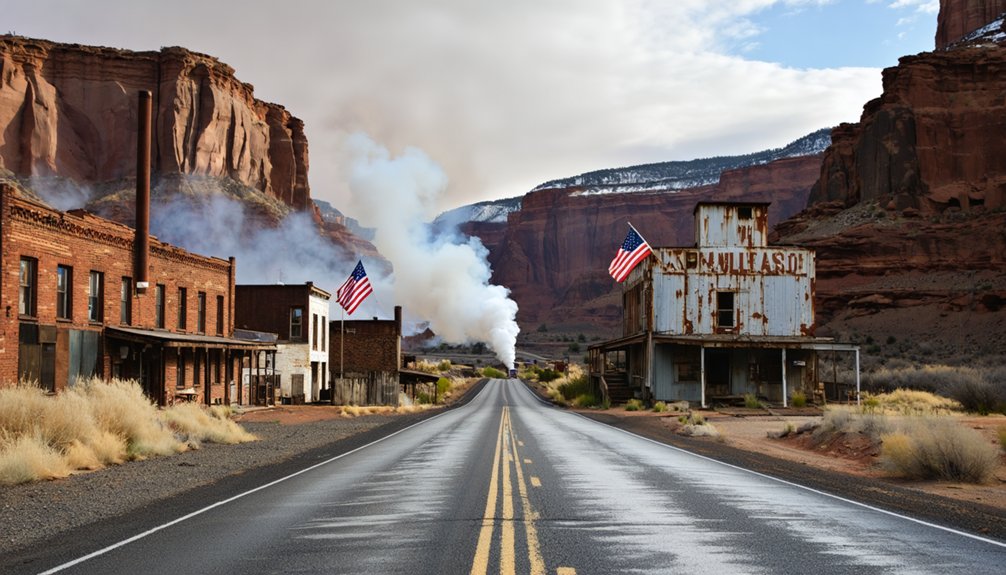
When you stand in Red Cliff’s quiet streets today, it’s easy to forget that a nearly identical town sits abandoned just miles away. The contrast comes down to four critical differences:
- Red Cliff maintained civic identity as Eagle County’s former seat.
- Gilman depended entirely on a single mine’s profitability.
- Advances in mining technology made Gilman’s ore deposits unprofitable by the 1980s.
- EPA contamination findings sealed Gilman’s fate permanently in 1984.
Red Cliff’s resilience came from diversification. It wasn’t just a mining camp; it had banks, an opera house, and governmental roots. Gilman had none of that institutional backbone.
When the Eagle Mine flooded and profits vanished, nothing remained worth saving. You’re fundamentally looking at two towns that started identically but chose completely different destinies.
Red Cliff’s Surviving Victorian Buildings and Historic Sites
As you walk Red Cliff’s narrow streets, you’ll find Victorian-era architecture that has outlasted the boom-and-bust cycle that swallowed neighboring towns whole.
The town’s historic core preserves the bones of its 1880s prosperity — commercial storefronts, residences, and civic structures that once supported saloons, a bank, and even an opera house.
You’re not touring a reconstructed frontier set here; you’re moving through a working town where the buildings carry genuine mining-era history.
Victorian Architecture Still Standing
Tucked into Red Cliff’s compact downtown, Victorian-era buildings from the silver boom still line the streets, giving you a rare chance to walk through a living piece of Colorado’s mining past. Victorian preservation here isn’t a museum project—it’s simply how the town survived.
Look for these standout remnants:
- The original bank building, reflecting Red Cliff’s brief financial prominence
- Early commercial storefronts built to support mining technology supply chains
- The opera house site, marking the town’s cultural ambitions beyond the mine shafts
- Structural details—brick facades, pressed-tin ceilings—that recall boom-era craftsmanship
You’re not touring a reconstructed set. These structures endured because people stayed. That persistence separates Red Cliff from Gilman, its abandoned neighbor, and makes every weathered facade worth your attention.
Key Historic Landmarks
Red Cliff’s historic core rewards slow walking. Stroll the main street and you’ll find preserved Victorian architecture that survived long after the silver money ran out.
The old Eagle County Courthouse anchors the town’s civic identity — Red Cliff held the county seat from 1883 to 1921, and that governmental past shaped its built landscape. You’ll also spot remnants of the commercial strip that once housed saloons, a bank, and an opera house serving a booming mining population.
The mining heritage shows up in structural details, weathered facades, and the tight grid of a town built fast during Colorado’s Silver Boom. None of it’s roped off or staged. You’re walking through a working town that simply never erased its past.
Driving to Red Cliff: Elevation and Road Conditions
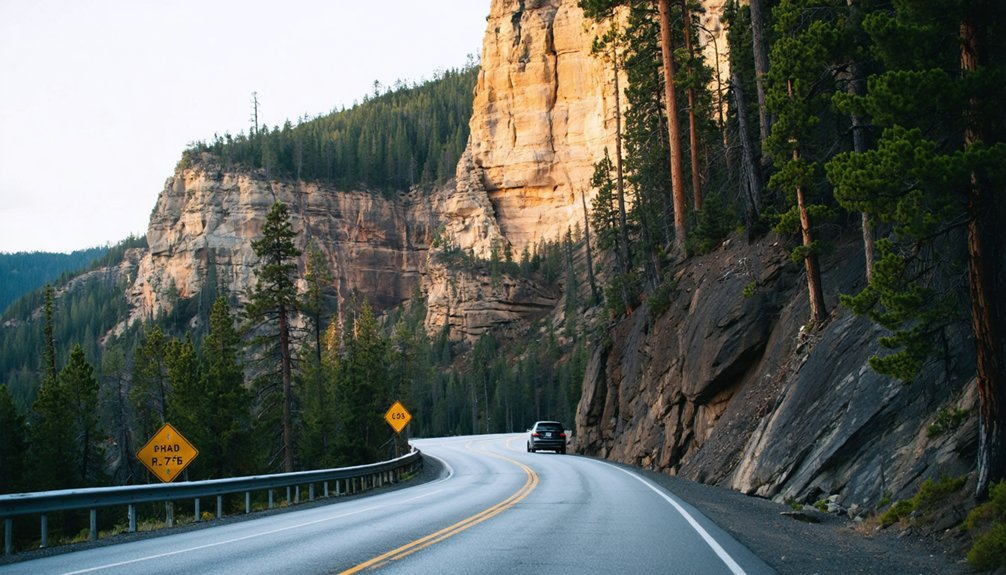
Reaching Red Cliff means climbing into Colorado’s high country, where the town sits at roughly 8,750 feet in the Eagle Valley near Battle Mountain. The drive rewards you with sweeping alpine scenery tied directly to the region’s mining heritage and environmental cleanup legacy.
Before you go, prepare for these road realities:
- Elevation gain happens fast, so watch for altitude-related fatigue.
- Weather shifts quickly—snow is possible even in late spring or early fall.
- Mountain driving conditions include narrow stretches and steep grades near Tennessee Pass.
- US-24 from Leadville offers a historically rich approach through Colorado’s high mining corridor.
Pack layers, check road conditions before departing, and give yourself extra time. The mountain doesn’t rush, and neither should you.
The Best Time of Year to Visit Red Cliff
Once you’ve mapped out your route and accounted for mountain driving, timing your visit becomes just as important as planning the drive itself. Summer opens Red Cliff fully, giving you clear roads, longer daylight, and the freedom to absorb its Victorian streetscapes and historic preservation efforts without weather cutting your visit short.
You’ll appreciate the architecture and mining innovations that shaped this town far more when you’re not battling ice or low visibility. Fall delivers stunning color against the canyon walls and thinner crowds.
Winter isolates Red Cliff dramatically, which suits adventurous travelers but demands serious preparation. Spring remains unpredictable at 8,750 feet.
For most visitors, late June through early October hits the sweet spot — open, accessible, and honest about what this resilient mountain town actually is.
Nearby Stops: Tennessee Pass, Minturn, and the Gilman Overlook
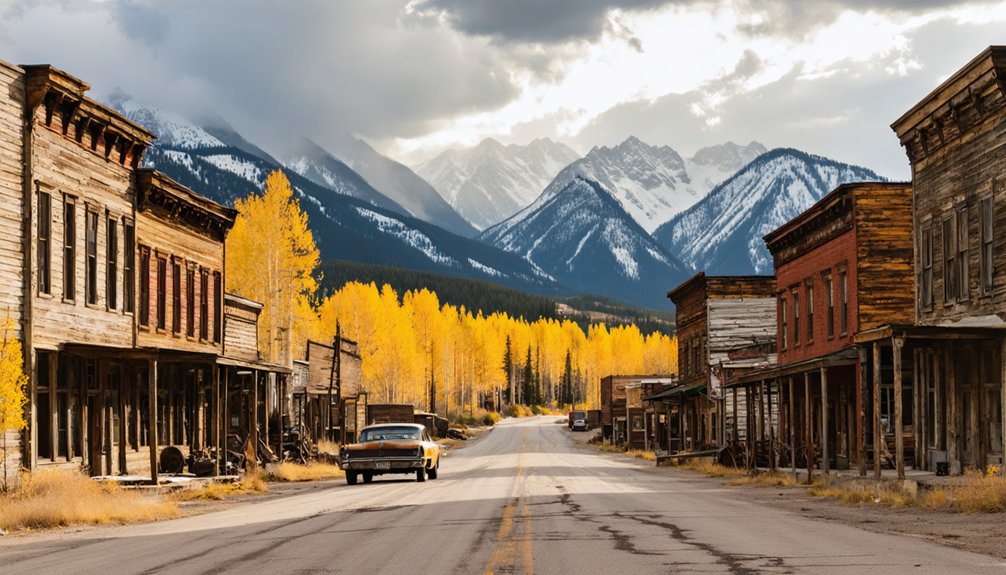
Stretching your drive beyond Red Cliff rewards you quickly. The surrounding corridor packs serious history into short distances, connecting mining relics and town preservation stories at every turn.
- Tennessee Pass – Cross this storied high point linking Eagle County to Leadville’s silver legacy.
- Minturn – A compact mountain town offering food, fuel, and authentic Colorado character before or after your Red Cliff stop.
- Gilman Overlook – View the abandoned townsite from US-24 without trespassing. Gilman’s sealed streets and empty structures tell a haunting story from a safe distance.
- Eagle Mine Area – Scan the contaminated landscape that triggered Gilman’s 1986 Superfund designation.
Each stop deepens your understanding of how prosperity collapsed across Eagle County while Red Cliff quietly survived.
What Gilman’s Superfund Status Means for Visitors Today
Gilman’s Superfund designation shapes your visit in one decisive way: you can’t go in. The EPA classified the site in 1986 after the Eagle Mine’s toxic legacy poisoned surrounding soil and water, triggering decades-long cleanup efforts that continue today. Private ownership enforces the closure, and trespassing carries real legal consequences.
That boundary actually sharpens the experience. You’ll stand at the overlook on US-24, scanning empty structures perched dramatically above the Eagle River canyon, knowing the environmental impact of unchecked industrial mining froze this town in place. No admission fee, no guided tour, no access — just a clear view of a community sealed off by its own poisoned past.
Sometimes the fence tells the most honest story a ghost town can offer.
Frequently Asked Questions
Are There Guided Historical Tours Available in Red Cliff, Colorado?
Guided tour options aren’t formally abundant in Red Cliff, but you’ll uncover a universe of history through self-guided historical site visits, where every weathered Victorian building screams centuries of silver-boom stories waiting for your discovery.
Is Red Cliff, Colorado, a Good Destination for Families With Children?
Yes, you’ll find Red Cliff offers family friendly activities like exploring Victorian mining history and scenic mountain landscapes. Its kid friendly attractions, including historic architecture and open-air adventures, make it an engaging, freedom-filled destination for curious families.
Are There Restaurants or Lodging Options in Red Cliff Today?
Red Cliff’s dining and accommodations scene is limited, but you’ll find rustic Red Cliff dining options and nearby Red Cliff accommodations that capture the town’s rugged, authentic spirit — perfect for independent travelers craving raw, historic Colorado adventure.
How Long Does a Typical Visit to Red Cliff Usually Take?
Time flies when you’re soaking in Red Cliff’s mineral history and scenic viewpoints! You’ll typically spend two to three hours exploring this living ghost town, wandering Victorian streets, and breathing mountain freedom at 8,750 feet.
Does Red Cliff Host Any Annual Events Celebrating Its Mining Heritage?
Red Cliff’s specific mining festivals aren’t widely documented, but you’ll find the town’s heritage celebrations woven into its living history — its Victorian architecture, mining roots, and storied past speak louder than any scheduled event.
References
- https://en.wikipedia.org/wiki/Gilman
- https://www.facebook.com/groups/486321554799444/posts/25157557027249221/
- https://www.reddit.com/r/Colorado/comments/18ros4m/toxic_ghost_town_in_the_mountains_of_colorado/
- https://www.reddit.com/r/Colorado/comments/xu5zyc/came_across_a_ghost_town_while_peeping_leaves/
- https://www.facebook.com/groups/486321554799444/posts/24422191750785756/
- https://ghosttownsoftherockies.com/towns/red-cliff/
- https://www.uncovercolorado.com/ghost-towns/gilman/
- https://www.uncovercolorado.com/towns/red-cliff/
- https://www.summitdaily.com/news/time-to-get-spooky-a-hotspot-for-paranormal-experiences-in-eagle-county/