From Helena, you’ll head west on US-12, then turn south onto Rimini Road for roughly 12 to 16 miles. Unlike most ghost towns, Rimini still has permanent residents who actively preserve its 19th-century architecture, false-front buildings, and historic landmarks. Check road conditions before you go — winter can make travel genuinely hazardous. Each season brings a completely different experience, and knowing what to expect before you arrive makes all the difference.
Key Takeaways
- Rimini is located 12–16 miles from Helena via US-12 west and Rimini Road, making it an accessible day trip destination.
- Summer and fall offer the best travel conditions, while winter requires four-wheel drive, snow tires, and emergency preparedness.
- Key historic sites include the 1904 schoolhouse, Moose Creek Ranger Station, and Camp Rimini, all listed on the National Register of Historic Places.
- Rimini is a living community, not an abandoned ghost town, so visitors must stay on public roads and respect private property.
- The area offers free, self-guided exploration with wildlife viewing opportunities, historic architecture, and scenic mountain backdrops requiring no tickets or tours.
Rimini, Montana: Ghost Town With People Still Living in It
Although it carries the “ghost town” label, Rimini isn’t fully abandoned — people actually still live here year-round. You’ll find permanent residents holding onto this rugged slice of Montana history, which makes your visit feel more like stepping into a living community than touring a museum exhibit.
The summer months bring a bump in population, so you’re likely to encounter more activity than you’d expect. Don’t count on finding local cuisine here — this isn’t a dining destination. Instead, pack your own food and stay alert for wildlife sightings along Rimini Road, where deer and other mountain animals frequently appear.
Rimini operates as an open-air site with no formal hours, meaning you can explore freely and on your own terms — exactly the kind of independence road-trippers crave.
How to Get to Rimini From Helena
To reach Rimini from Helena, take US-12 west and then turn south onto Rimini Road.
This will put you at the town site in roughly 12 to 16 miles. The road is well-maintained and easy to navigate in fair weather, making it a straightforward short road trip from the capital.
If you’re planning a winter visit, though, you’ll want to check conditions ahead of time, since heavy snow can complicate travel on rural roads in this part of Montana.
Route From Helena
Reaching Rimini from Helena is a straightforward drive of roughly 12 to 16 miles that you can complete in well under half an hour. Head west out of Helena on US-12, then turn south onto Rimini Road.
The route carries you through open terrain into a landscape steeped in mining legends, where the hills once drove ambitious prospectors to chase silver strikes. As you roll closer to town, you’ll feel the ghost town myths start to feel surprisingly real.
The road is generally well-maintained, making it accessible without special equipment in fair weather. Winter visits require more caution, as snow can complicate rural travel.
No permits or reservations are needed — you simply drive in, park, and explore on your own terms.
Winter Travel Considerations
Winter turns the drive to Rimini into a different experience entirely. Heavy snowfall blankets the local flora, transforming ponderosa pines and shrubs into a quiet white landscape that feels worlds away from Helena.
Rimini Road becomes narrower in feel, demanding slower speeds and careful attention. Rural road delays and closures are real possibilities, so check road conditions before you leave.
You’ll want four-wheel drive or reliable snow tires — this isn’t a trip to take chances on. Wildlife sightings actually increase in winter, as deer and elk move closer to the road seeking lower elevations.
That freedom to explore a frozen frontier ghost town rewards the prepared traveler. Stay alert, pack emergency supplies, and respect the conditions the season brings.
Why Silver Built Rimini : and Why the Town Never Quite Died
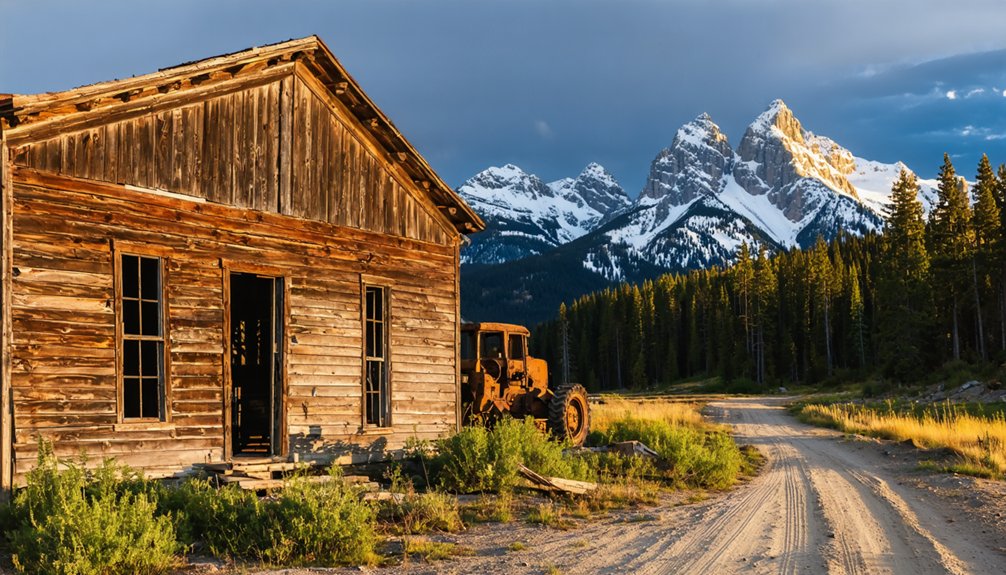
When you walk through Rimini, you’re standing on ground that miners first staked after discovering silver lodes in 1864, making it one of Montana’s oldest mining districts. The real boom hit in the 1880s, when the Northern Pacific Railroad pushed a branch line directly to town, transforming a rough mining camp into a functioning community with commercial buildings and permanent infrastructure.
Unlike so many ghost towns that emptied completely, Rimini never fully surrendered its population, and you’ll find actual residents still living among the weathered storefronts today.
Silver’s Transformative Discovery
How does a remote Montana canyon transform from wilderness to a bustling mining community almost overnight? Silver does that. When prospectors discovered rich silver lodes in 1864, they didn’t just find ore — they found reason to build a life here.
Miners flooded in, bringing demand for local cuisine, supply stores, and permanent shelter. Wildlife sightings became routine interruptions to daily work as the canyon’s wildness collided with human ambition.
Then the 1880s brought the Northern Pacific Railroad’s branch line directly to Rimini, accelerating everything. Suddenly, heavy equipment, supplies, and workers moved efficiently through terrain that had once stopped people cold.
That railroad connection transformed a rough camp into a functioning town, cementing Rimini’s place as one of Montana’s oldest and most consequential mining districts.
Railroad Accelerates Growth
The silver discovery lit the fuse, but the Northern Pacific Railroad’s branch line detonated the explosion. When the tracks reached Rimini in the 1880s, everything changed. Suddenly, you’d efficient ore transport, fresh supplies rolling in, and ambitious settlers staking their futures on the mountain’s wealth.
Commerce surged. Buildings rose fast — those distinctive false-front structures you’ll still see standing today. The local community that formed during this boom wasn’t temporary; it had roots, institutions, and identity.
What’s remarkable is that historic preservation kept much of that era intact. Walking through Rimini now, you’re reading the railroad’s legacy in weathered wood and century-old architecture. The tracks are long gone, but the town they supercharged still stands — a living reward for anyone craving an unscripted slice of Montana’s frontier past.
Rimini’s Enduring Resident Legacy
Most ghost towns die completely — the people leave, the buildings collapse, and the silence wins. Rimini never followed that script. Permanent residents still live here, keeping the town breathing on its own terms. That quiet stubbornness shapes everything you’ll experience when you arrive.
What makes Rimini’s enduring legacy worth your attention:
- Permanent residents maintain a living community rather than a frozen museum
- Town conservation efforts preserve 19th-century false-front architecture you can actually walk among
- Local wildlife moves freely through the surrounding Helena National Forest terrain
- No fences or gates mean you explore on your own schedule
You’re not visiting a curated exhibit — you’re stepping into a place that simply refused to disappear, and that distinction makes all the difference.
Rimini’s False-Front Buildings and What Survives Today
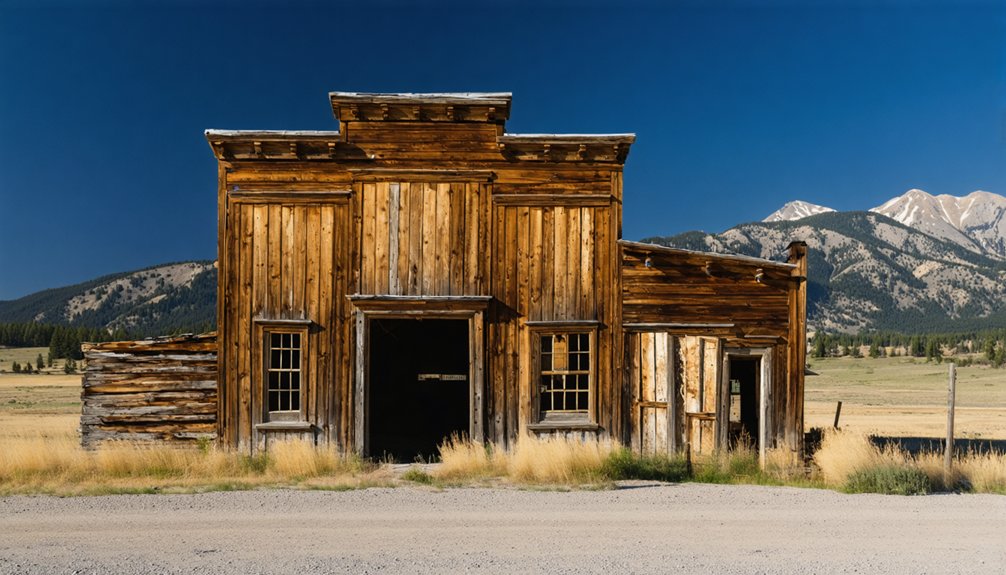
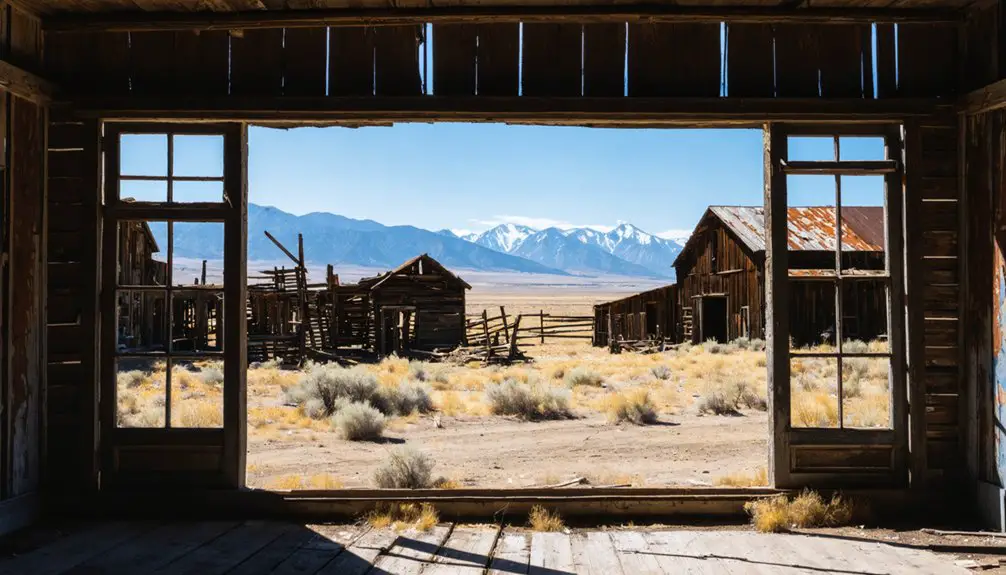
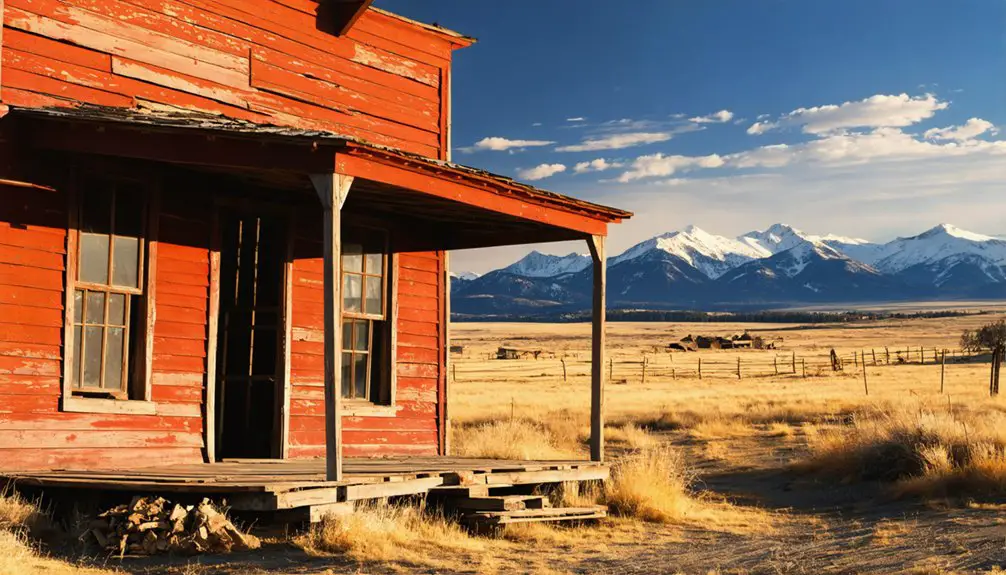
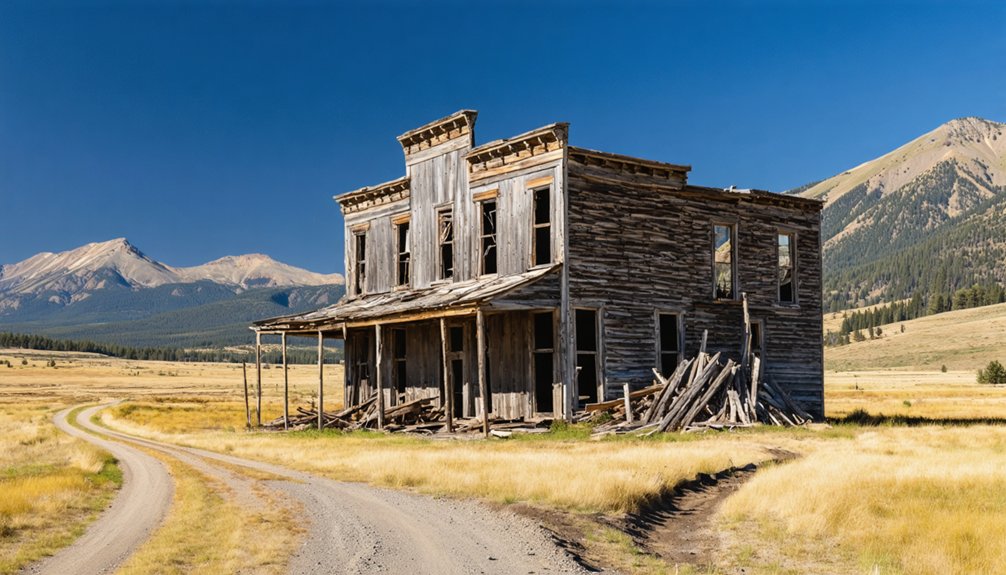
Walking through Rimini today, you’ll notice the late-19th-century false-front buildings that give the town its unmistakable Old West character. These structures blend log construction with framed commercial fronts, reflecting how miners and merchants built quickly but ambitiously during the silver boom years.
You won’t find local cuisine or guided tours here — Rimini rewards self-directed explorers. Move at your own pace, read the interpretive signs, and pause for wildlife observation along the surrounding Helena National Forest edges.
Mule deer and other animals frequently move through the area.
The 1904 schoolhouse, now listed on the National Register of Historic Places, still anchors the community as a gathering hall. It stands as one of the clearest surviving examples of what frontier Montana actually looked like.
The 1904 Schoolhouse and the Other Landmark Worth Stopping For
Among Rimini’s surviving structures, two stand out as official landmarks worth slowing down for.
Among Rimini’s weathered remains, two landmarks rise above the rest — worthy of your time and attention.
The 1904 schoolhouse, listed on the National Register of Historic Places, now serves as the community hall — a quiet symbol of historic preservation still pulling its weight.
Here’s what makes these stops count:
- The schoolhouse anchors the townsite with genuine frontier character.
- Its adaptive reuse keeps the structure alive rather than frozen.
- The Moose Creek Ranger Station, built in 1908, tells a layered story — from Helena National Forest’s founding to a WWII Army dog training facility.
- Both sites sit within forest surroundings where local wildlife roams freely.
You don’t need a guide or a ticket. Just show up, look closely, and let the history speak for itself.
Moose Creek Ranger Station and Camp Rimini’s Forgotten History
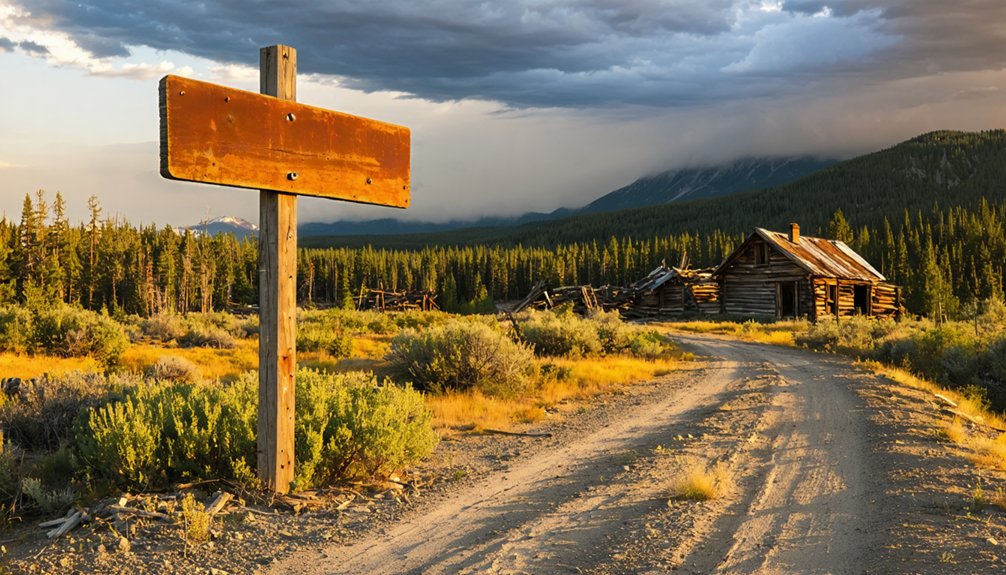
Just across the road from each other, the Moose Creek Ranger Station and Camp Rimini tell a story that stretches from federal forest management to wartime military operations. Built in 1908, the ranger station marks the early days of Helena National Forest, giving you a tangible connection to America’s conservation movement.
The CCC established Camp Rimini directly across the road in 1939, and by 1942, the U.S. Army had transformed it into a dog training facility that operated through 1944. You can pause at the scenic viewpoints nearby and watch for local wildlife while absorbing how dramatically this single stretch of road shifted purpose over four decades.
Both sites sit on the National Register of Historic Places, making this stop far richer than most travelers expect.
When to Visit This Montana Ghost Town and What Each Season Brings
Each season shapes your Rimini experience in a distinct way, so timing your visit makes a real difference.
Timing your Rimini visit isn’t just a detail — it shapes everything about the experience.
- Spring brings muddy roads and unpredictable seasonal weather, but local wildlife becomes active and the landscape feels alive.
- Summer offers the most reliable access, comfortable temperatures, and longer daylight hours for exploring the historic buildings and surrounding trails.
- Fall delivers cooler air, vivid foliage, and quieter roads — ideal if you prefer fewer people and dramatic scenery framing the old structures.
- Winter creates a moody, atmospheric setting, but heavy snow can close Rimini Road or make it genuinely dangerous without proper preparation.
You’re free to visit year-round, but summer and early fall give you the clearest roads, the best light, and the most rewarding experience overall.
Visiting Rimini Respectfully When Residents Are Still Home
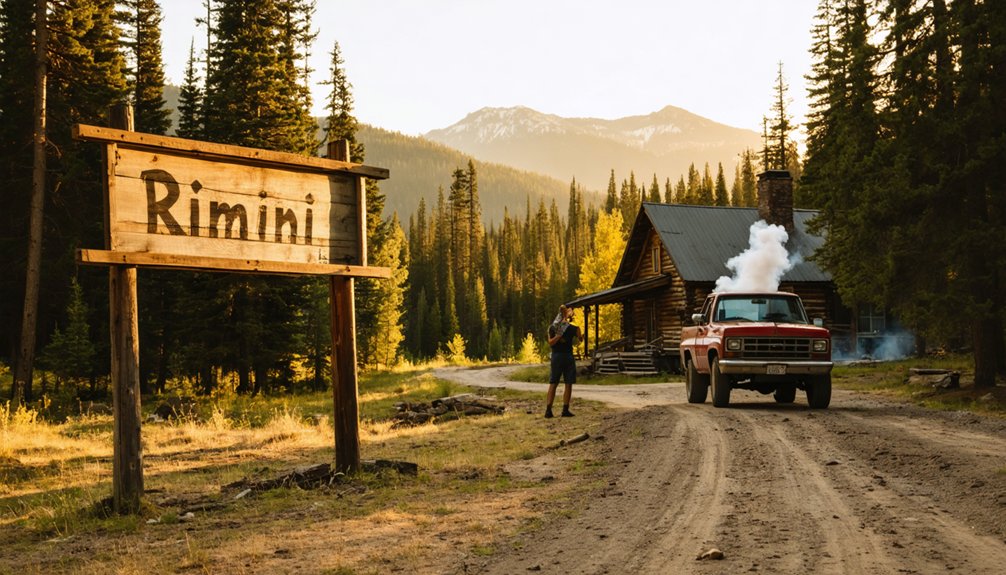
Unlike a staffed museum or an abandoned site cordoned off from daily life, Rimini is someone’s home — and that distinction shapes how you should carry yourself when you visit. Stay on public roads and open pathways rather than wandering onto private property. Keep your voice low, your vehicle slow, and your footprint minimal.
Outdoor photography is one of the best reasons to come here — the false-front buildings and mountain backdrop are genuinely striking — but point your lens at structures and local wildlife, not at residents or their property without permission. Pack out everything you bring in. Treat interpretive signs as guides, not suggestions.
You’re moving through someone’s neighborhood, and showing that respect keeps Rimini accessible for every traveler who follows you.
Frequently Asked Questions
Is There Cell Phone Service Available When Visiting Rimini?
Ready to unplug from the modern world? You’ll likely find limited cell phone reception in Rimini’s mountain valley. Signal coverage can be spotty, so download your maps before you hit the open road!
Are Pets Allowed When Exploring the Rimini Ghost Town Site?
No official pet restrictions exist, so you’re free to bring your furry companion! Prioritize pet safety by honoring leash requirements, keeping them close as you explore Rimini’s rugged, historic streets and respect residents’ property.
Can Visitors Legally Enter or Photograph Privately Owned Historic Buildings?
You can’t enter private property without permission, but you’re free to photograph buildings from public areas. Always respect photography permissions and ownership boundaries — honoring those rights keeps Rimini accessible for every freedom-loving explorer after you.
Are There Restroom Facilities Available for Visitors at Rimini?
You won’t find dedicated visitor amenities or restroom facilities at Rimini. As a site focused on historical preservation rather than tourism infrastructure, you’ll want to plan ahead and bring your own supplies before exploring.
Is There Any Parking Area Designated for Ghost Town Visitors?
Like a frontier explorer claiming open land, you’ll find no formally designated parking area, but you can park respectfully along Rimini Road. Prioritize visitor safety and historical preservation by avoiding residents’ property when you stop.
References
- https://montanahistoriclandscape.com/2023/07/28/rimini-a-ghost-town-in-the-helena-lewis-and-clark-national-forest/
- https://www.youtube.com/watch?v=k84kQ1MRyHM
- https://en.wikipedia.org/wiki/Rimini
- https://www.legendsofamerica.com/mt-rimini/
- https://www.islands.com/2064601/rimini-montana-open-air-ghost-town-abandoned-old-west-once-thriving/
- https://discoveringmontana.com/ghost-towns/rimini/
- https://it.wikipedia.org/wiki/Rimini_(Montana)