Planning a ghost town road trip to Bodie, California puts you face-to-face with one of the West’s best-preserved Gold Rush boomtowns. You’ll wander weathered saloons, miners’ cabins, and a hillside stamp mill, all frozen in a state of “arrested decay.” The entrance fee is just $8, and the site’s remote location off Highway 395 makes the journey part of the adventure. Everything you need to plan your trip is waiting just ahead.
Key Takeaways
- Bodie State Historic Park in Mono County preserves authentic Gold Rush-era structures in a state of “arrested decay,” offering an unfiltered historical experience.
- Access Bodie via Highway 395, turning onto State Route 270 approximately 10 miles east of Bridgeport, then drive 3 unpaved miles.
- Visit between Memorial Day and Labor Day for peak summer hours of 9 a.m. to 6 p.m. and maximum exploration time.
- Pack water, snacks, layered clothing, sturdy footwear, cash, and a full gas tank, as no vendors or gas stations are nearby.
- Camp near Bridgeport at Twin Lakes or Bridgeport Reservoir, or on BLM land, arriving early during summer weekends to secure spots.
Why Bodie Is Worth the Drive Into the Eastern Sierra
When you’re planning a ghost town road trip through California’s Eastern Sierra, Bodie State Historic Park earns its place at the top of your itinerary. Tucked into the Bodie Hills of Mono County, this remarkably preserved site pulls you straight into California’s mining history without Hollywood’s polish getting in the way.
You’ll walk through authentic 1800s structures frozen mid-life, tools still resting where miners left them. Historical preservation here isn’t staged — it’s deliberate and raw.
Structures stand frozen mid-life, tools exactly where miners left them — preservation that’s deliberate, raw, and unapologetically real.
Reaching Bodie means driving Highway 395 to State Route 270, then traversing three unpaved miles that filter out the uncommitted. That rough final stretch actually rewards you. Fewer crowds, more atmosphere.
With a modest $8 admission, you’re buying access to one of California’s most honest windows into its Gold Rush past.
Best Time of Year to Visit Bodie State Historic Park
Timing your visit to Bodie makes a genuine difference in what you experience. Memorial Day through Labor Day delivers the best combination of road access, historical preservation integrity, and visitor amenities. Summer hours run 9 a.m. to 6 p.m., giving you maximum exploration time.
Three reasons to visit during peak season:
- The unpaved final three miles into Bodie stay manageable in dry conditions.
- Bodie Ghost Walks run 3–4 nights each summer and sell out fast — book early.
- Full visitor amenities and staffed entry kiosks make arrival seamless.
Spring and fall offer quieter crowds if you prefer solitude.
Winter access becomes uncertain, and hours shrink to 9 a.m.–4 p.m.
Check road conditions on SR 270 before you head out regardless of season.
How to Get to Bodie From Highway 395
Once you’re cruising south on Highway 395 through Mono County, watch for the clearly marked turnoff onto State Route 270, which heads east toward Bodie.
You’ll follow SR 270 for roughly 10 miles until the pavement ends, then brace yourself for about 3 more miles of rough, unsurfaced road that demands a slower pace.
Most standard vehicles can handle the route, but you’ll want to check road conditions before you leave to avoid any surprises.
Highway 395 Starting Point
Highway 395 serves as your gateway to Bodie, threading through the Eastern Sierra past Bridgeport, June Lake, and Lee Vining before delivering you to the Bodie turnoff. Watch for State Route 270 heading east, then follow it roughly 10 miles to where pavement ends.
Three quick waypoints to keep you oriented:
- Bridgeport – your last reliable fuel and food stop before heading out
- Dog Town marker – a roadside nod to mining history on 395’s west side near the Bodie turnoff
- SR 270 junction – your final eastward pivot toward historical preservation at its rawest
The route’s freedom is real — open skies, sparse traffic, and a landscape that hasn’t forgotten its Gold Rush past. Drive it unhurried.
Turning Onto Route 270
The final three miles shift to unpaved terrain — rough, slow, and worth every bump. Most standard vehicles handle it fine, but drop your speed and stay alert.
When the weathered structures finally appear on the horizon, you’ll understand why historical preservation here matters. Bodie isn’t reconstructed or staged. It’s frozen in place, exactly as it was left.
That raw authenticity is what this road leads you toward.
Final Unpaved Miles
Where does the pavement end and the adventure begin? Exactly three miles from Bodie’s historical architecture and rusting mining equipment. Once Route 270’s asphalt stops, you’re rolling onto a washboard dirt road that demands respect.
Keep these three things in mind:
- Slow down — rough terrain can damage low-clearance vehicles
- Watch for loose gravel and sudden dips along the final stretch
- Allow extra time, since most drivers take 20–30 minutes on this section
Most standard vehicles handle the road fine if you’re not rushing. The payoff arrives the moment Bodie’s weathered wooden structures and scattered mining equipment appear on the horizon.
That raw, unfiltered approach — no guardrails, no polish — perfectly sets the tone for everything waiting inside.
What You’ll See: Preserved Saloons, Mines, and 1880s Streets
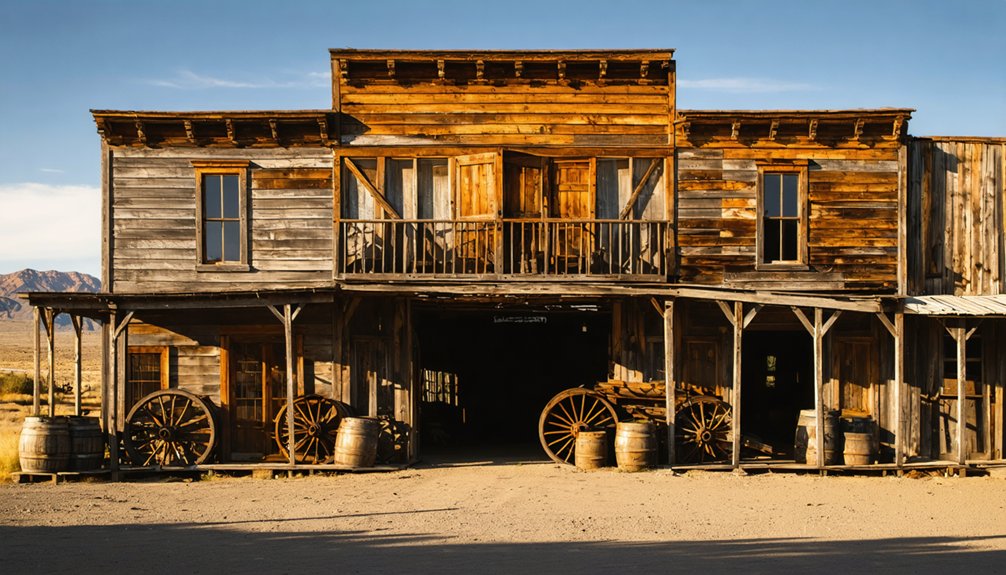
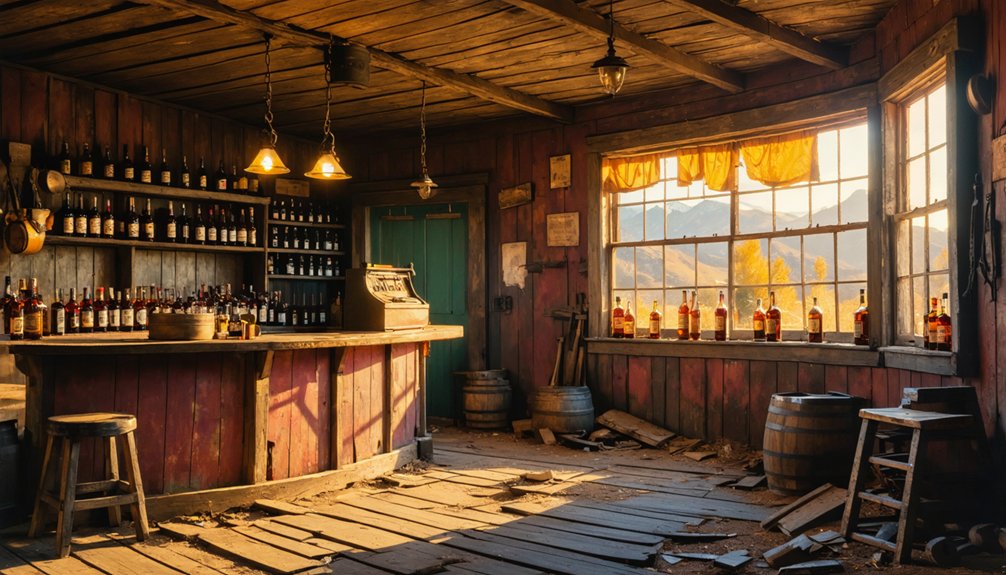
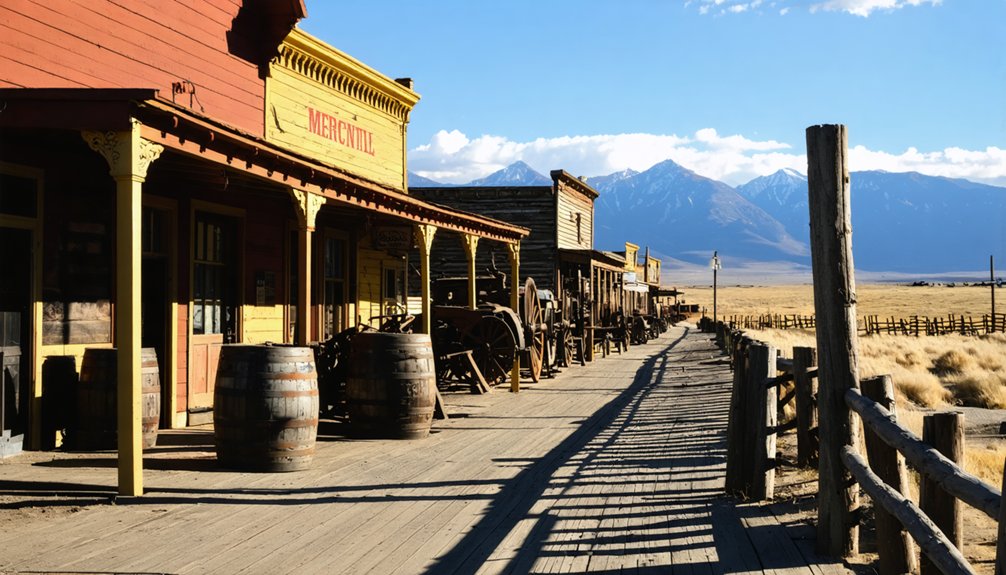
Stepping into Bodie State Historic Park feels like crossing a threshold into the 1880s. You’ll wander unpaved streets lined with weathered historical architecture — saloons, a Methodist church, a stamp mill, and miners’ cabins standing exactly where residents left them.
Nothing’s been restored or prettied up; Bodie exists in a state of “arrested decay,” which makes it feel startlingly authentic. Inside several structures, you’ll spot mining artifacts — rusted tools, ore carts, and equipment frozen mid-use.
The Stamp Mill dominates the hillside, a reminder of the industrial muscle that once drove this town to 10,000 residents. You’re free to roam the streets at your own pace, peering through windows and reading the landscape like an open history book.
Bodie, Monoville, and Dog Town: Building Your Eastern Sierra Route
Once you’ve walked Bodie’s dust-blown streets, Highway 395 pulls you deeper into Eastern Sierra history with two more stops worth building into your route. Each site adds distinct texture to your journey:
Bodie’s dust-blown streets are just the beginning — Highway 395 runs deeper into Eastern Sierra history.
- Monoville – California’s first official eastern Sierra settlement, historically tied to Bodie’s rise and loaded with context about early mining migration.
- Dog Town – A roadside marker on Highway 395’s west side marks this forgotten outpost, offering quick historical artifacts without requiring a detour.
- Bodie Hills overlooks – Pause between stops to absorb the stark landscape that shaped these communities.
Preservation efforts vary across these sites, from Bodie’s maintained structures to Monoville‘s modest markers.
Together, they build a cohesive narrative of boom, abandonment, and survival across the Eastern Sierra corridor.
Where to Stay Near Bodie and Bridgeport
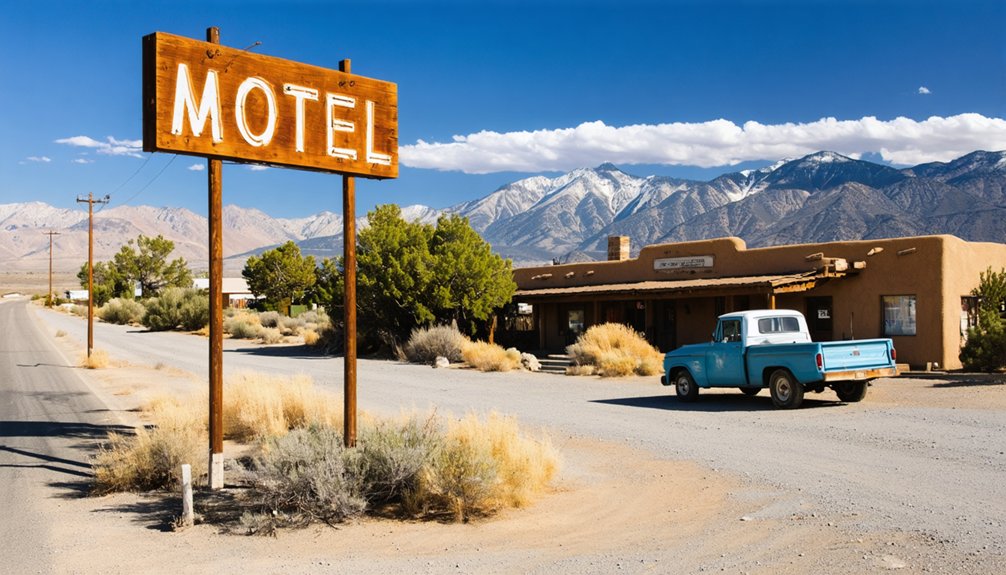
After a long day tracing ghost-town history through the Eastern Sierra, you’ll want a comfortable base camp close to the action. Bridgeport offers the nearest cluster of lodging options, from budget motels to small inns that put you within a short drive of Bodie’s SR 270 turnoff.
If you’d rather sleep under the stars, several campgrounds sit within striking distance of the park, letting you rise early and beat the crowds to the gate.
Bridgeport Lodging Options
Bridgeport serves as the most convenient base camp for your Bodie visit, sitting just a short drive from the State Route 270 turnoff on Highway 395. This small town keeps you close to historical preservation efforts at the park while surrounding you with local legends of the mining era.
Choose from these practical lodging styles:
- Motels – Budget-friendly options lining Highway 395 for flexible, no-frills stays
- Vacation rentals – Private homes offering full kitchens and more independence
- Campgrounds – Nearby sites letting you sleep under open Sierra skies
Booking ahead matters, especially during summer peak season when Bodie Ghost Walks sell out fast. Staying in Bridgeport means you’re ready to hit the road early and catch the park right at the 9 a.m. opening.
Campgrounds Near Bodie
Sleeping under a canopy of Sierra stars is often the most memorable part of a Bodie road trip, and campgrounds near Bridgeport put you perfectly positioned for an early morning run to the park.
Twin Lakes and Bridgeport Reservoir both offer developed sites with basic amenities, letting you wake up close to the region’s rich mining history without sacrificing comfort.
Dispersed camping on Bureau of Land Management land near the Bodie Hills gives you even more freedom, placing you directly within the landscape that shaped historical preservation efforts across the Eastern Sierra.
Arrive early during summer to secure a spot, since sites fill fast on weekends.
Whichever option you choose, you’ll spend your nights surrounded by the same rugged terrain that once drew thousands of fortune-seekers west.
What to Pack for a Ghost Town Road Trip in the Sierra
Since Bodie sits in a remote stretch of the Eastern Sierra with no nearby convenience stores or gas stations, you’ll want to pack smart before you hit Highway 395. Visitor amenities are minimal by design—historical preservation is the priority here, keeping the site authentically rugged.
Pack these three essentials before leaving:
- Water and snacks – Bodie offers no food vendors, so bring enough for your full stay.
- Layered clothing – Sierra temperatures shift dramatically between morning and afternoon.
- Cash – The entrance kiosk prefers it, and self-pay envelopes are your backup if staff aren’t present.
A full tank of gas, sturdy footwear for uneven terrain, and a camera round out your kit.
Freedom tastes better when you’re prepared.
Frequently Asked Questions
Can You Bring Pets or Dogs Inside Bodie State Historic Park?
You can bring your dog to Bodie State Historic Park, but pet policies restrict them to parking areas and roads only. Dog restrictions prevent pets from entering buildings, so you’ll keep them leashed outdoors.
Are Drones Allowed for Photography Over the Bodie Ghost Town Site?
Like a bird with clipped wings, your drone stays grounded at Bodie. Drone regulations and photography restrictions prohibit unmanned aircraft over the site, so you’ll want to keep your camera firmly on the ground.
Is There Cell Phone Service or Wi-Fi Available at Bodie?
Don’t count on cell service or wifi availability at Bodie—you’re deep in a remote Eastern Sierra valley. Embrace the disconnect, explore freely, and let the ghost town’s raw, untamed atmosphere pull you fully into the past.
Can Visitors Take Rocks or Artifacts Home From Bodie?
Don’t even think about it! Bodie’s rock collection policies and artifact removal rules are strict — you can’t take anything home. Leave every stone and relic where it lies, preserving this historic treasure for future explorers like you.
Are There Ranger-Led Tours Available During Regular Bodie Visiting Hours?
The knowledge base doesn’t confirm ranger-led tours during regular hours, but you’ll want to check guided tour schedules directly with the park. Bodie’s historical preservation mission means staff regularly share fascinating insights when available!
References
- https://www.youtube.com/watch?v=ElbXVNDurPc
- https://nvtami.com/2024/01/20/monoville-califoria-ghost-town/
- https://en.wikipedia.org/wiki/List_of_ghost_towns_in_California
- https://en.wikipedia.org/wiki/Bodie
- https://www.monocounty.org/places-to-go/bodie/