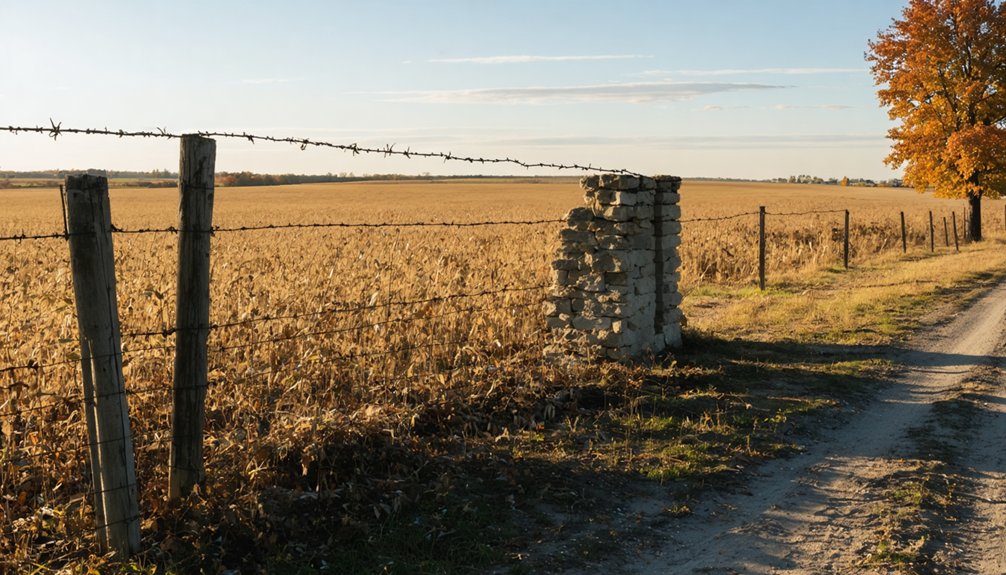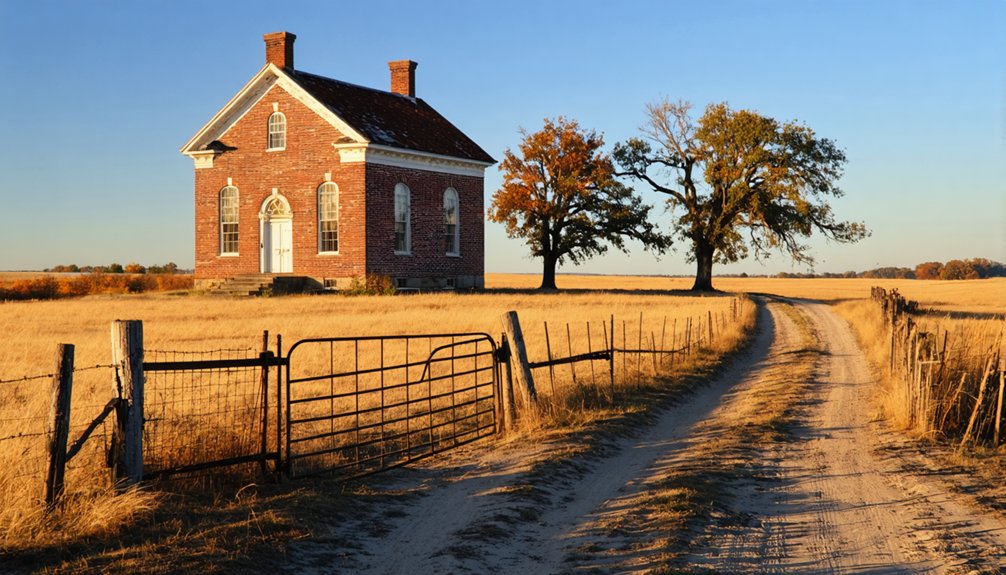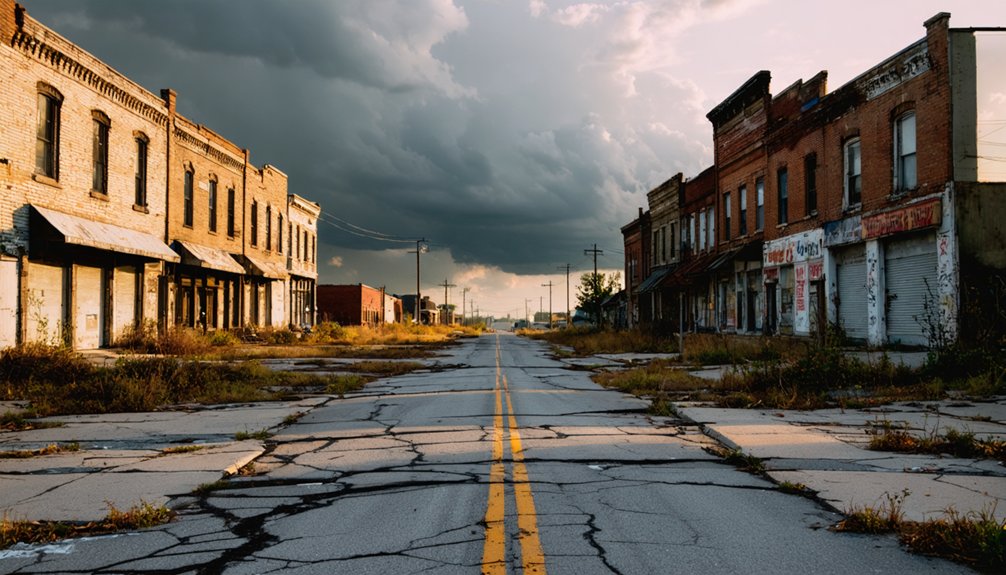
When you road trip to Riverview, Illinois, you’re chasing a ghost town that didn’t crumble — it vanished. Tucked along the Chicago River’s northwest edge, this former boomtown shed its identity so completely that only Deane St. and Circle Ave. remain. No ruins, no rollercoasters, no civic landmarks — just quiet residential streets where 160 years of settlement and one of America’s greatest amusement parks once roared. Stick around, and the full story gets even stranger.
Key Takeaways
- Riverview, Illinois, sits on Chicago’s northwest edge along the Chicago River, making it easily accessible without special vehicles or remote travel.
- The site offers quiet streets rather than ruins, so visitors should rely on imagination to envision the former town and amusement park.
- Riverview Park, a major regional attraction from 1904 to 1967, left no physical remnants after land was cleared and redeveloped.
- A few houses on Deane St. and Circle Ave. are the only visible traces of the original settlement.
- Pair the visit with nearby ghost towns like Pullman or Braidwood to build a fuller Illinois ghost town road trip.
Where Is Riverview, Illinois: and How Do You Get There?
Tucked into the northwest edge of Chicago along the Chicago River, Riverview sits within Cook County, Illinois — close enough to the city that you can reach it without ever leaving the urban grid. You don’t need a 4WD rig or a remote highway to get here; standard roads handle the route year-round.
Today, the landscape is mostly residential, absorbed into surrounding neighborhoods with only a few houses on Deane St. and Circle Ave. hinting at what once stood. Don’t expect sprawling abandoned structures or dramatic ruins — Riverview rewards the curious traveler willing to chase local legends through quiet streets.
It’s a ghost town built into a living city, and getting there’s as straightforward as knowing where to look.
What’s Actually Left of Riverview’s Ghost Town Today
What remains of Riverview today won’t take long to catalog. Despite urban legends suggesting hidden ruins scattered across the neighborhood, preservation efforts never gained traction here. The old town fundamentally vanished, absorbed by redevelopment after the park’s 1967 closure.
What remains of Riverview won’t take long to catalog — the old town fundamentally vanished, and preservation efforts never gained traction.
You’ll find traces only if you know where to look:
- A small cluster of houses still standing along Deane St. and Circle Ave.
- No civic landmarks — the post office, fire station, train station, and town hall are all gone.
- A residential streetscape that gives little indication of the boom town that once operated four factories and drew thousands.
Come with realistic expectations. Riverview rewards curiosity more than photography. You’re walking a footprint, not exploring ruins.
The Two Streets That Survived: Deane St. and Circle Ave
If Riverview has a heartbeat left, you’ll find it on Deane St. and Circle Ave. These two streets quietly held their ground while everything around them got bulldozed, redeveloped, or forgotten. A few houses still stand here — modest, weathered, and easy to miss if you’re not looking deliberately.
That stubborn survival feeds the urban legends. Locals swap ghost stories about the park’s final night, October 3, 1967, as if the neighborhood itself absorbed something it never fully released. Walking these streets, you sense that energy — history compressed into ordinary-looking houses on ordinary-looking blocks.
Don’t expect dramatic ruins. What you get is rarer: streets that outlasted an entire vanished world. Bring your curiosity, walk slowly, and let the silence do the storytelling.
Riverview’s Ghost Town Origins: Settlement, Railroad, and Boom Years
Before Riverview became a ghost town, it was a genuine one — a working settlement that planted roots in 1833, then accelerated hard when the railroad arrived in 1859.
By 1876, it had incorporated, earned a post office, and started building real economic muscle. No urban legends here — just grit.
By 1876, Riverview had incorporated, earned a post office, and started building real economic muscle — no legends, just grit.
The boom years tell a clear story:
- 1885: Four factories were already running
- Shortly after: A fifth opened, earning Riverview “boom town” status
- Industry mix: Farming, manufacturing, and rail traffic drove growth together
You’re looking at a community that built itself honestly, brick by brick.
The ghost stories came later.
Understanding these origins sharpens everything you’ll see — or won’t see — when you roll through what remains today.
How Riverview Park Turned a Farming Town Into a Regional Destination
When Riverview Park opened in 1904, it pulled Chicago’s working-class families out of crowded neighborhoods and into a world of roller coasters, Ferris wheels, and carnival food.
You can trace the town’s transformation in that shift — a quiet farming and railroad community suddenly became a regional draw that defined leisure culture for an entire metropolitan area.
The park didn’t just entertain; it reshaped Riverview’s identity from the ground up.
Park’s Working-Class Appeal
Once Riverview Park opened in 1904, it didn’t just draw crowds — it fundamentally rewired what this small Cook County farming town meant to the region. Working-class Chicagoans finally had an escape that felt built for them, not against them.
The park delivered something raw and democratic:
- Roller coasters, Ferris wheels, and carnival games priced for factory workers and their families
- Food stands and shows that made a full day’s entertainment genuinely affordable
- Regional accessibility that pulled suburban visitors into Riverview’s orbit
That energy masked the urban decay quietly creeping beneath the surface. When the park eventually closed, ghost town preservation efforts found almost nothing left to anchor.
What once roared with life had already been hollowing out for years before anyone noticed.
Regional Destination Growth
How does a farming town with four factories and a railroad line transform into a regional destination within a single generation? Riverview Park answered that question in 1904. Once the gates opened, Chicago’s working-class families arrived by rail, reshaping a quiet industrial pocket into something far larger than its founders imagined.
Local legends say the crowds never really stopped growing through the park’s early decades. The railroad that once hauled freight now delivered pleasure-seekers by the thousands. Urban legends about wild rides and carnival spectacles spread across Chicago neighborhoods, pulling visitors outward from the city.
Riverview stopped being a farming community and became a cultural landmark. You can still trace that transformation today by studying the town’s footprint and understanding how one park rewrote an entire region’s geography.
Why Riverview Park Closed for Good on October 3, 1967
October 3, 1967 is the day Riverview Park stopped being a place and started becoming a memory. Financial pressure, shifting demographics, and newer suburban parks had drained the crowds for years. When the gates finally shut, urban decay moved in fast, and industrial remnants replaced what was once a working-class paradise.
Joy was deliberately demolished on October 3, 1967 — and urban decay moved in before the dust could settle.
The closure wasn’t random — several forces converged:
- Declining attendance through the 1960s made operations unsustainable
- Suburbanization pulled Chicago families toward newer, cleaner entertainment options
- Financial losses left ownership no viable path forward
You’re not visiting a place that faded quietly. Riverview was stripped, redeveloped, and fundamentally erased. Understanding that abrupt ending makes the road trip hit differently — you’re standing where joy was deliberately demolished.
What the Park’s Demolition Did to the Town Around It
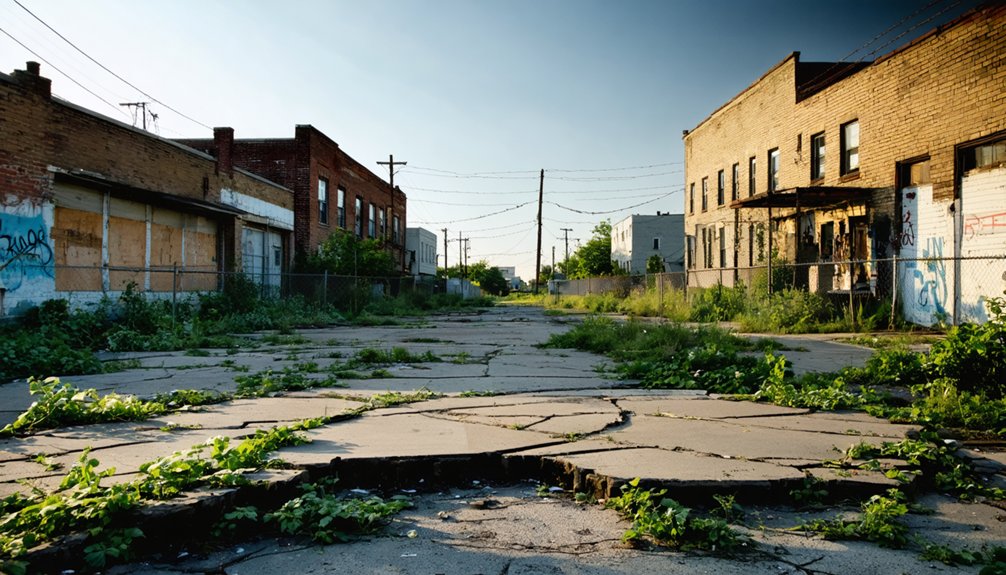
When Riverview Park’s gates closed for the last time on October 3, 1967, the town didn’t just lose an attraction—it lost its entire reason for being.
Developers moved in quickly, replacing the community’s roots with industrial and commercial projects that erased the old town center almost completely.
Today, you won’t find a post office, fire station, or town hall standing to anchor your sense of what once existed here.
Town Identity Erased Overnight
One date fundamentally erased Riverview’s identity: October 3, 1967, the day the park closed for good. What followed wasn’t gradual — it was immediate urban decay, a community stripped of its defining purpose overnight.
The workforce scattered, foot traffic vanished, and the surrounding neighborhood lost its reason to exist.
You can trace what disappeared by what replaced it:
- Industrial remnants and commercial developments swallowed the former park footprint
- The post office, fire station, and train station were all demolished
- Streets that once buzzed with visitors fell quiet and largely forgotten
Riverview didn’t fade — it was erased. When you visit today, you’re reading a blank page where a full story once lived, and that absence speaks louder than any ruin could.
Redevelopment Replaced Community Roots
The demolition crews that arrived after Riverview Park’s 1967 closure didn’t just tear down roller coasters — they dismantled the economic spine of an entire community. The park had employed a significant portion of local workers, and its absence triggered rapid industrial decline across the surrounding neighborhood.
What replaced it wasn’t a revitalized district but a patchwork of commercial and industrial development that erased Riverview’s original identity almost completely.
You won’t find the post office, fire station, or town hall when you visit — they’re gone. This community transformation happened fast and without sentiment.
A few houses on Deane Street and Circle Avenue survived, but they stand as quiet outliers. The bulldozers didn’t preserve history; they buried it under concrete and commerce.
Little Physical Evidence Remains
Riverview’s demolition didn’t stop at the park’s edge. Urban decay consumed the surrounding community too, erasing nearly every structure that once gave this place identity. Historic preservation never gained a foothold here, and the losses were total.
What you won’t find when you visit:
- The post office that operated from 1876 to 1925
- The fire station, train station, and town hall
- Any commercial district reflecting the boom-town years
What survived amounts to a small cluster of houses along Deane St. and Circle Ave. You’re fundamentally reading a landscape that’s been overwritten. The streets remain, the grid holds, but the architecture that carried Riverview’s story is gone.
Come prepared to use imagination as your primary tool for experiencing what this town once was.
What Ghost Town Hunters Find When They Walk the Old Footprint
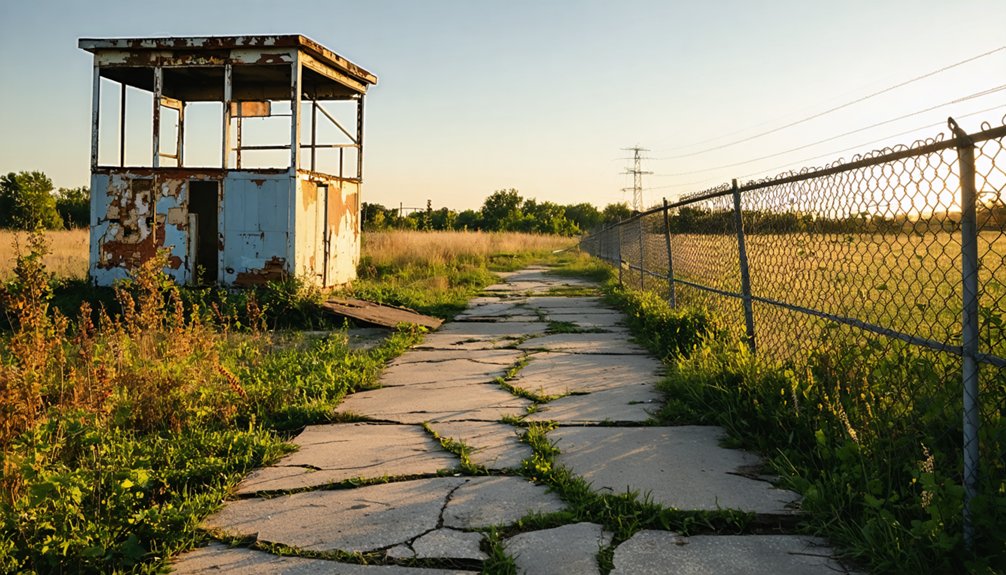
When you walk the old footprint of Riverview today, you won’t find roller coaster ruins or a crumbling midway — the land was cleared and redeveloped long ago. What you’ll find instead are residential streets, industrial parcels, and the quiet weight of lost landmarks swallowed by progress.
A few houses on Deane St. and Circle Ave. still stand, offering the closest thing to a physical connection with the original community. Ghost town hunters drawn by urban legends of buried coaster foundations or forgotten tunnels will mostly find pavement and silence.
But that absence tells its own story. Walking the old boundaries lets you feel the scale of what once existed — a booming park town that, after October 3, 1967, simply stopped being.
Ghost Town Day Trip: What Else to See Near Riverview
Once you’ve walked Riverview’s quiet streets, Chicago’s broader history pulls you outward in every direction. You can follow the Chicago River north toward the city’s industrial corridor, where landmarks like the Graceland Cemetery and the old North Side neighborhoods preserve layers of working-class heritage that once fed Riverview’s crowds.
If regional ghost towns are your focus, Illinois rewards the detour — communities like Drawbridge and Pullman offer their own collapsed dreams within a short drive.
Nearby Chicago Historical Sites
Chicago offers dozens of historical sites within a short drive of Riverview’s former footprint, making it easy to turn a quick ghost-town stop into a full day of layered urban history. Urban legends thread through many of these landmarks, and active preservation efforts keep their stories alive.
- Graceland Cemetery holds the graves of Chicago’s architectural giants, including Louis Sullivan and Daniel Burnham.
- The Chicago History Museum documents the city’s industrial rise, fire, and transformation across centuries.
- Wrigley Field sits nearby as a living monument to working-class Chicago culture that Riverview once mirrored.
You’re free to build your own route, moving between forgotten spaces and celebrated ones. The contrast between what’s been lost and what’s been saved tells Chicago’s full story.
Regional Ghost Towns Worth Visiting
Riverview doesn’t have to be your only stop. Illinois holds dozens of forgotten communities where industrial remnants and community memories linger along back roads and riverbanks.
Pullman, on Chicago’s South Side, offers preserved worker housing from a failed utopian experiment.
Head further south toward Braidwood, where coal-mining history shaped and then abandoned entire neighborhoods.
Seneca, along the Illinois River, carries quiet echoes of wartime industrial production now largely erased.
Each of these places rewards curious travelers willing to slow down and read the landscape carefully.
Together, they form a loose circuit of vanished ambitions and working-class lives that once defined the region.
Pair them with Riverview, and you’ve built a road trip that traces Illinois history through what was left behind.
Why Riverview Belongs on Any Chicago-Area Road Trip Route
Few ghost towns sit within reach of a major American city the way Riverview does, and that proximity is exactly what makes it worth adding to your itinerary. You don’t need to drive into remote wilderness to find urban legends or haunted landmarks — this one’s tucked into Chicago’s backyard.
Riverview delivers a rare combination that most ghost town stops can’t match:
- History layered with amusement-park heritage, stretching from 1833 settlement through Riverview Park’s 1967 closure
- Accessible year-round via 2WD roads, making spontaneous detours easy
- A compact footprint that pairs naturally with broader Chicago-area exploration
You’re not just chasing ruins here. You’re tracing a community that boomed, entertained millions, then quietly vanished — and that story deserves your time.
Frequently Asked Questions
Did Riverview Ever Have Its Own Mayor or Local Government Officials?
Yes, Riverview’s incorporation in 1876 suggests it had local government officials. You won’t find surviving mayoral records today, but its local government history once gave this community real, independent civic identity.
Are There Any Annual Events or Commemorations Held for Riverview Today?
No dedicated annual events mark Riverview today, but you’ll find ghost town tourism drawing curious wanderers and local community events in nearby Chicago neighborhoods that quietly honor the park’s vanished, working-class spirit if you look hard enough.
Can You Legally Visit or Photograph the Remaining Houses on Those Streets?
Ironically, you can photograph freely from public streets, but you can’t enter private property without permission. Photography restrictions don’t apply on public roads, so capture Riverview’s remaining houses respectfully from the sidewalk.
Were Any Riverview Park Rides Relocated to Other Amusement Parks After Closure?
The knowledge doesn’t confirm specific amusement park rides or ride relocation history after 1967, but you’d find that several Riverview Park attractions were reportedly sold and moved to other parks before demolition claimed the rest.
Is Riverview, Illinois Recognized on Any Official Historic Preservation Registers?
You won’t find Riverview on official historic preservation registers—preservation efforts never caught up with its rapid redevelopment. Few historic landmarks survived, leaving freedom-seekers like you to trace its ghost-town soul through memory rather than protected ground.
References
- https://www.ghosttowns.com/states/il/riverviewillinois.html
- https://www.facebook.com/groups/1831060803999882/posts/2128579940914632/
- https://meanderingmichiganhistory.weebly.com/uploads/1/2/9/3/12938817/vol2dbd.pdf
- https://chicagoandcookcountycemeteries.com/2019/10/30/ghosts-of-riverview-park/