Rollin, Kansas is a Neosho County ghost town that lasted about 30 years before fading from the map around 1921. You’ll find no parking lots, no signs, and no maintained paths waiting for you — just Delos Johnson’s surviving house and a weathered, neglected cemetery. Download your maps ahead of time, confirm road conditions, and check property boundaries before you go. Everything you need to plan a respectful, rewarding visit is just ahead.
Key Takeaways
- Rollin, Kansas, is a ghost town in Neosho County that was active from approximately 1890 to 1921, making it a historically rich road trip destination.
- The only surviving structures are Delos Johnson’s house and a neglected cemetery, offering a raw glimpse into frontier settlement history.
- No facilities, markers, or parking exist on-site, so bring a downloaded map and a fully charged phone for self-guided exploration.
- Plan a full-day loop through Neosho County, visiting nearby ghost towns to maximize your historical and exploratory road trip experience.
- Always verify land ownership, property boundaries, and road conditions before visiting to ensure responsible and uninterrupted access to the site.
What Is Rollin, Kansas and Why It Qualifies as a Ghost Town
Tucked into the southeastern corner of Kansas, Rollin is a Neosho County ghost town that once functioned as a genuine settled community before fading into near-obscurity. Its post office operated from 1890 to 1921, giving you a clear window into its active years and historical significance.
After that anchor closed, the town’s commercial and population center collapsed, leaving behind only Delos Johnson’s house and a neglected cemetery. Those remnants carry real weight — they’re physical proof that a community once took root here.
You won’t find preservation efforts that rival a museum or restored district, but that rawness is part of the appeal. Rollin qualifies as a ghost town precisely because it lost its purpose while leaving just enough behind to tell its story.
Rollin’s Post Office Years: How a Kansas Town Rose and Disappeared
When a Kansas town received a post office, it meant something — federal recognition, a physical address, and a reason for settlers to stay. Rollin earned that recognition in 1890, launching three decades of community life in Neosho County. Families built homes, commerce followed, and the town held its footing.
Then the purpose dried up. By 1921, the post office closed, and Rollin’s identity dissolved with it. No commercial district survived the decline.
What you’ll find today points to that lost era — a cemetery preservation effort keeping graves visible, and Delos Johnson’s house standing as the closest thing to house restoration the site offers. That house and cemetery are your primary anchors when you visit this quietly vanished Kansas settlement.
Delos Johnson, Town Founder and the Last House Standing at Rollin
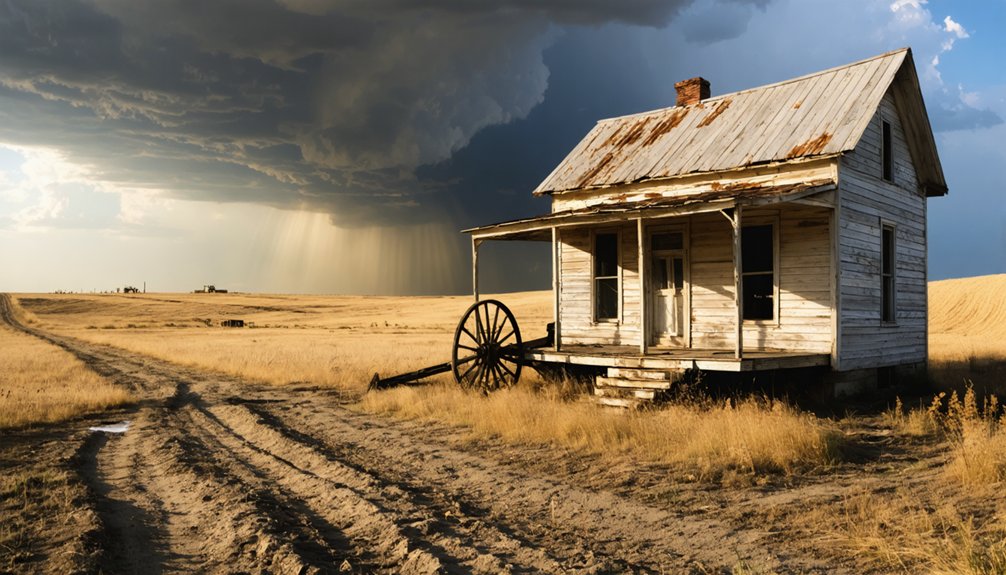
When you visit Rollin, you’re walking ground shaped largely by one man: Delos Johnson, the town’s founder. His house stands as the last surviving structure at the townsite, making it both a personal landmark and the clearest physical proof that a community once existed here.
Johnson’s legacy is quiet but tangible — his home outlasted the post office, the commerce, and the neighbors, leaving you with a rare direct connection to the person who started it all.
Johnson’s Role as Founder
Delos Johnson didn’t just live in Rollin — he founded it, and his house is the last structure standing to prove the town ever existed. When you visit, you’re stepping into living historical preservation, where one man’s legacy anchors an entire vanished community.
Johnson’s founding role matters because it frames everything you’ll see on-site:
- He established Rollin during its post office era, between 1890 and 1921
- His house represents the town’s only remaining structural footprint
- His story offers a natural entry point for tourism development narratives around Kansas ghost towns
You’re not just looking at an old house — you’re reading the final chapter of a founder’s vision. That personal connection makes Rollin worth the detour on any southeast Kansas ghost town loop.
The Last Standing House
Standing alone on the Rollin townsite, Delos Johnson’s house is the last structure left from a community that once had enough life to sustain a post office for over three decades.
As you approach the site, you’re looking at historical architecture that’s outlasted every business, neighbor, and institution that once surrounded it.
Johnson founded Rollin, and his house remains the most direct connection you’ll find to the town’s origins.
It’s not a museum or a restored landmark — it’s a raw, unfiltered remnant of frontier settlement.
Local legends tied to founders like Johnson give ghost towns their texture, and standing near his house puts you inside that story.
Bring your research, respect any property boundaries, and let the silence of the site do the rest.
Johnson’s Legacy at Rollin
Though little remains of Rollin’s original footprint, the house that Delos Johnson built tells you everything you need to know about who shaped this town. Johnson founded Rollin and anchored its identity during its most active years, from 1890 through 1921. His house stands as the site’s only real act of historic preservation, offering you a rare physical connection to the town’s origin.
What you’ll find tied to Johnson’s legacy:
- The last standing structure directly linked to the town’s founder
- A site free from visitor facilities, meaning you explore on your own terms
- A direct link to the settler-era ambition that briefly made Rollin a functioning community
Come prepared, respect any private property boundaries, and let the house speak for itself.
How to Find Rollin in Neosho County Before You Leave Home
Before you load up the car, you’ll want to pin down exactly where Rollin sits in Neosho County, because Kansas ghost towns can be surprisingly slippery to locate across different maps and sources.
Cross-reference at least two mapping tools and check historical landmarks noted in county records to confirm you’ve got the right coordinates.
Local legends and old post office documentation from 1890 to 1921 can help you triangulate the original townsite with more confidence.
Some sources list ghost towns inconsistently, so verify private property boundaries before you arrive.
A quick call to the Neosho County historical society could save you a wasted detour.
Do your homework now, and you’ll spend your road trip exploring rather than guessing.
No Parking Lot, No Signs: What the Rollin Townsite Actually Looks Like
When you pull up to the Rollin townsite, don’t expect a welcoming committee of historical markers, maintained paths, or a gravel lot to park in—there’s none of that. Historical preservation here means the land simply holds what’s left, and visitor accessibility is entirely self-directed. You’re steering through open countryside on your own terms.
No historical markers. No maintained paths. No gravel lot. Just open countryside and whatever the land still holds.
What you’ll actually encounter at the site:
- Delos Johnson’s house, the lone standing structure connecting you to the town’s origins
- A neglected cemetery, offering the most tangible human history on the ground
- Open landscape where the commercial district once stood, now reclaimed by time
Come with a charged phone, a downloaded map, and respect for private property. Rollin rewards the curious, not the casual.
The Cemetery at Rollin and What It Tells Us About the People Who Stayed
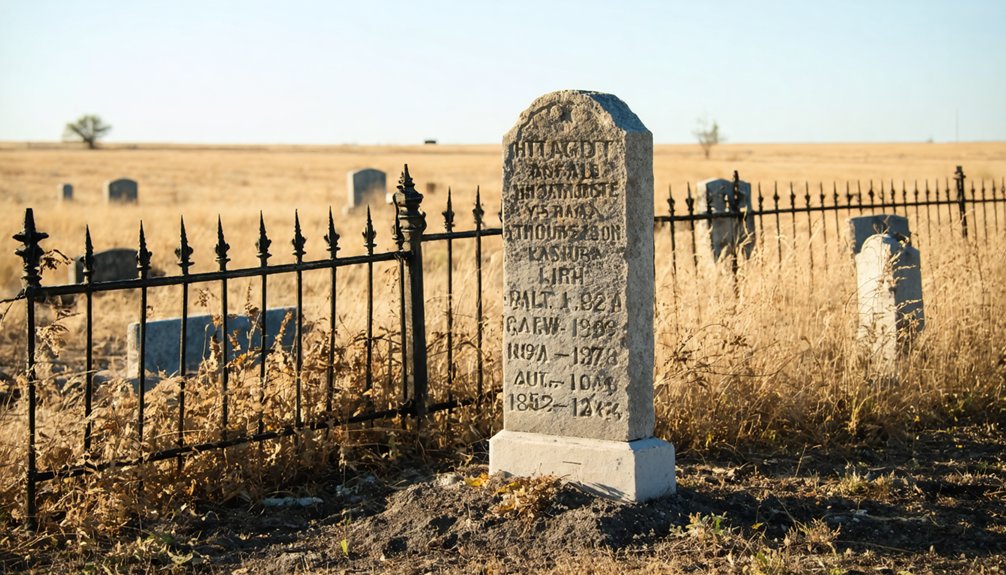
Among the sparse remains at Rollin, the cemetery speaks loudest. While historical architecture has largely vanished from this Neosho County ghost town, the burial ground endures as a quiet record of real lives. You’ll find no polished markers or maintained paths here, just weathered stones set into Kansas ground by families who once believed this place had a future.
Cemetery symbolism runs deep at sites like Rollin. These graves don’t represent failure — they represent commitment. The people buried here built homes, ran businesses, and raised children during the post office years between 1890 and 1921.
When the town faded, some chose to stay anyway.
Walking this ground, you’re reading a chapter of Kansas history that no roadside sign bothers to explain. That’s exactly why you came.
The House, the Cemetery, and Little Else: Making the Most of a Short Stop
Rollin gives you two things to see: Delos Johnson’s house and a neglected cemetery. That’s it, and knowing that upfront helps you plan a focused, worthwhile short stop.
You’re not walking into a preserved attraction — you’re stepping into a historical landscape shaped by community memory and quiet historical preservation.
Make the most of your visit by staying intentional:
- Photograph the house as the last standing link to Rollin’s founder and its settled years
- Walk the cemetery slowly, reading names and dates that anchor the town’s human story
- Note the surrounding landscape — the absence of structures tells its own story
Pair Rollin with other southeast Kansas ghost towns to build a road trip that rewards your curiosity without wasting your time.
Pair Rollin With These Southeast Kansas Ghost Towns for a Full-Day Loop
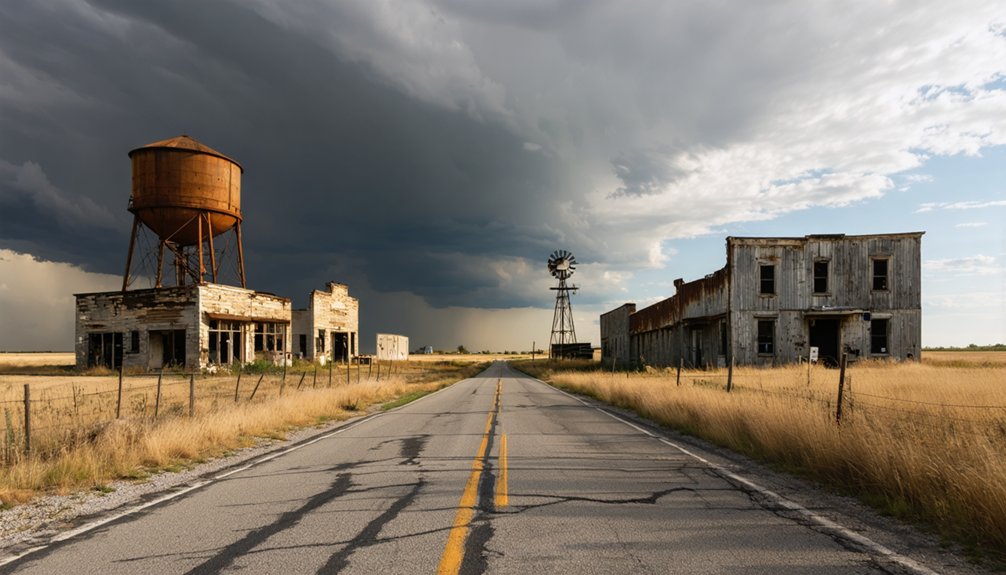
Southeast Kansas rewards ghost town hunters who plan their stops in clusters, and Rollin fits naturally into a full-day loop through Neosho County and its neighbors. You’ll find several nearby ghost towns carrying their own local legends, abandoned structures, and faded histories worth chasing down.
Start your morning at Rollin, spend time at the cemetery and Delos Johnson’s house, then push outward into surrounding counties where similar settlements dissolved after losing their railroads or post offices. Each stop adds texture to the story you’re building on the road.
Research your route before leaving home, confirm land access, and keep a flexible schedule. Southeast Kansas opens up when you treat it as a region, not a single destination.
Property Lines, Dirt Roads, and What to Verify Before You Visit Rollin
Before you load up the car and head toward Neosho County, verify a few critical details that can make or break your visit to Rollin. Land ownership matters here. Delos Johnson’s house and the surrounding townsite may sit on private property, so confirm access before you step off the road.
Check these essentials ahead of time:
- Road conditions – Dirt roads serving rural Neosho County can become impassable after rain
- Property boundaries – Historical preservation doesn’t grant access; respect posted land and contact owners if needed
- Cemetery location – Confirm the exact coordinates using multiple map sources, since listings vary
You’re chasing freedom on this road trip, but responsible travel protects both the site and your plans. A quick phone call or map check saves real headaches.
Frequently Asked Questions
Is There Cell Phone Signal Available Near the Rollin Townsite?
Cell service near Rollin’s remote townsite isn’t guaranteed, so you’ll want to check signal strength before heading out. Download offline maps, embrace the freedom of disconnecting, and let the ghost town’s raw solitude fully surround you.
What Is the Best Time of Year to Visit Rollin?
Spring and fall offer the best seasonal weather for your visit — you’ll enjoy mild temperatures and clear skies. Don’t expect visitor accommodations nearby, so pack your own supplies and embrace the open-road freedom Rollin demands.
Are There Any Nearby Towns With Restaurants or Fuel Stops?
You’ll find local dining and fueling stations in nearby Chanute or Erie — and coincidentally, both towns sit conveniently along natural routes toward Rollin, making them perfect pit stops before exploring this Neosho County ghost town.
Has Rollin Ever Appeared in Any Kansas Historical Publications?
You’ll likely find Rollin mentioned in Kansas ghost town records and county histories that highlight its historical significance and cultural heritage, but you’d want to verify specific publications through the Kansas Historical Society for confirmed appearances.
Is Rollin Accessible to Visitors With Limited Mobility?
Don’t hold your breath—Rollin lacks accessible pathways and wheelchair friendly facilities. You’ll find uneven terrain, a neglected cemetery, and one standing house. Plan carefully, bring mobility aids, and verify current site conditions before you hit the road.
References
- https://legendsofkansas.com/kansas-ghost-town-list/
- https://www.youtube.com/watch?v=KBXINX0xqnU
- https://en.wikipedia.org/wiki/List_of_ghost_towns_in_Kansas
- https://fhsuguides.fhsu.edu/kansasheritage/rawlinscounty
- https://www.youtube.com/watch?v=dF7vGl5xasI
- https://esirc.emporia.edu/server/api/core/bitstreams/eee1d0eb-8529-4e95-a732-12dc55fd687d/content
- https://esirc.emporia.edu/bitstream/handle/123456789/1577/McQuin Vol 8 Num 3.pdf?sequence=1
- https://www.reddit.com/r/kansas/comments/102hrmy/looking_for_ghost_towns_to_document/
- https://en.wikipedia.org/wiki/Rollins_Pass