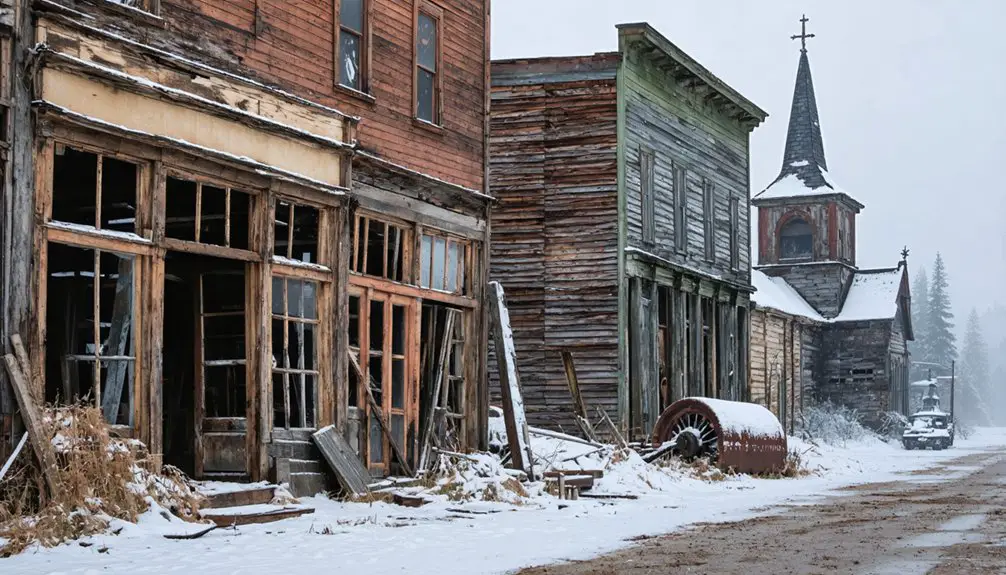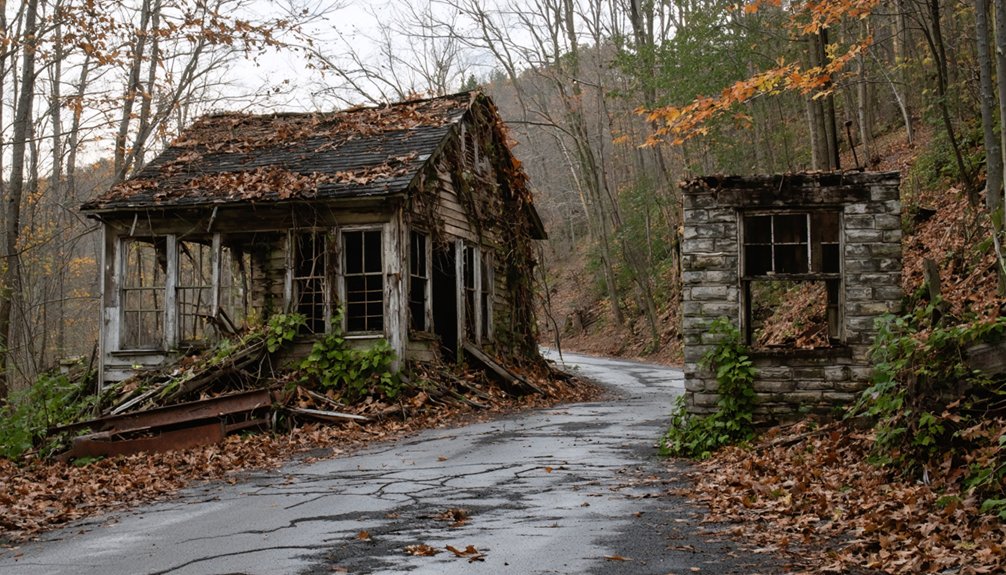
Planning a ghost town road trip to Royal, West Virginia means exploring one of Raleigh County’s most raw, unfiltered coal-era ruins. You’ll find scattered metal artifacts, crumbling stone walls, and weathered gravestones with no visitor facilities in sight. Bring sturdy boots, water, and offline navigation tools, since Royal’s unpaved roads require a higher-clearance vehicle. Pair it with nearby Thurmond for a fuller coal-country experience. Keep going to uncover everything you need for an unforgettable Southern West Virginia ghost town adventure.
Key Takeaways
- Royal, West Virginia, is an unincorporated ghost town in Raleigh County featuring scattered metal artifacts, crumbling stone walls, and weathered gravestones.
- Navigate to coordinates 37°51′10″N 81°4′4″W using GPS, offline maps, and a higher-clearance vehicle for unpaved rural roads.
- Pack sturdy boots, water, a first-aid kit, and a camera; leave all artifacts undisturbed during exploration.
- Royal suits brief exploration, not full-day visits; plan it as one stop on a broader regional route.
- Extend your road trip to Thurmond in New River Gorge National Park for a free, historically preserved ghost town experience.
What Was Royal, West Virginia?
Once a booming coal town tucked into Raleigh County, West Virginia, Royal lived and died by the industry that built it — thriving during the height of Appalachian coal production before fading into the quiet ruin it’s today. You won’t find bustling streets or civic landmarks here. Instead, you’ll discover metal artifacts, crumbling stone walls, and weathered gravestones — the raw remnants of a community that once hummed with purpose.
Royal’s unincorporated status meant no formal government preserved its legacy, leaving historical preservation largely to curious explorers like you.
Local legends surrounding the town’s rise and collapse add another layer to the experience. Walking these grounds connects you directly to a vanished world, one shaped entirely by coal, ambition, and the inevitable silence that followed.
What’s Left to See at Royal Ghost Town Today?
Although Royal won’t greet you with preserved storefronts or interpretive signage, what remains tells a striking story. You’ll find metal artifacts scattered across the landscape, stone walls standing as quiet witnesses to a once-thriving coal community, and gravestones marking lives tied to this forgotten town.
Don’t expect visitor facilities — there’s no welcome center, no fee station, and no guided tour waiting for you.
Historical preservation here is raw and unmanaged, which actually makes the experience feel more authentic. You’re walking through what coal-country abandonment genuinely looks like.
Treat Royal as a short exploration stop rather than a full-day destination. Bring your curiosity, watch your footing among the ruins, and let the remnants of this coal town speak for themselves.
How to Find Royal Ghost Town in Raleigh County
Royal sits at coordinates 37°51′10″N 81°4′4″W in Raleigh County, West Virginia, so plugging that location into your GPS gives you a reliable starting point before you hit the road.
You’ll want to cross-reference those coordinates with a current county map, since rural Raleigh County roads can shift in condition and some routes near former coal communities aren’t well marked.
Confirming your exact access point ahead of time saves you from dead ends and helps you identify whether any sections of the approach involve private property.
Getting To Royal
Tucked into Raleigh County, West Virginia, Royal ghost town sits at coordinates 37°51′10″N 81°4′4″W, which you can plug directly into a GPS or mapping app to get your bearings. Visitor access here is self-directed, so come prepared for a rugged, unstructured stop.
Before you head out, confirm these three essentials:
- Route verification – Cross-check county roads using a current map source, as rural West Virginia roads can change condition seasonally.
- Private property status – Historical preservation concerns may apply, so verify land ownership before exploring the ruins.
- Vehicle readiness – A higher-clearance vehicle handles unpaved approaches more reliably.
Royal rewards independent travelers who embrace exploration on their own terms, making it a genuine off-the-beaten-path detour worth adding to your itinerary.
Navigating Raleigh County Roads
Finding Royal ghost town means steering Raleigh County’s rural road network, where GPS coordinates (37°51′10″N 81°4′4″W) give you a reliable starting point but don’t guarantee a smooth arrival. Cross-reference those coordinates with a current county map before you leave, since rural West Virginia roads shift, close seasonally, or simply dead-end without warning.
Ask locals whenever possible. Raleigh County residents often carry local legends about Royal’s coal-era past that no trail marker preserves, giving your visit a richer layer than any screen can offer. That oral knowledge supports historical preservation just as much as stone walls do.
Download offline maps as a backup, check road conditions through the West Virginia DOT, and allow extra buffer time. Freedom on a road trip means preparation, not improvisation.
Is Royal, WV Safe and Accessible for Visitors?
Since Royal, WV is an unincorporated ghost town rather than a developed tourist site, you won’t find paved pathways, visitor centers, or posted trail maps waiting for you. Visitor safety depends entirely on your own preparation and awareness.
Before you explore, keep these three priorities in mind:
- Watch your footing — stone walls, industrial debris, and uneven terrain create real hazards.
- Respect boundaries — private property may restrict access, so research land ownership before you go.
- Pack self-sufficiently — no services exist on-site, so bring water, first aid, and a charged phone.
Preservation efforts at rural sites like Royal rely heavily on responsible visitors. Treat remnants carefully, take nothing, and you’ll help keep this coal-era history intact for others chasing the same freedom you’re after.
What to Bring to an Unmaintained Ghost Town Site

Exploring an unmaintained ghost town like Royal demands thoughtful preparation, because there’s no staff, no services, and no safety net if something goes wrong. Pack sturdy boots for uneven terrain, water, a first-aid kit, and a charged phone with offline maps loaded before you lose signal.
Bring a camera to document Royal’s remaining stone walls and metal artifacts without disturbing them — artifact significance depends on leaving everything exactly where you find it. A printed map or GPS coordinates help you navigate confidently.
If you’re serious about historical preservation, carry a notebook to record what you observe rather than pocketing souvenirs. Respect the site’s fragile condition, travel with a companion when possible, and always tell someone your destination before heading out.
Should You Pair Royal With Thurmond for a Full Ghost Town Road Trip?
If you’re already making the drive to Royal, pairing it with Thurmond turns a quick stop into a full ghost-town road trip worth the fuel.
Thurmond sits within New River Gorge National Park, offers a self-guided walking tour, and charges no NPS fee for its historic district.
Together, the two sites give you a compelling look at how coal-era prosperity faded across southern West Virginia.
Thurmond Complements Royal Perfectly
West Virginia’s coal-country ghost towns rarely stand alone, and pairing Royal with Thurmond turns a brief roadside stop into a genuinely compelling road trip. Both sites reflect historical preservation efforts within a region shaped entirely by coal’s rise and collapse.
Here’s why Thurmond complements Royal perfectly:
- Artifact significance expands — Thurmond’s preserved depot and structures add architectural depth that Royal’s stone walls and metal debris alone can’t provide.
- Guided context is available — Thurmond offers a free self-guided walking tour through New River Gorge National Park, giving you interpretive framing for both stops.
- No fees at either site — You’ll explore both ghost towns without admission costs, keeping your road trip flexible and budget-friendly.
Together, they deliver a fuller picture of southern West Virginia’s coal-era legacy.
Plan Your Combined Itinerary
Pairing Royal with Thurmond makes practical sense, and the two sites sit close enough in southern West Virginia’s coal country that you can hit both in a single day.
Start your morning at Royal, where you’ll wander remnants of a coal town — stone walls, metal artifacts, and quiet gravestones that carry local legends of boom-era prosperity. Keep your visit short since Royal rewards exploration rather than extended stays.
Then drive to Thurmond in New River Gorge National Park, where preservation efforts have stabilized the historic district enough to support a self-guided walking tour.
Thurmond’s visitor center runs 10 am–5 pm from June through August, with September weekend hours.
Neither site charges a fee, so you’re free to move at your own pace.
Which Other West Virginia Ghost Towns Are Worth the Detour?
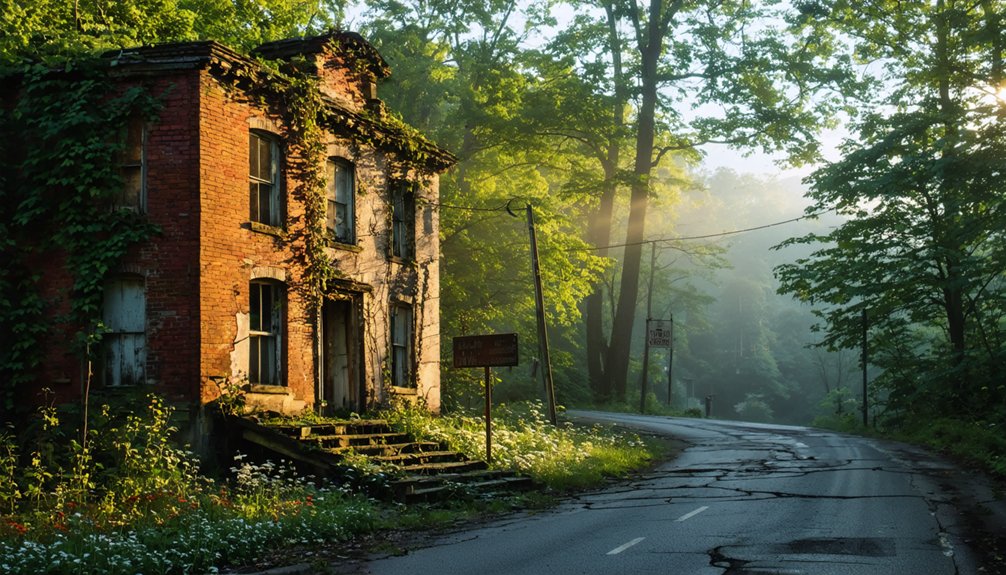
Once you’ve explored Royal’s crumbling coal-era remnants, it’s worth extending your road trip to Thurmond, one of West Virginia’s most accessible and well-documented ghost towns. Located inside New River Gorge National Park, Thurmond prioritizes both historical preservation and visitor safety through maintained walkways and NPS oversight.
Thurmond pairs perfectly with Royal — a ghost town where history is preserved, documented, and easy to explore safely.
Here’s what Thurmond offers that Royal doesn’t:
- Self-guided walking tour — Download the route online before you arrive.
- Staffed visitor center — Open 10 am–5 pm June through August, plus September weekends.
- No entrance fee — You’ll explore the historic district at no cost.
Pairing both stops creates a richer picture of southern West Virginia’s coal-country past. You’ll leave understanding not just individual towns, but an entire region’s rise and abandonment.
How to Plan a Coal-Country Ghost Town Road Trip Through Southern West Virginia
A coal-country road trip through southern West Virginia rewards you most when you treat it as a curated route rather than a spontaneous drive. Start by anchoring your itinerary around Royal in Raleigh County, where historical artifacts and stone walls mark what was once a thriving mining community.
Then extend your route toward Thurmond inside New River Gorge National Park, where abandoned structures and a self-guided walking tour deepen the experience without charging admission.
Plan Royal as a short exploration stop, not a full-day destination. Check road conditions and access points before you leave home, since rural Raleigh County roads can vary seasonally.
Carrying a printed map alongside digital navigation keeps you oriented when cell service drops in the hollows.
Frequently Asked Questions
Is There an Admission Fee to Visit Royal Ghost Town?
You won’t pay any admission fees at Royal Ghost Town — it’s a free, open exploration! There aren’t set visiting hours either, so you’re free to roam the coal-era ruins and stone remnants on your own schedule.
What Time of Year Is Best for Visiting Royal, West Virginia?
Spring and fall offer you the best seasonal weather for exploring Royal’s ruins — mild temps make hiking comfortable. You’ll also catch nearby local festivals that enrich your ghost town adventure with authentic Appalachian culture and spontaneous discoveries.
Are Pets Allowed at the Royal Ghost Town Site?
No confirmed pet policy exists for Royal’s unincorporated ruins, but you’ll want to prioritize pet safety by keeping your furry companion on a leash. Leash requirements help navigate unpredictable terrain, sharp metal debris, and hidden hazards throughout the site.
How Long Does a Typical Visit to Royal Ghost Town Take?
You’ll typically spend 30–60 minutes exploring Royal’s remnants. It’s a short stop, but you’ll find rich photography opportunities among stone walls and artifacts that bring historic preservation to life in this fascinating coal-era ghost town.
Is Royal Ghost Town Suitable for Young Children or Families?
Royal’s ruins suit curious families who love historical exploration — you’ll wander stone walls and artifacts together. It’s not a playground, but coincidentally, it sparks the best family friendly activities: storytelling, discovery, and sharing West Virginia’s coal-country past firsthand.
References
- https://www.youtube.com/watch?v=tU8B0h6jGdU
- https://www.caseybarber.com/thurmond-wv/
- https://en.wikipedia.org/wiki/Royal