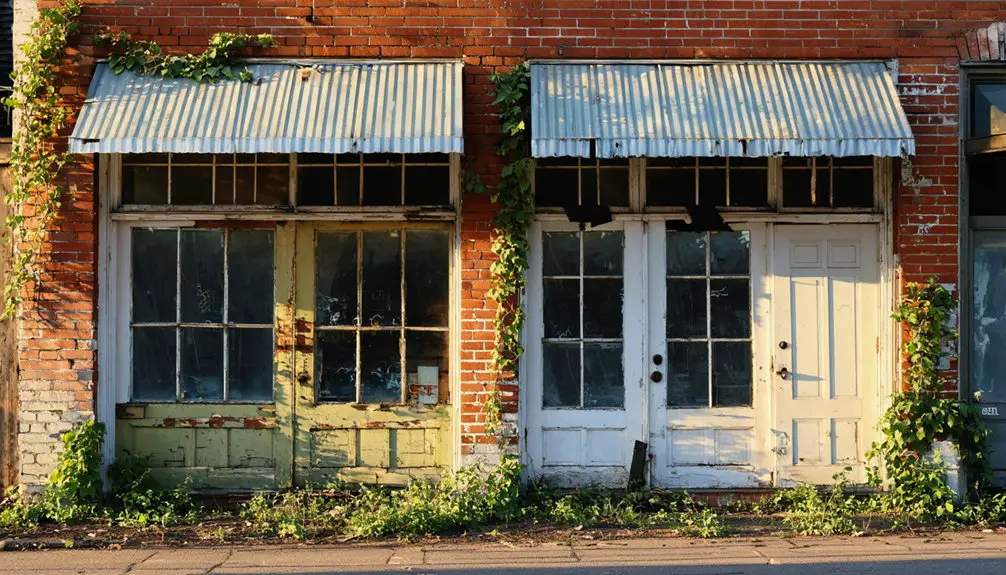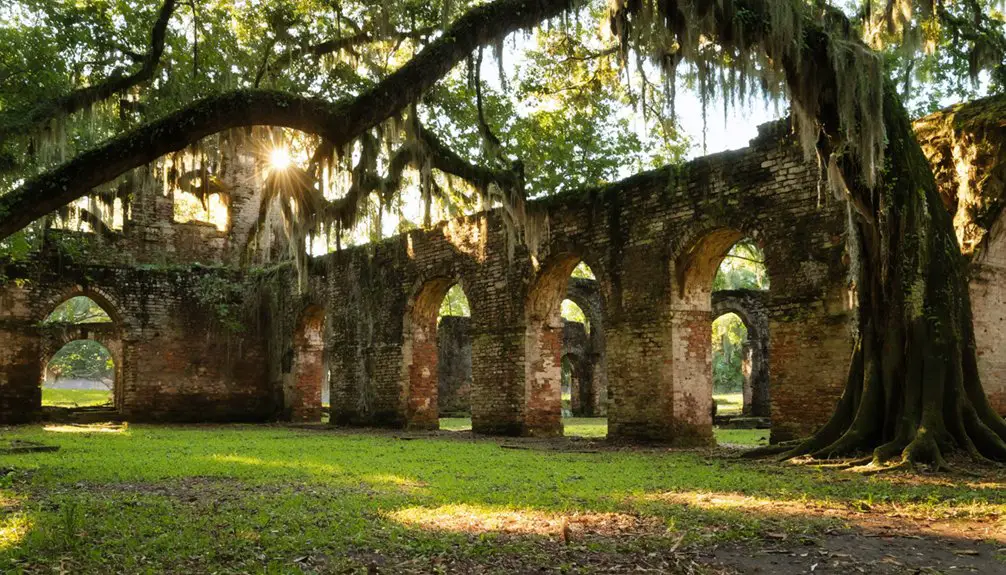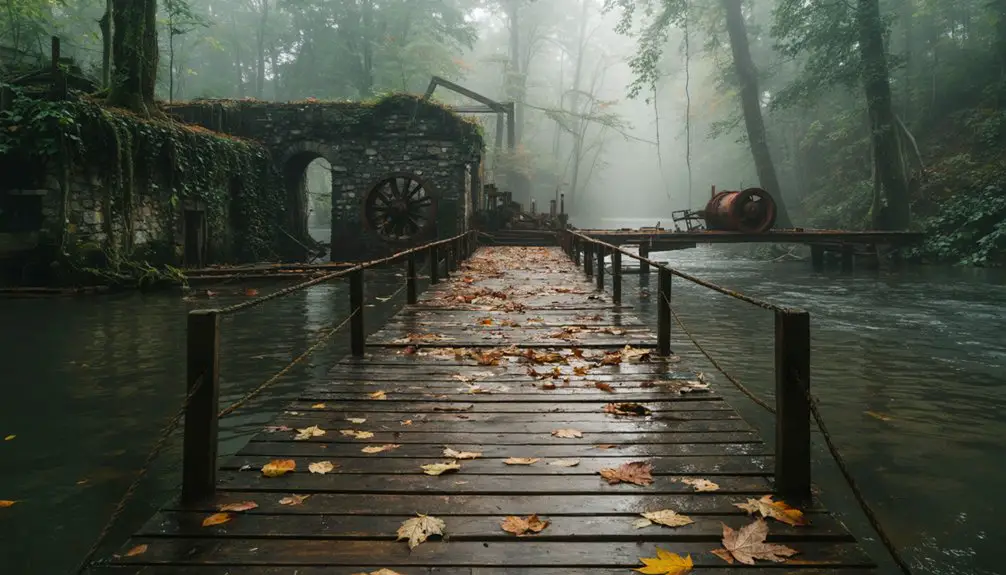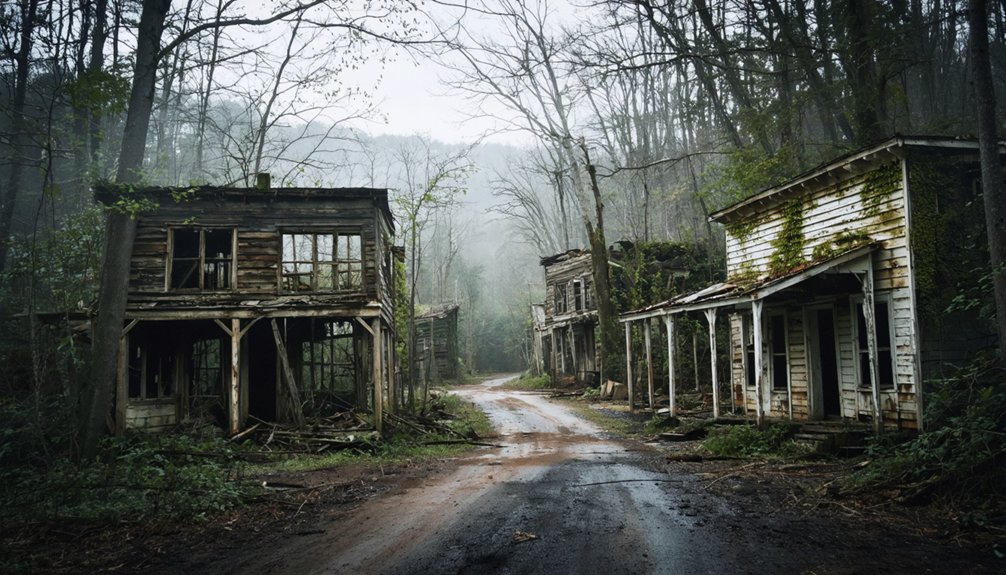
To plan your ghost town road trip to Ruby City, North Carolina, base yourself in Franklin, Jackson County’s gem capital. Ruby City emerged in the late 1880s as a hopeful gem-mining settlement, but it dissolved without leaving standing ruins. Today, Balsam Mountain Preserve covers the site. Pair your visit with gem shops, hands-on mining experiences, and stunning waterfall stops along scenic mountain corridors. Everything you need to build the perfect itinerary is just ahead.
Key Takeaways
- Ruby City, located near Willets in Jackson County, is now within Balsam Mountain Preserve, with no standing structures remaining at the site.
- Franklin serves as the ideal base camp, offering lodging, dining, and easy access via U.S. 441 and U.S. 64.
- Visit Ruby City Gems & Minerals on East Main Street to explore gemstone collections and regional mining history before heading to the site.
- Cherokee Ruby & Sapphire Mine offers hands-on prospecting, adding an interactive mining experience to your ghost town itinerary.
- Enhance your trip with scenic drives along Cowee Valley Road and waterfall stops at Dry Falls, Bridal Veil Falls, and Glen Falls.
What Was Ruby City, North Carolina?
Though it never grew into a bustling urban center, Ruby City earned its place on the map during the late 1880s as a mining settlement in Jackson County, North Carolina, nestled near what’s now Willets. Prospectors flooded the region hoping to strike rubies and other valuable gems buried in the mountain soil, giving the town its ambitious name.
When the mining activity dried up, so did the settlement. Today, the site falls within Balsam Mountain Preserve, which limits traditional exploration but supports historical preservation of the landscape. You won’t find crumbling storefronts or ghost-town ruins here.
Instead, Ruby City survives as a historical reference point, connecting you to western North Carolina’s broader gem-mining heritage and serving as a launching pad for nearby tourist attractions worth exploring.
Where Exactly Was Ruby City Located?
Ruby City sat in Jackson County, North Carolina, near the small community of Willets, tucked into the mountain terrain of western North Carolina’s gem-rich corridor. Today, you won’t find standing structures or marked ruins waiting for you.
Ruby City once thrived in Jackson County’s gem-rich mountains — today, nothing remains standing to greet you.
The site now falls within Balsam Mountain Preserve, which means access and exploration are limited compared to traditional ghost town visits.
That land designation carries real weight. The preserve manages the area with historic preservation in mind, recognizing the archaeological significance of what once stood there during the late-19th-century mining era.
You’re fundamentally visiting a historical reference point rather than a walkable ruin. If you’re planning this road trip, adjust your expectations accordingly and focus your energy on the broader region, where the gem-mining story comes fully into view.
Why Ruby City Works as a Ghost Town Road Trip
Ruby City won’t give you crumbling storefronts or rusted machinery to photograph, but it offers something more layered — a road trip where ghost town history and gem culture collide in the heart of western North Carolina.
You’re not just chasing an abandoned site; you’re tracing a mining legacy that shaped an entire region and still drives tourism today.
Franklin serves as your natural hub, anchoring the trip with real attractions like Ruby City Gems & Minerals while keeping you close to the land where prospectors once staked their hopes on finding precious stones.
History Meets Gem Culture
What makes Ruby City such a compelling ghost town road trip isn’t the ruins—it’s the story. In the late 1880s, prospectors flooded western North Carolina chasing mining legends and gemstone legends, convinced these mountains held fortune. Ruby City emerged from that fever, built on ambition and dissolved just as fast.
That history didn’t disappear when the town did. It shifted into the culture surrounding Franklin, where gem tourism keeps the region’s mining identity alive. You can walk through Ruby City Gems & Minerals and see thousands of specimens pulled from the same mountain corridor that once drew those early prospectors.
The past and present connect naturally here, giving your road trip a narrative thread that runs deeper than a standard ghost town visit ever could.
A Unique Road Trip Theme
Most ghost town road trips sell you on dramatic ruins and crumbling storefronts—Ruby City delivers something rarer. You’re chasing mining legends through mountain terrain where gem culture still breathes. This itinerary blends history with living tradition, giving you a road trip theme that actually holds together.
Here’s what makes Ruby City work as your anchor:
- The ghost town backstory fuels genuine curiosity about western North Carolina’s mining past
- Franklin’s gem scene connects mining legends directly to gemstone artistry you can see and touch
- Balsam Mountain Preserve adds natural beauty without requiring intact ruins
- The region rewards travelers who want discovery over spectacle
- Mountain scenery, local history, and geology combine into one cohesive experience
You’re not visiting a museum piece—you’re moving through a living landscape shaped by mineral ambition.
Franklin As Your Hub
Franklin pulls the whole itinerary together. It’s the regional gem capital of western North Carolina, sitting right along U.S. 441 and U.S. 64, which makes it an easy and natural base for your Ruby City road trip.
You’ll find Ruby City Gems & Minerals on East Main Street, a part-store, part-museum experience packed with thousands of gemstones and jewelry pieces worth your time.
Beyond the gems, Franklin’s historic downtown delivers solid local cuisine, from casual mountain fare to independent restaurants that reflect the region’s character.
If your timing lines up with cultural festivals celebrating Appalachian heritage and gem culture, you’ll get an even richer experience.
Franklin isn’t just convenient — it genuinely deepens the story you’re chasing across this mountain landscape.
Use Franklin as Your Ruby City Road Trip Base
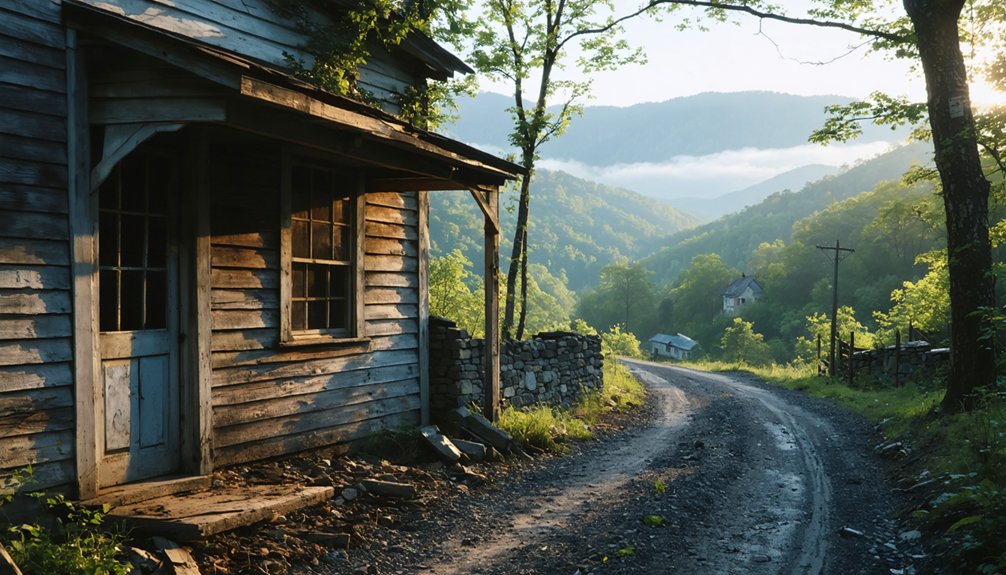
Since Ruby City’s former site now falls within Balsam Mountain Preserve with limited public access, you’ll want a solid base camp for your road trip — and Franklin, North Carolina fits that role perfectly.
Swap urban decay for mountain charm — Franklin anchors your itinerary with real historic landmarks and gem culture:
- Ruby City Gems & Minerals on East Main Street blends museum and store into one compelling stop
- U.S. 441 and U.S. 64 give you straightforward access into the region
- Franklin’s historic downtown offers food, local shops, and mountain character
- Cherokee Ruby & Sapphire Mine adds hands-on mining history nearby
- Scenic mountain drives connect your stops with rewarding views
Franklin keeps you close to everything without sacrificing comfort or convenience.
What to See at Ruby City Gems & Minerals
When you walk into Ruby City Gems & Minerals on East Main Street, you’re stepping into one of the largest gem, mineral, and Native American artifact collections in the region. Thousands of gemstones, fossils, and jewelry pieces fill the space, blending museum-quality displays with a working shop. It’s part store, part cultural archive, and entirely worth your time.
The collection connects local legends surrounding the area’s ruby and sapphire discoveries to the broader story of how gem culture shaped western North Carolina’s identity long before urban development transformed other mountain communities.
You’ll see raw stones pulled from regional mines alongside finished pieces that show what the land once produced. It’s a focused, hands-on way to understand why Ruby City earned its name in the first place.
Best Gem Mines to Visit Near the Ruby City Site
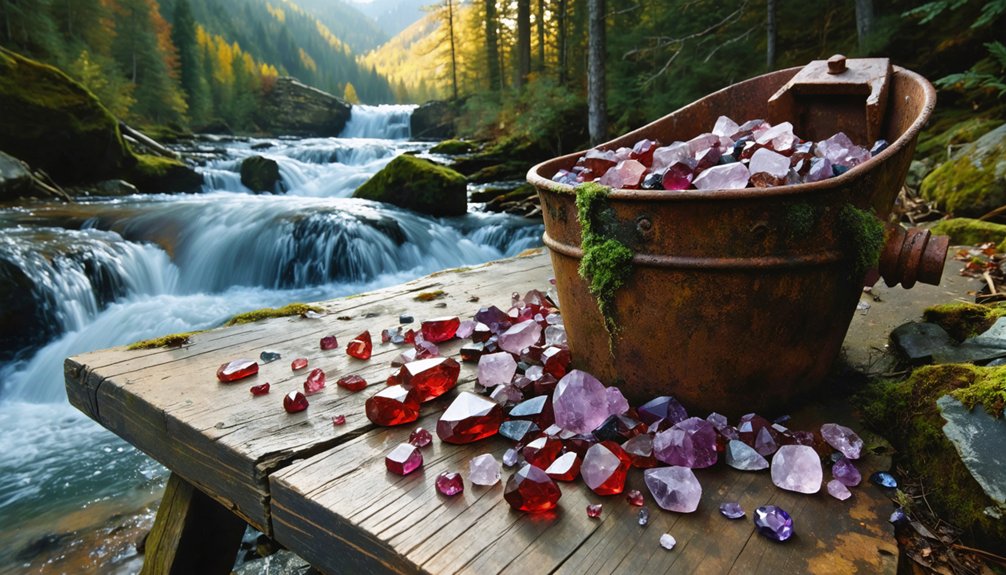
If you’re ready to get your hands dirty, the Cherokee Ruby & Sapphire Mine in Macon County sits near the former Ruby City site and lets you sift through native ore for real gemstones. This region shaped mining legends and fueled early gemstone trading across the Southeast.
Here’s what you can explore nearby:
mines, history, and gemstones hidden beneath the mountain’s surface.
- Cherokee Ruby & Sapphire Mine – sift native ore for rubies and sapphires
- Mason Mountain Mine – known for producing rhodolite garnets
- Sheffield Mine – family-friendly with guided gem hunting
- Gem Capital Mine – popular for sapphire discoveries
- Cowee Valley Mines – a historic corridor tied to regional gem culture
Each stop adds a hands-on layer to your road trip, connecting you directly to the mountain’s buried history.
Scenic Drives and Waterfall Stops Along the Mining Corridor
Once you’ve explored the gem mines, the mountain roads around Jackson and Macon counties reward you with sweeping ridgeline views and dense forest canopy that frame the broader mining corridor beautifully.
You’ll want to add at least one waterfall stop to your route, and the western North Carolina highlands deliver plenty of options within a short drive of Franklin.
Tracing these scenic corridors connects the landscape directly to the region’s mining past, giving your road trip a strong sense of place beyond the ghost town itself.
Mountain Scenic Drive Routes
Winding through western North Carolina’s mining corridor, the mountain roads connecting Franklin to the broader Balsam Mountain Preserve region give you some of the most rewarding scenic driving in the state. Far from urban development and modern amenities, these routes trade city noise for ridge-top views and forested curves.
Pack your route with these standout drives and stops:
- U.S. 441 North – connects Franklin to the Smokies with sweeping elevation changes
- U.S. 64 East – passes gorges, overlooks, and roadside gem shops
- Highlands Road Corridor – tight curves rewarding patient drivers with dramatic views
- Wayah Bald Road – leads to a stone fire tower with 360-degree mountain panoramas
- Cowee Valley Road – cuts through historic ruby-mining countryside toward Macon County
Waterfall Stops Nearby
Western North Carolina’s mining corridor doesn’t just reward you with gem history and mountain views—it drops you within easy reach of some genuinely stunning waterfalls. Dry Falls near Highlands lets you walk behind the cascade on a paved path, while Bridal Veil Falls spills directly over the old roadway. Both carry local folklore connecting the land to Cherokee traditions and early settler routes.
Glen Falls offers a quieter, more rugged experience with multiple tiers dropping through dense forest. As you move between stops, keep your eyes open for abandoned structures tucked into the tree line—remnants of the same mining era that built Ruby City.
These waterfalls aren’t detours; they’re natural anchors that make the entire corridor feel worth the drive.
Mining Corridor Highlights
The waterfalls are just one thread running through a broader corridor worth following on its own terms. Western North Carolina’s mining legends shaped entire communities, and you’ll feel that history on every switchback between Franklin and the old Ruby City site.
This region’s gemstone lore runs deep, and the road itself tells the story.
Hit these corridor highlights while you’re moving through:
- Ruby City Gems & Minerals – part museum, part store, all gem history
- Cherokee Ruby & Sapphire Mine – dig your own stones in Macon County
- Franklin’s East Main Street – local food, shops, and mountain character
- U.S. 64 scenic stretch – mountain views without the interstate noise
- Balsam Mountain Preserve area – where Ruby City’s story quietly ended
How to Build Your Ruby City Itinerary
Since Ruby City’s actual site is now part of Balsam Mountain Preserve with limited public access, you’ll want to build your itinerary around Franklin, North Carolina, the region’s gem-mining hub about 30 miles southwest. Use U.S. 441 or U.S. 64 as your main routes in.
Start your day at Ruby City Gems & Minerals on East Main Street, where an impressive gemstone collection brings the area’s mining heritage to life through thousands of specimens and jewelry pieces.
From there, swing by Cherokee Ruby & Sapphire Mine in nearby Macon County if you want hands-on prospecting.
Cap the day exploring Franklin’s downtown for food and local character.
This structure keeps your trip grounded in history while giving you real, tangible stops worth the drive.
Access Limits, Hours, and Road Trip Logistics

Because Balsam Mountain Preserve now covers the former Ruby City site, you’ll face real access limits that shape how you plan the day. Local access restrictions mean you won’t wander freely through ruins, so building your itinerary around nearby attractions keeps the trip worthwhile.
Balsam Mountain Preserve now covers the former Ruby City site, so expect real access limits before you go.
Before heading out, confirm these logistics:
- Check visitor center hours for Balsam Mountain Preserve before driving out
- Contact the preserve directly to ask about permitted access points
- Plan Franklin as your overnight base to stay flexible
- Schedule gem stops like Ruby City Gems & Minerals during their posted business hours
- Build buffer time for scenic mountain drives between stops
Respecting these boundaries doesn’t shrink your adventure — it just redirects your energy toward the gem culture and mining history Franklin does so well.
Frequently Asked Questions
What Is the Best Time of Year to Visit Ruby City?
You’ll love visiting in late spring or fall when seasonal weather is mild and perfect for exploring. Summer brings local festivals to Franklin, making it an ideal time to combine gem culture with mountain adventure!
Are There Any Guided Tours Focused on Ruby City’s Mining History?
You won’t find dedicated tour guides leading mining legends treks through Ruby City’s exact site, but Franklin’s Ruby City Gems & Minerals offers knowledgeable staff who’ll spark your curiosity about the region’s fascinating gem-mining heritage.
What Should I Pack for a Gem-Mining Road Trip in North Carolina?
Pack smart with safety gear essentials like sturdy gloves, boots, and eye protection. You’ll also want bags, labels, and field guides for gem collection tips that’ll help you identify every sparkling North Carolina treasure you unearth along the way!
Are Children Allowed to Participate in Gem Mining Activities Nearby?
Yes, kids can join in! Cherokee Ruby & Sapphire Mine welcomes young explorers, but you’ll want to prioritize child safety with proper parental supervision. It’s a thrilling, hands-on adventure the whole family will absolutely love!
What Accommodation Options Are Available Near the Ruby City Area?
Like a wanderer finding shelter under ancient mountain skies, you’ll discover lodging options and camping sites near Ruby City. Franklin, NC serves as your base, offering cozy inns, vacation rentals, and scenic campgrounds perfect for freedom-seeking adventurers.
References
- http://www.ghosttownsusa.com/ruby.htm
- https://en.wikipedia.org/wiki/List_of_ghost_towns_in_North_Carolina
- https://en.wikipedia.org/wiki/Ruby_City
- https://www.nogalesinternational.com/news/sun-sets-on-ruby-as-owners-shutter-the-ghost-town/article_d3e8b2ca-17ef-11ef-913b-6b292ced17db.html
- https://kids.kiddle.co/List_of_ghost_towns_in_North_Carolina
- https://www.roadsideamerica.com/story/37878
- https://wlos.com/features/open-road/the-ingles-open-road-the-gem-capital-of-the-world
- https://archive.knoxnews.com/entertainment/life/franklin-nc-and-surrounds-offer-history-waterfalls-and-local-gems-ep-358224383-355814311.html
- https://www.roadtripusa.com/appalachian-trail/north-carolina/franklin-chattanooga/
- http://www.ghosttownsusa.com/ruby2.htm