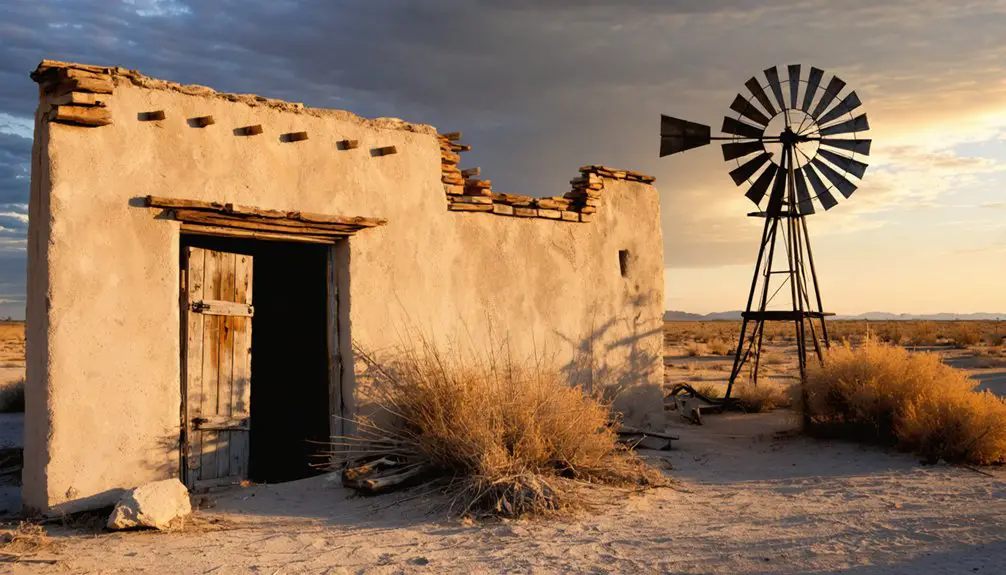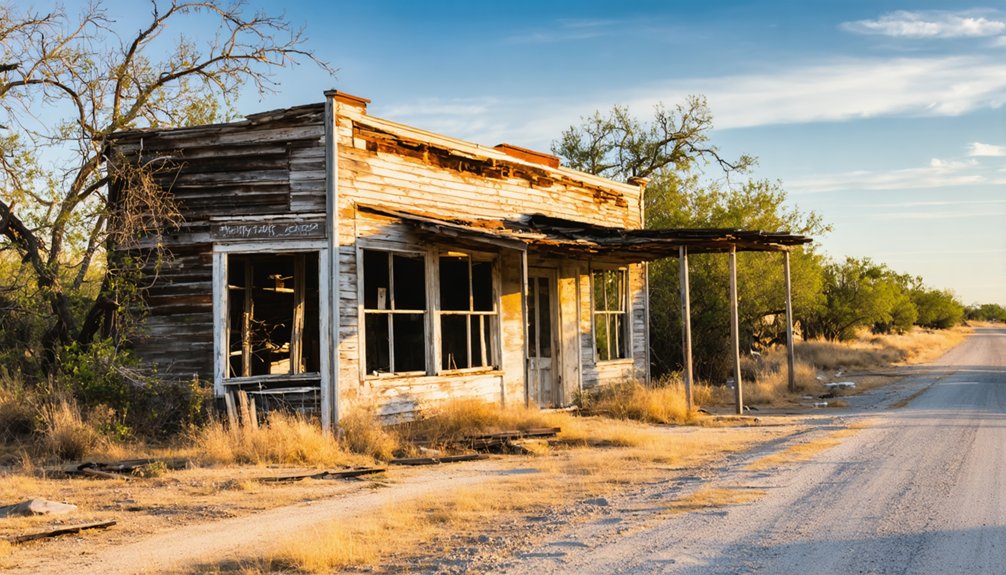
Planning a ghost town road trip to Cañada Verde, Texas starts with heading to the junction of FM 1303 and FM 3444 in rural Wilson County. This Civil War-era settlement offers no crowds, no fees, and no schedules—just raw Texas frontier history reclaimed by nature. Bring water, a full tank of fuel, and offline maps since cell service gets spotty. Pair it with nearby towns like Floresville and Stockdale for a richer, full-day adventure you won’t want to rush.
Key Takeaways
- Cañada Verde is a Civil War-era ghost town in Wilson County, Texas, located at the intersection of FM 1303 and FM 3444.
- Download offline maps and screenshot GPS coordinates before departing, as rural Wilson County has spotty cell service along FM routes.
- Arrive before midday, bring water, pack a full fuel tank, and research county records to enrich your on-site exploration.
- Pair the visit with nearby Stockdale, Floresville, Sutherland Springs, and La Vernia to experience the broader regional history of South Texas.
- The site has no fees, crowds, or signage, offering a raw, unfiltered, self-guided Texas frontier ghost-town experience.
What Is Cañada Verde, Texas?
Tucked into the rural landscape of Wilson County, Texas, Cañada Verde is a Civil War-era ghost town that’s faded into the quiet intersection of Farm to Market Roads 1303 and 3444. You won’t find a bustling attraction here — just the remnants of a settlement that once carved out its place in South Texas history.
Local legends tied to frontier life and wartime settlement give this stop a gritty, authentic character that no curated museum can replicate. The Wilson County Historical Society maintains preservation efforts by keeping the site alive in regional historical listings, ensuring the community isn’t entirely forgotten.
If you crave off-the-beaten-path exploration with real historical weight, Cañada Verde delivers exactly that kind of raw, unpolished Texas experience.
How the Civil War Era Shaped This Wilson County Settlement
When the Civil War tore through Texas in the 1860s, settlements like Cañada Verde emerged from the chaos of wartime displacement and frontier necessity. Wilson County became a refuge for families seeking stability while the nation fractured around them.
Families fleeing wartime chaos carved out new lives in South Texas, turning displacement into the foundation of frontier community.
You’re stepping into a place where survival demanded community, and that community built something lasting enough to survive in local legends long after the town itself faded.
The Civil War era left deep imprints on South Texas land and culture, shaping which settlements thrived and which quietly disappeared. Cañada Verde fell into the latter category, yet preservation efforts by the Wilson County Historical Society ensure its story isn’t completely lost.
When you visit, you’re connecting with a chapter of Texas history that most travelers never bother to find.
How to Find Cañada Verde Using FM 1303 and FM 3444

To reach Cañada Verde, you’ll navigate to the junction of Farm to Market Roads 1303 and 3444 in Wilson County, which serves as your primary landmark for pinpointing this ghost town’s location.
Before you head out, pull up a county road map or a GPS app that recognizes FM routes, since rural Texas farm roads don’t always appear prominently on standard navigation tools.
Once you’re on FM 1303, watch for the FM 3444 intersection, because that crossing puts you directly at the site.
Junction Landmark Navigation Tips
Finding Cañada Verde means zeroing in on the junction of Farm to Market Roads 1303 and 3444 in Wilson County—that intersection is your clearest landmark and the best navigation target you can plug into a map app or mark on a paper atlas.
Before you roll out, sharpen your approach with these tips:
- Search “FM 1303 and FM 3444, Wilson County, Texas” for precise coordinates.
- Screenshot your route—rural cell service gets unreliable fast.
- Ask locals about preservation efforts or any remaining structures before arrival.
- Listen for local folklore tied to Civil War-era settlement history.
You’re not chasing a developed attraction here. You’re chasing a crossroads where Texas history quietly settled in, then quietly disappeared. Own that freedom.
FM Roads Practical Directions
Once you’ve locked in your destination, the navigation is straightforward: FM 1303 and FM 3444 are your two anchor roads, and their junction in Wilson County marks the Cañada Verde site. Pull up a county map before you leave, because cell service gets spotty in South Texas’s rural stretches.
You’re not chasing a developed attraction here. Cañada Verde rewards travelers who’ve done their homework—reading up on local legends tied to Civil War-era settlement before arriving makes the roadside stop genuinely meaningful.
Preservation efforts in the area remain modest, so don’t expect signage to do the storytelling for you.
Drive FM 1303 with intention, watch for the FM 3444 junction, and you’ll land exactly where Texas history quietly left its mark.
Historical Sources and Maps to Review Before You Visit
Before you hit the road, you’ll want to pull up a few key resources that’ll make your visit far more rewarding. Check the Wilson County Historical Society’s records for local context.
Then cross-reference Texas ghost-town guides that list Cañada Verde among the state’s abandoned settlements.
Finally, grab an updated FM road navigation map so you can confidently trace your route along FM 1303 and FM 3444 without second-guessing your turns.
Wilson County Historical Records
Since Cañada Verde offers little in the way of on-site interpretation, you’ll want to do your homework before you make the drive out to Wilson County. The Wilson County Historical Society maintains records that give this ghost town real context. Dig into these resources before you go:
- Wilson County Historical Society’s historical-places listing for Cañada Verde
- Texas State Historical Association’s dedicated entry covering the settlement’s Civil War-era origins
- Regional ghost-town directories that map abandoned South Texas communities
- Local cuisine guides and wildlife observation notes tied to the surrounding rural landscape
These sources transform a quiet roadside stop into a meaningful experience. You’ll arrive understanding what once stood here, why it disappeared, and what the broader Wilson County frontier story actually means.
Texas Ghost Town Guides
Wilson County Historical Society records give you the foundation, but dedicated Texas ghost-town guides expand your reach across the full regional landscape. These directories compile abandoned settlements statewide, placing Cañada Verde inside a broader network of forgotten frontier communities.
Before you drive out to FM 1303 and FM 3444, pull up the Texas State Historical Association’s entry on the town and cross-reference it with regional ghost-town publications. You’ll uncover local legends tied to Civil War-era settlement that raw county records don’t always capture.
These guides also flag preservation challenges honestly, reminding you that most sites offer little beyond a roadside marker and open land. That context sharpens your expectations and helps you plan a more rewarding, fact-grounded stop rather than an empty drive.
FM Road Navigation Maps
Once you’ve pulled the Texas State Historical Association’s entry on Cañada Verde, your next move is tracking down FM road navigation maps that show the FM 1303 and FM 3444 junction clearly. Paper county maps and digital tools both work, but having a backup matters where cell service drops.
Before you roll out, gather these four resources:
- TxDOT’s official Wilson County road map for precise FM routing
- Google Maps offline download covering the FM 1303 corridor
- iOverlander or onX for wildlife observation hotspots along rural stretches
- Local cuisine stops logged through Roadtrippers near Floresville
These tools keep your route sharp and your stops intentional. Freedom on the road doesn’t mean wandering blind—it means arriving prepared and ready to explore every forgotten mile confidently.
What You’ll Actually See When You Arrive at Cañada Verde
When you pull up to Cañada Verde, don’t expect a preserved Main Street or a welcome sign pointing you toward a visitor center — this is a true ghost town, and it looks the part. What greets you instead is open South Texas landscape, rural quiet, and the unfiltered feeling of standing somewhere history simply walked away from.
The junction of FM 1303 and FM 3444 marks your reference point. Local flora has reclaimed much of what settlers once built, and the area now doubles as a wildlife habitat, drawing birds and native brush typical of the region. Bring your own context — research the Civil War-era roots before you arrive.
There are no interpretive signs, no services, and no crowds. Just land, road, and a story you’ll have to tell yourself.
South Texas Ghost Towns Worth Pairing With This Stop
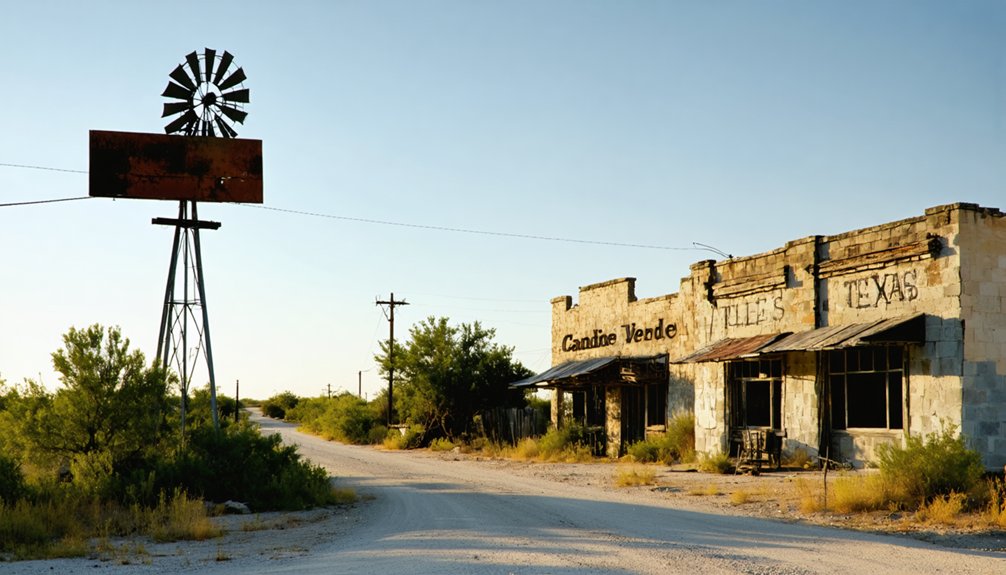
Cañada Verde works best as one node in a longer South Texas ghost-town loop, and the region gives you plenty to connect it to. Wilson County sits within a corridor of abandoned settlements tied to frontier expansion, Civil War displacement, and rural decline.
Cultural preservation efforts across the area mean local legends and historical markers still surface if you dig into county records before you leave home.
Consider pairing your stop with these nearby points of interest:
- Stockdale, TX – Wilson County’s seat with heritage architecture
- Floresville, TX – regional history museum and courthouse square
- Sutherland Springs, TX – layered local history along the Cibolo Creek corridor
- La Vernia, TX – early German settlement history worth exploring
Each stop deepens your understanding of the land you’re crossing.
How to Build a Full Day Around Wilson County Ghost Towns
How you structure your day matters as much as where you go, and Wilson County rewards a deliberate pace. Start your morning at Cañada Verde, using FM 1303 and FM 3444 to reach the junction site before midday heat sets in. Spend time absorbing the Civil War-era history and scanning for abandoned structures that hint at what life once looked like here.
From there, pull up county historical listings and trace connecting roads toward neighboring ghost towns. Local legends tied to frontier settlement give each stop its own character, so research before you leave home. Bring water, a full tank, and offline maps since services are sparse.
Is a Cañada Verde Road Trip Worth the Drive?
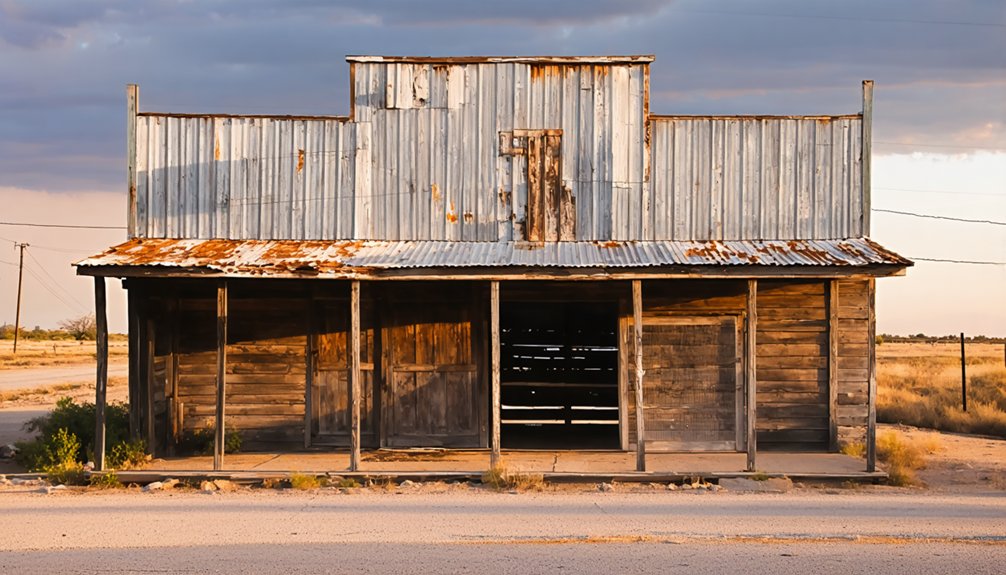
After mapping out a full Wilson County ghost-town day, you’re probably asking whether the drive to Cañada Verde actually pays off. It does, especially when you stack the experience with everything surrounding it.
Here’s what makes it worthwhile:
- History with teeth — Civil War-era settlement roots give the stop real historical weight.
- Scenic rural roads — FM 1303 and FM 3444 pass through open South Texas landscape perfect for wildlife viewing.
- Local cuisine stops — Wilson County’s small towns offer authentic regional food worth building into your route.
- Freedom to explore — No crowds, no admission fees, no schedules.
Cañada Verde won’t hand you a polished attraction. It’ll hand you raw Texas history on your own terms, and that’s exactly the point.
Frequently Asked Questions
What Is the Best Time of Year to Visit Cañada Verde?
Fall’s finest days favor your visit to Cañada Verde! You’ll uncover historical significance under cooler skies, chase local legends along FM 1303, and freely wander this Civil War-era ghost town without summer’s scorching, suffocating heat slowing you down.
Are There Any Entry Fees or Permits Required to Visit the Site?
You won’t need entry fees or visitor permits to explore Cañada Verde. It’s a rural roadside stop along FM 1303 and FM 3444, so you’re free to visit this forgotten frontier settlement on your own terms.
Is Cañada Verde Accessible to Visitors With Mobility Limitations?
Forget accessibility improvements or mobility assistance programs — Cañada Verde’s a rugged rural crossroads, not a theme park! You’ll navigate unpaved terrain near FM 1303 and FM 3444, so bring sturdy equipment and embrace the wild, unfiltered freedom of Texas ghost-town exploration.
Can I Camp Overnight Near the Cañada Verde Ghost Town Site?
You’ll need to research nearby campgrounds before heading out, as Cañada Verde offers no formal facilities. Local spots may let you enjoy wildlife observation under Texas stars while you protect historical artifacts on your adventurous overnight journey.
Are Pets Allowed When Visiting Rural Ghost Town Sites in Texas?
Texas has over 500 ghost towns! You’ll generally bring pets to rural sites, but you’re responsible for their pet safety. Watch for wildlife encounters with snakes or coyotes, and keep your furry companion leashed at all times.
References
- https://en.wikipedia.org/wiki/Cañada_Verde
- https://en.wikipedia.org/wiki/List_of_ghost_towns_in_Texas
- https://www.tshaonline.org/handbook/entries/canada-verde-tx
- https://www.ksat.com/holidays/2018/10/30/texas-has-more-ghost-towns-than-any-other-state/
- https://www.texasescapes.com/SouthTexasTowns/Canada-Verde-Texas.htm
- https://en.wikipedia.org/wiki/Category:Ghost_towns_in_Texas
- https://texashillcountry.com/camp-verde-camel-corps/
- https://www.ghosttowns.com/states/tx/campverde.html
- https://www.texasescapes.com/TOWNS/Texas_ghost_towns.htm
- https://www.ghosttowns.com/states/tx/tx.html