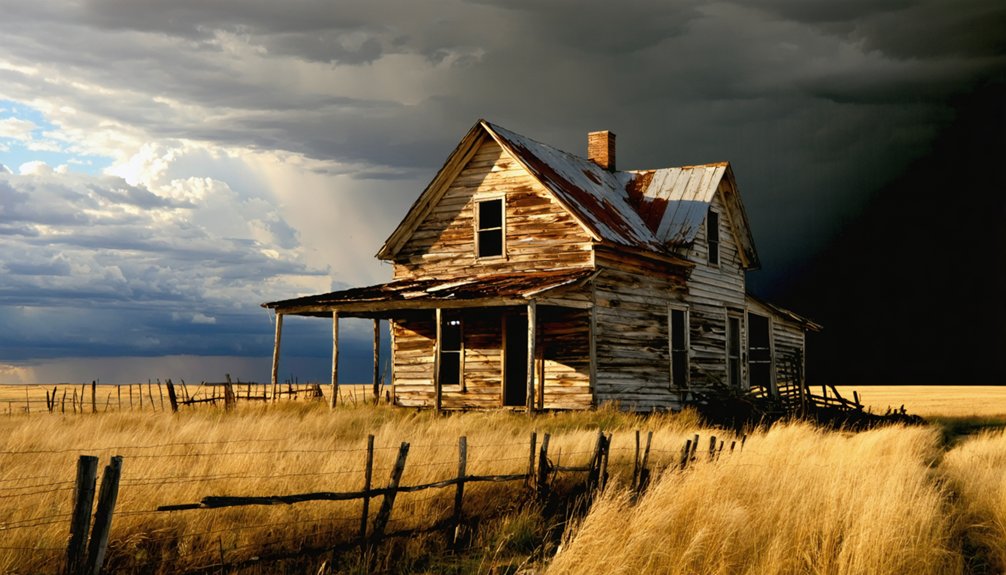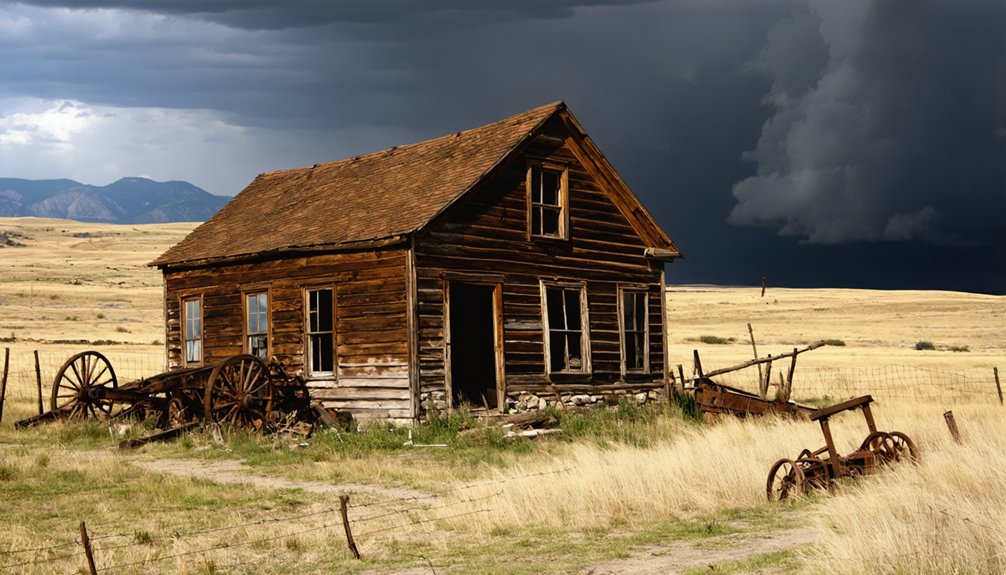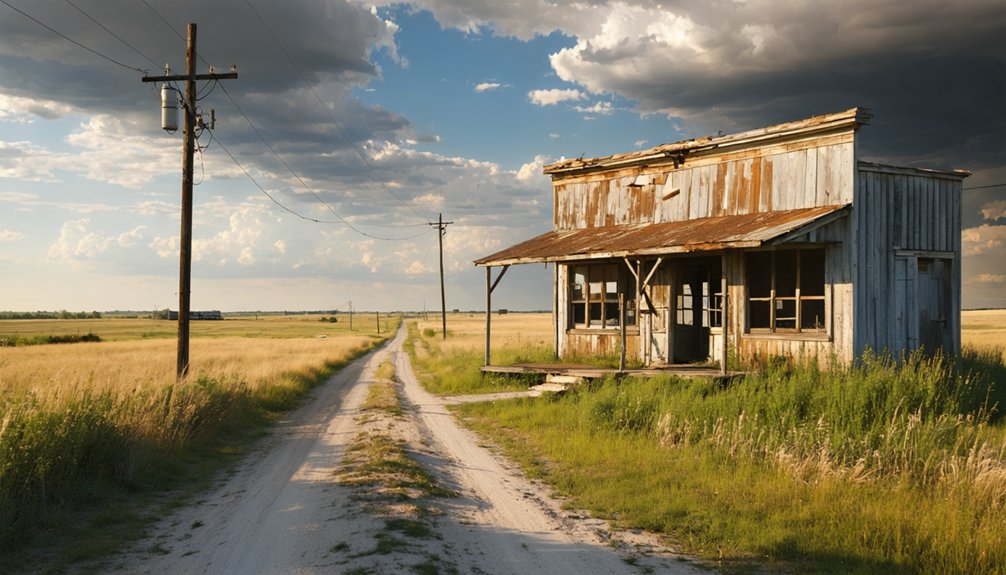
Planning a ghost town road trip to Runkel, South Dakota means embracing a destination where the town itself has virtually vanished. You won’t find signs, ruins, or markers — just open fields and an old apple orchard quietly holding its place in Meade County’s Black Hills corridor. Pair it with nearby ghost towns like Mystic, Rochford, and Galena for a fuller picture of frontier boom-and-bust history. Keep exploring to uncover everything you need to plan this unforgettable route.
Key Takeaways
- Runkel, located in Meade County near the Black Hills, is a vanished boomtown with no structures remaining, only an old apple orchard marking the site.
- Download offline maps and use precise coordinates before visiting, as Runkel has no highway signs, pullouts, or official markers guiding travelers there.
- Pair Runkel with nearby ghost towns like Mystic, Rochford, Galena, and Spokane to build a comprehensive Black Hills ghost town road trip circuit.
- Use Runkel as a quiet, contemplative stop within your itinerary, as the open fields and orchard invite reflection rather than traditional sightseeing.
- Build flexible buffer time into your schedule, as remote locations, sparse landmarks, and long distances between ghost towns slow travel considerably.
What Was the Ghost Town of Runkel, South Dakota?
Tucked into Meade County, South Dakota, Runkel was a small frontier settlement that rose and fell alongside the Black Hills’ mining and railroad boom of the late 1800s and early 1900s.
Named after George Runkel, the town once functioned as a genuine community before economic decline stripped it down to almost nothing. Its historical significance lies not in grand preserved structures but in what its disappearance reveals about frontier life.
Runkel’s significance isn’t in what survived — it’s in what vanished, and what that erasure reveals about frontier life.
You’ll find no buildings, no foundations, and barely a trace of what once stood here. Preservation challenges are obvious the moment you arrive — the site looks more like an open field than a former town.
One apple orchard remains as the sole surviving landmark, quietly marking a place that history nearly erased entirely.
Where Is the Runkel Ghost Town Site Located?
You’ll find the Runkel ghost town site tucked into Meade County, South Dakota, not far from the rugged landscape of the Black Hills region. The area sits within a broader corridor rich with former mining and railroad settlements, making it a natural fit for any Black Hills road trip.
Pinpointing the exact townsite takes some effort, though, since the land looks more like an open field than a former community unless you already know where to look.
Meade County, South Dakota
Nestled in the western reaches of South Dakota, Meade County sits at the edge of Black Hills country, where frontier ambition once pushed settlements into every promising valley and rail corridor. This region carries deep historical significance, having supported mining operations, railroad lines, and dozens of small service communities that rose and fell within a single generation.
Runkel emerged from that same pattern, tied to extraction economies and transportation networks that eventually disappeared. Today, preservation challenges define the site entirely — no buildings, no foundations, and no formal markers greet you when you arrive. What remains looks more like open farmland than a named settlement.
Understanding Meade County’s broader frontier history helps you appreciate why Runkel existed at all, and why it vanished so completely.
Black Hills Region Proximity
Where exactly does Runkel sit within South Dakota’s sprawling western landscape? It’s tucked inside Meade County, placing it close enough to the Black Hills to benefit from that region’s rich historical preservation efforts and strong tourism potential.
The Black Hills context matters because it explains everything about Runkel’s rise and fall:
- Over 600 ghost-town sites dot the Black Hills region alone
- Mining and railroad expansion drove early settlement across western South Dakota
- When economic drivers disappeared, towns vanished fast
- Runkel fits directly into this extraction-and-decline pattern
- The region’s ghost-town circuit makes Runkel a logical road-trip stop
You’re not traveling to an isolated outlier here. You’re visiting a site embedded within one of America’s most historically layered frontiers, where vanished communities outnumber surviving ones.
Finding The Townsite
Finding Runkel takes some intention—this isn’t a site with highway signs or a pullout parking lot. You’re steering toward a ghost town in Meade County, South Dakota, where historical preservation left almost nothing standing. No foundations, no markers, no restored structures greet you. The landscape reads like an ordinary field unless you know exactly where to look.
Tourist accessibility here is minimal by design—or rather, by erasure. Your best landmark is the apple orchard, which still stands at the townsite and gives you something tangible to orient around.
Research your coordinates before you leave, load an offline map, and approach with realistic expectations. Runkel rewards curiosity, not convenience. You’re chasing a place that time actively worked to erase, and that’s precisely what makes finding it worthwhile.
What Can You Still See at Runkel Today?
If you’re expecting crumbling storefronts or old foundations, Runkel will surprise you with its near-total absence. Historical preservation never happened here — the land simply reclaimed everything. Without knowing the exact location, you’d drive right past it. There are no visitor facilities, no markers, no exhibits.
Runkel leaves almost nothing behind — no markers, no ruins, no proof. The land reclaimed everything long ago.
What you can realistically expect to find:
- A surviving apple orchard, the townsite’s only identifiable landmark
- Open fields where buildings once stood
- No structural foundations visible at ground level
- No signage marking the former settlement boundaries
- A landscape that looks completely ordinary to the untrained eye
That orchard carries the whole story. It’s a quiet, almost haunting reminder that a functioning community once existed here — and that the frontier doesn’t always leave anything behind.
What Does the Runkel Site Look Like When You Arrive?
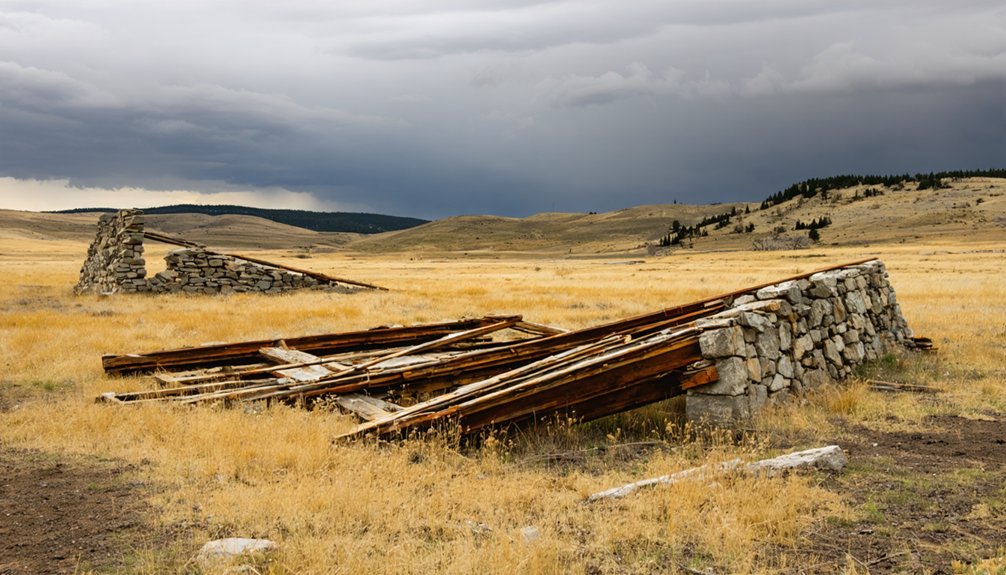
Pulling up to the Runkel townsite, you’ll find nothing that signals a former settlement — just open fields stretching quietly in every direction. No foundations, no crumbling walls, no faded signs mark the spot. The land looks like it simply swallowed the town whole.
That erasure speaks directly to the preservation challenges facing South Dakota’s most remote ghost towns — without structures or active stewardship, history disappears fast.
Yet the historical significance of Runkel remains real, even if invisible. Knowing that people once built lives, businesses, and a rail-connected community here changes how you read the silence.
The one exception is the old apple orchard, still standing like a quiet witness. It’s a small detail, but on an empty prairie, it carries the weight of everything that’s gone.
How Do You Work Runkel Into a Black Hills Ghost Town Road Trip?
Since the Black Hills region holds well over six hundred ghost-town sites, you can easily build a full day’s route around Runkel without stretching your drive too thin.
You’ll want to string together nearby stops that share Runkel’s railroad and mining roots, turning a single sparse site into a richer, more rewarding itinerary.
Planning your route in advance matters here, because Runkel leaves almost nothing to see on its own, so the surrounding stops carry much of the trip’s weight.
Nearby Ghost Town Stops
Because Runkel barely registers as a visible site, it works best as one stop among many on a broader Black Hills ghost town loop.
Pair it with nearby sites that still carry abandoned structures, local legends, and stronger visual payoffs:
- Mystic – a former mining camp with lingering foundations and rich local legends
- Rochford – a small historic settlement with remnants worth exploring
- Galena – a once-active mining town showing scattered abandoned structures
- Spokane – a quiet, nearly forgotten rail stop fitting the same pattern as Runkel
- Tigerville – another sparse site rounding out a full ghost town circuit
Stringing these stops together gives you a complete picture of how the Black Hills boom-and-bust cycle erased entire communities, leaving only silence, orchards, and open fields behind.
Ideal Route Planning
Planning a Black Hills ghost town road trip around Runkel means treating it as a quiet anchor point rather than a headlining stop. You’ll want to cluster it with stronger sites that offer more visible historical preservation, so Runkel becomes a meaningful pause rather than a disappointment.
Start in the central Black Hills, work through towns with surviving structures or active tourism development, then let Runkel serve as your reflective midpoint or endpoint. Drive out, locate the apple orchard, absorb the silence, and move on.
Keep your route flexible. You’re covering terrain where distances feel long and landmarks grow sparse. Build in buffer time, download offline maps, and treat each stop as its own small discovery rather than checking boxes on a rigid schedule.
Which Meade County Ghost Towns Pair Best With a Runkel Visit?
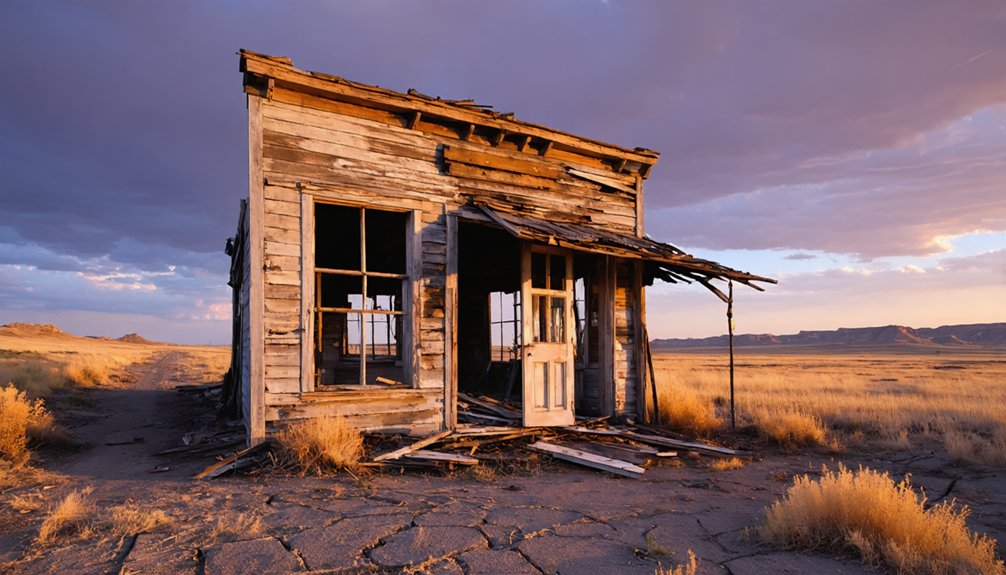
Meade County holds more ghost towns than most travelers realize, and pairing Runkel with a few nearby vanished settlements turns a single sparse stop into a full day of historical exploration.
Historical preservation efforts vary across these sites, and tourism development remains minimal, so you’ll want to research access points before heading out.
Consider adding these stops to your route:
- Oreville – a former mining camp with deeper Black Hills railroad ties
- Elm Springs – a quiet agricultural ghost town with a different decline story
- Ellsworth – offers contrasting military history nearby
- Tilford – sits close to key rail corridors worth tracing
- Sturgis outskirts – surrounding abandoned sites add context to the region’s boom-and-bust pattern
Each stop sharpens your understanding of how quickly frontier communities disappeared.
Frequently Asked Questions
Who Was George Runkel and Why Was the Town Named After Him?
You’ll find George Runkel woven into Black Hills ghost town history as a key local figure. Local legends say the town earned his name, though exact details remain as elusive as the vanished settlement itself.
What Caused the Deadly Boiler Explosion at Runkel in 1895?
The records don’t tell you what triggered the deadly 1895 boiler explosion, but you can imagine how weak historic safety regulations and absent industrial accident investigation left Andy Dillhay and William E. Warren tragically vulnerable that March day.
When Did the Railroad Serving the Runkel Area Finally Stop Operating?
Like a final whistle fading into prairie wind, the railroad serving Runkel didn’t quit overnight — you’ll find it stopped operating on March 20, 1930, leaving abandoned buildings and local legends as its only echoes.
Is the Runkel Ghost Town Site on Private or Public Land?
The land likely falls under private ownership, so you’ll want to respect boundaries when seeking visitor access. Approach historical preservation mindfully, observe from public areas, and you’ll still experience Runkel’s quietly vanished, freedom-evoking landscape.
Is Runkel Spelled Differently in Some Historical South Dakota Records?
Yes, you’ll find historical spelling variations between “Runkel” and “Runkle” when diving into archival research. Don’t let that trip you up — both names reference the same vanished South Dakota ghost town you’re chasing.
References
- https://en.wikipedia.org/wiki/List_of_ghost_towns_in_South_Dakota
- https://www.pbs.org/video/galena-the-ghost-town-that-refuses-to-die-ehw4x2/
- https://www.powderhouselodge.com/black-hills-attractions/fun-attractions/ghost-towns-of-western-south-dakota/
- https://www.youtube.com/watch?v=jmSADvq4Lek
- https://www.midwesternscout.com/remembering-the-town-of-runkel/
- https://kids.kiddle.co/List_of_ghost_towns_in_South_Dakota
- https://www.sdpb.org/rural-life-and-history/2023-08-21/some-black-hills-ghost-towns-and-their-origins
- https://en.wikipedia.org/wiki/Firesteel
- https://www.sdhspress.com/journal/south-dakota-history-2-2/some-black-hills-ghost-towns-and-their-origins/vol-02-no-2-some-black-hills-ghost-towns-and-their-origins.pdf