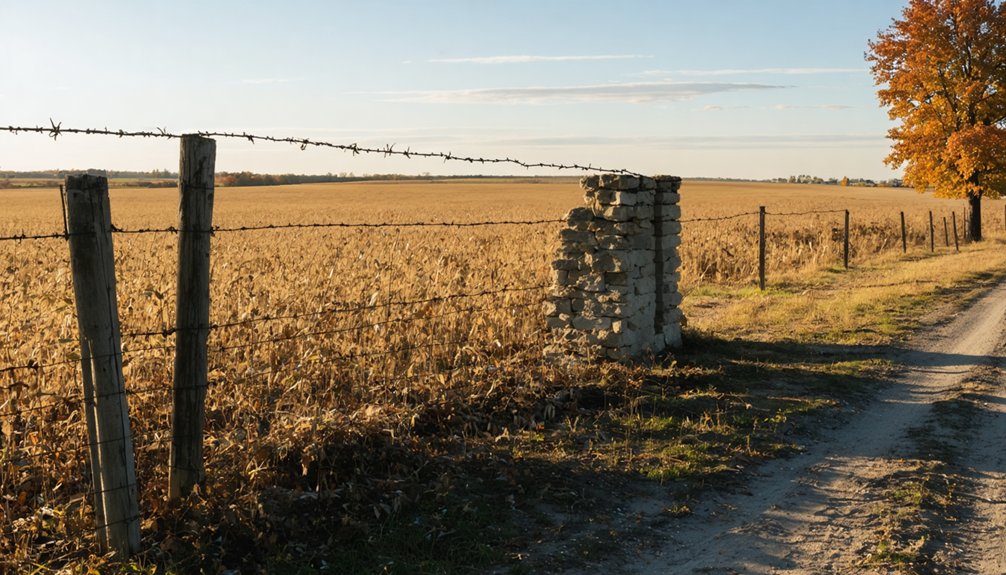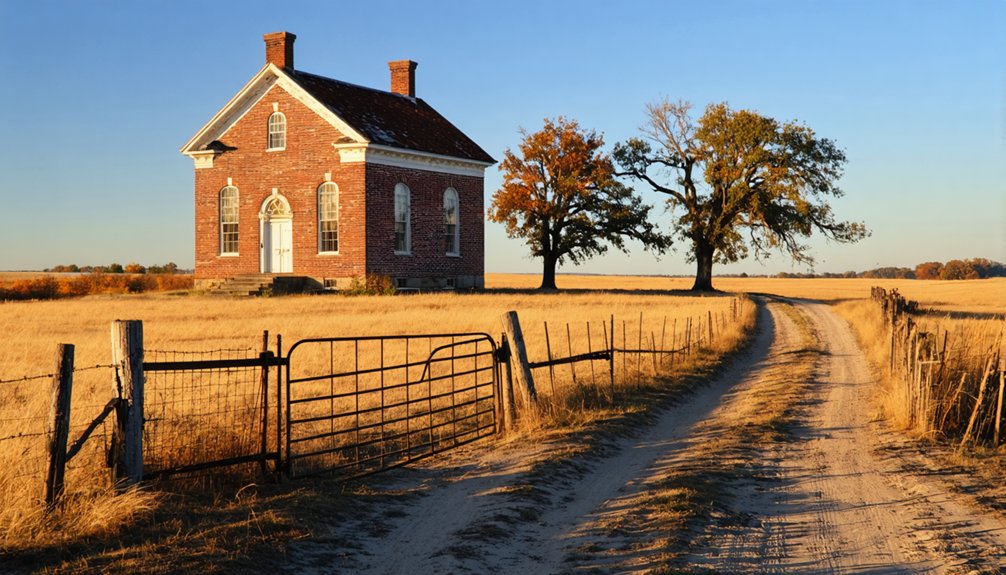
Planning a ghost town road trip to Santa Fe Park in Willow Springs, Illinois, means stepping back to 1896, when this railroad resort island buzzed with grandstands, dance halls, and beer gardens. Today, you’ll find crumbling foundations, a weathered grain elevator, and a lone stone chimney reclaimed by nature along the Des Plaines River. Bring sturdy boots, time your visit for early fall or late spring, and keep exploring—there’s far more to uncover about this hauntingly beautiful Midwest relic.
Key Takeaways
- Santa Fe Park, established in 1896 on a Des Plaines River island in Willow Springs, Illinois, features ruins including a grain elevator and stone chimney.
- A 4WD vehicle is required to navigate the rugged access road near Route 83 in DuPage County.
- Visit during early fall or late spring for the best weather, safety, and photography conditions.
- Wear sturdy waterproof boots, avoid solo exploration near riverbanks, and stay cautious of unstable, vegetation-covered ground.
- Nearby ghost towns like Braidwood, Drawbridge, and Pullman Historic District make excellent additions to your Illinois road trip.
What Is Santa Fe Park and Why Was It Abandoned?
Once a lively entertainment complex drawing crowds from Chicago and beyond, Santa Fe Park sprang to life in 1896 on an island nestled in the middle of the Des Plaines River in Willow Springs, Illinois. It featured grandstands, a dance hall, and a beer garden, all dependent on the Chicago, Rock Island and Pacific Railroad to deliver visitors.
After World War II, the automobile reshaped how Americans traveled, and railroad ridership collapsed. Visitor numbers plummeted, and by the 1940s, the community was completely abandoned.
Today, urban decay has reclaimed the island, leaving scattered building foundations, a grain elevator, and a stone chimney behind. Environmental preservation efforts keep the site largely undisturbed, making it a rare window into a forgotten era of American leisure culture you can still explore firsthand.
How Do You Get to Santa Fe Park in Willow Springs?
Reaching Santa Fe Park takes some effort, but that’s part of the adventure. You’ll find this historically rich island site near Route 83 along the Des Plaines River in DuPage County.
Getting to Santa Fe Park isn’t easy — and that’s exactly the point.
A 4WD vehicle is strongly recommended, as the access road reflects the site’s rugged, untamed character. Understanding its cultural significance makes the journey worthwhile.
Here’s what you need before heading out:
- Vehicle requirement: 4WD access is essential for traversing the island road
- Best timing: Visit during early fall or late spring for ideal weather conditions
- River awareness: Stay cautious near the riverbanks to avoid hazards
- Preservation efforts: Treat remnants respectfully — foundations, railroad tracks, and the stone chimney tell irreplaceable stories
You’re not just visiting a ghost town; you’re connecting with living history.
What’s Left to See at the Santa Fe Park Ghost Town?
Although nature has reclaimed much of Santa Fe Park, you’ll still find compelling remnants scattered across the abandoned island. Walking the roughly one-mile townsite, you’ll discover scattered building foundations, vintage railroad tracks, and a standing grain elevator that once supported a thriving community.
The site’s most striking landmark is a prominent stone chimney — a silent sentinel marking where the entertainment complex once buzzed with visitors. Urban legends and folklore myths have grown around these ruins, though no documented evidence supports ghost stories or paranormal claims.
You’ll want to stay alert near the river banks, where hazards lurk beneath overgrown vegetation. These raw, unpolished remains offer genuine historical discovery — no tourist polish, just authentic fragments of a railroad community frozen in post-war abandonment.
What’s the Best Time of Year to Visit Santa Fe Park?
Timing your visit to Santa Fe Park makes a significant difference — the site sits in a climate zone where winters turn brutally cold (January lows reach −6°C) and summers grow oppressively humid. Early fall and late spring offer the ideal window for exploration, photography tips in mind, and wildlife observations along the Des Plaines River banks.
Timing your Santa Fe Park visit matters — brutal winters and oppressive summers make early fall and late spring ideal.
- Early Fall: Crisp air, stunning foliage backdrops perfect for dramatic photography.
- Late Spring: Moderate temperatures reveal emerging vegetation around forgotten foundations.
- Wildlife Observations: Migratory birds appear seasonally near the river, rewarding patient explorers.
- Avoid: January through February’s hazardous ice conditions and July’s suffocating humidity.
You’ll move freely through the one-mile townsite without battling extreme elements, capturing the chimney and grain elevator at their atmospheric best.
What to Expect on the Santa Fe Park Walking Tour
Once you set foot on the abandoned island site, you’ll cover roughly one mile of forgotten history — stepping past scattered building foundations, a standing grain elevator, and a prominent stone chimney that anchors the landscape like a punctuation mark on the town’s abrupt end.
Railroad tracks still cut through the overgrowth, grounding you in the era when trains once delivered weekend crowds hungry for dancing and beer gardens.
Urban legends about public executions circulate among curious visitors, but no evidence backs them up. What’s real is more compelling anyway — the raw, unpolished remnants that preservation efforts haven’t sanitized.
You’re walking through something genuinely untouched. Stay alert near the river banks, watch your footing, and let the ruins speak without embellishment. They’ve earned that much.
Is It Safe to Explore the Des Plaines River Site at Santa Fe Park?
You can explore Santa Fe Park safely if you stay alert, especially near the Des Plaines River banks, where unstable ground and water hazards demand constant caution.
The island’s 4WD access road adds another layer of challenge, so you’ll want to come prepared with the right vehicle and footwear.
Plan your visit for early fall or late spring, when mild temperatures and lower precipitation make the terrain far more forgiving than the site’s icy winters or rain-soaked April conditions.
River Bank Safety Hazards
Exploring the Des Plaines River site at Santa Fe Park offers a rewarding historical experience, but you’ll need to stay sharp near the water’s edge. River erosion has undermined sections of the bank, making footing unpredictable.
The surrounding wildlife habitat adds natural beauty but also conceals unstable ground beneath dense vegetation.
Stay protected by following these precautions:
- Watch your step on eroded riverbank edges, especially after heavy rainfall
- Wear sturdy footwear to navigate slippery, uneven terrain confidently
- Stay alert for wildlife native to the river corridor habitat
- Avoid solo exploration near steep drops where the current runs strong
April brings the heaviest precipitation, so time your visit for early fall or late spring to minimize weather-related risks.
Best Times To Visit
Timing your visit wisely goes hand in hand with staying safe along those unpredictable riverbanks. Early fall and late spring offer the ideal window — you’ll enjoy mild temperatures, manageable precipitation, and full access to the island’s archaeological significance without battling extreme conditions.
August pushes heat and humidity to uncomfortable levels, while January’s −6°C lows make river crossings genuinely dangerous.
Spring and fall also reveal the site’s wildlife habitat at its most active and observable, rewarding curious explorers with layered natural and historical discovery.
April brings the heaviest rainfall, so factor muddy, unstable ground into your planning. The 4WD access road becomes considerably harder to navigate when saturated.
Choose your window deliberately, pack appropriately, and you’ll experience Santa Fe Park on your own terms.
What Should You Bring for the Terrain and River Access at Santa Fe Park?

Since Santa Fe Park sits on an island in the middle of the Des Plaines River and requires 4WD road access, you’ll want to gear up accordingly before making the trip. The terrain demands preparation, especially near the riverbanks where footing gets unpredictable.
Gear up before heading out — Santa Fe Park’s island location and rugged river terrain demand serious preparation.
Wildlife encounters are common, so stay alert, and bring a quality camera for photography tips worth acting on — the stone chimney and scattered foundations photograph beautifully in natural light.
- Sturdy waterproof boots for traversing muddy riverbank terrain
- 4WD vehicle to handle the rugged island access road
- Camera with wide-angle lens to capture sweeping abandoned structures
- Layered clothing suited for DuPage County’s variable spring and fall temperatures
Come ready to explore freely and move carefully along those river edges.
Which Other Illinois Ghost Towns Are Worth Visiting After Santa Fe Park?
Once you’ve explored Santa Fe Park’s crumbling foundations and stone chimney, Illinois rewards you with more ghost towns that share its railroad-era roots. You’ll find scattered remnants of other rail-dependent communities across the state, where abandoned tracks, forgotten depots, and weathered grain elevators tell the same story of post-WWII decline.
Mapping a route through these historic sites lets you piece together Illinois’s broader railroad legacy, one abandoned townsite at a time.
Nearby Illinois Ghost Towns
After exploring Santa Fe Park’s crumbling foundations and weathered stone chimney, you’ll find Illinois has no shortage of ghost towns worth adding to your itinerary. Each site offers raw urban decay alongside opportunities for cultural preservation, letting you piece together forgotten chapters of Midwestern history.
Consider adding these destinations to your road trip:
- Drawbridge, Illinois – A vanished railroad community with eerie remnants along abandoned tracks
- Middleport, Illinois – River-dependent settlement that succumbed to shifting commerce routes
- Milks Grove, Illinois – A quiet agricultural ghost town frozen in time
- Grafton outskirts settlements – Flood-ravaged communities offering haunting riverside exploration
Pack your camera, wear sturdy boots, and respect posted boundaries. These sites reward curious, independent travelers willing to venture off the beaten path.
Historic Abandoned Illinois Sites
Illinois rewards ghost town hunters with a rich trail of abandoned communities beyond Santa Fe Park’s crumbling island remnants. Each site carries its own urban legends, distinct architectural styles, and layered histories waiting for you to uncover.
Explore Drawbridge, another rail-dependent community swallowed by shifting transportation trends, or wander through Vermilion Grove, where collapsed storefronts echo a vanished agrarian economy.
You’ll find Greek Revival foundations alongside industrial brick ruins, reminding you how dramatically Illinois communities once built for permanence.
Move freely between sites, tracing forgotten railroad corridors and riverbank settlements that automobiles rendered obsolete.
Pack your maps, wear sturdy boots, and embrace the raw, unfiltered freedom these abandoned places offer — each crumbling wall a direct conversation with Illinois history.
Illinois Railroad Town Remnants
Where do you head after Santa Fe Park’s island ruins leave you craving more forgotten Illinois history? The state’s railroad history runs deep, and urban decay marks dozens of communities that thrived on rail travel before automobiles rewrote everything.
Explore these standout destinations next:
- Elgin’s abandoned rail yards — crumbling infrastructure frozen in industrial time
- Braidwood — a coal-and-railroad ghost town with haunting structural remnants
- Grafton’s river district — where railroad culture collided with Mississippi commerce
- Pullman Historic District, Chicago — a planned railroad workers’ community now frozen mid-collapse
Each site rewards curiosity with raw, unfiltered glimpses of America’s rail-dependent past. You’ll find foundations, rusted tracks, and weathered walls telling stories that no museum replicates.
Pack your boots and move freely through Illinois’s forgotten corridors.
Frequently Asked Questions
Did Santa Fe Park Ever Have Its Own Dedicated Post Office?
No, Santa Fe Park never had its own dedicated post office. You’ll find no historical architecture tied to mail service here, and local legends don’t mention one — this freedom-loving ghost town kept things wonderfully, mysteriously minimal.
How Much Did Residents Invest in the Railroad Infrastructure?
“Many hands make light work” — you’ll find that resident investments totaled $40,000, pooled together to fuel Santa Fe Park’s railroad expansion, ensuring trains delivered enthusiastic visitors straight to their vibrant island escape.
Are There Any Documented Ghost Sightings at Santa Fe Park?
You won’t find any documented spirit sightings at Santa Fe Park. Haunted legends about public executions remain unsubstantiated, and no paranormal activity’s ever been recorded here — but the eerie abandoned ruins’ll still send chills down your spine!
What Railroad Company Originally Serviced Santa Fe Park Visitors?
You’ll trace railroad history back to the Chicago, Rock Island and Pacific Railroad — it carried visitors, it shaped the town, it defined historic transportation to Santa Fe Park, connecting freedom-seekers to this vibrant Illinois destination.
What Is the Average Annual Temperature Near the Santa Fe Park Site?
You’ll experience a historic climate averaging 10°C annually near Santa Fe Park. Seasonal variations shape your adventure — August soars to 22°C, while January plunges to −6°C, so time your explorations wisely for ultimate freedom.
References
- https://santafe.com/new-mexico-road-trip-ghost-towns/
- https://www.ghosttowns.com/states/il/santafepark.html
- https://ceb.wikipedia.org/wiki/Santa_Fe_Park_(parke_sa_Tinipong_Bansa
- https://www.localopal.org/santa-fe-park-chillicothe.html