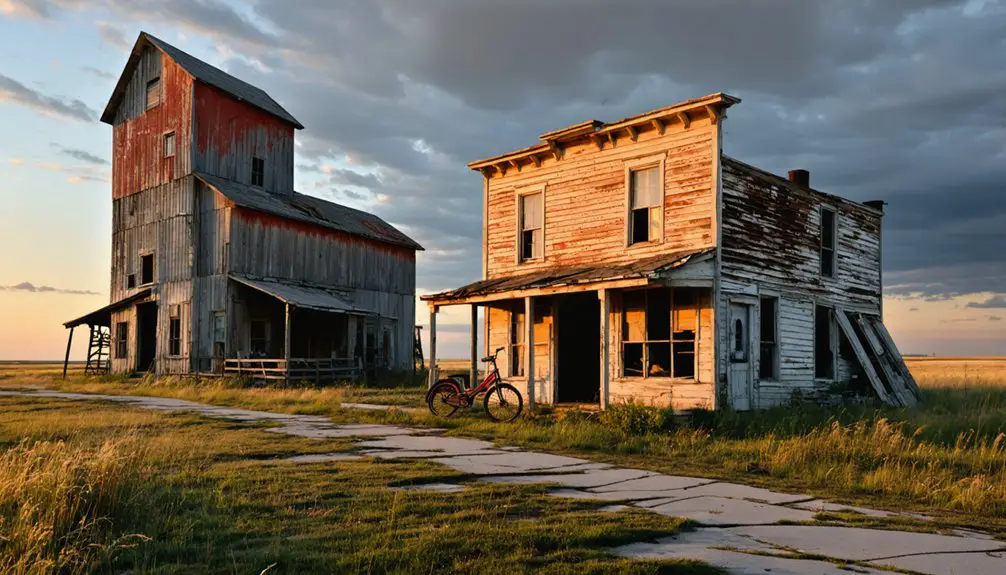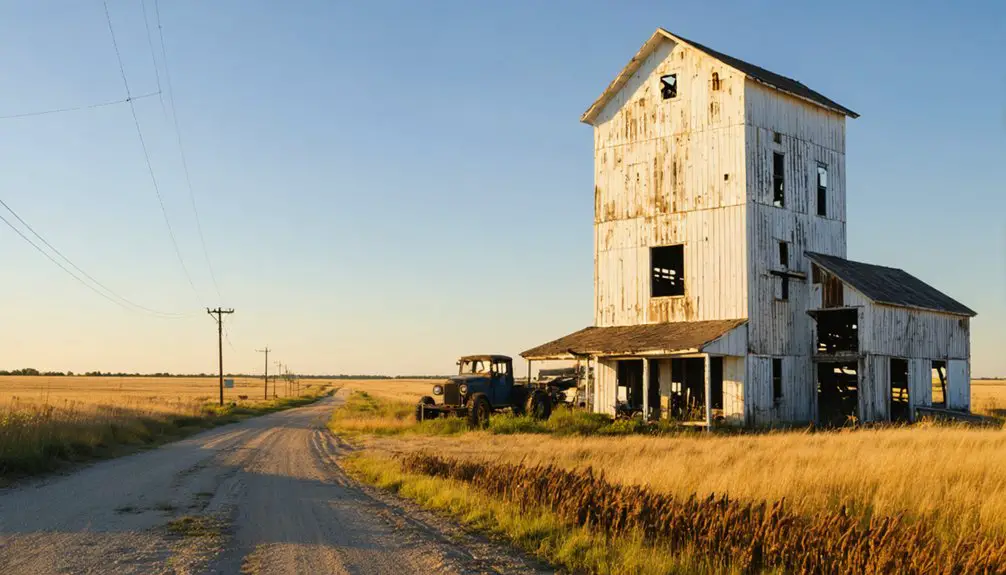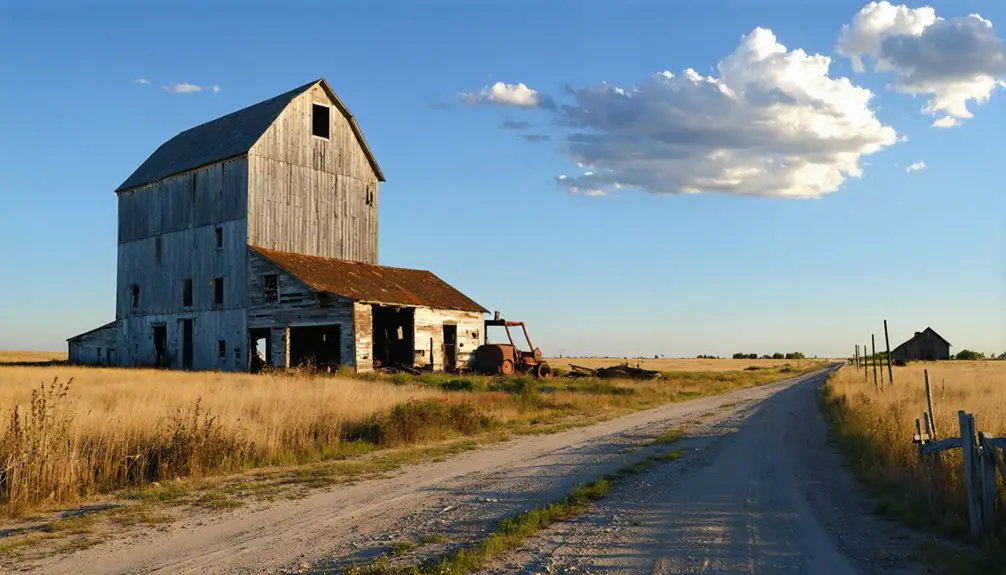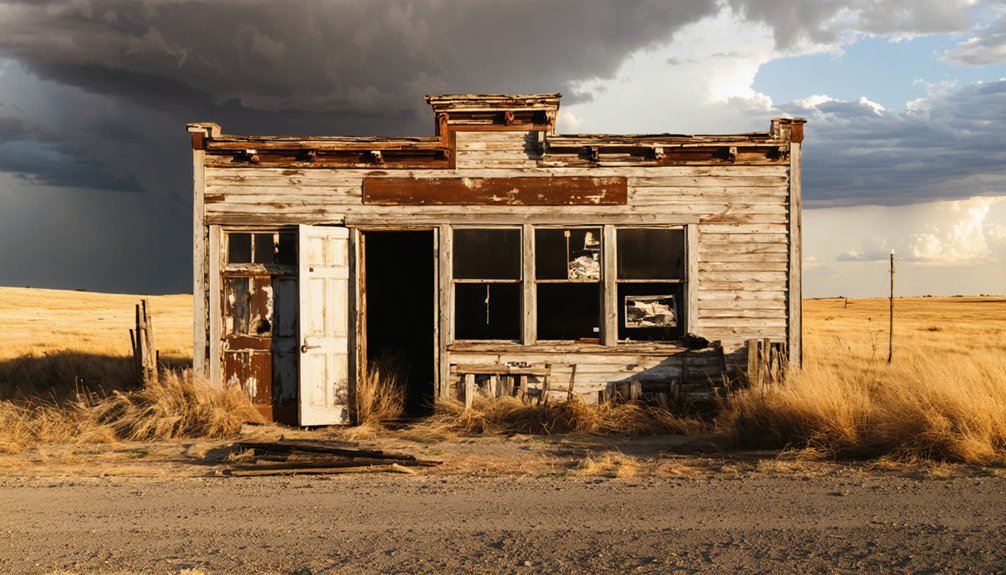
Planning a ghost town road trip to Melville, North Dakota means heading 9 miles south-southeast of Carrington to an unincorporated prairie settlement frozen in time. You’ll find open skies, railroad remnants, and the quiet solitude of a classic boom-and-bust town tied to railway history. Pack supplies before you leave Carrington, since Melville offers no restaurants or amenities. Summer’s your best bet for mild weather and long daylight hours. Stick around, and you’ll uncover the fascinating story behind this hauntingly compelling destination.
Key Takeaways
- Melville, North Dakota, is located 9 miles south-southeast of Carrington, accessible via U.S. Routes 52 and 281.
- Fuel up and stock supplies in Carrington, as Melville offers no restaurants, gas stations, or overnight accommodations.
- Pack offline maps, emergency supplies, layered clothing, waterproof boots, and a camera for documenting historical remnants.
- Visit during summer for mild temperatures, longer daylight hours, and safer road conditions across North Dakota’s open prairie.
- Combine your trip with nearby ghost towns like Oriska and Inkster for a fuller North Dakota railroad history road trip.
Essential Facts About Melville Before You Visit
Tucked into the heart of Foster County, North Dakota, Melville sits at the intersection of U.S. Routes 52 and 281, roughly 9 miles south-southeast of Carrington. You’ll find this unincorporated community resting at 1,538 feet elevation, governed directly by the county rather than any local municipal body.
It’s a place where local cuisine and community events aren’t the main draw — instead, raw history and open-road freedom pull travelers here. The Red River Valley and Western Railroad still cuts through the site, reminding you of Melville’s earlier boom years.
Originally named Newport after a Northern Pacific Railway treasurer, the town later honored landowner Melville D. Carrington.
Pack your Central Time Zone awareness, set your GPS to coordinates 47.3347°N, 99.0357°W, and prepare for genuine North Dakota solitude.
Why Melville Qualifies as a North Dakota Ghost Town
When you pull up to Melville, you’ll notice it lacks its own municipal government, making it an unincorporated community managed directly by Foster County — a defining trait of North Dakota ghost towns.
Its history tells a classic boom-and-bust story: the settlement originally thrived as “Newport,” named after a Northern Pacific Railway treasurer, before a name change to honor local landowner Melville D. Carrington signaled shifting fortunes.
You’re fundamentally visiting a place that railroads once built up and modern transport quietly left behind.
Unincorporated Community Status
Although Melville lacks its own local government, that absence tells a bigger story about why it earns ghost town status. Without local governance, you won’t find a town hall, elected officials, or independently managed community services here.
Foster County handles everything, which means Melville operates as an unincorporated community rather than a self-sustaining municipality.
For road trippers craving authentic ghost town experiences, that distinction matters. You’re not visiting a thriving settlement that simply grew quiet — you’re exploring a place that never maintained enough population or economic momentum to govern itself.
That reality gives Melville a raw, unfiltered character that incorporated towns can’t replicate. When you arrive, you’ll immediately sense the freedom that comes with wide-open spaces and minimal civic infrastructure surrounding you.
Historical Boom And Bust
Melville’s origins reveal a classic boom-and-bust arc that explains exactly why it earns ghost town status today. Originally named Newport after Northern Pacific Railway treasurer R. M. Newport, the settlement buzzed with railroad-driven energy.
Then the momentum shifted, the name changed to honor landowner Melville D. Carrington, and the crowd thinned.
You’ll find this pattern familiar across the American frontier:
- Railroad arrival sparked rapid settlement and commercial hope
- Name changes often signal shifting power and declining original ambitions
- Historical artifacts and local legends now replace the bustle that once defined the streets
That freedom-chasing spirit that built Melville ultimately moved on, leaving behind a quiet crossroads rich with story and surprisingly easy to reach on your own terms.
How to Get to Melville From Carrington
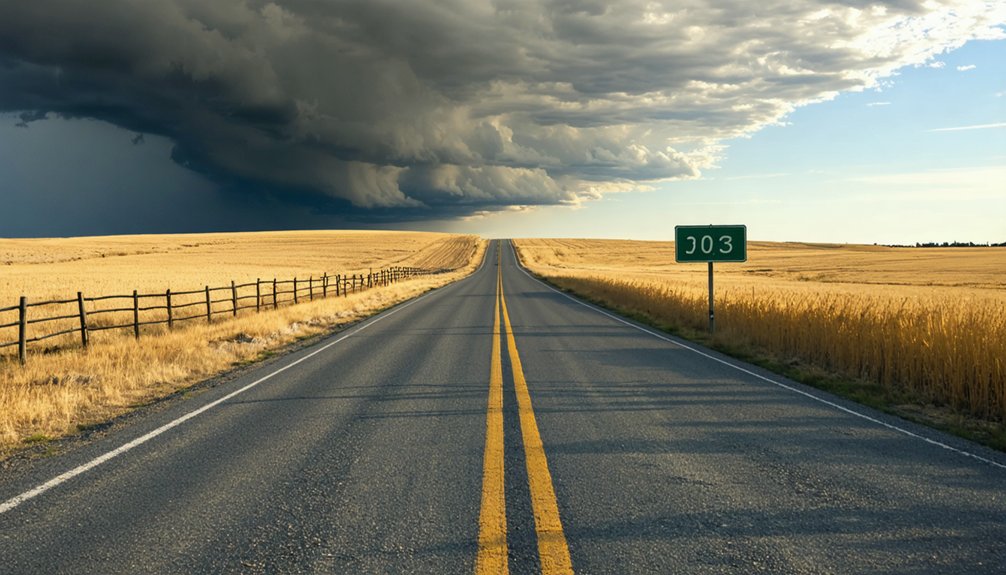
Since Melville sits just 9 miles south-southeast of Carrington, you’ll reach it quickly by heading out on U.S. Routes 52 and 281, which intersect directly at the community. The drive is straightforward, cutting through classic North Dakota prairie landscape that rewards anyone craving open-road freedom.
Before leaving Carrington, fuel up at local dining options downtown, since Melville offers no restaurants of its own. You’ll also want to scout nearby camping spots in the Carrington area, as the ghost town provides no overnight facilities.
The route follows flat, uncluttered roads, making navigation effortless.
Watch for the railroad crossing where the Red River Valley and Western Railroad passes through — it’s a quiet but telling reminder of Melville’s once-bustling past.
What to Pack for Your Melville Ghost Town Visit
When you head out to Melville, you’ll want to pack smart since this remote, unincorporated community offers no nearby stores to cover forgotten essentials. Bring a solid kit including a first aid supply, extra water, snacks, a camera, and a paper map since cell service along rural Foster County roads can be unreliable.
North Dakota’s central plains weather shifts fast, so layer your clothing with a moisture-wicking base, a wind-resistant mid-layer, and a waterproof outer shell to stay comfortable no matter what the sky throws at you.
Essential Gear and Supplies
Packing smart makes all the difference when you’re heading out to a remote, unincorporated community like Melville, sitting quietly along US 52 and 281 in central North Dakota. With no municipal services nearby, you’re on your own once you arrive. Bring enough supplies to explore historical architecture remnants and chase local legends without interruption.
- Navigation tools: Download offline maps since cell service stays unreliable at coordinates 47.3347°N, 99.0357°W
- Emergency kit: Pack water, snacks, a first-aid kit, and jumper cables for the open road
- Camera and notebook: Document what you discover—abandoned structures and regional stories deserve capturing
Freedom-seekers thrive when they’re self-sufficient. Carrington sits just 9 miles north if you need resupply, but arriving prepared keeps your adventure uninterrupted.
Weather-Ready Clothing Choices
Melville’s central North Dakota location means you’ll face the full mood swing of Midwestern weather, where summer afternoons bake at high elevation and early mornings bite with surprising chill. Layer strategically — breathable moisture-wicking shirts underneath a packable fleece jacket handle that temperature range efficiently.
Sturdy waterproof boots protect your feet during wildlife spotting along the roadside grasslands and wetlands surrounding the area. Tuck a wide-brimmed hat and UV-blocking sunglasses into your bag for open-sky exploration.
Rain gear is non-negotiable since prairie storms materialize fast. When you stop exploring abandoned sites and duck into Carrington for local cuisine, you’ll appreciate having a clean change of clothes ready.
Pack light, pack smart, and let your wardrobe match the wild freedom this landscape demands.
Best Time of Year to Visit Melville
Summer is the best time to visit Melville, North Dakota, since the long daylight hours and mild temperatures make exploring this quiet stretch of US 52 and 281 far more comfortable. You’ll appreciate the open skies and unhurried pace this central North Dakota community naturally offers.
Here’s what summer brings to your road trip experience:
- Wildlife sightings peak during warmer months, giving you real chances to spot prairie animals along the roadside.
- Local cuisine in nearby Carrington, just 9 miles north, becomes more accessible with farmer’s markets and seasonal eateries open.
- Daylight saving time extends your evening exploration hours considerably.
Avoid winter visits since harsh North Dakota conditions limit visibility and road safety, making ghost town exploration genuinely difficult and potentially dangerous.
What You’ll Actually Find When You Arrive in Melville
Once you’ve timed your visit and made the 9-mile drive south-southeast from Carrington along US 52 and 281, you’ll want to know exactly what’s waiting for you — and honesty matters here. Melville is genuinely sparse. You won’t find local cuisine options or community events dotting a calendar.
What you’ll find is the quiet intersection of two major U.S. routes, the Red River Valley and Western Railroad cutting through the landscape, and open sky stretching across central North Dakota at 1,538 feet elevation. It’s raw, unfiltered American geography.
The freedom here isn’t in amenities — it’s in the absence of them. Bring your own supplies from Carrington, keep your camera ready, and let the stillness of this unincorporated community speak for itself.
The Name Change That Reveals Melville’s Boom-and-Bust Past
Few ghost towns wear their history as plainly as Melville does — and the name itself tells the whole story. Originally called Newport, honoring Northern Pacific Railway treasurer R. M. Newport, the town rebranded around landowner Melville D. Carrington — a classic boom-and-bust signal worth noting.
When you dig into historical preservation efforts here, local legends emerge from that early railroad energy:
- Newport’s birth tied directly to railway money and expansion ambitions
- The name swap reflected shifting power from railroad interests to local landowners
- The bust followed as railroad importance faded and population drained away
You’re fundamentally standing at a crossroads where ambition once ran high. That name change isn’t just trivia — it’s a compressed biography of every forgotten American settlement chasing prosperity then quietly disappearing.
How the Railroad Built and Then Bypassed Melville
The name change from Newport to Melville hints at something bigger — the railroad didn’t just rename this town, it built it from scratch and then quietly walked away. Railroad history shaped nearly every structure, road, and ambition here.
The railroad didn’t just rename Melville — it built it from nothing, then walked away without looking back.
The Red River Valley and Western Railroad once made Melville a legitimate stop worth knowing, pulling freight, passengers, and economic energy through its center.
Then the priorities shifted. Modern transport bypassed smaller communities, and Melville felt that abandonment deeply. Community decline followed naturally — businesses closed, residents left, and the town’s pulse slowed to nearly nothing.
Today, the tracks still cut through, but they carry far less promise than they once did. You’re essentially visiting a monument to what rail expansion created and then casually left behind.
Other North Dakota Ghost Towns Worth Adding to Your Route
Melville isn’t the only ghost town worth chasing across North Dakota — Wikipedia lists 23 scattered throughout the state, each carrying its own story of boom, bust, and quiet abandonment.
String several together and you’ve got a road trip worth remembering.
When plotting your route, consider these stops:
- Oriska – a quiet remnant with railroad roots similar to Melville’s
- Inkster – sits near local dining options that fuel longer drives
- Horace – close enough to Fargo for nearby lodging without sacrificing that remote feel
You’re free to design the itinerary entirely on your own terms.
North Dakota’s open highways make connecting these forgotten places surprisingly easy, and the lack of crowds means you experience each site exactly as it deserves — in silence.
Frequently Asked Questions
Can I Legally Camp Overnight Near Melville’s Ghost Town Site?
Like frontier pioneers of old, you can explore wilderness camping near Melville, but you’ll need to check Foster County’s campground regulations first — they actively govern overnight stays in this unincorporated, remote North Dakota terrain.
Are There Any Local Guides Available for Ghost Town Tours?
You won’t find official tour guide availability in Melville, but you can explore its rich historical preservation independently! Trace the railroad’s legacy, follow US 52/281, and let the quiet landscape guide your own authentic ghost town adventure.
Is Cell Phone Coverage Reliable When Visiting Melville, North Dakota?
Don’t count on your cell service saving you here! In Melville’s remote, wide-open plains, signal strength can be as scarce as the population density—roughly 2 people per square mile—so you’ll want downloaded offline maps ready.
Are There Any Nearby Restaurants or Gas Stations Close to Melville?
You’ll find nearby services in Carrington, just 9 miles away. As you explore Melville’s ghost town architecture and historical preservation sites, stock up there on fuel and food before venturing into this remote, freedom-filled landscape.
Has Melville Ever Appeared in Any Films or Documentaries?
No confirmed film appearances or documented historical significance in cinema exist for Melville. You won’t find it on Hollywood’s radar, but its ancient ghost town vibes and crossroads mystique make it your perfect undiscovered documentary subject!
References
- https://en.wikipedia.org/wiki/Melville
- https://kids.kiddle.co/Melville
- https://places.us.com/north-dakota/melville
- https://northernsentry.com/2025/06/26/north-dakota-ghost-towns/