Santa Fe, Oklahoma was once a thriving frontier hub built on limestone quarrying and railroad trade — then the railway rerouted, and the town quietly surrendered to the prairie. Today, you’ll find deteriorated structures, scattered limestone fragments, and wide open land that feels raw and forgotten. Bring offline maps, sturdy boots, and extra water before you head out. Keep going to uncover everything you need to make this ghost town road trip worth the drive.
Key Takeaways
- Santa Fe, Oklahoma, a former frontier hub established in 1865, offers raw, authentic ghost town exploration with limestone remnants and open prairie landscapes.
- Verify routes using county maps, as rural roads near Santa Fe often lack signage, proper maintenance, and reliable cell service.
- Visit strictly during daylight hours, allocating enough time to explore and photograph deteriorated structures and historic limestone fragments safely.
- Bring extra water, offline maps, sturdy boots, and a charged phone to handle unpredictable terrain and limited nearby amenities.
- Respect the site by avoiding removing artifacts, minimizing environmental impact, and honoring its frontier railroad and quarrying heritage.
What Made Santa Fe, Oklahoma a Ghost Town?
When you stand at the edge of what was once Santa Fe, Oklahoma, it’s hard to imagine more than 200 families carving out a life here — quarrying limestone, loading railroad cars, and building something they believed would last.
Then the railway shifted its route, and commerce followed the tracks elsewhere. Businesses shuttered. Families packed up.
Local legends say the town didn’t die overnight — it just slowly exhaled.
What began as a military outpost established in 1865 quietly unraveled into abandonment, leaving behind scattered remnants that preservation efforts have struggled to document before nature reclaims them entirely.
That boom-and-bust arc isn’t unique to Santa Fe, but standing where it happened makes the pattern feel personal, urgent, and worth understanding before the last evidence disappears.
The Military and Railroad History Behind the Town’s Rise and Fall
Before a single railroad spike was driven into Oklahoma soil, Kit Carson planted the seed of Santa Fe’s future in 1865 when he established the only military post on the Santa Fe Trail within the territory. Those military origins gave the settlement its backbone, attracting families, commerce, and ambition to the frontier.
When the Atchison, Topeka and Santa Fe Railway arrived, the town surged. Limestone quarrying, agricultural trade, and railroad commerce pushed the population past 200 families. You can almost hear the hammers and wagon wheels echoing across that open land.
Then the railway rerouted. Transportation decline followed swiftly and mercilessly. Without the railroad’s pulse, businesses shuttered, families scattered, and Santa Fe quietly surrendered to the prairie. What once thrived now sleeps beneath Oklahoma’s wide sky.
Santa Fe Trail Stops Worth Adding to Your Route
Oklahoma’s stretch of the Santa Fe Trail holds more than one worthwhile stop, and you’d be shortchanging the trip by skipping them. The National Park Service’s Santa Fe National Historic Trail page maps out Oklahoma’s heritage points with access details and site images to help you plan your route.
Stack these stops alongside your ghost town visit and you’ll leave with a much richer picture of the trade and migration corridor that once defined this region.
Key Oklahoma Trail Sites
Though Santa Fe, Oklahoma anchors your ghost town itinerary, the broader Santa Fe Trail corridor running through the state offers heritage stops that deepen the story considerably. You’ll find echoes of traders, soldiers, and settlers at multiple points where cultural preservation efforts have kept fading history visible despite relentless urban decay and rural abandonment.
The National Park Service maintains an Oklahoma Santa Fe National Historic Trail page listing verified site locations, access details, and interpretive resources. Use it before you leave home. Each stop builds context, showing how migration and commerce carved this landscape long before railroads rerouted everything.
You’re not just visiting ruins; you’re tracing a decision corridor that shaped the American Southwest. Bring your maps, charge your camera, and move through the trail deliberately.
Planning Your Trail Stops
Stretching from Missouri to New Mexico, the Santa Fe Trail left its clearest Oklahoma impressions at a handful of sites worth folding into your route. Beyond Santa Fe’s ghost town silence, modern preservation efforts have kept the broader trail’s story legible across the landscape.
Skip the urban legends and focus on what’s actually documented:
- Point of Rocks – a sandstone landmark traders navigated by for decades
- Autograph Rock – where travelers carved names that still survive today
- Camp Nichols – Kit Carson’s 1865 military outpost, the trail’s only Oklahoma fort
- Cimarron Cutoff corridor – the drier, faster route carrying merchants west
Pull your maps before you go, confirm road conditions county by county, and let the landscape tell you what history books only sketch.
What Will You Actually Find at the Santa Fe, Oklahoma Site Today?
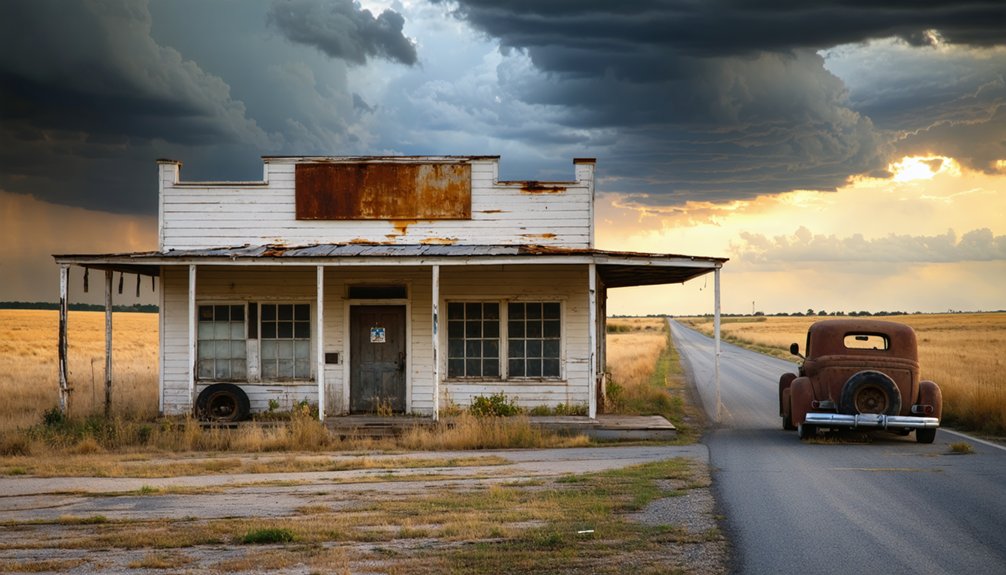
When you pull off the rural road and step out onto the quiet Oklahoma earth, you’ll find yourself standing in what feels like a conversation between past and present—except one side has gone mostly silent. Don’t expect polished signage or curated walkways.
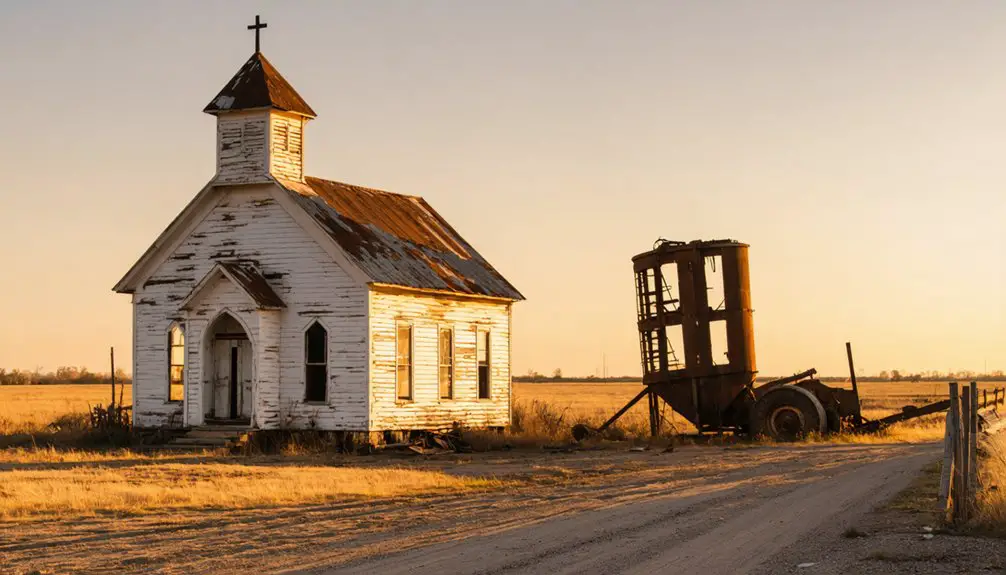
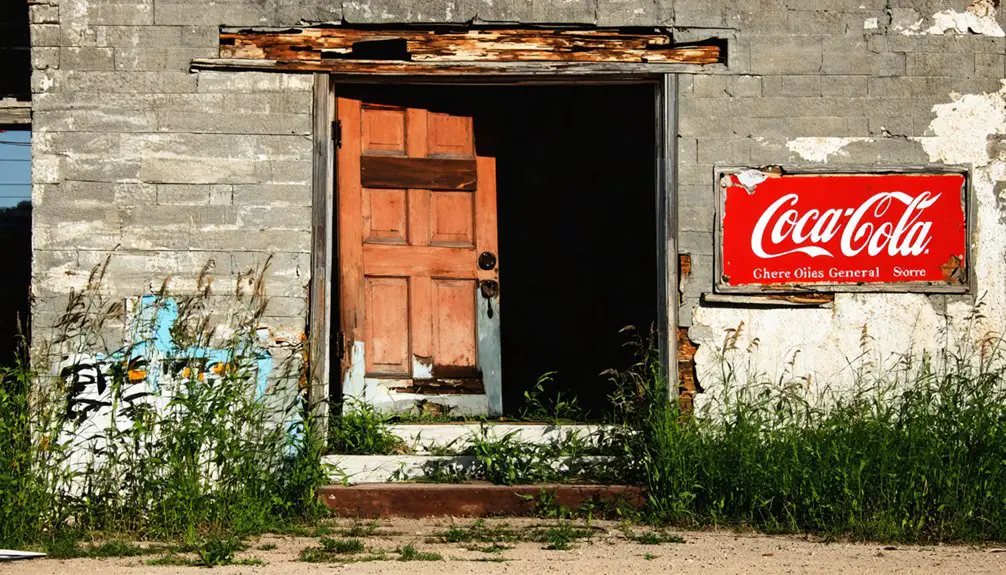
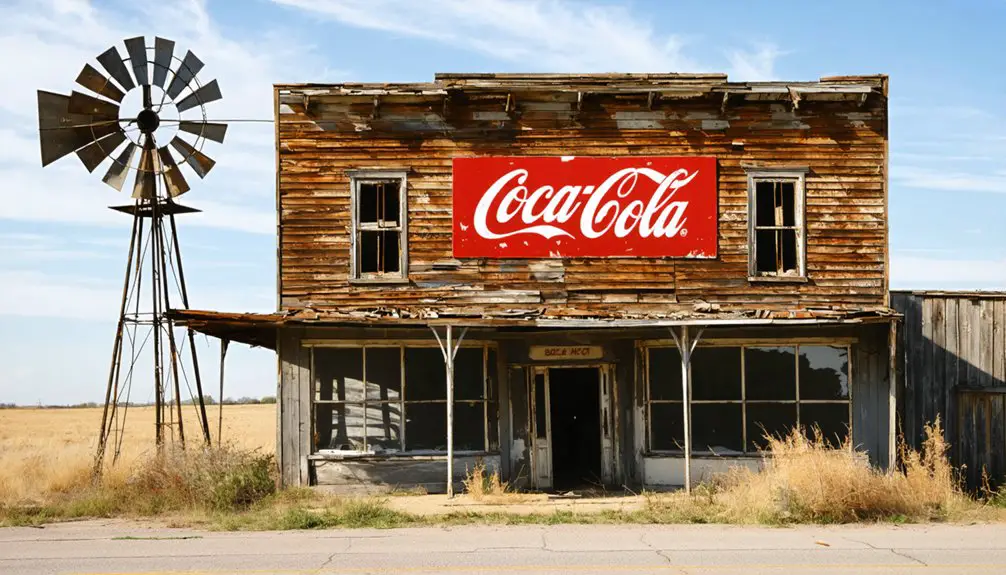
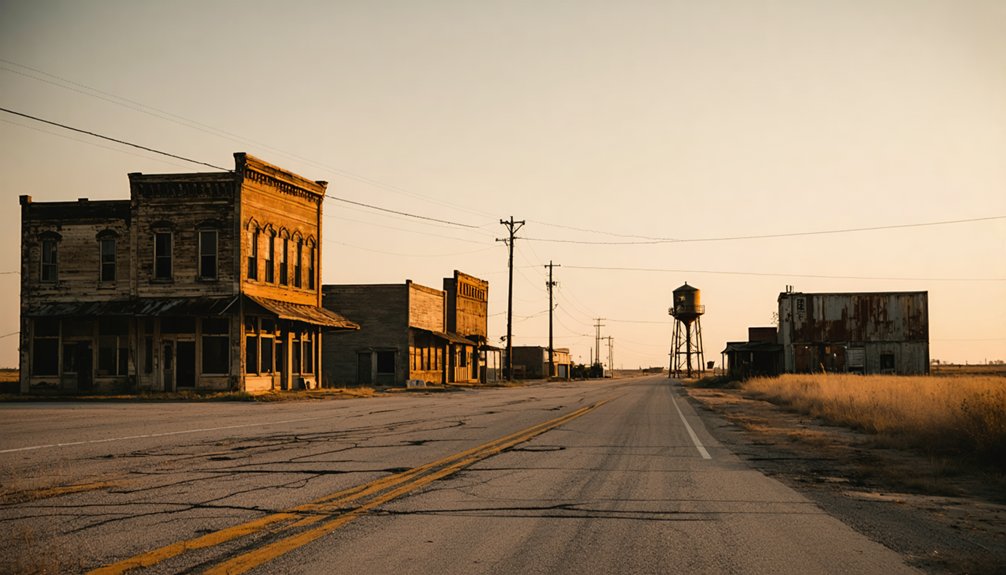
What remains are deteriorated structures, limestone fragments, and open land that rewards careful eyes. Unlike destinations fueled by urban legends or paranormal sightings, Santa Fe, Oklahoma offers something quieter—authentic historical weight.
You’ll trace where 200 families once built lives around rail commerce and quarrying. The railroad moved on, and the town followed into stillness.
Bring a camera, a detailed map, and your own sense of discovery. The freedom of this place lies precisely in its rawness.
How to Plan Your Santa Fe, Oklahoma Ghost Town Drive
Before you set out, verify your route using county-level maps, since rural ghost-town roads often lack clear signage or maintained access points.
You’ll want to travel during daylight hours so you can safely read any historical markers and photograph what remains of the site.
Strengthen your itinerary by pairing the Santa Fe, Oklahoma stop with nearby Santa Fe National Historic Trail heritage points, which the National Park Service documents with access details and site locations.
Route And Access Planning
Planning a drive to Santa Fe, Oklahoma means trading well-marked highways for quieter county roads that cut through rolling prairie and limestone-dotted terrain. Cultural preservation rarely happens along interstates, and modern tourism hasn’t reached this stretch yet, which is exactly why it’s worth the detour.
Before you roll out, prepare with these essentials:
- Verify county road conditions through local Oklahoma transportation sources before departure
- Download offline maps since cell service thins considerably across rural Cimarron territory
- Plan fuel stops in the nearest active towns rather than counting on anything near the site
- Travel during daylight hours to safely read historical markers and photograph remaining remnants
The freedom of this drive comes from its rawness. You’re orienteering history on your own terms, guided by curiosity rather than a tourist brochure.
Nearby Heritage Stops
Santa Fe, Oklahoma doesn’t have to be your only stop — the surrounding region holds enough trail history to fill an entire weekend. The National Park Service maintains an Oklahoma Santa Fe National Historic Trail page listing multiple access points, each carrying its own cultural significance rooted in commerce, migration, and survival.
You’ll find trail markers where wagon ruts still ghost the earth, quiet reminders that historical preservation isn’t just about buildings — it’s about land memory. Layer in Oklahoma Historical Society resources to understand how railroad routes shaped and erased entire communities.
Every stop adds texture to the larger story you’re already chasing. Treat the region as one connected corridor rather than isolated destinations, and the drive transforms into something genuinely meaningful.
Practical Safety Tips for Oklahoma Ghost Town Visits
Wandering through a ghost town like Santa Fe, Oklahoma carries a quiet thrill, but you’ll want to come prepared before you step onto that crumbling ground. Urban exploration rewards the curious, yet safety precautions keep the adventure from turning grim.
- Wear sturdy boots to protect against broken limestone, rusty metal, and uneven terrain hiding beneath overgrowth.
- Travel with a companion so someone can respond quickly if footing gives way unexpectedly.
- Carry a charged phone, paper map, and extra water since rural cell coverage disappears without warning.
- Visit strictly during daylight hours to read the land clearly and photograph remnants accurately.
These simple habits protect your freedom to roam while honoring the fragile, forgotten bones of a town that once hummed with railroad commerce and frontier life.
Frequently Asked Questions
Are There Any Guided Tours Available for Santa Fe, Oklahoma?
You won’t find formal guided tours, but you’ll uncover historical preservation efforts and local legends through self-guided exploration. Bring maps, embrace the open road, and let Santa Fe, Oklahoma’s haunting frontier past speak directly to you.
What Is the Best Time of Year to Visit?
Spring claims over 60% of heritage trail visits—and it’s your sweet spot. You’ll find seasonal weather mild and travel considerations minimal, letting you freely wander Santa Fe’s forgotten landscape bathed in golden, nostalgic light.
Is Photography Permitted at the Ghost Town Site?
You’ll likely find no formal photography rules or visitor restrictions here — it’s open land steeped in forgotten history. Capture every weathered detail freely, letting your lens honor the nostalgic echoes of lives once lived.
Are There Admission Fees or Permits Required to Visit?
No fees fetter your freedom here! You’ll find no permits required to visit this hauntingly historic site. Historical preservation remains minimal, visitor amenities scarcer still, so you’re free to roam, explore, and relive forgotten frontier days independently.
Can Visitors Bring Children or Pets to the Site?
You can bring children and pets to this open rural site. Family activities here feel wonderfully free, and pet-friendly policies aren’t restricted, but keep everyone close amid uneven terrain and weathered remnants of forgotten frontier days.
References
- https://www.rome2rio.com/s/Santa-Fe-NM-USA/Oklahoma
- https://www.okhistory.org/publications/enc/entry?entry=GH002
- https://www.ghosttowns.com/states/ok/ok.html
- https://www.aa.com/en-us/flights-from-santa-fe-1-to-oklahoma-city
- https://www.nps.gov/safe/planyourvisit/oklahoma.htm
- https://www.nps.gov/articles/santafetrail.htm
- https://www.kaypratt.com/autwine-ghost-towns-of-oklahoma/
- https://wanderlog.com/drive/between/58178/58232/santa-fe-to-oklahoma-city-drive
- https://www.okhistory.org/publications/enc/entry?entry=SA020