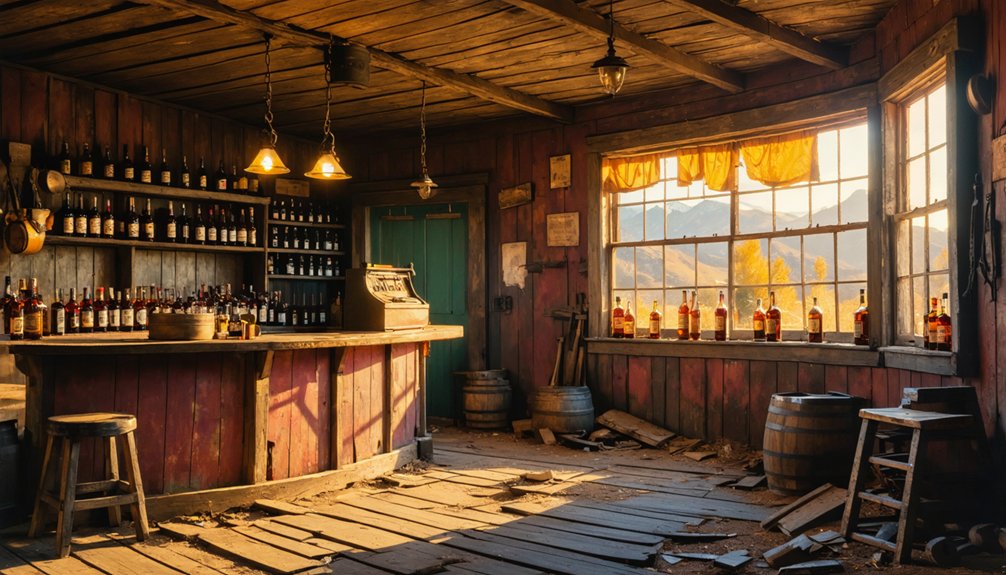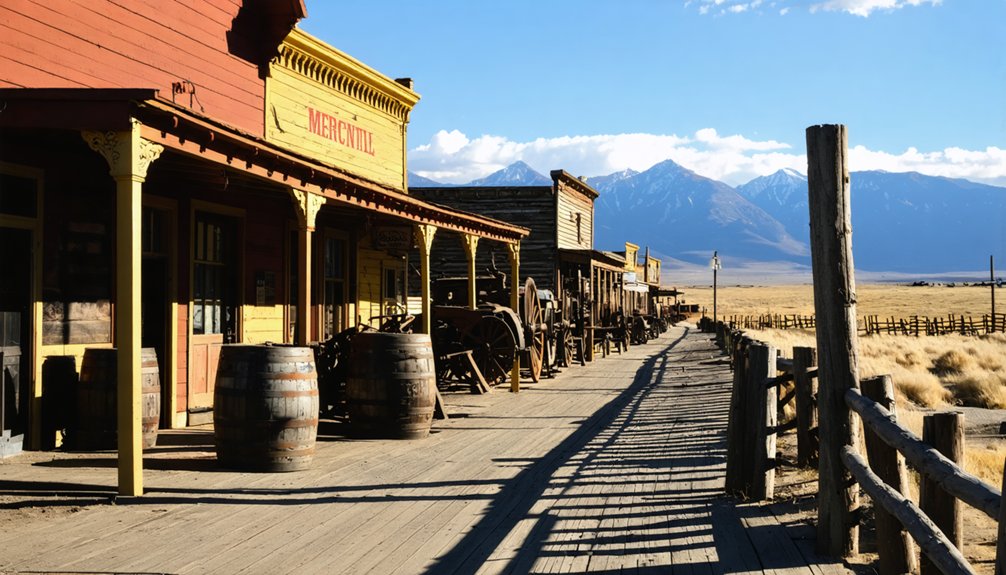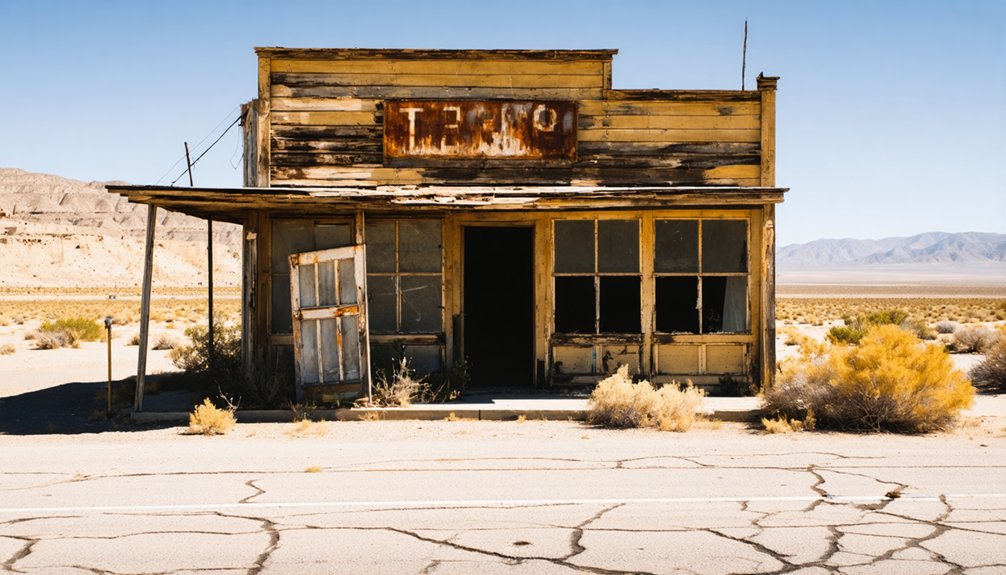
Siberia, California is one of the Mojave Desert’s most thoroughly erased ghost towns — a former Santa Fe Railroad water stop that briefly revived during Route 66’s heyday before Interstate 40 wiped it from the map. You’ll find crumbling walls, graffiti-marked ruins, and pure desert silence waiting for you off the Ludlow exit. Pair it with nearby Bagdad and Ludlow for a rewarding desert loop, and there’s far more to this forgotten town than first meets the eye.
Key Takeaways
- Siberia is located along historic Route 66 in San Bernardino County; access it via the Ludlow exit off I-40, heading west.
- Visit between October and April to avoid dangerous triple-digit summer heat; mornings offer cooler temperatures and better photography lighting.
- Bring at least one gallon of water per person, sun protection, sturdy shoes, and offline GPS navigation due to unreliable cell service.
- Combine Siberia with nearby ghost towns Bagdad and Ludlow, plus Roy’s Motel in Amboy, for a full Route 66 desert experience.
- Siberia’s crumbling stone walls and roofless structures offer a raw, unpreserved glimpse into railroad and Route 66 roadside history.
What Is Siberia, California: and Why Visit?
Tucked along a remote stretch of historic Route 66 in California’s Mojave Desert, Siberia is a ghost town that’s barely a ghost — just scattered crumbling walls and desert silence where a railroad water stop and roadside community once stood.
Born in 1883 as a Santa Fe Railroad siding, it later drew Route 66 travelers through cafes and tourist camps before fading into obscurity.
From railroad siding to roadside refuge, Siberia quietly lived many lives before the desert reclaimed it.
Its cultural impact is subtle but real — Siberia represents that overlooked overlap between railroad expansion and America’s open-road era.
Ghost town legends don’t require grand ruins, and Siberia proves it. You won’t find preserved buildings or interpretive signs here.
What you’ll find is raw desert history, an honest sense of place, and the freedom to stand somewhere most people speed right past.
How Siberia Went From Railroad Stop to Ghost Town
Siberia’s story starts in 1883, when the Santa Fe Railroad established it as a water stop and rail siding along its Needles-to-Barstow line.
When Route 66 came through, the town caught a second wind, with cafes and tourist camps serving desert road-trippers through the 1930s and 1940s.
The opening of Interstate 40 in 1973 bypassed Siberia entirely, cutting off traffic and sealing the town’s fate as a ghost.
Railroad Origins Begin
Before Siberia became a ghost town, it served a practical purpose: keeping Santa Fe Railroad trains moving through the Mojave Desert. Railroad expansion into California’s desert landscape demanded water stops, and Siberia delivered exactly that. Founded around 1883, it gave crews and locomotives what they needed to push forward through one of America’s most unforgiving stretches of terrain.
Here’s what Siberia offered during its railroad years:
- Water and fuel resupply for steam locomotives crossing the Mojave
- A rail siding that allowed trains to pass each other between Bagdad and Ludlow
- A telegraph station keeping rail communications connected across the desert
You’re looking at a place born purely from necessity — no glamour, no tourism, just raw infrastructure carved into the sand.
Route 66 Era
When Route 66 cut through the Mojave in the 1920s and 1930s, Siberia got a second life. The same desert landscape that once supported railroad history now drew road-trippers hungry for fuel, food, and a cool drink. Cafes and tourist camps briefly brought new energy to the site, layering highway culture over the old railroad bones.
But that revival didn’t last. When Interstate 40 opened in 1973, it bypassed Siberia entirely, cutting off the trickle of travelers keeping the place alive. Some accounts suggest Siberia had already faded well before that, losing momentum as early as the 1940s.
Either way, the town didn’t survive the modern era. By 2001, nearly everything was gone, leaving only crumbling walls and silence behind.
Interstate 40 Ends It
The opening of Interstate 40 in 1973 dealt Siberia its final blow. Travelers no longer needed Route 66, and Siberia lost the traffic that had kept it alive. By 2001, virtually nothing remained standing.
The cultural significance of this moment is hard to overstate — an entire desert community erased by a highway decision made hundreds of miles away. Preservation challenges proved insurmountable here, leaving only scattered rubble.
When you visit today, keep these realities in mind:
- Interstate 40 bypassed dozens of Mojave communities, not just Siberia
- No preservation effort ever protected the remaining structures
- Crumbling cement walls were all that survived before those disappeared too
You’re not visiting a relic — you’re standing where one used to be.
What You’ll Actually Find at the Siberia Townsite Today
When you arrive at the Siberia townsite, don’t expect a preserved ghost town — you’ll find only a few crumbling stone and cement block walls, the roofless remnants of what may have once been a service station or café.
The site reads more like a trace landscape than a destination, with graffiti-marked ruins slowly surrendering to the Mojave.
To make the most of the drive, pair Siberia with nearby Bagdad and Ludlow for a fuller picture of Route 66’s vanished desert corridor.
Crumbling Walls and Ruins
Stepping out at the Siberia townsite, you’ll find far less than the name “ghost town” might suggest. These desert ruins won’t reward you with dramatic abandoned relics, but they do offer raw, unfiltered honesty about how completely time erases a place.
What little survives includes:
- Crumbling stone and cement block walls, roofless and tagged with graffiti
- Remnants of former structures that likely served as a service station or café
- Scattered foundation traces barely distinguishable from the surrounding Mojave terrain
A Trace Desert Landscape
Beyond those few crumbling walls, Siberia offers something harder to photograph but worth understanding before you make the drive: almost nothing survives. By 2001, the townsite had been stripped clean, leaving desert flora to reclaim whatever the railroad and highway once shaped here.
You won’t find abandoned signage marking a former café or water stop. You won’t find preserved structures or interpretive plaques. What you’ll find is open Mojave terrain, wind, silence, and a faint sense that something once existed here.
That’s the honest reality of a trace landscape. For travelers who value raw, unmediated history over curated experience, Siberia still delivers. You’re standing on ground where Route 66 and the Santa Fe Railroad once intersected, and that context belongs entirely to your imagination.
Pairing With Nearby Ghost Towns
Siberia makes the most sense as one stop on a longer desert loop rather than a standalone destination. Pair it with nearby ghost towns to feel the full weight of Route 66’s cultural influences and the modern developments that erased these communities from the map.
Build your loop around three stops:
- Siberia – crumbling walls and railroad history along the original unpaved alignment
- Bagdad – another vanished rail and highway stop just miles west, equally stripped by time
- Ludlow – a partial survivor with fuel and context for what these desert towns once supported
Together, they tell a connected story. You’re not just visiting ruins — you’re tracing the arc of a corridor that thrived, got bypassed, and quietly disappeared.
How to Get to Siberia on Historic Route 66
Tucked along the historic Route 66 corridor in San Bernardino County, the ghost town of Siberia sits between Bagdad and Ludlow in California’s Mojave Desert, near coordinates 34.62667°N, 115.98583°W. To reach it, you’ll follow the old Route 66 alignment, which runs parallel to Interstate 40.
Take the Ludlow exit off I-40 and head west along the historic road. You’ll pass hardy desert flora — creosote, Joshua trees, and scrubby brush that’s outlasted every business that once operated here.
Local legends tied to the railroad era give the drive extra weight. The ZIP code is 92357, and area codes 442 and 760 serve the region.
There’s no signage welcoming you, so watch your coordinates and keep your fuel tank full before leaving Ludlow.
Best Time to Visit Siberia, California
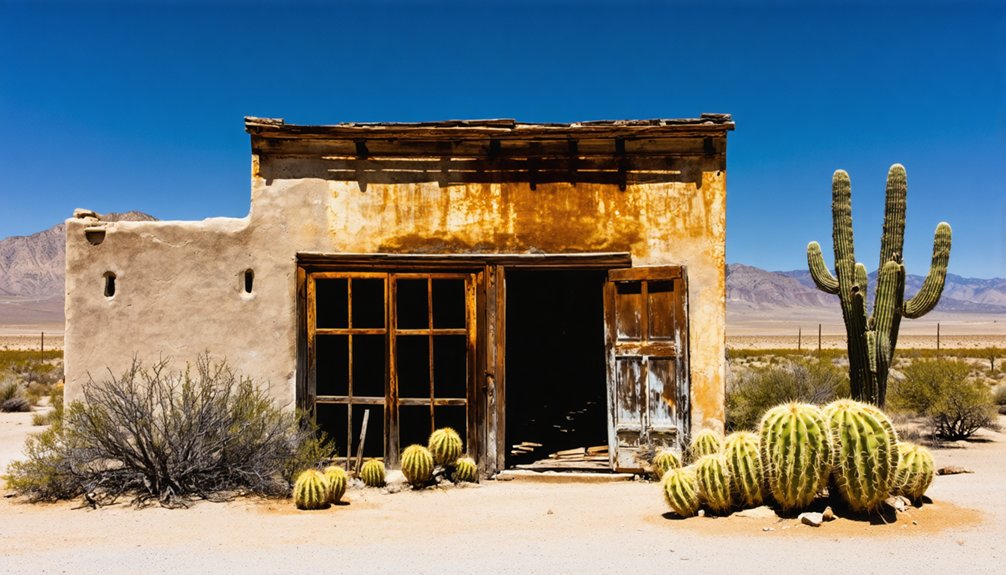
Because the Mojave Desert is unforgiving in summer, you’ll want to plan your visit to Siberia between October and April, when daytime temperatures are tolerable and the desert light flatters the sparse ruins. This window gives you the freedom to linger, explore local legends tied to the old railroad era, and photograph what little preservation efforts have left behind.
Plan your visit between October and April, when tolerable temperatures and flattering desert light make Siberia worth the detour.
Pack smart for any desert season:
- Water and fuel – Ludlow is your nearest reliable stop
- Morning arrival – cooler temps and better photography light
- Layered clothing – desert nights drop fast even in mild months
Avoid July and August entirely. Triple-digit heat turns a brief roadside stop into a dangerous situation, and no ghost town ruin is worth that risk.
What to Bring for a Siberia, California Desert Road Trip
Packing for Siberia means preparing for a place that offers nothing once you arrive. You’re heading into raw Mojave Desert, so bring more water than you think you need — at least a gallon per person. Fuel up in Ludlow before driving out, because no services exist along this stretch of historic Route 66.
Wear sturdy shoes for walking uneven terrain among crumbling ruins and desert flora like creosote and brittlebush. Pack sun protection, a hat, and layers for temperature swings. Bring a camera to document any historical artifacts still clinging to the site — weathered walls disappear quickly in this climate.
A paper map or offline GPS helps since cell service is unreliable. Travel light, stay aware of the heat, and move freely.
Pair Siberia With Bagdad and Ludlow for a Desert Loop
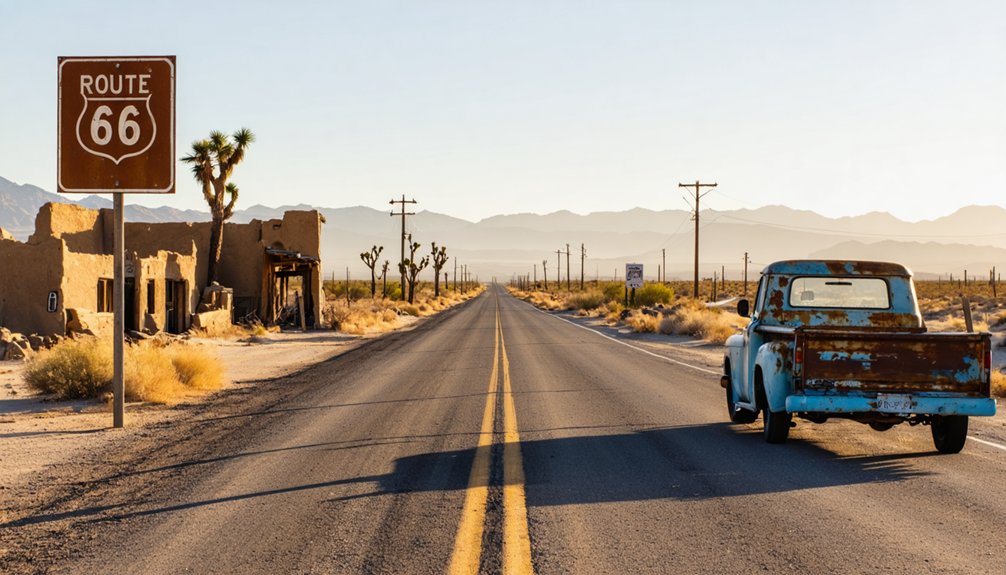
Siberia makes the most sense as one stop on a longer desert loop rather than a standalone destination. Pair it with Bagdad and Ludlow to build a Route 66 run rich in cultural significance and local legends.
Each stop adds a different layer to the same desert story:
- Siberia – a railroad water stop that briefly became a Route 66 roadside community, now reduced to crumbling walls
- Bagdad – another vanished town carrying local legends of extreme heat and isolation, famously linked to the film *Bagdad Café*
- Ludlow – a still-visible desert crossroads with deeper Route 66 infrastructure history
Together, these three sites give you a connected narrative across the same stretch of Mojave highway, making the drive genuinely worthwhile.
More Route 66 Ghost Towns to Pair With Siberia
The Bagdad-Siberia-Ludlow loop is a strong start, but the Route 66 desert corridor holds more ghost towns worth folding into your itinerary. Amboy sits just west of Bagdad, offering Roy’s Motel and Café as a rare surviving landmark amid crumbling surroundings.
Danby and Essex give you deeper desert solitude, where railroad relics and faded signage hint at lives once lived along the line. Each stop carries its own local legends — stories of travelers stranded, rail crews sheltering from heat, and small communities that vanished almost overnight.
You can string these towns together across a single long day or spread them over a weekend. Either way, you’re tracing a corridor that rewards curiosity, patience, and a full tank of gas.
Frequently Asked Questions
Is There Any Cell Service or GPS Signal Near the Siberia Townsite?
Even telegraph operators knew dead zones exist — you’ll face cell service challenges in Siberia’s remote Mojave stretch. However, GPS reliability holds steady, so download offline maps before you ride into freedom’s forgotten frontier.
Are There Any Fees or Permits Required to Visit Siberia, California?
You don’t need fees or permits to explore Siberia’s historical preservation site. It’s one of those free local attractions where you’re roaming open desert, uncovering Route 66’s raw, untamed past on your own terms.
Is the Siberia Townsite Located on Private or Public Land?
The land ownership isn’t clearly documented, but you’re chasing historical significance and local legends along free-spirited Route 66. Treat it as a respectful roadside stop and verify current access status before you venture out.
What ZIP Code and Area Code Cover the Siberia, California Area?
Siberia falls under ZIP code 92357 and area codes 442 and 760. You’re reaching into historical landmarks and local legends when you dial in — two area codes covering one hauntingly forgotten desert ghost town.
Has Siberia, California Ever Appeared in Films or Television Productions?
The available records don’t confirm Siberia’s appearance in films or television. You’ll find its appeal rooted in historic landmarks and local legends that fuel the free-spirited Route 66 ghost-town experience rather than Hollywood fame.
References
- https://en.wikipedia.org/wiki/Siberia
- https://www.youtube.com/watch?v=Cx7M42w2sJQ
- https://www.youtube.com/watch?v=VBXkSWc-es4
- https://en.wikipedia.org/wiki/List_of_ghost_towns_in_California
- https://www.theroadwanderer.net/RT66ludlow.htm
- https://medium.com/the-photolalia/siberia-california-88e33ada1f8a
- http://cali49.com/mojave/2015/10/20/rt-66-siberia-cal
- https://kids.kiddle.co/Siberia
- https://www.islands.com/1977075/bagdad-siberia-california-ruins-route-66-abandoned-ghost-towns/
- https://www.wikiwand.com/en/map/Siberia