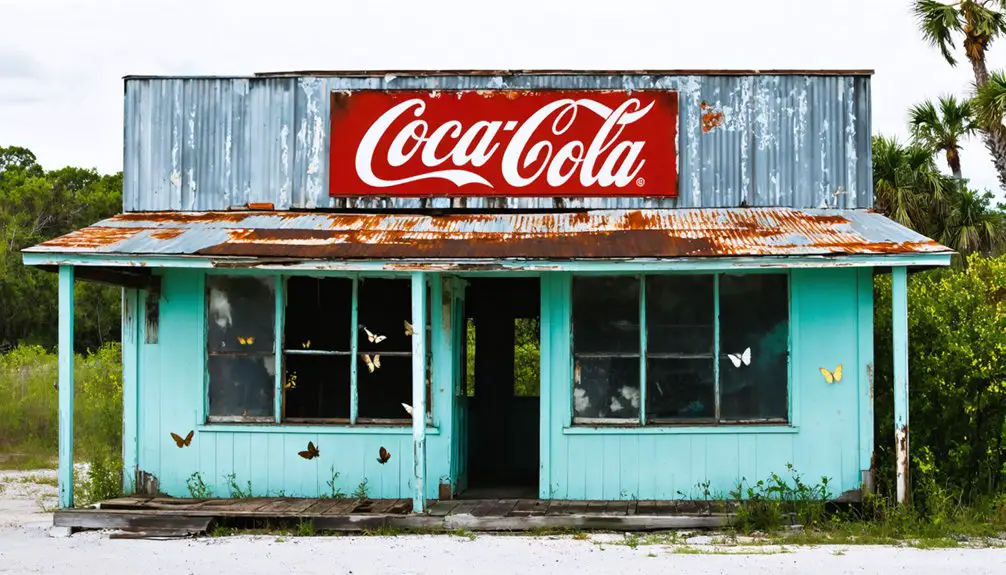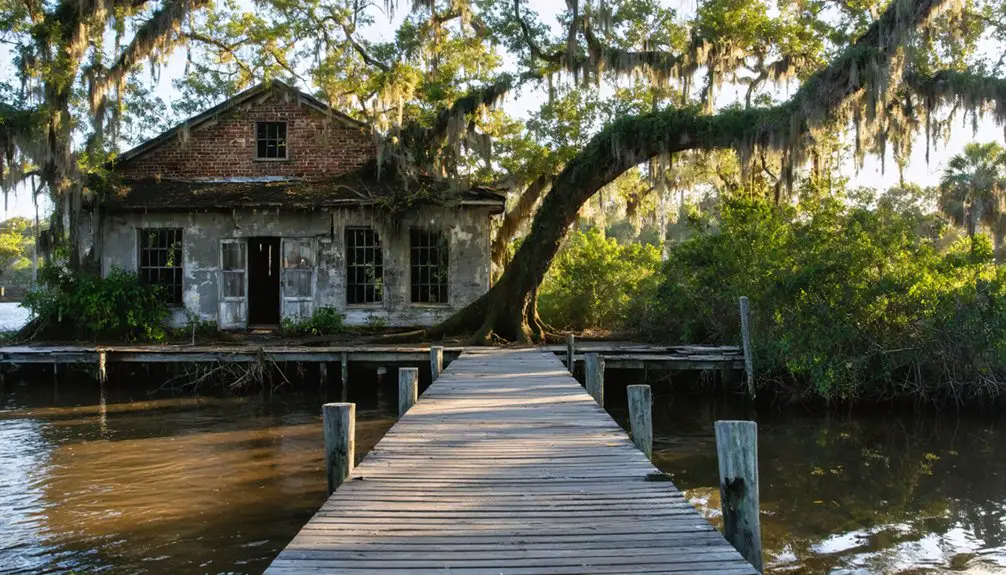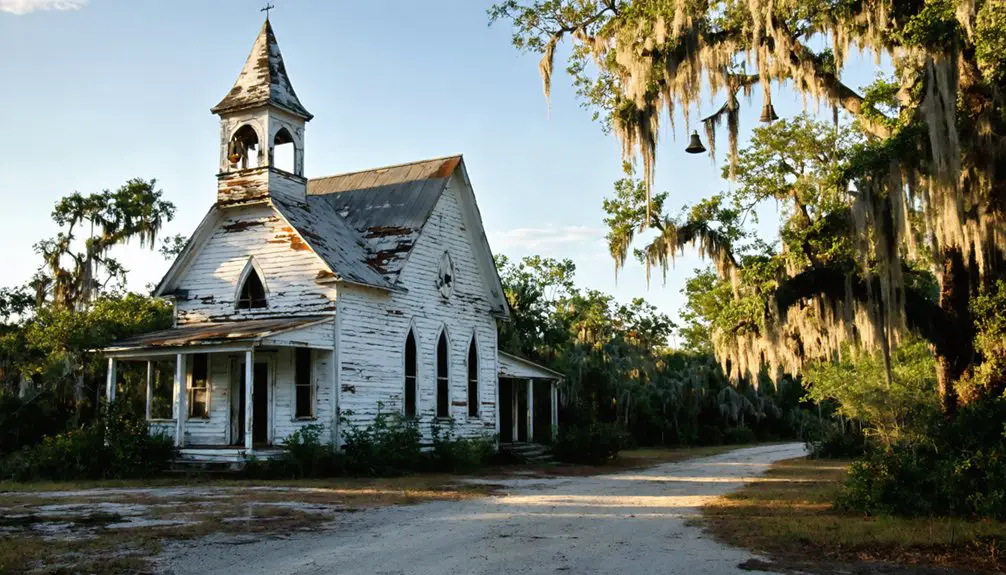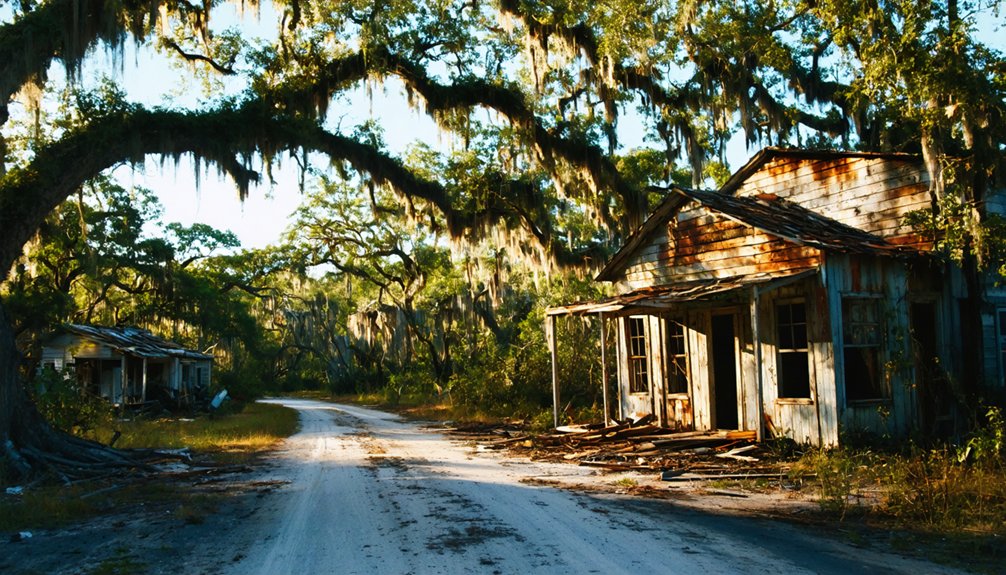
Planning a ghost town road trip to Sherman, Florida means heading to the intersection of SR 710 and Sherman Road, about 3 miles south of Okeechobee. You’ll find a quiet, overgrown landscape where a once-booming sawmill town completely vanished after its timber ran out in 1925. The only remnant standing is a lone railroad signal box. Visit during winter weekdays for the best experience—and there’s much more to uncover about Sherman’s fascinating, forgotten story.
Key Takeaways
- Sherman, Florida, a former sawmill town in Okeechobee County, operated briefly from 1924 to 1925 before timber depletion caused its complete abandonment.
- The only remaining landmark is a railroad signal box near the intersection of SR 710 and Sherman Road, about 3 miles south of Okeechobee.
- The site is accessible via 2WD vehicles, with no guided tours, interpretive signs, or preserved structures remaining.
- Visit during Florida’s mild winter months on weekdays, and shoot during golden hour for the best photography results.
- Combine Sherman with nearby ghost towns like Conant or Markham, and finish in Okeechobee to explore local timber history.
What Was Sherman, Florida?
Before the swamps and scrubland of Okeechobee County swallowed it whole, Sherman, Florida was a thriving sawmill town that once outpaced the city of Okeechobee itself in population. The W.C. Sherman Lumber Company drove that growth, operating its mill between 1924 and 1925 and pulling workers into a self-contained community complete with a large commissary and worker housing.
You won’t find urban legends or dramatic folklore stories attached to Sherman’s decline — just the straightforward reality of a resource extraction economy that burned bright and vanished fast. When the timber ran out, so did the people.
What once buzzed with industry quietly disappeared, leaving behind rural homes and a railroad signal box as the only clues that Sherman ever existed at all.
Sherman’s Rise as a Lumber Boomtown
When the logging industry surged through Okeechobee County in the early 1900s, Sherman didn’t just participate in the boom — it became the boom. The W.C.. Sherman Lumber Company sawmill operated from 1924 to 1925, driving rapid urban development that outpaced even the city of Okeechobee itself in population.
The ecological impact was significant — forests fell fast to feed the mill’s demand. What rose in their place was a self-contained community built around extraction:
- A large commissary supplying workers with daily necessities
- Dozens of homes housing families tied to the mill’s operation
- A railroad connection that kept lumber moving and people employed
When the timber ran out, so did Sherman’s reason for existing. That’s the story you’re chasing on this road trip.
Why Sherman Disappeared So Quickly
Sherman’s collapse wasn’t gradual — it was structural. The W.C. Sherman Lumber Company operated only from 1924 to 1925, and when the timber ran out, the reason to stay vanished with it. Resource extraction towns don’t retire — they evaporate. Workers moved on, the commissary closed, and the homes emptied.
No crop, no trade route, and no railroad hub existed to replace what logging had provided.
That’s what makes Sherman’s historical significance so sharp. It didn’t fade over decades — it simply stopped. And because modern preservation never reached this site, almost nothing remains to mark what was once a more populated place than Okeechobee itself.
You’re not visiting ruins here. You’re visiting an absence — and understanding why that absence exists tells you everything.
What’s Left to See at Sherman Today?
When you pull up to the Sherman site today, you won’t find preserved buildings, signage, or any formal historic marker welcoming you. The most recognizable surviving clue is a railroad signal box, which quietly confirms you’ve found the right spot along Bee Line Highway.
A scattering of rural homes occupies the surrounding land, but nothing remains of the commissary, worker housing, or mill that once made Sherman busier than Okeechobee itself.
Railroad Signal Box Remains
Although Sherman once bustled with more residents than the city of Okeechobee itself, you’ll find almost nothing left of it today. The logging industry erased its own tracks when the timber ran out, leaving industrial history behind with almost no physical evidence.
One exception stands out — a railroad signal box near the site. It’s a quiet but powerful marker of what once moved through here.
Use it as your anchor point when visiting:
- Locate the signal box along the rail corridor near Sherman Road
- Photograph it as a tangible connection to the lumber boom era
- Cross-reference the landscape with historical records to visualize the vanished mill town
It’s not dramatic, but it’s real — and sometimes that’s exactly what ghost town hunting is about.
Rural Homes Nearby
Beyond the signal box, the landscape around Sherman tells its own quieter story. As you drive through, you’ll notice scattered rural homes sitting quietly where a bustling mill town once stood.
These aren’t preserved historic structures — they’re simply modern homesteads occupying land that once held a commissary, worker housing, and an active sawmill community.
There are no formal preservation efforts here, no markers explaining what once thrived on this ground. You won’t find urban legends plastered on roadside signs either — Sherman’s history survives mostly through research and word of mouth.
What you’ll find is open road, quiet countryside, and the unmistakable feeling of a place that time quietly reclaimed.
For the freedom-seeking traveler, that raw, unfiltered atmosphere carries its own distinct reward.
No Preserved Structures
If you arrive at Sherman expecting ruins, weathered foundations, or even a historic marker, you’ll leave empty-handed — the site officially lists its remains as none. Preservation challenges erased nearly every trace of what was once a booming lumber town. Urban legends may hint at hidden remnants, but the landscape tells a quieter story.
What you won’t find at Sherman:
- Standing structures from the mill town era
- Interpretive signage or a formal historic park
- Preserved commissary buildings or worker homes
The railroad signal box remains the strongest physical clue connecting the present landscape to Sherman’s past. Beyond that, rural surroundings have simply absorbed the town. It’s a sobering reminder of how completely resource-extraction communities can vanish once the industry that built them disappears.
The Railroad Signal Box: Sherman’s Last Landmark
As you pull up to the Sherman site, keep your eyes open for the railroad signal box, one of the few physical clues that a thriving mill town once stood here.
It’s survived because railroad infrastructure tends to outlast the communities it once served, built to withstand decades of weather and neglect.
Bring your camera and shoot it against the flat Florida landscape — it’s a stark, telling image that captures exactly how completely Sherman has faded from the map.
Spotting The Signal Box
When most of Sherman’s story has faded into overgrown fields and rural lots, one quiet artifact still marks the spot: a railroad signal box that connects today’s roadside to the town’s working past. You won’t find interpretive signs or guided tours here, but you’ll recognize it once you know what you’re looking for.
Keep these tips in mind when you arrive:
- Position yourself near the SR 710 and Sherman Road intersection for the best sightline
- Skip the urban legends and local folklore — the signal box itself tells a more grounded story
- Photograph the surrounding landscape to document how completely the lumber town has disappeared
It’s a small detail, but finding it feels like cracking a code most drivers never notice.
Why It Still Stands
Railroad infrastructure tends to outlast everything else a boom town leaves behind, and Sherman’s signal box is no exception. Steel and iron resist decay far better than wood-framed commissaries or worker housing, so while the mill’s buildings surrendered to Florida’s heat and humidity decades ago, this structure held on.
Its cultural significance lies in what it silently confirms — that a railroad once served a working community here, moving lumber out and supplies in.
Environmental impact also played a role in Sherman’s erasure; the same subtropical climate that made timber valuable accelerated the collapse of every organic material left behind.
The signal box survived precisely because it wasn’t organic. When you stand beside it, you’re touching the one thing Sherman couldn’t lose to time.
Photographing This Landmark
The signal box photographs best in the early morning or late afternoon, when low-angle light cuts across its metal surface and pulls out texture and shadow detail that flat midday sun wipes away. This piece of historical architecture rewards patience—arrive with intention and you’ll capture something honest rather than ordinary.
Frame your shots to include surrounding context:
- Wide angle: Pull back to show the rural road and open sky, grounding the signal box within local legends of a vanished mill town.
- Close detail: Rust patterns and faded markings reveal decades of quiet survival.
- Environmental portrait: Include roadside vegetation to contrast organic growth against industrial remnants.
Shoot in RAW if possible. The soft golden tones at golden hour give this overlooked landmark the visual weight its history deserves.
How to Find Sherman on Bee Line Highway
Finding Sherman doesn’t require any special gear or off-road capability—you’ll simply head about 3 miles south of Okeechobee on Bee Line Highway (SR 710) until you reach Sherman Road. The intersection itself is unassuming, surrounded by rural homes with little hinting at the lumber boomtown that once rivaled Okeechobee in population.
Keep your eyes open for the railroad signal box, one of the few physical anchors tying today’s landscape to Sherman’s working past. Unlike ghost towns wrapped in urban legends and folklore stories, Sherman offers no dramatic ruins or marked trails—just open road, quiet surroundings, and history hiding in plain sight.
The site is 2WD-accessible and worth visiting anytime, making it an easy, rewarding detour on any Okeechobee-area road trip.
Best Time to Visit Sherman Ghost Town
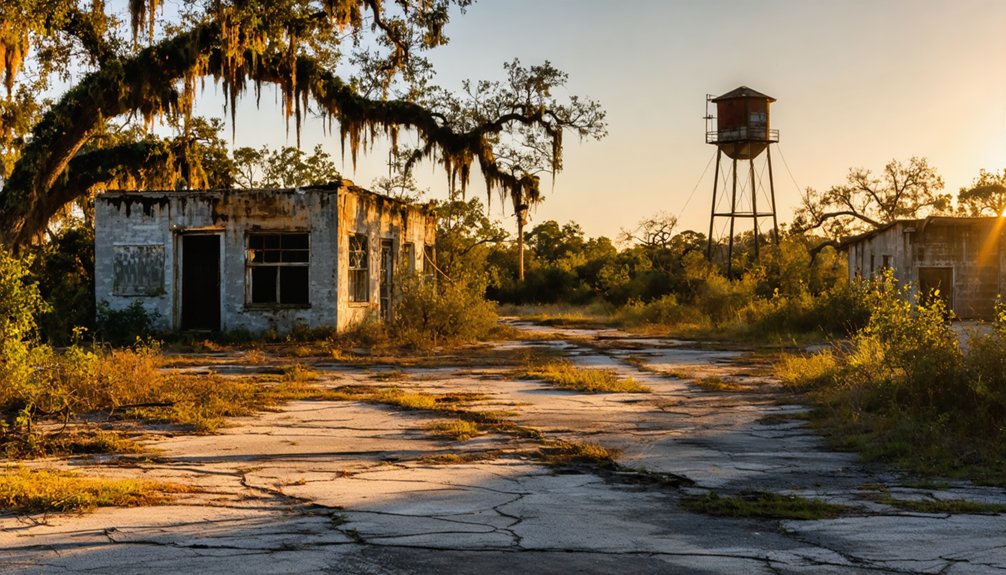
Once you’ve spotted the railroad signal box and soaked in what little the intersection has to offer, you’ll want to think about timing your visit right—though Sherman makes it easy. Unlike sites with historical preservation programs or tourist infrastructure, Sherman has no hours, no gates, and no seasonal closures.
Florida’s mild winters make cooler months ideal, but any time works. Consider these practical pointers:
- Fall through spring offers comfortable temperatures for roadside exploring.
- Midweek visits mean less traffic on Bee Line Highway while you pause and reflect.
- Daytime hours give you the clearest view of the signal box and surrounding rural landscape.
You’re free to roll through on your own schedule, making Sherman a flexible, no-pressure stop on any Okeechobee-area road trip.
Florida Ghost Towns Worth Adding to Your Route
Sherman fits naturally into a longer Florida ghost town road trip, and the state rewards that kind of curiosity with a surprising number of forgotten communities scattered along its back roads. You’ll find urban decay at varying stages across sites like Conant, Oriole, Orleans, Markham, and Alto, each carrying its own story of economic collapse or industry abandonment.
Some disappeared after freezes wiped out crops, others after railroads shifted routes. Florida’s 1920s land boom left behind additional short-lived towns worth tracing on a map.
Historical preservation efforts are minimal at most of these sites, which means you’re reading the landscape itself for clues. That rawness is exactly what makes the journey worthwhile. String several stops together, and you’ll piece together a vivid picture of Florida’s overlooked past.
Plan Your Okeechobee Ghost Town Route in One Day
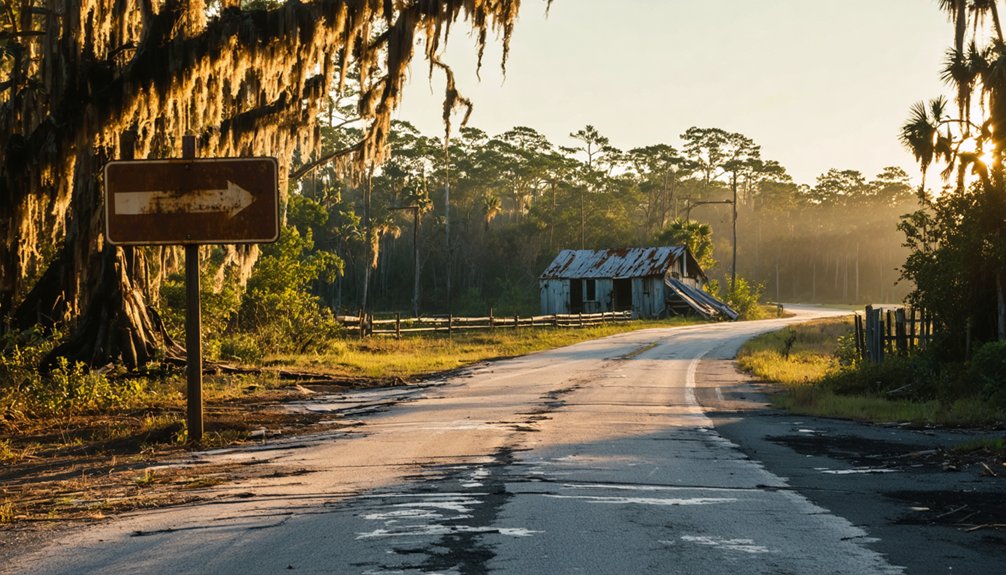
A one-day loop out of Okeechobee makes the ghost town hunt practical and rewarding. Sherman sits just three miles south on SR 710, so you’ll reach it fast. From there, build your route around the region’s broader story of economic decline following the lumber era’s collapse.
Use this framework to stay focused:
- Start at Sherman on Bee Line Highway, note the railroad signal box as a rare industry remnant, and photograph the rural landscape.
- Research nearby ghost towns like Conant or Markham to add historical depth to your drive.
- Return through Okeechobee city to explore local history resources that contextualize the logging boom.
You’re not chasing dramatic ruins here. You’re tracing the outline of a world that built itself on timber and then quietly disappeared.
Frequently Asked Questions
Was Sherman, Florida Ever Officially Incorporated as a Town?
Sherman never officially wore the crown of incorporation. As you delve into ghost town tourism and abandoned sites exploration, you’ll find this fleeting lumber settlement simply faded into Florida’s landscape before bureaucracy ever claimed it.
Who Exactly Was W.C. Sherman, and Where Did He Come From?
You won’t find clear records identifying W.C. Sherman’s origins — ghost town legends often outlast historical preservation efforts. He remains a mystery, though his lumber company briefly shaped an entire Florida community in the 1920s.
Are There Any Historical Photographs of Sherman’s Sawmill or Commissary?
You won’t find confirmed historic photographs of Sherman’s sawmill or commissary in public collections. Explore sawmill archives at Florida state libraries — they’re your best shot at uncovering rare historic photographs that bring this vanished lumber town back to life.
Is Sherman, Florida Listed on Any State or National Historic Registers?
Don’t let that discourage you — Sherman, Florida doesn’t appear on state or national historic registers, but its historical preservation lives through local folklore, and you can still chase its vanished lumber legacy yourself.
Did Any Former Sherman Residents Relocate to Nearby Okeechobee After the Mill Closed?
The records don’t confirm whether former Sherman residents relocated to Okeechobee after the mill closed. As you explore ghost town tourism and abandoned landmarks, you’ll find Sherman’s human story remains as vanished as its structures.
References
- https://floridatrailblazer.com/tag/ghost-towns/
- https://www.facebook.com/groups/628602987646037/posts/1719114858594839/
- https://www.instagram.com/reel/DQIG3WnjyQu/
- https://freepages.history.rootsweb.com/~gtusa/usa/fl.htm
- https://www.ghosttowns.com/states/fl/sherman.html
- https://en.wikipedia.org/wiki/List_of_ghost_towns_in_Florida
- https://www.facebook.com/groups/HistoricFloridaX/posts/4618566725133648/
- https://floridastateonline.com/ghost-towns-in-florida/
- https://en.wikipedia.org/wiki/Sherman