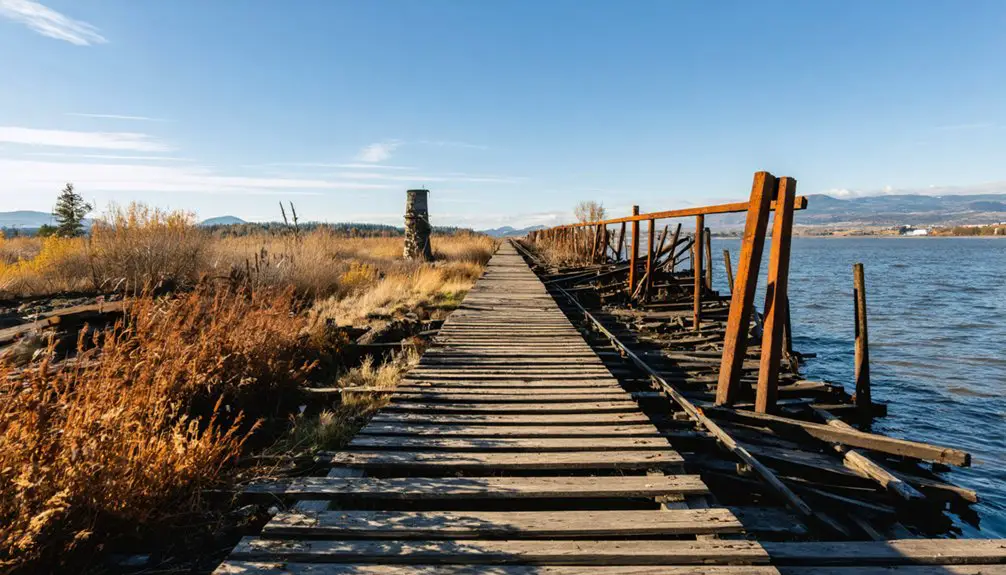
Planning a ghost town road trip to Skagit City means heading to the northeastern tip of Fir Island, where a once-booming river port has quietly faded into open land and scattered ruins. Founded in 1868, this steamboat hub thrived before logjam removal and railway bypasses erased it from the map. You’ll want to use the restored Skagit City School as your landmark, pack your own supplies, and come ready to explore — there’s far more buried history here than first meets the eye.
Key Takeaways
- Skagit City sits at the northeastern tip of Fir Island, approximately 2.4 miles southeast of Cedardale, with the restored schoolhouse serving as the main landmark.
- Visit between May and September for the best trail conditions, longer daylight, and easier access to ruins and archaeological remnants.
- Bring water, food, layered clothing, and navigation tools, as the site has no signage, facilities, or nearby supplies.
- Expect open, quiet land featuring scattered ruins, old foundations, and archaeological remnants with no guided tours or crowds.
- The site was once a bustling 1870s river boomtown before railway bypasses and logjam removal caused its gradual abandonment.
What Is Skagit City and Why Visit This Ghost Town?
Once a thriving river port on the South Fork Skagit River, Skagit City rose quickly after its 1868 founding, drawing settlers, steamboats, and commerce to Washington’s fertile Fir Island before fading into abandonment within decades.
Today, it exists only as a placename near where the Skagit River splits toward Skagit Bay.
You’ll find no crowds here, no gift shops, no guided tours — just open land, scattered ruins, and the weight of forgotten history.
Preservation efforts have salvaged the restored Skagit City School, which anchors the site and connects you directly to its past.
Historical artifacts and archaeological remnants tell a story of boom, collapse, and quiet disappearance.
If you crave unfiltered history and uncrowded exploration, Skagit City rewards the curious traveler willing to seek it out.
How Skagit City Grew Into a Skagit River Boomtown
When you trace Skagit City’s origins, you’ll find that fertile Fir Island farmland pulled white settlers westward in the 1860s, making the region ripe for a commercial center to emerge.
By 1869, Barker’s Trading Post had opened along the river, anchoring the townsite and drawing a steady stream of settlers hungry for trade and opportunity.
Within just a few years, you’d have witnessed Skagit City peak as a critical river transportation hub, its wharves and steamboat traffic making it the pulse of the South Fork Skagit by 1872.
Fertile Land Draws Settlers
The rich, dark soil of Fir Island pulled white settlers westward in the 1860s, and what followed was the kind of rapid, river-driven growth that defined frontier boomtowns across the Pacific Northwest. You can almost feel the urgency of those early years — settlers staking claims on fertile ground, recognizing that the land could sustain something lasting.
By 1868, Skagit City had formally established itself as a river port, and a year later, Barker’s Trading Post opened, anchoring the community and drawing even more arrivals. Urban legends still swirl around those early days of explosive ambition.
Today, preservation efforts keep fragments of that story alive, ensuring you can visit and connect with the raw, independent spirit that once made Skagit City worth building in the first place.
Barker’s Trading Post Opens
Barker’s Trading Post opened along the South Fork Skagit River in 1869, and almost overnight, it became the gravitational center of a town finding its footing. Settlers who’d staked claims on Fir Island’s fertile ground suddenly had somewhere to trade, gather, and plant roots deeper. You can almost hear the boots on the wharf planks, the haggling, the river talk.
The post didn’t just move goods — it moved people. Word spread, and Skagit City began layering itself upward: wharves, hotels, saloons, churches. Local legends took shape inside those walls, stories tied to the historical architecture that once defined this river boomtown.
Standing where Barker’s once stood, you’re touching the moment a settlement stopped drifting and decided to become something.
Peak River Transportation Hub
By 1872, Skagit City had hit its stride as a full-throated river boomtown, and the South Fork Skagit River was its engine. Steamboats churned past wharves stacked with goods, while hotels, saloons, and churches rose along the banks.
You’d have found a settlement humming with ambition — settlers farming Fir Island’s rich soil, traders moving supplies upriver, and a community betting hard on its own future.
Local legends still echo through the landscape, describing crowded docks and the sharp whistle of arriving steamers. Today, preservation efforts centered on the restored Skagit City School keep those stories grounded in something tangible.
Standing at that northeastern tip of Fir Island, you can almost hear the river working, restless and purposeful, just as it did during those peak years.
How the Logjam Removal Killed Skagit City’s Economy
Once Skagit City’s two massive logjams were cleared from the Skagit River in the 1870s, the town’s fate was effectively sealed. Before that, those natural barriers forced steamboats to stop here, keeping commerce alive and locals prosperous.
The logjams were Skagit City’s lifeline — clear them, and the town’s fate was already written.
Remove the logjams, and you remove Skagit City’s entire reason for existing.
River traffic shifted freely toward Mount Vernon, draining merchants, travelers, and dollars upstream. Then the Panic of 1893 delivered another brutal blow, and the Great Northern Railway bypassed the town entirely.
You can almost feel the abandonment walking the site today — local legends describe a community that simply evaporated.
Historical artifacts buried beneath the soil silently confirm what records suggest: Skagit City didn’t fade gradually. It collapsed, leaving only echoes where a bustling port once stood.
When Did Skagit City Finally Become a Ghost Town?
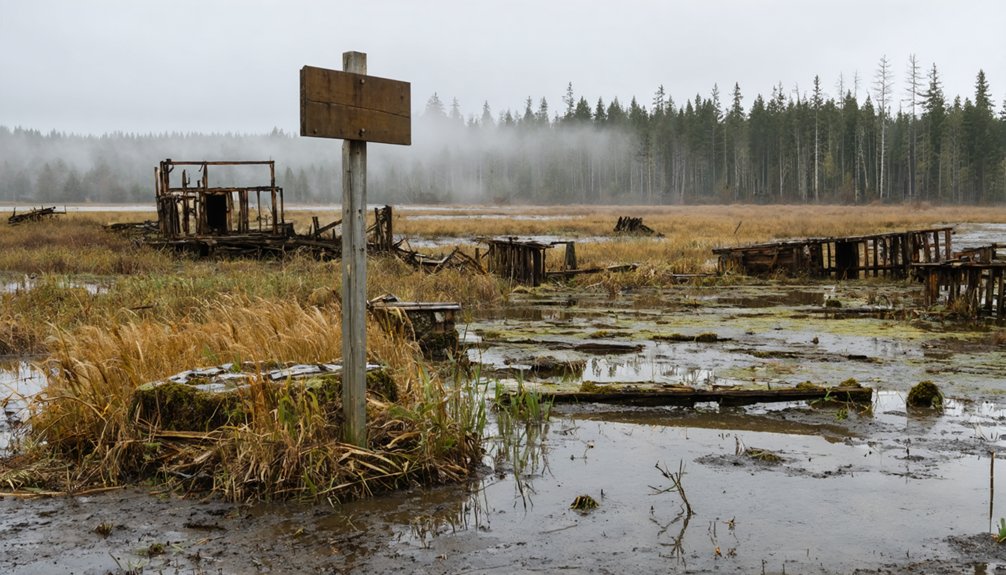
Once the logjams cleared and river traffic shifted to Mount Vernon, you can trace Skagit City’s slow bleed through the 1870s and into the early 1900s.
The Great Northern Railway‘s decision to bypass the town sealed its fate, stripping away any remaining economic lifeline and pushing families toward more connected communities.
Early Decline Begins
Skagit City’s downfall didn’t arrive all at once — it crept in quietly after workers cleared two massive logjams from the Skagit River in the 1870s, rerouting steamboat traffic toward Mount Vernon and stripping the town of its reason to exist.
Four blows sealed its fate:
- Logjam removal redirected river commerce away permanently
- The Great Northern Railway bypassed the townsite entirely
- The Panic of 1893 crushed remaining economic resilience
- Depression-era hardship emptied the final holdouts by the late 1930s
Historical artifacts and local legends still echo through the ruins, whispering of wharves, saloons, and steamboats that once defined frontier freedom here.
Each factor compounded the last, transforming a thriving river port into silence, scattered foundations, and memory.
Railway Bypass Impact
When the Great Northern Railway bypassed Skagit City entirely, it didn’t just reroute commerce — it severed the town’s last lifeline. Transportation shifts pulled merchants, travelers, and opportunity toward Mount Vernon, leaving Skagit City stranded in an economic backwater it couldn’t escape.
Industrial decline followed swiftly and without mercy. The Panic of 1893 deepened the wounds, draining whatever financial resilience the community had left. Shops shuttered. Families packed their lives onto wagons and didn’t look back.
By the late 1930s, only abandoned buildings stood where wharves and saloons once hummed with river traffic.
You can still feel that silence when you visit today — a town that time didn’t forget so much as deliberately leave behind, its ghost preserved in scattered ruins and reclaimed earth.
Final Abandonment Timeline
Pinning down the exact moment Skagit City died isn’t simple — abandonment rarely arrives on a single date. Instead, it unraveled in stages you can trace through historic preservation records and archaeological findings:
- 1868 — Skagit City formally establishes itself as a river port powerhouse.
- 1870s — Logjam removal redirects river traffic, draining economic lifeblood northward to Mount Vernon.
- 1893 — The Panic of 1893 accelerates departures, shattering what little commerce survived.
- Late 1930s — Depression-era hardship shutters remaining shops, pushing final families out permanently.
What Remains at Skagit City Today?
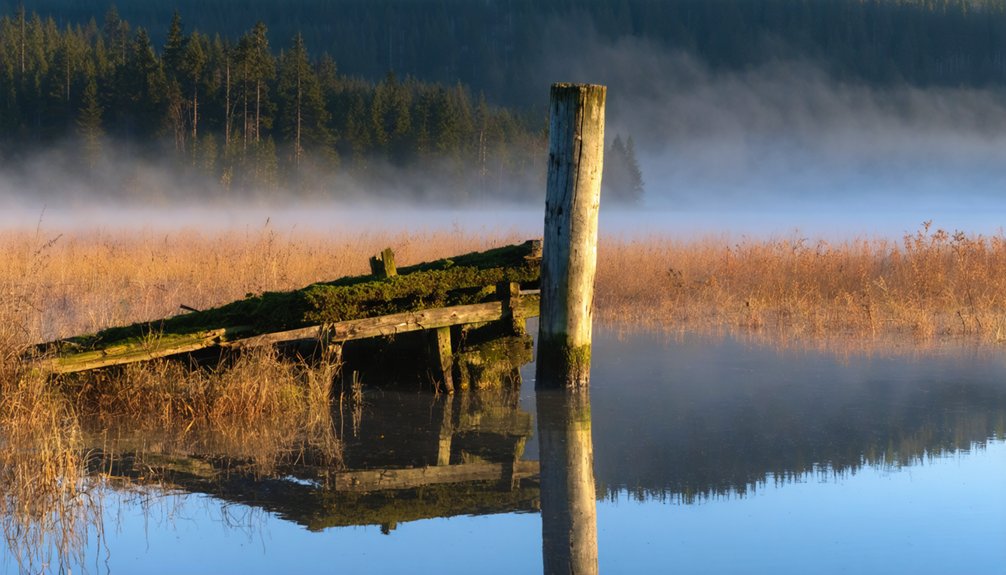
Though little remains of what was once a thriving river port, Skagit City still offers a hauntingly tangible connection to its 19th-century past. When you visit, the restored Skagit City School stands as your primary landmark, a symbol of preservation efforts that saved at least one structure from total erasure. It now functions as a cultural heritage center, grounding you in the community’s former vitality.
Beyond the schoolhouse, scattered historical artifacts and archaeological remnants push through the earth, whispering stories of wharves, saloons, and steamboat traffic long gone. The original churches and hotels haven’t survived intact, leaving only fragments behind.
You’ll find no public facilities here, just open landscape and ruins — an unfiltered, liberating encounter with a place history quietly swallowed whole.
The Best Time of Year to Visit Skagit City
Timing your visit to Skagit City can mean the difference between a rewarding exploration and a muddy, fog-blanketed frustration. The Pacific Northwest’s moody climate shapes every experience here.
Plan around these seasonal realities:
- Late Spring (May–June) – Dry trails reveal historical artifacts and scattered ruins without winter’s waterlogged ground.
- Summer (July–August) – Long daylight hours give you maximum exploration time among the remnants.
- Early Fall (September) – Crisp air sharpens your senses while local legends feel closer amid harvest-season stillness.
- Winter – Expect heavy fog, flooding near the South Fork, and limited access.
You’re chasing a ghost town, not a tourist trap. Respect the land’s rhythm, and Skagit City rewards your curiosity generously.
How to Get to Skagit City on Fir Island
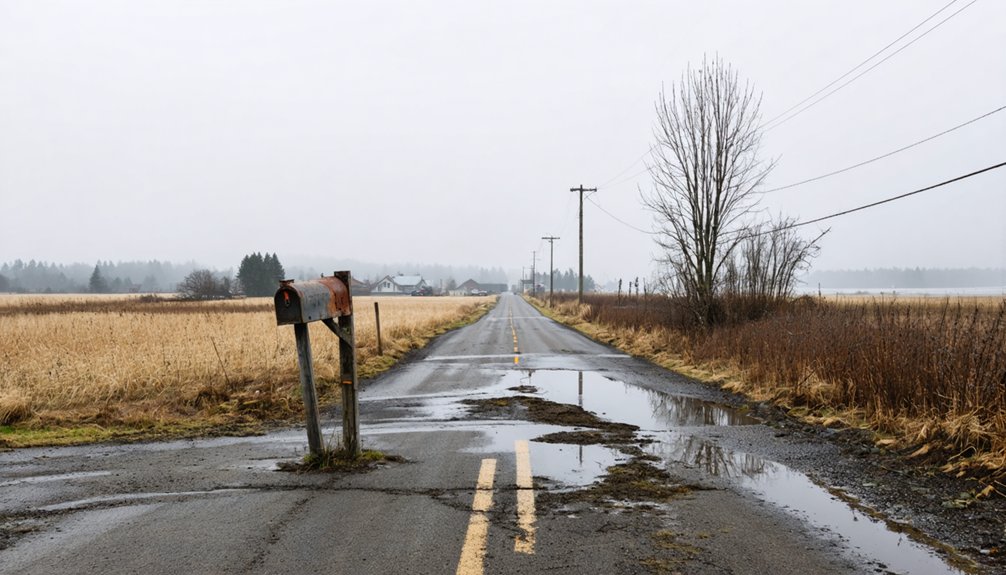
Once you’ve chosen your season, getting to Skagit City means traveling to the northeastern tip of Fir Island, where the Skagit River splits into its distributaries before emptying into Skagit Bay. You’re heading to coordinates 48.38333°N, 122.36306°W — no active town center awaits you, just open land and quiet history.
From Cedardale, the nearest community, you’ll drive roughly 2.4 miles southeast toward the former townsite. Use the restored Skagit City School as your primary landmark — it’s the site’s most intact anchor and houses historical artifacts connecting you to the 1868 river port that once thrived here.
Expect no services, no crowds, and no guardrails between you and the past. The scenic viewpoints along the river fork reward the self-directed traveler who arrives prepared and curious.
What to Pack When There Are No Services at Skagit City
Arriving at Skagit City means stepping into a site where the 1868 river port’s wharves, saloons, and hotels have long since crumbled — and where you’ll find no gas stations, restrooms, or emergency services within easy reach. Self-sufficiency is your ticket to exploring this ghost town freely. Pack smart:
Skagit City offers no hand-holding — just crumbled history and the freedom that comes with being fully prepared.
- Water and food — the nearest supplies sit 2.4 miles away in Cedardale
- Layered clothing — local weather near Skagit Bay shifts unpredictably
- Binoculars — wildlife viewing along the South Fork rewards the prepared observer
- Navigation tools — no signage guides you beyond the restored Skagit City School
Treat this abandoned riverbank like the frontier it once was: arrive ready, leave nothing behind, and let the ruins speak.
What to See Near Skagit City While You’re on Fir Island
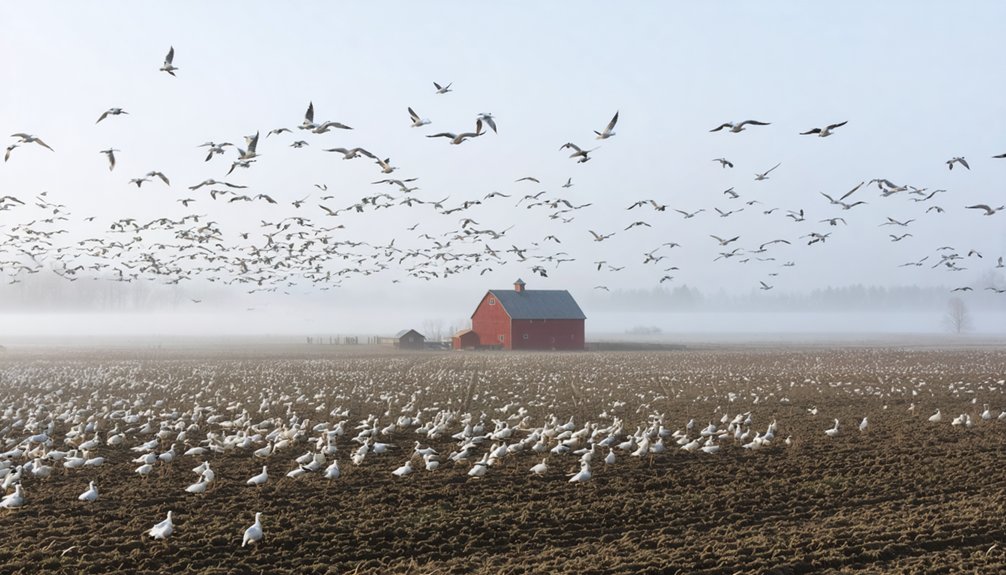
Fir Island rewards explorers who venture beyond Skagit City’s ruins, offering a landscape still shaped by the same fertile delta soils that drew white settlers here in the 1860s. You’ll find scenic viewpoints overlooking Skagit Bay where the river’s distributaries fan outward toward the Strait of Juan de Fuca — the same waterways that once carried steamboats to Skagit City’s wharves.
Scan the agricultural flats and you’re reading living history; these fields replaced the river commerce that abandoned towns like this one. Nearby Cedardale, just 2.4 miles away, offers a grounded sense of how communities survived where Skagit City didn’t.
Keep your eyes open for historical artifacts embedded in the landscape itself — old foundations, soil disturbances, and forgotten alignments that no restored schoolhouse can fully tell.
Frequently Asked Questions
Can You Camp Overnight at the Skagit City Ghost Town Site?
You can’t camp at Skagit City’s abandoned ruins — there are no campground regulations or overnight permits available here. The ghost town’s scattered remnants remain untamed, so you’ll need to seek nearby lodging before exploring its forgotten history.
Is the Skagit City School Open for Tours Year-Round?
Like a torch passed through generations, the school’s historical preservation isn’t confirmed year-round. You’d want to contact local legends keepers directly before visiting, ensuring the doors are open when your free spirit arrives.
Are Pets Allowed When Visiting the Skagit City Historic Site?
The knowledge doesn’t specify pet policies or animal restrictions for Skagit City. Since you’re exploring an abandoned ghost town, plan ahead, respect the historic grounds, and check locally before bringing your four-legged companion along.
Is the Skagit City Site Accessible for Visitors With Mobility Limitations?
The knowledge doesn’t confirm accessibility features or mobility assistance at Skagit City. Since it’s an abandoned ghost town with scattered ruins and no public facilities, you’ll want to research current conditions before venturing into this historically rich, untamed site.
Are Guided Tours of Skagit City Available for Visiting Groups?
No formal guided tour options exist, but don’t let that stop you. You’ll craft your own visiting group logistics, wandering freely through scattered ruins and the restored school, where Skagit City’s abandoned spirit speaks loudest without mediation.
References
- https://en.wikipedia.org/wiki/Skagit_City
- https://www.wta.org/go-hiking/hikes/northern-state-ghost-town
- https://en.wikipedia.org/wiki/List_of_ghost_towns_in_Washington