Planning a ghost town road trip to Slabtown, South Dakota, starts in Rapid City, where you’ll head into the Black Hills via U.S. Highway 385 before shifting onto gravel backroads through pine-covered ridges. Download offline maps before you leave, fuel up early, and pack sturdy boots, water, and a camera. Slabtown’s weathered remnants offer one of the region’s most authentic frontier experiences, and there’s plenty more to know before you hit the road.
Key Takeaways
- Start from Rapid City, taking U.S. Highway 385 and State Highway 89, then transitioning to gravel roads as you near Slabtown.
- Download offline maps beforehand, as cell service is unreliable, and fuel up early since services are sparse beyond main corridors.
- Pack essential gear including water, sturdy boots, a camera, and a first-aid kit for safe exploration.
- Confirm land ownership via county assessor records and observe all posted signs to avoid trespassing legally.
- Photograph freely but never remove artifacts, disturb structures, or leave trash, preserving the site for future visitors.
Why Slabtown Belongs on Your Black Hills Ghost Town List
When you’re mapping out a Black Hills ghost town route, Slabtown deserves a spot on the list. It represents exactly what draws explorers to South Dakota’s abandoned settlements — raw historical significance tied to mining booms, railroad shifts, and the economic forces that quietly erased hundreds of small communities across the region.
You won’t find a polished visitor center here. What you’ll find is a genuine remnant of frontier-era settlement, the kind that preservation efforts struggle to document before time erases what’s left. That authenticity makes Slabtown worth your detour.
The Black Hills hold well over six hundred ghost towns, and Slabtown fits naturally into a regional itinerary. Pair it with nearby sites, keep your expectations grounded, and you’ll leave with a sharper sense of what this land once held.
Where Slabtown Sits in the Black Hills
Slabtown sits within the Black Hills of South Dakota, a region where dramatic pine-covered ridges give way to open valleys still marked by the ghosts of extractive industry.
You’ll find it embedded in a landscape rich with local history and scenic views that reward explorers willing to leave the main corridors behind.
When orienting yourself, keep these reference points in mind:
- The Black Hills span southwestern South Dakota, covering roughly 6,000 square miles.
- Multiple ghost towns cluster within this zone, making regional routing efficient.
- Access often runs through rural roads rather than major highways.
- Terrain shifts quickly between forested hills and open grassland.
Treat Slabtown as one node in a broader network rather than an isolated stop.
How to Get to Slabtown, South Dakota
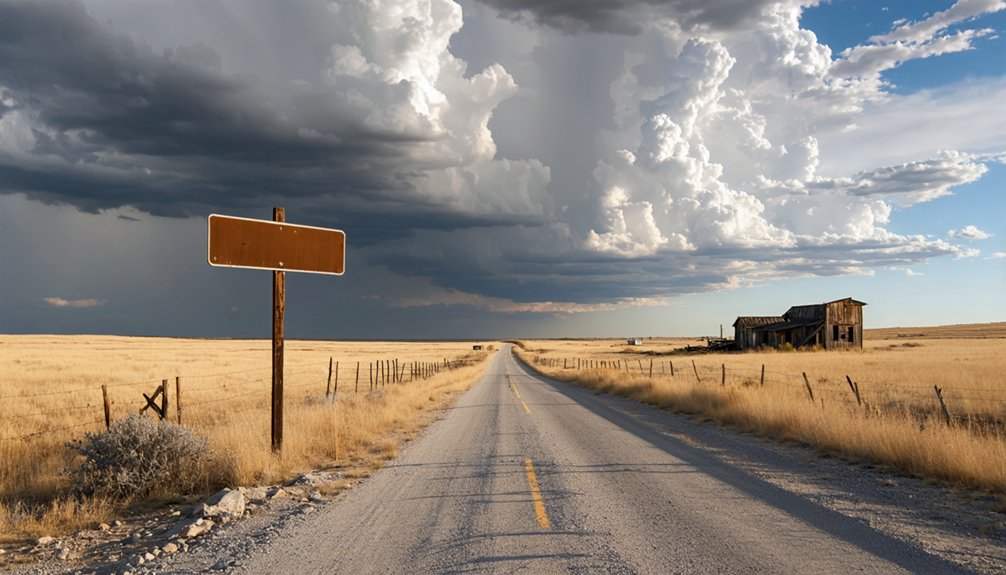
Once you’ve pinpointed Slabtown on a map, you’ll want to anchor your route around the Black Hills’ main corridors before branching onto smaller rural roads.
U.S. Highway 385 and State Highway 89 serve as reliable backbones for reaching the region, but expect to shift onto gravel or unimproved roads as you close in on the site.
Watch for unmarked turnoffs and limited signage, since rural access points in this part of South Dakota rarely advertise themselves with roadside markers.
Starting Your Route Planning
Getting to Slabtown means committing to the kind of drive that rewards curiosity over convenience. The Black Hills frame this route with historical significance at every turn, and local legends echo across the landscape before you even arrive.
Build your approach around these four priorities:
- Anchor your start in Rapid City, the most practical Black Hills gateway
- Choose paved over shortcuts until you confirm road conditions closer to the site
- Download offline maps since cell service gets unreliable in rural stretches
- Fuel up early because services thin out fast beyond the main corridors
You’re not just driving to a dot on a map. You’re threading through terrain that swallowed entire communities whole, and the route itself tells that story.
Key Roads To Take
With your start point locked in Rapid City, the next move is mapping the actual roads that carry you into Black Hills ghost-town territory. Head south on US-16, a reliable corridor that cuts through pine-covered ridgelines and opens into the kind of wide landscape where ghost town legends feel earned rather than invented.
From there, county roads branch toward less-traveled ground, where abandoned structures appear roadside without warning or fanfare. Keep SD-385 in your toolkit as a flexible north-south connector linking multiple historic sites efficiently.
Cell service thins as you push deeper into the Hills, so download offline maps before leaving Rapid City. Gravel stretches are likely, so adjust your speed and give yourself buffer time between stops to handle whatever the road throws at you.
As you leave the main corridors behind, the route to Slabtown demands more attention than a standard highway run. Rural access points shift quickly from paved roads to gravel, so stay alert and pace yourself.
Follow these steps before heading out:
- Download offline maps — cell service drops fast in the Black Hills.
- Check road conditions — seasonal weather affects gravel and dirt surfaces profoundly.
- Note private property boundaries — ghost town myths often romanticize free roaming, but land ownership is real.
- Respect historic preservation — avoid disturbing structures, artifacts, or landscape features you encounter.
You’re not just passing through scenery here — you’re moving through layered history. Treat the land accordingly, keep your vehicle prepared, and embrace the unfiltered freedom this kind of travel delivers.
What Survives at Slabtown Today
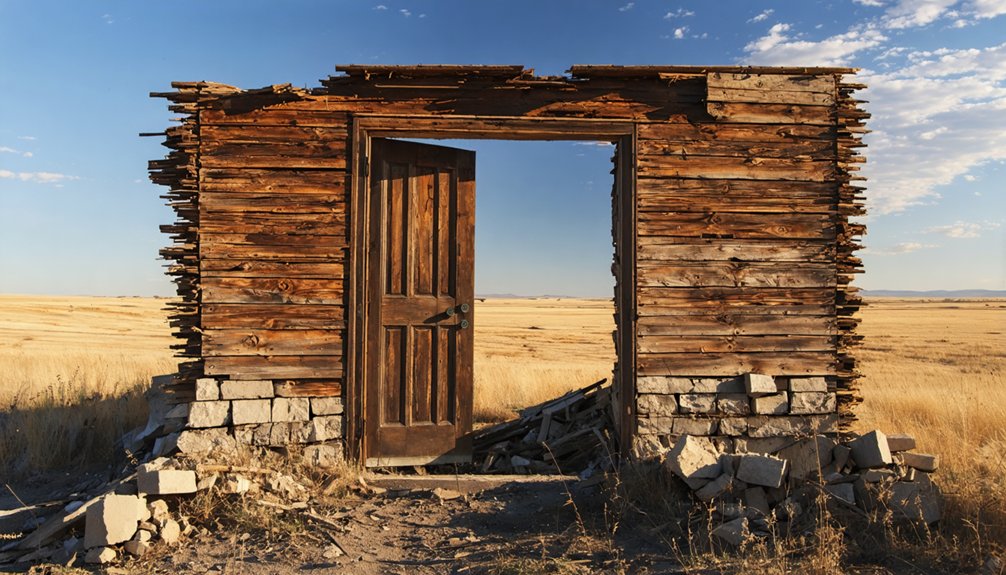
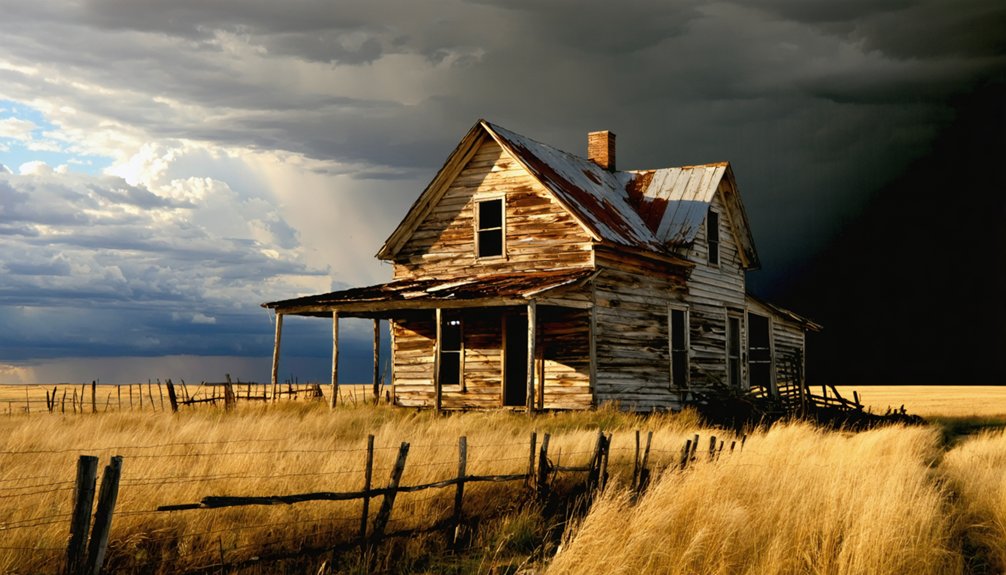
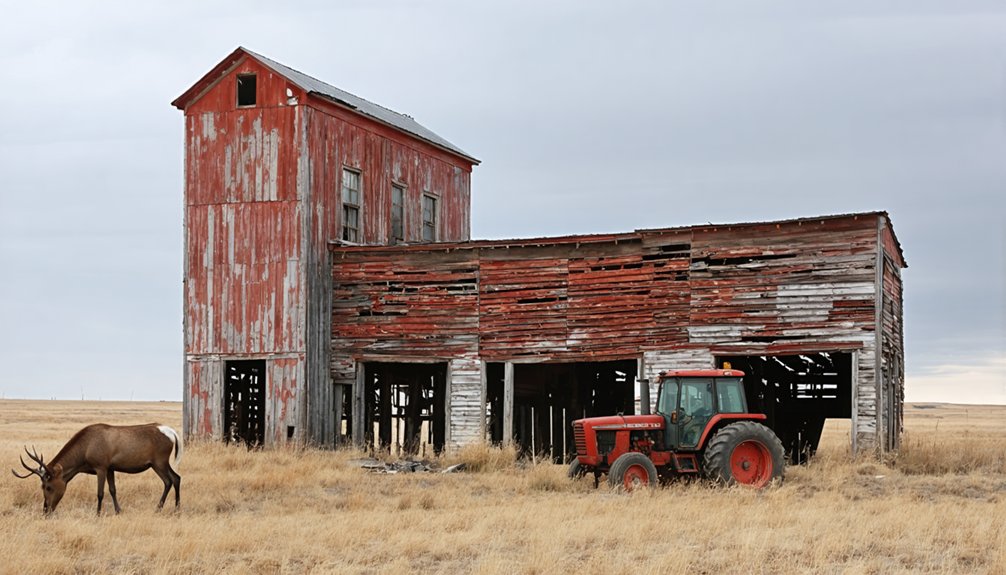
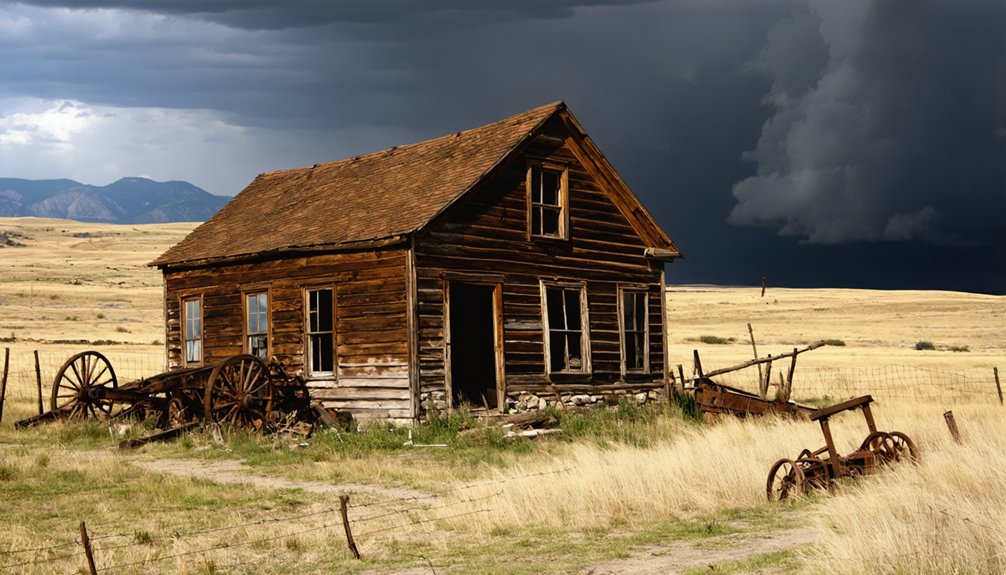
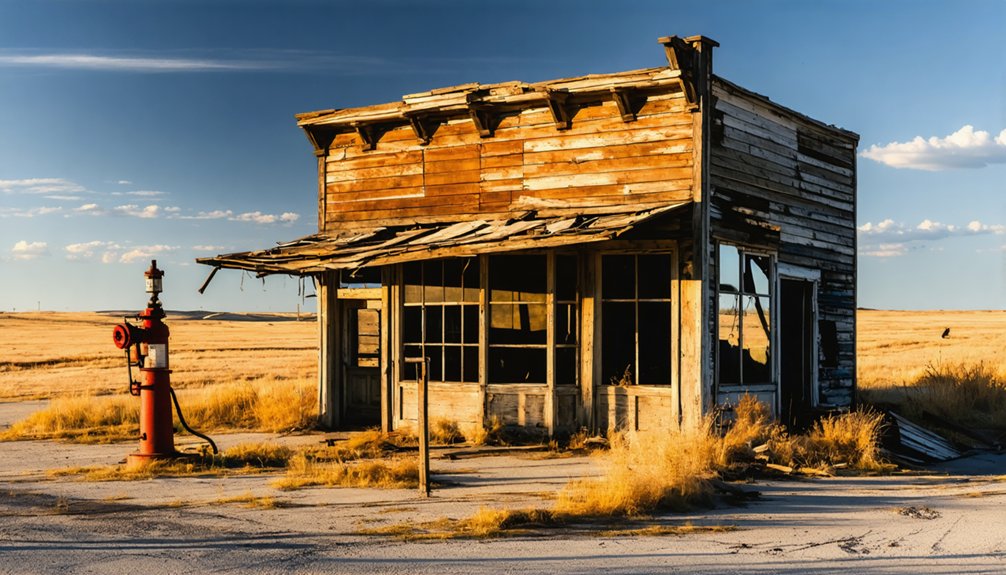
What remains at Slabtown today fits the pattern you’d expect from a Black Hills ghost town: scattered remnants rather than a preserved main street. You’ll likely encounter weathered structural fragments, possibly derelict outbuildings, and land shaped by past industrial or agricultural use.
Historical preservation here isn’t formal or funded—nature and time have done most of the editing.
That reality shapes how you should approach the site. Visitor safety matters more than most travelers anticipate at places like this. Unstable structures, uneven ground, and unmarked boundaries create real hazards, so watch your footing and stay alert. Don’t assume a standing wall means a stable floor.
Bring water, wear sturdy boots, and treat the land with care. What survives at Slabtown deserves curiosity, not carelessness.
What to Pack for a Black Hills Ghost Town Trip
Packing for a Black Hills ghost town trip isn’t complicated, but skipping the essentials can turn an interesting afternoon into a genuinely uncomfortable situation. These sites offer minimal services, so your gear essentials matter.
- Water and snacks – Roads can be rough, and stops are sparse.
- Sturdy footwear – Uneven terrain, debris, and weathered structures demand solid shoes.
- Camera and extra batteries – Follow basic photography tips: shoot in golden hour light for dramatic contrast against aged wood and rust.
- Navigation tools – Cell service drops in remote areas, so download offline maps beforehand.
Respect private property boundaries, pack out everything you bring in, and carry a basic first-aid kit. Slabtown rewards prepared explorers, not unprepared ones.
Other Black Hills Ghost Towns to Add to Your Route
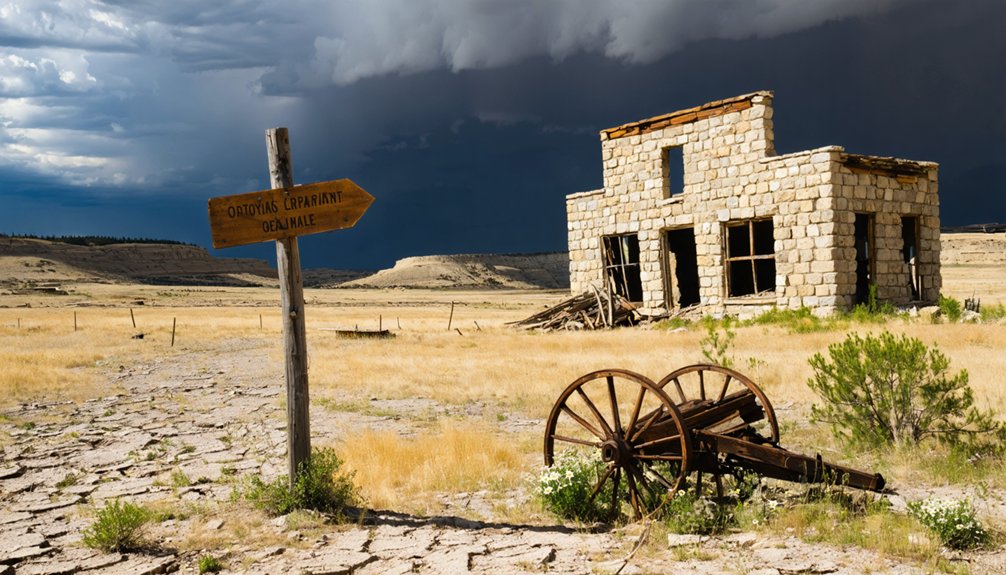
Once you’ve mapped out Slabtown, it makes sense to stretch the route and hit a few more Black Hills ghost towns while you’re already in the area. The region holds well over six hundred ghost town sites, so you’ve got plenty of options.
Seek out spots tied to historical mining booms, where ghost town architecture still stands in various states of decay — weathered timber frames, crumbling foundations, and rusted industrial remnants that tell the story without a single interpretive sign.
Towns like Rochford, Mystic, and Galena offer that same raw, open-road appeal. Keep your expectations flexible, since some sites are little more than a name on a map.
Pair stops thoughtfully, watch for private property boundaries, and let the landscape guide the pace.
How to Visit Slabtown and Abandoned Sites Responsibly
Before you set foot on any ghost town property, check whether the land is privately owned, because many South Dakota abandoned sites sit on private parcels where trespassing rules still apply. If you’re unsure, you can often contact the local county assessor’s office or ask nearby residents who may know the property’s status.
Once you’re cleared to explore, keep your footprint light — don’t remove artifacts, disturb structures, or leave trash behind, since these remnants are all that’s left of a community that once thrived.
Respecting Private Property Boundaries
Although Slabtown carries ghost-town status, that label doesn’t mean the land is open territory—some of these sites sit on private property, and you’re responsible for knowing the difference before you wander.
Urban decay looks photogenic, but historical preservation depends on visitors treating these spaces with discipline. Follow these boundaries before stepping foot on any abandoned site:
- Check ownership records through county assessor databases before visiting.
- Look for posted signs—no trespassing means exactly that, regardless of how abandoned a structure appears.
- Stay on public roads and designated access points when ownership is unclear.
- Never remove artifacts or disturb structures, even partial ruins with no visible occupants.
Your freedom to explore depends on respecting the rules that keep these sites accessible to future visitors.
Low-Impact Exploration Practices
Treating a ghost town right starts before you park the car—when you commit to leaving the site exactly as you found it, you protect what little history remains standing.
Slabtown survived economic collapse and escaped urban development, so don’t let casual curiosity finish what abandonment started. Stick to established paths, avoid touching or removing weathered materials, and never enter structurally compromised buildings.
Cultural preservation depends on visitors who treat these remnants as irreplaceable rather than as props for social media. Photograph freely, but take nothing physical. Pack out every piece of trash you bring in.
Keep noise low, move slowly, and observe more than you disturb. That kind of discipline lets the next explorer experience the same unfiltered history you came looking for.
Frequently Asked Questions
Is Slabtown Located on Public Land or Private Property?
You’ll want to verify property access before visiting, as Slabtown may sit on private land. Respect boundaries, tread lightly, and you’ll honor both the site’s history and your freedom to explore responsibly.
What Time of Year Is Best for Visiting Black Hills Ghost Towns?
Even harsh winters have charm, but you’ll find late spring through early fall offers the best seasonal weather for exploring. Golden light boosts your photography opportunities, and dry roads keep your adventure wide open.
Are There Any Entrance Fees Associated With Visiting Slabtown?
You’ll likely encounter no entrance fees at Slabtown, but respect private property boundaries. Embrace the freedom of exploring its historical preservation and local legends, though conditions can vary, so always research current access rules before heading out.
Can You Camp Overnight Near the Slabtown Ghost Town Site?
You’ll want to research local camping regulations before setting up near Slabtown. Nearby Black Hills public lands may offer options, but always prioritize overnight safety by confirming access rules and choosing well-lit, designated spots.
Is Slabtown Accessible to Visitors With Limited Mobility?
Slabtown’s mobility accessibility is likely limited, as you’ll encounter rough, unpaved terrain that isn’t wheelchair friendly. You’ll want to contact local authorities beforehand to confirm current conditions before hitting the open road.
References
- https://en.wikipedia.org/wiki/List_of_ghost_towns_in_South_Dakota
- https://www.youtube.com/watch?v=jmSADvq4Lek
- https://www.powderhouselodge.com/black-hills-attractions/fun-attractions/ghost-towns-of-western-south-dakota/
- https://www.atlasobscura.com/things-to-do/south-dakota/ghost-towns
- https://www.youtube.com/watch?v=POtU2hFPQsU
- https://blackhillsatvdestinations.com/ghost-towns/
- https://www.sdpb.org/rural-life-and-history/2023-08-21/some-black-hills-ghost-towns-and-their-origins
- https://www.sdhspress.com/journal/south-dakota-history-2-2/some-black-hills-ghost-towns-and-their-origins/vol-02-no-2-some-black-hills-ghost-towns-and-their-origins.pdf
- https://www.youtube.com/watch?v=_0WNYsFLSLA