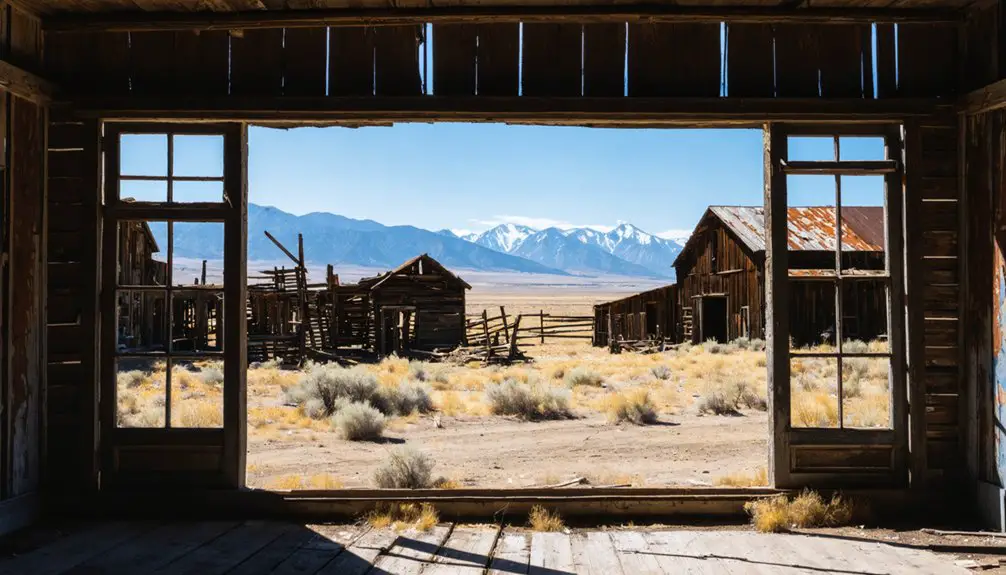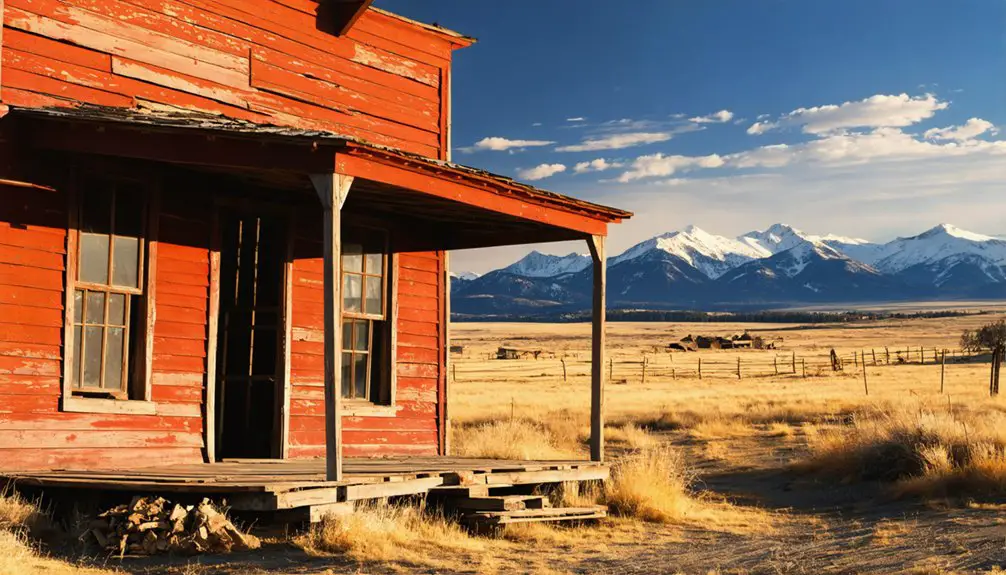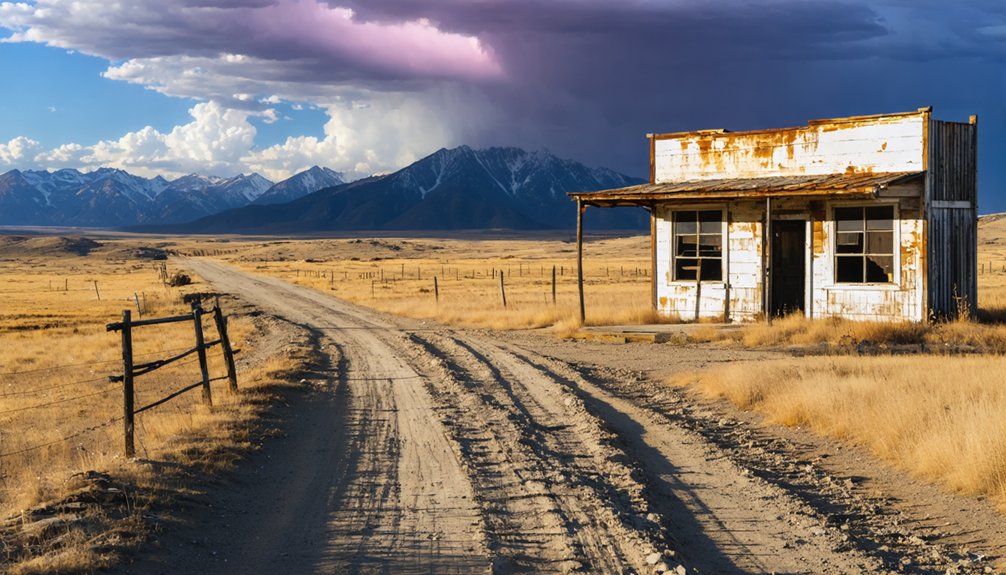
Planning a ghost town road trip to Stark, Montana means trading paved comfort for gravel adventure and genuine history. You’ll drive Highway 12 west from Helena, then wind down Granite Road to reach authentic 1890s silver-era ruins—no reconstructions, no ranger stations, just weathered structures and scattered artifacts. Visit between Memorial Day and late September, arrive early, and pack water, spare tires, and sturdy boots. There’s far more to uncover about routes, timing, and nearby towns worth stopping at.
Key Takeaways
- Visit between Memorial Day and September 30, arriving early morning for optimal lighting, wildlife sightings, and maximum exploration time.
- From Helena, take Highway 12 west, then turn onto Granite Road, expecting gravel on the final four miles.
- Pack water, extra fuel, offline maps, sturdy boots, rain layers, and photography gear for this remote trip.
- Extend your trip by visiting nearby ghost towns like Lennep and Philipsburg, connected via scenic secondary roads.
- Stark preserves authentic 1890s remnants with no reconstructed structures, tourist amenities, ranger stations, or interpretive plaques.
What Makes Stark, Montana Worth the Drive?
Though it’s little more than a footnote on most Montana maps, Stark pulls you in with the quiet gravity of a place that once mattered deeply — silver-rich, boomtown-loud, and now magnificently silent.
You’ll find historical artifacts scattered across the landscape like forgotten punctuation, each one telling a sentence the 1800s never finished.
The scenic viewpoints stretch wide across western Montana’s mining country, rewarding anyone willing to trade pavement comfort for gravel authenticity.
You’re not visiting a reconstruction here — you’re standing inside the real thing.
Stark delivers the kind of raw, unfiltered history that doesn’t need a gift shop to feel significant.
If you crave open roads and honest destinations, this ghost town earns every mile you put between yourself and the interstate.
What You’ll Actually See at Stark and Granite Ghost Town?
Once you’ve felt that pull Stark exerts on your curiosity, the next question answers itself: what’s actually left to see?
At Granite Ghost Town State Park, you’ll walk through preserved remnants of a genuine 1890s silver boomtown. Roofless structures, collapsed storefronts, and scattered historical artifacts tell the story without narration — you piece it together yourself. The silence does most of the talking.
Elevation rewards you too. The surrounding terrain opens into sweeping scenic vistas across western Montana’s ridgelines, the kind that make you stop mid-step just to absorb the scale.
Nothing here has been rebuilt or polished for comfort. That rawness is the point. You’re standing inside actual history, not a recreation of it — and that distinction hits differently when you’re the one standing there.
When to Visit Stark for the Best Experience?
You’ll get the most out of Stark and Granite Ghost Town by planning your visit between Memorial Day and September 30, when the park’s open and Montana’s roads are at their most forgiving.
Daylight-only access means you’ll want to arrive early, giving you time to photograph crumbling structures before late-afternoon shadows take over and rural roads get harder to navigate.
If you’re eyeing a shoulder-season window in early September, verify current park operations before you load the car, since seasonal schedules can shift without much notice.
Peak Season Visit Windows
Timing your visit to Stark makes all the difference between a rewarding ghost-town experience and a locked gate. For nearby Granite Ghost Town State Park, the window runs Memorial Day through September 30, giving you a clear seasonal framework for planning your broader western Montana route.
Aim for summer or early fall, when road conditions on rural gravel approaches are drier, more predictable, and far less likely to strand your vehicle mid-route. Seasonal closures hit hard once October arrives, so don’t push your luck into late fall without confirming access first.
Early morning arrivals maximize daylight hours on-site, which matters when you’re shooting photos or orienting unfamiliar secondary roads. Build your itinerary around this window, and you’ll move freely through Montana’s mining-era landscape without unnecessary detours or disappointment.
Daylight Hours Matter
Seasonal access sets the outer boundary, but daylight hours control everything inside it. Granite Ghost Town opens during daylight only, so your arrival time directly shapes what you’ll experience. Push too late into the afternoon, and you’re rushing through crumbling structures with fading light at your back.
Arrive early instead. Morning light hits weathered timber and rusted metal with a warmth that afternoon sun simply can’t replicate — and you’ll want those shots. Night photography isn’t an option here, so don’t plan around it.
What you *can* count on during early hours are wildlife encounters along the rural approach roads, where deer and other animals move freely before midday traffic picks up. Front-load your visit, pace yourself through the site, and leave before the light turns against you.
Shoulder Season Considerations
Shoulder season at Stark sits in a narrow window — but it’s worth understanding before you commit to a date. Seasonal closures hit after September 30, so timing your arrival matters. Weather considerations also shift fast in western Montana once October approaches.
Before you roll out, keep these factors locked in:
- Late September delivers crisp air, thin crowds, and dramatic light for photography
- Early Memorial Day weekend can bring lingering cold snaps — pack layers
- Shoulder-season road conditions on gravel approaches may include mud or washouts
- Verify park status directly with Montana Fish, Wildlife & Parks at 406-224-0833 before departing
You’ve got a short runway here. Use it deliberately, arrive early, and let Montana’s raw mining history reward your planning.
How to Route Your Trip Through Western Montana’s Ghost Towns?
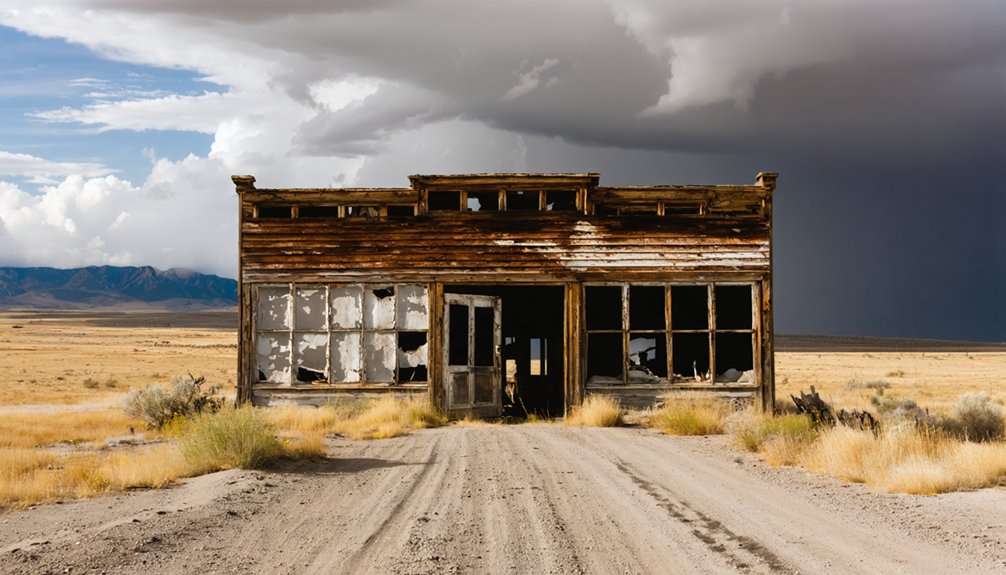
Because Montana’s ghost towns are widely scattered across the region, you’ll save the most time by grouping your stops geographically rather than plotting a straight-line route. Start on the main highways first, then peel off onto smaller county and forest roads for final access.
From Helena, Highway 12 west connects you efficiently before you shift onto Granite Road for the four-mile push toward the park.
Combine Stark with Granite Ghost Town State Park and Lennep, reached via Montana Highway 294 and NF-581 into the Castle Mountains.
Far removed from urban development and modern amenities, these corridors reward drivers who embrace slow miles on gravel.
Plan your sequence by region, keep daylight hours in mind, and let the landscape pull you deeper into Montana’s silver-era past.
How to Reach Stark and Granite Ghost Town From the Highway?
Key details for the road ahead:
- Address: 347 Granite Road, Philipsburg, MT 59858
- Final stretch: A gravel segment on Granite Road rewards slow driving with scenic viewpoints
- Historical preservation: The site remains authentically intact, not reconstructed
- Contact: Montana Fish, Wildlife & Parks at 406-224-0833
The highway gets you close, but Granite Road delivers the payoff — raw landscape, silver-era ruins, and the satisfying weight of arriving somewhere genuinely forgotten.
Which Nearby Ghost Towns Pair Well With Stark?
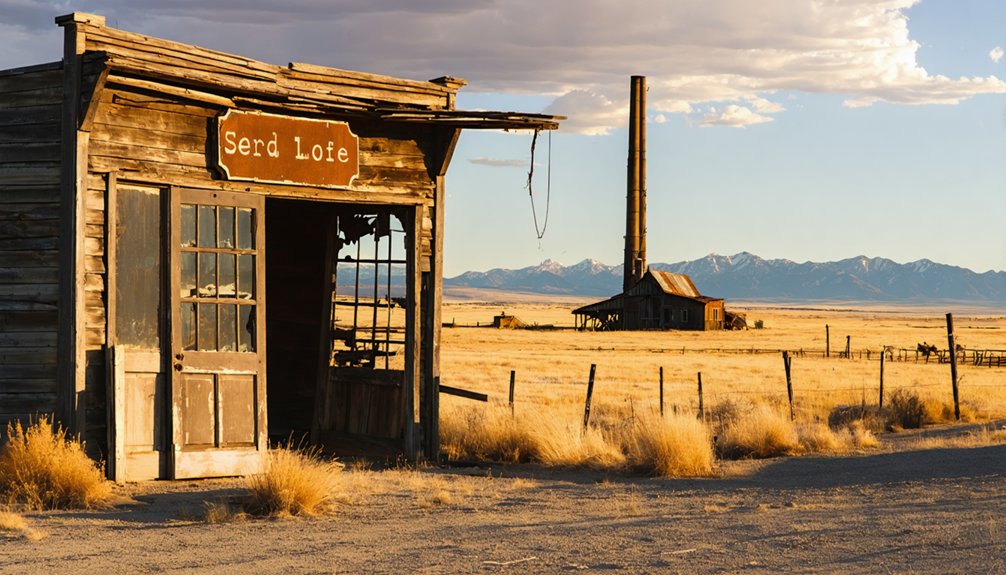
Once you’ve explored Stark, you can extend your route to Granite Ghost Town State Park near Philipsburg, where preserved 1890s silver-era ruins reward the short detour off Highway 1.
If you’re hungry for more remote scenery, Lennep offers a quieter stop accessible via Montana Highway 294 and NF-581 west into the Castle Mountains.
Western Montana’s mining corridor makes it easy to string these sites together by region, keeping backtracking to a minimum while deepening your feel for Montana’s boom-and-bust past.
Granite Ghost Town Nearby
Here’s what makes Granite worth the detour:
- Address: 347 Granite Road, Philipsburg, MT 59858
- Access: Take I-90 to Highway 1, then follow signs along Granite Road — watch for the *”Ghost Town 4 Miles”* marker
- Hours: Memorial Day through September 30, daylight hours only
- Contact: Montana Fish, Wildlife & Parks at 406-224-0833
Stage your visit from Philipsburg, arrive early for maximum daylight, and you’ve turned two stops into one focused, history-driven route through western Montana’s mining past.
Lennep’s Historic Appeal
Lennep rounds out a Stark-area road trip with a different kind of quiet — the kind you find down Montana Highway 294 and onto NF-581 west into the Castle Mountains, where a neat ghost town waits without fanfare or park signage to soften the mood. No ranger station greets you here.
What you’ll find instead are historical artifacts embedded in a landscape that time simply forgot to reclaim. Scattered remnants speak louder than any interpretive plaque could.
Preservation efforts here feel less institutional and more accidental — nature and neglect working together rather than against each other. That rawness is exactly what freedom-minded travelers chase.
Lennep rewards people who don’t need a curated experience, just honest terrain, open roads, and the unfiltered residue of Montana’s mining past.
Western Montana Mining Towns
Western Montana’s ghost-town circuit earns its reputation by delivering variety — Stark anchors the experience, but the region’s mining history doesn’t stop there.
You’ll find abandoned structures and mining relics scattered across several worthwhile stops, each one telling a distinct chapter of Montana’s silver-era story.
- Granite Ghost Town State Park – A preserved 1890s silver boomtown near Philipsburg, open Memorial Day through September 30.
- Lennep – A remote settlement accessed via Highway 294 and NF-581, tucked into the Castle Mountains.
- Philipsburg – A practical staging town connecting multiple ghost-town routes.
- Castle Mountains corridor – Links remote former settlements through scenic secondary roads.
Group these stops by region, drive the main highways first, then ease onto gravel roads where the real discoveries wait.
How to Plan Your Day Around Daylight-Only Access?
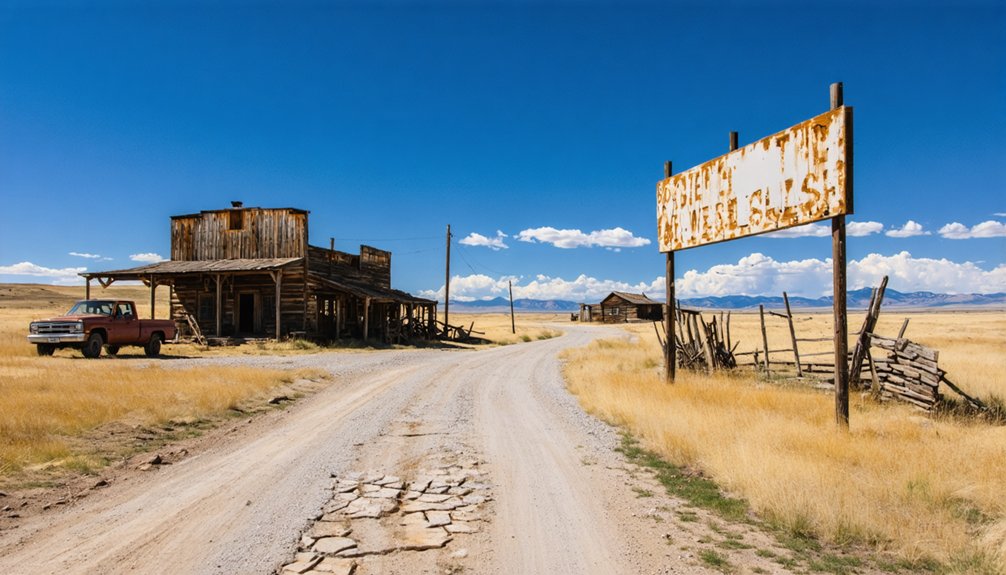
Because Granite Ghost Town State Park opens only during daylight hours, you’ll want to plan your arrival early and map your drive accordingly. Morning light hits the weathered structures beautifully, giving you ideal conditions for historical photography before shadows deepen across the ruins. Don’t waste that golden window.
Map your route using Highway 12 west of Helena or I-90 to the Highway 1 exit, then follow Granite Road until you spot the sign reading “Ghost Town 4 Miles.” That final stretch is gravel, so slow down and absorb it.
Prioritize the scenic viewpoints first, since they anchor your sense of the whole site. Wrap up well before dusk, because rural roads in western Montana demand full visibility. Freedom here means moving smart, not just moving fast.
What to Know Before Driving Montana’s Remote Ghost Town Roads?
Once you’ve timed your arrival and mapped your daylight window, the roads themselves demand your attention. Montana’s remote ghost town roads reward prepared drivers who respect the terrain.
- Expect gravel segments on Granite Road’s final four miles — slow down and let the landscape breathe.
- Watch for local wildlife crossing rural stretches, especially during early morning runs.
- Identify scenic viewpoints along Highway 1 and Highway 12 worth brief stops before reaching Philipsburg.
- Carry water, a spare tire, and a downloaded offline map since cell service thins fast.
You’re trading convenience for raw Montana freedom, and that exchange is worth every unpaved mile. The slower you drive, the more the silver-era story reveals itself through ridgelines, abandoned structures, and open sky.
What to Pack for a Montana Ghost Town Road Trip?
Packing for a Montana ghost town road trip means thinking like someone who won’t see a gas station, a pharmacy, or a cell tower for hours at a stretch. Load your camping essentials first — water, a first-aid kit, a paper map, and extra fuel.
Granite Ghost Town operates daylight hours only, so bring food you can eat on the move.
Your photography gear deserves equal priority. The crumbling 1890s silver-era structures reward wide-angle shots, but harsh midday light fades fast on overcast days, so pack extra batteries and memory cards.
Wear sturdy boots for uneven terrain, and toss a rain layer into your pack. Rural Montana doesn’t wait for you to realize what you forgot.
Frequently Asked Questions
Is There a Fee to Enter Granite Ghost Town State Park?
History’s open door welcomes you freely—no fee blocks your path to Granite Ghost Town’s historical preservation and wildlife viewing. You’ll roam daylight hours unrestricted, soaking in Montana’s silver-era ruins with adventurous, untethered freedom.
Are Pets Allowed on the Trails at Granite Ghost Town?
The knowledge base doesn’t confirm pet policies, so you’ll want to call 406-224-0833 before heading out. Always prioritize your pet’s safety on unpredictable trail conditions at historic ghost town sites.
Is the Road to Stark, Montana Suitable for RVS?
Exploring Montana’s rugged veins of adventure, road conditions to Stark can be rough. RV accessibility isn’t guaranteed, so you’ll want to research current routes, drive cautiously on gravel segments, and confirm road suitability before hitching up your rig.
Are Restroom Facilities Available at Granite Ghost Town State Park?
The knowledge doesn’t confirm restroom facilities at Granite Ghost Town State Park. Before you venture out, call the park directly at 406-224-0833 to verify park amenities—don’t let uncertain restroom facilities derail your wild, freedom-chasing adventure!
Can You Camp Overnight Near Stark or Granite Ghost Town?
Like a campfire’s fleeting glow, overnight stays aren’t confirmed at Granite Ghost Town—it’s daylight-only. You’ll want to secure camping permits nearby, stay alert for wildlife encounters, and embrace the freedom of Montana’s open, star-filled surroundings.
References
- https://fwp.mt.gov/stateparks/granite-ghost-town
- https://www.greatfallstribune.com/story/life/my-montana/2018/06/28/these-12-best-ghost-towns-see-montana/736153002/
- https://visitmt.com/listing/granite-ghost-town-state-park-6737
- https://montanastateparksfoundation.org/parks/granite-ghost-town-state-park/