Planning a ghost town road trip to Sveadal, Kansas means chasing one of the state’s most fleeting chapters. Founded in 1868 near the Smoky Hill River, Sveadal served as McPherson County’s first county seat before collapsing within three years. You’ll find no markers or museums waiting for you, just raw, quiet history absorbed into Lindsborg’s outskirts. It’s a destination built for curious explorers who appreciate unfiltered stories, and there’s far more to this town’s rise and fall than you’d expect.
Key Takeaways
- Sveadal, founded in 1868 near the Smoky Hill River, served briefly as McPherson County’s first seat before declining by 1871.
- No active townsite remains; Sveadal’s footprint has been absorbed into Lindsborg’s outskirts with no markers or museums present.
- The original courthouse, later repurposed as a tool shed, still stood in the late 1980s as the sole remnant.
- Combine your visit with nearby ghost towns like Bridgeport, Coronado, and Marquette-area settlements for a fuller day trip.
- Keep your schedule flexible, visit during daylight, and photograph everything to document these rapidly disappearing historical sites.
What Was Sveadal, Kansas?
Though it never grew into much of a town, Sveadal, Kansas, had a brief but notable role in shaping McPherson County‘s early history.
Major Leonard N. Holmberg founded it in 1868 near the Smoky Hill River, naming it after his Swedish homeland.
He built a general store that doubled as the area’s first courthouse, where locals organized McPherson County on March 6, 1870.
Who Founded Sveadal and How It Became a County Seat
Major Leonard N. Holmberg founded Sveadal in 1868, naming it after his homeland of Sweden. He wasn’t just a town namer — he built a general store that became the heart of early settler stories in McPherson County.
That store doubled as the region’s first courthouse, a remarkable piece of historical architecture where real decisions shaped frontier life.
How a General Store Became McPherson County’s First Courthouse
When Holmberg built his general store along the Smoky Hill River, he probably wasn’t envisioning a courthouse. Yet on March 6, 1870, that same building hosted the meeting that officially organized McPherson County. You’re looking at historical architecture that pulled double duty — part trading post, part seat of local government.
Local legends surrounding Sveadal often skip this detail, but it matters. The store gave settlers a physical anchor for civic life before any formal institutions existed. Holmberg served as both postmaster and justice of the peace, making that single structure the administrative heart of an emerging county.
The building survived long enough to stand on Lindsborg’s outskirts in the late 1980s, repurposed as a tool shed — a quiet, unglamorous ending for McPherson County’s first courthouse.
Why Sveadal Collapsed Within Three Years of Its Founding
Sveadal’s collapse came fast, and the reasons aren’t hard to trace. When you dig into the record, the pattern becomes clear:
- No population base – Sveadal never attracted enough settlers to sustain itself beyond Holmberg’s general store.
- Post office closure in 1871 – Losing mail service signaled the town’s economic decline and cut its connection to regional networks.
- Population migration to Lindsborg – Swedish settlers gravitated toward Lindsborg’s stronger, community-driven foundation instead.
- Administrative function ended – Once the county seat moved, Sveadal lost its only real reason to exist.
You’re looking at a town that ran on administrative momentum rather than organic growth. When that momentum stopped, nothing held Sveadal together.
Within three years, it had effectively ceased to function as a settlement.
What’s Left to See at Sveadal Today?
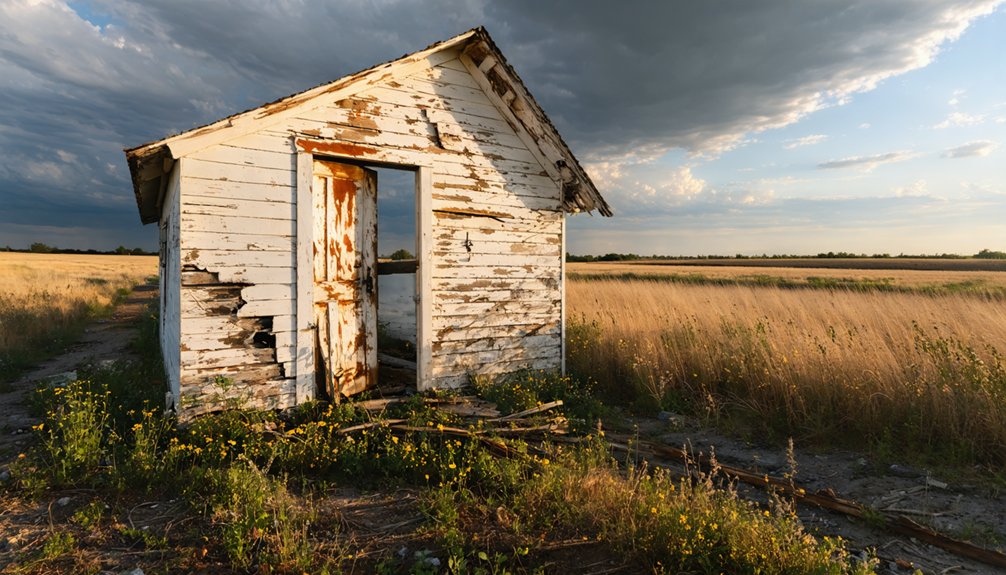
When you visit Sveadal today, you won’t find much of a townsite, but you can still track down the original courthouse and general store building on the outskirts of Lindsborg.
As of the late 1980s, the structure was still standing, though it had been repurposed as a tool shed — a quiet, unglamorous end for what was once McPherson County’s first seat of government.
The surrounding Lindsborg area also rewards curious travelers with deep Swedish settlement history that puts Sveadal’s brief rise and quick collapse into vivid context.
The Old Courthouse Building
Though little remains of Sveadal today, one tangible piece of its history survived into the late 1980s: the original general store that doubled as the area’s first courthouse. This modest structure of historical architecture carried serious weight — it’s where McPherson County officially organized on March 6, 1870.
If you visit the outskirts of Lindsborg, here’s what you should know:
- The building still stood in the late 1980s, repurposed as a tool shed.
- It marks the site where local legends of Swedish settlement took root.
- Holmberg ran his post office and justice duties from inside these walls.
- No active townsite remains — this structure was Sveadal’s last physical footprint.
Don’t expect a landmark sign. Expect raw, unfiltered history.
Outskirts Of Lindsborg
Standing on the outskirts of Lindsborg, you’re fundamentally standing in Sveadal — the two sites overlap so completely that the ghost town’s footprint has been absorbed into its more successful neighbor.
The most tangible piece of historical architecture still connecting you to Sveadal’s brief reign as county seat is the original courthouse and general store building. As recently as the late 1980s, it stood quietly on Lindsborg’s edge, repurposed as a tool shed — functional obscurity rather than dramatic ruin.
Local legends surrounding Holmberg’s ambitious but short-lived town give the site unexpected depth. You won’t find markers or museums here, but that raw, unpolished quality is exactly what makes Sveadal worth tracking down.
Freedom-seekers and history hunters will appreciate what patience reveals.
Swedish Settlement History
The courthouse-turned-tool-shed isn’t just a quirky footnote — it’s a thread that pulls you directly into the broader story of Swedish settlement across central Kansas. Holmberg named Sveadal after his homeland, and that identity never fully disappeared. When you explore this area, you’re tracing a migration pattern that shaped the entire region.
Follow these four threads to deepen your visit:
- Walk Lindsborg’s streets — its historic architecture echoes the same Swedish roots Sveadal once claimed.
- Research local legends surrounding Holmberg’s military company and courthouse meetings.
- Visit the Smoky Hill River corridor where settlement patterns shifted dramatically after 1871.
- Connect Sveadal’s decline directly to Lindsborg’s rise as the dominant Swedish community.
You’re not just visiting a ghost town — you’re reading a living migration story.
Ghost Towns Near Sveadal Worth Visiting the Same Day
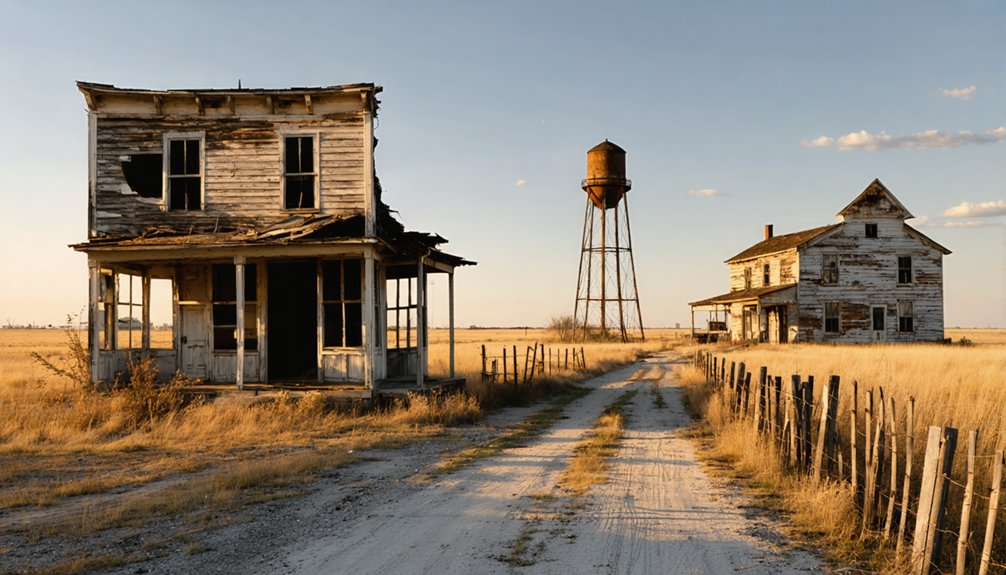
If you’re already out exploring central Kansas, you can easily turn your Sveadal stop into a fuller day trip by adding nearby ghost towns to your route.
McPherson County and the surrounding region hold several extinct settlements that share Sveadal’s story of Swedish immigration, short-lived ambition, and quiet abandonment.
Pack a good map, plan your stops in advance, and you’ll cover more history in a single drive than most people discover in a lifetime.
Nearby Kansas Ghost Towns
Sveadal makes a natural anchor for a longer ghost town loop through central Kansas, where McPherson and surrounding counties hold several vanished settlements worth pairing into a single day trip.
The region’s historical architecture and local legends give each stop its own character, so you’re never retracing the same story twice.
Consider adding these stops to your route:
- Bridgeport – An early McPherson County settlement with documented townsite remnants.
- Coronado – A short-lived community tied to the county’s Swedish immigration wave.
- Canton area ghost sites – Small platted towns that dissolved before gaining traction.
- Marquette vicinity settlements – Quiet farmland hides several forgotten plats worth locating on old county maps.
Pack a printed county plat map—you’ll need it.
Day Trip Planning Tips
Knowing which ghost towns sit near Sveadal is one thing—knowing how to string them into a single efficient day trip is another. Start early in Lindsborg, where you can locate the former courthouse building on the town’s outskirts before crowds arrive.
Pack water, a paper map, and a charged phone—rural McPherson County doesn’t always have reliable signal.
Move between sites with intention, treating each stop as a chapter in a larger story of historical preservation and Swedish settlement. Community stories don’t survive without curious visitors willing to seek them out.
Keep your schedule loose enough to explore unmarked areas, but tight enough to reach each site during daylight. Photograph everything. These places don’t wait around forever.
Frequently Asked Questions
What Is the Best Time of Year to Visit Sveadal?
Spring and fall paint the Kansas plains golden—you’ll find the sweetest seasonal weather then. Tourist crowds are thin year-round, so you’re free to roam Sveadal’s historic outskirts on your own terms anytime.
Is the Sveadal Townsite Located on Private Property?
The sources don’t confirm whether it’s private property, but you’ll want to respect private property restrictions and stay aware of trespassing laws before exploring. Always do your homework so you’re roaming freely and legally!
Are There Any Museums in Lindsborg Covering Sveadal’s History?
Specific sources don’t confirm a dedicated museum, but you’ll find historical landmarks and local events in Lindsborg that celebrate Swedish heritage, possibly touching on Sveadal’s story—so scout the Swedish-settled streets for surprises!
How Far Is Sveadal From Wichita or Salina?
You’ll find Sveadal roughly 90 miles north of Wichita and 20 miles from Salina, making it an easy detour when you’re chasing historical landmarks and uncovering local legends across Kansas’s open, liberating backroads.
Is There Parking Available Near the Old Courthouse Building?
Ready to explore freely? Parking options near the old courthouse aren’t formally documented, but you’ll find accessibility concerns minimal — simply pull off near Lindsborg’s outskirts, where the former tool shed sits waiting for your curious visit.
References
- https://digging-history.com/2014/10/29/ghost-town-wednesday-sveadal-mcpherson-county-kansas/
- https://www.youtube.com/watch?v=OyBXD18P_j4
- https://www.visitoldmeadecounty.com/newpage815e5c49
- https://legendsofkansas.com/sumner-county-kansas-extinct-towns/
- https://www.youtube.com/watch?v=dy7nLwjHkbY
- https://vi.wikipedia.org/wiki/Danh_sách_phố_ma_tại_Kansas
- https://en.wikipedia.org/wiki/List_of_ghost_towns_in_Kansas
- https://esirc.emporia.edu/bitstream/handle/123456789/1577/McQuin Vol 8 Num 3.pdf?sequence=1
- https://esirc.emporia.edu/server/api/core/bitstreams/eee1d0eb-8529-4e95-a732-12dc55fd687d/content