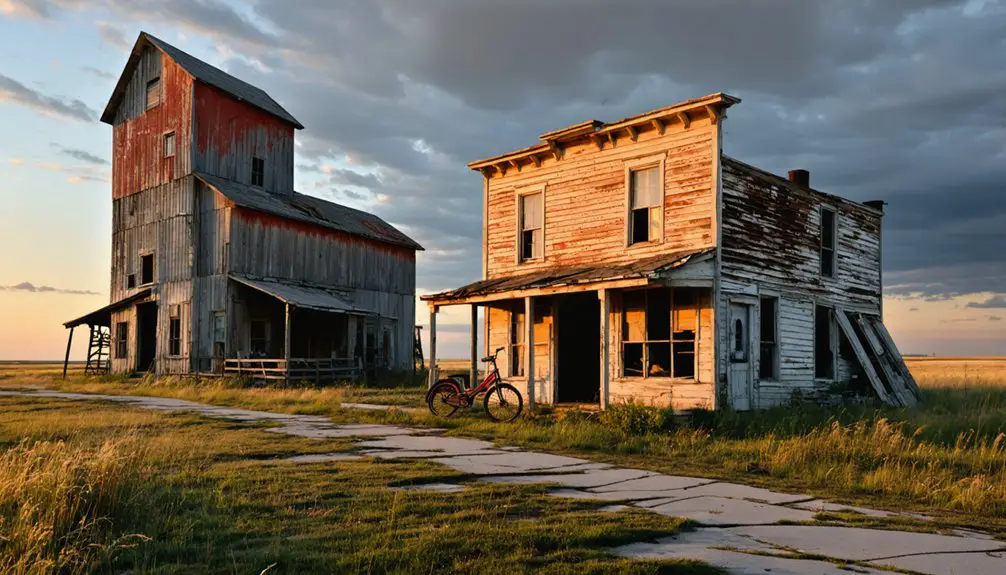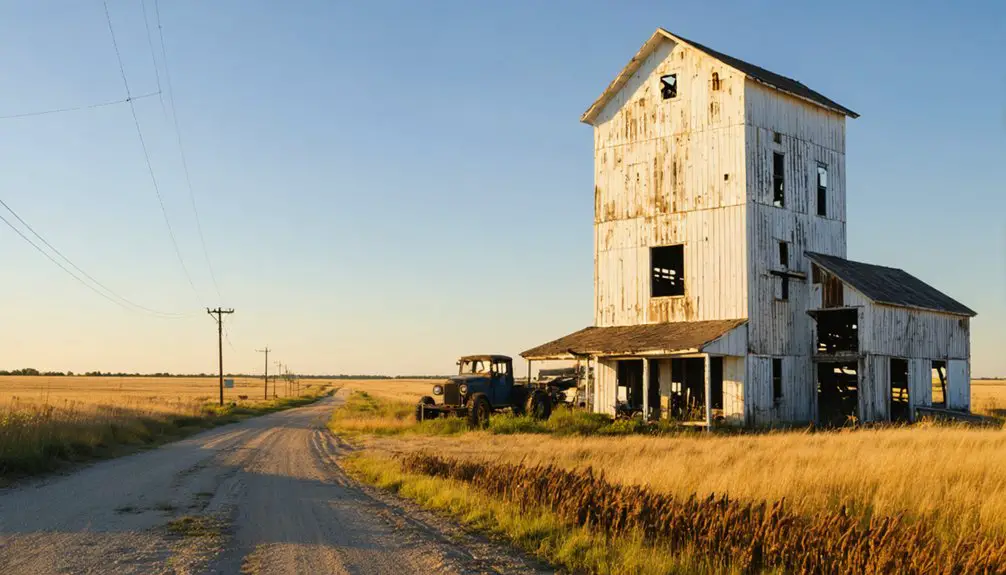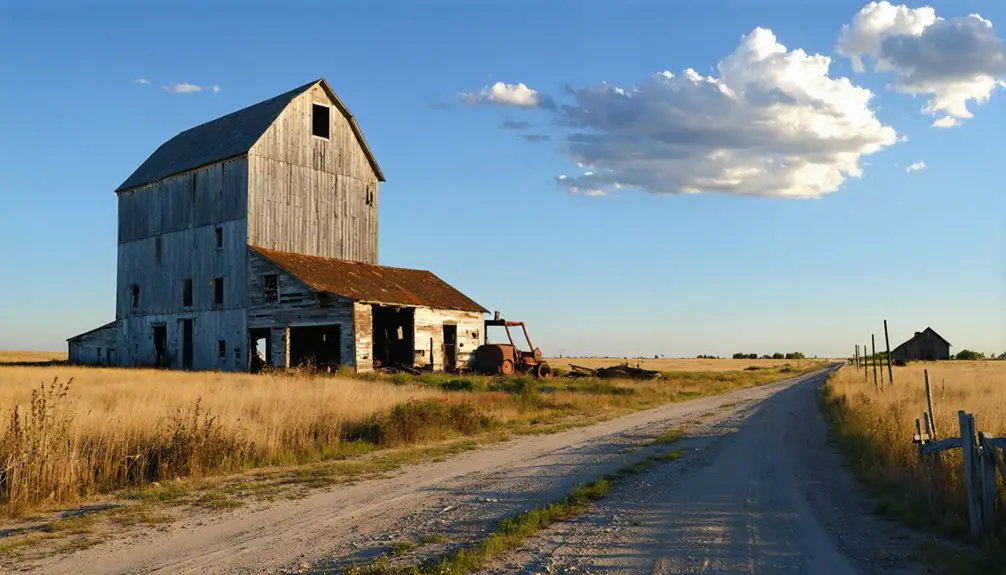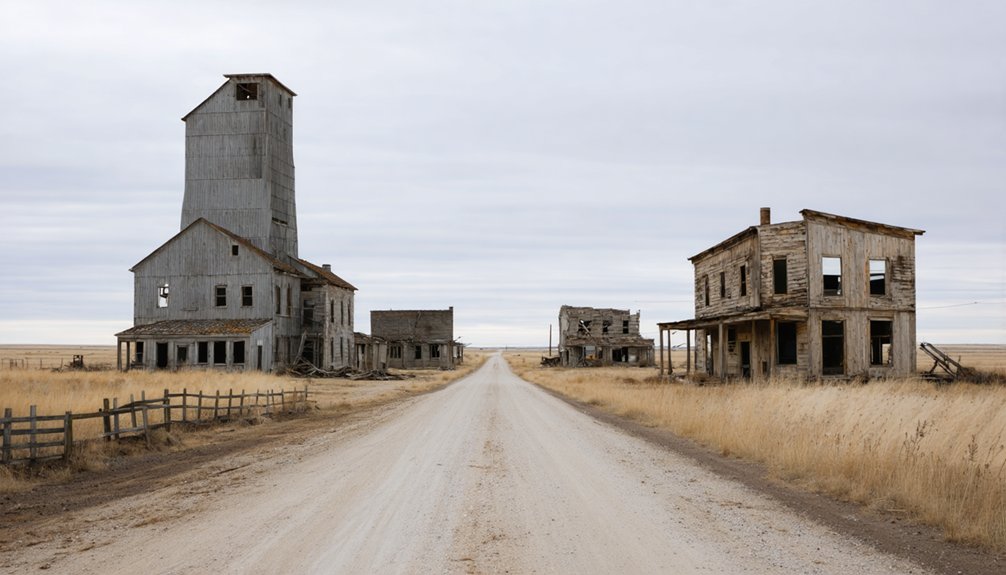
Planning a ghost town road trip to Leipzig, North Dakota means exploring two towns for the price of one. Start in Elgin, then head eight miles north to find the original Old Leipzig site, marked by a bronze plaque and a few surviving structures. Founded in 1896 by German-Russian immigrants, it was abandoned after the railroad bypassed it by 11 miles. Stick around — there’s a fascinating story of heritage, survival, and prairie history waiting for you.
Key Takeaways
- Old Leipzig, founded in 1896 by German-Russian immigrants, sits about eight miles north of Elgin, North Dakota, making Elgin your ideal starting point.
- Visit in September or October for scenic prairie views, cooler temperatures, fewer crowds, and better photography lighting.
- Bring water, snacks, sturdy boots, offline maps, and a printed map, as roads are unpaved and cell service is limited.
- A bronze plaque marks the original site, and several historic structures, including churches and a schoolhouse, still stand for exploration.
- Extend your trip by visiting nearby New Leipzig and German-Russian ghost towns like Krassna and Strasburg for a fuller historical experience.
What Is the Leipzig, North Dakota Ghost Town?
Leipzig, North Dakota, is a ghost town tucked into Grant County that traces its origins to 1896, when 15 German-Russian immigrants arrived and built a community named after their former home in Bessarabia. That Bessarabian town had itself borrowed its name from Leipzig, Germany, carrying layers of cultural heritage across continents and generations.
The settlement grew quickly, reaching nearly 200 residents by 1909. Then railroad history intervened. When the Northern Pacific Railroad bypassed the town by roughly 11 miles to the southwest, residents abandoned the original site and relocated to what became New Leipzig.
Who Were the German-Russian Settlers Who Founded Leipzig?
The people who built Leipzig weren’t random pioneers chasing open land. They were 15 German-Russian settlers with deep roots and a clear identity tied to their German Russian heritage. They’d lived in Bessarabia, a region under Russian imperial rule, where German colonists had established tight-knit communities since the early 1800s.
Their settlement origins traced back even further, to Leipzig, Germany itself — a name they carried across continents and planted in North Dakota soil in 1896.
When you dig into this history, you’ll find people who moved deliberately, preserving culture through names, faith, and community structure. They established a post office that same year and grew to nearly 200 residents by 1909. That kind of momentum tells you everything about who these settlers were.
Why Did the Railroad Kill Old Leipzig in 1910?
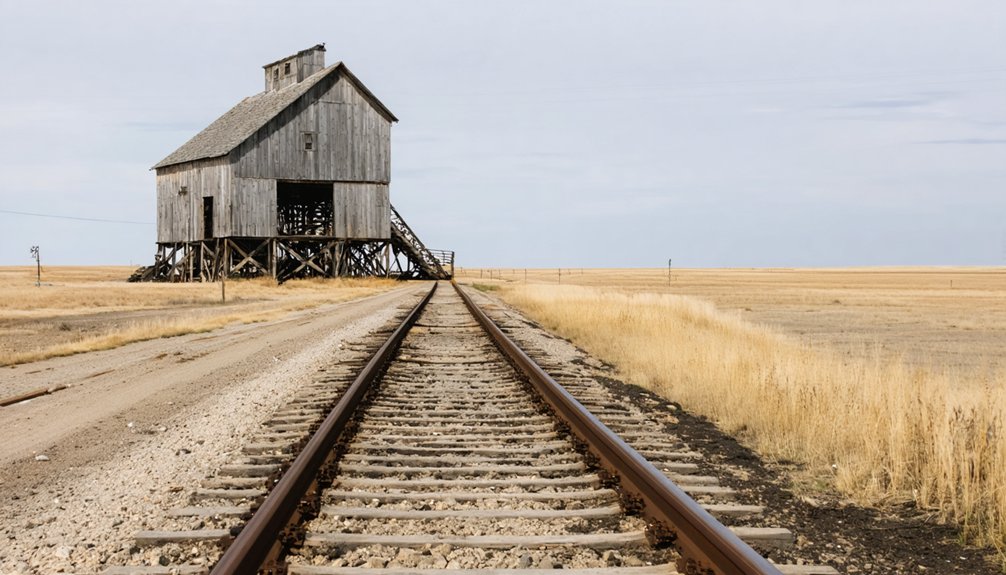
When the Northern Pacific Railroad bypassed Old Leipzig by roughly 11 miles to the southwest, it didn’t just redirect a train route — it redirected an entire community’s future.
Railroad expansion in early North Dakota wasn’t just about commerce; it determined which towns survived and which ones vanished. Without rail access, Old Leipzig couldn’t compete.
Residents packed up and followed the tracks, founding New Leipzig where opportunity now existed.
What Remains at the Old Leipzig Townsite Today?
When you arrive at the Old Leipzig townsite, you won’t find much — but a bronze plaque marks the site and anchors your visit with a sense of place.
A couple of churches and a schoolhouse still stand, giving you rare, tangible connections to the original 1896 settlement.
Beyond those survivors, the landscape has largely reclaimed what once housed nearly 200 people.
Surviving Churches And Schoolhouse
Although little survives at the old Leipzig townsite, what remains tells a quiet but powerful story. When you visit, you’ll find a couple of churches still standing alongside a schoolhouse — rare examples of local architecture that outlasted the town itself.
These structures give you a tangible connection to the German-Russian families who built their lives here before the railroad pulled everything southwest. Ghost town preservation isn’t always dramatic, but these buildings carry real weight.
They stood while residents packed up and moved to New Leipzig, and they’re still standing now. Walk the grounds and you’ll sense the community that once gathered here — for worship, for learning, for daily life.
It’s a modest stop, but an honest one.
Bronze Plaque Marks Site
Anchoring the old Leipzig townsite is a bronze plaque that marks where the community once stood. It’s a small but powerful symbol of local history, giving you a tangible connection to the German-Russian settlers who built their lives here in 1896.
You won’t find a bustling town square or paved streets, but that plaque stands as a quiet act of heritage preservation, ensuring the story doesn’t disappear entirely. When you visit, take a moment to read it and absorb what it represents — a community that thrived, reached nearly 200 residents, and then vanished when the railroad bypassed them.
It’s exactly the kind of unfiltered, off-the-beaten-path discovery that makes a ghost town road trip worth taking.
Little Else Remains
Beyond the bronze plaque, there’s not much left at the old Leipzig townsite — though “not much” doesn’t mean nothing. A couple of churches and a schoolhouse still stand, offering rare glimpses of the cultural heritage that German-Russian settlers carried across continents.
These abandoned buildings quietly hold the story of a community that once reached 200 people before the railroad redirected everything.
You won’t find roads cutting through the site or a main street to walk. The landscape has largely reclaimed what settlers built.
But if you look closely, those surviving structures speak louder than silence. For anyone chasing North Dakota’s ghost town history, Old Leipzig rewards the effort — not with spectacle, but with the kind of understated, weathered authenticity that no restored historic district can replicate.
How Do You Get to the Old Leipzig Ghost Town Site?
Since Old Leipzig sits about eight miles north of Elgin, North Dakota, you’ll want to use Elgin as your starting point and navigate north toward the original townsite. Elgin offers basic services before you head out onto rural roads, so fuel up and check your directions carefully.
The surrounding Grant County landscape is wide open, giving you a real sense of the isolation early German-Russian settlers navigated when they built this community from scratch.
Once you reach the area, watch for the bronze plaque marking the townsite — it stands as a quiet act of historical preservation, anchoring community stories that might otherwise disappear entirely.
Cell service can be limited, so download offline maps before leaving Elgin.
The drive itself rewards curious travelers who appreciate raw, unfiltered North Dakota prairie history.
When Is the Best Time to Visit the Old Leipzig Townsite?
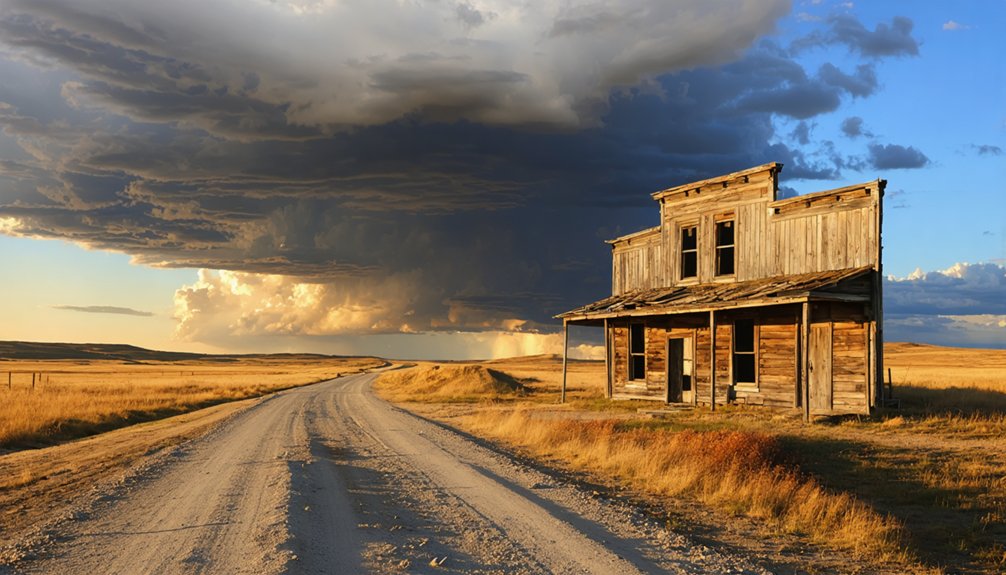
If you’re planning a visit to the Old Leipzig townsite, you’ll find summer gives you the best road conditions and easiest access to the rural site.
Winter in Grant County brings brutal cold and snow that can make backcountry travel genuinely dangerous, so you’ll want to avoid those months entirely.
If you can time your trip for fall, you’ll catch sweeping prairie views with seasonal color that makes the historic landscape even more striking.
Summer Offers Best Access
Summer gives you the best shot at actually reaching the Old Leipzig townsite, where unpaved rural roads can turn impassable after spring thaw or heavy rain. Dry summer conditions let you drive out freely, explore what remains of the historical architecture, and take your time reading the bronze plaque marking where settlers once built their lives.
You’ll move at your own pace without fighting mud or early snowfall. Local legends about the German-Russian founders travel better when you’re standing on the actual ground, not rushing through before a storm rolls in.
Plan for June through August if you want reliable road conditions, good light for photography, and enough warmth to walk the site comfortably before continuing your ghost town road trip across Grant County.
Avoid Harsh Winter Months
North Dakota winters will shut down your plans fast, and the Old Leipzig townsite offers no shelter, no services, and no maintained roads to pull you out if conditions turn. Temperatures drop brutally, snowdrifts erase rural routes, and you’ll find yourself stranded before you ever reach the architectural remnants you came to see.
December through February aren’t worth the risk. March and November sit in uncertain territory, offering unpredictable freezes that can trap vehicles on unmarked back roads.
If you want genuine access to the cultural heritage preserved at this site, plan between late spring and early fall. You’ll move freely, read the bronze plaque clearly, and explore what little remains without fighting the landscape just to get there.
Fall Provides Scenic Views
Fall transforms the Grant County landscape into something worth driving for, and timing your visit to the Old Leipzig townsite around September or October puts you in the best possible position. Cooler temperatures make walking the grounds comfortable, and the open prairie shifts into warm golden tones that frame the remaining historical architecture beautifully.
Here’s why fall works best for this road trip:
- Golden light enhances photography of surviving churches and the bronze plaque
- Mild temperatures support longer exploration without weather interference
- Harvest season connects you to the agricultural roots local legends describe
- Fewer visitors mean quieter, more personal moments at the site
You’ll appreciate the stillness that fall brings, letting the weight of Leipzig’s abandoned history actually sink in.
What Should You Bring to the Old Leipzig Townsite?

Since the old Leipzig townsite offers little in the way of modern amenities, you’ll want to pack smart before making the drive out. Bring plenty of water, snacks, and a fully charged phone for navigation, since roads in the area can be sparse and unreliable.
Wear sturdy boots suited for uneven terrain, and stay alert for local wildlife as you explore the open land surrounding the site. A camera is essential for capturing the bronze plaque, remaining structures, and sweeping prairie landscape.
Pack a notebook to jot down observations that support historical preservation efforts or personal research. A printed map helps if cell service drops.
Traveling light but prepared lets you fully absorb the freedom and quiet that define this forgotten North Dakota landmark.
Should You Visit New Leipzig on the Same Trip?
Once you’ve packed up from the old townsite, don’t skip New Leipzig just because it’s a few miles down the road. This surviving community completes the story you just walked through.
Don’t skip New Leipzig — just miles away, this surviving town completes the story the old townsite left behind.
Here’s why New Leipzig earns a stop for heritage tourism:
- It shows where the railroad redirected an entire population
- Local culture reflects the same German-Russian roots as the original settlers
- Cultural preservation efforts keep that immigrant story alive in real, tangible ways
- Small-town businesses and landmarks reward curious, independent travelers
Pairing both sites turns a single roadside stop into a full historical arc. You’ll understand not just what was lost, but what survived. That contrast makes your road trip far more meaningful than any single ghost town visit alone could deliver.
What Other German-Russian Ghost Towns Are Near Leipzig?
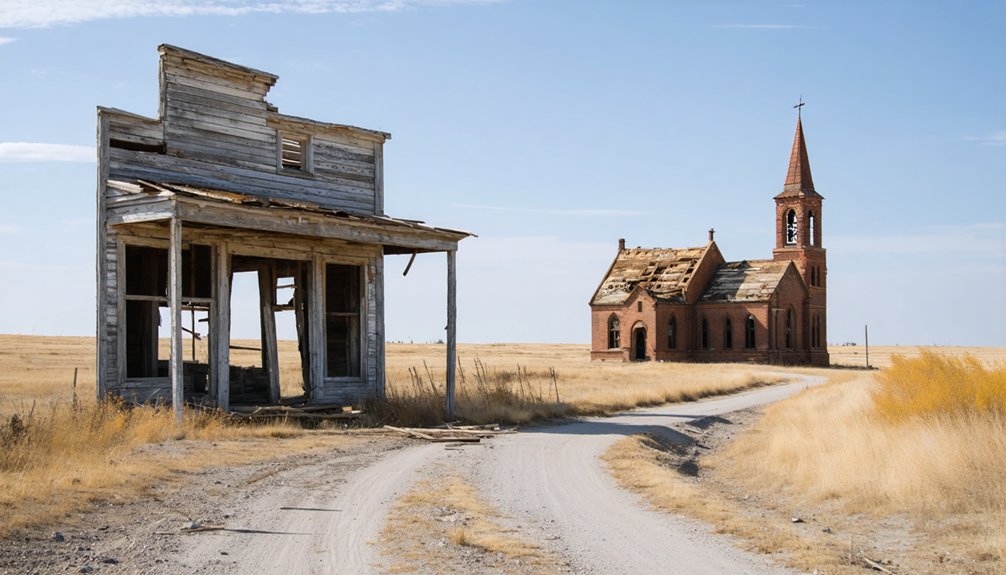
Leipzig wasn’t the only German-Russian settlement that faded from the North Dakota map. Grant and Emmons counties hold several vanished communities founded by the same immigrant wave that built Leipzig.
Towns like Krassna and Strasburg carry that same Bessarabian German identity, and Strasburg still breathes — you can explore local cuisine tied directly to that heritage and catch cultural festivals celebrating German-Russian roots.
Some surrounding ghost towns left only cemeteries and cellar depressions, while others kept a church standing against the prairie sky.
As you plan your route, dig into regional historical societies for mapped locations of these lost settlements.
Pairing Leipzig’s old townsite with these nearby stops creates a richer picture of how an entire culture planted itself — and sometimes disappeared — across the northern plains.
Frequently Asked Questions
What Does the Name Leipzig Actually Mean in Its Original Language?
You’re exploring a name with deep linguistic origins — Leipzig traces back to a Slavic word meaning “a settlement by the lime trees,” carrying historical significance dating to around 1015, connecting you to centuries of rich cultural heritage.
How Many People Lived in Leipzig Before It Was Abandoned?
You’ll find that Leipzig’s population reached around 200 people by 1909, before ghost town preservation became its story. Abandoned town legends echo through its past, reminding you how quickly railroad decisions could erase a thriving community.
Was Leipzig Ever Officially Incorporated as a North Dakota Town?
The available records don’t confirm Leipzig’s official incorporation. You’ll find its historical architecture and local legends speak volumes though — it thrived as a living settlement, grew to 200 residents, then vanished when the railroad bypassed it.
Is There an Entrance Fee to Visit the Old Leipzig Townsite?
Ready to explore freely? You won’t pay an entrance fee to visit Old Leipzig’s townsite. It’s an open, accessible stop perfect for ghost town photography and honoring historical site preservation on your own terms.
Did Any Leipzig Settlers Ever Return After Moving to New Leipzig?
The records don’t confirm settlers returning, but historical migration patterns show most embraced New Leipzig’s railroad opportunities. Cultural influences on settlement kept their German-Russian heritage alive there, letting you trace that resilient community spirit forward, not backward.
References
- https://en.wikipedia.org/wiki/Leipzig
- https://kids.kiddle.co/Leipzig
- https://news.prairiepublic.org/show/dakota-datebook-archive/2022-06-10/old-leipzig-born
- https://en.wikipedia.org/wiki/List_of_ghost_towns_in_North_Dakota
- https://en.wikipedia.org/wiki/New_Leipzig
- https://zh.wikipedia.org/wiki/萊比錫_(北達科他州)
- https://de.wikipedia.org/wiki/New_Leipzig
- https://www.youtube.com/watch?v=QKxWY4tHTOU
- https://northernsentry.com/2025/06/26/north-dakota-ghost-towns/
- https://leipglo.com/2015/05/12/new-leipzig-north-dakota/