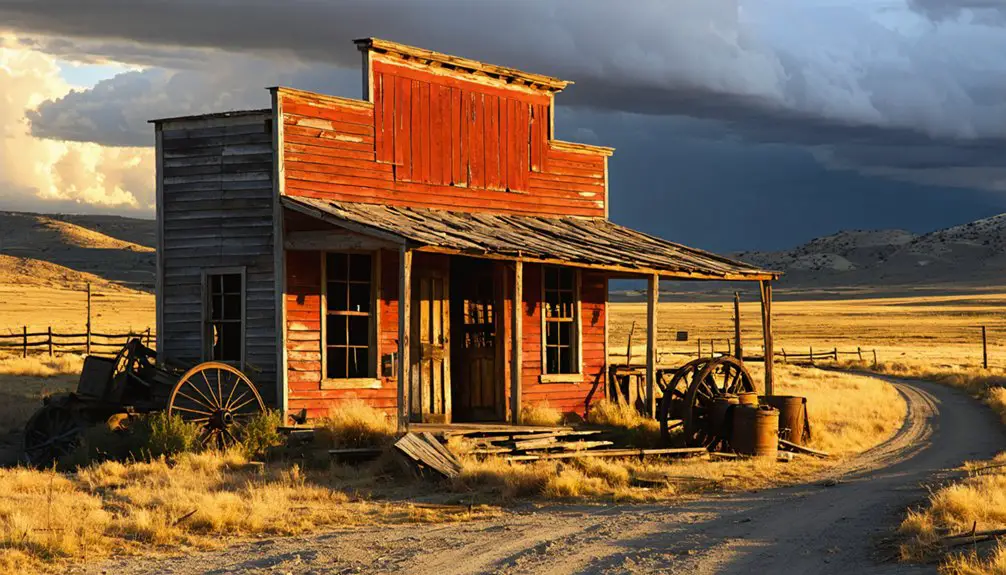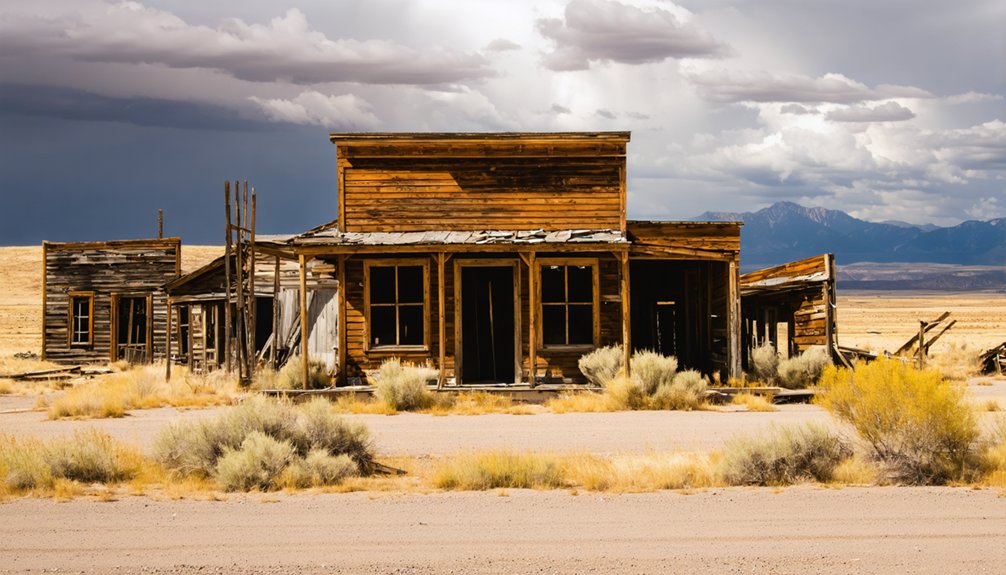
Planning a ghost town road trip to Tubb Town, Wyoming is easier than you’d think. Head to U.S. Route 16, about 2 miles northeast of Newcastle, and look for the historical marker near Tubb Town Road. Founded in 1889 by DeLoss Dewitt Tubbs, this wild frontier settlement packed saloons, brothels, and nightly brawls into just a few chaotic months before vanishing overnight. Stick around, and you’ll uncover the full story behind Wyoming’s most notorious boom-and-bust town.
Key Takeaways
- Tubb Town sits along U.S. Route 16, 2 miles northeast of Newcastle, Wyoming, marked by a single roadside historical marker.
- No original structures remain, making this a quick roadside stop rather than a walkable ghost town experience.
- Founded in 1889, Tubb Town collapsed within 48 hours after the railroad chose Newcastle over the settlement.
- The site was notorious for saloons, brothels, and nightly brawls, representing Wyoming Territory’s wildest frontier culture.
- Pair your visit with nearby Newcastle Historic Downtown, Weston County Museum, or the Cambria Ghost Town Area for a fuller trip.
What Was Tubb Town and Why Does It Matter?
Tucked just two miles northeast of Newcastle along U.S. Route 16, Tubb Town represents everything raw and restless about the Wild West. DeLoss Dewitt Tubbs founded this settlement in spring 1889, banking on a railroad route that would transform his storefront into a commercial hub. Saloons, brothels, and dance halls quickly gave the town a reputation as one of Wyoming Territory’s rowdiest spots.
Its historical significance lies in how perfectly it captures frontier boom-and-bust cycles. When the railroad chose Newcastle instead, Tubb Town collapsed within 48 hours. Residents literally picked up their buildings and moved.
You’re not visiting a forgotten backwater — you’re standing where an entire community gambled on a single decision and lost fast. That story deserves your attention.
The Rowdy Frontier History That Made Tubb Town Notorious
Tubb Town wasn’t just a railroad town waiting for its big break — it was also one of the rowdiest settlements in Wyoming Territory.
You’ll find accounts of saloons, brothels, dance halls, and sporting houses that gave the town a rough-and-tumble reputation almost from the start.
Frontier law here had its own flavor, with at least one sheriff reportedly telling brawlers to keep fighting but warning he’d shoot the first man who reached for a gun.
Saloons And Brothels
While Tubb Town only lasted a few months, it packed in enough chaos to earn a reputation as one of Wyoming Territory’s rowdiest settlements. Saloons, brothels, and dance halls defined its ghost town architecture, drawing workers and drifters hungry for a good time on the frontier.
Vintage photographs from the era capture similar boom towns built around vice and survival. Tubb Town fit that mold perfectly:
- Saloons operated openly, fueling nightly fights and disorder
- Brothels and sporting houses drew crowds from nearby settlements like Whoop Up
- One local ordinance literally required visitors to buy a round for everyone present
You won’t find a wilder frontier footnote in Wyoming. The town lived fast, burned bright, and disappeared almost overnight.
Frontier Law And Order
Law in Tubb Town was more suggestion than enforcement. Frontier justice here operated on its own terms, and law enforcement wasn’t exactly a priority.
One story captures it perfectly: a sheriff reportedly broke up a brawl but told the fighters to carry on — with one condition. Pull a gun, and he’d kill you himself. That was the line.
You’d have walked through a town where disorder wasn’t just tolerated — it was practically the local culture.
A reported ordinance even required visitors to buy a round of drinks before passing through.
Nobody was above the rules, but the rules themselves were barely above chaos.
Tubb Town didn’t just attract rough characters; it practically advertised for them.
How to Find the Tubb Town Site Near Newcastle
Finding the Tubb Town site is straightforward since it sits right along U.S. Route 16, roughly 2 miles northeast of Newcastle, Wyoming. You won’t find ghost town architecture or standing structures here — historical preservation left only a marker — but the open plains tell their own story.
Tubb Town sits right along U.S. Route 16 — no standing structures, just open plains and a lone historical marker.
Watch for the intersection of U.S. 16 and Tubb Town Road, where the historical marker stands.
- Pull off safely near the marker for photos and reading the site’s history
- Look toward Salt Creek’s east bank, where Tubbs originally platted his boom town
- Pair the stop with other Newcastle-area history sites for a fuller road trip experience
It’s a quick, rewarding roadside stop that delivers real frontier context without requiring much time or planning.
What You’ll Actually See at the Ghost Town Today?
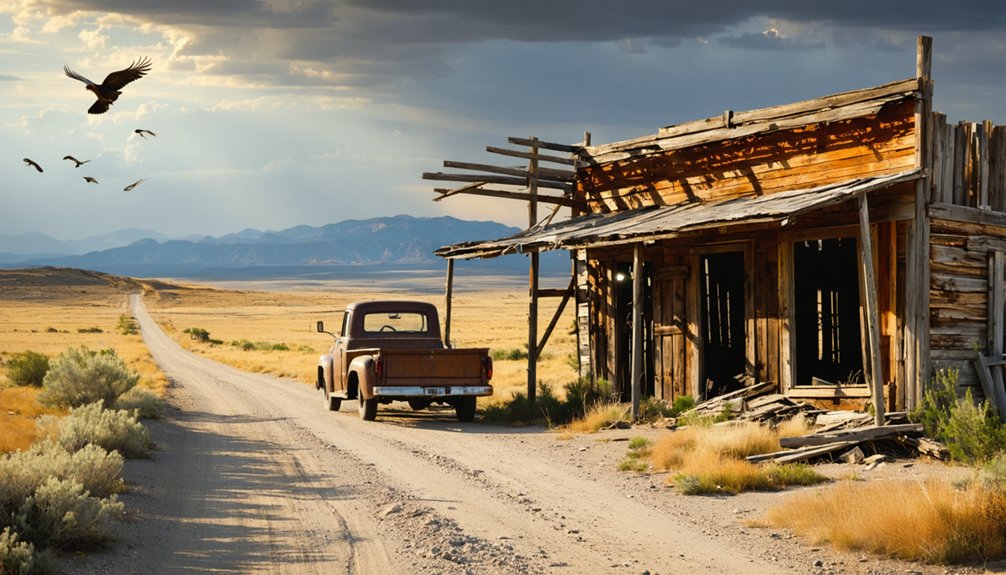
Once you arrive at the Tubb Town site, you’ll quickly realize this is a landscape stop rather than a built ghost town. No original structures survive, and there’s no visitor center waiting with historical artifacts on display.
What you’ll find instead is an open stretch of Wyoming plains beside U.S. Route 16, anchored by a historical marker near the intersection of Tubb Town Road. That marker tells the full story — the railroad gamble, the rowdy saloons, and the 48-hour collapse that followed Newcastle’s first lot sales.
Some visible ruins exist nearby, but they connect to a later recreation attempt, not the original 1889 settlement. Bring your camera, read the marker carefully, and let the wide-open landscape do the storytelling.
Nearby Newcastle and Weston County Stops Worth Adding
Since Tubb Town wraps up quickly, you’ll want a few solid follow-up stops to round out the drive. Newcastle sits just two miles away and carries its own deep connection to Tubb Town’s collapse — it’s practically the town that won.
Weston County rewards curious travelers who appreciate historic preservation and local ghost stories rooted in real frontier chaos.
Consider adding these stops to your itinerary:
- Newcastle Historic Downtown — Walk the streets that absorbed Tubb Town’s buildings and population almost overnight
- Weston County Museum — Dig into regional history, coal mining heritage, and Black Hills settlement stories
- Cambria Ghost Town Area — Another boom-and-bust site nearby, tied directly to the coal discoveries that shaped this entire corridor
Each stop adds meaningful context without backtracking.
How to Make the Most of Your Tubb Town Visit?
Tubb Town won’t take long to explore, so you’ll want to arrive with a clear sense of what you’re actually looking at. Read the historical marker carefully — it tells the full boom-and-bust story and helps you visualize what once stood on those empty plains. Bring a camera, because the open landscape carries its own quiet drama.
Pair the stop with scenic drives through Weston County, where the rolling terrain rewards unhurried travel. After you’ve soaked in the site, head into Newcastle for local dining and a deeper look at the town that fundamentally absorbed Tubb Town overnight.
You’re not just visiting a ghost town here — you’re tracing a single, decisive moment when a railroad decision erased one settlement and built another.
Frequently Asked Questions
Who Was Deloss Dewitt Tubbs, the Founder of Tubb Town?
DeLoss Dewitt Tubbs founded Tubb Town in 1889, and you’ll find his ghost stories woven into Wyoming’s historic landmarks. He’s the ambitious entrepreneur who built his store on Salt Creek, sparking a wild frontier boomtown.
What Railroad Company Bypassed Tubb Town in Favor of Newcastle?
Boldly bypassing Tubb Town, the Burlington and Missouri River Railroad chose Newcastle instead, shaping railroad history forever. You’ll find ghost town legends live on where tracks never came, leaving this wild Wyoming settlement abandoned within 48 hours.
Was Tubb Town Ever Officially Incorporated as a Wyoming Territory Town?
The records don’t confirm Tubb Town ever achieved official incorporation. You’ll find that ghost town tourism and historical preservation efforts keep its wild, fleeting legacy alive through the roadside marker standing near Newcastle today.
What Does “Field City” Mean as an Alternative Name for Tubb Town?
Like a mirage on the plains, “Field City” likely reflected early settlers’ hopes for growth. In ghost town history, abandoned settlements often carried optimistic names—you’d find this alternate label simply distinguished Tubb Town’s open frontier location.
How Long Did Tubb Town Actually Exist Before Being Completely Abandoned?
You’ll find Tubb Town’s entire lifespan lasted mere months in 1889. This abandoned site’s history makes ghost town tourism fascinating — it sprang up in spring, then completely emptied by November 1st after the railroad bypassed it.
References
- https://en.wikipedia.org/wiki/Tubb_Town
- https://cowboystatedaily.com/2024/09/21/wyoming-history-tubb-town-the-rowdiest-town-in-wyoming-territory/
- https://www.wyomingpublicmedia.org/2024-10-31/around-wyoming-thursday-october-31
- https://kids.kiddle.co/Tubb_Town
- https://kingfm.com/wyomings-wildest-bar-brawl-the-tubb-town-throwdown/
- https://www.youtube.com/watch?v=56Jkv-XkUGQ
- https://www.hmdb.org/m.asp?m=34872
- https://wyomingdigitalcollections.ptfs.com/aw-server/rest/product/purl/WSL/i/0309a0d8-d2e2-42ab-ad6f-0f3496f18e50
- https://places.wyo.gov/resources/references-for-the-database