Planning a ghost town road trip to Whitney, Oregon means driving roughly 13 miles from Sumpter through mountain terrain to reach a frozen-in-time company town tucked deep in the Blue Mountains. You’ll find about ten weathered houses, crumbling sheds, and mill ruins left behind after a 1918 fire and a railroad abandonment ended everything. There’s no guided tour—just raw, authentic history waiting to be explored. Stick around to uncover every detail you’ll need before you go.
Key Takeaways
- Whitney, Oregon, founded in 1900, is a historic ghost town featuring around ten decaying structures along a sandy thoroughfare with no guided tours.
- From Sumpter, drive approximately 13 miles via Highway 410, Highway 7, and North Fork Burnt River Road, cresting Larch Summit at 5,082 feet.
- The town’s decline began after the sawmill burned in 1918 and accelerated when the Sumpter Valley Railroad was abandoned in 1947.
- Wear closed-toe shoes, carry a paper map, and expect limited cell service when visiting this remote Blue Mountains location.
- Do not disturb artifacts or grounds; respect preservation laws, watch for wildlife, and observe private land boundaries during your visit.
What Makes Whitney, Oregon Worth the Drive?
Whitney, Oregon won’t greet you with polished tourist attractions or roadside signage—what it offers instead is something rarer: an authentic, nearly untouched glimpse into early 20th-century logging and railroad history.
Founded in 1900, Whitney carries real historical significance as a former company town built by the Nibley Lumber Company and later a prime station on the narrow gauge Sumpter Valley Railroad. You’ll walk streets where 150 residents once lived, worked, and shaped a thriving frontier community.
Local legends surround the railroad’s extraordinary trestle, once considered the second highest in the world. Decaying houses, weathered sheds, and a single sandy thoroughfare tell that story without embellishment.
If you value raw, unfiltered history over curated experiences, Whitney delivers exactly what most tourist destinations can’t—the real thing.
How the Sumpter Valley Railroad Built and Abandoned Whitney
Much of what made Whitney worth founding at all came down to steel rails and a bold engineering vision. Railroad construction brought the narrow gauge Sumpter Valley Railroad into Whitney Valley on June 1, 1901, instantly connecting the logging industry and nearby mining camps to wider markets across 80 miles of track.
One jaw-dropping feature was a towering trestle crossing a deep canyon, once considered the second highest in the world. Engineers removed it in 1915 after deeming it too dangerous to maintain.
When the sawmill burned in 1918, Whitney nearly collapsed overnight. The railroad kept some life flowing through town, but when operators abandoned the line entirely in 1947, Whitney had no reason left to exist. The town simply stopped.
How to Get to Whitney, Oregon From Sumpter
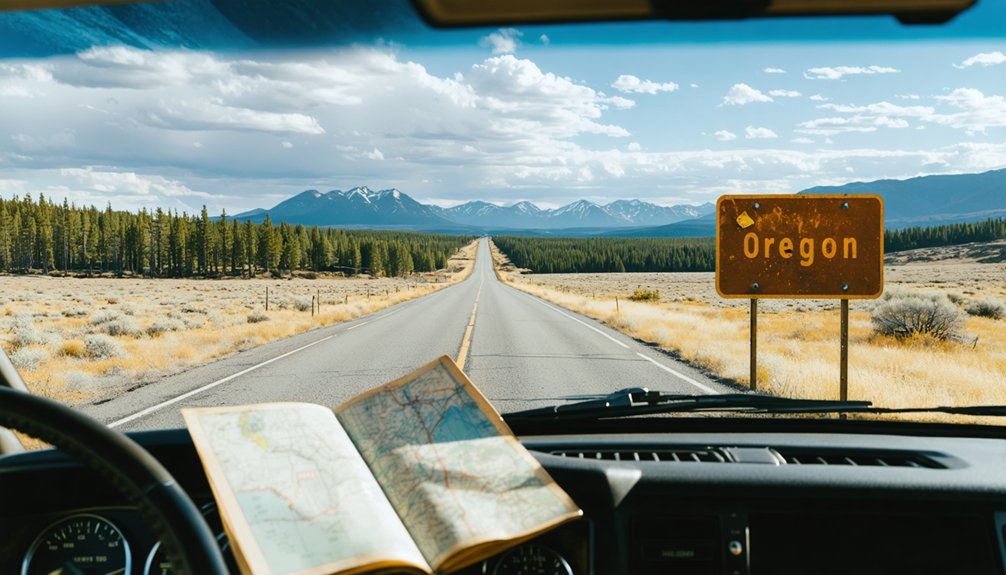
Getting to Whitney from Sumpter takes roughly 13 miles and combines paved highway driving with a short stretch of gravel road. Head south on Highway 410 for 3 miles, then turn right at the T-intersection onto Highway 7.
Thirteen miles from Sumpter to Whitney — paved highway, then gravel, then gone.
Continue 9.7 miles, cresting Larch Summit at 5,082 feet before descending into the valley. Turn left onto North Fork Burnt River Road, and Whitney appears shortly after the pavement ends.
Before you head out, check weather conditions — mountain routes can turn unpredictable fast. Fuel up and grab local cuisine in Sumpter, since you won’t find restaurants or services once you leave town.
Carry a paper map because cell service fundamentally vanishes along this corridor. The drive itself rewards you with stunning high-desert scenery before delivering you straight into Whitney’s weathered, forgotten streets.
What You’ll Actually See at Whitney?
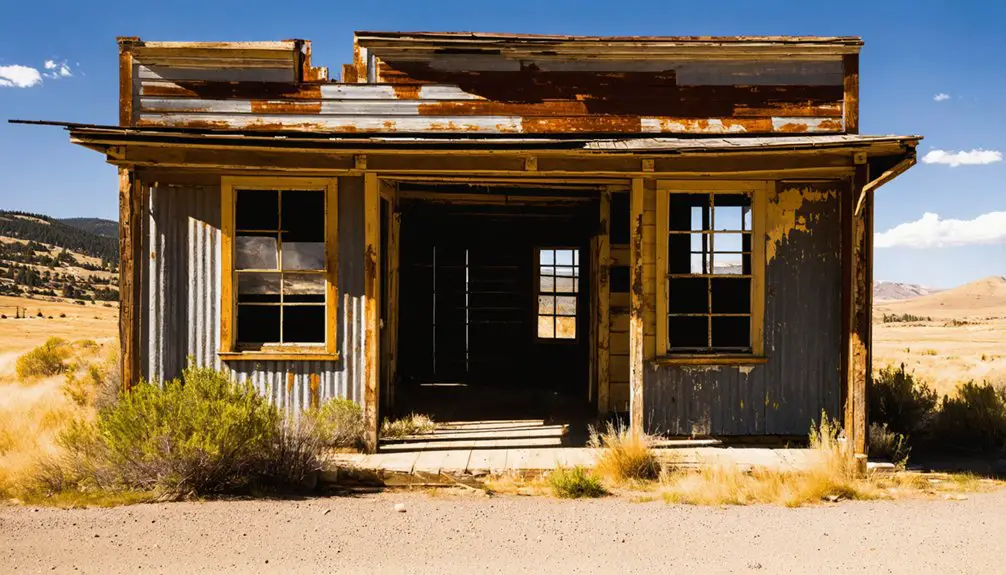
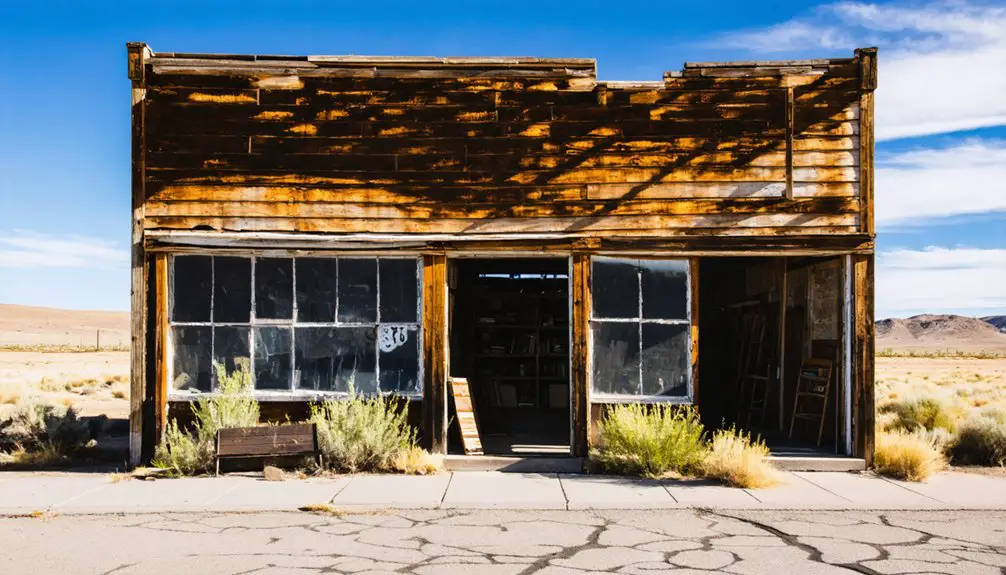
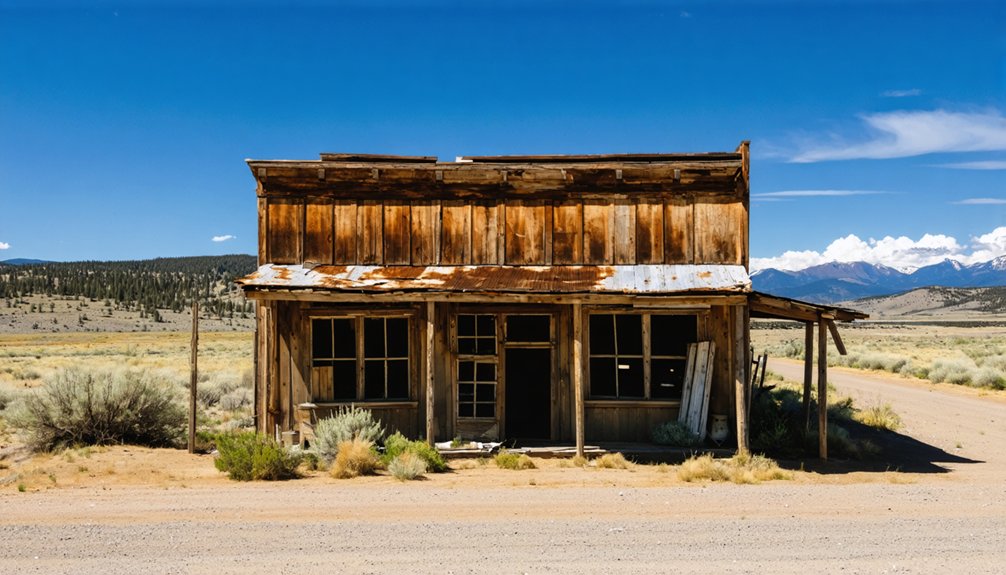
Once you roll off the pavement onto North Fork Burnt River Road, Whitney’s skeletal remains come into view almost immediately. About ten houses and sheds line a single sandy thoroughfare, each one sitting in a different stage of decay. The abandoned structures lean, sag, and crumble quietly beneath the mountain air — raw evidence of a town that once housed 150 people at its peak.
You won’t find a museum or guided tour here. Instead, you’ll walk among authentic historical artifacts frozen in place — weathered timber frames, collapsed rooflines, and forgotten outbuildings where loggers and railroad workers once moved with purpose.
The three-story mill is long gone, lost to an 1918 fire. What remains is honest, unpolished, and entirely yours to explore on your own terms.
Know Before You Go: Hazards and Rules at Whitney
Whitney rewards curiosity, but it doesn’t coddle you. Cell service is practically nonexistent out here, so carry a paper map and plan your route before leaving Sumpter.
Wear closed-toe shoes — rusty springs and rotting floorboards hide everywhere. Those weathered structures look tempting to explore, but many aren’t structurally sound. Enter at your own risk.
Historical preservation laws protect sites like Whitney, meaning you can’t pocket artifacts or disturb the grounds without risking legal consequences. Leave everything exactly as you found it.
Wildlife safety matters too. You’re deep in Blue Mountains territory, so stay alert for snakes warming themselves on sun-baked debris.
Respect any private land boundaries you encounter — some parcels surrounding the town remain privately owned. Explore freely, but explore smart.
Frequently Asked Questions
Who Exactly Was Pioneer C.H. Whitney, the Town’s Namesake?
The historical background doesn’t fully reveal C.H. Whitney’s complete story, but you’ll find his pioneer legacy lives on through this Oregon ghost town that proudly carries his name into modern exploration.
Are There Any Guided Ghost Town Tours Available Near Whitney?
The knowledge doesn’t confirm guided tours near Whitney, but you’ll uncover historical artifacts and local legends on your own terms. Explore freely, respect the land, and let Whitney’s haunting decay tell its own remarkable story.
What Is the Best Time of Year to Visit Whitney?
With temperatures averaging 70°F, summer’s your best bet to explore Whitney’s historical landmarks. You’ll enjoy freedom on open roads, soak in rich history, and sample local cuisine in nearby Baker County towns before heading home.
Are There Nearby Campgrounds or Accommodations Close to Whitney?
You’ll find campgrounds and lodging near Sumpter, just 13 miles away. You can enjoy local dining and outdoor activities like hiking before exploring Whitney’s haunting remnants—it’s your perfect basecamp for freedom-loving adventure!
Can Visitors Access Whitney During Winter Months Given Its Elevation?
Like a mountain gate swinging shut, Larch Summit’s 5,082-foot elevation can block your winter access. Seasonal accessibility becomes a real gamble — winter conditions transform that highway into a treacherous, snow-packed challenge you’ll want to plan carefully around.
References
- https://www.historicsumpter.com/whitney-oregon-ghost-town/
- https://www.youtube.com/watch?v=KwOQ_Z0MOlU
- http://www.photographoregon.com/Whitney-Oregon.html
- https://en.wikipedia.org/wiki/Whitney
- https://wastelandproject.wordpress.com/2015/05/17/whitney-oregon-u-s-a-2013/
- https://traveloregon.com/things-to-do/culture-history/ghost-towns/whitney/
- https://eugeneweekly.com/2013/06/06/summers-ghost-towns/