To plan your ghost town road trip to Whitney, West Virginia, head southeast from Charleston on US-19, then shift to WV-25 through Fayette County’s winding backroads. Whitney’s a coal camp where collapsed walls, rusted machinery, and Appalachian wilderness tell the story of boom, collapse, and silence. Stop at Thurmond and Nuttallburg along the way for context. Come prepared — there’s nothing out there but history, and there’s far more to uncover ahead.
Key Takeaways
- Whitney, a coal camp in West Virginia, offers an authentic ghost town experience with collapsed walls, rusted machinery, and nature reclaiming industrial ruins.
- Travel southeast from Charleston on US-19, then transition to WV-25 through Fayette County’s backroads to reach Whitney.
- Stop at Thurmond and Nuttallburg along the way to gain historical context about the region’s coal mining heritage.
- Pack water, food, and emergency supplies, as Whitney has no services, and only explore during daylight hours.
- Check trail conditions and access permissions with the National Park Service before visiting, as hazards like unstable ground exist.
What Makes Whitney One of West Virginia’s Best Ghost Towns?
When you step into Whitney, West Virginia, you’re walking into the bones of a coal camp that the 20th century simply left behind.
Whitney history reads like a cautionary tale — boom, collapse, silence. The coal industry built this Fayette County community during the early 1900s rush, then abandoned it just as swiftly when profits dried up.
What sets Whitney apart from typical ruins is its raw authenticity. No gift shops, no guardrails — just crumbling structures reclaimed by Appalachian wilderness.
Ghost town legends surrounding these New River Gorge communities carry real weight here, where economic collapse left entire lives frozen in place.
You’re not just sightseeing; you’re confronting what happens when industry moves on and people must follow.
Whitney demands that kind of honest reckoning.
How to Reach Whitney via New River Gorge
Getting to Whitney means trading the comfort of major highways for the kind of backroads that feel like they’re keeping secrets. Head southeast from Charleston on US-19, letting the New River carve your sense of direction as the landscape shifts from suburban sprawl into something rawer and older.
Drop onto WV-25 toward Thurmond, where the road narrows and the scenic views start earning their name. From there, push through Fayette County’s backroads near Winona and Sewell, following routes that coal miners once traveled daily.
You’re not just traversing geography here — you’re tracing the economic veins that once powered an entire region. Keep your tank full and your expectations flexible; this territory doesn’t accommodate complacency, but it rewards curiosity generously.
Which Ghost Towns Should You Stop at Between Charleston and Whitney?
Between Charleston and Whitney, the ghost towns don’t just punctuate your route — they define it. Each stop layers meaning onto the next, transforming a simple drive into something you’ll carry long after you’ve left.
Thurmond should anchor your first stop. Thurmond history runs deep — once a roaring rail hub processing 95,000 annual passengers, it’s now cathedral-quiet, its depot standing as a National Register landmark against the gorge.
From there, push toward Nuttallburg ruins, where collapsed coke ovens still line the hillside like ribcages of a vanished industry. The National Park Service preserves access, so you’re walking through documented history, not trespassing on it.
Both towns prime you for Whitney — a rawer, quieter destination where the silence feels earned rather than curated.
What’s Left to See When You Actually Arrive at Whitney?
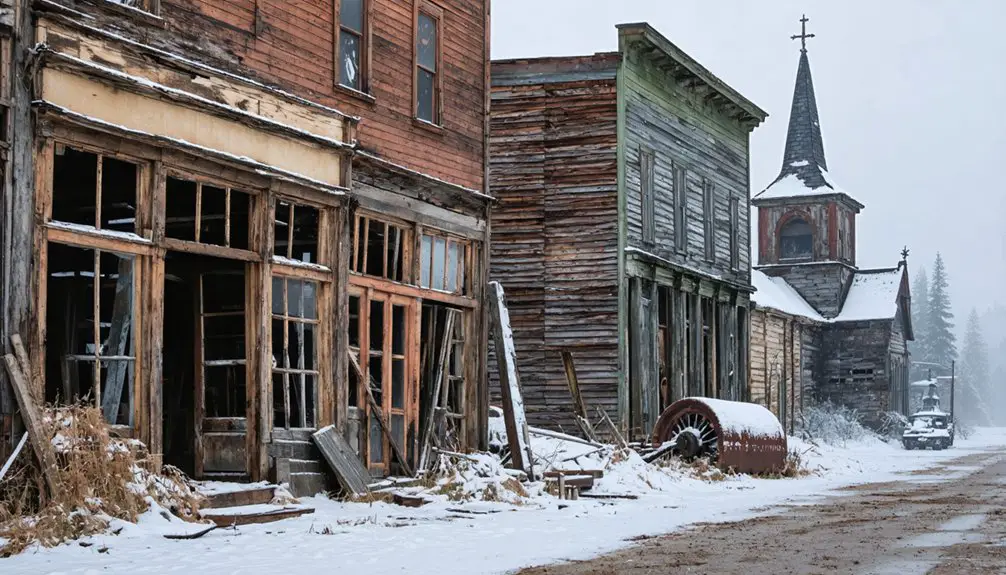
When you arrive at Whitney, you’ll find the remnants of coal camp structures — collapsed walls, rusted machinery, and weathered foundations — standing as silent witnesses to the boom that once drove this community.
The surrounding New River Gorge landscape has quietly reclaimed much of the site, wrapping industrial ruins in dense Appalachian forest that sharpens the contrast between nature’s resilience and human abandonment.
If Whitney leaves you wanting more, nearby ghost towns like Winona and Beury offer equally haunting glimpses into Fayette County’s coal-era past, all within a short drive along the same backroads that once carried miners to work.
Remnants Of Coal Structures
Silence greets you at Whitney — but look closer, and the bones of a coal camp still jut from the overgrowth. Crumbling foundations, scattered timber, and rusted metal fragments tell the story of coal camp architecture that once housed hundreds of miners and their families.
You’ll notice structural outlines where company stores and worker housing once stood, each ruin a quiet reflection of lives built around a single industry. Historical preservation efforts remain minimal here, which means nature’s reclamation is ongoing — vines creep across concrete, and trees split through floors.
That rawness is exactly what makes Whitney compelling. You’re not walking through a curated exhibit; you’re reading an unfiltered landscape. Bring your curiosity, watch your footing, and let the ruins speak on their own terms.
Surrounding Natural Landscape
The ruins don’t end where the coal camp does. Step beyond Whitney’s crumbling structures, and you’ll find yourself surrounded by Fayette County’s raw, untamed terrain.
The New River Gorge frames everything here — ridgelines cutting sharp against the sky, forested hollows swallowing old rail beds whole. You’re standing where industry once muscled through wilderness, and now wilderness is reclaiming its ground.
The natural beauty doesn’t soften the history; it sharpens it. Scenic views stretch across gorge walls that miners once dynamited and carved.
Hemlocks crowd the hillsides. The river moves far below, indifferent to everything that rose and collapsed above it. This landscape doesn’t offer comfort — it offers perspective.
Out here, freedom feels geological, older than any coal company’s ambitions, and far more permanent.
Nearby Accessible Ghost Towns
Whitney itself may leave you wanting more — and that’s exactly when the surrounding ghost towns earn their place on the itinerary. Fayette County’s backroads connect you to remnants that carry real historical significance.
- Thurmond — Once processing 95,000 annual passengers, its rail depot and DunGlen Hotel ruins stand as haunting proof of coal’s former grip.
- Nuttallburg — Now a National Park site, its coke ovens let you witness abandoned buildings that demonstrate how raw coal became industrial fuel.
- Beury and Winona — Quieter stops where collapsed structures whisper stories of communities that vanished almost overnight.
You’re not just sightseeing here — you’re moving through an open-air archive of an industry that shaped and then abandoned an entire region.
What You Need to Know Before Exploring Fayette County Ghost Towns
Before you set foot in Fayette County’s forgotten coal camps, you’ll need to understand what you’re walking into. These sites carry real ghost town history — collapsed structures, unstable ground, and silence that speaks louder than any museum exhibit.
Coal mining impact didn’t just hollow out these communities economically; it physically transformed the landscape. Subsidence, chemical runoff, and decaying timber are constant hazards.
The National Park Service manages several sites, so check trail conditions and access permissions before arriving. Some areas require permits or charge entry fees.
Bring your own water, food, and emergency supplies — there’s nothing out here anymore. Go in daylight, wear sturdy boots, and tell someone your route.
These ghost towns reward the prepared explorer with raw, unfiltered American industrial history.
More Ghost Towns Near Whitney Worth Adding to the Route

Once you’ve got your bearings in the ghost town landscape around Whitney, it makes sense to push the route further — because Fayette County doesn’t run short on abandoned coal camps worth seeing. Each stop adds another layer to the region’s industrial collapse.
- Beury Village — A company town swallowed by forest, its foundations still readable beneath the overgrowth.
- Sewell Town — Once a working settlement humming with miners; now silent, reclaimed by the gorge’s quiet authority.
- Winona — A neighboring relic sharing Whitney’s coal origins and atmospheric desolation.
You’re not just driving through geography here — you’re tracing the arc of an economy that rose fast and fell hard.
Take the backroads slowly. These places reward attention.
Frequently Asked Questions
Can You Camp Overnight Near Whitney or in New River Gorge?
You can camp overnight near Whitney! New River Gorge’s nearby campgrounds welcome free spirits. Follow camping regulations, pitch your tent among coal country’s haunting echoes, and wake surrounded by the gorge’s ancient, freedom-breathing wilderness.
Are There Guided Tours Specifically Focused on Fayette County Ghost Towns?
You won’t find many formal guided tours, but local historians and NPS rangers occasionally lead explorations steeped in ghost town history and local folklore, letting you freely uncover Fayette County’s haunting, coal-scarred landscapes on your own spirited terms.
What Wildlife Might Visitors Encounter While Exploring Whitney’s Abandoned Structures?
Deer roam freely, hawks circle silently, foxes slip through shadows — you’ll encounter stunning wildlife sightings among Whitney’s abandoned structures. Nature’s reclaimed these coal-era ruins, offering you an untamed, historically-rich landscape where industry’s ghost meets the wild’s enduring freedom.
Is Whitney Accessible to Visitors With Mobility Limitations or Disabilities?
Whitney’s rugged backroads don’t offer fully accessible pathways, but you’ll find visitor resources through the National Park Service for nearby managed sites. Check NPS updates before venturing into these atmospheric, historically-grounded remnants of coal’s fading legacy.
What Is the Best Time of Year to Photograph Whitney’s Ruins?
Coincidentally, autumn’s golden light perfectly suits Whitney’s haunting ruins. You’ll capture the best seasonal lighting in October, when falling leaves frame coal camp remnants dramatically. These photography tips guarantee freedom to explore atmospheric, historically-grounded shots without winter’s harsh mountain road closures.
References
- https://en.wikipedia.org/wiki/List_of_ghost_towns_in_West_Virginia
- https://minskysabandoned.com/2015/08/06/west-virginia-ghost-towns-part-2-thurmond/
- https://www.wvnews.com/news/wvnews/west-virginias-ghost-towns-history-industry-and-collapse/article_750c0b12-dd9b-4139-8af1-720ff55be395.html
- https://www.onlyinyourstate.com/experiences/oregon/vacant-ghost-town-rural-or
- https://www.youtube.com/watch?v=GovanJPisrQ