Start your ghost town road trip in Acme, Pennsylvania, a small unincorporated community in Westmoreland County that anchors one of western Pennsylvania’s most rewarding industrial history drives. From here, you’ll chase abandoned coke ovens, crumbling mining remnants, and quiet ghost towns like Chester, Cokeville, and Claghorn across rolling western Pennsylvania backroads. The 46-mile Ghost Town Trail ties it all together beautifully. Keep exploring to uncover everything you need to plan this unforgettable route.
Key Takeaways
- Acme, Pennsylvania, located 40 miles southeast of Pittsburgh, serves as the perfect anchor point for exploring the region’s coal and railroad ghost towns.
- Nearby ghost towns like Chester, Cokeville, and Claghorn offer abandoned mining remnants, crumbling coke oven arches, and rich industrial history worth discovering.
- The 46-mile Ghost Town Trail, a National Recreation Trail along a former railroad corridor, provides a scenic trail-based stretch for your road trip.
- Spring and fall offer the best driving conditions, with budding trees or peak foliage creating a cinematic backdrop for ghost town exploration.
- Pack sturdy walking shoes, offline maps, layered clothing, and a daypack with water and snacks for safe, smart exploration of uneven terrain.
Why Acme Shows Up on Every Pennsylvania Ghost Town List
When you search Pennsylvania ghost towns, Acme keeps surfacing on every list — and it’s not just because of the name. This unincorporated community in Mount Pleasant Township, Westmoreland County carries real historical significance rooted in western Pennsylvania’s coal and railroad era.
Once tied to the industrial boom that shaped the region, Acme now stands as a quiet remnant of that working past. You won’t find dramatic ruins on every corner, but the atmosphere delivers something more subtle — a place where ghost stories grow naturally from forgotten rail lines and abandoned industrial memory.
That combination of accessible location, layered history, and road-trip appeal keeps Acme appearing whenever travelers start mapping Pennsylvania’s abandoned places. It earns its spot on those lists honestly.
Acme’s Coal Towns, Coke Ovens, and Railroad Past
The deeper you dig into Acme’s past, the more you find a community shaped entirely by coal, coke, and the railroads that carried both.
The deeper you dig into Acme’s past, the more you find a community shaped entirely by coal, coke, and the railroads that carried both.
Acme history mirrors western Pennsylvania’s industrial boom-and-bust pattern, where coal mining built towns fast and abandoned them faster.
Here’s what defined the landscape:
- Coke ovens transformed raw coal into fuel for steel production across the region
- Company towns rose around mines, housing workers who depended entirely on one employer
- Railroad corridors moved coal and coke out and supplies in, threading communities together
- Bust cycles left infrastructure behind when demand collapsed, creating the ruins you can still explore today
Walking this history means understanding how industrial ambition built — and ultimately emptied — places like Acme.
Where Acme, Pennsylvania Is and How to Reach It
You’ll find Acme tucked into Mount Pleasant Township in Westmoreland County, roughly 40 miles southeast of Pittsburgh in the heart of western Pennsylvania’s old coal country.
To reach it, you can take Route 31 east from Connellsville or head south from Greensburg along local roads that wind through the Laurel Highlands foothills.
The drive itself sets the mood, pulling you past rolling hills, scattered farmland, and quiet hollows that hint at the industrial ghost towns hiding just off the main road.
Acme’s Location In Pennsylvania
Tucked into the rolling hills of Mount Pleasant Township, Acme sits in Westmoreland County in southwestern Pennsylvania, roughly 40 miles southeast of Pittsburgh.
Acme history runs deep here, where coal mining and railroad culture shaped the landscape and local legends still echo through the hollows.
You’ll find Acme positioned along quiet back roads that wind through Pennsylvania’s Appalachian foothills.
Here’s what defines its setting:
- Surrounded by forested ridgelines and former industrial corridors
- Nestled within a region dense with ghost towns and abandoned communities
- Located near historic mining infrastructure and old rail lines
- Accessible by scenic two-lane roads ideal for open-road exploration
This corner of Pennsylvania rewards curious travelers who prefer discovery over crowded destinations.
Getting There By Road
Knowing where Acme sits on the map is one thing — actually getting there by road is where the adventure begins. Acme lies along Route 31 in Mount Pleasant Township, Westmoreland County, making it straightforward to reach from Pittsburgh via Route 51 South or Interstate 70 East toward Greensburg, then south on local roads.
One of the best travel tips for this stretch is embracing the scenic routes rather than chasing the fastest path. Pennsylvania’s back roads reward patient drivers with rolling hills, old rail corridors, and glimpses of industrial history tucked into quiet valleys.
Mapping your route in advance helps you spot nearby ghost towns worth adding along the way. Keep your tank full — small-town gas stations aren’t always guaranteed out here.
Ghost Towns Near Acme Worth Adding to Your Route
Since Acme sits within a region dense with industrial history, it’s easy to build a fuller road trip around it.
Westmoreland and surrounding counties hold hidden histories and local legends tied to coal’s boom-and-bust cycles. Add these stops to your route:
- Chester – a quiet remnant of a once-active mining community worth a slow drive-through
- Cokeville – named for its industrial past, with traces of coke oven culture still visible
- Claghorn – a lesser-known stop carrying its own abandoned character
- Ghost Town Trail – 46 miles of former railroad corridor through Indiana and Cambria Counties, designated a National Recreation Trail
Each stop deepens your understanding of the region’s raw, working-class past.
What the Ghost Town Trail Actually Covers
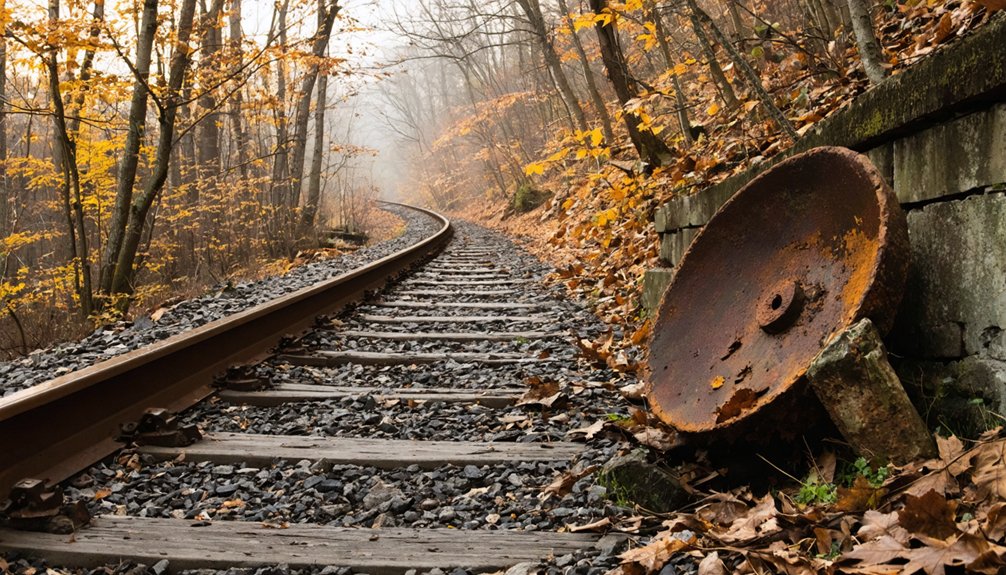
The Ghost Town Trail stretches 46 miles through Indiana and Cambria Counties, tracing the old railroad corridors that once carried coal and coke across western Pennsylvania.
It started with a 16-mile donation in 1991, grew by 4 miles in 1993, and expanded another 20 miles in 2005. The U.S. Department of the Interior has designated it a National Recreation Trail, and it connects into the larger Trans Allegheny Trails network.
Trail highlights include abandoned mining remnants, industrial ruins, and quiet wooded corridors where you can move at your own pace.
The historical significance runs deep here — you’re literally rolling or walking over ground that powered an entire industrial era. It’s a raw, honest stretch of western Pennsylvania that rewards curious travelers willing to slow down.
Ruins and Industrial Landmarks to Stop at Along the Way
As you wind through western Pennsylvania’s back roads toward Acme, you’ll pass remnants that tell the region’s industrial story better than any museum could.
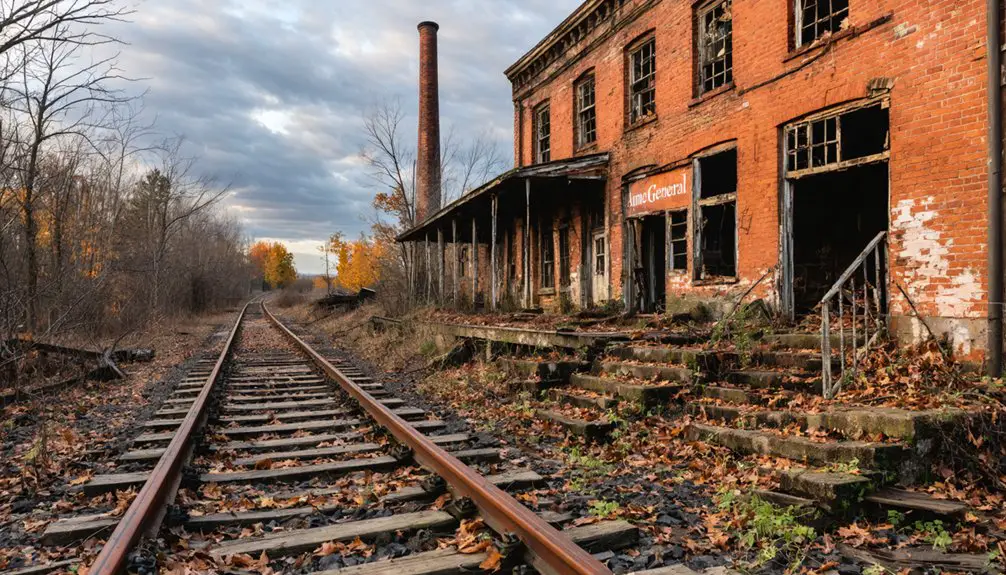
Keep your eyes open for crumbling coke oven arches, rusted rail infrastructure, and the skeletal outlines of former mining towns that once bustled with workers and company commerce.
These landmarks aren’t just photogenic stops — they’re physical evidence of the boom-and-bust cycles that built and ultimately emptied communities across Westmoreland and the surrounding counties.
Coke Oven Remnants
Nothing quite prepares you for the sight of coke oven ruins stretching across a hillside in western Pennsylvania — rows of stone archways, blackened and half-collapsed, standing as industrial-age monuments to the region’s coal boom.
These remnants of coke oven history tell a raw, unfiltered story of industrial heritage that shaped entire communities.
Look for these details as you explore:
- Beehive-shaped chambers where coal once burned for days at extreme temperatures
- Blackened stonework permanently scorched from decades of continuous firing
- Collapsed archways that reveal the sheer scale of former operations
- Overgrown surroundings slowly reclaiming land that once housed hundreds of workers
You’re not just seeing ruins — you’re standing inside a chapter of American industrial history that most people never get to read firsthand.
Abandoned Rail Infrastructure
Coke ovens didn’t operate in isolation — they depended on an entire network of rail lines to move coal in and finished coke out, and those corridors left behind some of the most compelling ruins you’ll find on any western Pennsylvania road trip.
As you drive through the region, you’ll notice abandoned tracks cutting through overgrown hillsides, rusted trestles bridging forgotten hollows, and rail beds that once carried industrial weight now reclaimed by nature.
These industrial remnants shape genuinely ghostly landscapes that reward curious travelers willing to slow down and look closely.
Western Pennsylvania’s rail history runs deep here, and the Ghost Town Trail itself follows former railroad corridors, letting you experience that abandonment firsthand on foot or by bike.
Former Mining Town Sites
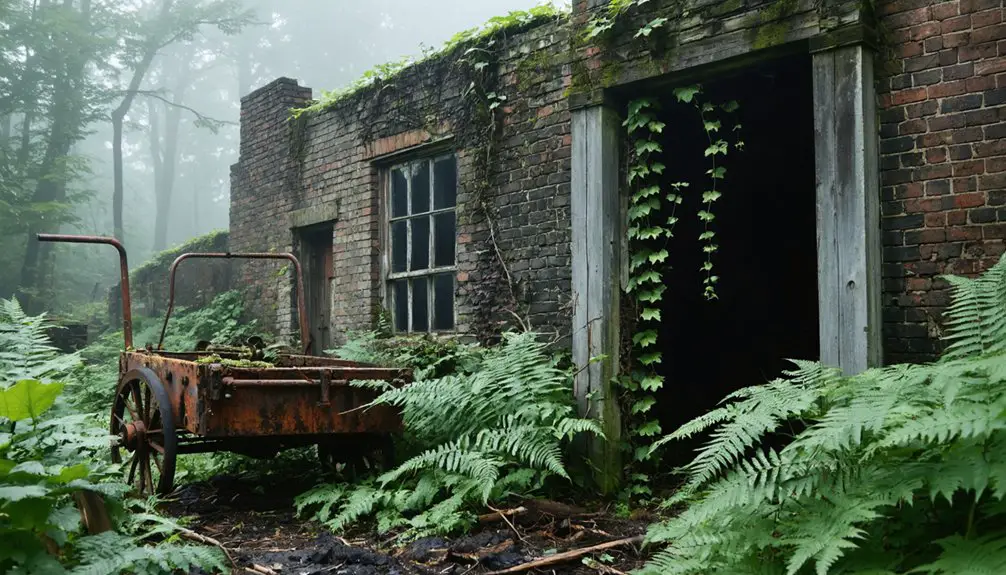
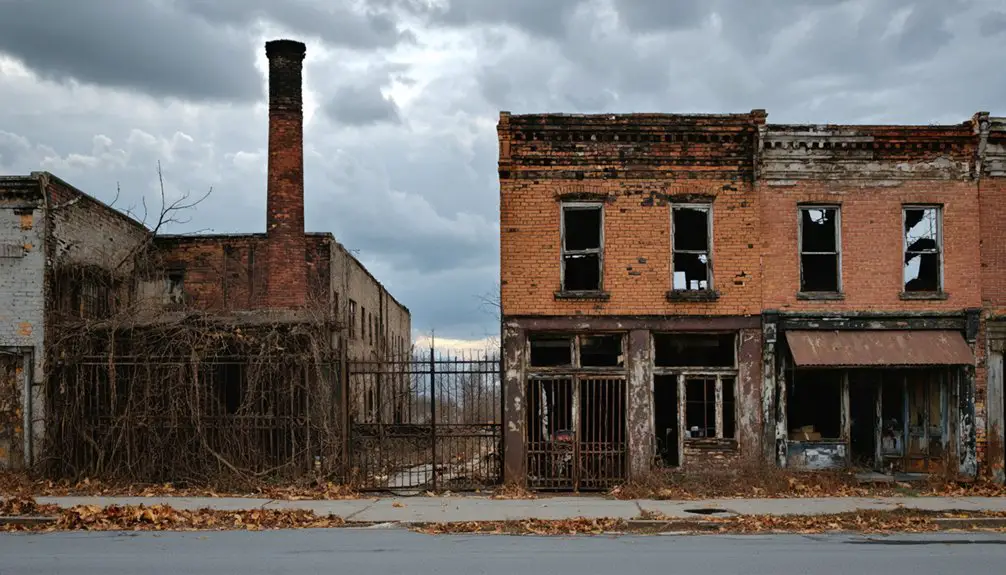
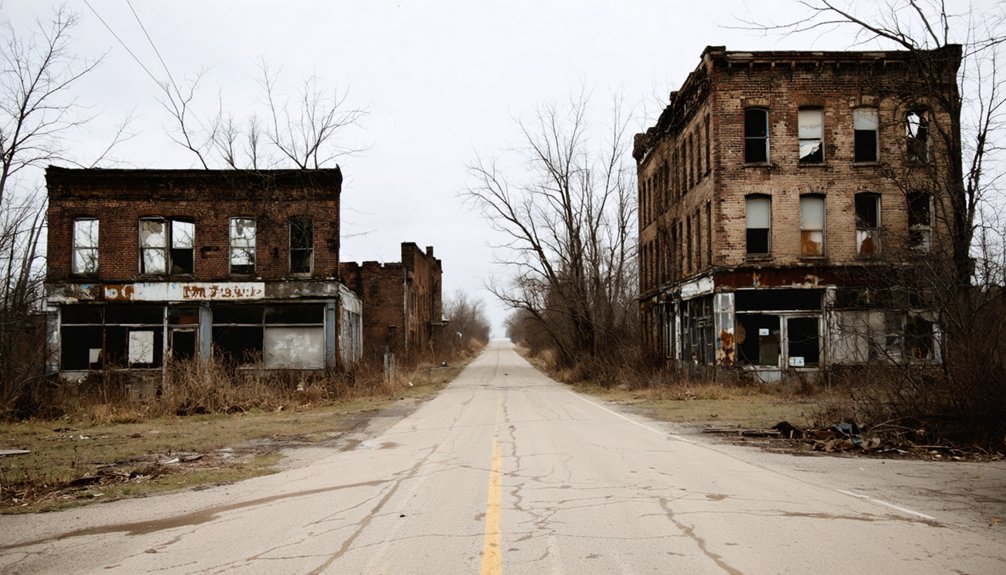
Scattered across the hillsides and hollows of western Pennsylvania, former mining town sites give you something no museum can replicate — the raw, physical presence of places where communities once lived and worked, now reduced to stone foundations, rusted equipment, and overgrown streets.
Ghost town exploration here carries real historical significance. You’re walking through the boom-and-bust cycle of coal country firsthand.
Watch for these markers as you travel:
- Coke oven ruins — stone arches still standing in rows along former industrial corridors
- Company town foundations — grid-patterned lots where worker housing once stood
- Claghorn and Cokeville remnants — named sites tied directly to coal production
- Collapsed mine infrastructure — tipples, shaft openings, and rusted mechanical debris reclaimed by forest
How to Build Your Western Pennsylvania Ghost Town Road Trip
Building a western Pennsylvania ghost town road trip is easier than you might think, especially when the region hands you so many waypoints to work with. Start with Acme as your anchor, then push outward through Westmoreland and surrounding counties.
Thread in stops at Chester, Cokeville, and Claghorn, where local folklore runs deep and the landscapes reward ghost town photography at every turn. Layer in the Ghost Town Trail for a trail-based stretch through Indiana and Cambria Counties, where railroad corridors tell their own quiet stories.
Map your route along former mining roads, keep your schedule loose, and let the industrial ruins guide your pace. Western Pennsylvania doesn’t hide its past — it leaves it standing right where you can find it.
When to Drive Pennsylvania’s Ghost Town Routes
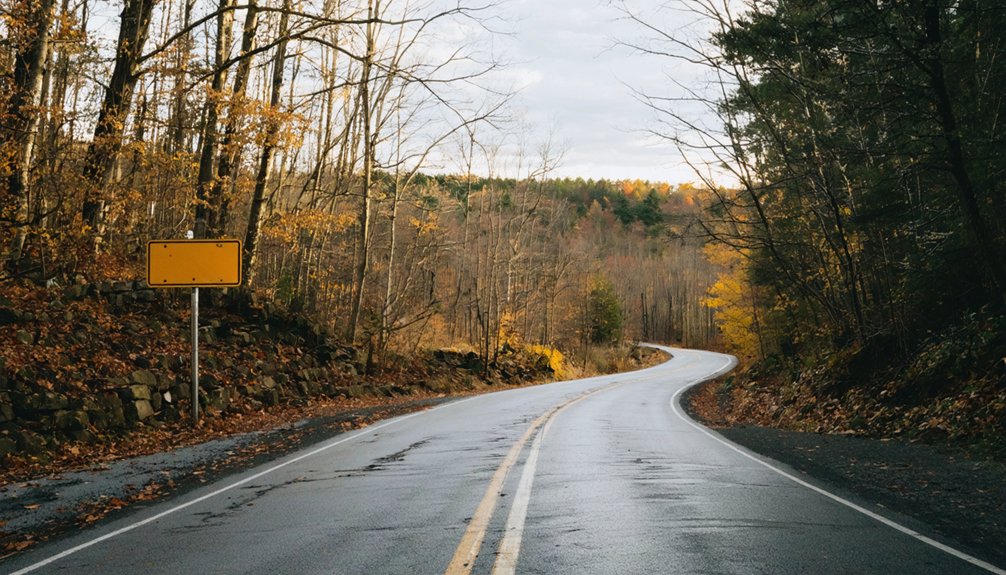
Timing your drive through Pennsylvania’s ghost town routes makes a real difference in what you’ll see and how you’ll feel the landscape.
Best seasons shift the mood entirely, and driving conditions vary enough to change your whole experience.
- Spring opens the roads after winter, with budding trees framing abandoned structures in soft light.
- Fall delivers peak color and crisp air, making ruins feel cinematic against the hillsides.
- Summer keeps all trail access open but brings humidity and heavier foliage that can obscure site views.
- Winter strips the trees bare, exposing foundations and old infrastructure you’d otherwise miss, though driving conditions on rural back roads can turn dangerous fast.
Choose your season based on what you want to feel, not just what you want to see.
Where to Base Yourself for a Western Pennsylvania Ghost Town Trip
Picking the right base town puts you within striking distance of Acme, the Ghost Town Trail, and the wider cluster of abandoned communities scattered across Westmoreland, Indiana, and Cambria Counties.
Greensburg offers solid ghost town accommodations with easy highway access, letting you push out early and cover ground before midday crowds thin the quiet from the ruins.
Johnstown sits closer to the Ghost Town Trail’s Cambria County segments and rewards evening drives with scenic overlooks above the Allegheny ridgelines.
Indiana, Pennsylvania splits the difference nicely, positioning you centrally between multiple ghost town clusters.
Wherever you settle, prioritize lodging with flexible checkout, room for gear, and proximity to back roads.
Your base isn’t a destination — it’s a launchpad.
What to Pack for a Pennsylvania Ghost Town Road Trip
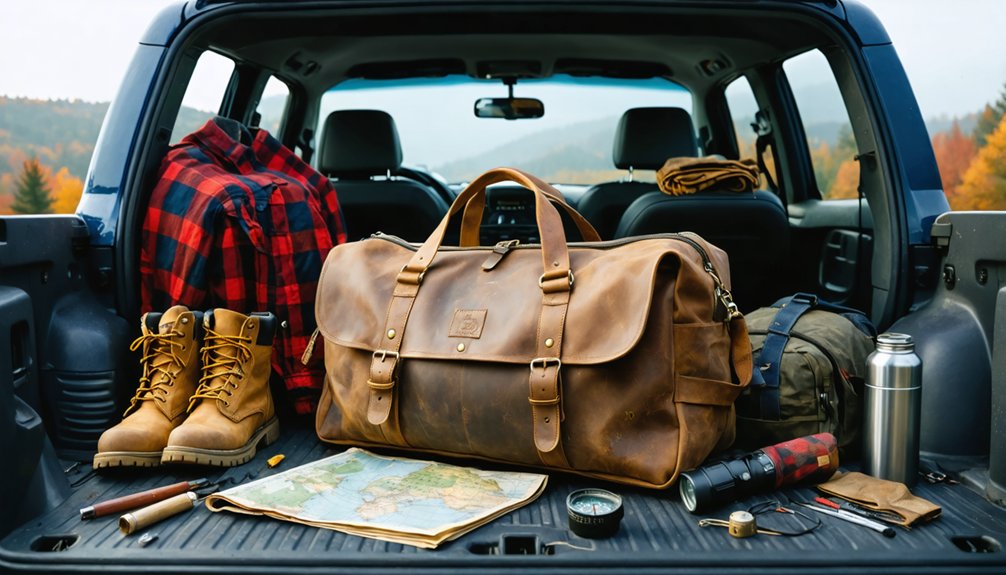
Packing for a ghost town road trip through western Pennsylvania isn’t complicated, but the wrong gear turns a good day into a frustrating one.
These packing essentials and road trip tips keep you moving confidently through abandoned sites, rural back roads, and trail corridors.
- Sturdy walking shoes — uneven ground, loose gravel, and old rail beds demand solid footwear
- Offline maps or a downloaded GPS route — cell service disappears fast in rural Westmoreland County
- Layered clothing — western Pennsylvania weather shifts quickly, especially near wooded hollows
- A small daypack — carry water, snacks, a charged phone, and a portable battery without slowing down
Pack light, pack smart, and you’ll stay free to explore wherever the route takes you.
Frequently Asked Questions
Is There an Entry Fee to Visit Acme, Pennsylvania?
You don’t need to pay an entry fee to explore Acme history — it’s an open, unincorporated community. Simply drive through, soak up the local attractions, and enjoy your ghost town adventure freely!
Are Pets Allowed on the Ghost Town Trail?
Yes, you can bring your dog! Imagine hiking with your pup through historic ruins — pet friendly policies welcome leashed pets on the Ghost Town Trail, so check ghost town regulations before you go.
Can You Camp Overnight Near Acme During a Road Trip?
You’ll find several camping options near Acme, including state parks and private campgrounds offering overnight facilities. Pitch your tent, breathe the mountain air, and wake up ready to explore Pennsylvania’s hauntingly beautiful ghost towns!
Is the Ghost Town Trail Accessible for Wheelchair Users?
Yes, you’ll find the Ghost Town Trail offers strong wheelchair accessibility along its flat, crushed-limestone surface. You can roll freely through scenic viewpoints, soaking in western Pennsylvania’s stunning industrial history and lush, untamed wilderness effortlessly.
Are Guided Ghost Town Tours Available in Westmoreland County?
Like Sherlock Holmes uncovering hidden truths, you’ll find guided tours in Westmoreland County aren’t formally established, but local historical societies actively offer experiences that illuminate the historical significance of ghost towns, letting you explore freely on your own terms.
References
- https://www.onlyinyourstate.com/trip-ideas/pennsylvania/ghost-town-road-trip-pa
- https://indianacountyparks.org/our-trails/ghost-town-trail/
- https://www.facebook.com/jacksontownship.historicalpreservation/posts/view-from-the-ghost-town-trail-tracks-at-the-back-corner-of-acme-market-left-and/1370182398469196/
- https://en.wikipedia.org/wiki/List_of_ghost_towns_in_Pennsylvania
- https://www.facebook.com/unitedstatesghosttowns/posts/acme-pennsylvania-ghost-townunitedstatesghosttowns-ghosttown-ghosttowns-abandone/1377002474221443/
- https://blog.batchgeo.com/ghost-towns/
- https://www.youtube.com/watch?v=cly9J0dRJaw
- https://www.yelp.com/search?cflt=landmarks&find_loc=Acme,+PA+15610
- http://joellenlitz.net/wp-content/uploads/2019/03/Ghost-Tour-of-Lebanon-County-Businesses.pdf
- https://www.youtube.com/watch?v=CTPw1uFvy7A