You’re heading into canyon country where Gold Rush dreams once thundered along the North Fork of the American River. Oregon Bar, tucked into Placer County’s rugged Sierra Nevada foothills, left behind scattered rock foundations, ghost-like cabin depressions, and the echo of placer miners who struck it rich—then vanished. Approach via Auburn or Foresthill with a high-clearance vehicle and offline maps. Everything you need to plan this unforgettable journey into California’s forgotten past is just ahead.
Key Takeaways
- Oregon Bar is a Gold Rush ghost town along the North Fork of the American River in Placer County, California, with scattered mining remnants.
- Access the site from Auburn or Foresthill via CA-49 or Foresthill Road, requiring a high-clearance vehicle and offline maps.
- Expect rock foundations, sluice remnants, and cabin depressions—no restored buildings or interpretive signs exist at the site.
- Stay in Auburn motels, Foresthill rental cabins, or campgrounds along the North Fork of the American River.
- Extend your trip by visiting nearby historic sites like Golden, which features original 1850s structures on the National Register.
What Is Oregon Bar, California?
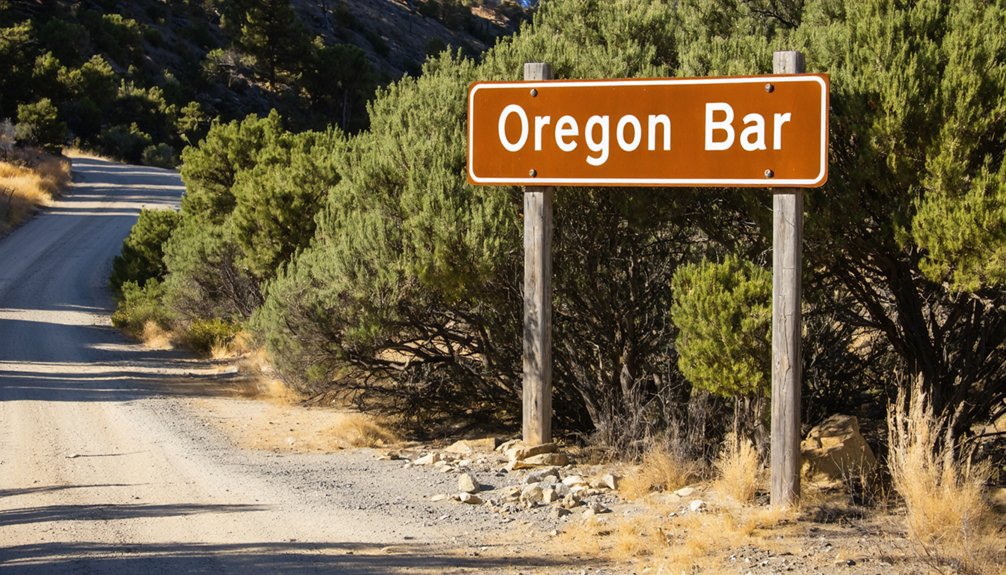
Oregon Bar was a short-lived Gold Rush settlement that sprang up along the North Fork of the American River in Placer County, California, during the mid-19th century.
Miners flooded this rugged river canyon chasing placer gold, building a scrappy community that burned bright and disappeared fast.
Oregon Bar history reads like a frontier fever dream — boom, bust, and silence.
Oregon Bar blazed hard, collapsed fast, and left nothing behind but silence and scattered gold dust dreams.
You won’t find standing structures or marked streets here. What remains are ghost town legends, fragments of a world where fortune-seekers gambled everything on a river bend.
If you crave open roads and forgotten places, this site rewards curiosity.
The canyon itself tells the story. You just have to show up, look closely, and let the landscape speak.
How to Get to Oregon Bar Ghost Town
Reaching Oregon Bar means committing to canyon country on California’s western Sierra Nevada slope, where paved roads eventually give way to rougher terrain along the North Fork of the American River.
You’ll approach through Auburn or Foresthill, following CA-49 or Foresthill Road depending on your starting point. A high-clearance vehicle isn’t optional here — it’s essential.
Download offline maps before you leave cell coverage, because signal disappears fast in these canyons. The site carries real historic significance as a Gold Rush placer mining location, so arrive prepared to explore on foot.
Travel tips worth remembering: carry water, wear sturdy boots, and check seasonal road conditions through Placer County. Spring runoff and winter storms frequently compromise access, turning a straightforward drive into something far more demanding.
What Still Stands at the Oregon Bar Site Today?
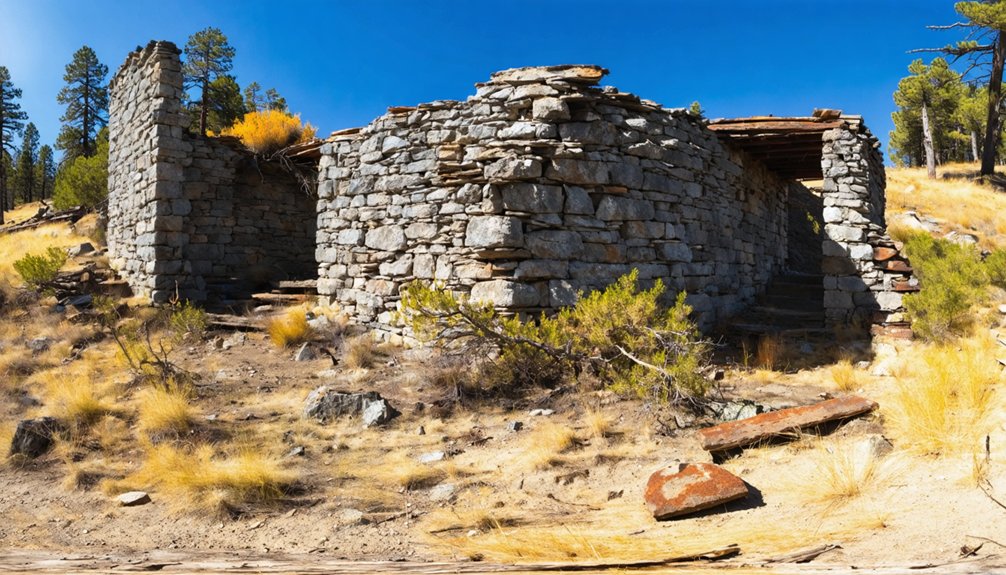
Few traces remain at Oregon Bar, but what survives tells a quiet story of the men who once worked these riverbanks for gold.
You’ll find scattered rock foundations half-swallowed by brush, remnants of sluice works, and depressions where cabins once stood. These fragments carry real ghost town architecture — rough, functional, built by hands that prioritized survival over aesthetics.
Don’t expect restored buildings or interpretive signs. Oregon Bar rewards the self-directed traveler willing to read the land itself.
The historical significance here lives in the topography — in gravel bars reshaped by hydraulic mining, in the silence where a working camp once hummed. You’re standing where California’s Gold Rush played out on a smaller, grittier stage.
Bring your curiosity and respect what little time has left behind.
Other Historic Sites Worth Hitting on This Route
While Oregon Bar delivers raw, unmediated history, the surrounding region rewards you with ghost towns and frontier bars that round out the story of the state’s pioneer era.
Extend your route and you’ll find ghost town attractions that each carry their own weathered identity:
- Shaniko – Oregon’s most famous ghost town runs a weekend saloon inside a preserved historic building, keeping Old West atmosphere alive through active historic preservation.
- Golden – Four original structures still stand at this 1850s mining site, now listed on the National Register of Historic Places.
- Paisley – The Pioneer Saloon, Oregon’s oldest bar, anchors a ranching community steeped in frontier character.
Hit all three and you’ve traced a genuine arc of Oregon’s pioneer past.
Where to Stay Near Oregon Bar
Sleeping near Oregon Bar means accepting the terms of remote country—there’s no hotel waiting at the end of the road. Your lodging options run toward campgrounds along the North Fork of the American River, where a bedroll under pines beats any chain motel.
Auburn sits close enough to anchor a base camp, offering motels and short-term rentals without sacrificing access to nearby attractions like the Gold Rush corridors of Highway 49. Some travelers push into Foresthill, a small mountain town with rental cabins that feel appropriately frontier.
Whatever you choose, keep your gear light and your plans loose. This country rewards the traveler who stays flexible—the kind of freedom that ghost-town roads were built for.
Frequently Asked Questions
What Led to the Permanent Abandonment of Oregon Bar, California?
Gold’s exhaustion drove Oregon Bar, California’s economic decline — once the mining history dried up, you couldn’t sustain a community on empty riverbeds. Folks simply packed their dreams and chased prosperity elsewhere, leaving silence behind.
Are Guided Ghost Town Tours Available Near Oregon Bar?
You won’t find formal guided tours near Oregon Bar, but you can explore surrounding gold rush sites independently, uncovering their historical significance at your own pace—true freedom for adventurous spirits chasing California’s wild, forgotten past.
Is Oregon Bar Located on Public or Private Land?
Oregon Bar’s land ownership details aren’t confirmed here, but you’ll want to verify before venturing out. Its historical significance deserves respect — always check local records to ascertain you’re exploring freely and legally.
What Is the Best Time of Year to Visit?
Like pioneers chasing gold, you’ll find spring and fall offer the best seasonal climate for your adventure. Tourist accommodations stay available, crowds stay thin, and Oregon’s ghost-town landscapes reveal their rugged, untamed beauty most vividly.
Are There Any Local Festivals Celebrating Oregon Bar’s History?
You’ll find local traditions and historical reenactments breathing life into Oregon’s ghost towns seasonally. Shaniko hosts Old West weekends where gunfighters roam dusty streets, letting you experience frontier freedom firsthand and connect deeply with adventurous pioneer heritage.
References
- https://www.latimes.com/nation/la-na-oregon-washington-revival-20180709-story.html
- https://melissawhitneyphotography.com/2025/06/19/the-ghost-town-of-golden-oregon/
- https://en.wikipedia.org/wiki/List_of_ghost_towns_in_Oregon
- https://www.reddit.com/r/oregon/comments/1p7o3ef/a_literal_ghost_town_118_years_in_one_of/
- https://www.youtube.com/watch?v=xtHbaTa_u7E
- https://www.tiktok.com/@hereisoregon/video/7530311776815090958
- https://www.facebook.com/groups/ForgottenOregon/posts/3666168383651073/
- https://www.reddit.com/r/Portland/comments/1p7o2vx/a_literal_ghost_town_118_years_in_one_of/
- https://www.oregonlive.com/living/2025/07/oregons-most-famous-ghost-town-now-has-a-saloon-where-the-wild-west-comes-to-life.html
- https://www.youtube.com/shorts/AOATR8C-LoY