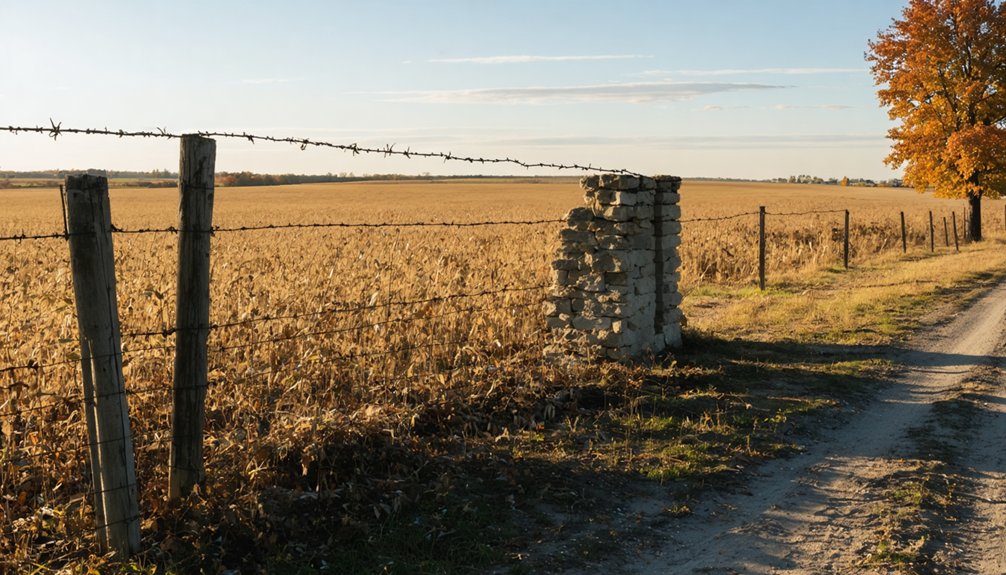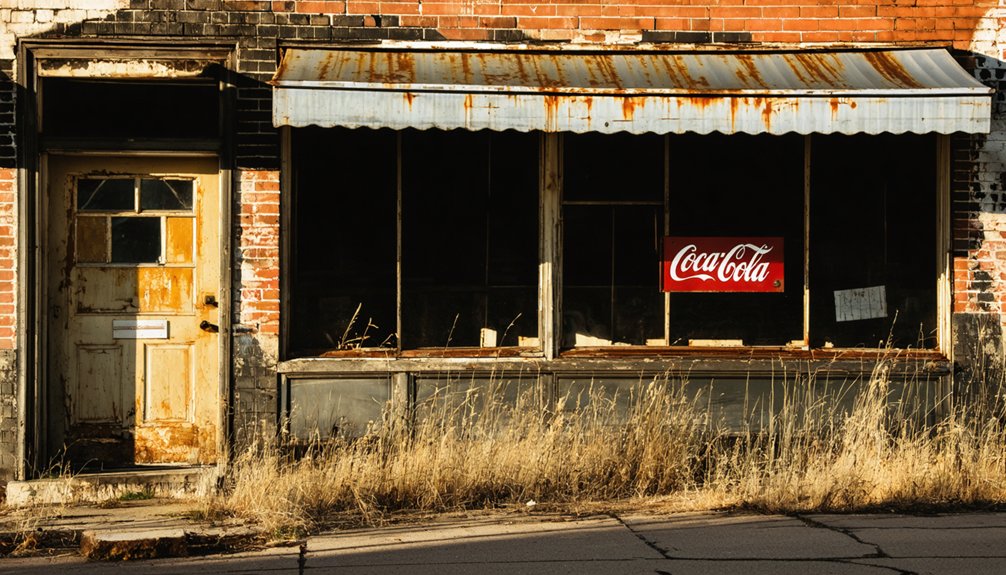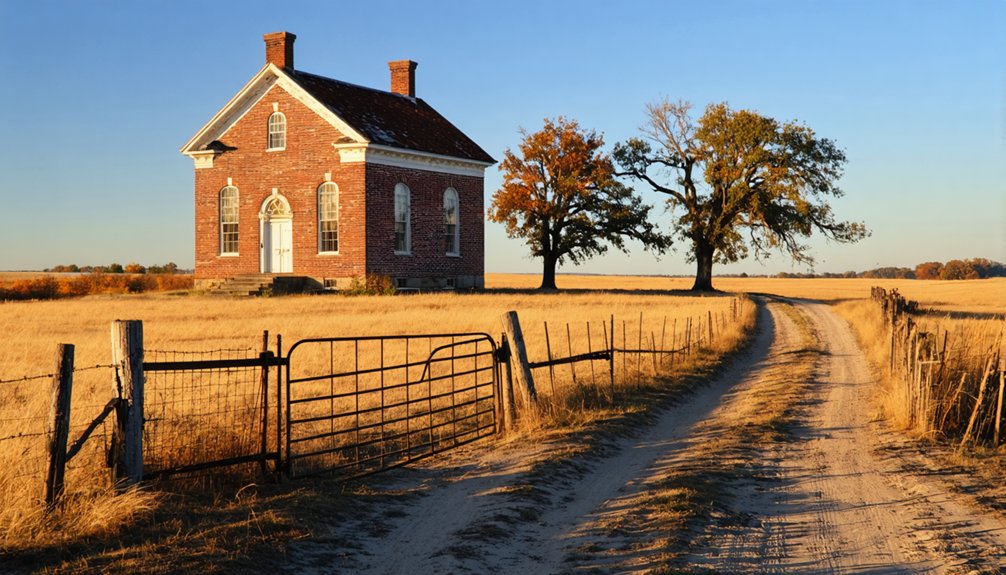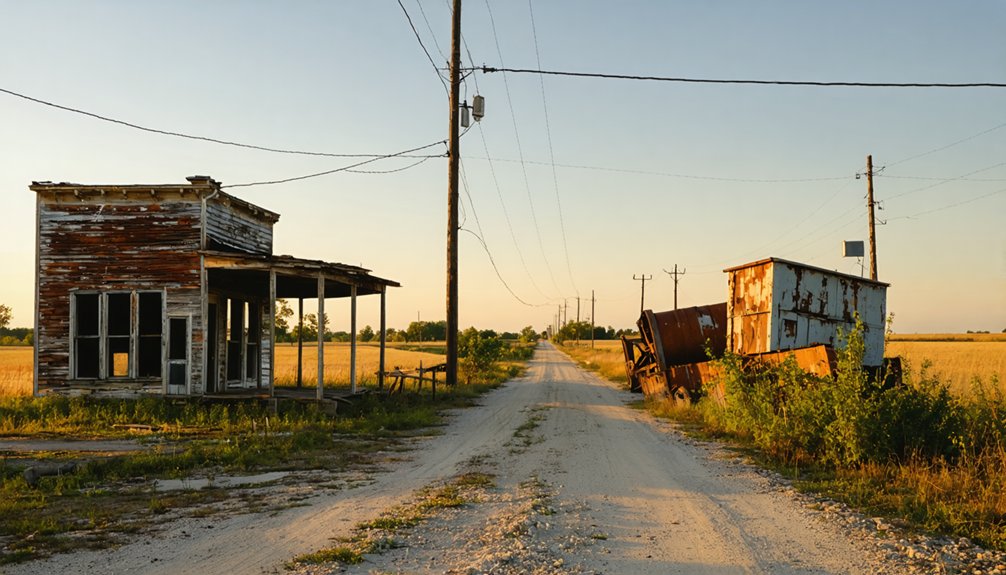
Planning a ghost town road trip to Barr, Macoupin County, Illinois means trading busy highways for quiet country roads leading to a town that time nearly erased. You’ll find one abandoned building and one occupied home where a general store, post office, and hotel once thrived. Pack water, a paper map, and a camera before you go. There’s far more to uncover about Barr’s past and the forgotten towns surrounding it.
Key Takeaways
- Barr is a ghost town in Macoupin County, Illinois, featuring one abandoned building and one occupied home on quiet rural roads.
- Travel via Macoupin County’s grid-layout country roads; the approach is unmarked, so patience and careful navigation are essential.
- Visit late spring through early fall, departing early morning, and avoid travel within 48 hours of heavy rainfall.
- Pack water, snacks, a full gas tank, paper map, camera, and comfortable walking shoes for uneven terrain exploration.
- Combine Barr with nearby ghost towns Anderson, Reader, and Comer for a full-day lost communities road trip.
What Is Barr, Illinois and Who Still Lives There?
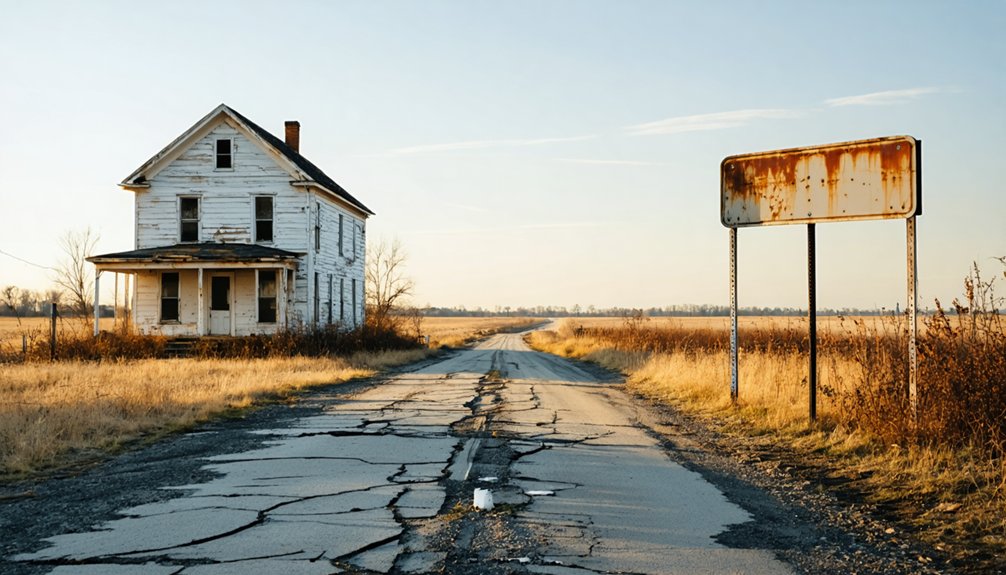
Tucked into the country roads of Macoupin County, Illinois, Barr is one of those quiet rural remnants that’s easy to miss if you don’t know what you’re looking for.
This ghost town once supported a real community, complete with a general store, post office, and hotel. Barr history tells a familiar Illinois story — economic shifts and changing transportation routes slowly pulled people away until almost nothing remained.
Today, you’ll find one abandoned building, one standing home, and reportedly one resident still holding on. There’s no visitor center, no museum, no marked trail.
One abandoned building. One standing home. One resident. No signs, no trails — just what’s left.
It’s just open country and silence. For travelers who value the freedom to explore on their own terms, Barr offers an honest, unfiltered glimpse into a fading past.
What You’ll Actually See Standing at Barr Today
When you pull off onto the country roads that pass through Barr, the scene is spare and immediate: one abandoned building standing weathered against the open sky, and one home still occupied by the town’s lone remaining resident. That’s it.
The rural landscape stretches wide in every direction, flat and quiet, with nothing pressing in on you but fields and memory.
The abandoned structures don’t offer dramatic ruins or photogenic decay on a grand scale. What they offer is honesty — a stripped-down reminder that a full community once stood here.
A general store, a post office, a hotel. Now just worn wood and open road. You’ll take it in quickly, but it stays with you longer than you’d expect.
How Barr Went From General Store and Hotel to Ghost Town
Barr wasn’t always this quiet. It once hummed with daily life, drawing locals through its doors for goods, mail, and a night’s rest. Economic decline and transportation changes slowly unraveled that fabric.
Here’s how Barr faded:
- The general store closed as rural shopping shifted toward larger towns.
- The post office shuttered, cutting Barr’s official identity.
- The hotel emptied when travelers followed new roads elsewhere.
- Population drained away, leaving community memories behind like dust on a windowsill.
What you’re standing in today is the result of those quiet departures, each one unremarkable on its own but devastating together.
The rural remnants you see now tell that story honestly. Barr didn’t vanish overnight — it simply stopped being needed.
How to Reach Barr on Macoupin County Back Roads
Getting to Barr means trading the noise of main roads for the slower rhythm of Macoupin County’s country grid, and that shift is part of the experience.
Getting to Barr means leaving main roads behind and surrendering to Macoupin County’s quieter, unhurried country grid.
You’ll navigate flat, open farmland on 2WD-accessible roads, so no specialized vehicle is necessary. The county’s grid layout makes navigation straightforward if you move methodically from one section road to the next.
Barr sits deep in a stretch of rural Illinois where ghost town history quietly lingers at roadsides most drivers never notice. Your rural exploration here rewards patience over speed.
Keep your eyes open as you drive, because what remains — one original building, one home — appears without fanfare. Treat Barr as a deliberate stop, not a destination with signage guiding you in.
What the Drive Into Barr Tells You Before You Arrive
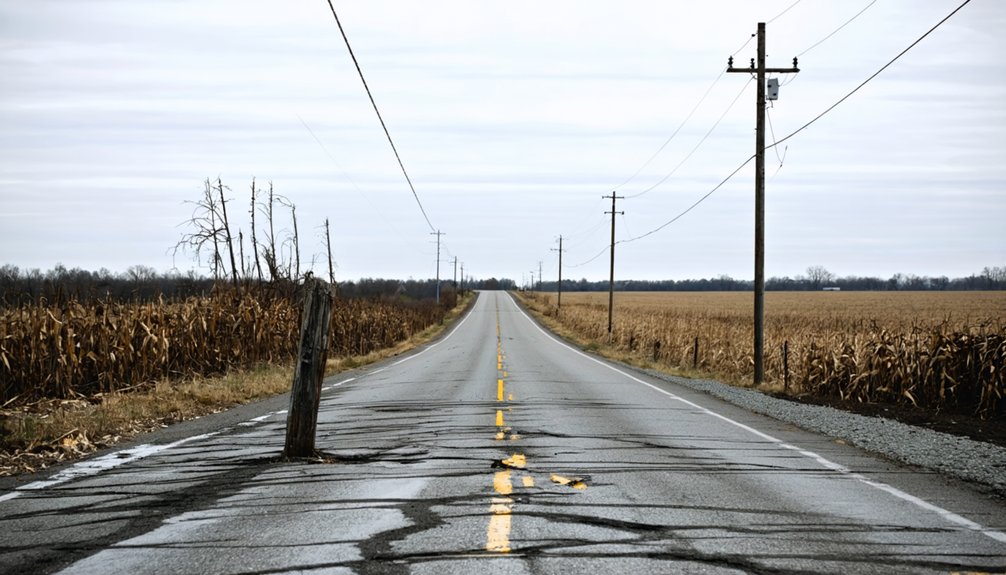
The last few miles into Barr do the storytelling for you. The rural landscapes shift quietly, and you’ll notice the signs of a forgotten world closing in around you.
Watch for these four markers as you approach:
- Farmsteads thin out until you’re seeing more empty fields than occupied ones.
- Road signs become sparse, and crossroads lose their traffic.
- Tree lines replace what were once community gathering points.
- The pavement gives way to the kind of country quiet that signals historical significance nearby.
You’re not just driving through scenery — you’re reading a timeline. Each passing mile strips away modern noise and drops you closer to what Barr once was.
Anderson, Reader, and the Other Macoupin County Ghost Towns Nearby
Once you’ve absorbed what little Barr has left to offer, Macoupin County’s back roads are still holding more quiet history for you to find.
Anderson sits nearby with its own story of rural decay, leaving almost nothing behind but the land itself.
Reader, formerly called Reeders, adds real Reader significance to your ghost town exploration — once an agricultural hub tied to grain and livestock, it now rests quietly at 581 feet in Western Mound Township.
Challacombe and Comer round out a county that clearly watched its small communities fade as economics and transportation shifted away from them.
String these stops together into a single drive, and you’ll cover more Anderson history and forgotten ground than most people ever bother to seek out.
How to Build a Full Macoupin County Ghost Town Day Trip
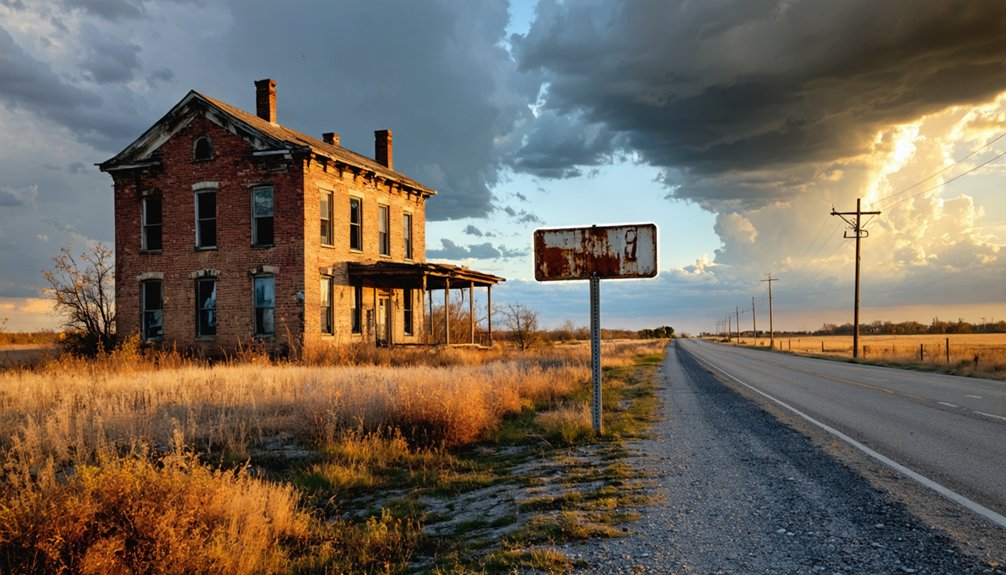
Planning a full Macoupin County ghost town day trip means leaning into the county’s grid of quiet country roads and letting the drive itself become part of the experience.
You’re not racing between landmarks — you’re tracing ghost town history across a landscape that time quietly passed by.
Build your route around these four stops:
- Barr – your anchor for rural exploration and the county’s most stripped-down remnant
- Anderson – minimal traces, maximum atmosphere
- Reader/Reeders – an agricultural ghost town with grain-country roots
- Comer – a quick addition rounding out the county’s lost-place story
Pack a paper map, keep your tank full, and expect gravel.
The freedom here isn’t just the open road — it’s the unhurried pace of discovering what Illinois quietly left behind.
When Macoupin County Roads Are Actually Drivable
You’ll be glad to know that Barr is reachable by standard 2WD vehicles, so you don’t need a truck or SUV to make the trip.
These old country roads follow a grid-style layout, and keeping a grid 5 navigation setting helps you stay oriented across the flat, sprawling farmland.
Dry weather is your best friend out here, since unpaved rural sections can turn soft and slick after rain, turning a straightforward drive into a muddy headache.
Roads Suitable For 2WD
Getting to Barr doesn’t require a four-wheel drive, but it does require some common sense about when to make the trip. Road conditions on these rural Macoupin County driving routes stay manageable when you plan smart.
- Visit during dry weather — gravel and dirt roads turn slick fast after rain.
- Avoid early spring — thaw cycles make rural navigation unpredictable and soft.
- Go midday — better light supports ghost town photography spots and safer road reading.
- Download offline maps — cell signals fade, and exploration tips mean nothing without reliable directions.
Barr sits quietly down country roads carrying real historical significance and whispers of local legends.
Your standard car handles it fine — just respect the land and go when conditions invite you.
Grid 5 Navigation Tips
Traversing Macoupin County on a grid 5 setting means you’re working a tight, methodical pattern of country roads — the kind that cut straight across flat central Illinois farmland like lines on old survey paper.
For rural exploration like this, that grid keeps you honest. You won’t accidentally skip Barr or the handful of other ghost towns tucked into these townships.
Mark your turns at each mile-road intersection, keep your compass oriented north, and move section by section. The roads here don’t announce themselves with signage. You’ll spot a weathered building before you spot a street name.
Trust the grid, slow down at crossroads, and let the pattern do the work. Ghost towns reward the methodical traveler, not the impatient one.
Best Driving Conditions
Since Barr sits deep in rural Macoupin County on unpaved country roads, timing your visit matters more than most ghost-town trips.
Road conditions shift fast out here, turning a smooth gravel lane into a muddy trap overnight. For driving safety and a hassle-free experience, plan around these conditions:
- Late spring through early fall offers the driest, most stable gravel roads.
- Avoid visits 48 hours after heavy rain, when low-lying country roads stay soft and slick.
- Early morning departures let you reach remote stretches before afternoon thunderstorms roll in.
- Late October through March brings frozen ruts and unpredictable ice patches that compromise driving safety greatly.
Your 2WD vehicle handles Barr fine — just respect the land and read the weather first.
What to Bring for a Macoupin County Ghost Town Drive
Packing light but smart makes all the difference when you’re heading out to explore Macoupin County’s forgotten corners. Bring a full tank of gas, since rural exploration means stretching miles between stops with no guarantees of a nearby station.
Pack water, snacks, and a paper map as backup, because cell service gets spotty fast out here. A camera helps you document ghost town history before nature swallows what little remains.
Wear comfortable walking shoes since you’ll be stepping out onto gravel and uneven ground. Keep a small notebook handy for jotting observations about old structures or road names worth remembering.
Most importantly, bring curiosity and patience. Barr rewards the unhurried traveler who notices a weathered building standing quietly beside an empty country road.
Where to Find More Macoupin County Lost Town Records

Once you’ve packed the car and pointed it toward Barr, you’ll want more than curiosity to guide you — you’ll want records.
Macoupin County holds layers of lost history waiting to be uncovered before you hit those rural exploration roads.
Start your research here:
- Illinois State Archives – holds township plats and early settlement records for Macoupin County ghost towns
- Macoupin County Clerk’s Office – property records reveal who once owned land around Barr
- Genealogy Trails History Group – free online Illinois county databases document vanished communities
- Illinois Ghost Town Project listings – crowd-sourced field notes on remaining structures and access roads
These sources transform a casual drive into something richer — a genuine reckoning with the rural landscapes and lost history that shaped central Illinois.
Frequently Asked Questions
Is Photography Allowed at Privately Owned Ghost Town Properties in Illinois?
Don’t tread on thin ice — ghost town photography on private property requires owner permission. You’ll need to secure property access beforehand, as trespassing laws apply throughout Illinois, even at abandoned sites.
Are There Any Local Guided Tours Available for Macoupin County Ghost Towns?
You won’t find formal guided tours for Macoupin County’s ghost town history, but you’ll uncover local legends freely by driving rural roads yourself, stopping at Barr and nearby lost communities on your own schedule.
Can Children Safely Visit Rural Ghost Town Sites Like Barr?
Yes, children can enjoy ghost town safety at Barr when you supervise them closely. Their children exploration of crumbling rural remnants sparks wonder, but you’ll want to keep little adventurers away from unstable abandoned structures.
Are There Any Camping Spots Near Barr in Macoupin County?
While Barr itself lacks camping amenities, you’ll find nearby parks in Macoupin County worth exploring. Don’t let the remote roads discourage you — they’ll carry you toward open skies and unforgettable overnight freedom.
Has Barr Ever Appeared in Any Illinois Historical Preservation Registers?
You won’t find Barr history tied to formal preservation efforts or Illinois historical registers. It’s a forgotten rural remnant, quietly fading — one abandoned building standing as your only tangible connection to its once-thriving past.
References
- https://en.wikipedia.org/wiki/List_of_ghost_towns_in_Illinois
- https://www.facebook.com/groups/398907990548719/posts/1027456501027195/
- https://www.youtube.com/watch?v=0M_47g1TGIw
- https://www.ghosttowns.com/states/il/barr.html
- https://kids.kiddle.co/List_of_ghost_towns_in_Illinois
- https://m.hauntedillinois.com/realhauntedplaces/macoupin-county-courthouse.php
- https://drloihjournal.blogspot.com/search/label/Lost Towns of Illinois
- https://drloihjournal.blogspot.com/p/lost-towns-of-illinois-series.html
- https://urbexunderground.com/ghost-towns-in-illinois/