Planning a ghost town road trip to Bells Mills, Pennsylvania means traversing Indiana County’s winding backroads to find crumbling foundations and overgrown ruins reclaimed by nature. You’ll need sturdy boots, offline maps, and plenty of water before heading out. This former coal community carries the quiet weight of displaced families and exhausted seams. Watch for wildlife, respect the ruins, and don’t take artifacts. Stick around, because there’s much more to uncover about this haunting slice of Pennsylvania’s coal history.
Key Takeaways
- Bells Mills, a former coal mining community in Indiana County, Pennsylvania, features overgrown ruins and scattered remnants of its late 19th-century past.
- Navigate using offline maps or paper maps, as digital coverage is unreliable along the winding rural backroads leading to Bells Mills.
- Pack sturdy boots, a flashlight with spare batteries, water, and paper maps before exploring the remote and potentially hazardous site.
- Watch for local wildlife, including black bears and copperheads, stick to visible paths, and avoid entering unstable, crumbling structures for safety.
- Respect the historical significance by leaving all artifacts and ruins undisturbed, maintaining a careful balance of curiosity and caution throughout your visit.
What’s Left to See at Bells Mills Today?
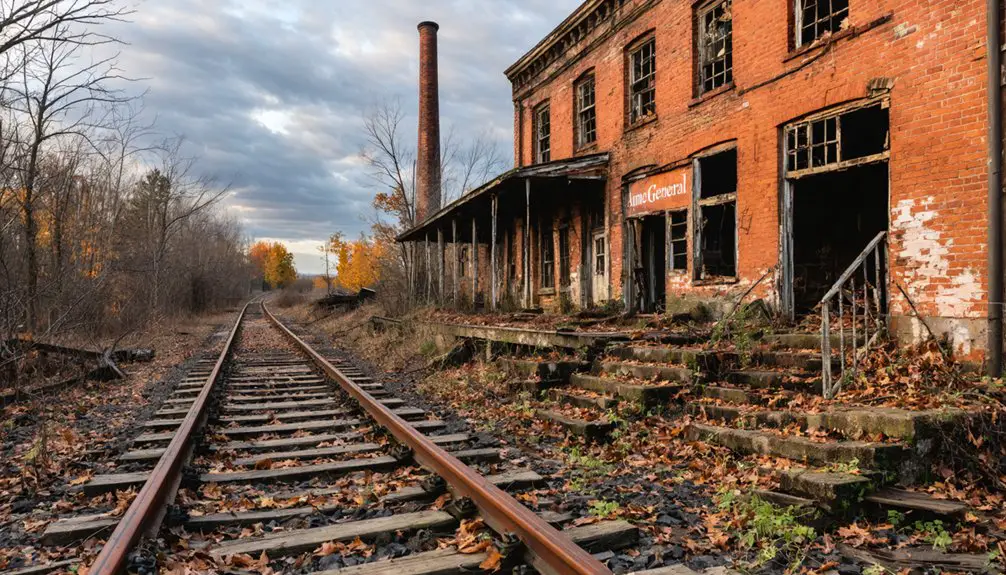
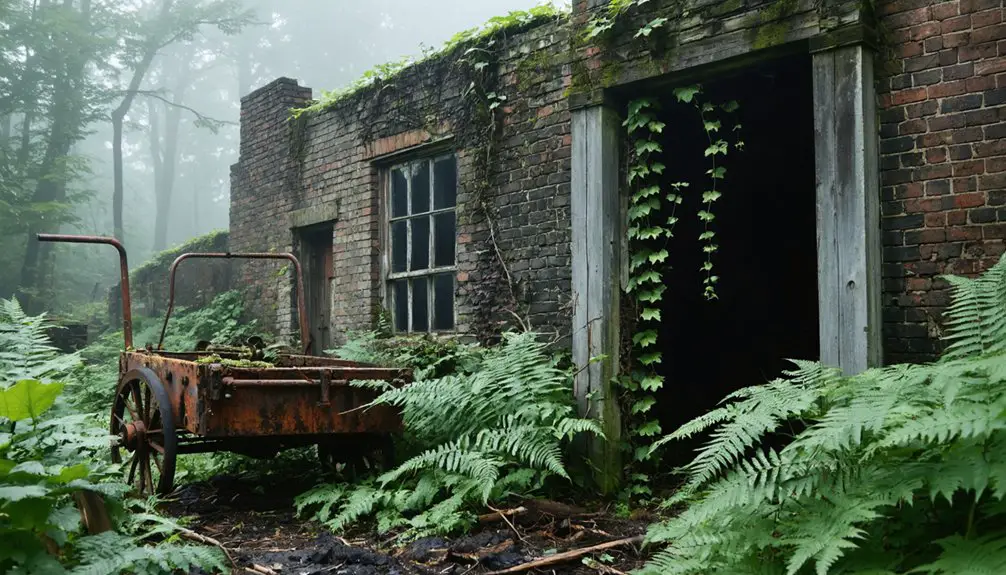
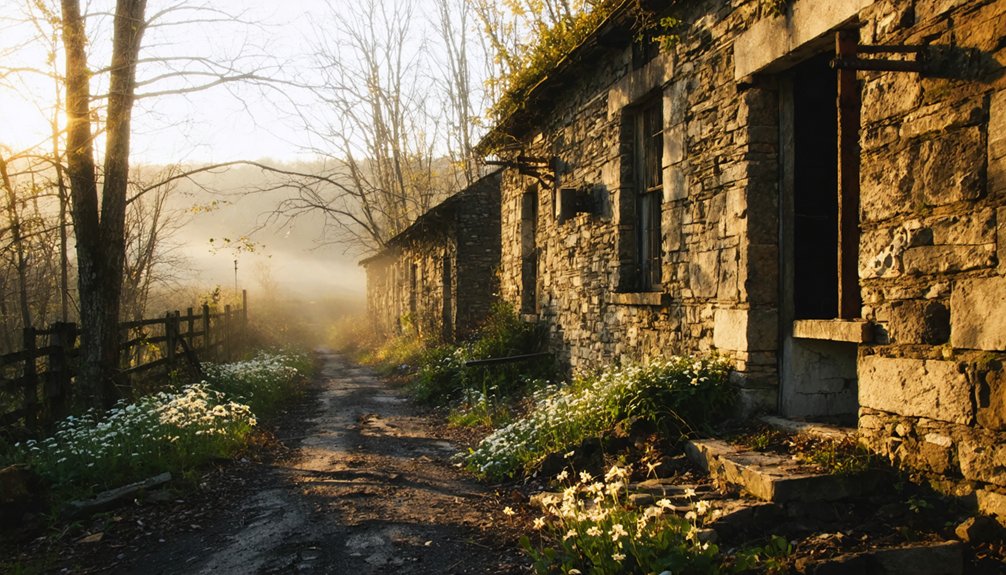
Though little remains to mark Bells Mills as a once-thriving coal community, you’ll find the site quietly holds onto its past through overgrown ruins, scattered structural remnants, and the kind of heavy silence that only abandoned places carry.
Push through the encroaching forest, and you’ll discover historical remnants hinting at what coal-driven ambition once built here in Blacklick Township.
Venture past the tree line, and Blacklick Township’s coal-forged ambitions slowly reveal themselves through fragments left behind.
The abandoned structures blend into the landscape now, reclaimed by decades of unchecked growth.
You’re fundamentally reading the land like a text, piecing together a community that the industry both created and discarded.
Bring sturdy boots, a sharp eye, and the patience to let the place speak.
Bells Mills doesn’t announce itself — it rewards those willing to look closely.
How Bells Mills Became a Pennsylvania Ghost Town
When you stand amid the overgrown ruins of Bells Mills, you’re witnessing the inevitable fate of a town that coal built and coal destroyed.
Like dozens of Western Pennsylvania communities, it rose during the late 19th-century mining boom, drawing workers who powered the region’s steel-hungry coke furnaces.
Once the industry collapsed, residents packed up and left, surrendering the town to the forest’s slow, patient reclamation.
Coal Mining Town Origins
Like so many forgotten corners of Western Pennsylvania, Bells Mills didn’t fade quietly — it burned bright with industrial promise before coal’s decline swallowed it whole.
Blacklick Township once hummed with the rhythm of extraction, where mining techniques shaped every aspect of daily existence. Men descended into the earth while families built genuine community life above ground — churches, company stores, shared meals after brutal shifts.
You can almost feel it when you stand among the overgrown ruins: the ambition, the grit, the belief that coal would fuel something permanent.
Indiana County’s hills held enough black seam to make men dream. But mining towns live and die by the resource beneath them, and when that resource exhausted itself, Bells Mills simply… stopped.
Industry Collapse And Abandonment
The coal seams that built Bells Mills ultimately signed its death warrant. When the veins ran thin and cheaper extraction sites emerged elsewhere, the economic decline hit fast and hard. Companies pulled out, wages dried up, and families packed what they could carry.
Community displacement wasn’t gradual — it was a hemorrhage. Neighbors who’d shared Sunday suppers and company store credit scattered across Pennsylvania and beyond, chasing whatever work remained.
The structures they left behind didn’t disappear overnight; they surrendered slowly to kudzu, frost heave, and rot. Walking through what remains today, you’ll sense that particular heaviness of a place that once hummed with purpose.
Bells Mills didn’t fade — it was abandoned mid-sentence, a story the forest has been quietly finishing ever since.
How to Get to Bells Mills in Blacklick Township
To reach Bells Mills in Blacklick Township, you’ll navigate Indiana County’s winding rural backroads, where crumbling asphalt gives way to gravel paths threading through dense second-growth forest.
Keep your eyes on local route markers along Blacklick Township’s road network, using nearby landmarks like the Ghost Town Trail corridor as your orienting anchor.
It’s a quiet, unhurried drive through Pennsylvania’s coal country, where the landscape itself whispers of the industry that once made these forgotten hollows hum with life.
Finding Blacklick Township Roads
Once you leave the main highways behind, rural Blacklick Township roads in Indiana County begin to feel like a different era entirely — narrow, tree-canopied lanes that seem to absorb the past rather than carry you through it.
Road conditions vary seasonally, so check forecasts before heading out. Watch for local wildlife crossing unexpectedly — deer and wild turkey own these stretches.
Navigate with intention:
- Download offline maps before losing cell service on remote rural roads
- Follow Route 119 north from Indiana Borough as your primary orienting corridor
- Look for Blacklick Creek as a natural landmark guiding you deeper into the township
You’re not just driving toward ruins — you’re moving through forgotten time, each gravel turn stripping modernity away completely.
Navigating Rural Indiana County
Knowing the roads of Blacklick Township is one thing — knowing how to string them together toward Bells Mills is another. Rural navigation here demands more than a phone signal.
Pick up local maps from Indiana County’s tourism office before you head out — digital coverage gets unreliable fast once you’re threading through forested hollows and unmarked intersections.
You’ll want to anchor yourself to Indiana Borough first, then push southeast toward Blacklick Township along Route 422. From there, roads thin and quiet.
Watch for landmarks rather than street signs — old fence lines, creek crossings, hillside clearings. Trust your instincts and your paper map. The freedom of this kind of travel isn’t reckless — it’s deliberate.
Bells Mills rewards those who navigate with patience and purpose.
Nearby Landmarks And Routes
Bells Mills doesn’t announce itself — you have to read the land to find it. No billboard marks its landmark history, no paved welcome invites you in. You’re steering by instinct and scenic routes carved through Blacklick Township’s forested hollows.
Use these anchors:
- Ghost Town Trail — your eastern spine, threading through Indiana County’s coal-scarred landscape toward Claghorn and beyond.
- Newport Township Roads — pre-colonial corridors nearby, offering quiet, tree-canopied passage through forgotten settlements.
- Route 422 — your reliable corridor west, connecting Indiana County’s rural grid before you turn onto unmarked township roads.
Trust your odometer more than signage. The land shifts from farmland to dense second-growth forest quickly. That change tells you you’re close.
Which Nearby Ghost Towns Are Worth Adding to Your Route?
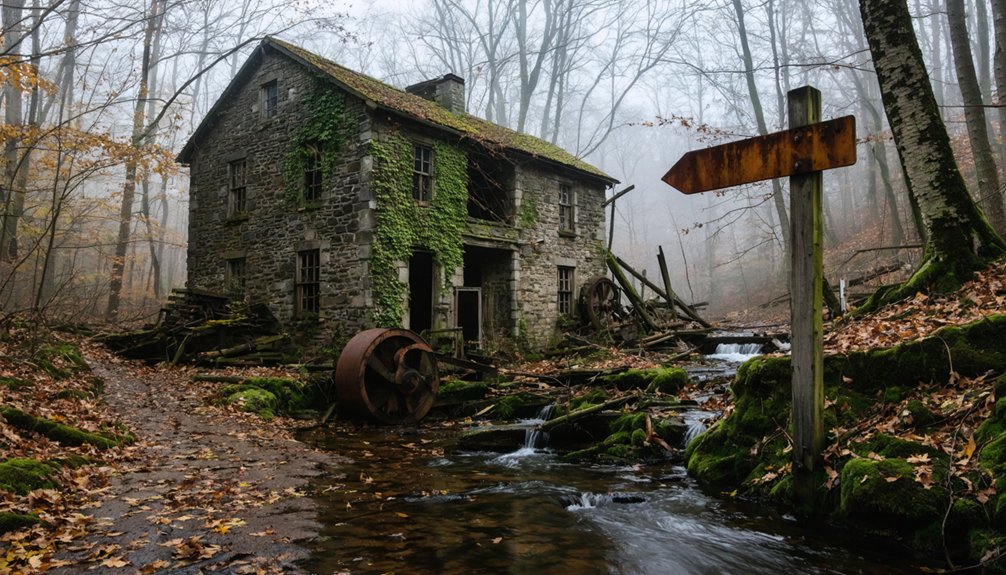
Why stop at Bells Mills when Indiana County’s Blacklick Township holds another forgotten chapter just down the road? Newport’s pre-colonial Newport History predates nearly every settlement you’ll encounter on this route, offering quiet roads and layers of time compressed into overgrown foundations.
You’ll feel that weight standing there.
Swing southwest toward Westmoreland County for Chester Exploration, where coal-era remnants still interrupt the tree line. Chester, also known as Humphries, rewards patient explorers willing to push past unmarked turns.
Frogtown in Salem Township adds another coal-scarred stop worth the detour.
Each town pulls you deeper into Appalachia’s industrial past, connecting you to people who built lives in places the modern world simply forgot.
That freedom to wander their silence is the whole point.
What Should You Bring When Visiting Bells Mills?
Before you pull off onto Blacklick Township’s rural roads, pack like the terrain expects you to fail it. Bells Mills doesn’t coddle explorers — overgrown paths and unstable ruins demand respect.
These essential gear and safety tips keep your adventure honest:
- Sturdy boots — ankle support matters when crumbling foundations hide beneath decades of undergrowth.
- Flashlight and spare batteries — shadows collect inside forgotten structures where daylight doesn’t reach.
- Paper map or downloaded offline route — cell signals vanish where coal towns once thrived.
You’re chasing something real here — the quiet aftermath of lives built on black rock and fire.
Don’t let poor preparation cut that experience short. Bring water, tell someone your route, and move through history carefully.
How to Explore Bells Mills Without Getting Into Trouble
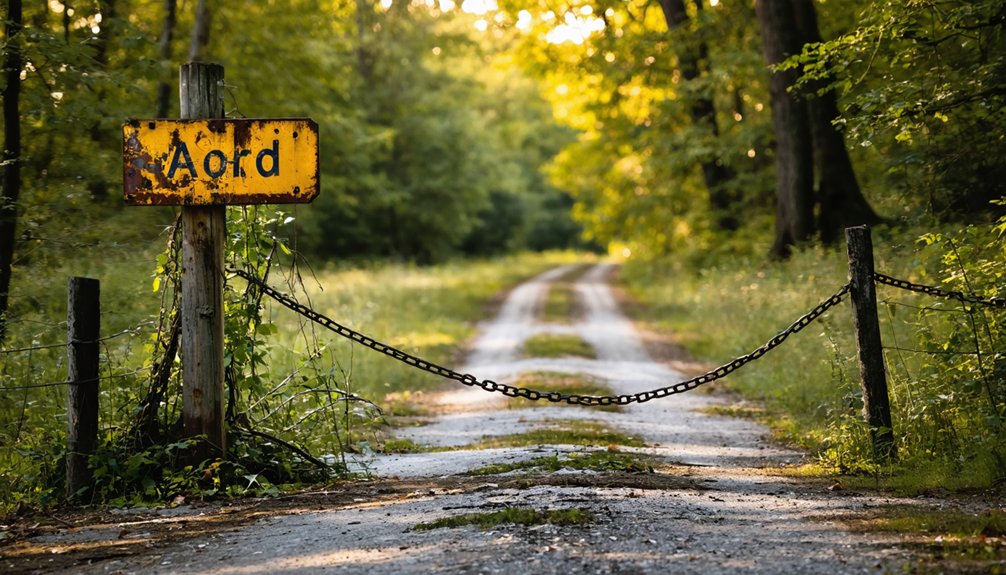
Exploring a site like Bells Mills means walking a line between curiosity and caution — and getting that balance right starts before you take your first step off the road.
Follow basic safety tips: tell someone your location, stick to visible paths, and never enter crumbling structures. Indiana County’s overgrown terrain hides unstable foundations beneath decades of brush and silence.
Tell someone where you’re going. Stay on visible paths. Never step inside what’s already falling down.
Local wildlife — black bears, copperheads, and territorial birds — share these forgotten hollows, so watch where you step and where you reach. You’re not trespassing on history; you’re reading it.
Respect what remains. Don’t disturb ruins, don’t pocket artifacts, and don’t push boundaries the land itself is warning you against. Freedom here means knowing exactly where your limits are.
Frequently Asked Questions
Are There Guided Tours Available for Bells Mills Ghost Town Visits?
No guided tours exist for Bells Mills, but you’ll find freedom forging your own path through faded, forgotten fields. Seek local history through self-directed exploration, connecting with coal heritage on your own enchanting, curious terms.
What Is the Best Time of Year to Visit Bells Mills?
Fall’s your best season to visit Bells Mills — crisp air sharpens the haunting beauty of abandoned ruins, golden leaves frame forgotten structures nostalgically, and nearby local festivals celebrate Pennsylvania’s coal heritage, giving your freedom-seeking adventure extra meaningful depth.
Is Bells Mills Privately Owned or on Public Land?
“Better safe than sorry” — Bells Mills history doesn’t clearly confirm public access, so you’ll want to verify land ownership before chasing ghost town legends. Always research local regulations to freely explore without trespassing concerns.
Can You Camp Overnight Near the Bells Mills Ghost Town Site?
You’ll find camping essentials come in handy as nearby state forest land offers freedom to sleep under starlit skies, deepening your ghost town experiences while the echoes of Bells Mills’ forgotten past whisper through ancient trees.
Are There Any Historical Societies Preserving Bells Mills Documentation?
Like whispers fading into fog, Bells Mills’ records are scarce. You’ll find the Indiana County Historical Society actively preserving its historical significance and local legends, so immerse yourself and uncover the freedom of forgotten stories yourself.
References
- https://en.wikipedia.org/wiki/List_of_ghost_towns_in_Pennsylvania
- https://kids.kiddle.co/List_of_ghost_towns_in_Pennsylvania
- https://www.youtube.com/watch?v=2NCx2f3zv8s
- https://www.youtube.com/watch?v=Qj5LjacccJ0
- https://www.youtube.com/watch?v=4I9j30fvz8M
- https://en.wikipedia.org/wiki/Centralia