To plan your ghost town road trip to Grapetown, Texas, start in Fredericksburg and drive 9.5 miles south on Highway 87. You’ll find a hauntingly quiet settlement with a stone schoolhouse, crumbling ruins, and a preserved German immigrant cemetery. Founded in 1848, Grapetown once stood on the edge of becoming Texas’s wine capital before a railway bypass and rerouted highway sealed its fate. Stick around, and you’ll uncover the full story.
Key Takeaways
- Grapetown is located 9.5 miles south of Fredericksburg along Highway 87, making it an easy drive from this German heritage town.
- Key historic sites include a recorded stone schoolhouse, dance hall ruins, a German immigrant cemetery, and original 1848 signage.
- Spring and fall are ideal visiting seasons, with April and October offering wildflowers and vibrant vineyard colors respectively.
- No restrooms, shade, or cell signal exist on-site, so bring water, a paper map, and sturdy shoes.
- Combine your visit with nearby Fredericksburg wineries like Pedernales Cellars, Becker Vineyards, and William Chris Vineyards for a full day trip.
What Grapetown Actually Is: a German Ghost Town With a Wine Secret
Tucked 9.5 miles south of Fredericksburg along the old Pinta Trail, Grapetown isn’t your typical Texas ghost town — it’s a forgotten German settlement with a surprisingly sophisticated past.
Its ghost town origins trace back to 1848, when John Hemphill established it along the Fredericksburg-San Antonio road. Eight determined settlers followed in 1854, building a community that eventually thrived on cattle ranching and something far more unexpected: wine production.
German settlers planted vineyards and transformed Grapetown into a regional winemaking center during the 1880s, an ambitious pursuit rarely seen across Texas at the time.
In the 1880s, German settlers turned Grapetown into a Texas winemaking hub decades ahead of its time.
Today, the vineyards’ legacy lives on in the surrounding Texas Hill Country wine region. When you visit, you’re not just exploring ruins — you’re walking through a chapter of Texas history most people never knew existed.
How to Get to Grapetown From Fredericksburg
Start your journey in Fredericksburg, where you’ll hop on Highway 87 heading south toward San Antonio.
You’ll follow the same historic road that once connected frontier settlements across the Texas Hill Country, watching the landscape shift into cedar-studded ranchland as you drive.
After just 9.5 miles, you’ll arrive at Grapetown, a blink-and-you’ll-miss-it settlement that rewards those paying close attention.
Starting Point In Fredericksburg
Fredericksburg serves as your launching pad for the short but rewarding drive to Grapetown, sitting just 9.5 miles to the south. This charming Hill Country town is steeped in German heritage, making it the perfect cultural backdrop before you venture into Grapetown history.
Before heading out, take a moment to explore Fredericksburg‘s historic Main Street, where that same German immigrant spirit shaped both communities. Stock up on supplies, grab a local wine from a nearby tasting room, and fuel up your vehicle.
Highway 87 south is your route, cutting through rolling limestone hills and cedar-dotted landscapes. The drive itself previews the rugged beauty that once drew determined settlers to carve out a life in this untamed Texas terrain. Adventure waits just minutes away.
Route Along Highway 87
Once you’ve soaked in Fredericksburg’s German charm and topped off your tank, hitting Highway 87 south puts you on the same corridor that once carried freight wagons, cattle drives, and determined settlers toward the Hill Country’s interior.
This scenic drive covers roughly 9.5 miles before Grapetown appears—or rather, whispers—on your right. Watch for subtle roadside markers and aging structures tucked among cedar and live oak.
The landscape opens into rolling terrain where vineyards once defined an entire regional economy.
Ironically, Highway 87’s 1932 reroute through Comfort helped seal Grapetown’s fate as a ghost town, draining traffic and commerce away permanently.
That same road now delivers curious travelers back to its quiet, sun-bleached remains—a satisfying twist of historical irony worth savoring through your windshield.
Arrival At Grapetown
Finding your way to Grapetown couldn’t be simpler—head south out of Fredericksburg on Highway 87, and you’ll cover roughly 9.5 miles before the settlement materializes along the old Fredericksburg-San Antonio road corridor.
Watch for subtle roadside markers; this stretch follows the ancient Pinta Trail, where Grapetown history quietly unfolds around every bend.
The landscape shifts as vineyards emerge, remnants of a once-thriving winemaking center that peaked in the 1880s.
Pull over near the stone schoolhouse, now a community center and Recorded Texas Historic Landmark, and let the atmosphere sink in.
Local legends of Civil War loyalists hiding from Confederate patrols still echo across these hills.
You’re standing where freedom-minded German settlers carved out something remarkable—and the evidence remains unmistakably alive.
What’s Left to See in Grapetown Today?
When you arrive in Grapetown, you’ll find the old stone schoolhouse still standing proud, now serving as a community center and recognized as a Recorded Texas Historic Landmark since 1984.
You can also spot the ruins of the dance hall, a ghostly reminder of the town’s lively peak years, along with two additional historic buildings documented as recently as 2005.
Don’t miss the preserved cemetery and the original German signage, both of which keep the town’s 19th-century immigrant roots quietly alive.
Historic Buildings Still Standing
A handful of historic structures still stand in Grapetown, offering ghost town explorers a tangible connection to the settlement’s 19th-century roots.
You’ll find the old stone schoolhouse, built between 1880 and 1884 using volunteer labor, now serving as a community center and recognized as a Recorded Texas Historic Landmark since 1984. Its historic architecture speaks volumes about the German settlers’ determination to build something lasting.
You can also spot the ruins of the dance hall, where ghost town legends of lively Schuetzenfest celebrations still seem to echo through the crumbling walls.
As of 2005, two additional buildings remained standing, quietly holding the town’s memory together.
Wander the grounds, and you’ll feel Grapetown’s layered past pressing through every weathered stone and timber.
Preserved Cemetery And Signage
Beyond the schoolhouse and crumbling dance hall, Grapetown’s preserved cemetery and original German signage give you two more reasons to make the trip.
Walk through the cemetery and you’ll feel the weight of its historical significance immediately — German immigrant names etched into weathered stone tell ghostly tales of settlers who built something remarkable in the Texas Hill Country. These graves belong to the founders, the freight drivers, the vintners who planted vineyards where few dared try.
Don’t rush past the original German sign, either. It’s a rare surviving artifact connecting you directly to 1848. Few ghost towns preserve their identity this authentically.
Bring a camera, respect the grounds, and let Grapetown’s quiet remnants speak for themselves — they’ve got more to say than most living towns do.
Why Grapetown Nearly Became a Real Town: and What Stopped It
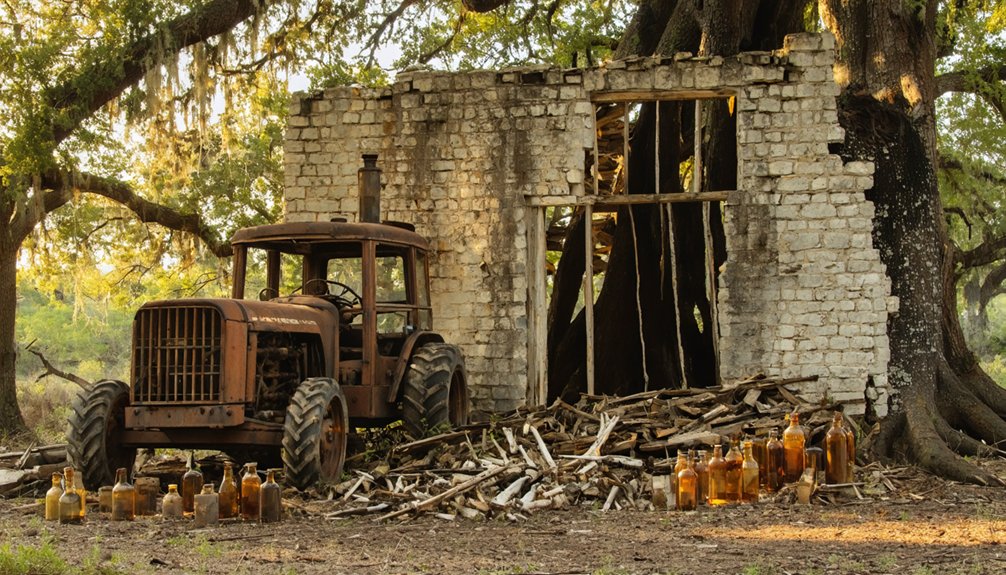
Grapetown had all the ingredients of a boomtown waiting to happen. The Fredericksburg and Northern Railway arrived in 1913, sparking Grapetown’s Ambitious Plans for real expansion.
Developers even plotted a townsite called Mount Alamo on Doebbler’s Hill that same year, dreaming of transforming this scrappy settlement into something permanent.
But those Failed Townsite Dreams collapsed fast. The railway bypassed Grapetown directly, instead anchoring the neighboring community of Bankersmith.
Then in 1932, Highway 87 rerouted through Comfort, stripping away the road traffic that had sustained local businesses for decades.
Without rails or highway access, Grapetown couldn’t compete. What once promised growth delivered silence instead.
You can almost feel that lost momentum standing here today, surrounded by ruins that whisper of roads not taken.
The Hill Country Vineyards That Continue Grapetown’s Wine Tradition
Not everything in Grapetown faded when the highway rerouted and the townsite dreams dissolved. The German settlers who planted vineyards here in the 1880s built something lasting — a vineyard history that pushed roots deeper than any failed railroad town could claim.
Grapetown was briefly Texas’s winemaking capital, and that heritage didn’t disappear; it simply spread across the surrounding Hill Country.
Today, you can chase that legacy through modern wineries threading the same limestone ridges those early settlers farmed.
Wine tasting along the Texas Hill Country wine trail lets you taste what those determined German immigrants envisioned. The grapes changed hands, the labels evolved, but the ambition behind every bottle connects directly back to Grapetown’s bold, overlooked past.
Raise a glass to that.
How to Turn Grapetown Into a Full Hill Country Wine Day
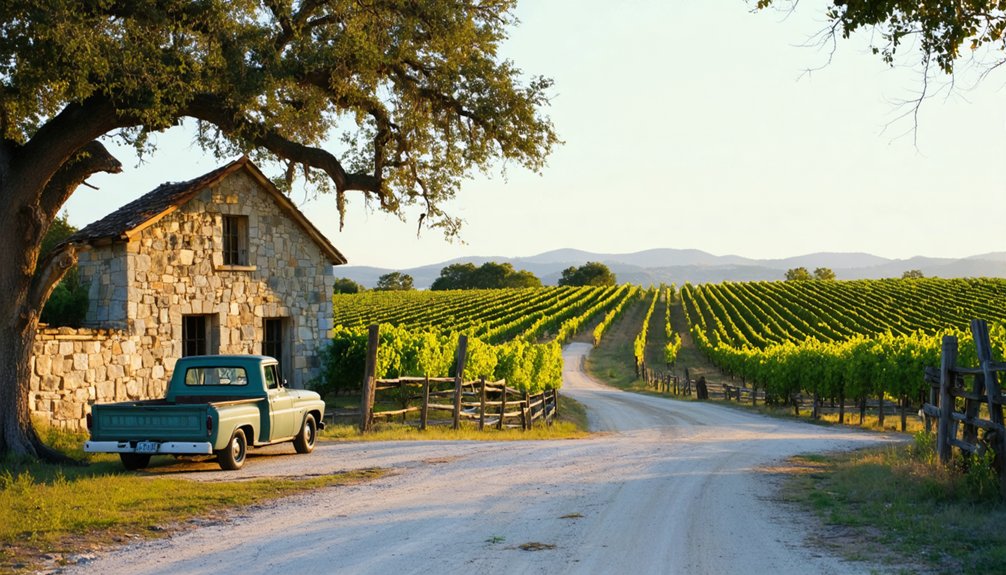
Turning a Grapetown visit into a full wine day takes almost no convincing once you’re standing nine miles south of Fredericksburg with vineyards stretching across every limestone ridge in sight.
Start at Grapetown itself — walk the schoolhouse grounds, absorb the ghost town legends, and let the Grapetown history of German settlers planting vines in the 1880s sink in.
Then drive north along Highway 87 toward Fredericksburg’s wine corridor. You’ll find dozens of tasting rooms within twenty minutes.
Pedernales Cellars, William Chris Vineyards, and Becker Vineyards all carry that same Hill Country limestone terroir the original settlers recognized.
Pack a cooler, wear comfortable shoes, and move at your own pace. Nobody’s setting your itinerary out here but you.
Best Time of Year to Visit Grapetown
Spring and fall own Grapetown. These seasons deliver the best season for exploring this quiet Hill Country ghost town, with ideal weather that keeps the heat manageable and the scenery sharp.
April and October push wildflowers and golden vineyard colors across the rolling landscape, making every stop feel earned.
Summer bakes the caliche roads and turns the ruins into a slow-roast experience—bring extra water if you go.
Winter strips the vines bare but rewards you with solitude and crisp visibility across the hills.
If you’re pairing your visit with the surrounding Texas wine country, time it for harvest season in September or October. You’ll catch the vineyards working hard, the air cooling down, and the ghost town sitting quietly at its best.
What to Bring to Grapetown: No Shade, No Restrooms, No Cell Signal
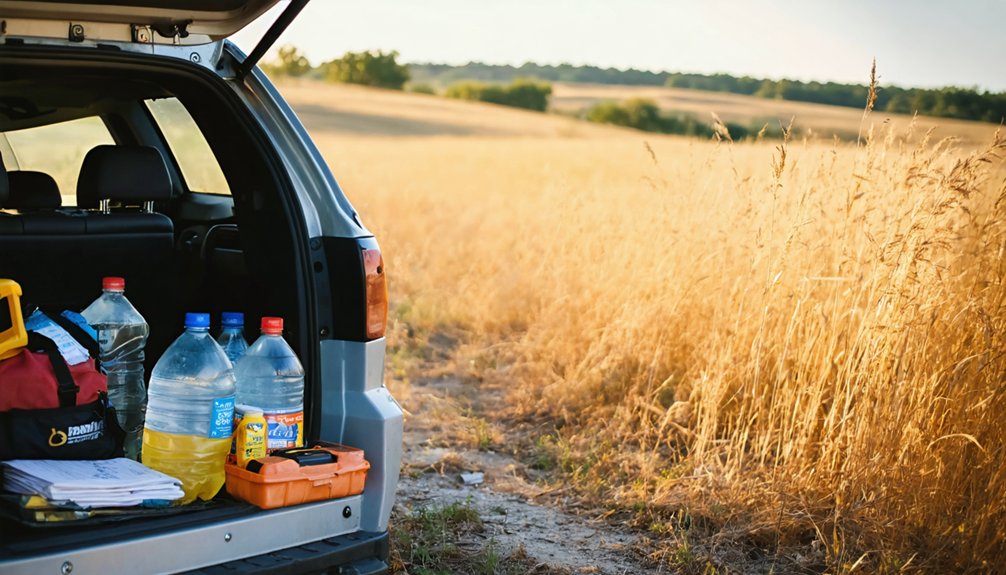
Grapetown offers none of the conveniences you’d expect from a developed site—no shade structures, no restrooms, no cell signal, and no one coming to help if something goes wrong.
You’re stepping into raw Hill Country terrain where ghostly encounters with the past feel genuinely possible. Pack water, more than you think you’ll need, especially in summer heat.
Wear sturdy shoes for uneven ground around the schoolhouse ruins and dance hall remnants. Bring a paper map since digital navigation fails completely out here. A camera captures local legends preserved in crumbling stone and weathered German signage.
Tell someone your plans before you go. This freedom comes with real responsibility—Grapetown rewards prepared explorers and quietly punishes those who arrive expecting modern comforts.
Nearby Towns Worth Adding to Your Route
Once you’ve absorbed everything Grapetown offers, the surrounding Hill Country rewards you with towns that fill in the region’s layered history.
Fredericksburg, just 9.5 miles north, anchors the area’s German immigrant story with museums, wineries, and architecture carrying deep historic significance.
Comfort, where Highway 87 was rerouted in 1932, ironically thrived at Grapetown’s expense and now showcases its own community heritage through preserved 19th-century storefronts.
Kerrville, the cattle market that once bought Grapetown ranchers’ livestock, offers river access and a strong arts scene.
Each town connects directly to Grapetown’s rise and decline, making your route feel less like random stops and more like following one continuous thread.
Drive them in sequence and the Hill Country’s full story snaps into focus.
Frequently Asked Questions
Was Grapetown Ever Officially Incorporated as a Texas Municipality?
Grapetown history reveals it never achieved official Texas municipality status. As you explore Texas ghost towns, you’ll find this settlement thrived informally, driven by free-spirited German pioneers who built community without bureaucratic incorporation holding them back.
Who Owns the Grapetown Schoolhouse Community Center Today?
“It takes a village” — the community history surrounding this ghost town’s schoolhouse lives on, but the knowledge base doesn’t confirm today’s specific owner. You’ll want to contact Gillespie County officials directly for current ownership details.
Did Union Loyalty in Grapetown Cause Violence During the Civil War?
You’ll find that Union sentiment sparked real historical conflicts in Grapetown during the Civil War. Community dynamics turned dangerous, forcing loyalists like Hoffman and Rausch to actively hide from Confederate patrols just to survive.
How Many German Families Originally Settled in Grapetown at Peak Population?
“Bloom where you’re planted!” The knowledge doesn’t specify exact German family counts at peak population, but you’ll discover rich German Heritage and Settlement Patterns shaped Grapetown’s estimated 145 free-spirited souls by 1900.
Is the Original Doebbler’s Inn Building Still Standing Today?
The knowledge doesn’t confirm if Doebbler’s Inn still stands, but you’ll uncover Doebbler’s history firsthand when you explore Grapetown! Don’t let missing Inn renovations records stop your adventurous spirit—discover what remains of this legendary 1860s frontier landmark yourself!
References
- https://www.texasescapes.com/TexasHillCountryTowns/Grapetown-Texas.htm
- https://ghost-towns.close-to-me.com/states/texas/grapetown/
- https://en.wikipedia.org/wiki/Grapetown
- https://www.tshaonline.org/handbook/entries/grapetown-tx
- https://www.grapetown.org/history.shtml
- https://texashillcountry.com/hill-country-ghost-town-road-trip/