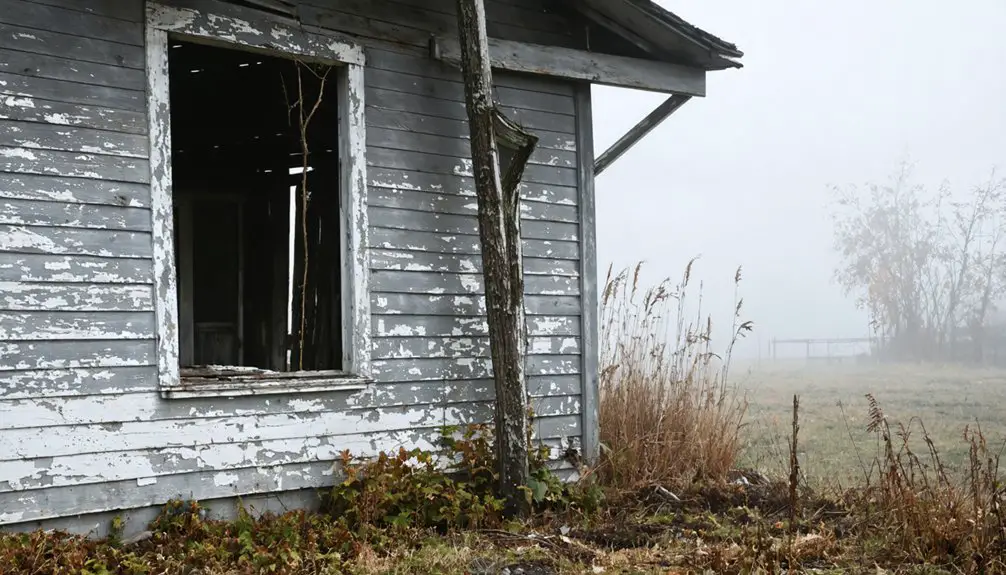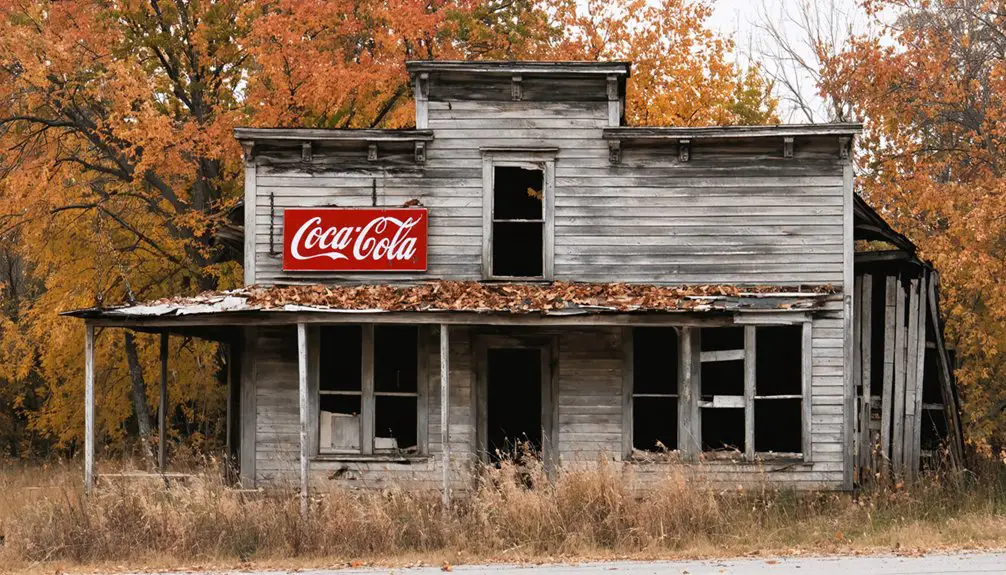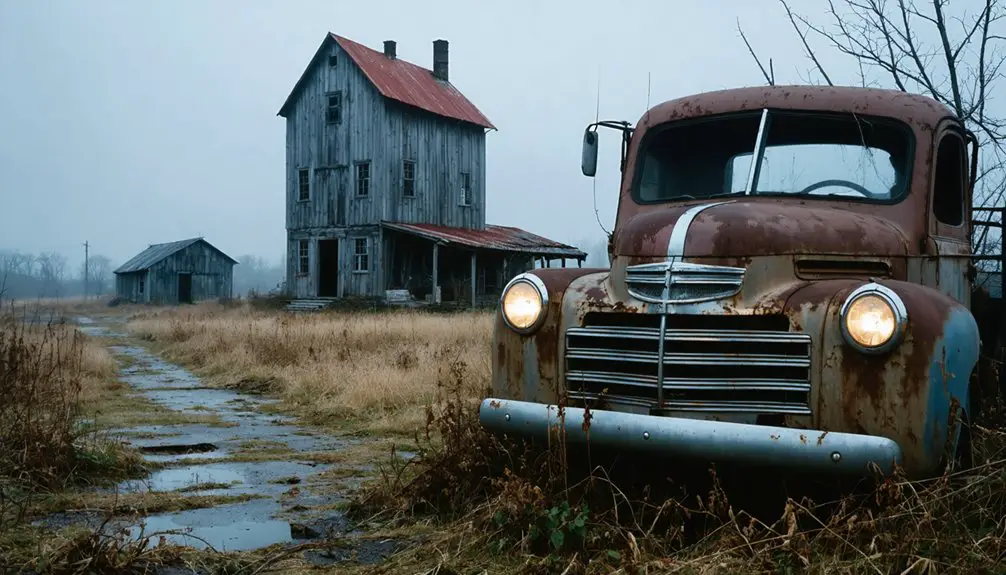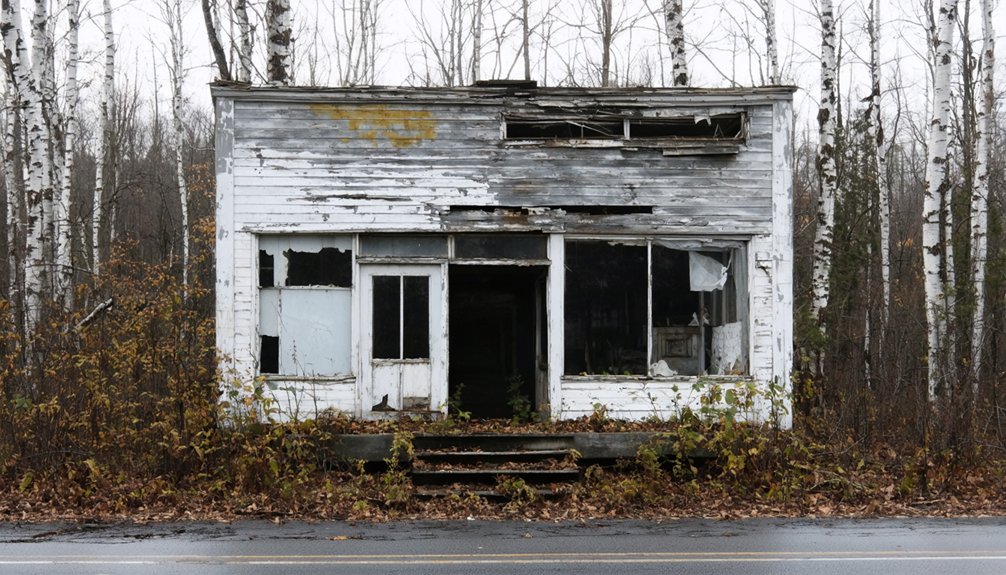
Planning a ghost town road trip to Bertrand, Michigan means stepping into a place where history lingers in overgrown lots, weathered cemeteries, and roadside markers. Founded in 1808 by fur trader Joseph Bertrand, this once-thriving village of nearly 1,000 residents collapsed after the railroad bypassed it in favor of nearby Niles. You can reach the site from Niles in under ten minutes. Stick around and you’ll uncover the fascinating story behind Bertrand’s dramatic rise and haunting disappearance.
Key Takeaways
- Bertrand, Michigan, founded in 1808 by fur trader Joseph Bertrand, declined after the railroad bypassed it, closing its post office in 1901.
- The site features two cemeteries, historical markers, and one original home, offering visitors a tangible connection to the town’s frontier history.
- Access from Niles takes under ten minutes; bring GPS, a full tank, and plan approximately two hours for exploration.
- Visit in spring or fall for optimal visibility, as the site has no maintained paths, signage, or nearby services.
- Combining Bertrand with nearby Berrien County heritage markers and St. Joseph River corridor sites creates a enriching regional ghost town road trip.
The Rise and Fall of Bertrand, Michigan
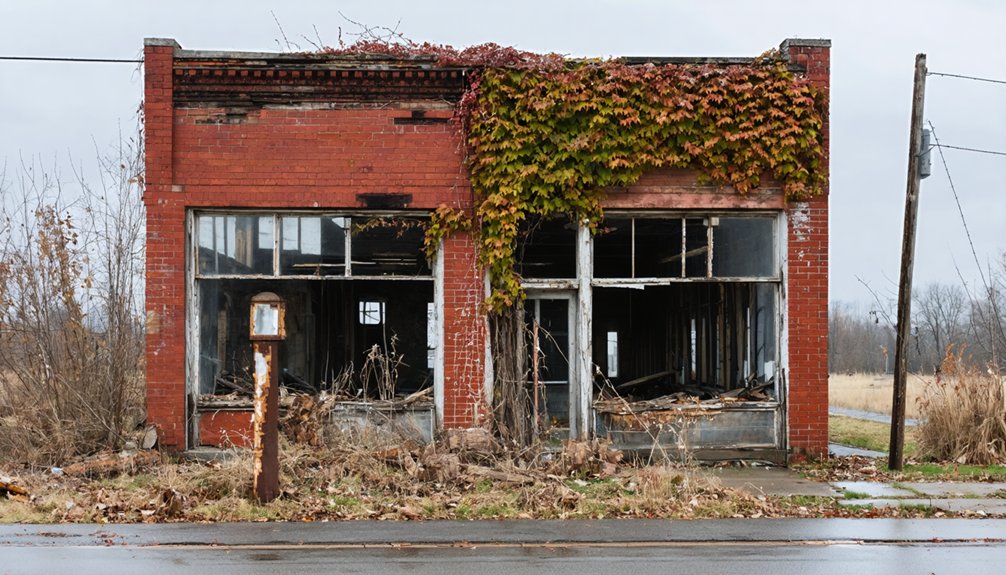
Before the railroad reshaped the Midwest, Bertrand, Michigan was a thriving frontier hub that few people remember today. Founded in 1808 by fur trader Joseph Bertrand, the settlement grew into a legitimate town of nearly 1,000 residents, complete with hotels, taverns, warehouses, and a post office.
Founded in 1808, Bertrand, Michigan once thrived as a frontier town of nearly 1,000 residents — now largely forgotten.
Its location along the Detroit-Chicago road made it a natural stop for travelers and traders. The Sisters of the Holy Cross even established their first U.S. convent here in 1844, signaling real institutional roots.
But economic shifts hit hard. The Michigan Central Railroad bypassed the town, land prices were inflated, and Native American trade dried up.
Those settlement dynamics redirected growth toward nearby Niles, and Bertrand quietly faded into forgotten history.
Who Was Joseph Bertrand and Why Does He Matter?
When you start tracing Bertrand’s origins, you quickly land on one man: fur trader Joseph Bertrand, who established a trading post here in 1808 and built relationships with the local Potawatomi people that made permanent settlement possible.
He didn’t just trade goods — he laid the groundwork for a frontier community that would grow into a platted village by 1833, complete with hotels, warehouses, and a post office.
His name lives on in the township and historical markers, reminding you that a single trader’s ambition once shaped the entire arc of this forgotten corner of southwestern Michigan.
Bertrand’s Fur Trading Origins
Though the name “Bertrand” might seem like just another dot on a Michigan map, it carries the story of a man who helped shape the entire southwestern corner of the state.
Joseph Bertrand arrived in 1808, establishing a fur trading post along the St. Joseph River that quickly became a hub for early commerce in the region. He understood the land’s potential and built relationships with the Potawatomi people, creating a foundation that attracted settlers, traders, and travelers heading between Detroit and Chicago.
His post wasn’t just a business — it was a lifeline connecting cultures and economies during a transformative period in American expansion.
When you visit Bertrand today, you’re standing on ground that once buzzed with the energy of frontier trade.
Founding A Frontier Settlement
Few frontier figures left as lasting an imprint on southwestern Michigan as Joseph Bertrand. He established his trading post in 1808, reading the landscape with the instincts of someone who understood both frontier challenges and long-term opportunity. Positioned near the St. Joseph River and the Detroit-Chicago road, his location wasn’t accidental.
Bertrand’s settlement strategies centered on relationships — with Potawatomi communities, passing traders, and early settlers moving westward. He built trust where others might’ve built walls.
By 1833, the site was formally platted as a village, reflecting genuine momentum rather than speculation alone.
When you visit today, you’re standing where someone deliberately chose to plant roots on an open frontier. That intentionality shaped everything that followed, including the town’s eventual rise and its quiet, forgotten decline.
His Lasting Historical Legacy
Joseph Bertrand didn’t just build a trading post — he shaped the cultural and economic foundation of southwestern Michigan at a pivotal moment in American expansion. His relationships with the Potawatomi people carried real cultural impact, fostering trade networks that connected Indigenous communities with European settlers during a rapidly changing era.
His historical significance extends beyond commerce. The town bearing his name became a stop on the Detroit-Chicago road and later welcomed the Sisters of the Holy Cross, who established their first U.S. convent there in 1844.
These milestones reflect how one man’s vision attracted institutions that outlasted the settlement itself.
When you visit Bertrand today, you’re standing on ground shaped by choices Bertrand made over two centuries ago — choices that echo across the region’s identity.
How the Railroad Killed a Thriving Village
When the Michigan Central Railroad laid its tracks through the region, it bypassed Bertrand entirely, rerouting commerce and settlers toward nearby Niles instead.
You can imagine how quickly a thriving village unravels once the economic lifeline shifts — businesses followed the railroad, and Bertrand’s hotels, warehouses, and dry-goods stores lost their purpose almost overnight.
What had been a bustling stop on the Detroit-Chicago road became a quiet backwater, left behind while Niles absorbed the growth that Bertrand once seemed destined to claim.
Railroad Bypasses Bertrand
By the 1830s, Bertrand had built itself into a legitimate regional hub—hotels, taverns, dry-goods stores, and a post office all operating within a village pushing toward 1,000 residents.
Then came the railroad impact that rewrote everything. When the Michigan Central Railroad laid its tracks through the region, it bypassed Bertrand entirely, redirecting commerce and settlers toward Niles instead.
Landowners in Bertrand had priced their lots too high, giving railroad planners little incentive to route the line through the village. That decision triggered an immediate village decline.
Without rail access, businesses couldn’t compete, trade dried up, and residents followed opportunity elsewhere.
It’s a brutal reminder that in frontier America, infrastructure determined survival—and the towns that lost the railroad often lost everything else right behind it.
Commerce Shifts To Niles
Once the railroad bypassed Bertrand, Niles didn’t just grow—it absorbed everything Bertrand had built. Merchants relocated, freight moved through rail-connected depots, and travelers followed the iron tracks rather than the old Detroit-Chicago road.
This economic change happened fast and without mercy. You can almost picture it: warehouses emptying, tavern doors closing, families loading wagons and heading a few miles east toward opportunity.
Bertrand couldn’t survive regional competition with a town that suddenly controlled transportation, commerce, and communication. Niles had the railroad. Bertrand had geography and history—neither of which paid bills.
The post office shuttered in 1901, fundamentally marking the village’s official surrender. What you’ll find today is silence where ambition once ran loud and constant.
A Village Left Behind
Few forces reshaped the American Midwest as swiftly and ruthlessly as the railroad, and Bertrand learned that lesson the hard way. When the Michigan Central Railroad bypassed the village entirely, commerce didn’t slow — it collapsed. Merchants packed up, residents followed, and what was once a thriving stop on the Detroit-Chicago road faded into silence.
The historical significance of Bertrand lies precisely in how complete that collapse was. A settlement nearly 1,000 strong simply ceased to matter once the tracks ran elsewhere.
Today, you’re visiting a ghost town that didn’t burn or flood — it was economically erased. Land speculators priced out buyers, Native American trade dried up, and Niles absorbed everything Bertrand once was. The railroad didn’t just pass through — it passed judgment.
Why Did the Sisters of the Holy Cross Choose Bertrand?
Though Bertrand had already begun its slow fade by the 1840s, it still held enough promise to attract something unexpected: the first American convent of the Sisters of the Holy Cross.
In 1844, the Sisters chose Bertrand because the frontier community offered both a base for early education and a genuine need for their mission. The area’s Potawatomi heritage and growing settler population created the Sisters’ motivations — they saw an opportunity to build something lasting where others saw decline.
They established their convent and began teaching local children, planting roots in a town that the railroad would soon abandon.
It’s a remarkable contrast worth reflecting on as you visit the site today: faith and education thrived here even as commerce quietly slipped away.
What You Can Still See at the Bertrand Town Site
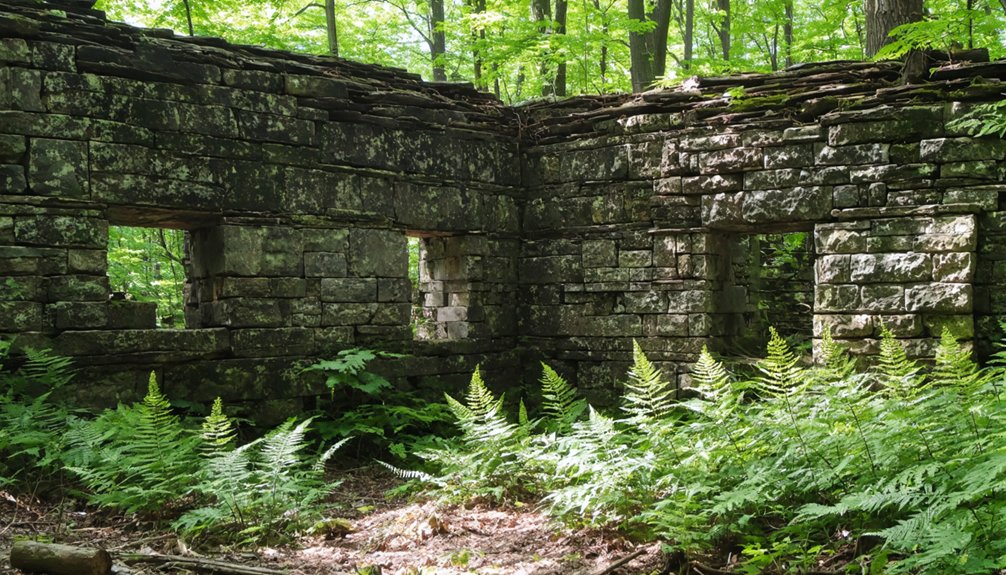
When you visit the Bertrand town site today, you’ll find two cemeteries and a pair of historical markers as the most recognizable remnants of what was once a thriving frontier village.
One original home reportedly still stands, offering a rare tangible link to the settlement’s peak years.
Much of the surrounding land has shifted to newer housing or agricultural use, making the markers essential for piecing together the town’s lost geography.
Remaining Cemeteries And Markers
Today, two cemeteries and a pair of historical markers are just about all that’s left to anchor Bertrand’s story to the landscape. The cemetery significance here goes beyond burial grounds — these sites confirm that real people built lives, raised families, and shaped a community that time eventually swallowed.
Walking among the headstones connects you directly to Bertrand’s peak years in ways no photograph can replicate.
The historical markers nearby give you the essential facts — the founding, the fur trade era, the rise and fall — without requiring a museum visit. They’re roadside anchors for independent travelers who want context without crowds.
Bring a camera, read the markers carefully, and let the quiet of the cemeteries do the rest. Bertrand rewards those willing to look closely.
The Last Standing Home
Beyond the cemeteries and markers, one more piece of Bertrand’s built past reportedly survives — a single original home still standing on the old town site.
This last home won’t stop you in your tracks with grand architectural significance, but it carries something quietly powerful. It’s a physical thread connecting you directly to the people who once built lives here, traded furs, raised families, and watched their town slowly disappear around them.
When you spot it, take a moment. You’re looking at what nearly 200 years of weather, neglect, and change couldn’t fully erase.
It’s a rare thing — a tangible anchor in a place where almost everything else has vanished into overgrowth or been replaced by newer construction. Don’t rush past it.
Modern Land Use Changes
Standing at the Bertrand town site today, you’ll find a landscape that tells its story through absence as much as presence. Urban development has quietly reshaped much of what was once a thriving frontier village.
Where hotels and warehouses once stood, you’ll now see newer housing, agricultural fields, and overgrown patches reclaiming the earth.
Land use here has shifted dramatically over two centuries. Without the historical markers anchoring your understanding, you’d likely drive past without a second thought. The transformation isn’t dramatic or sudden — it’s gradual and easy to miss.
Two cemeteries remain as the most tangible evidence of the community that existed here. They cut through the noise of modern change, reminding you that a thousand people once called this place home.
No Trails, No Signage: What to Expect When You Arrive
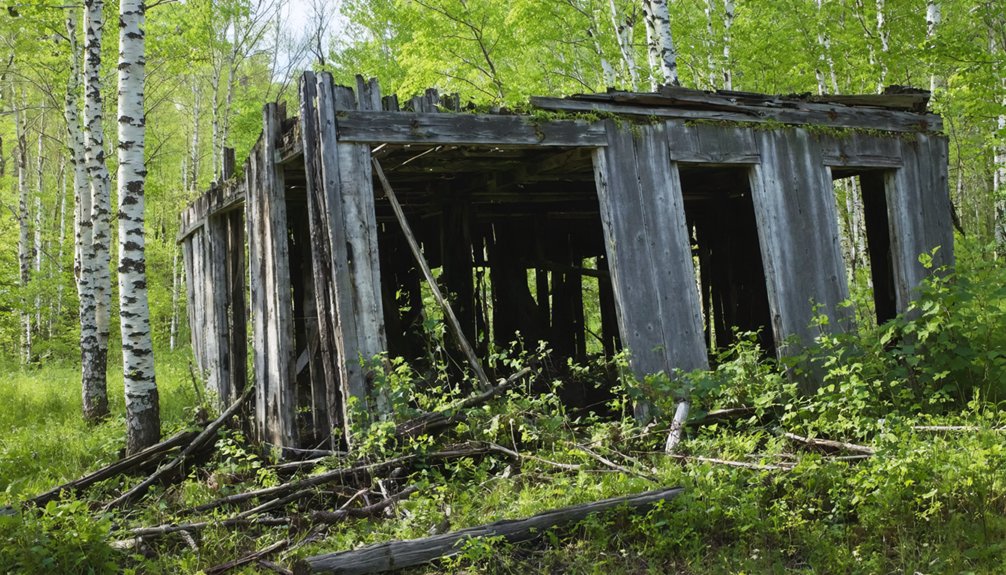
When you pull off the road at Bertrand’s town site, don’t expect a welcome sign, a trailhead, or a tidy interpretive kiosk—there’s almost nothing here to signal that a bustling village of nearly 1,000 people once stood on this ground.
Ghost town exploration here demands self-sufficiency. You’ll find two historical markers that acknowledge the site’s historical significance, but beyond those, the landscape offers overgrown lots, newer housing, and agricultural fields that have quietly swallowed the past.
No maintained paths guide your steps. Bring a GPS, do your research beforehand, and arrive with realistic expectations. This isn’t a curated heritage park—it’s a raw, largely unmarked place where history has been reclaimed by ordinary land use.
That rawness, honestly, is part of its appeal.
When Is the Best Time to Visit Bertrand?
Timing your visit well makes a real difference at a site like Bertrand, where overgrown vegetation and minimal infrastructure already work against you.
The best visiting season is either spring before full leaf-out or fall after foliage thins. Both windows give you cleaner sightlines to the historical markers and remaining structures.
Spring before leaf-out or fall after foliage thins — both seasons open up the site considerably.
Summer’s dense growth swallows what little there’s to see, and Michigan’s local climate turns humid and buggy, making roadside exploration genuinely unpleasant.
Winter works logistically, but frozen ground and snowpack can obscure low features entirely. A crisp October afternoon or an early May morning lets you move freely, read the markers without fighting back brush, and photograph the landscape before it closes back in.
Plan for two hours and bring layers.
How to Get to Bertrand From Niles, Michigan
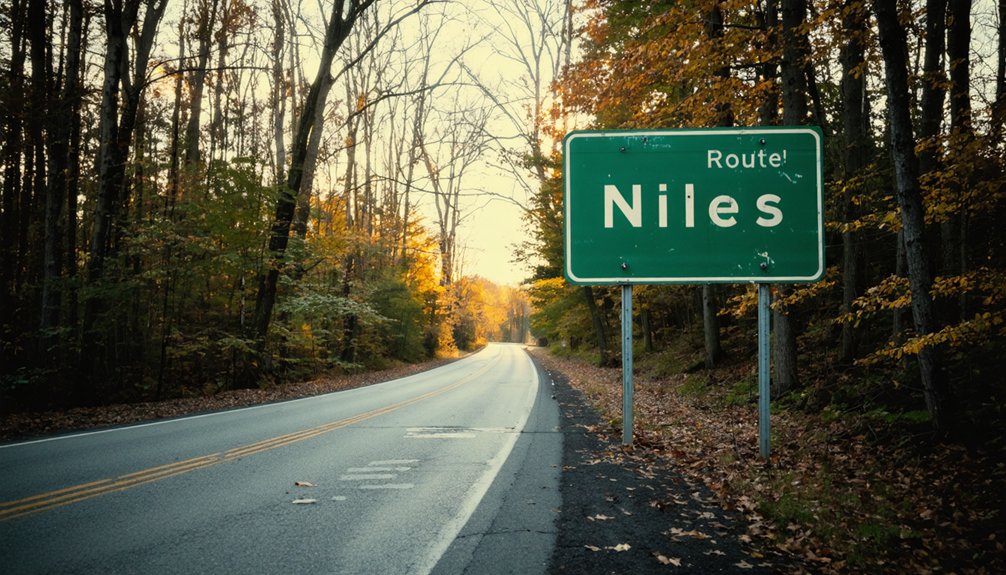
Getting to Bertrand from Niles takes less than ten minutes, making it one of the easiest ghost-town detours you’ll find in southwest Michigan.
Follow the Niles route west toward the Indiana state line, keeping your eye on Bertrand Township roads that cut through farmland and scattered residential lots. A GPS helps since signage is minimal and the landscape offers few obvious landmarks pointing you toward the site.
A couple of travel tips before you go: check road conditions seasonally, as some local roads can get muddy after heavy rain.
Arrive with a full tank since there are no services near the site itself. Park safely along the roadside, grab your camera, and spend a few unhurried minutes absorbing what little remains of this once-thriving frontier village.
Southwest Michigan Ghost Towns to Pair With a Bertrand Visit
Bertrand makes for a quick stop, so you’ll want to build a fuller day around it by adding a few more ghost-town sites scattered across southwest Michigan. The region holds layers of regional history that reward explorers willing to roam beyond a single destination.
Several ghost towns and heritage stops pair naturally with Bertrand:
- Bertrand Township history sites provide direct context for the old village’s rise and fall
- Berrien County heritage markers connect you to broader settlement patterns across the county
- St. Joseph River corridor sites trace early frontier commerce and movement
Stringing these stops together gives you a themed road trip that feels purposeful rather than random.
Keep a regional map handy, stay flexible with your timing, and you’ll leave with a genuine sense of how southwest Michigan was shaped and abandoned.
Why Did Bertrand Follow the Same Path as So Many Michigan Ghost Towns?
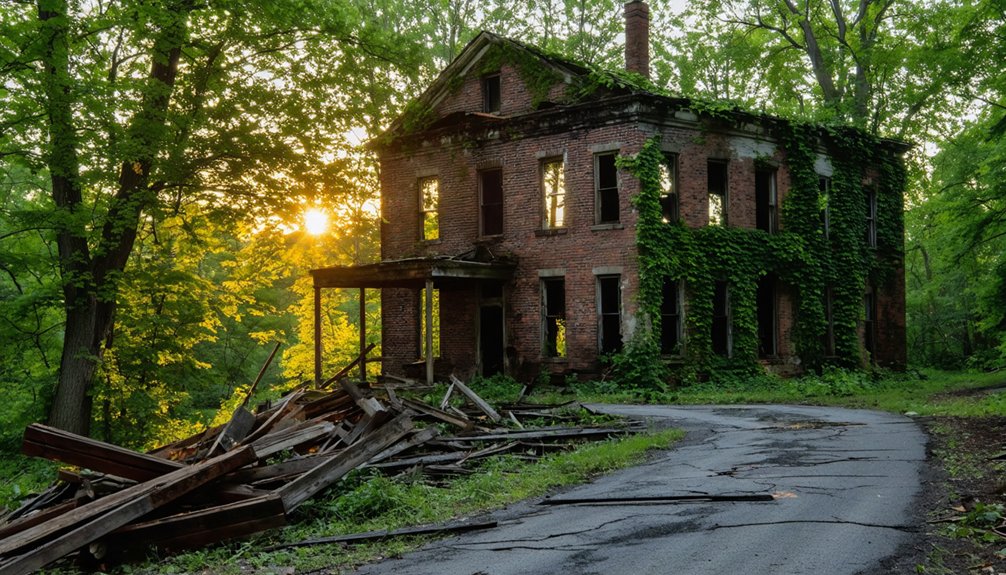
Why did so many promising Michigan settlements rise quickly and then vanish just as fast? Bertrand’s story answers that question clearly. When the Michigan Central Railroad bypassed the village, economic decline followed almost immediately.
Commerce shifted, settlers moved on, and Niles absorbed what Bertrand had built.
You’ll recognize this pattern across southwest Michigan. Towns that thrived on fur trade, river access, and overland roads couldn’t survive once railroads redrew settlement patterns.
Whoever controlled the rail lines controlled regional growth, and Bertrand simply lost that gamble.
Understanding this history makes your visit more meaningful. You’re not just stopping at an overgrown lot — you’re standing where an entire economic system collapsed and reshaped the landscape around it.
That context transforms a roadside stop into something genuinely worth your time.
Frequently Asked Questions
Is There an Admission Fee or Parking Cost to Visit Bertrand?
You won’t pay any admission fee or parking cost to visit Bertrand. It’s a free roadside stop where you can explore its historical significance, uncover local legends, and experience Michigan’s ghost town heritage on your own terms.
Are There Any Guided Tours Available at the Bertrand Town Site?
Scattered clues and silent echoes await you — but no guided tours exist at Bertrand’s town site. You’ll embrace independent guided exploration, uncovering its historical significance through roadside markers, making your freewheeling discovery feel thrillingly personal.
Can Visitors Legally Access the Bertrand Cemetery Grounds Year-Round?
You can typically visit Bertrand’s cemetery grounds year-round, though it’s wise to confirm local cemetery hours beforehand. Exploring these hallowed spaces connects you directly to the historical significance of this fascinating, once-thriving frontier village.
Are There Any Museums Nearby Dedicated to Bertrand’s Specific History?
Like dusty pages of a forgotten book, Bertrand heritage lives in nearby Niles museums and Berrien County historical sites. You’ll uncover local folklore and regional history there, though no museum dedicates itself exclusively to Bertrand.
Is the Bertrand Site Accessible for Visitors With Mobility Limitations?
The Bertrand site’s roadside access works well for most mobility aids, but uneven terrain limits deeper exploration. You won’t find formal visitor assistance here, so plan ahead and bring a companion for a safer, more enjoyable experience.
References
- https://wkfr.com/ghost-towns-southwest-michigan/
- https://bertrandtwpmi.gov/history
- https://www.ghosttowns.com/states/mi/bertrand.html
- https://www.facebook.com/groups/michianahistory/posts/2811430189042300/
- https://berrienhistory.wordpress.com/tag/haunted/
- https://en.wikipedia.org/wiki/Bertrand
- http://www.wiskigeamatyuk.com/Joseph_and_Madeleine_Bertrand.htm
- https://www.facebook.com/groups/197963929104900/posts/539229144978375/
- https://www.potawatomi.org/blog/2021/07/09/bertrand-family-history/
- https://www.hmdb.org/m.asp?m=261108