Planning a ghost town road trip to Kalawao means preparing for one of America’s most emotionally powerful destinations. You’ll need permits through Kalaupapa National Historical Park, and you can’t just show up unannounced. Entry requires hiking the Pali Trail, booking a mule ride, or arranging a guided tour or small plane flight. Set aside a full day, ideally ten hours, to honor the layered tragedy here. There’s far more to this haunting peninsula than any quick summary can capture.
Key Takeaways
- Kalawao is only accessible via hiking the Pali Trail, mule rides, guided tours, or small plane flights — no direct highway access exists.
- Permits through Kalaupapa National Historical Park are mandatory, walk-ins are strictly prohibited, and children under 16 are not allowed.
- Plan a minimum of six to eight hours, with ten or more hours ideal for full exploration of Kalawao and Kalaupapa combined.
- Key landmarks include St. Philomena Church, Father Damien’s original grave, and unmarked architectural ruins of former medical buildings requiring careful exploration.
- Approach the visit as a pilgrimage, moving slowly through cemeteries and historical sites to honor the profound tragedy and layered history.
What Makes Kalawao a Ghost Town Worth Visiting?
Because it sits at the end of a nearly unreachable peninsula, cut off from the rest of Molokai by towering sea cliffs, Kalawao carries the kind of weight that most ghost towns only hint at.
You’re not just visiting ruins here. You’re stepping into a place shaped by forced exile, disease, and survival, where the historical significance runs deeper than crumbling walls or overgrown paths.
The ghostly encounters you’ll feel aren’t manufactured. They come from cemeteries holding thousands of exiled souls, from Father Damien’s original grave, and from structures left standing after the colony’s activity gradually shifted westward.
Kalawao doesn’t perform its history for you. It simply holds it, quietly and completely, waiting for travelers bold enough to make the journey.
The Dark History Behind the Kalaupapa Peninsula
When the Hawaiian government passed its Act to Prevent the Spread of Leprosy in 1865, it set into motion one of the most sweeping forced exile programs in American history. People diagnosed with Hansen’s Disease were torn from their families and shipped to Kalaupapa Peninsula with no return date.
This exile history cuts deep:
- Patients arrived with nothing but fear.
- Early settlers built their own shelters or died exposed.
- Father Damien documented staggering suffering before dying of the disease himself.
- Thousands never left — their graves still mark the land.
You’re not visiting a curiosity here. You’re walking ground where freedom was legally stripped away, where human beings became outcasts overnight, and where that wound never fully closed.
St. Philomena Church, Father Damien’s Grave, and the Ruins Worth Finding
Though it stands weathered and small against the dramatic cliffs of Kalaupapa, St. Philomena carries enormous historical significance. Father Damien transformed this modest church while serving the exiled patients of Kalawao, and his original grave still rests nearby in the cemetery grounds.
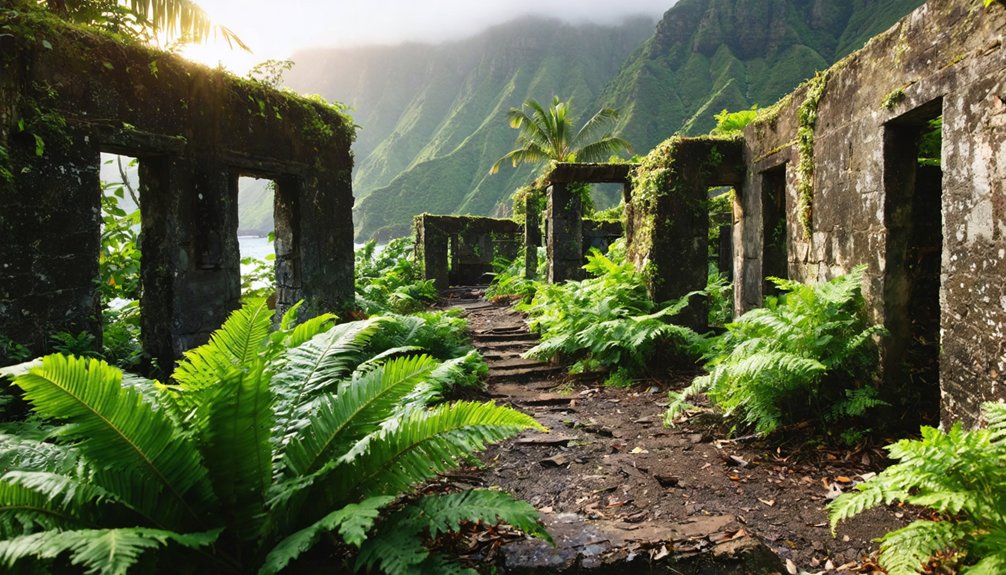
You’ll feel the weight of that history standing between the headstones. Beyond the church, the peninsula rewards exploration — architectural ruins of former medical buildings, collapsed structures, and crumbling foundations scatter across the landscape if you know where to look.
These remnants aren’t marked with polished signs, so you’ll need to move deliberately and read the terrain. Father Damien’s grave, even after his remains were moved to Belgium, still marks a powerful spot.
Don’t rush through it. This place demands your full attention.
How to Actually Get to Kalawao, Hawaii
Getting to Kalawao requires accepting that nothing about this trip will be convenient, and that’s exactly the point.
Getting to Kalawao means choosing difficulty on purpose — and finding something worth the effort waiting at the bottom.
No highway drops you here. Your access methods are deliberately limited, which filters out the casual crowd and rewards the intentional traveler.
Use these travel tips to plan honestly:
- Hike the Pali Trail — a steep, switchbacking descent that earns every view.
- Book a mule ride — a slower, rawer way down the cliffside.
- Arrange a guided tour — required for most visitors and the only legal entry option.
- Fly or arrive by boat — limited but possible with advance coordination.
Permits aren’t optional. The park controls access tightly.
Respect that boundary, book early, and arrive ready for a visit that demands your full presence.
How Permits and Tours Actually Work at Kalaupapa
Booking access to Kalaupapa isn’t complicated, but it’s strict. The permits process runs through Kalaupapa National Historical Park, and you’ll need approval before setting foot on the peninsula. No walk-ins exist here.
Children under 16 aren’t permitted at all, a rule tied to the community’s wish for privacy and dignity.
Your tour options are limited but purposeful. Guided mule rides descend the Pali Trail, while hiking the same steep switchbacks remains a raw, physical alternative. Small plane flights into the airstrip offer a third route.
Once down, an authorized guide leads you through the settlement, covering history, landmarks, and restricted zones.
Start your planning weeks ahead. Permits fill quickly, especially in peak seasons, and missing your window means missing Kalaupapa entirely.
What the Kalawao Peninsula Actually Feels Like to Walk Through
Once you’re walking the Kalawao Peninsula, the silence hits you before anything else—no traffic, no crowds, just wind off the Pacific and the occasional creak of an old structure settling into coastal air.
The sea cliffs rise at your back like walls that sealed this place off from the rest of the world for over a century, framing every step you take through the ruins with a reminder that escape was never part of the design.
You’re moving through grief made geography here, where a Hansen’s disease exile colony, Father Damien’s mission work, and decades of forced isolation collapse into a single landscape you can actually walk across.
Silence Between the Ruins
Walking into the Kalaupapa Peninsula feels less like sightseeing and more like stepping into a sustained, unbroken quiet that the cliffs seem to enforce from every direction. The haunting echoes of forgotten stories settle into you slowly, carried by wind cutting across graves and crumbling foundations.
What breaks through that silence:
- The sound of your own footsteps near Father Damien’s grave
- Waves striking the eastern shoreline below Kalawao’s ruins
- Birds calling over cemetery grounds where thousands remain buried
- Wind threading through St. Philomena’s weathered walls
You’re not touring a place — you’re reading it. Every overgrown path and salt-worn stone holds weight. The peninsula doesn’t perform its history. It simply holds it, waiting for someone willing to actually listen.
Cliffs Framing Every Step
The cliffs don’t stay in the background here — they frame every step you take across the Kalaupapa Peninsula, rising over 1,600 feet along the northern face of Molokai and cutting the settlement off from the rest of the island as completely as any wall ever could.
You feel their presence constantly. The cliffside views shift as you move between cemetery grounds and weathered structures, pressing the scale of this place into sharp focus.
There’s a haunting beauty in how the landscape holds everything together — ocean on three sides, volcanic rock towering behind you, and history embedded in the soil beneath your feet.
Walking here doesn’t feel casual. It feels earned. The geography itself becomes part of the story, reminding you exactly why this peninsula kept its secrets for so long.
Weight of Layered History
Moving through the Kalaupapa Peninsula feels less like sightseeing and more like reading a document written in stone, soil, and silence. The historical significance here isn’t framed behind glass—it surrounds you completely. Every step carries emotional resonance that builds layer by layer:
- You’re standing where exiled patients first landed, stripped of freedom by government decree.
- You’re walking ground Father Damien chose when no one else would.
- You’re passing graves of people history nearly forgot entirely.
- You’re witnessing structures still holding shape against decades of wind and grief.
Nothing here is decorative. The peninsula doesn’t perform its past—it simply holds it.
You’ll leave understanding something about human resilience that no museum exhibit could ever fully replicate.
How Long to Spend at Kalawao and Kalaupapa Combined
Plan for a minimum of four to six hours if you want to move through both Kalawao and Kalaupapa with any real intention.
A full peninsula exploration, one that takes in the cemeteries, St. Philomena Church, the coastal ruins, and the quieter eastern reaches near Kalawao’s settlement core, will push your day closer to eight hours.
You’re not driving a loop here, so budget your time the way you’d budget it for a pilgrimage rather than a pit stop.
Minimum Recommended Visit Duration
Most visitors who rush through Kalaupapa and Kalawao leave feeling like they only scratched the surface—and that’s because a peninsula this layered in tragedy, preservation, and raw coastal drama genuinely demands a full day at minimum.
These trip essentials will help you honor both settlements properly:
- Arrive early to walk Kalawao’s eastern shoreline before tour groups arrive.
- Spend unhurried time at St. Philomena Church and Father Damien’s grave.
- Move slowly through the cemetery areas—the names carved in stone deserve your attention.
- Allow quiet reflection time before departing, because this place stays with you.
Your minimum visit should be six to eight hours. Anything shorter shortchanges the weight of what happened here and why you came.
Full Peninsula Exploration Time
Six to eight hours covers the minimum, but exploring both Kalawao and Kalaupapa as a combined unit—treating the peninsula as a single immersive landscape rather than two separate checkpoints—pushes that number closer to a full day of ten hours or more.
Full exploration demands deliberate time management. You’ll move between Father Damien’s church, the cemetery grounds, coastal ruins, and quiet settlement corridors, and each site rewards slow attention rather than rushed movement.
The dramatic cliffs, the layered history, and the atmospheric weight of what happened here aren’t absorbed on a schedule built for convenience. Give yourself room to pause, backtrack, and sit with what you’re seeing.
You didn’t travel this far to skim the surface.
Other Molokai Stops Worth Adding Only If Time Allows
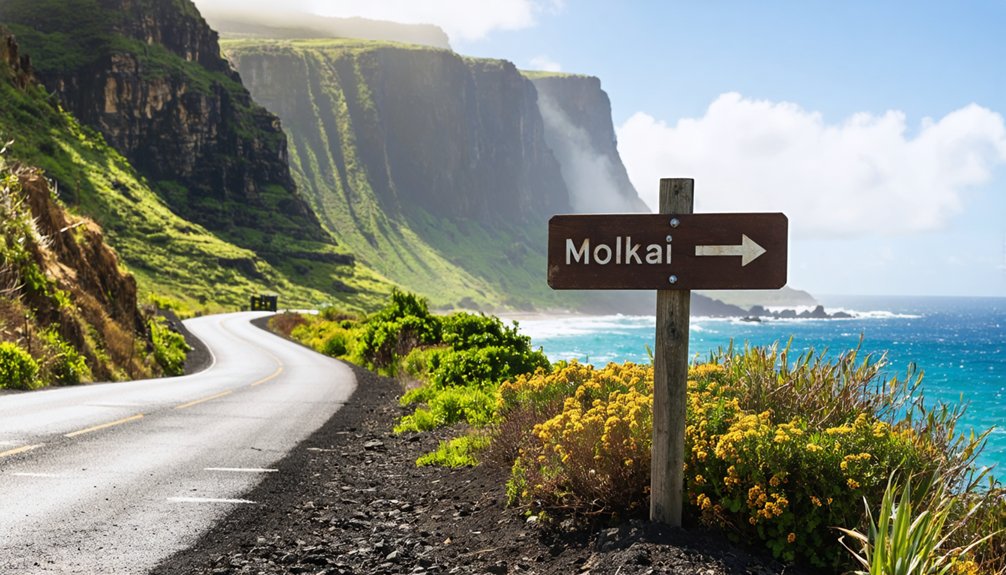
Because the Kalaupapa Peninsula commands the bulk of your attention on Molokai, treat any additional island stops as bonuses rather than obligations. If your schedule breathes, explore freely:
- Halawa Valley – Ancient taro fields and cascading waterfalls reward those willing to hike deep into Molokai’s oldest inhabited valley.
- Kaunakakai Town – Sample local cuisine at small plate-lunch spots where cultural experiences feel genuinely unhurried and authentic.
- Papohaku Beach – One of Hawaii’s longest white-sand beaches offers raw, uncrowded solitude that matches the peninsula’s meditative energy.
- Molokai Forest Reserve – Elevated trails cut through misty ironwood forests, delivering sweeping views across an island that refuses to perform for tourists.
Frequently Asked Questions
Can Children Visit Kalawao and Kalaupapa National Historical Park With Adults?
Children face strict age restrictions here — visitors must be 16 or older. You’ll need to plan family activities elsewhere on Molokai, as the park’s controlled access rules firmly limit who can explore this hauntingly remote peninsula.
Are Photography Restrictions Enforced Anywhere Within the Kalaupapa Peninsula?
Over 8,000 souls once suffered here. You’ll face strict photography guidelines within Kalaupapa, where ethical considerations protect residents’ privacy. Always ask before shooting — freedom means respecting boundaries in this hauntingly sacred, living landscape.
Is There Cell Phone Service or Internet Access on the Kalaupapa Peninsula?
Don’t count on cell service or internet availability on the Kalaupapa Peninsula. You’ll step into true isolation here — no digital tether, just raw history, ocean winds, and the freedom of pure disconnection awaiting you.
What Should Visitors Wear or Pack Specifically for the Kalaupapa Visit?
Like armor for an adventure, your appropriate clothing and essential gear matter here. Wear sturdy walking shoes, breathable layers, and sun protection. Pack water, snacks, and a camera — you’ll want every moment captured on this rugged, remote peninsula.
Are Any Former Patient Residents Still Living on the Kalaupapa Peninsula Today?
Yes, a small number of former residents who were once patients still choose to live on the peninsula today. Their patient experiences shape the living memory you’ll encounter, making this sacred place unlike any ghost town you’ve ever explored.
References
- https://www.pointswithacrew.com/kalawao-county-hawaii-trip-report-the-hardest-county-in-the-us-to-visit/
- https://quickwhittravel.com/2019/05/09/ultimate-guide-to-visiting-the-kalaupapa-peninsula-molokai/
- https://www.dark-tourism.com/index.php/761-kalaupapa-molokai-hawaii
- https://nvtami.com/2023/04/26/big-island-hawaii-ghost-towns/
- https://en.wikipedia.org/wiki/List_of_ghost_towns_in_Hawaii
- https://www.instagram.com/p/DYCya4jESPP/
- https://www.youtube.com/watch?v=FyuJb3IeTUM
- https://www.nps.gov/articles/000/kalaupapa-kalawao-settlements-975012.htm
- https://www.yelp.com/search?find_desc=Historical+Tours&find_loc=Kalawao,+HI
- https://www.travelweekly.com/Hawaii-Travel/Tales-tragedy-compassion-Kalaupapa