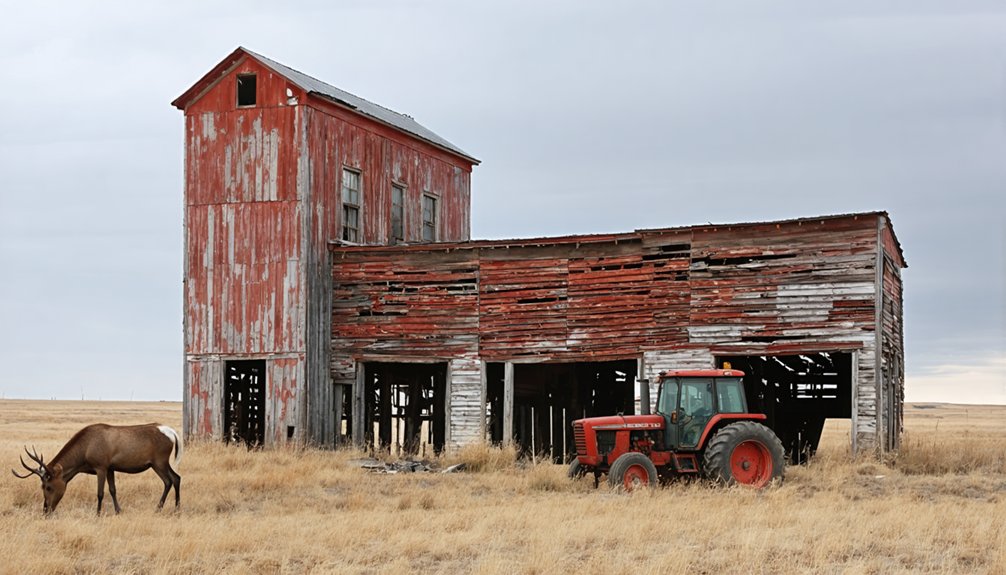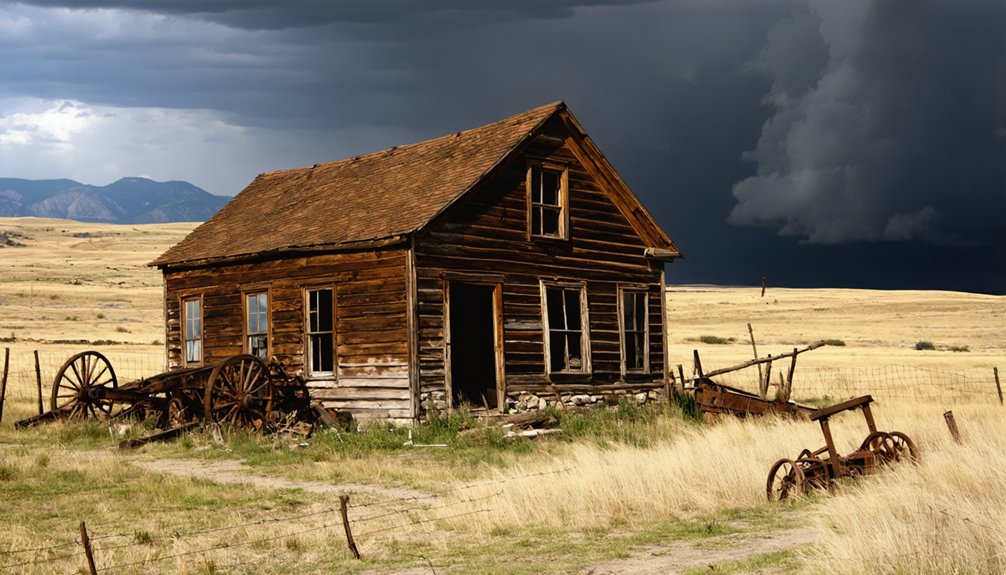
You’re chasing a settlement that bloomed during the 1876 Black Hills gold rush and vanished so completely that no standing structures remain today. Start in Rapid City, head northeast along Highway 16, and loop through Lawrence and Pennington Counties toward Deadwood. Pair Centennial Park with stops at Mystic, Rockerville, and Scenic for a fuller picture of South Dakota’s mining collapse. There’s far more to this forgotten landscape than any single map can tell you.
Key Takeaways
- Centennial Park, established in 1876 during the Black Hills gold rush, has no remaining structures, making satellite imagery and detailed maps essential for locating it.
- Access Centennial Park via Lawrence County’s rugged terrain near Highway 16, requiring a capable off-road vehicle and thorough preparation before departure.
- Begin your road trip in Rapid City, heading east on Highway 16, then north through Pennington and Lawrence Counties toward Centennial Park.
- Enhance your trip by visiting nearby ghost towns like Scenic, Mystic, Rockerville, and Canyon City, each reflecting Black Hills mining history.
- Pack sturdy footwear, water, and a camera; respect private property signs and expect limited cell coverage throughout your journey.
The 1876 Settlement That Became South Dakota’s Forgotten Ghost Town
When gold fever gripped the Black Hills in 1876, a scrappy little settlement near Cook City clawed its way into existence, cobbling together a grocery store, a restaurant, and a handful of miners’ cabins before the rush moved on and left it hollow.
That settlement became Centennial Park, a name that barely registers on modern maps but carries real forgotten history beneath its silence.
That name barely registers on modern maps, yet underneath its silence rests a forgotten history worth unearthing.
No structures remain. No markers greet you. The town simply vanished, leaving only early cartographic records as proof it ever breathed.
You won’t find a welcome sign or a museum exhibit — just open land where ambition once staked its claim.
That erasure is exactly what makes Centennial Park worth chasing. Some stories demand that you go looking for them yourself.
Centennial Park’s Ghost Town History in the Black Hills
Nestled in Lawrence County, Centennial Park carries a peculiar dual identity — it was both a fleeting mining camp and a township that actually managed a recorded population of 52 by 1900.
Unlike many Black Hills settlements that simply faded before anyone counted heads, this ghost town earned its place on early maps and even supported a functioning post office. The community centered around a benchmark in Centennial Prairie, anchoring what was briefly a real place rather than just a hopeful name.
Today, you won’t find standing structures or visible evidence of those former residents. Centennial Park exists now as a barren ghost town, stripped clean by time.
But that emptiness is precisely what makes exploring it feel like genuine discovery rather than a curated museum experience.
How to Reach This South Dakota Ghost Town
Getting to Centennial Park means tracing the same rugged Lawrence County terrain that drew miners and settlers into the Black Hills over a century ago.
You’ll navigate routes threading through Pennington and Lawrence Counties, staying close to Highway 16 near Rapid City. From there, push northeast toward Deadwood, where the landscape shifts into dense pine corridors and elevation changes that once swallowed entire communities whole.
Don’t let ghost town myths fool you into expecting marked signage or maintained roads.
Travel logistics here demand preparation — check satellite imagery beforehand, carry detailed maps, and confirm your vehicle handles uneven terrain.
Preparation isn’t optional here — satellite imagery, detailed maps, and a vehicle built for rough terrain are non-negotiables.
The benchmark centered in Centennial Prairie remains your truest landmark.
You’re retracing history on your own terms, which is exactly the point of a road trip like this.
What Remains at Centennial Park Ghost Town Today?
When you arrive at Centennial Park today, you won’t find a single standing structure—just open, wind-swept prairie where a community of 52 once lived and worked.
The town’s barren footprint offers no cabins, no storefronts, no markers hinting at the lives that once filled this Lawrence County landscape.
You’ll need satellite imagery or old survey maps to even confirm you’re standing where a real settlement once thrived.
No Visible Structures
Silence is about all you’ll find where Centennial Park once stood. No walls, no foundations, no ghostly remnants of the 52 souls who called this Lawrence County settlement home in 1900. The land has swallowed its forgotten history completely.
You won’t stumble across collapsed cabins or rusted relics here. Satellite imagery confirms what boots on the ground already tell you — it’s barren. The benchmark centered in Centennial Prairie remains your only geographic anchor to this vanished community.
That erasure makes Centennial Park uniquely haunting. You’re standing somewhere that genuinely existed, served by a post office, mapped by surveyors, yet utterly reclaimed by the prairie.
Bring your curiosity, not your expectations. This ghost town rewards those who appreciate absence as much as artifacts.
Barren Prairie Remnants
What you’ll find at Centennial Park today is fundamentally nothing — and that nothing tells its own story. The barren landscapes stretch across Centennial Prairie without apology, offering no crumbling facades, no rusted hinges, no sentimental ruins. Just wind, grass, and a benchmark quietly marking where 52 people once built something real.
That absence carries genuine historical significance. Miners staked claims here during the Black Hills rush, established a post office, called this place home.
Now satellite imagery confirms what boots on the ground reveal — the earth has reclaimed everything completely.
For freedom-seekers, that erasure is oddly powerful. You’re standing inside a story with no visible chapter markers.
Bring your curiosity, check early maps beforehand, and let the open prairie do the talking.
Trails Near Centennial Park That Pass Other Abandoned Sites
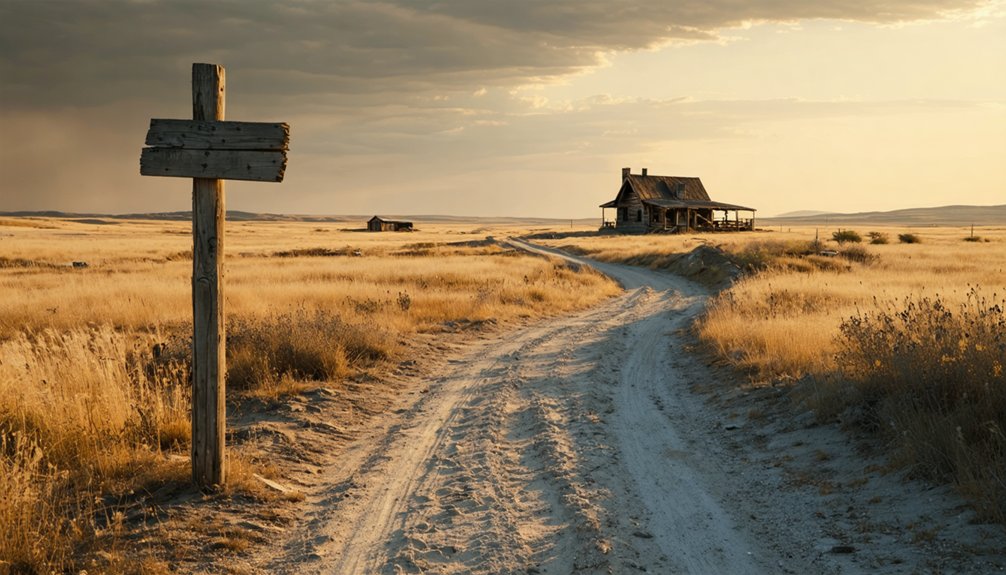
Though Centennial Park itself leaves little to discover above ground, the trails threading through the surrounding Black Hills bring you face-to-face with the region’s abandoned past at nearly every bend.
These hiking trails connect ghost town histories through raw, open country, putting authentic abandoned landmarks within your reach.
Hit these four trail-linked stops:
- Mickelson Trail — Ride or hike converted railroad grades through former mining corridors.
- Mystic Trailhead — Follow the old Crouch Line for sweeping views near a National Register site.
- Canyon City remnants — Reach this former 400-person mining camp through backcountry routes.
- Scenic Ghost Town — Walk past Longhorn Saloon ruins standing over a century abandoned.
You’re not just hiking — you’re moving through living history on your own terms.
Best Nearby Ghost Towns to Add to Your Route
Scattered across southwest South Dakota, a handful of ghost towns reward the curious traveler willing to push beyond Centennial Park’s barren benchmark.
Mystic, added to the National Register of Historic Places in 1986, carries deep historical significance along the former Crouch Line, where scenic views frame abandoned rail grades.
Canyon City once swelled to 400 residents during Black Hills mining fever — you’ll feel that restless energy even now.
Scenic’s crumbling Longhorn Saloon remnants demand a camera and an open afternoon.
Rockerville flirted with tourist revival before Interstate 90 bypassed it entirely.
Each town tells a different chapter of boom-and-bust ambition.
String them together heading southwest from Deadwood, and you’ve built a route that’s genuinely unforgettable, raw, and yours alone to explore.
How to Loop Centennial Park Into a Black Hills Ghost Town Drive
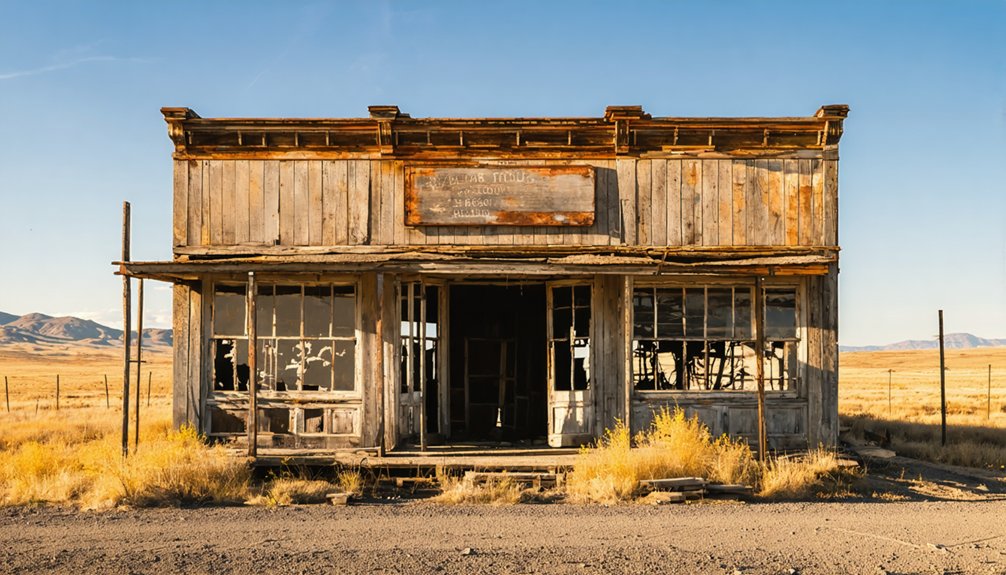
You’ll want to anchor your route in Rapid City, then head east along Highway 16 before cutting north through Pennington and Lawrence Counties toward Centennial Park’s prairie benchmark.
From there, loop through Deadwood’s shadow and swing south to catch Mystic’s historic trailhead and Scenic’s crumbling Longhorn Saloon along the way.
Each stop layers another chapter of Black Hills mining history onto your drive, turning a simple ghost town visit into a full-circuit journey through South Dakota’s forgotten past.
Mapping Your Route
Planning a ghost town loop through the Black Hills means threading together a region where history sits just beneath the surface, and Centennial Park makes a compelling anchor for the drive. Its historical significance within Lawrence County rewards those who seek forgotten benchmarks on Centennial Prairie.
Follow these travel recommendations to map your route efficiently:
- Start near Deadwood, heading south through Lawrence County toward Centennial Park’s recorded site.
- Connect through Pennington County toward Mystic, added to the National Register in 1986.
- Push south toward Scenic Ghost Town along Highway 16 near Rapid City.
- Close your loop east through Okaton, where 31 residents still hold ground among crumbling structures.
You’re driving living history — pack light, move freely, and stay curious.
Key Stops Along The Way
Once you leave Deadwood’s gilded chaos behind, the Black Hills open into a quieter kind of history — one you’ll chase through Lawrence and Pennington Counties, stopping at sites that range from benchmarked prairie to barnacled ghost facades.
Hit Scenic first for the Longhorn Saloon’s sun-bleached remnants, then swing toward Mystic, where ghost town legends earned it a spot on the National Register of Historic Places in 1986.
Canyon City’s historical significance peaks when you realize 400 miners once carved life from that silence.
Push southwest to Okaton, where 31 stubborn residents still occupy crumbling edges of a dying map dot.
Each stop layers meaning onto the next, building toward Centennial Park’s sparse benchmark — proof that absence can speak louder than any standing wall.
Where to Stop Between Rapid City and Centennial Park
The stretch between Rapid City and Centennial Park packs in several stops worth pulling over for. Each one carries scenic landscapes and historical significance that reward curious travelers willing to slow down.
- Rockerville – A revived gold rush town with authentic frontier character before interstate traffic swallowed it whole.
- Mystic Trailhead – Walk the former Crouch Line railroad grade through timber-lined hills with sweeping views.
- 1880 Town in Midland – Raw Old West history displayed without the tourist polish.
- Scenic Ghost Town – Catch the Longhorn Saloon remnants standing defiantly against a century of abandonment.
You’re threading through Lawrence and Pennington Counties on roads that once carried miners chasing fortunes.
Don’t rush it — the landscape demands your attention.
What to Know Before You Chase South Dakota Ghost Towns
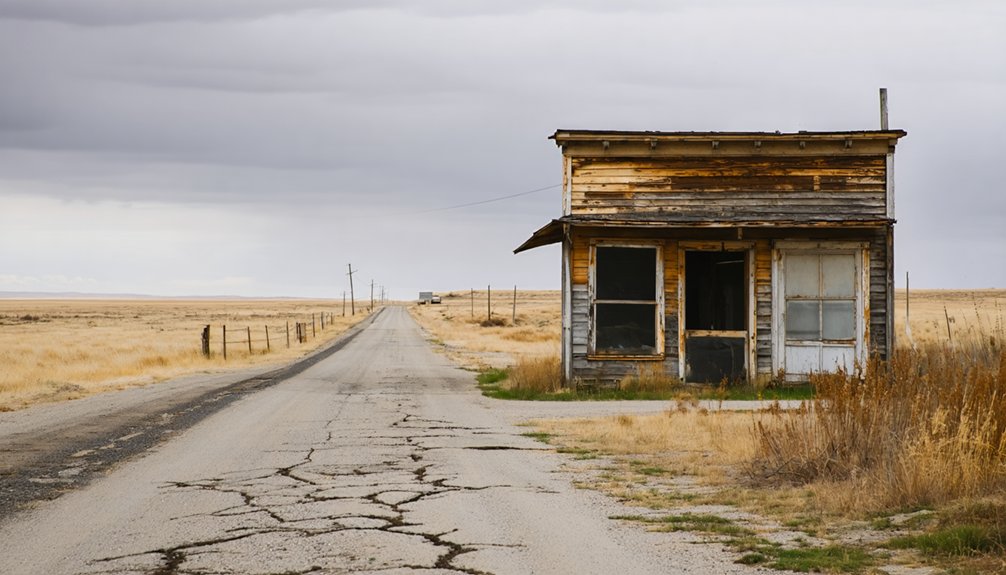
Chasing ghost towns across South Dakota isn’t casual sightseeing — you’re stepping into the fractured bones of the Black Hills mining era, where towns like Centennial Park flared to life around 1876 and vanished before most maps caught up.
Ghost town legends romanticize the ruins, but mining history tells a harder truth: these settlements built fast, burned through resources, and collapsed without ceremony.
Before you roll out, check satellite imagery — barren sites like Centennial Park leave almost no visible trace. Respect no-trespassing signs around private land.
Pack sturdy footwear, water, and a camera. Cell coverage thins beyond Deadwood.
The reward isn’t always a standing structure — sometimes it’s just wind, prairie, and the weight of knowing exactly where you’re standing.
Frequently Asked Questions
Is There a Fee to Visit Centennial Park Ghost Town?
No fee blocks your path to Centennial Park’s ghost town history! You’ll roam freely across Centennial Prairie’s open lands, though visitor amenities are nonexistent—pack your own supplies and embrace the untamed, boundless spirit of South Dakota’s forgotten frontier.
Are Pets Allowed on Trails Near Centennial Park?
Roam free, but responsibly! You’ll want to verify pet friendly policies locally, as trail etiquette typically requires leashes. The Mickelson Trail welcomes leashed pets, letting you explore ghost town history alongside your faithful trail companion.
What Is the Best Time of Year to Visit?
Summer’s your best bet for best weather exploring Centennial Park’s ghost town trails. You’ll enjoy seasonal activities like hiking the Black Hills, uncovering mining-era mysteries, and breathing the wild freedom these abandoned 1876 settlements still powerfully evoke.
Are There Guided Ghost Town Tours Available in the Black Hills?
Surprisingly, you won’t find guides holding your hand here! You’ll uncover ghost town history and local legends solo — grab a map, hit the Black Hills trails, and let freedom fuel your own raw, unscripted adventure.
Can You Camp Overnight Near Centennial Park Ghost Town?
You’ll find camping options near Centennial Park in the Black Hills, where overnight amenities await at surrounding campgrounds. Pitch your tent, breathe frontier air, and let South Dakota’s wild, gold-rush spirit fuel your adventurous soul tonight.
References
- https://www.tripadvisor.com/Attraction_Review-g54799-d22999414-Reviews-Scenic_Ghost_Town-Scenic_South_Dakota.html
- https://en.wikipedia.org/wiki/List_of_ghost_towns_in_South_Dakota
- https://www.powderhouselodge.com/black-hills-attractions/fun-attractions/ghost-towns-of-western-south-dakota/
- https://sailingstonetravel.com/north-south-dakota-road-trip-itinerary/
- https://www.legendsofamerica.com/sd-okaton/
- https://www.youtube.com/watch?v=_0WNYsFLSLA
- https://www.blackhillsbadlands.com/blog/post/old-west-legends-mines-ghost-towns-route-reimagined/
- https://www.1880town.com